The 1948 Shannon-Buente Special N5489N was built by James Shannon & Ben E Buente as a Midget racer. A single place cabin, mid-wing monoplane, it reportedly never raced.
Engine: 85hp Continental C-85
Wingspan: 19’4″
Length: 16’7″
Seats: 1
The 1948 Shannon-Buente Special N5489N was built by James Shannon & Ben E Buente as a Midget racer. A single place cabin, mid-wing monoplane, it reportedly never raced.
Engine: 85hp Continental C-85
Wingspan: 19’4″
Length: 16’7″
Seats: 1
The 1928 IAC Special NX4966 c/n 100 was a single seat aircraft powered by a 90hp Curtiss OX-5.
The 1929 Shamrock 3-B was a four-place cabin, high-wing monoplane selling for $6,500. This might well be the IAC Special repowered.
3-B
Engine: 110hp Warner Scarab
Wingspan: 36’6″
Length: 25’10”
Useful load: 900 lb
Max speed: 115 mph
Cruise: 85 mph
Stall: 45 mph
Range: 380 mi
Seats: 4
A developed version of Bucker Bu 181 Bestmann
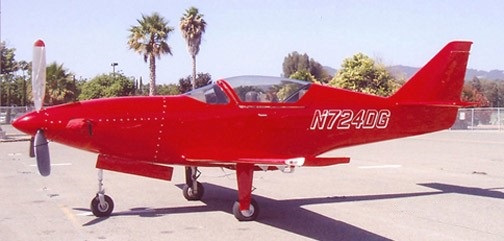
The Gray Special was built in 2002 as a turboprop version of the Legend.
Engine: Walter M601D, 657hp
Wingspan: 28’6″
Length: 25’9″
Max speed: 356 mph
Cruise speed: 334 mph
Stall: 120 mph
Range: 944 mi
Seats: 2
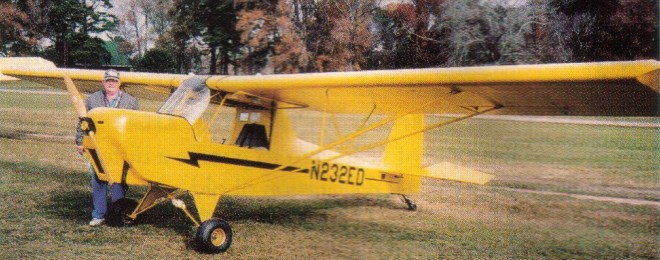
This is a scratch built J-3 Kitten, scaled up 10% to accept an EA-81 Subaru direct drive engine with a 60 inch ground adjustable Precision propeller.
The cowling and fuel tank are fibreglass, and the airframe is covered in Ceconite and finished with Randolf dope.
It took about 3000 hrs over two years to construct, finishing in 2001.
Empty weight: 500 lb
Wingspan: 32 ft

First seen in 1997 at the Bassano show, the Seastorm is aimed at the American kit plane market. Entirely composite, a 900kg MAUW four seater was under development.
Engine: Midwest 110, 115 hp
Wing span: 9.27 m
Wing area: 12.24 sq.m
MAUW: 500 kg
Empty weight: 300 kg
Fuel capacity: 120 lt
Max speed: 270 kph
Cruise speed: 210-240 kph
Minimum speed: 62-73 kph
Climb rate: 4.5 m/s
Seats: 2
Fuel consumption: 18-32 lt/hr
Price (1998): $89,000
Kit price (1998): $45,000
Engine: Midwest 105, 105 hp
HP range: 105-115
Top speed: 171 mph
Cruise: 148 mph
Stall: 44 mph
Range: 1040 sm
ROC: 1200 fpm
TO dist land/water: 400 ft / 820 ft
Ldg dist land/water: 425 ft / 620 ft
Service ceiling: 13,700 ft
Fuel cap: 26.5 USG
Empty wt: 682 lb
Gross wt: 1340 lb
Height: 6 ft
Length: 24.6 ft
Wing span: 30 ft
Wing area: 131 sq.ft
Seats: 2
Undercarriage: tail
The Storm is derived from the P 220 Pottier, using pop-riveted sheet dural.
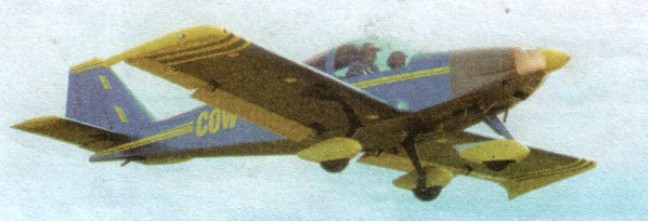
The Storm 400Ti is a three seat version of the Storm 280, designed specifically for the US kitplane market.
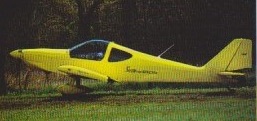
Storm 280
Engine: Rotax 912, 80 hp
Wing span: 8.6 m
Wing area: 11.6 sq.m
MAUW: 450 kg
Empty weight: 262 kg
Fuel capacity: 90 lt
Max speed: 225 kph
Cruise speed: 200 kph
Minimum speed: 65 kph
Climb rate: 5 m/s
Certification: vVZ
Seats: 2
Fuel consumption: 13 lt/hr
Price (1998): 88,328 DM
Kit price (1998): 33,335 DM
Storm 300
Engine: Jabiru, 120hp
Fuel cap: 55 lt main + 2 x 28 lt wing.
Storm 300
Engine: Rotax 912
Fuel cap: 90 lt.
Storm 300
Engine: Midwest 105, 105 hp
HP range: 80-120
Top speed: 200 mph
Cruise: 171 mph
Stall: 35 mph
Range: 650 sm
ROC: 1500 fpm
TO dist: 450 ft
Ldg dist: 360 ft
Service ceiling: 12,000 ft
Fuel cap: 23 USG
Empty wt: 617 lb
Gross wt: 992 lb
Height: 6.4 ft
Length: 20.9 ft
Wing span: 26 ft
Wing area: 119 sq.ft
Seats: 2
Undercarriage: nose or tail.
Storm 300 Special
Engine: Midwest 105, 105 hp
HP range: 80-120
Top speed: 200 mph
Cruise: 171 mph
Stall: 42 mph
Range: 650 sm
ROC: 1500 fpm
TO dist: 450 ft
Ldg dist: 360 ft
Service ceiling: 12,000 ft
Fuel cap: 38 USG
Empty wt: 710 lb
Gross wt: 1155 lb
Height: 6.4 ft
Length: 20.9 ft
Wing span: 26 ft
Wing area: 119 sq.ft
Seats: 2
Undercarriage: nose or tail
Storm 400Ti
Engine: Lycoming O-235, 116 hp
Wing span: 7.20 m
Wing area: 11.06 sq.m
MAUW: 720 kg
Empty weight: 400 kg
Fuel capacity: 90 lt
Max speed: 242 kph
Cruise speed: 220 kph
Minimum speed: 81 kph
Climb rate: 5.5 m/s
Seats: 3
Fuel consumption: 20 lt/hr
Kit price (1998): 65 000 000 L
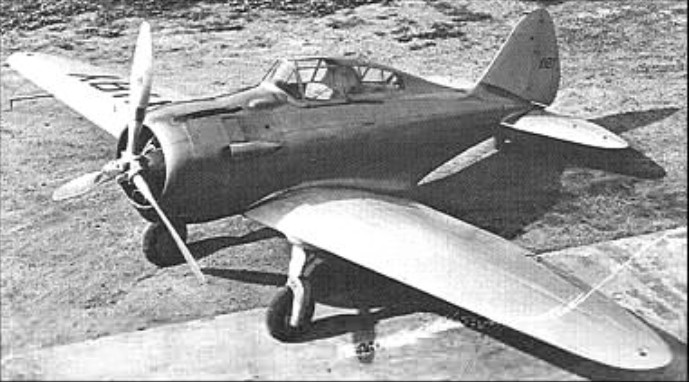
The SEV-2XP with an 800hp Wright XR-1670 engine, was damaged enroute to Wright Field and hurriedly converted into the single-place SEV-1XP with an 850hp Wright R-1820-G4 Cyclone engine
First flying as the NX18Y c/n 2 still, in August 1935 piloted by de Seversky, the SEV-1XP initially retained the R-1670 engine. By now featuring a semi-retractable undercarriage, the prototype was reengined with an ungeared nine-cylinder Wright R-1820 Cyclone. This engine failed to produce its rated power, however, the predicted 483km/h maximum speed proving unobtainable in consequence.
The USAAC Materiel Division’s decision to defer fighter choice pending further evaluation to be held in March 1936 enabled the SEV-1XP to be re-engined once more, this time with an 850hp 14-cylinder Pratt & Whitney R-1830-9 Twin Wasp. This was succeeded, in turn, by a geared R-1820-G5 offering 950hp for take-off, but the Twin Wasp was subsequently re-installed.
With this last engine and an armament of one 7.62mm and one 12.7mm gun, the SEV-1XP was selected on 16 June 1936, approval being given for production of 77 fighters against a contract confirmed early in 1937, with the designation P-35.
Repowered with a P&W R-1830B as the SEV-S1, and with a new tail and cowling, NX18Y raced at the 1935 Nationals, piloted by Frank Sinclair) to fourth place.
It was scrapped in 1937.
Sev-1XP
Engine: 850hp Wright R-1820-G4 Cyclone
Wingspan: 10.97 m / 36 ft 0 in
Length: 7.59 m / 25 ft 11 in
Height: 2.69 m / 9 ft 10 in
Wing area: 20.44 sq.m / 220.01 sq ft
Max take-off weight: 2274 kg / 5013 lb
Empty weight: 1681 kg / 3706 lb
Max. speed: 465 km/h / 289 mph
Range: 1918 km / 1192 miles
Seats: 1
Sev-1XP
Engine: P&W R-1830B
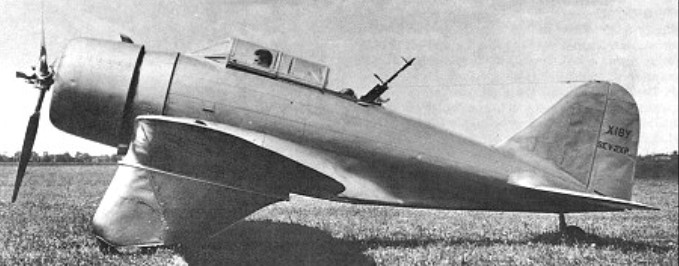
The SEV-2XP (the designation indicating 2-seat experimental Pursuit) designed by Alexander Kartveli was a derivative of the first product of the Seversky Aircraft Corporation, the commercial SEV-3 three-seat monoplane.
An all-metal semi-monocoque aircraft with a fixed spatted undercarriage, the SEV-2XP NX18Y c/n 2 was flown in May 1935 by pioted by de Seversky with the unsatisfactory Wright R-1670 14-cylinder radial offering 735hp for take-off. Provision was made for an armament of two synchronised machine guns, one of 7.62mm and the other of 12.7mm, and one 7.62mm gun on a flexible mount in the rear cockpit.
The USAAC Material Division initiated a contest for a new single-seat fighter. Maj Alexander P de Seversky, believing the SEV-2XP capable of out-performing any single-seat fighter, entered this aircraft as a contender. In the event, the SEV-2XP was damaged in an accident on 18 June while en route to the contest. It was then returned to the manufacturer and reworked as the single-seat SEV-1XP.
Engine: 800hp Wright XR-1670
Max take-off weight: 2404 kg / 5300 lb
Empty weight: 1633 kg / 3600 lb
Wingspan: 10.97 m / 36 ft 0 in
Length: 7.49 m / 25 ft 7 in
Height: 2.62 m / 9 ft 7 in
Wing area: 20.44 sq.m / 220.01 sq ft
Max. speed: 441 km/h / 274 mph
Range: 1529 km / 950 miles
Seats: 2

