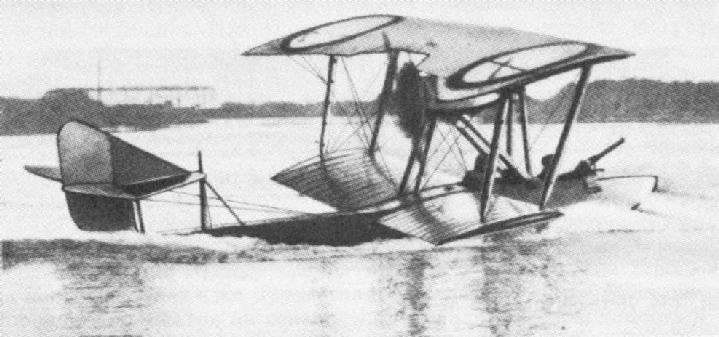
Shchetinin M-11 / M-12 / Grigorovich M-11 Rosja / M-12

M-11

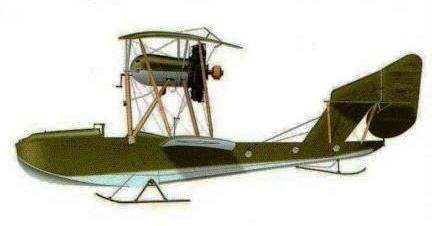
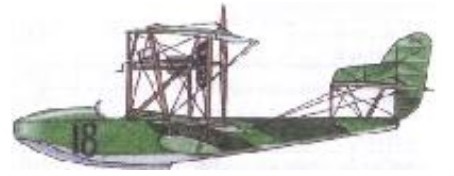
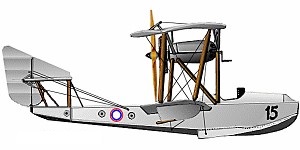
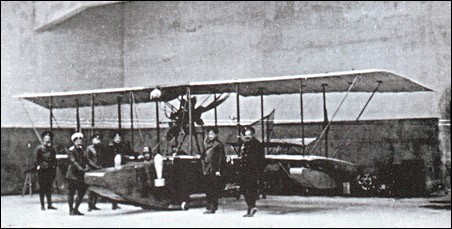
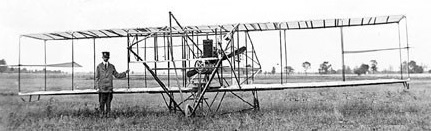
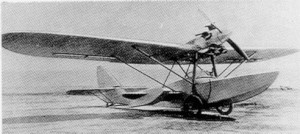
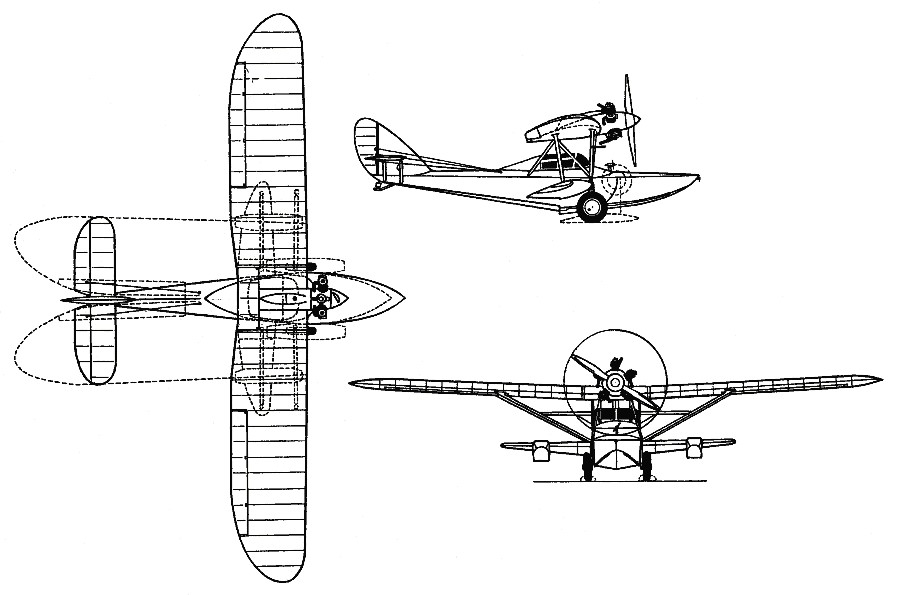
The Grigorovich M-11 (or Shchetinin M-11 (Russian: Григорович М-11)) was a Russian single-seat fighter flying boat designed by Dmitry Pavlovich Grigorovich and built by Shchetinin.

Actually. three flying boat models known as M-11 and M-12 were covered under this designation, but this differentiation was applicable only by the PRTV factory and in the Baltic. The examples in service in the Black Sea, regardless of the model, were designated M-11.

With the course of the War and especially in the Baltic theatre the M-9 flying boats began to be highly vulnerable to attacks by German fighters, generally faster and well armed. Under these conditions it was necessary to carry out the missions with the escort of fighter planes. Land-based Nieuport-17 and Nieuport-21 models were originally used for these roles, but the Navy wanted to have a seaplane capable of performing these roles.

Two-seater flying boats armed with machine guns could not be defined as a fighter in the full sense of this term. It was necessary to develop the idea of the single-seat high-speed flying boat armed with a machine gun, so very soon Grigorovich would decide to build the single-seat version, intended to serve as an armed escort for the M-9.

The M-11 was conceived as a single-engine flying boat with a biplane wing structure. The experience of the company’s engineers obtained during the construction of the M-10 showed that the increase in point wing loading had a positive influence on performance, so the M-11 was conceived with dimensions considerably smaller than those of the previous models of the company.

In general, the structural and construction characteristics of the model differed little from the rest of the company’s M, but the M-11 presented very clean lines that were pleasing to the eye. The boat’s hull had little taper towards the keel and was generally similar to that used on the M-9.

The biplane wing box had some sagging (about 5º) and was made up of two upper planes with the ailerons and two lower planes, with different wingspans and a certain offset. The upper wing had an Eifel-32 profile and the lower Eifel-36. Both profiles had to allow excellent stability at angles of attack from 3 to 11º. The bracing was done by means of cables. As a notable difference with previous models, the stabilization floats were fixed to the wing structure but without separation from the skin.

The control surfaces consisted of these ailerons, the two elevators and the rudder, attached to a tail with a keel and small-area stabilizers. Originally the keel was installed just above the tailplanes, but with the introduction of skis and seeking to increase stability, the area of the keel below the stabilizers was increased.

Originally the M-11 was conceived as having a 100 hp Gnôme Monosoupape engine, but later a 110 hp Le Rhône would be installed, in both cases driving a two-bladed wooden propeller. A distinctive feature of the M-11 was the egg-shaped engine hood, designed with a view to reducing aerodynamic drag. This hood also covered the small direct feed fuel tank and oil reservoir.

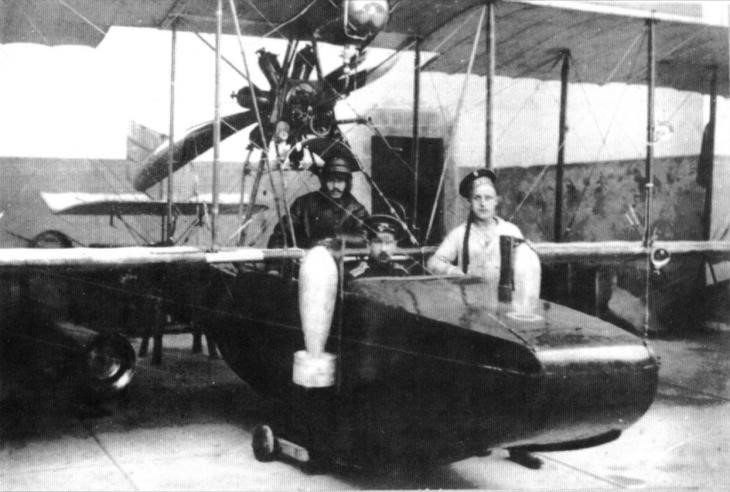
The M-11 single-seat fighter was armed with a fixed machine gun and featured armor for the first time. In the front area of the engine, this armor consisted of a 4-5 mm steel disc located fixed to the center of the hood. A 6mm steel plate was placed in front of the pilot and instead of the windshield a detachable armor shield with lattices was installed to ensure forward visibility. The leading edge of the wing supports featured 2-3 mm steel sheets. The machine gun was located on the deck of the bow section of the flying boat, in front of the cabin and was covered by a plywood fairing.

It is interesting that Shavrov defines that: “sometimes in front of the pilot two 4 mm steel sheets were located at a distance of 25 mm from each other. In one case, a 2-mirror periscope was even placed at the exit of the lattice-type peephole.”

According to AO Alexandrov Shavrov surely confused the aiming collimator designed by the sailor Musinyants, which was tested in the summer of 1917, with a periscope.

The first M-11 prototype rolled out in July 1916 and shortly thereafter it was presented to the naval authorities. It was powered by a 100 hp Gnôme Monosoupape engine installed on a mounting frame under the upper wing. The first flight took place on August 9, 1916.

In the series models, the power plant was improved by introducing a 110 hp Le Rhône. This, together with the weight reduction, gave the model excellent performance. Until the second half of 1916 the M-11 was the fastest flying boat in the world, with a speed close to 150 km/h. The pilots who tested the model valued it positively. Most of all they liked the armour.

After the tests, serial production was quickly organised. By November 1916, 12 flying boats had been delivered to the Baltic and 10 to the Black Sea. There were 60 of the M-11 single-seat production variant built.

Seeking to increase the versatility of the Grigorovich model, he decided to test the two-seater configuration. The new model was characterized by the location of its two crew in tandem, with the pilot’s seat in the rear position. The gunner-observer was located in the forward position.
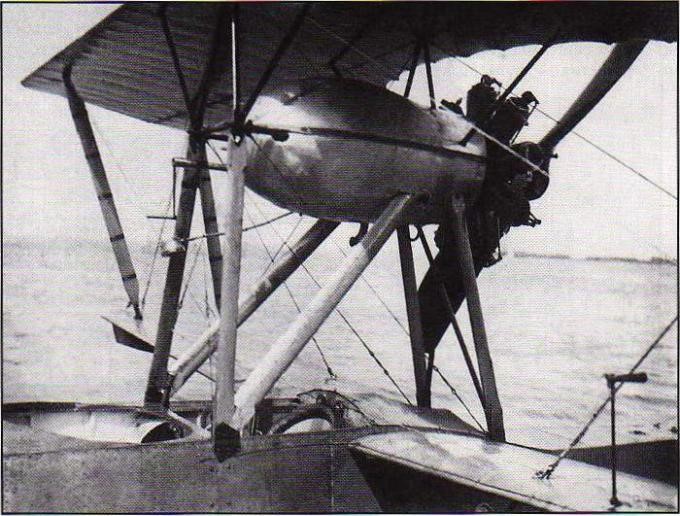
Crew and the power plant in the Grigorovich M-11.

These examples were produced with both powerplants (100 hp Gnôme Monosoupape and 110 hp Le Rhône). In some literature, the two-seater version with the first power plant is also named M-11, and the model with the second power plant is M-12. Other sources name both two-seater models as M-12, differentiating them by the power plant and the presence or absence of armour.

The tests were then carried out by pilot Alexandr Prokofiev-Severski (later a founder of the Seversky company). He initially flew with weight in the position of the second crew member, for a total load of 250 kg. The craft on eight occasions covered the distance of 1,500 meters, showing an average speed of 140 km/h. Later with a person in the front position it developed a speed of 135 km/h. The measured climb to 1000 meters was 9 minutes.

In November 1916 Prokofiev-Severski would write the “M-11 Hydrocanoe Regulation Manual” and in December he would project some skis for the M-11.

The features presented were considered satisfactory and in this state the Navy was in an uncomfortable situation, since it was difficult to define which of the models to choose (between the single-seat fighter and the two-seat fighter). On November 19, 1916 Dudorov would write on this subject to the Main Directorate of Shipbuilding:
“In view of the discussions held in relation to the quality of the single and two-seater models due to the impossibility of establishing an exact comparison, I request for the Baltic Fleet 50% single-seater fighters and 50% two-seaters of the request for motorized copies.”

On August 31 there would be an official request for 30 copies in two-seater configuration. It is interesting that the contract does not name the model, setting only the price of 11,000 rubles per unit and the technical requirements of climbing 1,000 m in 10 minutes. The power plant would be supplied by the Navy. According to Alexandrov, this lack of definition was used by Schetinin, who decided to deliver the M-12 two-seater models, with and without armour, under the same contract.

The excellent test results resulted in an original request for 30 examples of the two-seater model with the 100 hp Gnôme Monosoupape engine, to be followed by another 30 of the single-seat fighter version.
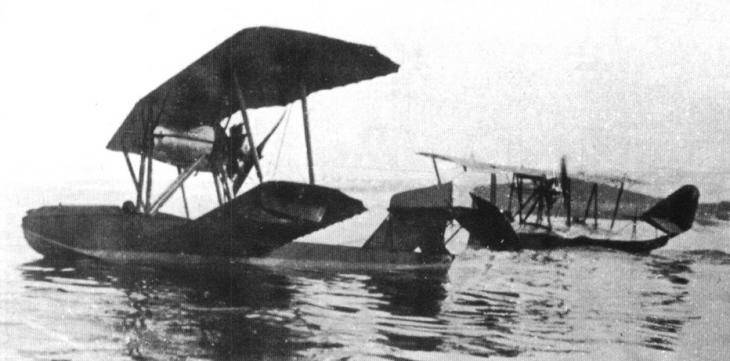
M-11 at the Baku Flight School.

In April 1917 a new contract was signed for the delivery of 100 copies. Serial production began on April 6 and by August 16 only the first 25 copies had been delivered. Since July 5, about 100 unfinished copies were on PRTV, but the Navy refused to accept them, considering them obsolete. By December 1917, 61 copies (with factory numbers 1316-1376) and 17 undelivered copies of the August and October 1916 contracts were kept in storage at the factory.

The production contracts were the following:

Contract date: August 31, 1916
Number of copies: 30
Serial numbers: 912, 913, 915-922, 924, 926, 927, 930-933, 935, 936, 939, 942-944, 946, 947, 952
Conditions: 11,000 rubles for each copy with a 100 hp Gnôme Monosoupape engine. Delivery scheduled for October 1, 1916. Partially fulfilled. 26 copies were delivered that were delivered by March 24, 1917.

Contract date: October 5, 1916
Number of copies: 30
Serial numbers: 914, 923, 925, 928, 934, 948-956, 958
Conditions: 12,500 rubles for each copy with a 110 hp Le Rhône engine. Delivery scheduled for December 1, 1916. Partially completed by March 8, 1917. Probably all single-seaters.

Contract date: November 24, 1916
Number of copies: 15
Conditions: 12300 rubles for each copy. copies for spare parts. Contract completed for May 30, 1917.

Contract date: April 6, 1917
Number of copies: 100
Conditions: Originally 100 aircraft with a 110 hp Le Rhône engine. By July 1, 1917, the contract provided for the delivery of 60 copies with a 125 hp Le Rhône engine.

Despite the initial good reception, the M-11 soon began to show problems. The seaworthy characteristics of both versions turned out to be rather doubtful. The achievement of a speed of 140 km/h was paid with a detriment of the behavior of the flying boat in the water. The takeoff could only be carried out in fairly calm seas and the right wing, due to the reactive moment of the propeller, tended to sink under water. In the air, the effect of the moment of the engine was also appreciated, which was felt in the piloting.

On March 23 in his report on fleet aviation Vice-Admiral AV Kolchak presented the opinions of the pilots that both the single-seat version and the two-seat version could only be flown from calm waters due to quality problems. The poor centering of the engine and the poor quality of the surface made the plane unstable in the air. Speeds of 130 – 140 km/h and climbing to 2,000 m in 15 – 20 minutes were considered unacceptable.

Around that date a document published by the Baltic Sea Air Division highlighted:
“Night flying demands great knowledge and is very difficult. This aircraft by virtue of its vertical and horizontal speed is intended to attack enemy aircraft in the area of their bases and for aerial combat. In extreme cases and depending on the location, the enemy can be pursued up to 25 miles. Fighting over enemy territory should be avoided due to low fuel reserves. The machine gun is fixed and in line with the longitudinal axis of the device, slightly raised. Compared to ground fighters, the M-11 aircraft is unable to fulfill its mission and for this reason these combats must be avoided.”

For these reasons, between September 1916 and May 1917, the Navy received only 61 copies of the M-11 from PRTV (despite having contracted 100 copies) in single-seater and two-seater versions with factory numbers 912-962 and 1068-1077.

Twenty-six examples were delivered to the Black Sea Fleet (15 in single-seat configuration, 7 in two-seat configuration and 4 of unspecified type. At least 11 single-seat M-11s, 5 two-seat M-11s and a number of the two-seat model served in the Baltic modified M-12 with Le Rhône engine.A single M-11 served with the branch of the Petrograd Naval Aviation School in Baku.This example, delivered in December 1916 , would be destroyed shortly after.

In naval service the M-11s were known as SchI (acronym for Schetinin Istrebitiel or Schetinin de Caza). The copies of the Black Sea carried continuous numbering starting from 1. In the Baltic they received registration OR (single-seater fighter) and IM (two-seater).

Generally, the M-11 was used in reconnaissance or bomber tasks. The great speed difference in relation to the M-9 and the lack of adequate tactics prevented its possible use as escort aircraft. The two-seaters built were intended to serve as transitional trainers to the armoured M-5 and M-9 models.

By mid-1917 only 15 M-11s were recorded in the Baltic and only 4 in the Black Sea. By the summer of that year the Navy had practically rejected the model. With the fall of the Russian Empire and the decline in military action, these small flying boats simply disappeared.
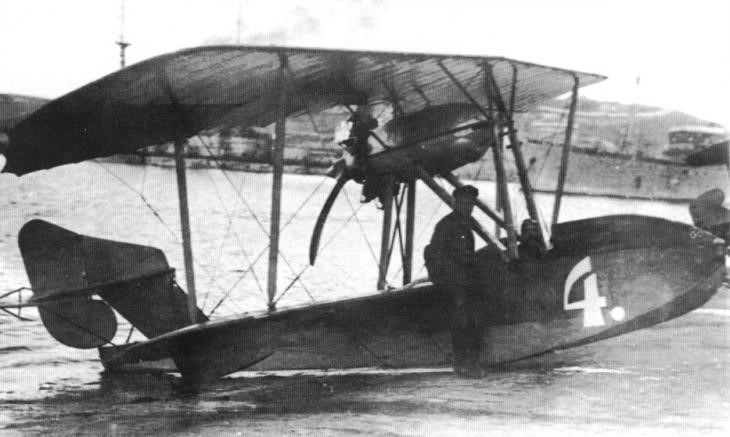
The most famous action of the M-11s took place on December 3, 1916. That day a flying boat, probably fleet number 4 and piloted by NA Ragozin, took off in response to an attack on Suin by a seaplane and a fighter. During the combat, the Russian pilot managed to shoot down the enemy fighter, which ended up falling into the sea. Upon landing, the Russian flying boat had 8 hits from enemy bullets. This was the only victorious dogfight documented in Black Sea Fleet records.

At the Third Naval Station in Rebel, an M-11 was fitted with skis and the underwing stabilization floats were removed. The goal was to be able to perform operations on ice and snow.

The test pilot took flight in this configuration in December 1916 and by January 25 the tests carried out were considered successful, so PRTV was asked to introduce this improvement in the serial production of the model.
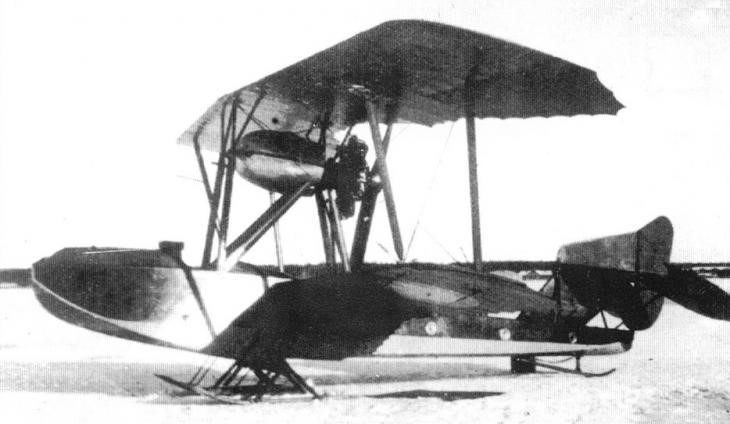
According to Shavrov the installation of the skis was very simple. A steel tube was passed from side to side through the hull, shortly before the area of the re-entry, which was attached to both sides. An axle was passed through this tube to which the skis were attached. A third small unit was located in the tail area.
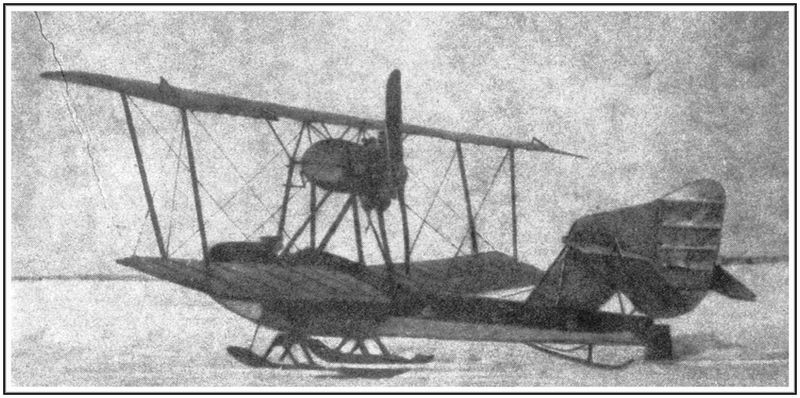
Documents from 1918 refer to an M-11bis that flew in Oranienbaum. Everything seems to indicate that it is a modified M-11 with a 110 hp Clerguet power plant. According to the opinions of the pilots, the model was inferior in performance to the M-17 with the same power plant.

Despite the increase in speed in relation to the previous flying boats, the characteristics presented by the M-11 flying boats were considered unsatisfactory. The limited radius of action, its poor seaworthiness and the difficulties in piloting weighed down the possibility of using the model. In August 1916 Grigorovich decided to start delivering a twin-engine version with a 110 hp Le Rhône engine that lacked armour.

The M-12 (Russian: Григорович М-12) version featured a redesigned forward hull section, in a laudable effort to improve its predecessor’s hydrodynamic qualities and lighter construction. The crew was located in tandem, with the pilot in the rear position and the gunner in the bow.
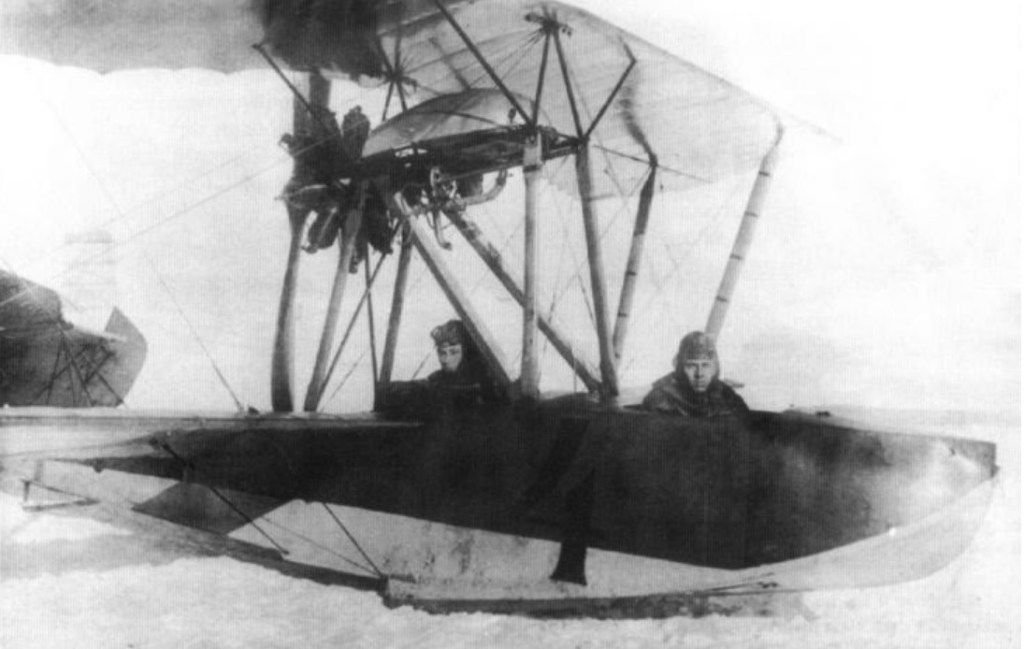
M-12

The tests were developed by Alexandr Prokofiev-Severski. Loaded weight was reduced by 56 kg and the draft was redesigned. Although the M-12 could climb to 1,000 m in 6 minutes (five minutes less than the M-11 used) and its service ceiling was also better, the maximum horizontal speed was lower by 8 km/h.

Consequently, only a few M-12s were built from the end of 1916, which were used primarily in the Baltic Sea Fleet. The few specimens that were used in the Black Sea kept the name M-11, so it is difficult to differentiate the details of their exploitation.

In some literature, the two-seater version with the 100 hp Gnôme Monosoupape power plant is also named M-11, and the model with the 110 hp Le Rhône power plant is M-12. Other sources name both two-seater models as M-12, differentiating them by the power plant and the presence or absence of armour.

М-11 single-seat version
Powerplant: 1 x Le Rhône, 82 kW (110 hp)
Wingspan: 8.75 m (28 ft 8½ in)
Wing area: 279.87 ft² (26 m²)
Length: 7.60 m (24 ft 11¼ in)
Height: 3.12m
Rudder surface: 0.84 m²
Empty weight: 676 kg (1490 lb)
Gross weight: 926 kg (2041 lb)
Payload Capacity: 140kg
Wing loading: 35.5 kg/m²
Power Load: 8.4kg/hp
Top speed: 130 – 148km/h
ROC: 91m/min
Time to 1000m: 5 – 7min
Time to 2000m: 12 – 17min
Endurance: 2.7 hours
Practical ceiling: 3000 m
Accommodation: 1
Armament: 1 fixed forward-firing 7.62mm Vickers or Maxim machine gun.
Bombload: 15 kg

М-11 two-seat version
Powerplant: 1 x 100 hp Gnôme Monosoupape
Wingspan: 8.75 m (28 ft 8½ in)
Wing area: 279.87 ft² (26 m²)
Length: 7.60 m (24 ft 11¼ in)
Height: 3.12m
Empty weight: 665kg
Normal takeoff weight: 915 kg
Fuel + oil capacity: 90 kg
Total Payload Capacity: 250kg
Wing loading: 35.0 kg/m²
Power load: 9.1 kg/hp
Top speed: 148 km/h (92 mph)
Practical ceiling: 3000 m
Endurance: 2.7 hours
Accommodation: 2
Armament: 1 fixed forward-firing 7.62mm Vickers or Maxim machine gun.
Bombload: 15 kg

М-12
Engine: Le Rhône, 110 hp
Wingspan: 8.75 m
Wing area: 26.00 m²
Length: 7.60 m
Height: 3.12 m
Empty weight: 620 kg
Normal takeoff weight: 870 kg
Fuel weight: 106 kg
Total load capacity: kg 250
Wing loading: 33.5 kg/m²
Power load: 8.0 kg/hp
Maximum speed: 140 km/h
Max ROC: 167 m/min
Practical ceiling: 4000 m
Time to 1000m: 6.0min
Time to 2000m: 12.0min
Endurance: 2.7 hr
Armament: 1 x 7.62 mm Lewis machine gun
Accommodation: 2
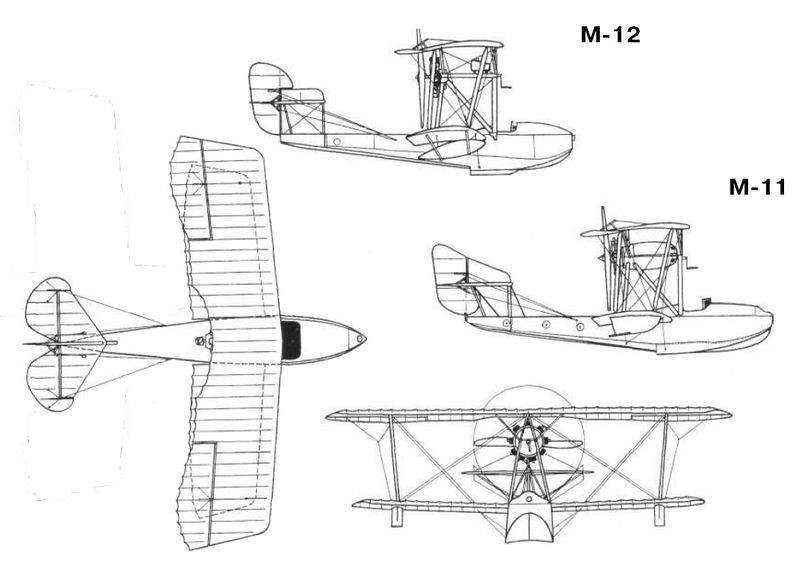
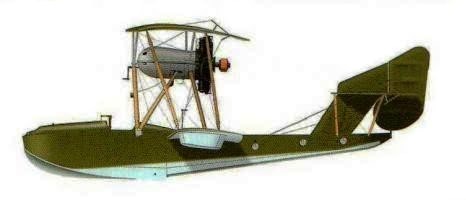
Grigorovich M-11 two-seat trainer
Single-seater hydrocanoe M-11 with skis.
M-12
Grigorovich M-11 – 1916
Grigorovich M-12 – 1916

Shchetinin M-1 / Sch-1 / Grigorovich M-1

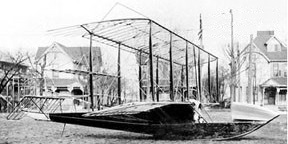
In the summer of 1913 at the Schetinin factory the first work with seaplanes began. Between 1912 and 1913 the Baltic Sea Aviation acquired a number of French Donnet-Lévêque flying boats. On July 25, 1913, the naval pilot von Litgard, belonging to the experimental station directed by the second-rank captain DN Alexandrov, had an accident in one of them.

Taking into account that the flight had been carried out without completing some formalities, the pilot decided to repair the plane at his own expense. The specialists of the RBVZ (Rusko-Baltiski Vagonni Zavod or Russo-Baltic Wagon Factory) valued the repairs at 6,500 rubles, and at the newly opened Lievediev factory the price reached 6,000 rubles, which at the time was a considerable amount of money, which was not within the reach of a fleet officer.

In view of this von Litgard decided to try the Schetinin factory. Grigorovich, advised by the head of the factory drawings bureau Andrei Nikolayevich Sidielnikov, convinced Schetinin, who decided to take over the repair at his factory for the symbolic sum of 400 rubles. In the repair process, Grigorovich was able to carry out an in-depth study of the construction of the aircaft and practically all the pieces were copied. The hull coating was replaced in just 10 days. The plane was able to operate satisfactorily, the pilot managed to repair the plane cheaply, his boss Alexandrov avoided a reprimand, and Grigorovich obtained the necessary information to create the foundations for his future career as a naval aircraft construction specialist.

The plans obtained from the copy of the parts and pieces of the Donnet-Lévêque boat allowed Schetinin to present to the Navy in September 1913 his willingness to build a new model and on the 24th of that month the State Naval Major General asked the commander of the port of St. Petersburg to sign the official request for a seaplane with a Gnôme engine of 80 hp. According to the contract signed on October 23, the entire project was initially valued at 9,000 rubles (later increased by another 300 rubles). 50% of the requested amount would be paid after the tests of the Gnôme engine in Moscow or in Paris, 25% after the inspection of the production process by representatives of the fleet and the rest upon delivery of the airplane. The work was to be completed by December 23 with the possibility of testing the model in May 1914 due to winter. Finally, a point in the contract established that the engine and the flying boat would remain at the disposal of the manufacturer and the Navy, respectively, in the event that the tests were considered unsuccessful. The new design was called M-1 Sea-first (Russian: Григорович М-1).

As requirements, the ability to climb to 300 meters in less than 10 minutes during a 30-minute flight and glide to 100 meters during another 15-minute interval was established.

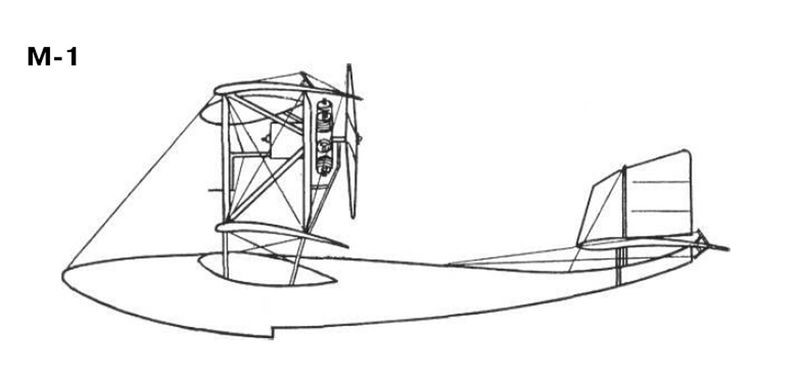
Despite having been based on the French Donnet-Lévêque , the M-1 introduced some appreciable differences. It was shortened by about a meter and its nose became sharper. The bottom was flat, becoming rounded near the recess, and behind it sharpened slightly. The height of the huts in the area of the rediente reached 200 mm.
The M-1 had a hull with stringers made of ash and frames of ash and basswood covered in 3 mm thick birch plywood on the upper part of the bow and the rails of the tail section and 5 mm on the rest of the body. helmet. The bottom of the hull had a double layer of 5 mm and three layers at the back. The coating was fixed using yellow copper lag screws.

The entire boat was divided into 6 watertight compartments, of which the second and third were the cabins for the pilot and his passenger. The entire interior of the hull was tarred and the crew seat was painted grey.

The airfoil was modified to bring it closer to that used by the Farman XVI, which was produced at the Schetinin factory, but the biplane box shape and wing area were retained. Plans featured unequal spans and four pairs of parallel uprights on each side constructed of American pine braced by tension cables. The wing spars were made of basswood and pine. The trunk-like nerves of the alar root of ash and the intermediate nerves of linden. The entire wing covering was cloth with three layers of “Novavia” paint.

The wing box was located on the hull, fixed to its structure by means of triple 160 mm long supports made of welded steel tubes. In the intrados of the lower plane, the stabilization floats were located, made of wood with quite flat shapes. The control surfaces consisted of two fabric-covered wooden fins.

The tail unit, monoplane type, was also located separated from the hull structure by means of tubular supports and featured strong cable bracing. The stabilizers and the empennage were made of ash wood and covered with fabric.

The power plant selected was the French Gnôme engine fixed to the structure of the upper plane and with a manual starting system from the Bosh firm. BV Shavrov in his work “Aeronautical construction in the USSR until 1938” defines the power of the engine at 50 hp, but more recent research has established that it was a Gnôme of 80 hp. This engine had a two-bladed wooden Shower propeller which had a diameter close to 2.60 meters. The fuel system consisted of two 50-litre tanks within the hull structure and a small 20-litre tank fixed to the upper midplane. The oil tank had a capacity of 35 liters and was made of 0.7 mm brass.

The pilot was located in an open cabin at the bow and a little further back the capacity to transport a passenger was installed.

Some photos taken at the “Kilkond Station” naval base in September 1914 show two bombs located on the rails, on the sides of the cabin, which presupposes a premature attempt to interest the naval forces in the military development of the model for observation and bombing.

The construction of the flying boat was assigned to DP Grigorovich, who served as technical director of the factory. By December 18, 1913, the first copy was completed, designated M-1, an acronym for Morskoi (Naval) -1. Factory tests started on June 1, 1914.

On June 6, 1914, after carrying out several flights at the First Naval Aviation Station in Libava (Liepāja), Latvia, with the pilot II Kulniev at the controls, the plane was officially registered in the list of military assets under the Sch-1 designation (relating its origin to the Schetinin factory). For this purpose, a reception commission was sent there. During the test flights in a flight of 32 minutes, 600 meters of height were reached. The 300 meters were reached in 10 minutes. Before being officially named Sch-1, the model was known simply as Donnet-Lévêque No.1 and the military designated it with the code “B”.

The flying boat M-1 showed acceptable flight qualities, but it was clear that the model needed revisions and improvements in order to improve its performance. Among the outstanding deficiencies, which were already stated at a meeting of the Aviation Committee of the Baltic Fleet, held on May 6, the following were highlighted:
Problems with the stabilizer;
Powerplant location too far back;
Engine reliability problems that required constant repairs;
Dangerous gliding at heights greater than 100 meters;
Lack of hull rigidity.

For these reasons the Sch-1 was used as a training flying boat.

When Germany declared war on Russia on July 19, 1914 , the Naval Fleet Aviation (AVMF) had only four aircraft: two Sikorski S-10 , the Schetinin Sch-1 and a Donnet-Lévêque (under repairs for the month of August according to the report No.425 of the Naval General Staff of August 13, 1914).

To increase the number of units, the Navy decided to increase requests to Russian factories. Schetinin received a request to build 4 copies of the M-1. However, in the naval ministry they already knew about the work of DP Grigorovich with a view to improving this model, so the request was finally withdrawn and the M-1 ended up being a unique example.

The M-1 (Sch-1) remained on the military register until December 2, 1914, when it was destroyed in a flight by Lieutenant A.A. Tuchkov, chief of the Aeronautical Department of the General Staff at the Second Kilkond Naval Station ( Ezel Island). During the landing with a headwind and after making a turn, the aircraft lost speed, began to fall touching the ground with the tip of the upper right wing. The plane hit the ground and ended up hull up, destroying the wing box. The pilot managed to get out alive despite suffering several injuries. It was decided not to restore the airplane.

М-1
Engine: 1 × Gnome, 37 kW (50 hp)
Upper wing span: 10.28 m
Lower wingspan: 7.04 m
Length: 7.96m
Hull length: 7.41m
Height: approx. 3m
Wing area: 26.90 m²
Stabilizer surface: approx. 2.96 m²
Empty weight: 420 kg (926 lb)
Gross weight: 620 kg (1,367 lb)
Power Load: 12.4kg/hp
Payload capacity: 230-260 kg (175 kg + fuel + oil)
Top speed: 90km/h
Cruising speed: 68km/h
Practical range: 100 km
Time to 300 m: 10 minutes
Accommodation: 2

Shaw Twin-Ez

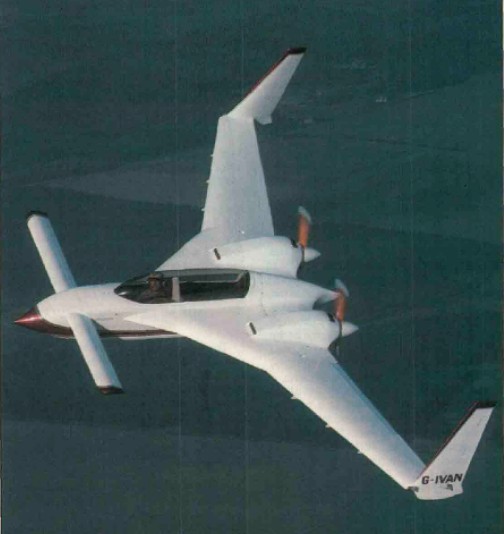
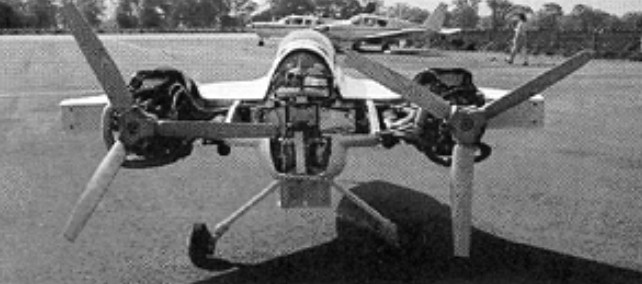
Built by Ivan Shaw, Barnsley, South Yorkshire, England. G-IVAN began in 1980 as a VariEze and completed in 1981, was later converted to a Long-EZ, and then to a twin engined pusher (first flight 29 June 1989). The main undercarriage gear retracts into the fuselage where the O-200 used to fit.

The Twin-EZ was developed and built by Mr. Ivan Shaw, a British science school teacher. The Twin-EZ started life as a homebuilt Rutan VariEze certified in 1978. When Shaw considered transforming his aircraft into a twin-pusher (initially referred to as the Twin Speed) in 1981, he planned to use two 50 hp Lotus rotary engines. According to him, twin pusher engines and a retractable undercarriage should boost the Long-EZ’s cruise speed to 200 m.p.h. and increase range to 2,000 n.m., offering 50 m.p.g. fuel economy. Shaw, a self-confessed “eyeball engineer” who aimed to fly his home-built late in 1985 when a pair of Lotus microlight engines would become available.

Shaw claimed a pair of 50 h.p. Lotus engines weighed 701 lb. less than either of the other units and burned 20 per cent less fuel. He built a bracket which allowed the pair to be attached to the standard engine mount on the rear fuselage, each engine sitting just 31 in. from the fuselage centre line. Electrical systems could be run from either engine, offering “complete redundancy”.

Shaw’s other modification was to fit a fully retractable undercarriage. This carried a 301 lb. weight penalty over the fixed undercarriage, but reduced drag and so offered the prospect of the major speed increase Shaw was predicting. Empty weight was predicted to be 800 lb. and the first flight was to be made within six weeks of engine delivery.

However, development of the Lotus engine type was stopped, and therefore none was ever installed on the Twin-EZ. For Shaw, who had worked with Lotus and Rutan on the Microlight aircraft, Colin Chapman’s untimely death also signified the end of all aviation activity for Lotus, engines included. As a result Shaw decided to modify the aircraft with larger Long-EZ wings to accommodate two 77 hp Hewland HAE75 three-cylinder two-stroke reciprocating engines, installed in a pusher configuration. In this form, the Twin-EZ was first flown on June 29, 1989, and was demonstrated days later at the UK Popular Flying Association’s annual rally at Cranfield Airport.

The Twin-EZ was soon used as test-bed for the Norton-Wankle NR642 rotary engines, each unit being mounted pusher-style at the wing trailing edge. The Norton rotary engine had already been tested in 1987 in an Aviation Composites Mercury, a local derivative of the Microlight developed at Scaled Composites. The advantages of the rotary Norton over the Hewland engine were said to be a lengthy overhaul interval and increased power. The Norton engine developed 90 h.p. compared with the Hewland’s 75 h.p., and was claimed to be extremely light for its power output owing to constructional simplicity.

At Gamston in the 1980’s Ivan Shaw was air testing the twin conversion and it was damaged whilst stored there.

Ownership later changed to Anthony Malcolm Aldridge of Crostwight, North Walsham, and the aircraft was stored.

Type: twin-pusher two-seat sportsplane
Engines: 2 x Hewland HAE75, 77 hp
2 x 90 hp Norton rotary
MTOW: 499kg
Cruise speed: 280 mph
Vmca: 57 kt
Serial No: c/n 39; s/n PFA 074-10502
Crew/passengers: 2

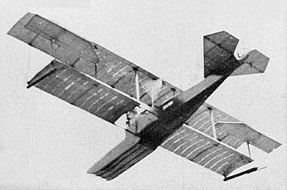
Shaw 1915 Flying Boat

A sportplane, the Shaw flying boat was rather different from other American flying boats in design, as well as construction. Typical was the very short fuselage of the hull, formed as a gliding airfoil, but in its bow was a three-cylinder, two-stroke, water-cooled, 90hp Johnson covered with an aluminium top. Just behind the motor was the radiator, and behind that two tandem cockpits with dual-controls, then the pusher prop operated by a long shaft and chain.

Wings were linen-covered wooden frames with two spars, the front one of which as a layer of ash between two layers of spruce. Leading edges were made of five layers, four spruce and one ash, all secured by steel wire. Wood struts had a streamlined cross-section and were made from three layers of ash and two of spruce. Only the upper wing had ailerons.

Tail section was rather compact and set at an angle to avoid trailing in the water. The lifting tailplane had an elevator in two parts, a stabilizer in three parts, and a balanced rudder. All were covered with linen. Both the lower wings and the tail section were attached to the fuselage with steel pipes, and on both sides of the fuselage a section of the lower wing was uncovered to provide a handy downward view.

Fuselage was an ash and spruce frame covered with mahogany three-ply having a center layer of linen, and the deck’s bow was covered with linen. Fuselage length was about 6 meters and had a hollow V-bottom with one step. Behind that step the bottom was flat.

Shavrov SH-1 / SH-2

The Shavrov Sh-2 was developed from the small amphibian Sh-1 prototype design and performed its first flight on November 11, 1930, made from land. The Sh-1 remained a prototype.

The first Soviet mass-produced flying boat, the small, wooden Shavrov Sh-2 was a development of the Sh-1, with a more powerful engine and increased size.

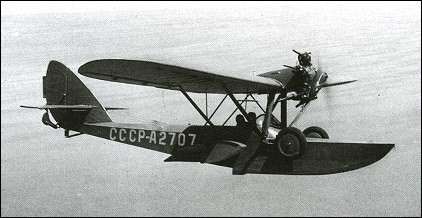
The Sh-2 could carry two crew members as well as one passenger and during wintertime, the aircraft could be equipped with skis. The small lower wing served as attachment for the stabilizing floats. It was a light, simple and reliable design.

The Sh-2 passed State Acceptance trials for operation from water and land on June 12–17, 1934, without problems. Series productions was initiated on 1 April 1934, and ended two years later. However, due to its successful design and the popularity among its pilots, production was restarted in 1939. Total production was up to at least 700 aircraft, several hundred of those being built after 1939, possibly up to 1950.

The Sh-2 served throughout the Soviet Union as a utility transport, for liaison, and as a trainer, and for many years was used on fishery protection duties and frontier patrol work. They supported Arctic operations.

Sixteen were built under the designation Sh-2S as air ambulances carrying one or two stretcher patients.

In 1939 Aeroflot built additional Sh-2s from available spares and later the type was reinstated in production. As well as use for the civil roles indicated, the Sh-2 was flown by the V-VS as a general-purpose aircraft.

A number of later machines had a glazed crew cabin and other refinements, becoming redesignated Sh-2bis most had improved M-11L engines.

The aircraft was in service until 1964 and set a number of records among flying boats and seaplanes.

On 28 August 1942, the Finns captured two Sh-2s and pressed them into service in the liaison role, as well as carrying the Commander of the Finnish Air Force, until 1944.

One plane was constructed by cadets of Egorevsky aviation school of civil aircraft in the USSR, under the direction of teachers, during 1984-86. The plane was sold and delivered to the USA in the 1990s.

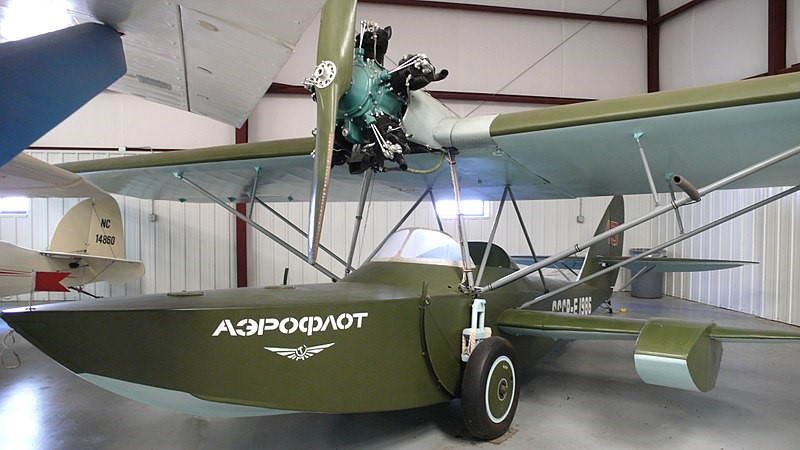
Shavrov Sh-2, at the Historic Aircraft Restoration Museum, Maryland Heights, Missouri, USA.

Shavrov SH-2
Engine: 1 × Shvetsov M-11A, 75 kW (100 hp)
Propeller: 2-bladed fixed-pitch
Wingspan upper: 13.0 m / 42 ft 8 in
Wingspan lower: 5.4 m / 17 ft 9 in
Wing area: 24.75 m² / 266 ft²
Length: 8.20 m (26 ft 11 in)
Height: 2.80 m (9 ft 2 in)
Empty weight: 680 kg (1,500 lb)
Max. takeoff weight: 937 kg / 2,065 lb Payload: 257 kg (567 lb)
Maximum speed: 140 km/h (87 mph, 76 kn)
Range: 400 km (250 mi, 220 nmi)
Service ceiling: 3,500 m (11,500 ft)
Crew: 1 pilot
Capacity 2 passengers / 257 kg / 567 lb

Sharp Tartan

Tartan/Nimrod

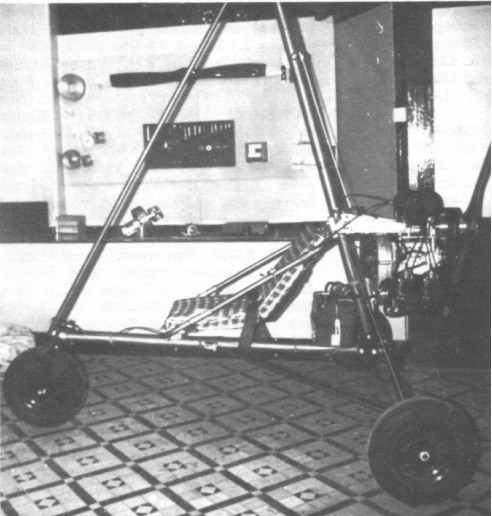
Single seat single engined flex wing aircraft with weight shift control. Rogallo wing with keel pocket. Pilot suspended below wing in trike unit, using bar to control pitch and yaw/roll by altering relative positions of trike unit and wing. Wing braced from above by kingpost and cables, from below by cables; floating cross tube construction with 70% double surface. Undercarriage has three wheels in tricycle formation; no suspension on any wheels. Push right go left nosewheel steering independent from yaw control. No brakes. Aluminium tube trike unit, with optional pod. Engine mounted below wing driving pusher propeller.

By 1982 four Tartan trike units have been made; three with 330 cc Robin engines and one with a 250.

The Tartan, so named because of its distinctive seat covering, is most commonly flown with an Airwave Nimrod wing and was largely inspired by the Ultrasports Tripacer. It is a beefier structure using heavier gauge tube, a cast engine bearer and solid plastic tubing inserts, to prevent bolts crushing the tubing.

While the Tartan is a thoroughly conventional trike unit, a high proportion is made in house not just the tubework but also the engine bearers, propeller, silencer and reduction drive.

Engine: Robin EC34PM
Propeller diameter and pitch 54×30 inch, 1.37×0.76m
Toothed belt reduction, ratio 2.3/1
Fuel capacity 2.4 US gal, 2.0 Imp gal, 9.1 litre
Length overall 11.8ft, 3.60m
Wing span 32.8ft, 10.0m
Nose angle 120 deg
Total wing area 165 sq.ft, 15.3 sq.m
Wing aspect ratio 6.5/1
Nosewheel diameter overall 16 inch, 41 cm
Main wheels diameter overall 16 inch, 41 cm
Max climb rate at sea level 650 ft/min, 13 m/s

Engine: Robin EC25PS
Propeller diameter and pitch 54×27 inch, 1.37×0.69m
Toothed belt reduction, ratio 2.3/1
Fuel capacity 2.4 US gal, 2.0 Imp gal, 9.1 litre
Length overall 11.8ft, 3.60m
Wing span 32.8ft, 10.0m
Nose angle 120 deg
Total wing area 165 sq.ft, 15.3 sq.m
Wing aspect ratio 6.5/1
Nosewheel diameter overall 16 inch, 41 cm
Main wheels diameter overall 16 inch, 41 cm

Sharp DR90 Nemesis

The Nemesis originated as an attempt by Jon Sharp to build a Shoestring racer, with composite skins over a steel frame. Along the way, Dan Bond convinced him to use an airfoil with extensive laminar flow and finally, Steve Ericson helped Jon design a sleeker, all composite airframe. All that remains of the original “plastic Shoestring” is the horizontal tail. The steel space frame was sold to Dan Gilbert and became the guts of his Shadow Formula One air racer. Although Shadow looks much like Nemesis it is fabricated differently and has a completely different wing.

The Formula One racing Sharp DR 90 Nemesis was built at the Mojave Airport by the Nemesis Air Racing Team. The aircraft is powered by a modified Continental O-200 piston engine.

Between 1991 and 1999, the plane won 45 of the 48 race events in which it was entered, including nine consecutive Reno Gold National Championships. During each of the race seasons from 1994 through 1999, Nemesis finished as the International Formula One points champion. Nemesis was awarded the George Owl Trophy for its design in 1991, three Louis Blèriot Medals from the Fédération Aéronautique Internationale (1993, 1996 and 1998), and four Pulitzer Trophies (1993, 1994, 1995 and 1999). The aircraft set 16 world speed records, and in one of those records, Nemesis was clocked at over 290 mph (467 km/h). Because of its successes, the National Air and Space Museum has described the plane as “the most successful aircraft in air racing history”.

After the end of the 1999 racing season, Jon Sharp donated the aircraft to the National Air and Space Museum and it is now on display at the NASM’s Steven F. Udvar-Hazy Center.

The success of the aircraft led Jon Sharp to design a follow-on type, the Nemesis NXT.

Variant: Rolls-Royce ACCEL

Engine: 1 × Continental O-200, 100 hp
Wingspan: 20 ft 6 in (6.25 m)
Wing area: 66 ft2 (6.13 m2)
Length: 18 ft 6 in (5.64 m)
Height: 3 ft 4 in (1.02 m)
Empty weight: 520 lb (236 kg)
Loaded weight: 770 lb (350 kg)
Fuel capacity: 5 US gal (18.9 liters)
Maximum speed: 292 mph (470km/h)
Stall speed: 90 Kias (167 km/h)
Crew: 1
G-Loading limits: +6, -4
Cabin height: 35 in (89 cm)

Shapley Kittiwake

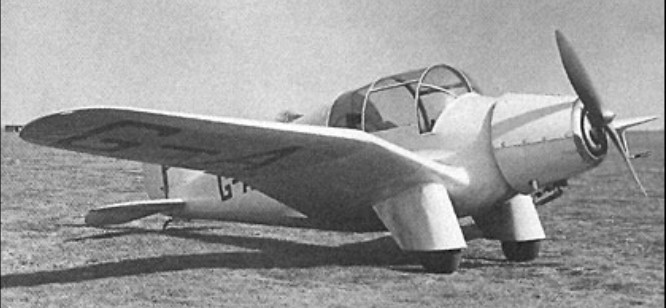
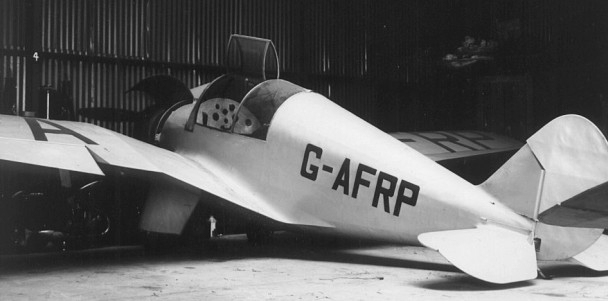
Designed and built by Errol Spencer Shapley at Torquay, Devon, the Kittiwake was a two-seat monoplane with a gull wing and a fixed landing gear. The first aircraft, a Mark 1 registered G-AEZN (c/n ESS.1), with an open cockpit was powered by a 50 hp (37 kW) Continental A50 piston engine and first flown at Roborough in 1937. A Captain F Symodson was the test pilot. The second aircraft, a Mark 2 registered G-AFRP (c/n ESS.2), was a cabin monoplane powered by a 90 hp (67 kW) Pobjoy Niagara III engine and first flown at Roborough in 1938.

The Mark 1 aircraft was dismantled before the Second World War. The Mark 2 was stored during the war only to crash on Dartmoor in December 1946.

Kittiwake Mark 2
Engine: 1 × Pobjoy Niagara III, 90 hp (67 kW)
Wingspan: 32 ft 0 in (9.76 m)
Length: 20 ft 10 in (6.35 m)
Empty weight: 901 lb (409 kg)
Gross weight: 1600 lb (726 kg)
Cruise speed: 110 mph (176 km/h)
Crew: 1
Capacity: 1