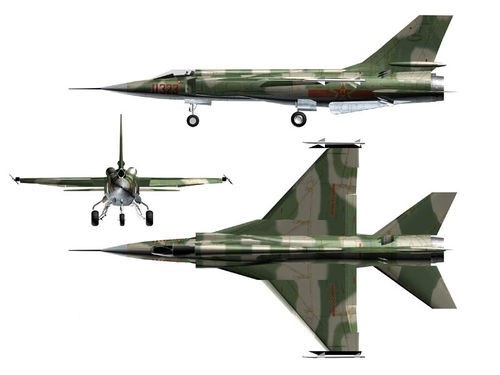
In the early 1970s, Shenyang began looking into the development of a new fighter to replace their J-6/MiG-19s. When, in 1974, the PLAAF proposed the development of a new lightweight fighter with a top speed of Mach 2, Shenyang began serious design work, testing several wing configurations. The design that emerged had side-mounted intakes and a double-delta wing. While as early as 1976 Shenyang had finalized the design and was looking into the avionics and materials to be used in the aircraft, it was still without an engine. Plans called for the Rolls-Royce Spey derived WS-9 engine to be used, but when the engine finally emerged in 1980, it proved unsuitable for a single-engined fighter. In the late 1970s, the Chinese had got their hands on an Egyptian MiG-23MS complete with its Tumansky R-29 turbojet, which was hastily copied. However, when the new engine proved to be underperforming, the project was once again delayed. Further issues came in 1981 when the success of the J-8 caused the funding for the J-13 to be cut. Throughout the 80’s the project soldiered on with low priority, with new requirements emerging that called for the design to be competitive with the newest fourth generation fighters. Finally, the project was abandoned in the early 1990s as Chengdu’s J-10 proved to be more promising.
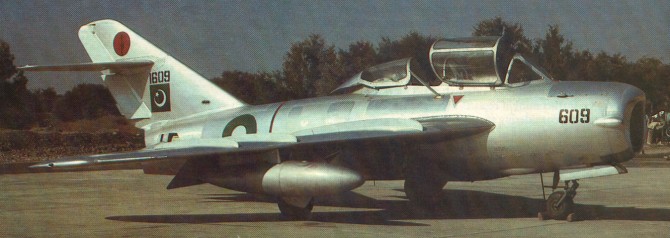
The Chinese developed two seat version of the MiG-17, built at Shenyang and designated the FT 5, emerged from complete obscurity. The FT 5 appears uniquely Chinese, in that no similar two seat conversion of the MiG 17 ever appeared in the Soviet Union.
The FT 5 is based on the two seat MiG-15UTI, or FT-2, built in very large numbers in both the USSR and the People’s Republic of China, and as a modification of the early MiG 17, with a non afterburning Klimov VK 1 centrifugal turbojet derived from the Rolls Royce Nene (designated TJ 5D by the Chinese), and developing only 5,952 lb (2700 kg) thrust for take off, offers little more in the way of performance. It remains firmly subsonic, with no transonic capability limiting speed is around Mach 0.92 and has a fixed rather than all moving tailplane.
Although the forward and centre (ie, forward of the rear frame of the engine plenum chamber) fuselage of the FT 5 remains essentially similar to that of the MiG 15UTI, the rear fuselage of the MiG 17 is lengthened 35.4 in (90 cm), the tailplane sweep is increased and the wing is substantially different, with a consequent major improvement in handling.
The thinner and almost crescent wing of the MiG 17, with inner leading edge sweep of 45 deg reducing to 42 deg on the outer panels, plus three large and strategically placed fences appears to result in much “softer” and less critical handling characteristics.
Cockpit arrangement, both internally and externally, seems basically similar to that of the MiG 15UTI alias FT 2, a few of which remain in PAF service for instrument training. In Pakistan, the FT 5 began replacing the Lockheed T 33 and F¬-86F Sabre for advanced training in early 1975.
The FT 5 is equipped with a single 23 mm Nudelman Rikhter cannon under the starboard nose for air to ground gunnery, apparently in conjunction with a radar ranging sight through a di electric antenna in a small radome above the intake.
Although so far identified in foreign service outside China only in Pakistan, the FT 5 has been built in substantial numbers. The JJ-5 is the export derivative.
Wing span: 31 ft in (9,63 m) Length: 37 ft 7.2 in (11,46 m) Height: 12 ft 5.5 in (3,8 m) Max level speed: 486 kts (902 km/h) at 32,000 ft (9753 m) Service ceiling: 45,000 ft (13715 m) Max endurance @45,000ft: 2 hr 38 min with two 88 Imp gal (400 lt) drop tanks
Built at Kharbin, the Heilunkiang (first flight 16 December 195) was powered by a 180 hp M-11FR engine. A redesign of the Shen Yang, the rear fuselage has been tapered almost to a tail boom and a heavily strutted undercarriage is fitted. The payload of 485 lb normally consisted of a pilot and two passengers.
With a Chinese built 160 hp M-11FR engine in a helmeted cowling, and rounded wingtips, the Aviation College in Shanghai built the prototype in 75 days. It flew in the winter of 1958-59 and production of passenger, liasion, ambulance and agricultural versions was said to be planned. The wings were fitted with full span slots and split flaps. Normal accommodation is for a pilot and three passengers.
Span: 41 ft 4 in Length: 28 ft 10.5 in Wing area: 257 sq.ft Gross weight; 2645 lb Max speed: 121 mph Service ceiling: 11,500 ft
This pod and boom rear loading development of the Yak-12 features a cantilever main undercarriage and a single bracing strut for each wing. Construction is all metal and the engine is an AI-14R. The Yin An was designed and built at the North-Western Industrial University.
The all metal Red Banner resembles a Yak-12 except for a shallow tail boom and clam shell rear loading doors. Power is from a 240 hp AI-14R radial with a Type V-530D variable pitch proeller. Payload is up to 6 passengers of 1100 lb of freight. The prototype was built in Peking.
Span 41 ft 8 in Length: 29 ft 10 in Height: 11 ft 2 in Wing area: 260 sq.ft Gross weight: 3330 lb Empty weight: 2425 lb Max speed: 111 mph Cruise speed: 84 mph Service ceiling: 13,780 ft Range: 310 miles
The Sheffield Micro Light/ Skyhook Sailwings Trident (Solo Engine)/ Sabre C is a single seat single engined flex wing aircraft with weight shift control. Rogallo wing with keel pocket. Pilot suspended below wing in trike unit, using bar to control pitch and yaw/roll by altering relative positions of trike unit and wing. Wing braced from above by kingpost and cables, from below by cables; floating cross tube construction with 55% double surface enclosing cross tube preformed ribs. Undercarriage has three wheels in tricycle formation; no suspension any wheels. Push right go left nosewheel steering independent from yaw control. No brakes. Aluminium tube trike unit, with optional pod. Engine mounted below wing driving pusher propeller. The company’s single seat trike units are all identical except for the power pack, three choices being offered: Solo, Robin EC25PS or Hunting GS260A. All three are single-cylinder engines, the Hunting having an electric start.
In design the Trident is a conventional mono pole machine, and is typically flown with the Skyhook Sailwings Sabre C wing. Its reduction drive is a Sheffield Micro Lights own design, using a ‘dead’ shaft and hub assembly rather than the normal plummer blocks.
All three versions were in production in 1982; by when Peter Jackson has built six with the Solo, ten with the Robin and five with the Hunting. The aircraft are available only in ready to fly form. Regardless of engine fitted, all Sheffield Micro Lights single seat trikes can be fitted with the following optional extras: glass fibre pod, wheel fairings and an alloy folding propeller.
The Sheffield Micro Light/ Skyhook Sailwings Trident Dual/Dual Striker is a side by side two seat single engined flex wing aircraft with weight shift control. Rogallo wing with keel pocket. Pilot suspended below wing in trike unit, using bar to control pitch and yaw/roll by altering relative positions of trike unit and wing. Wing braced from above by kingpost and cables, from below by cables; bowsprit construction with 65% double surface; pre formed ribs. Undercarriage has three wheels in tricycle formation; no suspension any wheels. Push right go left nosewheel steering independent from yaw control. Brake on nosewheel. Aluminium tube trike unit, without pod. Engine mounted below wing driving pusher propeller.
The Trident Dual/Dual Striker is Sheffield Microlights’ training air¬craft and is of generally similar arrangement to the single seaters, the most notable difference being the inclusion of a nosewheel brake.
By 1982 only one Trident Dual/Dual Striker had been produced, and that used the Hunting HS525A engine. Wheel fairings are an optional extra.
Trident / Sabre C Engine: Solo, 20hp at 6900rpm Propeller diameter and pitch 50x33inch, 1.27×0.84m V belt reduction, ratio 2.3/1 Max static thrust 125 lb, 57kg Power per unit area 0.10hp/sq.ft, 1.1 hp/sq.m Fuel capacity 2.4 USG, 2.0 Imp gal, 9. 1 lt main tank; (inc. 0.15 USG, 0. 13 Imp gal, 0. 57 lt integral res) Length overall 12.7 ft, 3.87 m Height overall 11.0ft, 3.35m Wing span 34.0ft, 10.36m Total wing area 195 sq.ft, 18.1 sq.m Wheel track 5.0 ft, 1.52 m Wheelbase 5.0 ft, 1.52 m Nose¬wheel diameter overall 12 inch, 30 cm Main wheels diameter overall 12 inch, 30 cm Empty weight 139 lb, 63kg Max take off weight 375 lb, 170 kg Payload 236 lb, 107 kg Max wing loading 1.92 lb/sq.ft, 9.4 kg/sq.m Max pow¬er loading 18.8 lb/hp, 8.5 kg/hp Load factors, 3.0 design; >+4.0, ultimate Max level speed 55 mph, 88 kph Max cruising speed 43 mph, 69kph Economic cruising speed 27mph, 43kph Stalling speed 22mph, 35kph Max climb rate at sea level 450ft/min, 2.29m/s Min sink rate 200 ft/min at 25 mph, 1.0 m/s at 40 kph Best glide ratio with power off 8/1 at 27 mph, 43 kph Take off distance 85 ft, 26 m Landing distance 110ft, 35m Range at average cruising speed 115 mile, 185 km
Engine: Robin EC25PS, 18 hp at 6000rpm Propeller diameter and pitch 54x30inch, 1.37×0.76m V belt reduction, ratio 2.3/1 Max static thrust 133 lb, 60 kg Power per unit area 0.09 hp/sq.ft, 1.0 hp/sq.m Fuel cap: 2.4 USG, 2.0 Imp gal, 9. 1 lt main tank; (incl 0.15 USG, 0. 13 Imp gal, 0. 57 lt integral res). Length overall 12.7 ft, 3.87 m Height overall 11.0ft, 3.35m Wing span 34.0ft, 10.36m Total wing area 195 sq.ft, 18.1 sq.m Wheel track 5.0 ft, 1.52 m Wheelbase 5.0 ft, 1.52 m Nose¬wheel diameter overall 12 inch, 30 cm Main wheels diameter overall 12 inch, 30 cm Empty weight 179 lb, 81 kg Max take off weight 455 lb, 206 kg Payload 276 lb, 125 kg Max wing loading 2.33 lb/sq.ft, 11.4 kg/sq.m Max pow¬er loading 25.3 lb/hp, 11.4 kg/hp Load factors, 3.0 design; >+4.0, ultimate Max level speed 55 mph, 88 kph Max cruising speed 44 mph, 71kph Economic cruising speed 28mph, 45kph Stalling speed 24mph, 39kph Max climb rate at sea level 460ft/min, 2.34m/s Min sink rate 225 ft/min at 26 mph, 1.1 m/s at 42 kph Best glide ratio with power off 7/1 at 28 mph, 45 kph Take off distance 80 ft, 24 m Landing distance 125 ft, 40 m Range at average cruising speed 101 mile, 163km
Engine: Hunting HS260A, 25hp at 6900rpm Propeller diameter and pitch 54x32inch, 1.37×0.81m V belt reduction, ratio 2.3/1 Max static thrust 139 lb, 63 kg Power per unit area 0.13hp/sq.ft, 1.4 hp/sq.m Fuel capacity 2.4 USG, 2.0 Imp gal, 9. 1 lt main tank; (incl 0.15 USG, 0. 13 Imp gal, 0. 57 lt integral res) Length overall 12.7 ft, 3.87 m Height overall 11.0ft, 3.35m Wing span 34.0ft, 10.36m Total wing area 195 sq.ft, 18.1 sq.m Wheel track 5.0 ft, 1.52 m Wheelbase 5.0 ft, 1.52 m Nose¬wheel diameter overall 12 inch, 30 cm Main wheels diameter overall 12 inch, 30 cm Empty weight 183 lb, 83kg Max take off weight 459 lb, 208kg Payload 276 lb, 125 kg Max wing loading 2.35 lb/sq.ft, 11.5 kg/sq.m Max power loading 18.3 lb/hp, 8.3kg/hp Load factors, 3.0 design; +4.0, ultimate Max level speed 55 mph, 88 kph Max cruising speed 43 mph, 69kph Economic cruising speed 27mph, 43kph Stalling speed 22mph, 35kph Max climb rate at sea level 490ft/min, 2.5 m/s Min sink rate 200 ft/min at 25 mph, 1.0 m/s at 40 kph Best glide ratio with power off 8/1 at 27 mph, 43 kph Take off distance 85 ft, 26 m Landing distance 110ft, 35m Range at average cruising speed 104 mile, 167 km
Trident Dual / Dual Striker Engine; Hunting HS525A, 45 hp at 6000 rpm Prop¬eller diameter and pitch 56x36inch, 1.42×0.91m Toothed belt reduction, ratio 2.3/1 Max static thrust 285 lb, 129 kg Power per unit area 0.18hp/sq.ft, 1.9 hp/sq.m Fuel capacity 2.4 USG, 2.0 Imp gal, 9.1 lt main tank; (incl 0.15 USG, 0.13 Imp gal, 0.57 lt integral res) Length overall 14.0 ft, 4.27 m Height overall 10.5ft, 3.20m Wing span 38.0ft, 11.58m Chord at root 9.0ft, 2.74 m Chord at tip 3.5ft, 1.07m Dihedral 2 deg Sweepback 15 deg Keel pocket depth 1.2ft, 0.37m Total wing area 250 sq.ft, 23.2 sq.m Keel pocket area 3.5 sq.ft, 0.33 sq.m Wing aspect ratio 6.0/1 Wheel track 5.0 ft, 1.52 m Wheelbase 5.5 ft, 1.68 m Nose¬wheel diameter overall 17 inch, 43cm Main wheels diameter overall 16 inch, 41 cm Empty weight 252 lb, 114kg Max take off weight 688 lb, 312kg Payload 436 lb, 198kg Max wing loading 2.75 lb/sq.ft, 13.4 kg/sq.m Max power loading 15.3 lb/hp, 6.9kg/hp Load factors +4.5, 2.0 design Max level speed 58 mph, 93 kph Max cruising speed 44 mph, 71 kph Economic cruising speed 30 mph, 48kph Stalling speed 27mph, 43kph Max climb rate at sea level 780 ft/min, 4.0 m/s Min sink rate 320ft/min at 29mph, 1.6m/s at 47 kph Best glide ratio with power off 5/1 at 33mph, 53kph Take off distance 100ft, 30m Landing distance 80ft, 25m (using brake)
The Skeeter is a lightweight sporting plane featuring a single seat and a single strut-braced wing mounted in parasol fashion. The wing is constructed from wood spars and fabric covering with the exception of the leading edge that is metal-covered. The fuselage is constructed from a steel-tube frame that is paneled with either wood or metal in the cockpit area only. Aft of the cockpit section the airframe is left uncovered. Power is supplied by Volkswagen engines rated from 50 to 72 hp.
Engine: 72hp VW Wingspan: 22’0″ Length: 13’6″ Gross Wt. 730 lb Empty Wt. 500 lb Fuel capacity 5½ USG Useful load: 280 lb Max speed: 85 mph Cruise speed: 75 mph Stall: 42 mph Climb rate 600 fpm Takeoff run 600 ft Landing 600 ft Range: 160 mi Sears: 1
In 1933 W J Sheehan of S Walpole MA., USA, built a single-place, open-cockpit, low wing monoplane. Powered by a Heath-Henderson, later replaced by Anzani, the sole example built was registered N911V c/n 4. Featuring V-strut-braced wings, the registration was cancelled in 1935.