Sport Performance Aviation Panther

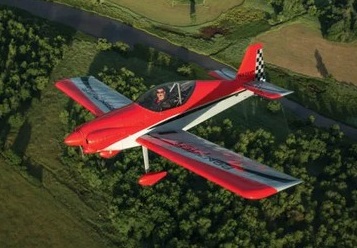
The Sport Performance Aviation LLC Panther is a versatile, mid-sized, single seat low wing Sport or LSA aerobatic airplane with quick fold wings. The Panther is designed for handling manners and gentleman aerobatics, combining looks, handling and critical build elements meant to keep the cost down.

The base kit was $15,995 and that includes pre-drilled aluminum wing skins, a steel fuselage structure that’s been fully welded and powder coated, the canopy and landing gear legs. The Panther is built around the Corvair six-cylinder engine and that helps keep costs down; however, other engines in the 80–160 hp range can be used. Powerplant options include Continental C-85 thru 0-200, Lycoming 0-235 thru 0-320 (Panther Sport), UL power, Jabiru 3300.

Two Panther versions were available: one with 93 square feet of wing for LSA compliance and one with a smaller, 85-square-foot wing for better performance. Total build cost was $28–50k.

Construction
6061 aluminum / flush blind rivets (solid optional)
4130 steel tube construction from seat back to firewall. All critical attachment points like Landing gear, wing pin, engine mount, 5 point harness, ballistic chute, rollover bar, control Hard points etc. will be welded in the fixture. This allows quick accurate construction of all Critical points.
Skinned in AL
Quick easy to build tail cone rivets/bolts on to the forward fuselage
Simple control surface design
Simple strong wing spar with only seven components per spar (plus bolts/rivets)

The Panther features
Quick (2 min or less) easy single person wing fold, no controls to disconnect
Fit in 18ftx7x7 space (trailer) when folded
Large cockpit with adjustable rudder pedals and seat back, room for big guys and a parachute
Forward (2cu ft) and rear baggage area
Pilot rollover protection
Ballistic chute capable
Bubble canopy replaceable by small windshield and skirt for open cockpit flying
excellent visibility

Panther
Engine: Corvair/3.0L, 100hp @ 3100 rpm
Propeller: Sensenich/Wood over Composite, 2-blade
Wingspan: 23 ft 6 in
Maximum gross weight: 1115 lb
Typical empty weight: 725 lb
Typical useful load: 425 lb
Fuel capacity: 27 gal
Full-fuel payload: 262 lb
Wing loading: 11.8 lb/sq. ft
Baggage capacity: 40 lb
Max speed: 170 mph
Cruise speed: 165 mph @8000ft
Stall speed (landing configuration): 46 mph
Stall speed (clean): 51 mph
Maximum rate of climb: 1500 fpm
Takeoff distance (to 50 ft agl): 1000 ft
Landing distance (from 50 ft agl): 1200 ft
Seats: 1
Cabin width: 28 in

Sport Flight International Astra

Designed by Allistair Wilson and built in Bloomfield, Indiana, the Astra trike is built to exceed the Light Sport Aircraft standards. The Astra has wide comfortable seating and can be used for serious cross country flying or simply enjoying the scenery.

The Astra Trike is manufactured in the American Mid West and has been developed using British technology. Two engine options were available: the HKS 700E – 60 BHP – 2 cylinder – 4 stroke or the 4 cylinder- 4 stroke – Rotax 912. The Astra Trike has been designed and manufactured to comply with the requirements of BCAR Section S Issue 2, and the American Sportplane aircraft design category.

Many parts for the wing are manufactured by Sport Flight International, including the wing sail, storage bag, wing bag and packing set. Sport Flight International also manufacture the structural wing frame tubes for the Astra Trike. Bill Sherlock test flew the first complete Astra Trike at Shawnee airport, Bloomfield Indiana, on the 26th April 2005.

The Astra Trike is the product of years of research and development, bringing to America a world class trike, capable of effortless cross country flying, with the reliability of a four stroke engine at an affordable 2009 Price.

The Astra 912 is powered by the 80 hp Rotax 912 four cylinder four stroke engine, allowing the trike to cruise at 70 mph, and burn just over 3.0 gallons per hour. Maximum level speed is 80 mph, VNE is 90 mph. Stall speed occurs at 32 mph. Rate of climb 800-1100 feet per minute depending on load and density altitude. Take off run 180 – 250 feet depndent on load and dnsity altitude. Astra 15.6 m double surface wing. Composite front fairing with windshield, Instrument panel, and composite wheel pants.

Dual rear brakes with parking brake, Warp Drive composite 3-blade propeller, Polyurethane shock absorber suspension system, Fabric skirt, 11.5 gallon fuel tank, Rotax mechanical fuel pump system, Cast aluminum spoked wheels, Wide composite seat with folding backrest, Chrome Moly steel maingear, Rear seat nose-wheel steering. Dual stainless steel muffler system, Pod storage bag, 10-row oil cooler, all aluminum radiator.

Standard instrument fit on the Astra 912 are Airspeed Indicator, Sensitive Altimeter, Fuel gauge, Digital engine monitoring which includes dual CHT and quadruple EGT, Hour meter, Flight timer, Voltage, Oil temperature, Oil pressure, Tachometer and In-dash Compass. Available Options include: Ballistic Recovery System Parachute, Vertical Speed Indicator, Fuel computer, Lynx Radio antenna, Dual Strobe system, High intensity headlight, Complete Lynx system including, Helmets, Vizors, Headsets, Intercom (self or aircraft powered), Radio, PTT cable, Windshield extension, Gas lift strut to assist in lifting the wing during set-up and takedown.
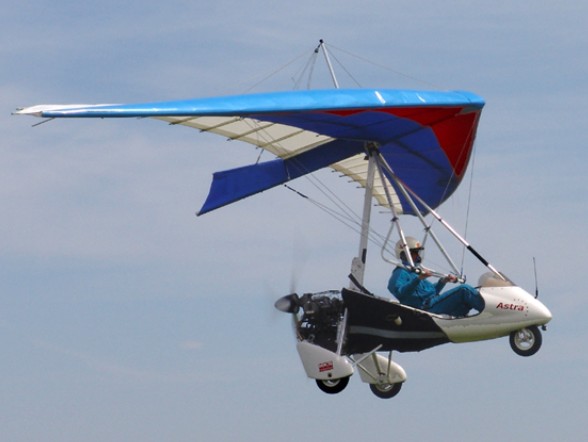
The Astra HKS is powered by the 60 hp Japanese HKS twin cylinder four stroke engine. This allows the trike to cruise at 55 – 65 mph, while burning just over 2.2 gallons per hour. Maximum level speed is 75 mph, VNE is 90 mph. Stall speed occurs at 32 mph Rate of Climb is 400 – 800 feet per minute depending on flight loads and density altitude. Astra 15.6 m double surface wing Composite front fairing with windshield and Instrument panel, composite wheel pants.

Dual rear brakes with parking brake, composite 3-blade propeller with reinforced leading edge, Polyurethane shock absorber suspension, Fabric skirt, 11.5 gallon fuel tank, Electric and mechanical fuel pump system, Cast aluminum spoked wheels, Wide composite seat with folding backrest, Chrome Moly steel maingear, Rear seat nose-wheel steering. Standard instrument fit on the Astra HKS are Airspeed Indicator, Sensitive Altimeter, Fuel gauge, Dual CHT, Dual EGT, RPM , Hourmeter, Voltmeter and In Dash Compass. Available Options include: Digital engine monitoring with warning light for out of range engine parameters, Jet Hot coating on the Muffler, Ballistic Recovery System Parachute, Vertical Speed Indicator, Fuel computer, Lynx Radio antenna,Dual Strobe system, headlight, Complete Lynx system including, Helmets, vizor, headsets, intercom (self or aircraft powered), Radio, PTT cable, Windshield extension, Gas lift strut to assist in lifting the wing during set-up and takedown.
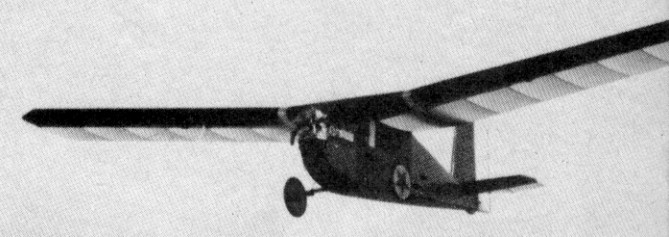
The Astra S2 is powered by the 100 hp Rotax 912S four cylinder four stroke engine. A reliable, efficient and powerful engine that allows the trike an effortless cruise anywhere between 55 and 100 mph, and burn just over 3.5 gallons per hour. Maximum level speed is 105 mph, VNE is 115 mph. Stall speed occurs at 38 mph. Rate of climb is normally between 1000 -1300 feet per minute depending on load and density altitude. Take off run is typically 300 – 450 feet again dependent on load and density altitude. Astra S2 10.6 m double surface wing Composite front fairing with extended two piece windshield and Instrument panel, composite Pylon fairing and stabiliser wheel pants. Electric trim, Dual rear brakes with parking brake, composite 3-blade propeller with reinforced leading edge and prop spinner, Polyurethane maingear shock absorber suspension, Fabric skirt, 11.5 gallon fuel tank, Rotax mechanical fuel pump system, Cast aluminum spoked wheels, Wide composite seat with folding backrest, Chrome Moly steel maingear, Rear seat nose-wheel steering. Standard instrument fit on the Astra S2 are Airspeed Indicator, Sensitive Altimeter, Fuel gauge, Digital engine monitoring which includes dual CHT and quadruple EGT, Hour meter, Flight timer, Voltage, Oil temperature, Oil pressure, Tachometer and In-dash Compass. Available Options include: Ballistic Recovery System Parachute, Vertical Speed Indicator, Fuel computer, Lynx Radio antenna, Dual Streamlined Strobe System, High intensity headlight, Complete Lynx system including, Helmets, Vizors, Headsets, Intercom (self or aircraft powered), Radio, PTT cable, Windshield extension, Gas lift strut to assist in lifting the wing during set-up and takedown. Instructor Training Bars.
The Astra 503 is powered by the 54 hp Rotax 503 two cylinder four stroke engine. It powers the trike to a cruise speed between 55 and 65 mph, burning just over 4 gallons per hour. Maximum level speed is 70 mph, VNE is 90 mph. Stall speed occurs at 32 mph. Rate of climb is normally 250 -700 feet per minute depending on load and density altitude. Take off run is typically 200- 400 feet again dependent on load and density altitude. Astra A1 15.6 m double surface wing Composite front fairing with extended two piece windshield and Instrument panel, and wheel pants. Dual rear brakes with parking brake, composite warp drive 3-blade propeller, Polyurethane maingear shock absorber suspension, Fabric skirt, 11.5 gallon fuel tank, Rotax mechanical fuel pump system, Cast aluminum spoked wheels, Wide composite seat with folding backrest, Chrome Moly steel maingear, Rear seat nose-wheel steering. Standard instrument fit on the Astra 503 are Airspeed Indicator, Fuel gauge, Digital Altimeter and VSI, digital engine monitoring which includes dual CHT and dual EGT, Hour meter, Flight timer, Voltage, Tachometer and In-dash Compass. Available Options include: Ballistic Recovery System Parachute, Analogue Altimeter and Vertical Speed Indicator, Lynx Radio antenna, Dual Strobe System, High intensity headlight, Complete Lynx system including, Helmets, Vizors, Headsets, Intercom (self or aircraft powered), Radio, PTT cable, Windshield extension, Gas lift strut to assist in lifting the wing during set-up and takedown. Instructor Training Bars.
The Astra 103 is powered by the Rotax 503 two cylinder two cycle engine. This allows the trike a cruise speed between 55 and 63 mph, and burn just over 4 gallons per hour. Maximum level speed is 63 mph, VNE is 90 mph. Stall speed occurs at 25 mph. Rate of climb is normally between 300 and 500 feet per minute depending on load and density altitude. Take off run is typically 300 – 450 feet, again dependent on load and density altitude. Astra 103 10.6 m double surface wing. Composite front fairing with windshield and Instrument panel, and stabiliser wheel pants., Wooden 2 -blade propeller with protected leading edge, Bungee maingear shock absorber suspension, Fabric skirt, 5 gallon fuel tank, Rotax mechanical fuel pump system, Cast Nylon wheels, Wide fabric seat, Chrome Moly steel maingear. Standard instrument fit on the Astra 103 are Airspeed Indicator, Digital Altimeter and VSI, engine monitoring which includes dual CHT and dual EGT, Hour meter, Flight timer, Voltage, Tachometer. Available Options include: Ballistic Recovery System Parachute, Lynx Radio Antenna, Dual Streamlined Strobe System, High intensity headlight, Complete Lynx system including, Helmet, Vizor, Headset, Radio, PTT cable, Windshield extension, Gas lift strut to assist in lifting the wing during set-up and takedown.

Sport Flight Sky Pup

Single seat single engine high wing monoplane with two axis control. Conventional tail. Pitch control by elevator on tail; yaw control by fin mounted rudder; no separate roll control; control inputs through stick for pitch and pedals for yaw. Cantilever wing; wing profile; double surface. Undercarriage has two wheels with tailskid. Wood/foam fuselage, partially enclosed. Engine mounted at wing height driving tractor propeller.

Announced in 1983, the Sky Pup is a development of Steven Wood’s one off ultralight called the Blue Light Special. With the Sky Pup, the accent is on simplicity and low build cost; the aircraft is only sold in the form of plans, the company reckoning that the machine can be built for less than $1000 excluding power pack.

The design principle is to use foam to carry shear loads and wood to carry bending loads. Ribs and fuselage panels are cut from foam and then bonded to wood capstrips and gussets, with plywood covering for the leading edge and dope and fabric covering for the rest of the flying surfaces.

Engine is a Cuyuna 215RR coupled to the company’s own propeller via a reduction drive. Unlike most two axis aircraft, the Sky Pup is not purely stick controlled. The centre-mounted stick moves fore and aft only, to control pitch, while pedals are used for rudder control. The plans cost $50 in the US, $52 in Canada, $56 elsewhere.

Engine: Rotax 277
Empty wt.: 205 lbs
Max wt.: 400 lbs
Height 5’2”
Width 74”
Length 15’11”
Wing span: 31 ft
Wing area: 130 sq.ft.
Wing loading: 3.1 lbs/sq.ft
Power loading: 14.3 lbs/hp
Max speed: 61 mph
Cruise: 57 mph
Stall: 26 mph
Vne: 69 mph
Seats: 1
Vne 69 mph
L/D 12:1
Minimum sink rate 260 fpm
Takeoff roll 200’
Climb rate 450 fpm
Load factors +6, -3 G’s

Engine: Cuyuna 215RR, 20 hp at 5500 rpm
Propeller diameter and pitch 58 x 24 inch, 1.47 x 0.61 m
Reduction 2.3/1
Power per unit area 0.15 hp/sq.ft, 1.7hp/sq.m
Length overall 15.9 ft, 4.85 m
Height overall 4.3ft, 1.32m
Wing span 31.0ft, 9.45m
Mean chord 4.2ft, 1.28m
Dihedral 6.5 deg
Total wing area 130 sq.ft, 12.1 sq.m
Wing aspect ratio 7.4/1
Empty weight 195 lb, 88kg
Max take off weight 400 lb, 181kg
Payload 205 lb, 93kg
Max wing loading 3.08 lb/sq.ft, 15.0kg/sq.m
Max power loading 20.0 lb/hp, 9.1kg/hp
Load factors design; +6.0
Never exceed speed 69mph, 111 kph
Cruising speed 55mph, 88kph
Stalling speed 26mph, 42kph
Max climb rate at sea level 450 ft/min, 2.3 m/s
Best glide ratio with power off 12/1

Sport Cub S2

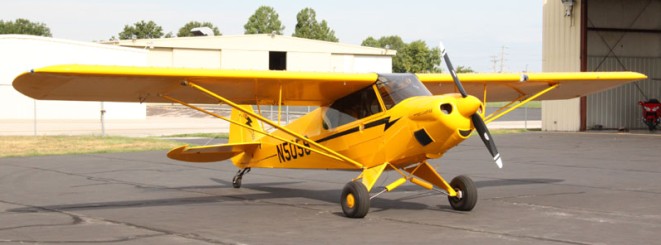
The Sport Cub S2 is literally a reinvention of the classic Piper Super Cub. With stick and rudder flying, complimented with modern touches such as adjustable seating, cabin heating and standard AmSafe airbags. There’s enough space for up to 120 pounds of cargo. With extensive weight saving carbon fiber and a 100 Horsepower Continental engine, it offers a climb rate comparable to aircraft with much more power and are still capable of 100 mph and a range of over 450 miles.

Engine Continental O-200A 100 hp

Sport Copter Vortex

A single-seat partially enclosed autogyro, Sport Copter’s composite seats conform to the pilot’s shape, including the head, provide comfort as well as crucial support. Independent toe-operated hydraulic disc brakes are standard on all models. Its unique nose-wheel suspension operates independently from the rudder to make for smooth takeoffs and landings in crosswinds. Vortex reaches 100 mph with a 67-hp engine and has seating for one with a useful load of 460 pounds. Kits for the Vortex in 2001: US$20,400

Standard: semi-enclosure, folding rotor mast, pre-rotator, independent hydraulic disc brakes, new rotor head and roto-control Cyber Seat, nosewheel and main gear suspension.

Engine: Rotax 582, 67 hp
Rotor Blades: 25′ Sport Rotors
Height: 8.3 ft
Length: 12 ft
Disk span: 25 ft
Disk area: 490.8 sq.ft
Width: 7’4″
Empty wt: 350 lbs
Gross wt: 760 lbs
Fuel cap: 10 USG
Max speed: 100 mph
Cruise speed: 80 mph
Range: 170 sm
ROC: 1200 fpm
Take-off dist: 50 ft
Landing dist: 0-10 ft
Service ceiling: 13,000 ft
Seats: 1

Sport Copter II

Full Body Enclosure including Fire Wall w/ two removable doors, Heavy Duty Engine Mounts, Mechanical Prerotator System, 8.5” X 31’ Sport Rotors Rotor System w/ Adjustable Pitch , Rotor Brake, Independent Hydraulic Disc Brakes, toe actuated, Roto-Control System, Cyber Seats w/ Adjustable Seat Backs and Adjustable Lumbar.

Heavy Duty Suspension, rate sensing shocks w/ springs (11” of travel!), Nosewheel, full castering with suspension (offering self alignment), Spun Aluminum Wheels, strong lightweight wheels, Customized 27 Gal. Aluminum Fuel Cell, Landing Lights (2), Cockpit Interior Lighting.

The “Quick Build “, High Performance Kit: offers a pre-fabricated, one piece cabin, so that no gluing is required to assemble the Kit. The cost is $59,995.00 in 2009 (less engine and prop package).

Engine: Lycoming IO-360
Propeller: Sport Copter Controllable pitch, three-blade
Rotors: 8.5″ x 31′
Fuel Capacity: 27 gal
Min Speed: 10-20 mph
Cruise: 100 mph
Top Speed: 120 mph
Empty Weight: 1000 lbs
Useful Load: 650 lbs
Gross Weight: 1650 lbs
Cabin Width 49″
Aircraft Width: 81″
Height: 10′
Length: 15.5′
Seats: 2

Engine: Subaru, 160 hp
Max speed: 130 mph
Cruise speed: 100 mph
Range: 310 sm
ROC: 1200 fpm
Take-off dist: 50 ft
Landing dist: 0-10 ft
Fuel cap: 25 USG
Empty wt: 650 lb
Gross wt: 1300 lb
Height: 9.75 ft
Length: 17 ft
Disk span: 30 ft
Disk area: 706.7 sq.ft
Seats: 2

Sport Copter Lightning / Vancraft Lightning

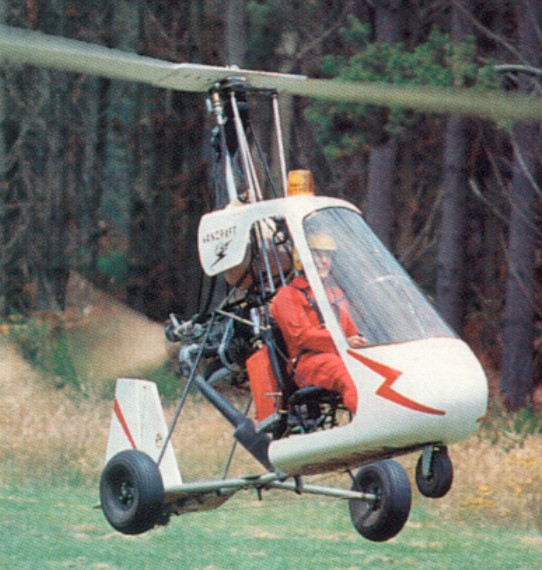
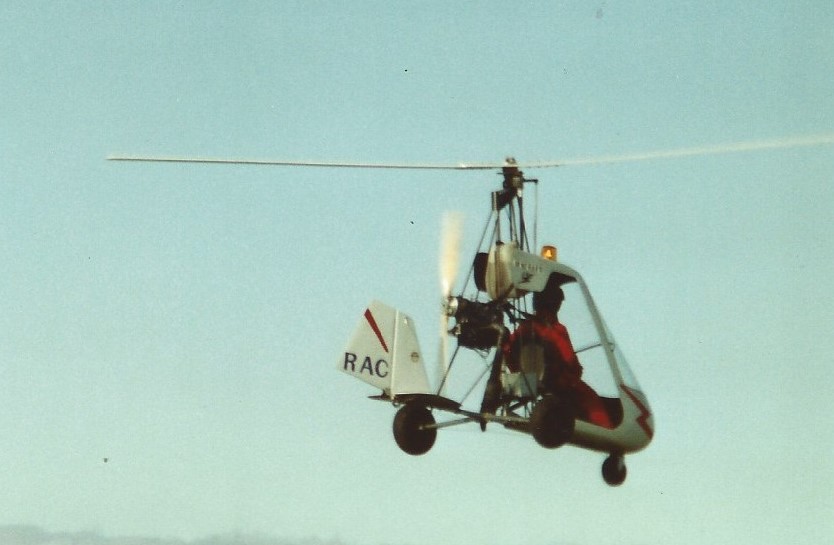
Vancraft Lightning – pilot Alf Crowe

Originally marketed as the Vanvraft Lightning, the Lightning comes with most of the Vortex components. The all triangulated airframe is built of large-diameter aluminum tubing, with a truly remarkable suspension system and the finest control system in the industry (Roto-Control) We have designed a new composite seat to ensure unparalleled pilot comfort and crashworthiness. Up-grading to a partial enclosure is easy. The new shock mounted rotorhead and independent toe-operated hydraulic disc brakes are standard.

A step-by-step video is included with the assembly manual. The instructions and components are so complete it requires only 40 – 60 hours to bolt together using basic hand tools. The Lightning uses a Rotax 503 with oil injection, and a 2.58-to-1 reduction gear box delivering 52 horsepower.

A unique feature on both the Vortex and Lightning is float capability The Lightning must be equipped as an experimental model with a 67-hp engine for this feature, but it typically operates as an ultralight with a 50-hp Rotax 503. Top speed is 63 mph with the ultralight or 80 mph with the experimental. Conforming composite seats, nosewheel suspension and independent disc brakes also come on the Lightning. Kits for the Lightning in 2001: $15,300

Engine: 50 hp Rotax 503 or 76 hp Rotax 582. Prop: 60” x 32” GSC wood fixed pitch or Warp Drive 64” ground adjustable. Rotor blades: 23-25’ x 7” Sport Rotors or 23-25’ x 8” Sky Wheels.

Standard: brakes suspension, new-design rotor head, Cyber Seat, independent nose wheel suspension and main gear suspension. Can be operated as ultralight or experimental. Options: prerotator, semi-enclosure, floats, instrumentation, folding mast. Info package $12, video $13, both $25. Kit: $15,300 in 2009.

Engine: Rotax 503, 46 hp
Rotor Blades: 23′ Sport Rotors
Disk span: 23 ft
Disk area: 415.4 sq.ft
Vne: 80 mph
Max speed: 63 mph
Cruise speed: 55 mph
Range: 90 sm
ROC: 1000 fpm
Sustained Climb: 500 fpm
Fuel cap: 5 USG
Empty wt: 252 lbs
Gross wt: 600 lb
Height: 8 ft
Length: 11 ft
Width: 6 ft 1.75 in
Seats: 1

Sportavia SFS 31 Milan / Scheibe SFS 31 Milan

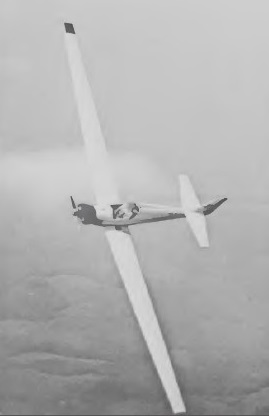
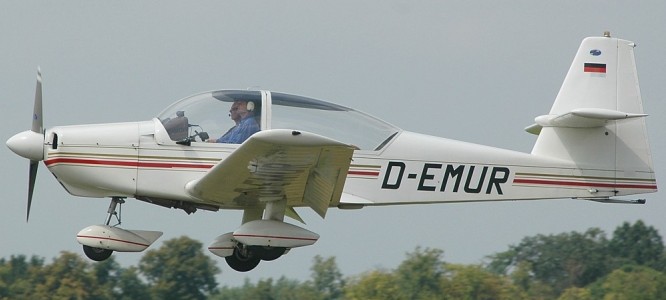
Designed by Rene Fournier and Egon Scheibe, Sportavia built the SFS 31 Milan, a single seat development of the Fournier RF4D with a sailplane wing of the Scheibe SF-27M motorglider and a feathering prop. The Milan’s designation is formed by adding together the manufacturers’ initial letters and the numbers in the designations of these two aircraft.

Like all of Rene Fournier’s designs, it had a big bubble canopy. It has spoilers for approach control and outrigger wheels and a steerable tailwheel to aid in taxiing. The cantilever wings are low-set instead of in the shoulder position of the SF-27M and Zugvogel V, with 4° dihedral from the roots, and are wooden structures with a pine box spar and plywood ribs covered with birch plywood and fabric; Schempp-Hirth glassfibre/metal air brakes are fitted in the upper surfaces. The SF-27M’s wings were made stronger than those of the unpowered SF-27 Zugvogel V, and it is powered by a 26hp Hirth Solo vertically-opposed four-cylinder engine. The Milan’s powerplant is a 39hp Rectimo (converted Volkswagen) 4 AR 1200 ‘flat four’ engine in a conventional tractor installation, driving a Hoffman two-blade fixed-pitch or fully-feathering wooden propeller, of 4ft 4in of 4ft 5.5in diameter respectively. The single fuel tank in the fuselage has a capacity of 7.7 Imp gallons. The landing gear is similar to the RF4D’s, but with spring-assisted retraction of the main wheel.

The Milan prototype, D-KORO, made its first flight on 31 August 1969. The SFS 31 was produced jointly by Sportavia and Scheibe.

Milan SFS-31
Engine: 29kW / 39 bhp Rectimo 4AR 1200
Wing span: 15 m / 49 ft 2.5 in
Wing area: 12 sq.m / 129 sq.ft
Aspect ratio: 18.6
Airfoil: Wortmann
Length: 19 ft 10.25 in
Height: 5 ft 1.75 in
Empty Weight: 310 kg / 682 lb
Payload: 130 kg / 286 lb
Gross Weight: 440 kg / 968 lb
Wing Load: 36.67 kg/sq.m / 7.5 lb/sq.ft
Max cruising speed: 112 mph at sea level
L/DMax: 29 95 kph / 51 kt / 59 mph
MinSink: 0.82 m/s / 2.7 fps / 1.60
Take-off run: 690ft
Range with max fuel: 415 miles
Structure: wood
Seats: 1
No. Built: 24

Sportflight Aviation Talon

Magnum

The LSA Talons are strut-braced three-axis aircraft with conventional gear and a pusher prop configuration, based on an ultralight style of construction.

Sport Flight Aviation uses CAD/CAM technology to refine and verify its designs while also improving manufacturing processes. CNC machining of Talon components is done in-house, producing Talon aircraft kits.

With the powder-coat option, the only painting required on the Talon is the nose cone. The Talon has only a few welded components, such as the elevator interlink, torque tube, and fuel tank. All welding is done at the factory.

XP

The range of the Talon varies depending on the model, engine used, loading, and fuel capacity. The TalonXP equipped with the standard 11.75 gallon welded aluminum fuel tank and Rotax 582 C drive, with 70 inch 3-blade prop can fly for at least 2.5 hours at 68mph. A TalonXP equipped the same, but with the HKS 700E 60hp four-stroke engine, can stay aloft for over three hours with a reasonable reserve. The single seat Magnum and Typhoon can accept an optional 22 gallon welded aluminum fuel tank.

The two-seat TalonXP has an empty weight of 479lbs and a gross weight of 950lbs. With the NorthSlope package installed, the useful payload can be increased to 570lbs. The TalonXP with a Rotax 582 engine can fly at 90mph in level flight. The Talon cruises between 62 and 85mph, depending on the model and engine installation. A typical TalonXP equipped with a Rotax 582 engine cruises at about 70mph. The single seat Magnum and Typhoon comparably equipped will cruise at 76-80mph.

All Talons are equipped with 3-position flaps; 10, 22, and 35 degree positions. Set in the 35 degree position, The TalonXP can comfortably fly at 40-43mph at low power settings. The stall takes place at 33-38mph.

The main boom is 5in. OD x .065in. wall 6061-T6 seamless drawn aluminum tubing. This tube is sleeved at hard points, such as the landing gear carry-through, for added durability. The skins are .050 6061-T6 mated together with stainless steel rivets, creating a light, strong, box-type structure. The Talon’s gear legs are nickel plated 4130 steel alloy tubing with .120in. wall, heat-treated in a special salt bath for strength and integrity.

All Talons come standard with an Aviation Products 5in. break-away full swivel steerable tail wheel.

All Talon models include a built-in curved instrument panel, 3-point shoulder harness, 8-inch spun aluminum welded wheels, streamlined aluminum struts, padded configurable seats, 3-axis control, AN aircraft hardware throughout (included with kit), welded aluminum fuel tank with 11.75 US gallon capacity, tinted polycarbonate windshield, differential ailerons, stainless steel control and structural cables, Mil-spec control pulleys, engine mount with 6 rubber isolators, and preformed wing ribs (XP and Super Magnum: 40 total, Magnum: 36 total)

Talon Magnum
Engine: HKS 700E, 61 hp
HP range: 40-70
Length: 21.6 ft
Wing span: 26 ft 3 in
Wing area: 138 sq.ft
Cruise: 80 mph
Stall: 38 mph
Range: 230 sm
Rate of climb: 1000 fpm
Takeoff dist: 175 ft
Empty weight: 437 lb
Gross weight: 735 lb
Fuel capacity: 11.75 USG
Landing dist: 225 ft
Seats: 1
Cockpit width: 24 in
Landing gear: tailwheel
LSA: yes

Talon XP
Engine: HKS 700E, 61 hp
HP range: 40-80
Length: 21.6 ft
Wing span: 28.5 ft
Wing area: 148 sq.ft
Empty weight: 535 lb
Gross weight: 1050 lb
Fuel capacity: 11.75 USG
Cruise: 72 mph
Stall: 41 mph
Range: 230 sm
Rate of climb: 900 fpm
Takeoff dist: 250 ft
Landing dist: 250 ft
Seats: 2 tandem
Cockpit width: 24 in
Landing gear: tailwheel
LSA: yes