Earlier, in August 1978, P.Z.L. Swidnik concluded an agreement with the Spitfire Helicopter Company of Media, Pennsylvania, US allowing them to market a modified version of the Kania (itself an Mil Mi-2 verion) in Western countries under the name Spitfire Taurus. This differed primarily from the standard Polish version by introducing uprated Allison 250-C28 turboshaft engines, each with a take-off rating of 373kW fed by a large common intake; revised nose contours and sporting a ventral fin. However, the company has since gone out of business, and it is not known if any conversions were completed.
Taurus Engine: 2 x Isotov 350P, 400 shp TBO: 3500 hr Main rotor: 48.3 ft Seats: 9 Length: 39.2 ft Height: 12.3 ft Max ramp weight: 7400 lb Max takeoff weight: 7400 lb Standard empty weight: 5166 lb Max useful load: 2234 lb Max landing weight: 7400 lb Max sling load: 1763 lb Disc loading: 4 lbs/sq.ft Power loading: 9.3 lbs/hp Max usable fuel: 1472 lb Max rate of climb: 900 fpm Service ceiling: 13,300 ft Hover in ground effect: 6,900 ft Hover out of ground effect: 7900 ft Max speed: 147 kt Normal cruise @ 3000 ft: 128 kt Fuel flow @ normal cruise: 435 pph Endurance @ normal cruise: 2.8 hr
The Spitfire Mark I was a utility helicopter built in the United States in the late 1970s and intended for series production. In essence, the Mark I was an Enstrom F-28 that was modified to use an Allison 250 turboshaft engine and geared transmission in place of the original piston engine and system of vee belts. The resulting powerplant installation was lighter and more compact, which allowed for additional cargo or fuel.
Spitfire Helicopters’ parent company, Fetsko Aviation Sales and Transportation began work on the prototype in January 1976, and on a number of pre-production aircraft in February 1977. Fetsko displayed a mockup of the concept at the National Maintenance and Operations Meeting at Reading, Pennsylvania in June 1976.
The prototype (registered N4890) first flew in December 1978. By May 1979, Spitfire had supplemental approval for the turbine conversion and by July, the company reported that it had sold 42 examples of the Mark I and Mark II and expected to build 60 aircraft during 1980. The engine installation on production models was to be slightly further forward than on the prototype.
The Spitfire II derivative of the Enstrom uses a new four seat front fuselage and the Allison engine with Enstrom rotor and rear fuselage.
Other projects included Spitfire Mark IV with auxiliary propulsion engines at tips of stub wings.
However, Spitfire remained dependent on Enstrom to supply airframes for remanufacture, and Enstrom distanced itself from the project somewhat. Competing plans by Enstrom and Spitfire to market Polish-built Mil Mi-2 helicopters in the United States might have contributed to the friction. In Spitfire’s version of the deal, Polish manufacturer PZL-Świdnik would also contribute to the Spitfire manufacturing efforts. By November 1979, Enstrom refused to supply airframes to Spitfire.
The situation improved somewhat in the 1980s, and Spitfire president Jack Fetsko reported in May 1983 that relations with Enstrom had improved to the point where the two companies could “talk programs”. By that time, costs had increased from $US 165,000 expected in 1979 to $US 285,000 but Spitfire had taken deposits for 50 Mark Is, and had a firm sale for the first production aircraft. Together with companies Sodian and Soprea, Spitfire formed a new venture, Spitfire Helicopters International, to manufacture the Mark I and Mark II in Málaga, Spain.
Nothing came of the joint venture, and Spitfire’s attempts to market F-28 derivatives came to an end. In the 1990s, Enstrom marketed its own turbine-powered version of the F-28 as the Enstrom 480.
Mark 1 Engine: Allison 250-C20B, 420 shp TBO: 3500 hr Main rotor: 32 ft Seats: 3 Length: 29.4 ft Height: 9.2 ft Max ramp weight: 2350 lb Max takeoff weight: 2350 lb Standard empty weight: 1292 lb Max useful load: 1058 lb Max landing weight: 2350 lb Disc loading: 2.9 lbs/sq.ft Power loading: 5.6 lbs/hp Max usable fuel: 469 lb Max rate of climb: 1550 fpm Service ceiling: 15,000 ft Hover in ground effect: 13,400 ft Hover out of ground effect: 8000 ft Max speed: 112 kt Normal cruise @ 3000 ft: 96 kt Fuel flow @ normal cruise: 180 pph Endurance @ normal cruise: 2.4 hr Range: 308 mi
Mark II Tigershark Engine: 420hp Allison 250-C20B Rotor: 31’11” Useful load: 1175 lb Max speed: 135 mph Cruise: 120 mph Seats: 4
Mark IV Engine: 420hp Allison 250-C20B Rotor dia: 33’4″ Length: 30’0″ Useful load: 2100 lb Max speed: 215 mph Cruise: 201 mph Range: 482 mi Seats: 4-5
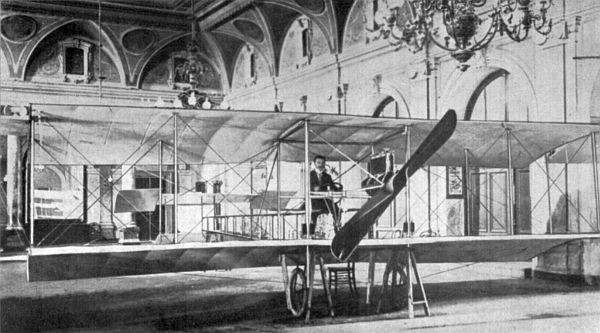
The first design of brothers Franz and Josef Spiller in Graz, Austria. It was exhibited in Graz in June 1910 before tests on the Graz flying field Thalerhof. The engine was a 50 hp Austro-Daimler automobile motor similar with that which Etrich also had no joy in Spring 1910 (before Ferdinand Porsche designed an aero engine of it). The Spillers later that year changed to a Puch aero engine, also built in Graz. Details of their achievements are almost undocumented, but they were experimenting at Thalerhof at least until 1912, with more or less success.
The Spezio DAL-1 Tuholer stems from a design by Tony Spezio in the late 1950s and is said to have been based loosely on the Howard Ike racer of the 1930s. As the Tuholer name implies, it is a two-seat, open cockpit, strut-braced, low-wing taildragger. The original was built using parts collected from various surplus and wrecked sources, and with no hangar space the wings were designed to fold. The first flight of the type occurred on 2 May 1961.
Spezio Tuholer N9110R
Marketed plans for home-builders. Mechanix Illustrated Golden Hammer Award c.1961 for design.
N140P First plans built DAL-1, builder Ken Patsch, August 1987
The fuselage and tail structure are welded steel tubing. Its large center section, supporting the folding wing mechanism is fashioned from a trio of one-inch .049 tubing with end plates, fittings and large bolts that allow the wings to fold for storage. The wings are wood with fabric cover.
The 1922 Hi-Lift was an experiment by Sperry in modifying a Curtiss JN-4D into a monoplane with an internally-braced, one-piece high-wing with I-beam spars, to produce a craft capable of carrying five, when it was originally designed for two. Despite successful trials and demonstrations, nothing came of the idea.