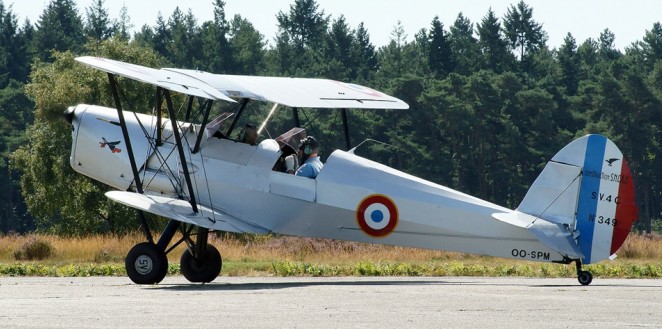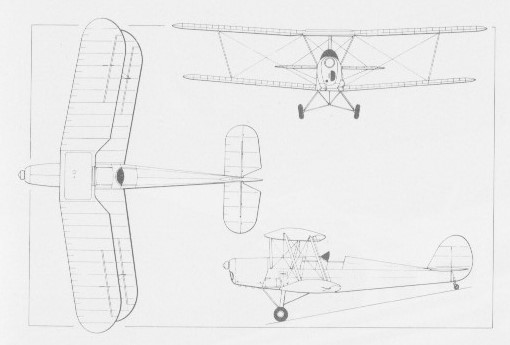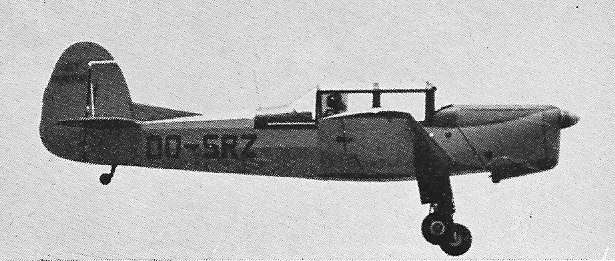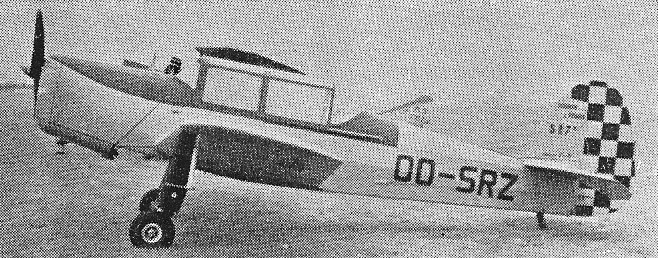
Stampe et Vertongen RSV.26/100 / RSV.18/100 / RSV.18/105 / SV.18M / SV.18MA / RSV.26/18

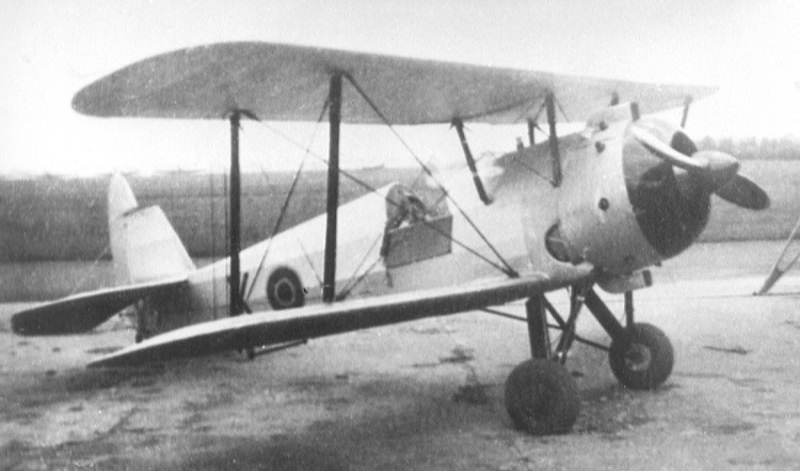
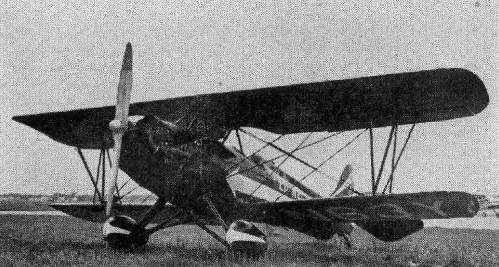
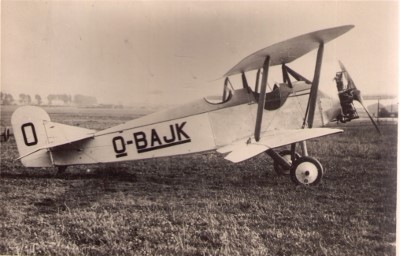
RSV26-100 O-BAJK

In the late 1920s. Belgian company Stampe et Vertongen decided to compete with the British manufacturers that then dominated Europe. In 1928, the talented Belgian engineer Alfred Renard was given a technical task to develop a light training aircraft.

Structurally, it was a conventional, single-bay biplane with staggered wings of equal span. The pilot and passenger sat in tandem open cockpits and power was provided by a radial engine in the nose. The fixed undercarriage consisted of main units braced to one another, and a skid to support the tail. The military showed interest in the new aircraft, and they were quite ready to support the domestic manufacturer. The only question was whether Renard could provide the required indicators. Fortunately, the terms of reference turned out to be quite reasonable, and the RSV.26/140 became the first aircraft for the Belgian own Air Force.

At the time, Stampe et Vertongen designated their aircraft with two numbers: the wing area (measured in square metres) and the engine power (measured in horsepower). Renard’s new design had a wing area of 26 m² and was to be powered by a 75 kW (100 hp) Renard Type 100 and was therefore designated RSV.26/100. Two years previously, the firm had introduced a training biplane for the Belgian Air Force that also had a wing area of 26 m² (280 sq ft); powered by a 75 kW (100 hp) engine, it had been designated the RSV.26/140. The similar designations caused confusion in the aviation press, but Renard insisted that the RSV.26/140 and RSV.26/100 were two distinct aircraft.

Thus, the first prototype of the aircraft, intended for the Belgian Air Force and equipped with a 140-horsepower engine, was designated RSV.26/140. Some time passed and in 1928 the RSV.26 / 100 aircraft equipped with a 100-horsepower Renard engine came out for testing. Although the wing area of both aircraft was the same structurally, they had a number of fundamental differences.

The first prototype was completed on December 12, 1928. By April 15, 1929, this aircraft was registered in Brussels as OO-AJU. Prototype tests were completed successfully, after which Stampe et Vertongen concluded that mass production was possible. However, the construction of the RSV.26 / 100 was limited to 5 copies, some of which entered the service of the Belgian Air Force. These aircraft were used for their intended purpose until May 1940, when Belgium was occupied by German troops. The surviving RSV.26/100s were then scrapped. Traces of the first prototype were lost at the very beginning of the war, but only in February 1947 it was removed from registration.
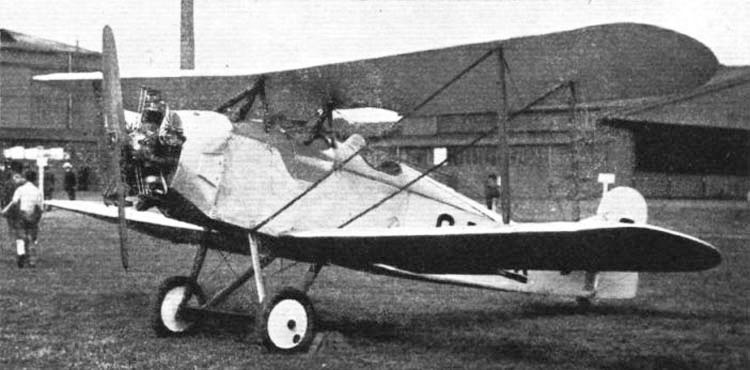
RSV.26/100

With monoplanes becoming more popular, Stampe et Vertongen considered the possibility of marketing a version of the RSV.26/100 in this configuration. Renard was able to realise this design by removing the lower pair of wings and bracing the upper pair of wings to the fuselage with two struts on each side. The resulting aircraft, having lost 8 m² of wing area, was now designated the RSV.18/100. The monoplane version was a little faster than the biplane, but climbed a little more slowly. With the differences between the two configurations so minimal that one could be converted to the other within one hour, Stampe et Vertongen decided to market the type as a convertible, the RSV.26/18.
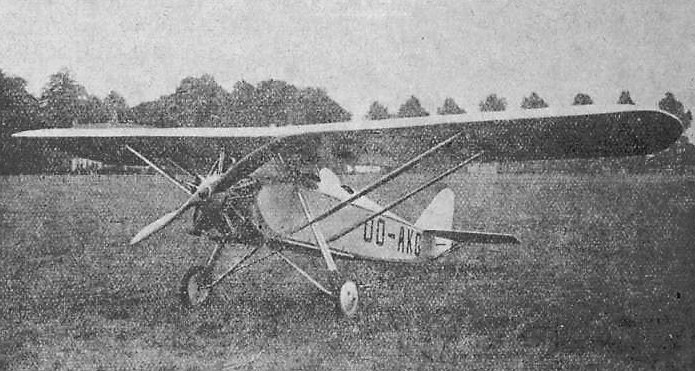
Stampe et Vertongen RSV 18-100 Annuaire de L’Aéronautique 1931

The onset of the Great Depression also halted Stampe et Vertongen’s production of the type. After George Ivanow joined the firm, he made one final attempt to market the design, modifying the RSV.18/100 (OO-AKG) to use a de Havilland Gipsy III engine[ and rebuilding the fuselage and empennage along similar lines to the SV.4. Marketed first as the SV.18M (Modification) tourer, then further modified and marketed as the SV.18MA (Modification Armée) fighter-trainer, no further production ensued.

Despite such modest successes, the RSV-26/100 was noticed by foreign buyers. American businessman and apologist for light aviation Ivan R. Gates, owner of Wright Tuttle Motors, in 1929 began negotiations on the possibility of licensed production of the Belgian aircraft in the United States. Previously, a “reference” sample O-BAJK was purchased from the manufacturer. At the same time, for the RSV-26/100, a project was developed to replace the wooden fuselage with a steel pipe structure – engineer Nathan F. Vanderlip was engaged in this refinement. However, it was not possible to achieve the expected commercial success again – until October 29, 1929, only two aircraft were assembled, after which the country plunged into economic stagnation for almost 10 years. Wright Tuttle Motors immediately went bankrupt, and its owner committed suicide. The fate of almost finished aircraft was unenviable. Three or four fuselages survived, one of which was used as a chicken coop as recently as 1975.

Variants
RSV.26/100
biplane version with Renard Type 100 engine (5 built)
RSV.18/100
monoplane version with Renard Type 100 engine (1 built)
RSV.18/105
monoplane version with Cirrus Hermes engine (1 built)
SV.18M
monoplane with de Havilland Gipsy III engine (1 converted from RSV.18/100)
SV.18MA
militarised SV.18M (1 converted)
RSV.26/18
convertible version with Renard Type 100 engine (2 built)
Gates Convertiplane
American variant of RSV.26/18 with Renard Type 100 engine and fuselage of steel tube construction (2 built)

RSV.26/100
Powerplant: 1 × Renard Type 100, 75 kW (100 hp)
Wingspan: 9.36 m (30 ft 8 in)
Wing area: 26 m2 (280 sq ft)
Height: 2.73 m (8 ft 11 in)
Length: 7.10 m (23 ft 3 in)
Empty weight: 484 kg (1,060 lb)
Gross weight: 747 kg (1,640 lb)
Maximum speed: 168 km/h (104 mph, 90 kn)
Cruise: 135 km/h
Range: 640 km (400 mi, 350 nmi)
Service ceiling: 4,600 m (15,000 ft)
Rate of climb: 6.0 m/s (1,000 ft/min)
Crew: 1 pilot
Capacity: 1 passenger
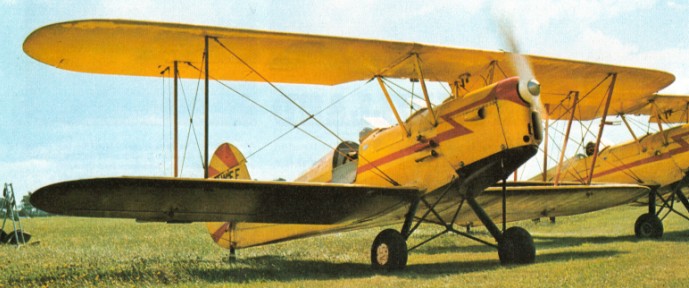
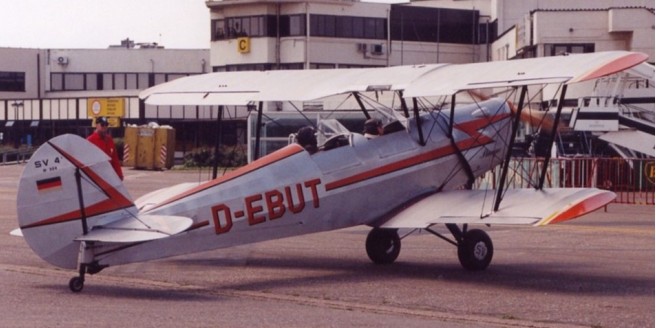
Stampe et Vertongen SV.4 / SNCAN SV.4C

SV.4C

Georges Ivanow was asked in 1932 to study a new aircraft, which resulted in the SV4, an open-cockpit 2-seat training biplane of wood and fabric construction. The prototype flew first on May 13, 1933 and the aircraft entered production. May 10, 1940 the factory was bombed by the Luftwaffe and destroyed.

Stampe et Vertongen SV.4 Article

The SV-4 was redesigned and produced in France from 1945 till 1950, under licence by SNCAN – Société Nationale de Constructions Aéronatiques du Nord.

The SV 4C is a French license built version of the Belgian primary trainer also manufactured in Algeria. More than 900 were built, with a 140¬hp Renault engine.

Rollason started importing former military Stampe SV-4Cs (Renault-powered), restoring and converting them to SV-4B status by replacing the Renault with the Gipsy Major of the Tiger.

SNCAN/Stampe SV.4C
Stampe S.V.4C

Gallery

Stampe et Vertongen SV.4
Engine: de Havilland Gipsy III, 120 hp

SV.4B
Engine: de Havilland Gipsy Major I, 130 hp

SNCA du Nord SV.4C
Engine: Renault 4 Pei, 140 hp
Wingspan: 27 ft 6 in / 8.38 m
Length: 22 ft 10 in / 6.96 m
Empty weight: 1106 lb / 502 kg
MTOW: 1720 lb / 780 kg
Max cruise SL: 95 kt / 109 mph / 175 kph
ROC SL: 1080 fpm / 330 m/min
Service ceiling: 16,400 ft / 5000 m
Seats: 2
Baggage capacity: 110 lb / 50 kg
No built: 700

Stampe et Renard SV-4D
Engine: Rolls-Royce Continental IO-346-A, 165 hp
No built: 1
First flight: 1967

SV.4C

Stampe Et Renard SR.7 Monitor / Farman F.521 Monitor III

SR.7 Monitor III

The Monitor I incorporated the fuselage, tail assembly and 140 hp Renault 4 Pei engine of the S.V.4C biplane married to a wooden wing.

The Monitor II had a metal wing and a 240 hp Salmson-Argus engine.

The SR.7 Monitor III, also known as the Farman F.521 Monitor III, was built in France by the Societe des Usines Farman with the collaboration of Stampe-Renard.

The Monitor III first flew on 15 June 1954.

Stampe et Renard S.6.7B Monitor 4-01 prototype

Monitor I
Engine: 140 hp Renault 4 Pei

Monitor II
Engine: 240 hp Salmson-Argus

Monitor II
Engine: 170 hp SNECMA-Regnier 4L-22
Wing span: 30 ft 11 in
Length: 22 ft 2.5 in
Height: 7 ft 11 in
Empty weight: 1232 lb
Loaded weight: 2083 lb
Max speed: 143 mph
Cruise: 118 mph
ROC: 787 fpm

Stampe Et Renard SR-6

The unique SR-6 by Stampe-Renard owed much to the Stampe SV-4. Specially developed for aerobatic training in 1949, the Stampe Renard SR-6 was a single seat biplane powered by a 185 hp Mathis G.7R engine.

The aircraft first flew as OO-SRX in 1949 and was also briefly tested in Belgian AF colours while the letter “X” of its civilian registration remained on the fuselage.

The registration was cancelled in April 1954 and the aircraft was scrapped.

Stallings Air Master

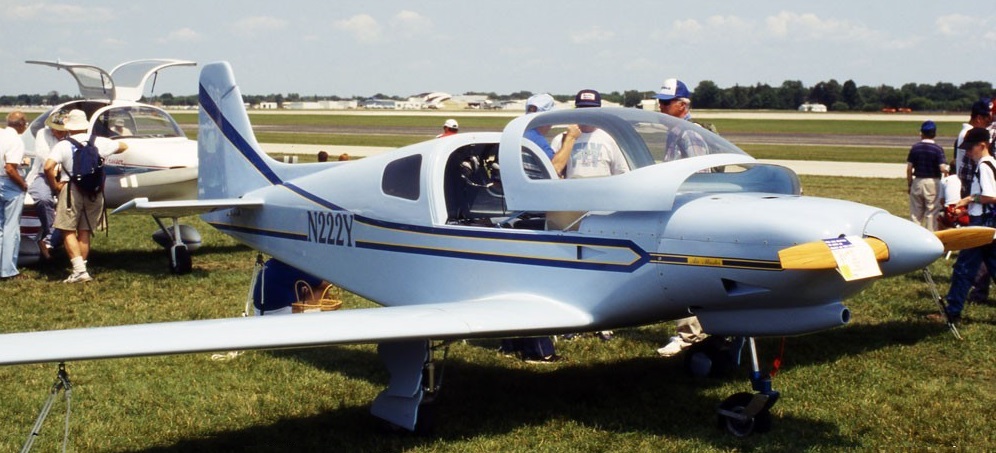
The Air Master was an original homebuilt design of Jerry J. Stallings reportedly influenced by the Lancair 320, but was built of different composite materials and had several major differences.

The type was suitable for engines in the 150 to 200 hp range, and from 1995 was marketed via Airplane Builders Company, founded by the designer. The type was planned to become available (ultimately) in kit form, although initially only plans were made available.

The first and sole example was built by the designer, possibly together with M.D. Kraft and powered by a 150 hp Lycoming O-320 engine it was first flown during 1994.

Development halted when the prototype aircraft was lost in a crash on July 25, 1996, killing the designer and his passenger. An Air Master 2 with registration N10AX was never completed.

Engine: Textron-Lycoming O-320, 150hp
Wing span: 26’6″
Length: 21’0″
Max speed: 238
Cruise: 200 mph
Range: 1000 mi
Seats: 2

Staib Carpenter Special / Little Dea-Dea

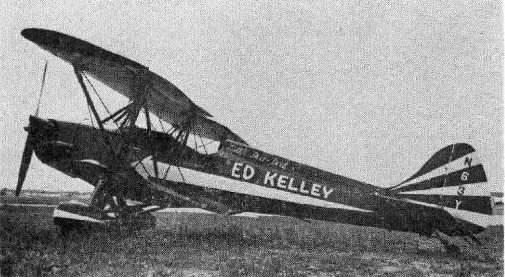
Carpenter Special Serial number 3 N63Y Little Dea-Dea

Carpenter Special Serial number 3 N63Y was built in 1933. The third aircraft built by Walter Staib. Each side of the aircraft has four flying wires and three landing wires, plus N struts. The upper wing is mounted on six cabanes, forming two pylons. It was powered by a Continental C-85 in 1955.

Originally installed was a Continental A-50 engine. Registration N63Y(X), the black and white biplane, called “Little Dea-Dea”, has a fuselage construction of steel tubing and wood stringers, wooden wings and the whole aircraft is fabric covered. Fuel is in a 12 USG wing tank and a 12 USG header tank.

Carpenter Special Serial number 3 N63Y Little Dea-Dea

In 1949 Charles E. Rawson bought the Special for $1800, recovered it, and installed a 125 hp Warner Scarab. He later scrapped the Warner as tired out and installed an 85 hp Continental. Rawson also installed Cessna 140 wheels and brakes, and Stinson 108 wheel pants.

Carpenter MLC-3
Engine: Continental C-85-12, 85 hp
Wingspan upper: 21 ft 0 in
Wingspan lower: 19 ft 9 in
Length: 19 ft 6 in
Height: 7 ft 10 in
Wheel tread: 5 ft 8 in
Max speed: 110 mph
Cruise: 100 mph
Landing speed: 65 mph
Fuel capacity: 24 USG
Cruise range: 325 mi

Staib LB-3 / LB-5

LB-5
LB-3

The LB-2 was flown at near top speed, with stalls untested. The roll rate was good, but turns were difficult. Landing speed was 120 mph (193 km/h). The fuselage was disassembled in 1953 to build the Staib LB-3 biplane. The LB-3 used new 14 ft (4.3 m) span wings made in the same fashion as Staib’s LB-1 with brazed steel bedspring, which was obtained from a local manufacturer, wing ribs with Taylorcraft airfoil sections. This airplane sat higher off the ground than others. The spring steel gear was of local manufacture, and was made of one piece.

LB-3

The aircraft cruised at 125 mph (201 km/h), landed at around 55 to 60 mph, and operated on the airshow circuit for two years. Cliff Baker operated the aircraft one more season, suffering a broken back after a high-speed incident.

LB-5

The Staib LB-5 “Little Bit” was a Volkswagen powered variant. One is on display at the Mid-America Air Museum.

LB-5

Staib Special / LB-2 / Little Bastard / Little Bit / The Monster

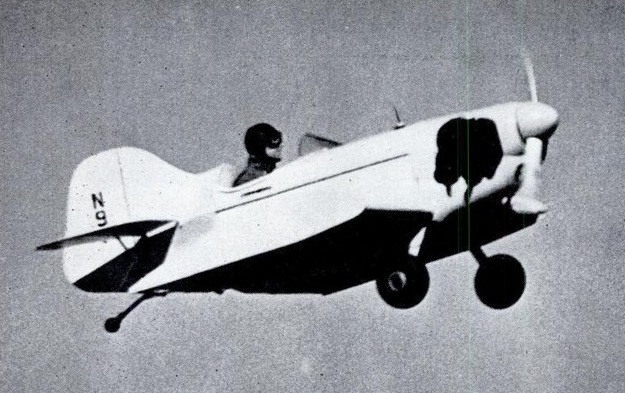
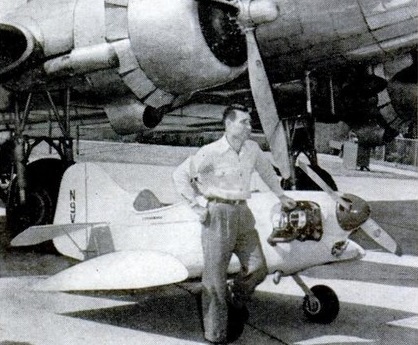
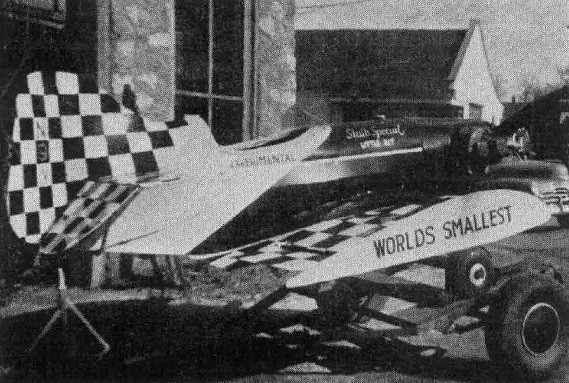
The Staib LB-2, also called the Little Bastard, Little Bit and The Monster, is a homebuilt aircraft design of Wilbur Staib. It once held the title as the “world’s smallest monoplane”. Staib flew his aircraft in airshows with the title “The Diamond Wizard”.

The LB-2 is a single engine low-wing, open cockpit monoplane with conventional landing gear. LB-2 was the considered the “World’s Smallest Monoplane” when built to take the title from Ray Stits 7 ft 6 in span aircraft. The wing section was adapted from a Piper Cub airfoil.

Named the “Little Bit”, but nicknamed the “Monster” it would do 160 mph., and was used for “one flight around the pattern” at exhibits, and was not flown other-wise.

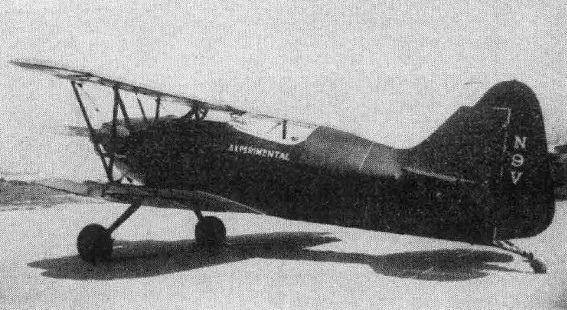
It was later dismantled for parts, as a ” hazard to the life and limb of Wilbur Staib”. Powered by an 85 hp. Continental engine, it weighed 390 lb empty. It bore the registration number N-9V(X), leading one to believe that a biplane may have been built from the remains of the “Monster”. Originally, the biplane had a tail group similar to that of the “Monster”, though later modified, and the fuselages are quite similar.

LB-2
Powerplant: 1 × Continental C-85, 85hp
Wingspan: 7 ft 6 in (2.29 m)
Wing area: 31 sq ft (2.9 m2)
Airfoil: Clark Y
Length: 11 ft (3.4 m)
Empty weight: 390 lb (177 kg)
Fuel capacity: 5 U.S. gallons (19 L; 4.2 imp gal)
Maximum speed: 140 kn (160 mph, 260 km/h)
Cruise speed: 130 kn (150 mph, 240 km/h)
Stall speed: 100 kn (120 mph, 190 km/h) est.
Endurance: 1 h
Crew: 1

Staib LB-1 Special

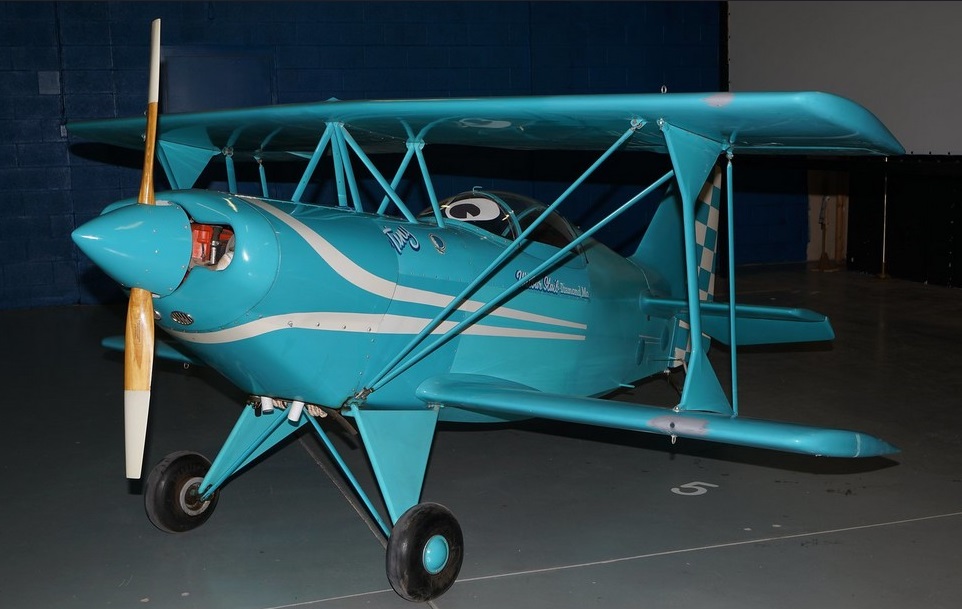
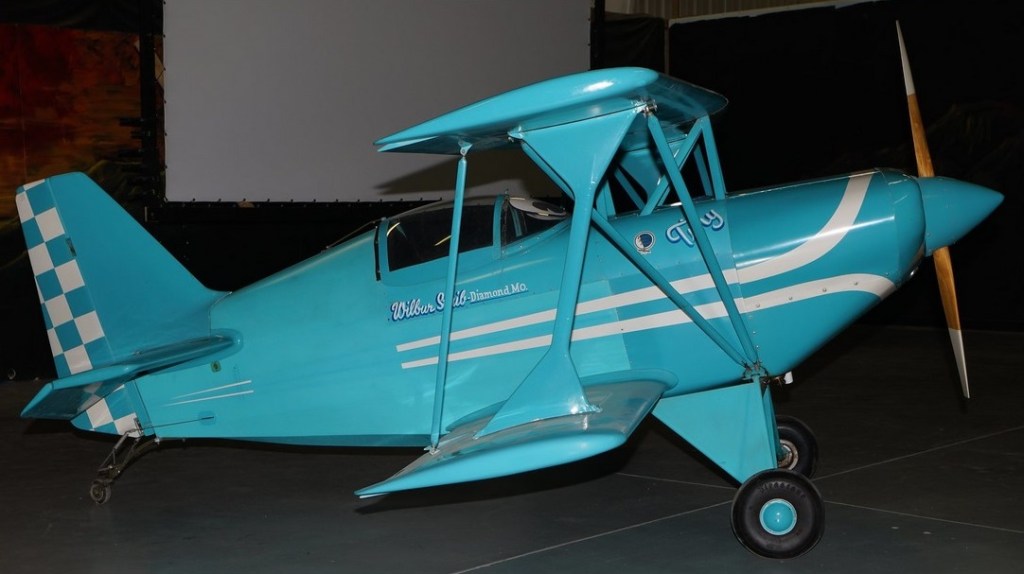
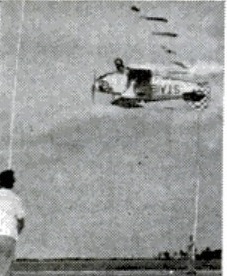
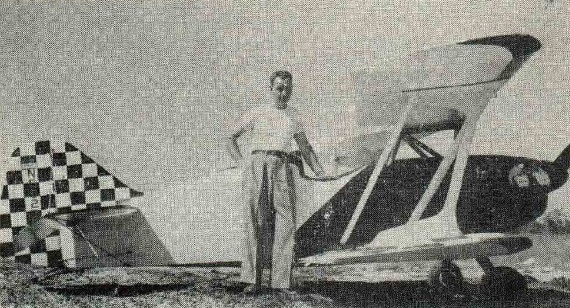
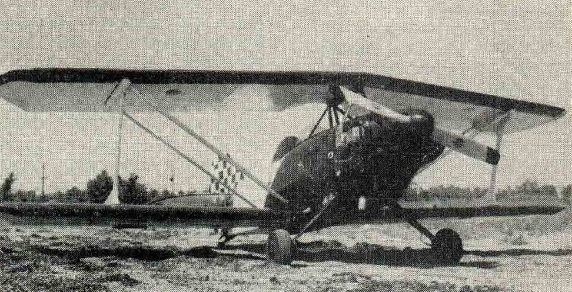
Designed and built by Wilbur Staib, the LB-1 N5927V (X) was a single engine, open cockpit biplane with conventional landing gear. The low-cost construction included using brazed steel bedspring wire for wing-ribs, and bed-sheet muslin covering. Metal ribs are spaced on a wooden spar and normal construction methods are used throughout. The airfoil was patterned on a Taylorcraft BC-12D. Fuel is in two 6 USG tanks in the fuselage. The aircraft used three fuel tanks: one in the headrest, one in the baggage compartment and one against the firewall. The red and white checkerboard-painted aircraft was outfitted with a smoke system for air show work.

The top wings are swept back, and lower wings are straight. Both sets span 17 ft. Note that the centre pylon slopes inward from the fuselage top. Arrangement of the other struts is a pair of parallel struts and I-struts connecting the wings at the outer brace point. Ailerons are only provided on the lower wings.

Staib used the LB-1 to perform on the pro-akro circuit, performing stunts such as inverted ribbon cuts. His LB-1 was comparable to the Pitts Special flown by Betty Skelton at the same shows. The aircraft performed from 1949 to 1952.

By 1955 it had flown approximately 1000 hours. The prototype was registered as late as 1990.

Staib LB-1
Powerplant: 1 × Continental C-85
Propeller: 2-bladed Metal
Wingspan: 17 ft (5.2 m)
Wing area: 95 sq ft (8.8 m2)
Length: 15 ft (4.6 m)
Height: 4 ft 9 in
Empty weight: 600 lb (272 kg)
Fuel capacity: 17 U.S. gallons (64 L; 14 imp gal)
Maximum speed: 96 kn (110 mph, 180 km/h)
Cruise speed: 87 kn (100 mph, 160 km/h)
Cruise at 2450 rpm: 110 mph
Stall speed: 48 kn (55 mph, 89 km/h)
Endurance: 2.5hr
Crew: 1