In 1936 E Graydon Stapp built the Stapp B-1 single-place, open cockpit biplane. Registered N13989 c/n ND-1, it was powered by a 40hp Ford engine.
1 engine
Stanton Sunbird
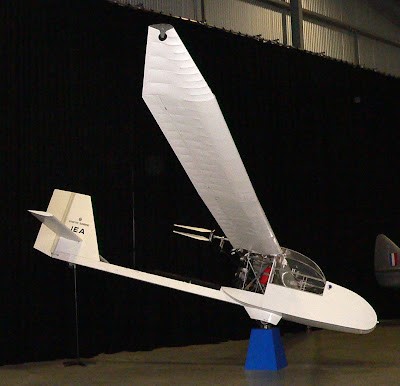
In early 1983, Charlie Stanton commenced a three-year project that would see him design and build the Stanton Sunbird powered glider.
The 28 hp Rotax 277 engine enables a take-off and climb to a height sufficient for the engine to be stopped, the propellor automatically folded and the aircraft to fly as a conventional glider. The engine can be re-started in flight if needed.
The single seat Stanton Sunbird motorglider ZK-JEA utilised various mechanical parts from Charlie’s earlier American Eaglet ZK-GOE.
It has a wingspan of 42 feet (12.8 metres) and was powered by a 27 HP Rotax 277 engine with a feathering propellor that could be restarted in flight if necessary. It was self-launching and flew successfully for over 10 years.
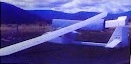
ZK-JEA (c/n 001) was registered as a Class 1 microlight to Charlie Stanton on 1 November 1994, and its first flight was on 26 February 1995 and over the next ten years Charlie made many flights including a maximum height of 13,000 ft and on another occasion a flight of 3 hr 30 min.
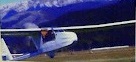
The registration was cancelled on 11 April 1997 as withdrawn.
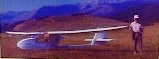
Its final flight was on 16 April 2005.
On Sunday 4 December 2005, during the Ashburton Aviation Museum’s Christmas party, the Stanton Sunbird was donated to the museum by Charlie and his wife, Phyllis, where it is now on display.
Engine: 28 hp Rotax 277
Wingspan: 42 ft / 12.8 m
Wing area: 100 sq.ft / 9.2 sq.m
Wing loading: 5.3 lb/sq.ft / 26 kg/sq.m
Airfoil: Epple 748 High Lift
Empty weight: 313 lb / 142 kg
Payload: 214 lb / 97 kg
Max weight: 527 lb / 239 kg
Vne: 81 mph / 132 kph
Cruise: 45 mph / 90 kph
Stall w/flaps: 32 mph / 52 kph
Load factor: +- 4.4g
Service ceiling: 15,000 ft
Standard J
The 1916 Standard Aircraft Corp model J was the first production model. A two-place, open cockpit biplane, they were powered by a 90hp Hall-Scott A-7 engine, and featured a pronounced overhang in the top wing.
An army contract model, many were sold surplus after WW1.
Standard GD-24

The Standard GD-24 (Gates-Day) of 1928 (ATC 2-38) was designed by Charles H Day and first flew on 24 August 1928, piloted by Clyde Pangborn.
A 3-4 seat (in three cockpits) biplane, three were built; NC193E c/n 102, NC442 c/n 103, and NX7286 c/n 101, and possibly also included NC2220. The first two become New Standard D-24.
An optional engine was the 220hp Hispano E.
Engine: 180hp Hispano E
Wingspan: 45’0″
Length: 26’0″
Useful load: 1305 lb
Max speed: 105 mph
Cruise: 90 mph
Stall: 35 mph
Seats: 3-5

Standard JR-1 / E-4
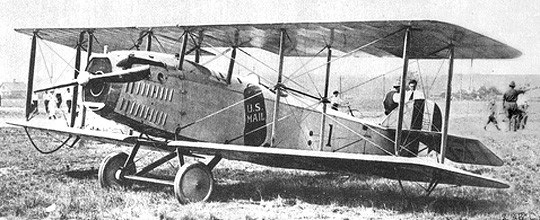
The 1917 Standard JR-1 and -1B were two-place Army advanced trainer, but boldly referred to by the company as “Pursuit”. They were revised J-1/SR-1 with a 175hp Hall-Scott A-5 engine in the JR-1, and 150hp Wright-Hisso A in the JR-1B.
Six JR-1 were built; AS25804, and 34225 to 34229, and six went to the US Mail Service in 1918 as JR-1B with 150hp Wright-Hisso A engine (AS42111 to 42116).
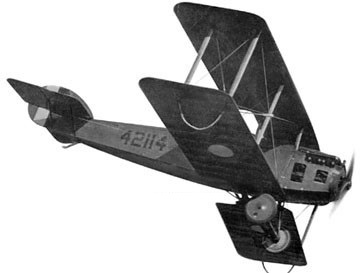
The 1918 Standard E-4 were redesignated JR-1B as a post-war single-place mail plane with a 150hp Wright-Hispano A and a longer top wing.
JR-1
Engine: 175hp Hall-Scott A-5
Useful load: 546 lb
Seats: 2
JR-1B
Engine: 150hp Wright-Hisso A
Speed: 90 mph
Seats: 2
E-4
Engine: 150hp Wright-Hispano A
Standard E-1 / M-Defense
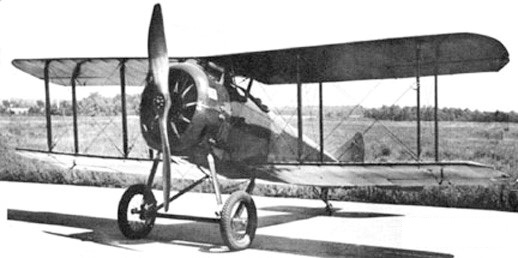
Standard Aircraft Corp made to own designs SJ trainers; E-1 single-seat fighters, used for advanced training; H-3 landplane reconnaissance biplanes and H-4-H floatplanes.
One hundred and twenty-eight Standard E-1 Pursuit Trainer were built, up to 30 with Gnôme Rhône engines (AS33769 to 33770, AS44542 to 44574, and AS47515), the 80hp LeRhône powering most (AS49133 to 49207).
Three LeRhône powered were retitled M-Defense (44575 to 44577).
AS49156 to 49212 are also seen in some records as M-Defense, but those conflict with E-1 s/ns.
Underpowered, none saw combat service. Three were converted in 1919 with lengthened fuselages as MAT experimental radio-controlled aerial torpedoes and reregistered (64228 to 64230).
E-1
Engine: Gnôme Rhône, 100hp
Wingspan: 24’0″
Length: 18’5″
Useful load: 385 lb
Max speed: 105 mph
Stall: 53 mph
Range: 200 mi
Ceiling: 14,500′
Seats: 1
E-1, M-Defense
Engine: LeRhône, 80hp
Wingspan: 24’0″
Length: 18’5″
Useful load: 329 lb
Max speed: 100 mph
Stall: 53 mph
Range: 180 mi
Ceiling: 14,500′
Seats: 1
Standard SJ
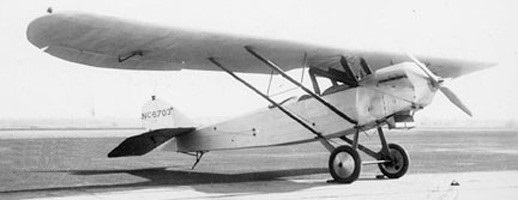
Standard Aircraft Corp made to own designs SJ trainers; E-1 single-seat fighters, used for advanced training; H-3 landplane reconnaissance biplanes and H-4-H floatplanes.
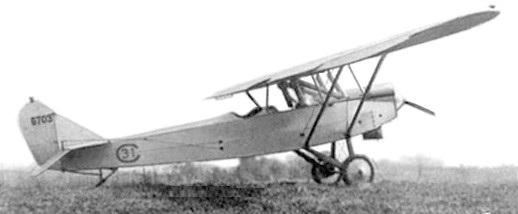
Built in 1916, the SJ was a civil trainer, modified from the J-1 as a two-place high-wing monoplane powered with 90hp Curtiss OX-5 and Sikorsky-designed wing.
Production included NC6703 c/n UNW-9, NC5469.
Standard Twin Hydro / TH-D
The 1917 Standard Aircraft Corp Twin Hydro, or TH-D, was a two-place, open cockpit, monoplane with twin floats; serial AS364. Only the one was built.
Engine: 125hp Hall-Scott A-5a
Wingspan: 69’2″
Length: 33’4″
Speed: 78 mph
Seats: 2
Standard J-1
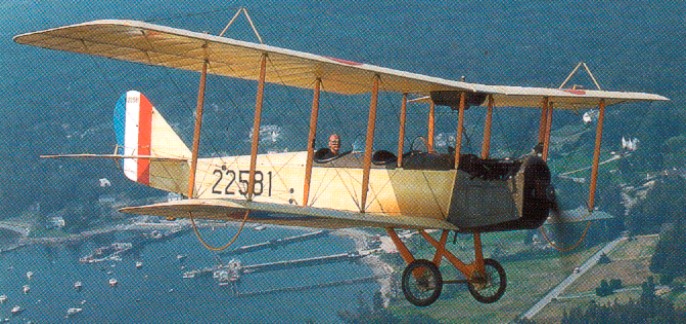
The Standard Aircraft Corp J-1 and SJ-1 of 1917 were Army trainers developed from the Sloane H-3. They are two-place, open cockpit biplanes designed by Charles H Day
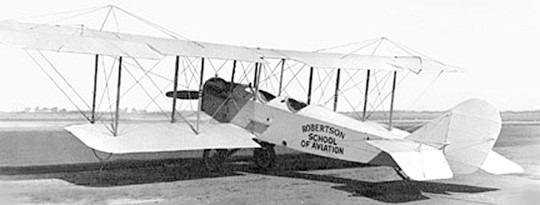
The SJ-1 had an anti-nose over tricycle gear.
The second production model cost government about $8,000.
About 800 were built.
1,601 were built as SJ-1 including those also built by Dayton-Wright (400), Fisher Body Works (400), and Wright-Martin (51) – AS193 to 208, 957 to 1056, 1660 to 2403, 4477 to 4994, 22403 to 22803, and 41208 to 41357.
Many were surplused into civil use after WW1. Walter T Varney Aeroplanes converted many J-1 to 3-4 seats in 1921, from war-surplus Standard J-1.
Engine: Hall-Scott A-7A, 100 hp
Wingspan: 43’10”
Length: 26’2″
Useful load: 513 lb
Max speed: 72 mph
Cruise: 64 mph
Stall: 40 mph
Range: 350 mi
Ceiling: 15,000′
Seats: 2
Engine: Curtiss OX-5
Useful load: 513 lb
Max speed: 72 mph
Cruise: 64 mph
Stall: 40 mph
Range: 350 mi
Ceiling: 15,000′
Seats: 2
Engine: Hispano E, 180 hp
Wingspan: 43’10”
Length: 26’7″
Useful load: 513 lb
Max speed: 72 mph
Cruise: 64 mph
Stall: 40 mph
Range: 350 mi
Ceiling: 15,000′
Seats: 2
Stampe et Vertongen RSV26-180

RSV26-180 O-BADE (c/n 138) was built in 1926 for the Stampe Flying School, the O-BADE was modified as an amphibian version in 1927 and even did some flight trials. Presented later on to the “Administration de l’Aéronautique”, this project never went further and the plane was written off in 1933.
In 1929, after having previously acquired eleven R.S.V. 26/180 trainers, the Aéronautique Militaire Belge placed an order for 14 more aircraft of this type. The machines of this order were specialised night-flying trainers and equipped with a blind-flying hood over the forward pilot seat. Although ancestry to the initial RSV 26/180 is clearly evident, the additional aircraft had been extensively improved by Chief Engineer George W. Ivanov. Readily noticeable is the Morane Saulnier style wide main undercarriage, a Hispano 180hp motor with its new radiator behind the engine, and new central “N” struts. The extend of modifications to the 19 aircraft of this additional order justified the specific designation R.S.V. 26/180 Mark III, while they were given registrations V-12 to V-30 – including 5 more aircraft ordered in 1930(2) and 1931(3).
These additional aircraft were destined to receive the then new AéM standard power plant the 215 hp radial Armstrong Siddeley Lynx in order to compete for an AéM requirement for a new basic trainer. However Stampe and Vertongen’s hopes for a large additional order of the basic trainer version of the RSV 26/180 quickly faded away, when the AéM selected the Avro 504N as its elementary trainer in 1932. Only one example of the Lynx powered R.S.V. 26 was flown, being designated S.V. 26/215 or S.V. 26 Lynx. Some of the 14 initial production R.S.V. 26/180 Mark III’s were reworked aircraft of the initial 11 R.S.V. 26/180 series.
The MK.III’s soldiered on until early 1936 when they were replaced by the S.V. 5 (ordered in 1935). Ten R.S.V. 26/180 Mk.III were sold to civil operators and continued flying until World War II. In the late thirties at least two MK.III’s were noted with a scrap dealer at the Chausée de Dinant, 81A at Anhée.

