Stewart 265

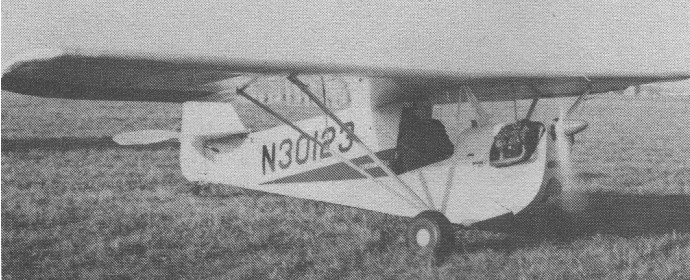
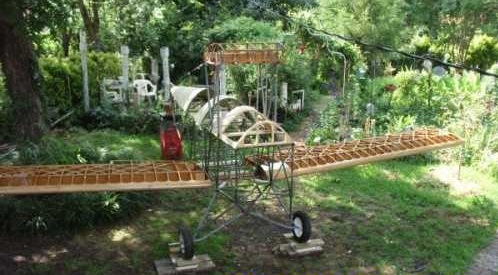
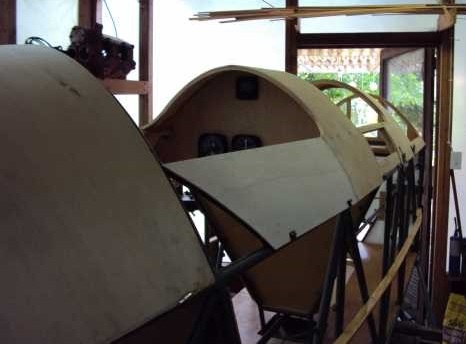
The 265 design was based on the Ryan ST and Don Stewart wanted the airplane to be in his favourite category, which included the Champ, Chief, Cub and all the rest of the 65-85 HP clan. The problem was that there was no engine available that fit the concept at the time.

A publicity release in 1993 for the Mikron III answered my need for the engine and he got down to work and finished the design work on what’s become the 265. Two people, sixty five horse power.

By December 2007, the airplane has over one hundred hours of good service with no problems other than making some new fiberglass parts to remove weight. The airplane cruises at about 90 MPH, stalls about 40 and handles very nicely. The engine burns 3.7 USgph.

Drawings were not for sale.

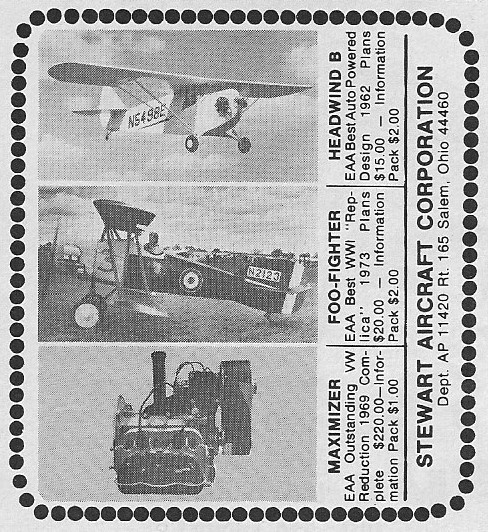
Stewart Headwind / JD1HW1.7 / SAC-1VW

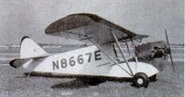
The prototype Headwind N8667E was built over a period of 5 months and was first flown on March 28, 1962.

Dec 1973

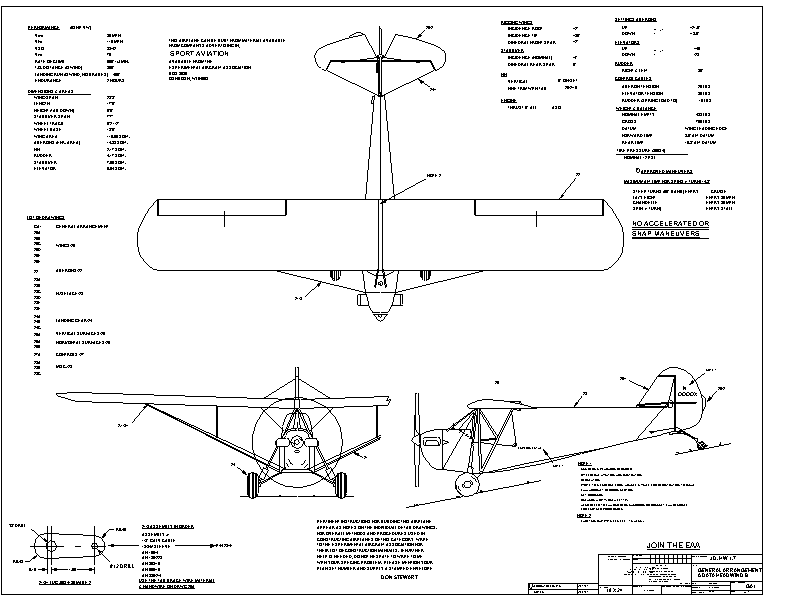
The Headwind is described as an extremely simple airplane of steel tubing construction for the fuselage and tail. The wings are two wood spars with either sawed plywood or formed aluminum ribs. All the fittings are flat, and only two of them require any preassembly. The engine bolts directly to the front of the fuselage, saving a separate engine mount. A 36- to 65-hp VW engine is used. The Headwind was the first design to use the Volkswagen engine in the United States and much development work was required to get the engine to it’s full potential as an aircraft engine. The most important development in the engine work was the design and patenting of a propeller speed reducing unit (PSRU) to allow the engine to develop it’s full horsepower. Many structural (to simplify and make it easier to build) and aerodynamic improvements have been made to the design so that now the only part of the original design still used is the engine mount and the portion of the fuselage between the cockpit and the stabilizer. Everything else is new.

In the forty some years that the Headwind has been in existence, many examples have been built all over the world. Well over one hundred airplanes are now in service powered by a variety of engines, however, only the Volkwagen engine is shown on the plans. No other engine data is published.

Approved Maneuvers:
Steep turns ( 60 degree bank ) Entry – Cruise
Lazy Eight ” – 85 mph
Chandelle ” – 85 mph
Spin ( one turn ) ” – Stall
Maximum aft limit for spins 14.8″

Headwind B

Wing Span 28′ 3″
Length 17′ 0″
Height ( tail down ) 5′ 9″
Gross Wt. 760 lb
Empty Wt. 450 lb
Fuel capaci¬ty: 6 USG
Vno 80 – 85 mph
Vne 110 mph
Vso 38-42 mph
R of C 650 fpm 1st minute
T.O. distance ( 0 wind ) 300′
Landing run ( 0 wind no brakes ) 400′
Endurance 2 hours
Range 195sm
Stabilizer Span 7′ 7″
Wheel Track 5′ 2 1/2″
Wheel Base 13′ 6″
Wing Area 110.95 sq.ft
Ailerons ( eff. area ) 14.83 sq.ft
Fin 2.17 sq.ft
Rudder 4.17 sq.ft
Stabilizer 7.00 sq.ft
Elevator 9.54 sq.ft

Headwind B
Cruise: 85 mph
Stall: 40 mph
Range: 200 sm
Rate of climb: 650 fpm
Takeoff dist: 300 ft
Landing dist: 400 ft
Engine: VW, 53 hp
Fuel capacity: 7 USG
Empty weight: 435 lb
Gross weight: 750 lb
Length: 17 ft
Wing span: 28-3 ft
Wing area: 110 sq.ft
Seats: 1
Cockpit width: 23-25 in
Landing gear: tailwheel
LSA: yes

Stewart Foo Fighter JD2FF

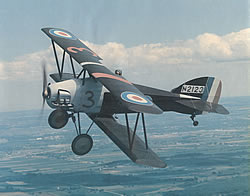
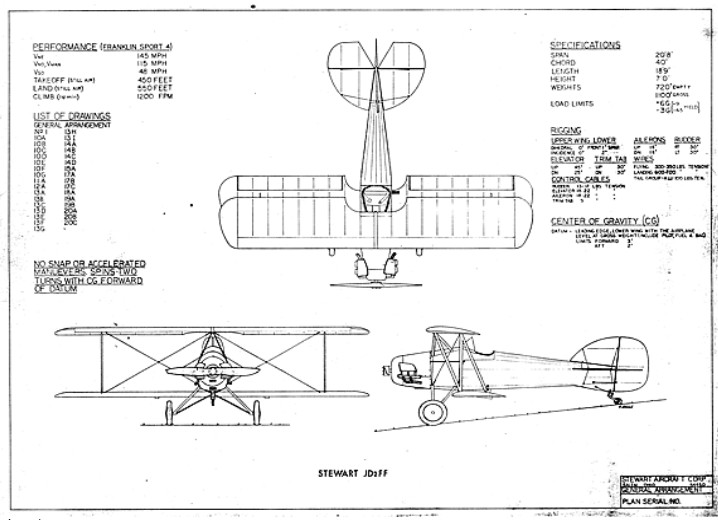
The Foo Fighter was designed and built in 1967 by Don Stewart and Tom Raybourn, Mohawk Airline pilots, and inspired by the Alcock A-1, a World War I war bird that resembles the Sopwith Pup. One distinguishing feature of the Foo Fighter is its lower wing that crosses below the fuselage, aft of the gear, and attaches on the centerline. The airframe is built from steel tubing and covered with fabric. Originally, a Falcon 200 six cylinder CID auto engine was installed, but a 130-hp Franklin Sport Four can also be used. It was first flown in 1970 with a PSRU but the engine proved to be too heavy for the power provided and the airplane was modified to use a Franklin “Sport Four” of 130 HP.

Dec 1973

This engine went out of production and so the airplane was once again redesigned to accept any of the four cylinder Lycoming engines from the O235 up to the O320 series. It is a very docile sport airplane that offers limited aerobatic capabilities.

The prototype was registered N2123.

Engine: Franklin Sport 4, 130 hp
Gross Wt. 1100 lb
Empty Wt. 720 lb
Fuel capacity 19 USG
Wingspan 20’8”
Length 18’9”
Top speed 145 mph
Cruise 115 mph
Stall 45 mph
Climb rate 1200 fpm
Takeoff run 450 ft
Landing roll 550 ft
Range 345 sm

Stephenson Tigershark

This project was started by Steve Stephenson in Dallas, TX, USA, as a Tiger Moth replica. It uses Fisher Flying Product wings and stabilizers. The fuselage and landing gear were designed by Steve Stephenson.

This project started in the spring of 2002. Due to traveling for work for some years and building space issues for other times, the progress has been slow.

Due to scaling issues and the modernization of certain components, and a non scale engine it was decided to rename the aircraft Tigershark.

Sterner Skywalker

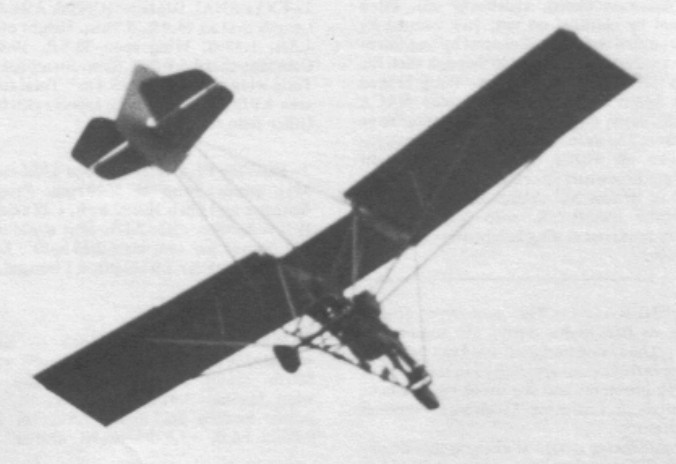
Single seat single engined high wing mono¬plane with conventional three axis control. Wing has unswept leading and trailing edges, and constant chord; flaps fitted. Cruciform tail. Pitch control by elevator on tail; yaw control by fin mounted rudder; roll control by ailerons; control inputs through stick for pitch/roll and pedals for yaw. Wing braced from below by struts; wing profile; double surface. Undercarriage has three wheels in tricycle formation. Push right go right nosewheel steering con¬nected to yaw control. Alumi¬nium tube framework, without pod. Engine mounted below wing driving pusher propeller.

In most respects the Sky Walker is a thoroughly conventional high¬wing tube and Dacron machine, powered by the Cuyuna 430. Both the aircraft and its manufacturer made their debut in 1983 and, as is becoming common with recent ultralight designs of this type, strut bracing is employed rather than the kingpost and cable bracing which has been almost universal hitherto.

Quite the most unusual feature of the Sky Walker is its use of flaps. These lift augmenta¬tion devices can be moved to four positions and at their maximum they reduce the stall speed by 3 mph (5 kph). Controls are conven¬tional three axis, with a side mounted stick controlling the elevator and differential ailer¬ons, and pedals controlling the rudder.

Price of the Sky Walker was $5495 in 1983.

Engine: Cuyuna 430, 30 hp at 6600 rpm
Propeller diameter and pitch 54 x 24 inch, 1.37 x 0.61 m
V belt reduction, ratio 2.1/1
Power per unit area 0.21 hp/sq.ft, 2.3 hp/sq.m
Fuel capacity 5.0 US gal, 4.2 Imp gal, 18.9 litre
Length overall 18.0 ft, 5.49 m
Height overall 9.0ft, 2.74m
Wing span 32.0ft, 9.75m
Constant chord 4.4 ft, 1.33 m
Sweepback 0 deg
Total wing area 140 sq.ft, 13.0 sq.m
Wing aspect ratio 7.3/1
Empty weight 253 lb, 115kg
Max take off weight 510 lb, 231kg
Payload 257 lb, 117kg
Max wing loading 3.64 lb/sq.ft, 17.8 kg/sq.m
Max power loading 17.0 lb/hp, 7.7kg/hp
Load factors; +5.0, 3.5 ultimate
Max level speed 62 mph, 100 kph
Never exceed speed 80 mph, 129 kph
Max cruising speed 62 mph, 100 kph
Economic cruising speed 50 mph, 80 kph
Stalling speed 24 mph, 39 kph (with flaps)
Stalling speed 21 mph, 34 kph (without flaps)
Max climb rate at sea level 600 ft/min, 3.1 m/s
Best glide ratio with power off 11/1
Stephens & Fisher Scamp 36

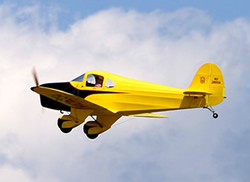
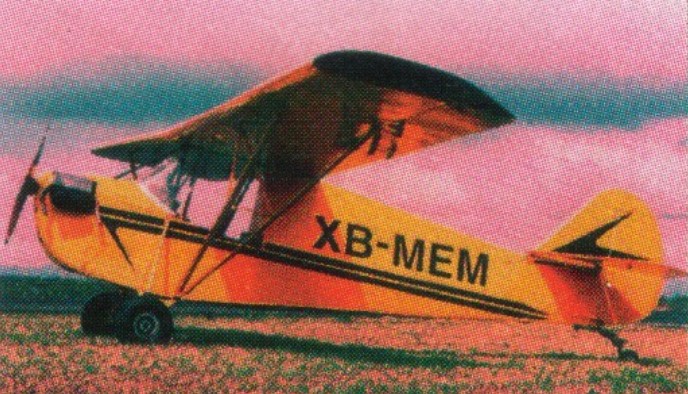
The 1936 Stephens & Fisher Scamp 36 was a single-place, open cockpit monoplane, powered by a Salmson AD-9 engine. It was registered N15893 c/n 1.

It was sold on 26 February 1940, dismantled on 11 February 1940, and sold to Fleetcraft Co (Alexandria MN), who gave it to the National Guard as a ground-school instructional airframe.

The registration was cancelled on 26 April 1948.

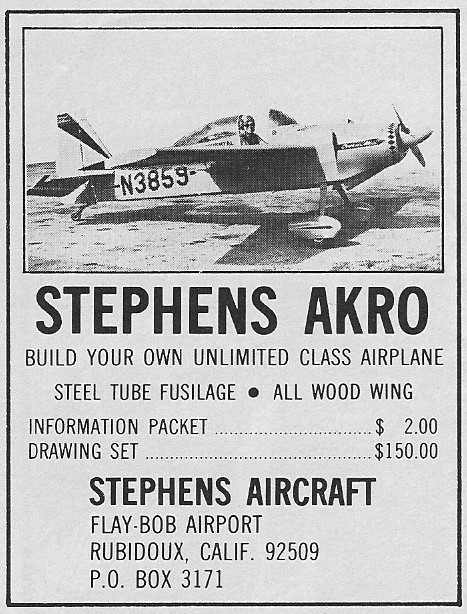
Stephens Akro / Aircraft Technologies Akro 1

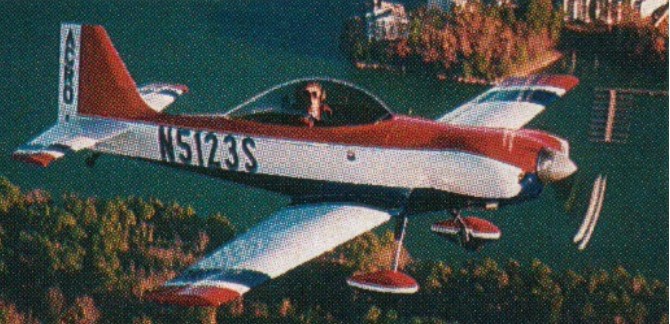
This homebuilt was designed to meet the requirements of aerobatic competition. It is stressed to + 12G and -11G. The Akro’s wing is a one-piece, all-wood structure with two spars, and its fuselage is a fabric-covered steel tube frame. Seating is for one under a sliding bubble canopy. The Model B has both a fuel and an oil system for inverted flight. The Akro is one of the most popular aerobatic ships in the monoplane class. All control surfaces are fully static-balanced.

Dec 73

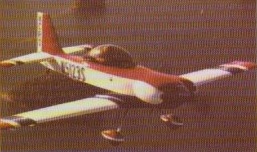
The Aircraft Technologies Akro 1 first flew in March 1994.

Gallery

Gross Wt. 1100 lb
Empty Wt. 830 lb
Fuel capacity 21 USG
Wingspan 24’4”
Length 19’
Wing area: 98 sq.ft
Engine 180-hp Lycoming
Top 192 mph
Cruise 175 mph
Stall 54 mph
Climb rate 2100 fpm
Ceiling 22,000 ft
Takeoff run 400 ft
Landing roll 900 ft
Range 375 sm
Seats: 1

Aircraft Technologies Akro 1
Engine: Lycoming IO-360, 200 hp
HP range: 100-200
Top speed: 270 mph
Cruise: 220 mph
Stall: 58 mph
Range: 1000 sm
ROC: 3500 fpm
Service ceiling: 25,000 ft
Fuel cap: 47 USG
Empty wt: 780 lbs
MTOW: 1250 lbs
Length: 17 ft
Wing span: 20 ft
Wing area: 60 sq.ft
Seats: 1
Undercarriage: tailwheel
Ultimate load: +/- 15g
Roll rate: 360 deg./sec

Aircraft Technologies Akro 1
Engine: Lycoming IO-360, 200 hp
Wing span: 6.1 m
Wing area: 5.52 sq.m
MAUW: 567 kg
Empty weight: 354 kg
Fuel capacity: 178 lt
Max speed: 434 kph
Cruise speed: 354 kph
Minimum speed: 93 kph
Climb rate: 15 m/s
Seats: 1
Fuel consumption: 40 lt/hr
Plan price (1998): $225
Kit price (1998): $22,900