In 1935 Truman F Taylor built the Territory of Taylor, single place, open cockpit biplane, registered N9409, powered by a 60hp LeBlond.
1 engine
Taylor Experimental
A two-seat cabin monoplane of all-metal construction with a high lattice girder with diagonal surface bracing.
Built at Hamsey Green, UK, by designer R.Taylor in 1936. Only one was built of three planned. The designer died in the crash of the prototype in 7 January 1937 on its first flight.
c/n TE.2 G-AEPX prototype built with Cirrus Minor I engine.
c/n TE.3 G-AEPY single seat, not built
c/n TE.4 G-AEPZ two-seater, not built
c/n G-AERA not built
Taylor Thunderbird
In 1931 (H B) Taylor Automobile Works built the Thunderbird home-built NX12219 with an experimental license for “new type ailerons and flaps”.
A single place open cockpit monoplane, powered by a 30hp Szekely, by 1935 it had been repowered with an Anzani engine.
On 8/2/41 it was sold to the New Mexico Highlands University National Defense Training Branch, and the registration was cancelled in 1948.
Tatin-Mallet 1907 Monoplane
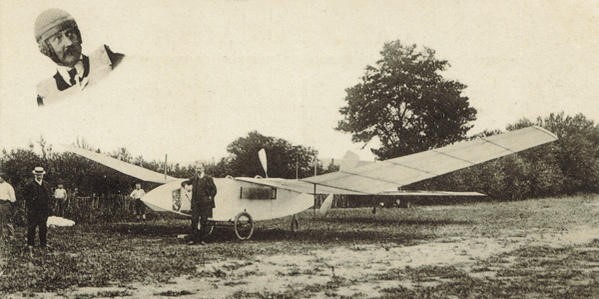
The Tatin-Mallet Monoplane of 1907 was funded and piloted by Comte Henry de la Vaulx at St. Cyr.
Tatarinov Aeromobile

Tatarinov started building his “Aeromobile” at Petrograd in 1909 with a grant provided by the Russian Ministry of War. The project was never completed, since Sukhomlinov, Russian Minister of War at the time, thought the work was progressing too slowly and consequently, the continuation of funding was denied. In despair, Tatarinov set fire to his rotorcraft and the hangar which housed it. The “Aeromobile” had four rotors, each turning at the end of an X-form of beams. Beneath it the chassis contained an EDTT 25 hp water-cooled engine which was to drive the rotors as well as a five-bladed “centrifugal propeller”. The pilot’s seat and controls were placed behind the engine. The total weight of the machine was 1300 kg.
Task Vantage / Sneeky Pete

This single pilot manned test-bed was built by Jim Kern’s TASK Research Inc. of Santa Paula, California in 1982, which supplied many composite structures/components for the Rutan designed Long-EZ, Defiant, and Voyager aircraft during the early to mid-1980’s under contract to Northrop’s Electric Mechanical Division in the late 1980s to test early avionics/electronic equipment for remotely piloted vehicles.
The Vantage was a single-seat pusher canard which resembled a Rutan Long-EZ, but was slightly larger with more rounded fuselage sides, a large bulbous two piece canopy. The craft also incorporated an extra long pitot tube in the front. Power was supplied by a single Lycoming O-360 (180 HP) engine turning a variable pitch wood or composite propeller. The aircraft incorporated a retractable nose gear which was powered by an electric motor. The wing root to fuselage joint was blended/contoured and flowed seamlessly into the cockpit. Nicknamed “Sneeky Pete” by its pilots, the undesignated aircraft was outfitted with various special avionics depending on the specific mission requirement. The exterior was painted white, with the name “Sneeky Pete” written along the side of the fuselage, though this is not apparent in the one picture that was released.
Although the maiden flight of “Sneeky Pete” took place at Mojave Airport on July 18th, 1982 with Dick Rutan at the controls (Mike Melvill, along with many others served as test pilots for this aircraft), Rutan Aircraft Factory or Scaled Composites apparently were not involved in the elaboration and building process of the aircraft. It is believed that the flight test program for “Sneeky Pete” first took place at the remote Groom Lake test site in Nevada widely known as “Area 51” (AFFTC DET. 3) in late 1982. The aircraft was periodically tested over the years with various equipment, put into seclusion at various times, but has never been officially retired. During its “down time”, “Sneeky Pete” was most likely stored in a top-secret facility known as “Dyson’s Dock” at Groom Lake which was also the location of the Northrop “Tacit Blue” technology demonstrator after it was retired in 1985.
In 1993, “Sneeky Pete” was acquired and rebuilt by Scaled Composites and experimentally fitted with a Williams FJ107 jet engine, a small turbofan engine designed to power cruise missiles and developed by the Williams International company from their WR19.The FJ107 was notably the powerplant for the AGM-86 ALCM, BGM-109 Tomahawk, and AGM-129 ACM, as well as the experimental Williams X-Jet flying platform. In its jet-powered form, the aircraft was first tested in August 1993 and was known at Scaled Composites as the Jet LEZ Vantage or Model 61-B. A striking feature of the revised aircraft was a square, flat section, as seen from below, added at the back of the aircraft. The section wasn’t as wide as the strakes at the front wing roots but was longer along the fuselage, in comparison.
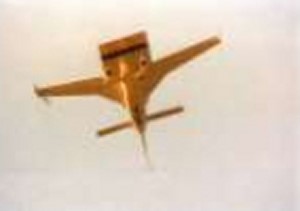
Only one airframe was ever constructed. The data gathered throughout the “Sneeky Pete” program contributed to today’s advanced UAVs such as the Northrop/Grumman Global Hawk, General Atomics Predator, Boeing X-45, Northrop/Grumman X-47 Pegasus. The aircraft was returned to a more conventional configuration and still appears on the civil register as being owned by Scaled Composites, but its current whereabouts are unknown, and, like many experimental variants of the Long-EZ, it is not properly documented, due to its classified use by the military.
N3142B c/n 1
Powerplant:1 x Lycoming O-360 (180 hp) / 1 x Williams FJ107 / 1 x Lycoming IO-320 (150 hp)
Wingspan: 28 ft.
Overall length: 17ft. (approximate)
Weight: up to 12,499 lb. (with Lycoming engine)
Crew/passengers: 2
Task Silhouette
The 1984 Task Research Inc Silhouette was a single-place cabin, low-wing monoplane of composite construction for kit builders.
The prototype was registered N84TR.
Engine: 44hp Rotax 447
Wingspan: 31’20”
Length: 19’4″
Cruise: 120 mph
Stall: 52 mph
Ceiling: 14,000′
Seats: 1
Taris No.2 monoplane / Monoplan de course Paul de Lesseps

This peculiar monoplane, also known as the “Monoplan de course Paul de Lesseps”, was designed and built in 1910 by Taris, a Polytechnique graduate that taught aerodynamics at the Ligue Nationale Aérienne. A characteristic feature was its intricate triangular fuselage, uncovered and the front and covered at the rear and with a triangular cockpit floor breaking the lines. It was powered by a 50 hp Gnôme driving a ground-adjustable four-bladed propeller. It crashed in 1911.
Tapanee Levitation
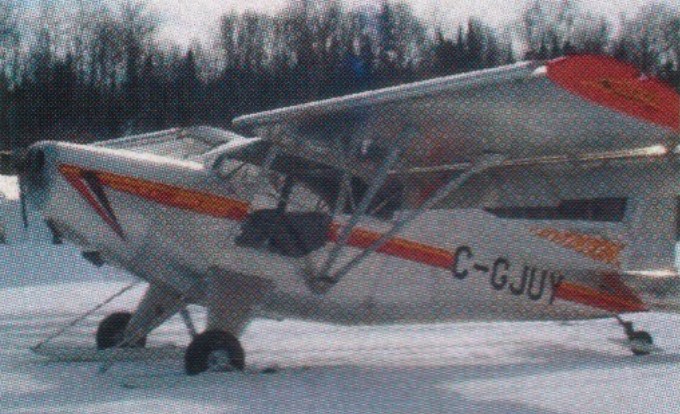
The Tapanee Levitation 4 is a Canadian four-seat STOL aircraft designed to be homebuilt by Michel Lequin for Tapenee Aviation of Quebec. A larger version of the companies earlier Pegazair bushplane, the Levitation is a high-wing monoplane with V-strut bracing, first flown in 2002. Powered by a 180 hp (134 kW) Lycoming O-360 flat-six piston engine with a two-blade propeller. The Leviation has a fixed conventional landing gear with a tailwheel and a cabin holding a pilot and three passengers in two rows of side-by-side seating. By December 2004 five kits had been sold.
Variants:
Levitation 2
Levitation 4
Specifications:
Levitation
Engine: Lycoming O-360, 180 hp / 134 kW
Propeller: Hartzell 80 in
Length: 7.47 m (24 ft 6 in)
Overall Height: 2.44 m (8 ft 0 in)
Wingspan: 10.21 m (33 ft 6 in)
Wing area: 180 sq.ft / 16.72sq.m
Wing Loading: 13.9 lb/sq.ft
Gross weight: 2500 lbs / 1133 kg
Empty Weight: 621 kg (1368 lb)
Usefull load: 1138 lbs
Stall Speed: 38 Mph / 62 km/h
Cruise speed: 115-120 Mph
VNE: 159 Mph / 255 km/h
Range at cruise: 575 sm / 925 km
Gross wgt takeoff dist: 400 ft
Landing Distance: 300 ft
Climb rate at Gross: 700 fpm / 3.6 m/s
Power Loading: 13.9 lb/hp
Cabin Length: 109 in
Cabin width at elbow: 48 in
Usable fuel: 55 US Gallons
Fuel Optional, Wings: 36 USG
Baggage Area: 25 cu.ft
Seats: 4
Tapanee Pagazair-100
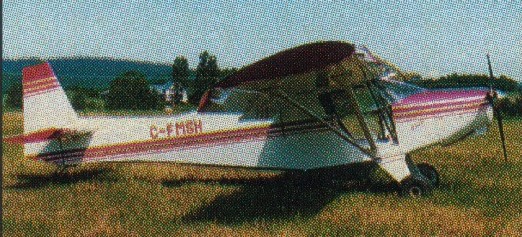
A conventional sheet metal, tubing and fabric high wing tail dragger. It was available as a kit or plans.
Engine: Continental O-200, 100 hp
HP range: 85-115
Length: 22.5 ft
Wing span: 29 ft
Wing area: 150 sq.ft
Fuel capacity: 36 USG
Empty weight: 791 lb
Gross weight: 1450 lb
Top speed: 122 mph
Cruise: 105 mph
Stall: 28 mph
Range: 660 sm
Rate of climb: 900 fpm
Takeoff dist: 250 ft
Landing dist: 300 ft
Seats: 2
Cockpit width: 40 in
Landing gear: tailwheel

