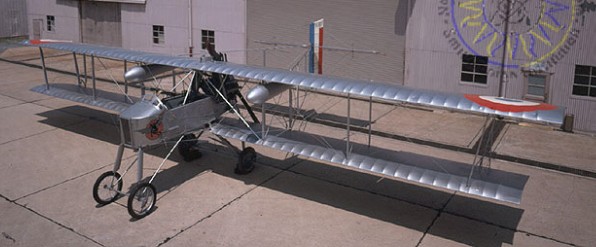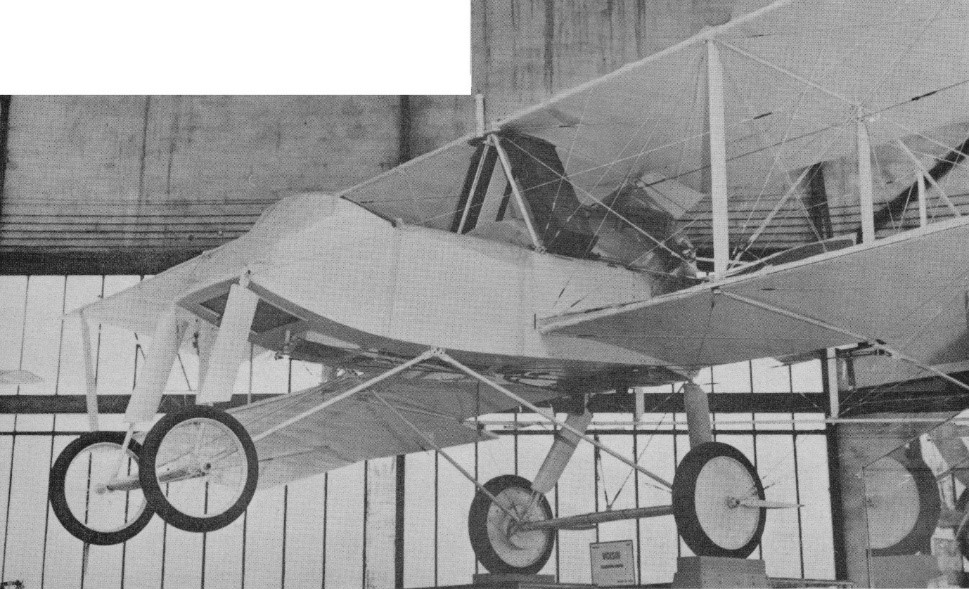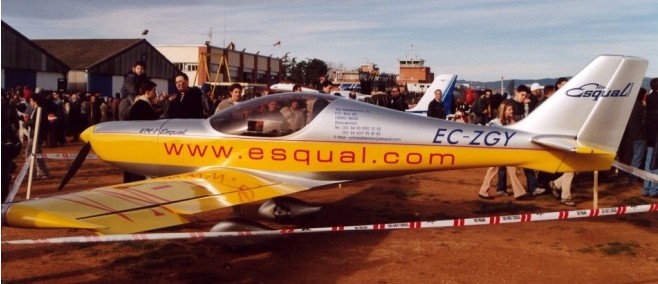
Vol Mediterrani VM-1 Esqual / Esqual Aerocomp AB VM-1

The VM-1 Esqual is a two seat light plane manufactured in composite with high density PVC foam and Epoxy resins. Laminated in a mould and vacuum cured in an oven at constant controlled temperature and humidity.

The fuselage is monocoque. The safety reinforced cockpit has twin axle composite beams all around its frame. The low cantilever wing has positive changing flaps (as high lift devices). The wing structure has a composite sandwich skin with a main double “T” composite spar and an accessory spar near the trailing edge.
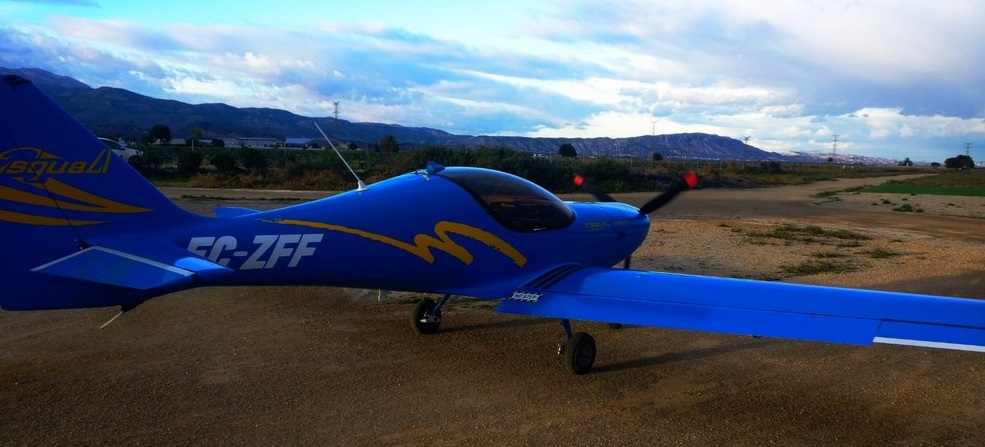
Vol Mediterrani VM-1 Esqual

The cockpit seats are side by side. The rudder pedals are adjustable in flight. Electric operated flap and mechanical trim are standard, electric trim is an option. Independent ventilation openings are standard, a cabin heater is an option. The luggage compartment (with 50lts capacity) is located behind the seats and can be accessed during flight.

Vol Mediterrani VM-1 Esqual

The landing gear of the Esqual has a classic tricycle gear which is made of 7175 T6 aluminium grade. The main gear legs are suspended in the main carry through beam together with the reinforced wing spar zone. The main wheels are equipped with independent hydraulic brakes for steering. The nose gear leg is supported in the engine mount and equipped with a free swivel nose wheel.
2009 Price: 75000 EURO

Engine: Rotax 912 ULS (100 HP)
Wing span: 9.10 m
Wing area: 9,0 m²
Length 6.08 m
Height 1.94 m
Empty Weight: 265 kg / 584 lbs
Maximum weight: 544 Kg
Fuel capacity: 2 x 50 lts
VNE: 173 kt / 199 mph / 320 kmh
Stall: 33 kt / 39 mph / 62 kmh
Cruise: 135 kt / 155 mph / 250 kmh
Climb Rate: 1800 ft/min / 9 m/s
Glide Ratio: 1:19
Take-off distance (50ft obstacle): 450 ft / 138 m
Landing distance (50ft obstacle): 660 ft / 200 m
Roll rate (45/45º) 2 sec
Cockpit width 110 cm
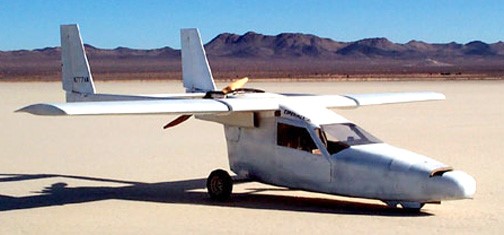
Voliamo S. Franscesco

S. Franscesco 3

The S. Franscesco side by side two seater has a spaceframe fuselage and fabric covered wooden wings.

The prototype first flew in 1976.

S. Franscesco 3
Engine: Limbach, 80 hp
Wing span: 9.7 m
Wing area: 12 sq.m
MAUW: 450 kg
Empty weight: 280 kg
Fuel capacity: 50 lt
Max speed: 170 kph
Cruise speed: 140 kph
Minimum speed: 60 kph
Climb rate: 3 m/s
Seats: 2
Fuel consumption: 10 lt/hr

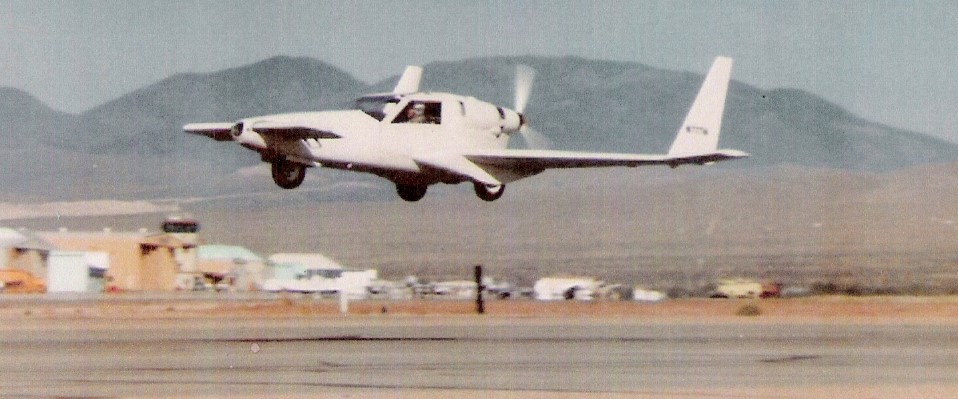
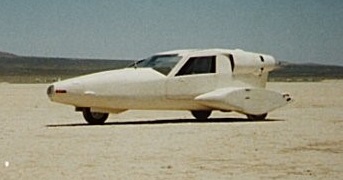
Volante Aircraft Co Volante

The ultimate goal of the Volante flying car program was to prove to the aviation community and to the public, by actual demonstration, that the flying car, properly designed, can bring revolutionary new capabilities to a transportation system.

The conversion process, aircraft to car and trailer and back, be very simply carried out in a very short time. They set 10 to 12 minutes as a goal. All flying cars require some conversion, and 12 minutes is a good trade for a lightweight, unencumbered car.

Aircraft
Engine: 180 hp
Wingspan: 27 ft
Length: 20 ft
Height: 7 ft
Empty weight: 1300 lb
Gross weight: 2000 lb
Baggage: 7.6 cu.ft
Cruise speed: 157 mph
Stall: 65 mph
Max range: 650 mi
TO dist: 700 ft

Car
Width: 5 ft 6 in
Height: 4 ft
Length: 13 ft 5 in
Empty weight: 640 lb
Gross weight: 1200 lb

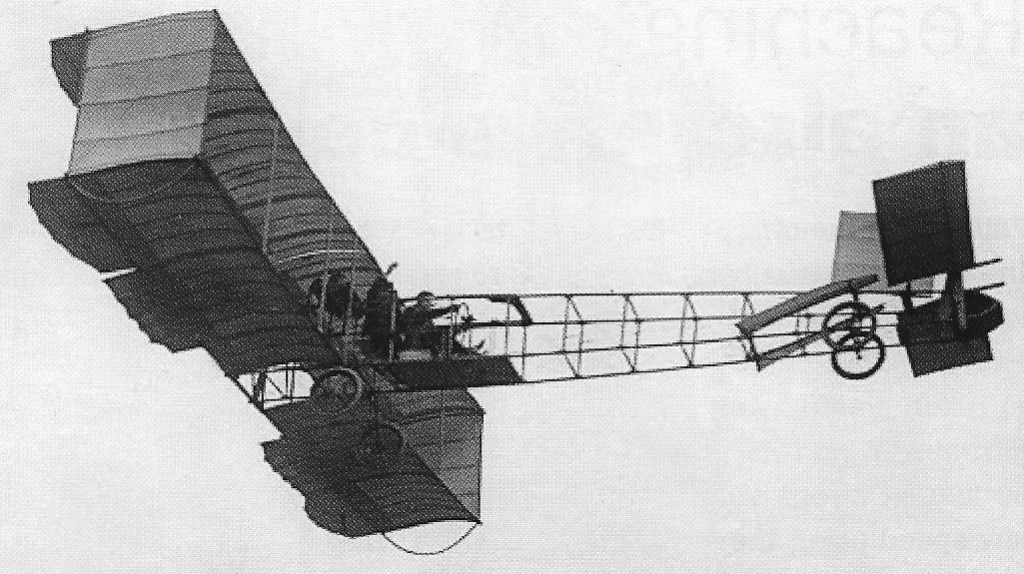
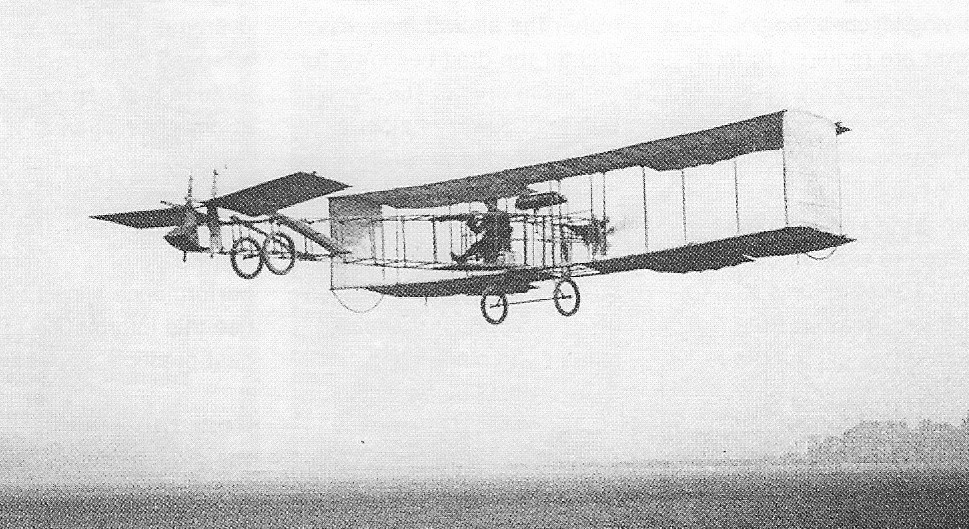
Voisin Canard

March 1911

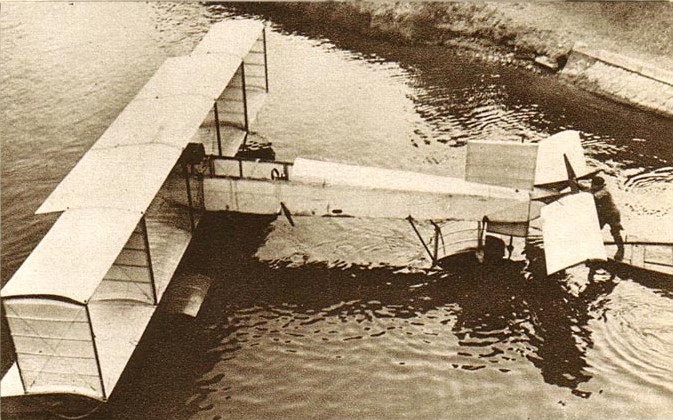
The Voisin Canard was an aircraft developed by Voisin brothers during 1910 and first flown early in 1911. It was originally flown as a landplane: with the addition of floats it became one of the first seaplanes used by the French Navy.

3 February 1911

As first flown at Issy-les-Moulineaux by Maurice Colliex, the aircraft had an uncovered fuselage of wire-braced wood construction with the 50 hp (37 kW) Rossel-Peugeot rotary engine at the rear and the front-mounted control surfaces consisting of an all-moving elevator divided into two halves, one either side of the fuselage, a rectangular balanced rudder mounted above the elevator, and a pair of short-span fixed horizontal surfaces with a high angle of attack mounted behind and below the elevators. Voisin’s characteristic side-curtains were fitted to the outermost pair of interplane struts and roll control was achieved using trailing-edge ailerons on both upper and lower wings.

Voisin Canard floatplane being tested on the Seine, 3 August 1911

The aircraft was judged a success and Voisin manufactured a number of examples. There are variations between the individual production aircraft: the two examples flown in the French military aircraft trials in 1911 had a wingspan of 15 m (49 ft 3 in).; one was powered by a 56 kW (75 hp) Renault and the second by a 97 kW (130 hp) Gnome. The number of sets of side curtains varied, some aircraft having two or even three sets.

The seaplane variant, fitted with floats designed by Henri Fabre, was initially built to the order of Prince Bibesco, who intended to use it make a flight across the Black Sea. It was first successfully flown from water on 25 April 1911.

One example was bought by the French navy in March 1912 to equip the seaplane tender La Foudre, the first seaplane carrier in history. A second example was delivered to the Navy in December 1913.

47 of the 1911 Voisin Canard (amphibian) were built.

1911 Voisin 17m canard biplane

Powerplant: 1 × Gnome, 52 kW (70 hp)
Wingspan: 12 m (40 ft)
Wing area: 43.9 m2 (473 sq ft)
Length: 7.9 m (26 ft)
Gross weight: 549 kg (1,210 lb)
Maximum speed: 90 km/h (56 mph, 49 kn)
Seats: 2

1911 Voisin Canard (amphibian)
Span: 36’1″
Speed: 47 mph

1911 Voisin 17m canard biplane
Span: 55’9″
Length: 37’9″
Weight: 2140 lb empty

Voisin-Farman II

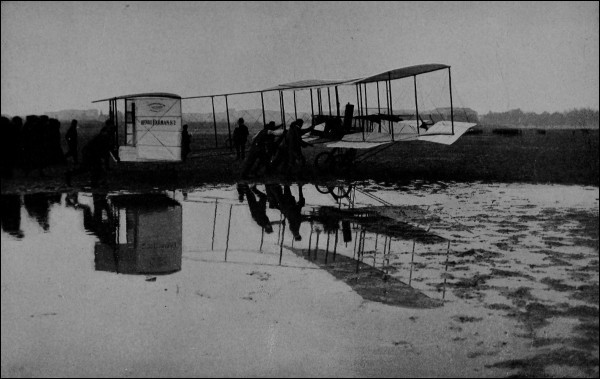
Farman’s First Biplane at Issy-les-Moulineaux returning to the Hangar after a Flight

During 1908, the Voisin brothers built for Farman another aircraft, to be called the Farman II, incorporating refinements in the design based on Farman’s specifications. After the break in his association with Voisin in early 1909, Henry Farman started aircraft construction for himself.

Voisin Zodiac

Voisin flying his Zodiac aeroplane

Originally, George White of Bristol Aeroplanes wanted to build licensed copies of the Zodiac biplane designed by Gabriel Voisin, after one was bought by White to show at the 1910 London Aero Meet.
After taking the Zodiac to Brooklands airfield for tests, no one could get the plane of the ground—perhaps due to an under-powered engine to plane weight ratio, and the shallow camber of the wing section—a fact commented on by the pioneering aviation magazine, Flight.

To compensate for the wing problem, White and company added a different set… but still… a weak motor is a weak motor.

On May 28, 1910, pilot Maurice Edmond was able to achieve a short flight, but on June 10, 1910, an accident that damaged its undercarriage had the frustrated crew give up on the Zodiac… even with five other such copies being built by the British and Colonial Aeroplane Company at its headquarters at Filton.

Voisin L.A.5 / 8 / 10 / Avion Canon / Avion de Bombardement

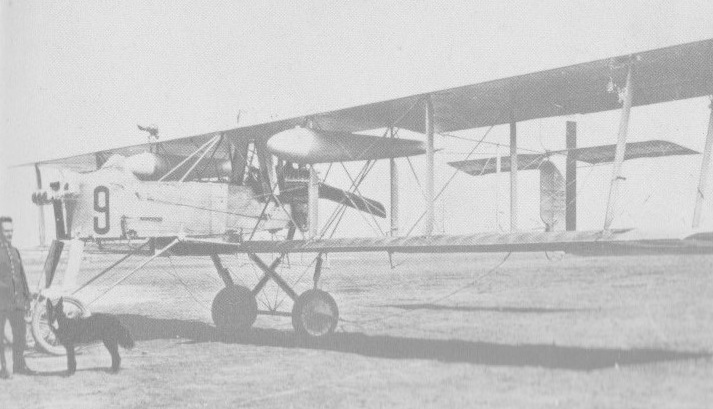
The 1915 Type L.A.5 B2 two-place observation-bomber was powered by a 140 hp Salmson Canton-Unne pusher engine. After 1917 the 5 B2 was relegated to training.

Voisin L.A.5 Type V First Aerial Dogfight

L.A.5 B2

The Voisin Type 8 was specifically designed as a bomber and manufactured 1916-1918. A three bay biplane, the wings are of mixed steel and wood construction, with fabric covering, and four wheel undercarriage. The cockpit nacelle is steel framed. Ailerons are on all four wings and the tail unit, consisting of rudder and elevators only, are carried on open steel booms.

The Peugeot engine drives a two blade pusher propeller. Fuel is held in streamlined tanks under the top wing. One or two machine-guns are mounted in the front cockpit and up to 396 lb of bombs.

Voisin 8

When manufactured in February 1916, it was equipped as a night bomber, with internal bomb racks, cockpit lights, and provision for landing lights.

Continuous development, and the use of increasingly powerful engines, enabled it to remain in service throughout the war. The original version, the Type L, had a 70 hp Gnome engine and was unarmed.

The Voisin Type 8 entered service with French night bombing squadrons in November 1916.

Development was directed along two lines, producing night bomber and ‘Avion Canon’ versions. The latter mounting a 37mm or 47mm gun for use against ground targets.

Avion de Bombardement

The final version was the Type 10, with a 300 hp Renault engine and bombload of 600 lb.

A total of 1100 were built, mainly for us as bombers.

Gallery

Type L
Engine: Gnome, 70 hp
Span: 55’9″

Voisin 5
Engine: Canton-Unne, 150 hp
Wingspan: 52 ft 4.5 in
Length: 31 ft 6.5 in
MTOW: 3240 lb
Speed: 74 mph
Ceiling: 1500 ft
Endurance: 3 hr 30 min
Crew: 2
Armament: 1 x mg
Bombload: 130 lb

LA.5 B2
Engine: 140 hp Salmson Canton-Unne
Wingspan: 48.35 ft
Length: 31.16 ft
Gross weight: 3080 lb
Speed: 62 mph

Voisin 5 LAS Canon
Engine: Salmson R9, 138 hp
Length: 31.824 ft / 9.7 m
Height: 9.514 ft / 2.9 m
Wingspan: 44.291 ft / 13.5 m
Wing area: 339.819 sqft / 31.570 sq.m
Max take off weight: 2513.7 lb / 1140.0 kg
Weight empty: 1719.9 lb / 780.0 kg
Payload: 793.8 lb / 360.0 kg
Max. speed: 65 kts / 120 km/h
Initial climb rate: 285.43 ft/min / 1.45 m/s
Service ceiling: 13123 ft / 4000 m
Wing load: 7.38 lbs/sq.ft / 36.00 kg/sq.m
Range: 216 nm / 400 km
Endurance: 4 h
Crew: 2

Voisin 8
Engine: Peugeot 8Aa, 220 hp
Wingspan: 18.0 m (59 ft)
Length: 10.4 m (34 ft)
Height: 4.0 m (13 ft)
Weight: Empty, 1,310 kg (2,888 lb)
Gross, 1860 kg (4,101 lb)
Airframe: Wood
Covering: Fabric
Seats: 2

Voisin 8
Engine: Peugeot 8Aa, 220 hp
Wingspan: 61 ft 8 in
Length: 36 ft 2 in
Height: 11 ft 6 in
Empty weight: 2893 lb
MTOW: 4103 lb
Max speed: 75 mph at 6000 ft
Service ceiling: 14,100 ft
Endurance: 4 hr

Type 10
Engine: 300 hp Renault
Bombload: 600 lb

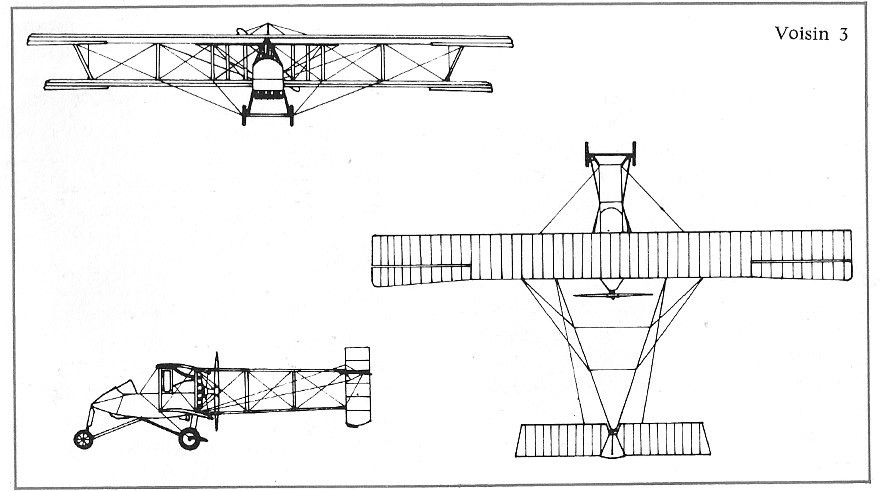
Voisin 1912 Type / Type 1

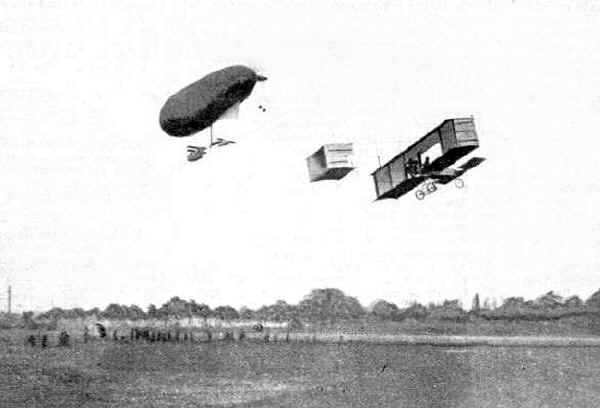
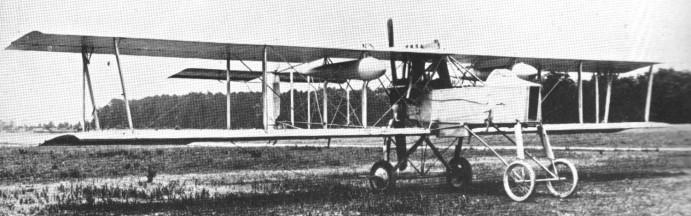
Two identical pusher biplane machines, with Antoinette engines, had been built by the Voisin brothers for two early aviation pioneers, one for Léon Delagrange in March 1907, and the second for his friend and rival the Anglo-French pioneer Henry Farman (1874-1958) in October 1907.

Gabriel and Charles Voisin were among Europe’s leading pioneer aviators. Their classic 1907 pusher biplane was one of the most significant aircraft of the pre-World War I era. In 1912, they developed a military version. Thereafter they built aircraft almost exclusively for military contracts.

The Voisin 1912 Type, as it was referred to by the French military, also called the Type 1, launched the standard configuration of almost all Voisin aircraft throughout the war. The Voisin design philosophy was conservative. There were only slight, incremental design changes in the airframes during the war. Improvements principally consisted of installing more powerful engines, usually necessitating wings of greater span.