The 1909 Voisin tractor biplane was designed and built by Feres Voisin in France.
Span: 32’10”
Length: 29’6″
The 1909 Voisin tractor biplane was designed and built by Feres Voisin in France.
Span: 32’10”
Length: 29’6″
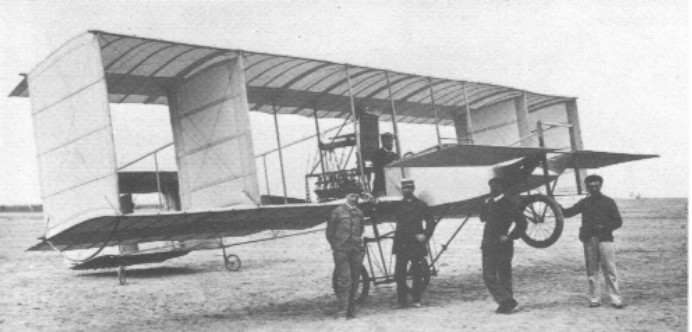
Voisin of the type used for the first officially recognised flight by a British pilot in Britain, which was made in April 1909 by J. T. C. Moore-Brabazon (later Lord Brabazon of Tara), flying his own Voisin named Bird of Passage.
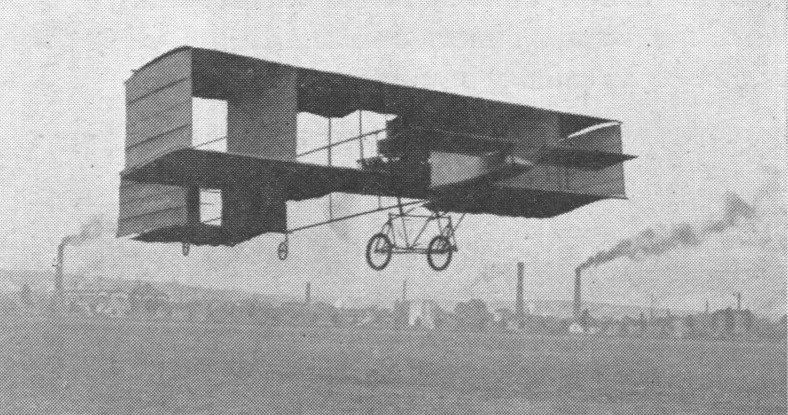
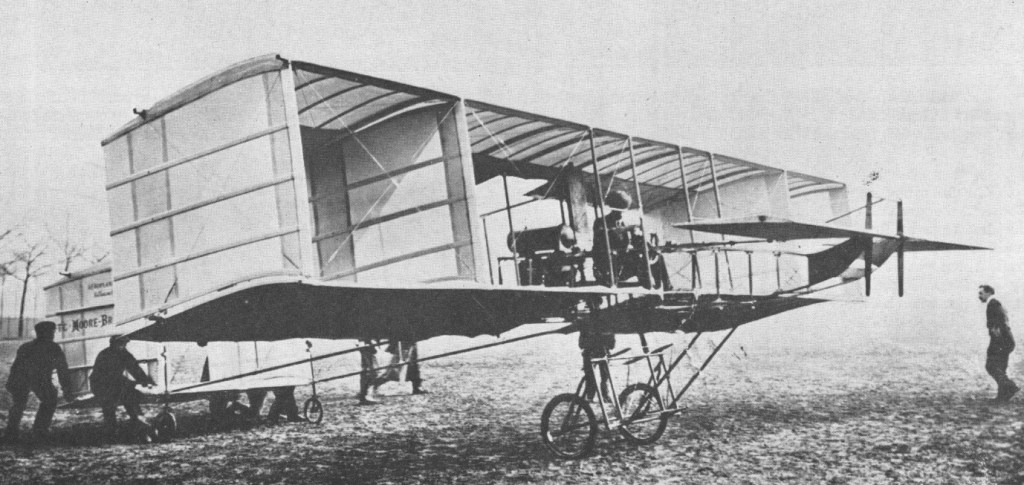
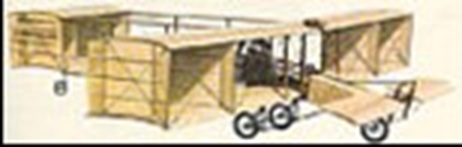
Engine: One 50 h.p. Antoinette
Length 39 ft (12m)
Wing span 33 ft (10m)
Weight empty 1,100 lb (500 kg.)
Seats: 1.
Speed: 34 mph (55 kph)
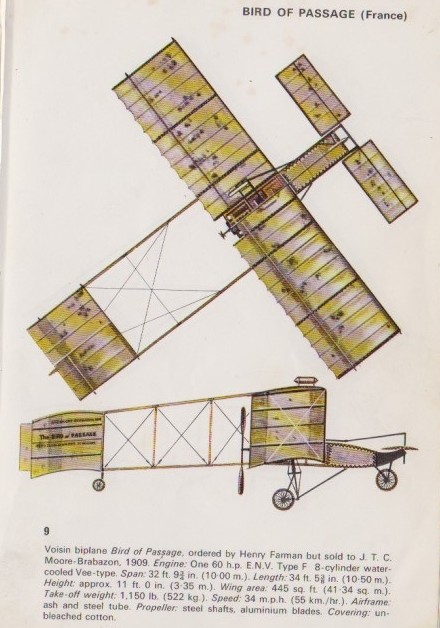
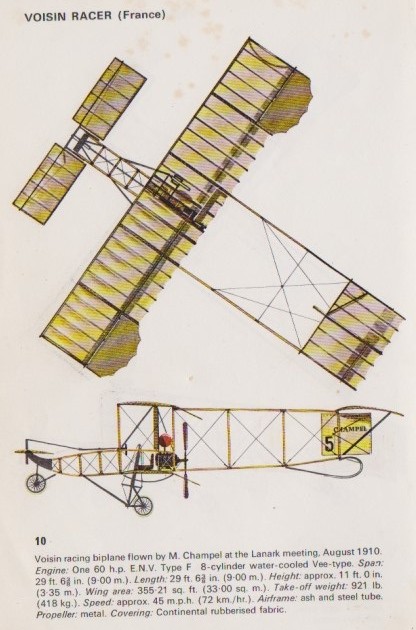
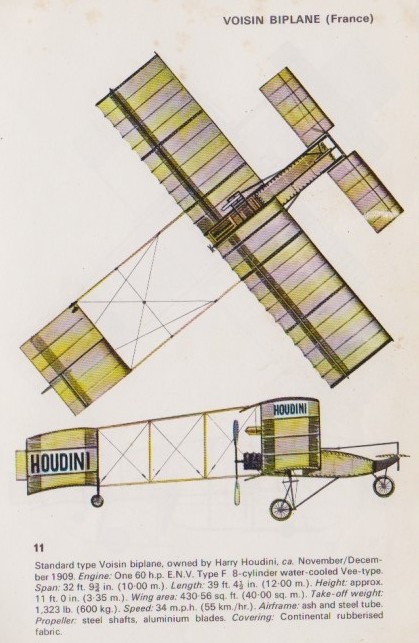
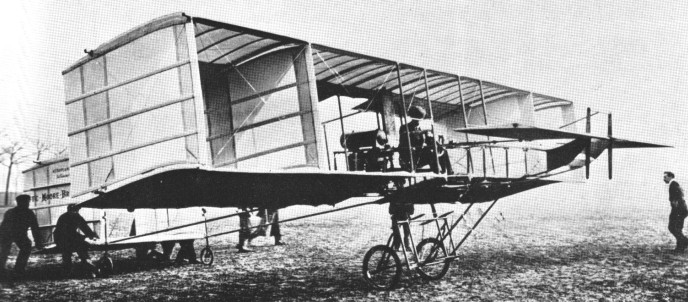
Gabriel and Charles Voisin were among Europe’s leading pioneer aviators. Their classic 1907 pusher biplane was one of the most significant aircraft of the pre-World War I era. In 1912, they developed a military version. Thereafter they built aircraft almost exclusively for military contracts.
In September 1907 it hopped but in October it managed some flights.
Henry Farman made the first circular flight of one kilometer, and attained a speed of about a mile a minute, in 1908. In 1909 he accomplished a trip of nearly 150 miles, remaining four hours in the air. Farman was probably the first man to ascend with two passengers.

Voisin-50 Antoinette of Henri Farman
September 30, 1907- Starting with a Voisin-50 Antoinette similar to that built for Delagrange, Farman was successful in flying 30-80m. at Issy, his first flight.
October 15, 1907 – 285m., unofficially beating the Santos Dumont record of 220m. Subsequent principal pioneer flights were made as follows;
October 19, 1907 – 100m.
October 23, 1907 – 185m. in 15.4 secs., winning the first of the 150m. prizes of the A.C.F. Five others, longest 150m.
October 24, 1907 – Three flights 100m. or more.
October 25, 1907 – Six flights up to 190m.
October 26, 1907 – 770m. in 52.6 secs., a new OFFICIAL WORLD RECORD FOR DURATION AND DISTANCE, winning the Archdeacon Cup held by Santos Dumont and money prize of the A.C.F. for the first official flights of 300 and 500m. Seven other flights up to 400m. Other flights up to 400m. made following days. He also established speed record of 52.7 k.p.h.
November 9, 1907 – Twice beat previous record by flying 800 and 400m. and beginning to circle.
November 10, 1907 – 1,036m. in 1:14, complete circle and some short flights, continuing on eleventh. THIRD MAN TO FLY A KILOMETER, and first in Europe.
November 11, 1907-January 11, 1908 – Flights with circles continued almost daily, up to 700m. On January 11, 1908, he covered 1,800m. in 1:45. In January 1908 Henry Farman made the first circular flight of 1 km in Europe, to win a prize of 50,000 francs. On 30 October 1908 he made the first cross-country flight, from Chalons to Rheims, a distance of 16½ miles.
The improved HF1bis flew 16 miles in 20 minutes
Span: 35’5″
Length: 44’2″
Take-off weight: 1200 lb
HF1bis
Span: 35’5″
Length: 44’2″
Take-off weight: 1200 lb
Speed: 38 mph
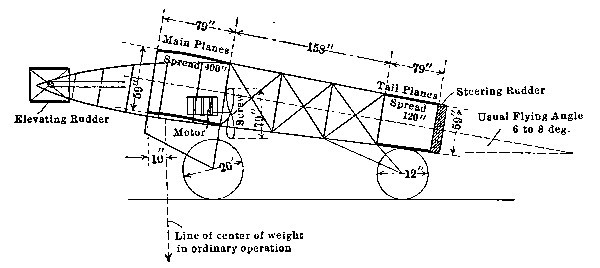

The 1907 Voisin – Delagrange No. 1 biplane France was designed and built by Les Freres Voisin.
The first machine built for Delagrange by the Voisins was a failure. The Voisin-Delagrange II first flew tentatively in 1908.
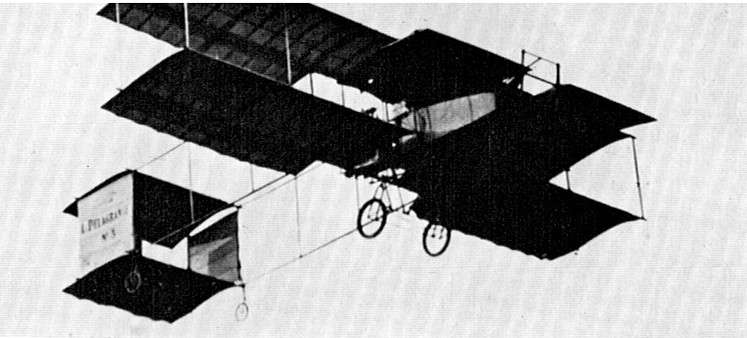
It was not until further modifications were made, in April 1908, now the Voisin-Delagrange III, began flying productively.
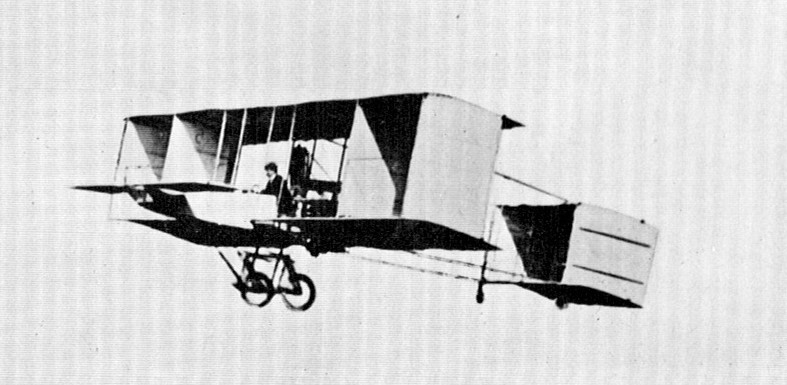
Span: 36’2″
Length: 36’2″
Weight: 990 lb empty

Gabriel Voisin began his formal aviation career in 1903 when he was engaged by a prominent French aeronautical promoter, Ernest Archdeacon, to build gliders for him.
June 8, 1905, over the Seine, Gabriel Voisin succeeds on a glider built with Ernest Archdeacon to fly 15 meters high and 150 m.
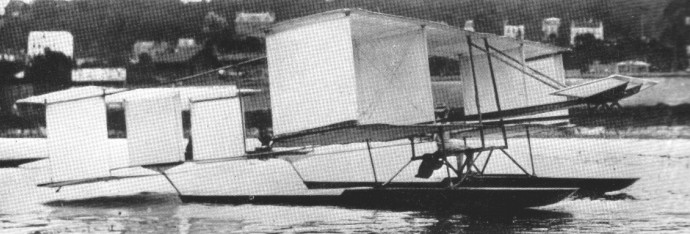
One of the gliders built by Gabriel Voisin in 1905 for towed flights behind a motor boat on the River Seine.
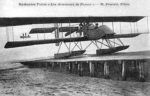
The Voisin-built Archdeacon glider was acquired and motorized as the Bellamy Hydroavion by French inventor Emile Bellamy in 1906.

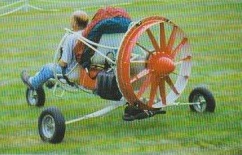
The Sylphe Bi is a two seat version of the Sylphe. The Bi can be used as a single seater without any modification. Flying controls are the same as a normal paraglider.
Empty weight: 100 kg
Wingspan: 11.75 m
Wing area: 40 sq.m
Fuel capacity: 30 lt
Engine: Rotax 503, 52 hp
Seats: 2
Max speed: 55 kph
Cruise speed: 40 kph
Min speed: 25 kph
ROC: 2.5 m/sec
Fuel burn: 15 lt/hr
Price (1998): 78 000 Fttc
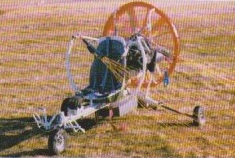
The Sylphe has a welded tubular framework and a short ducted fan. The canopy is of Voilerie Soubeyrat design.
Empty weight: 85 kg
Wingspan: 11 m
Wing area: 36.5 sq.m
Fuel capacity: 20 lt
Engine: Rotax 447, 40 hp
Seats: 1
Max speed: 50 kph
Cruise speed: 42 kph
Min speed: 22 kph
ROC: 3 m/sec
Fuel burn: 12 lt/hr
Price (1998): 64 000 Fttc
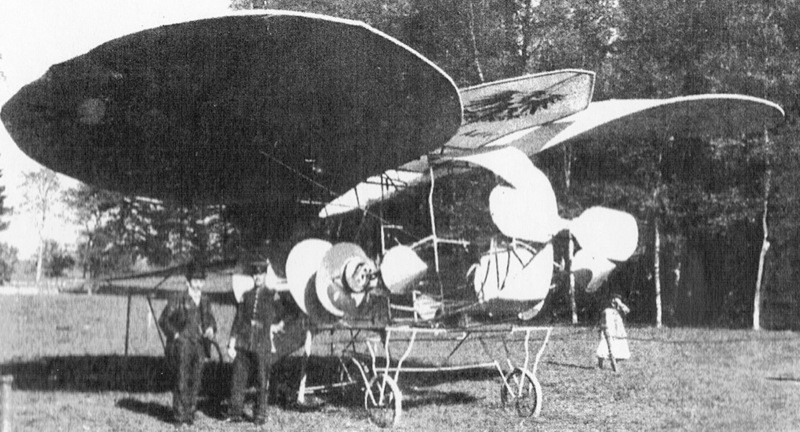
“Der Adler” was a bird-like monoplane designed by Karl Vogt and Johann Stockhausen, displayed at the “Schützenplatz” in Paderborn in October 1909. The 17 m long machine of 9 m span did apparently not fly, not even with the help of a 60 hp Dürkopp engine.
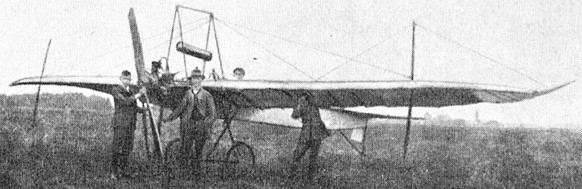
Based on the Taube design and built by Richard Vogt when he was just 16-years old, this machine was test flown on the Mutlanger Heide but unfortunately crashed on its first flight. Vogt designed this 30 hp Anzani-powered monoplane together with an unknown friend during 1911 through early 1912.
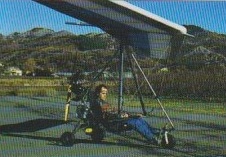
A small single-seater built of TIG welded tubing, circa 1998.
Empty weight: 65 kg
Wing span: 12 m
Wing area: 14.8 sq.m
Fuel capacity: 8 lt
Engine: Vitorrasi 80, 14 hp
MAUW: 180 kg
Seats: 1
Max speed: 85 kph
Cruise speed: 55 kph
Minimum speed: 32 kph
Climb rate: 2 m/s
Fuel consumption: 4 lt/hr

