Developed from the G-1 design, pilots have expressed amazement at this craft’s stability and manoeuvrability. The Skylark can be flown in the Experimental Aircraft category. Although this is one of the more affordable homebuilts, the airframe and all of its major components have been designed for quality, dependability and durability.
Full instrumentation Skylark kit minus engine and instruments: $19,995 in 2001. Skylark construction plans in 2001: Reduced-size prints (11″ x 17″ format): $75 (add $6 postage U.S. or $16 foreign) Full size prints (18″ x 24″ format): $175 (add $7 postage U.S. or $22 foreign)
Standard helicopter control system -All-aluminum main- & tail-rotor blades
Aircraft-grade steel & aluminum airframe & major components, plus all AN hardware
Full instrumentation
Engine Rotax 582, 65 hp Main Rotor Diameter 19 ft Disk area: 283 sq.ft Tail Rotor Diameter 3 ft 6 in Height 7 ft Length 17 ft 6 in Empty Weight 350 lbs Gross Weight 725 lbs Payload Weight 375 lbs Fuel cap: 10 USG Power Loading 10.8 lbs/hp Disc Loading 2.5 lbs/sq ft Maximum Speed 95 mph Cruise Speed 70 mph Rate Of Climb 1,000 fpm Maximum Altitude 12,500 ft Range: 120 sm Seats: 1
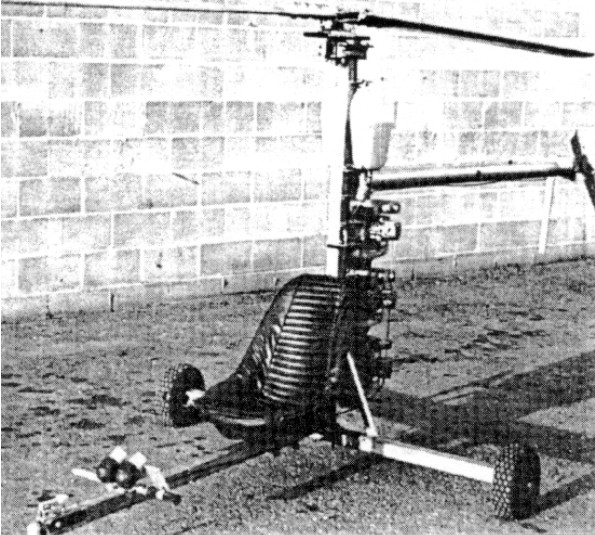
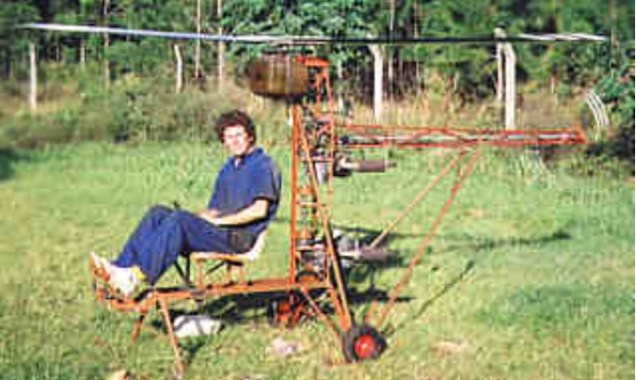
The G-1 Ultrtalight Helicopter, created in the early 1970s by Art Weilage, was tested and sold as low-cost kits by Compcop, Inc. Vortech offers the original construction prints to hobbyists curious about this design, or who want to study the concept as inspiration for a design of their own.
Developed, tested and sold in the 1970’s by Compcop, the G-1 was designed to fill the need for an affordable, easy-to-build ultralight helicopter. The entire helicopter can be built at home with ordinary tools at a low cost. No license is required to fly the G-1 because it is in the license-free “Ultralight Aircraft” category (see FAR Part 103). The construction manual provides all the details needed to build the G-1 with an engine of 40 h.p. or higher. The three McCulloch go-cart engines can be replaced with a single engine such as the Rotax 447. Aluminium construction.
Carries one person. Takes off and lands vertically. Flies forward, backward, sideward, & hovers.
Engines: 3 x McCulloch MC101 42 hp Empty wt: 150 lb Max wt: 420 lb Rotor span: 12ft Height: 5.5ft Length: 12ft Max speed: 80 mph Cruise: 55 mph Climb rate: 1,000 fpm Range: 120 sm Service ceiling: 10,000 ft Seats: 1
Engine (typical) Kawasaki or Rotax, 40+ hp Length 12 ft Width 5.7 ft Height 5 ft 6 in Main rotor diameter 12 ft Tail rotor diameter 2 ft Empty weight 150 lbs Gross weight 420 lbs Useful payload 270 lbs Fuel capacity 5 USgals Fuel consumption 4 USgals/hour Speed (max.) 80 mph Altitude (max.) 10,000 ft asl
Engine: 3 x McCulloch, 9.5 hp Rotor span: 3.66 m MAUW: 190 kg Empty weight: 66 kg Fuel capacity: 19 lt Max speed: 128 kph Cruise speed: 80 kph Fuel consumption: 12 lt/hr Seats: 1 Plan price (1998): $34.95
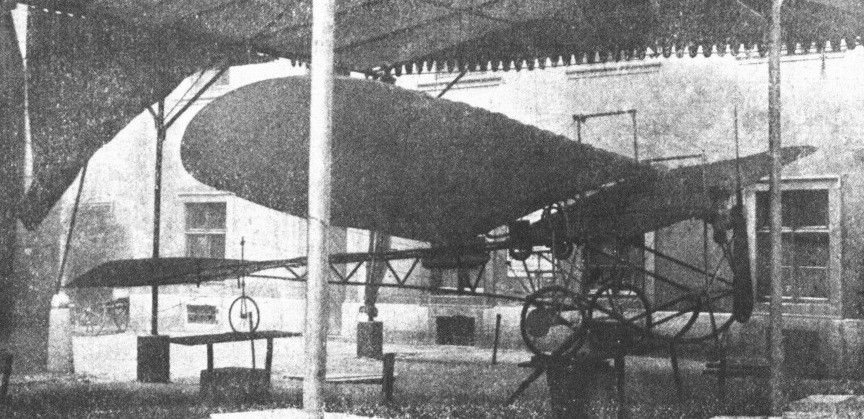
A monoplane with a variable geometry wing, designed by Hauptmann Rudolf Vorauer from Graz, in what is now Austria, in 1910. Vorauer had the rank of Artilleriehauptmann in the k.u.k. Armee.
In 1930 Carl T von Cosel, of Key West FL. Built a two-place cabin, high-wing monoplane amphibian, registered N879Y and powered by a 180hp LeRhône rotary engine.
The wings were never attached, so the plane was never flown. Some reports claimed that von Cosel, an undertaker by trade, kept his dead wife in it for an unstated period of time.
When he left Key West in 1940, he took the plane with him and both disappeared.
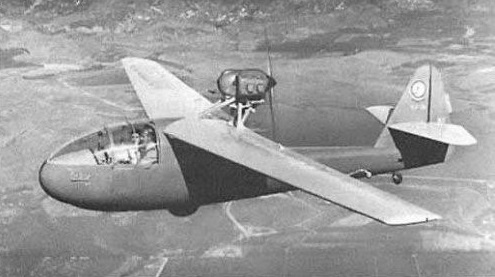
The Jarvis Jaybird design was acquired by Volmer Jensen as homebuilt project soon after World War II and became the VJ-21 Jaybird with retractable wheels and 75hp Continental A75 engine.
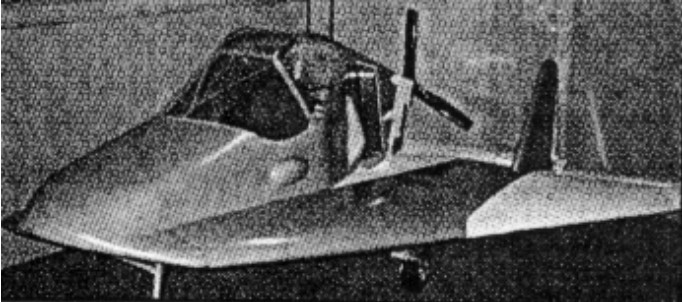
The 1947 Volmer Jaybird all-metal evolution features a pod nacelle with a pusher engine and has monowheel gear with outriggers on the wings. Reportedly more than 900 plans sold to builders through the 1960s.
A later owner (ca.1960) put a 125hp Continental C125 in, repositioned wings slightly lower and added small auxiliary fins.
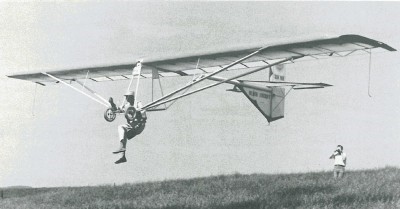
The VJ-24 is Volmer Jensen’s hang glider design built from aluminum. This motorglider is constructed of aluminum tubing plus fabric, and originated as a foot-launched glider. SunFun is made from pop riveted aircraft aluminium with the wings leading edge formed in styrene foam. Covering is polyester aircraft fabric doped. Control is by aileron, elevator and rudder. A permanent seat is built into the hanger structure.
The VJ-24 was first flown in about 1975 and showed excellent controllability with a joystick. Plans were available from Volmer Aircraft for $100.00. Materials have been estimated at $2400, with a building time of 250 hours.
The VJ-24 uses pip pins and thumb screws to assemble in 10 minutes without tools.
Designated the VJ-24E, the Sunfun is essentially a simplified version of the Swingwing hang glider or powered hang glider. The wings are fabric-covered aluminum tube and are a rectangular-planform type braced by V struts. The two wheels are for ground handling only, so the Sunfun is foot-launched and foot-landed. A 10-hp engine and fuel tank are installed beneath the wing and behind the pilot so that takeoff can be performed without benefit of a steep hill. Wingspan is 36 feet 6 inches, and total weight is 110 pounds. The Volmer VJ 24E Sunfun has a useful load of about 200 pounds, burns about 1.5USG per hour.
A minimum powered glider, the VJ-24W is a modified version of VJ-24E Sun Fun hang glider with wheeled landing gear, tractor engine, independent rudder control, manufactured by Airway Aircraft Inc., 905 Airway Ave., Glendale, CA 91201, USA.
Fairing behind pilot cuts drag. Independent three-axis controls. Construction is all metal with Dacron cover. Yamaha KT100 or McCulloch 101 engine. Two main wire wheels, tail skid undercarriage.
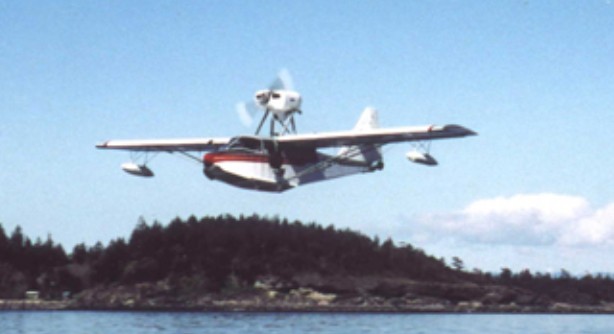
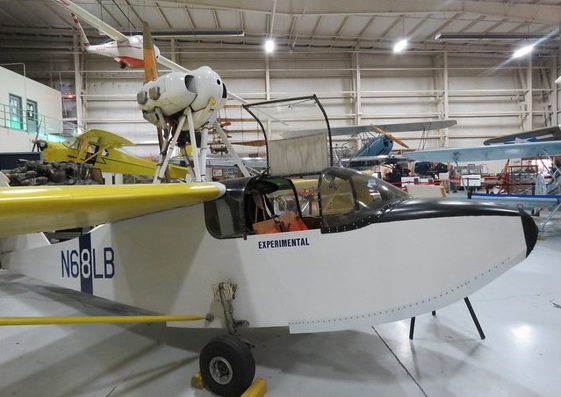
The Volmer VJ-22 Sportsman (or Chubasco) is a two-place, side by side, closed cabin, highwing monoplane, amphibious flying boat. Designed by Mr. Volmer Jensen, the Sportsman first flew on 22 December 1958 as an original design based on an earlier aircraft, the VJ-21, a high-wing pusher that contributed much data for the Sportsman.
Construction of the original Sportsman started in September 1957 and was completed in December 1958. The rigid, corrosion proof hull is made of 1/16 inch and 3/32 inch aircraft mahogany plywood with 1/4 inch plywood at the step for maximum strength and covered with fiberglass for added protection. The fin is built integral with the hull. The Sportsman can use fabric-covered Aeronca Chief or Champion wings. The wing panels are identical to those of the Aeronca Chief and consist of front and rear solid spruce spars, aluminium ribs, steel tube compression members and internal wire bracing. Each panel is externally braced by steel tube V struts to the fuselage. Floats are attached, and are braced to the outboard end of each wing. The main undercarriage retracts by swinging forward 90o. Shock absorption is by means of rubber bungee cord. The tailwheel incorporates a water rudder, and retracts upwards when not required. The pusher engine is mounted on a steel tube structure above the wing. To facilitate storage, the wings may be removed by undoing the few retaining bolts.
Numerous testing from calm water to five foot swells in the open sea have proven the design to be both extremely airworthy and seaworthy. Wings are wood spar and ribs, fabric covered. It takes off from water at sea level in about 20 seconds. The VJ-22 is powered by a Continental C-85, starter and gen. It has a cruising speed of 85 mph and stalls at 45 mph.
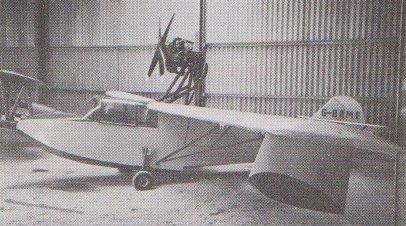
Suited to Continental s from the C85 to the O-200, most VJ-22 have their pylon-mounted engine mounted as a pusher, but one built by Viv Bellamy, G-BAME c/n VHB-1, started in 1971 and first flown from St. Just in early 1974, had a tractor engine. Possibly a Lawrence or Salmson radial.
Viv Bellamy’s G-BAME
Designed to use wings from light aircraft including Auster, Aeronca, and Taylorcraft, In the UK, G-BAHP completed at Rollasons at Croydon by September 1972 featured Aeronca 7AC G-ATXC wings. It was first flown at Biggin Hill in 1973 with a Continental C90 engine.
Engine: Continental, 85 hp HP range: 85-100 Speed max: 110 mph Cruise: 80 mph Range: 225 sm Stall: 45 mph ROC: 550 fpm Take-off dist: (land) 350 ft., (water) 1000 ft Landing dist: (land) 500 ft., (water) 1000 ft Service ceiling: 12,000 ft Fuel cap: 20 USG Weight empty: 1000 lb Gross: 1500 lb Height: 8 ft Length: 24 ft Wing span: 36.5 ft Wing area: 180 sq.ft Seats: 2 Landing gear: tail wheel, retractable Takeoff time 20 sec
Engine: 100 hp ROC: 600 fpm Span: 36 ft 6 in Length: 24 ft Empty wt: 1000 lb Max wt: 1500 lb