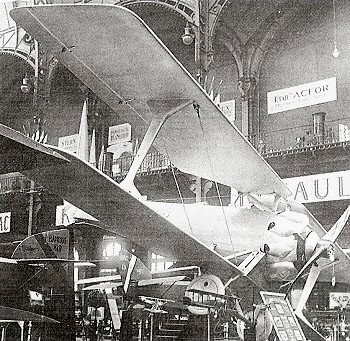
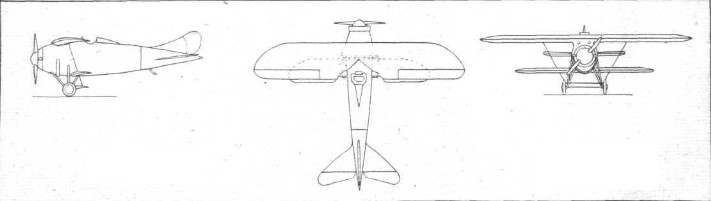
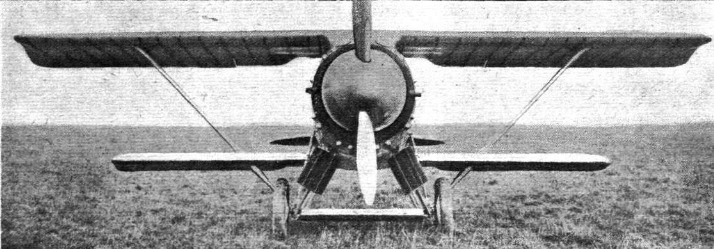
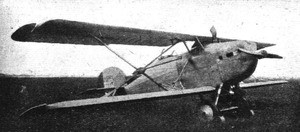
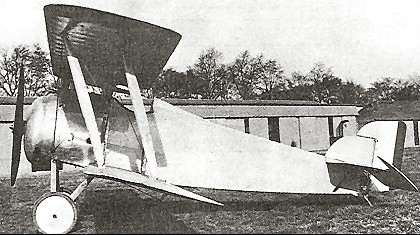
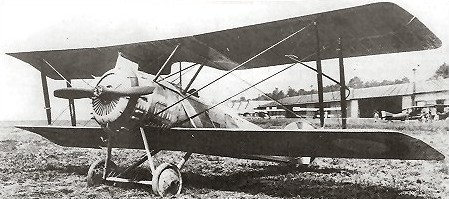
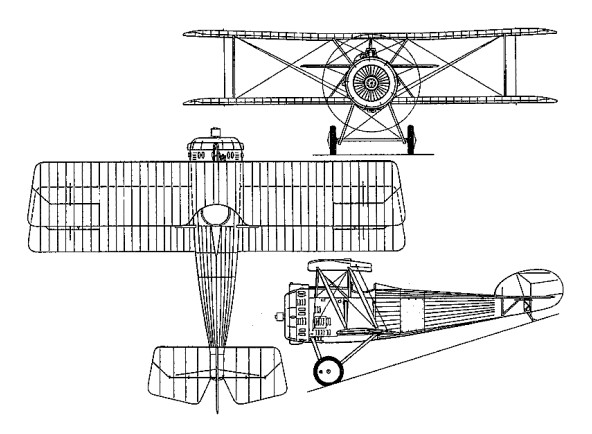
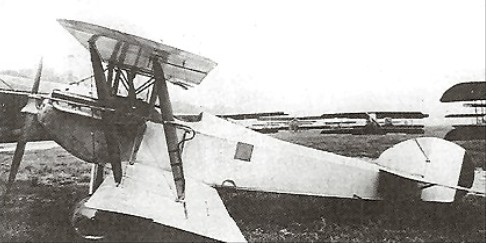
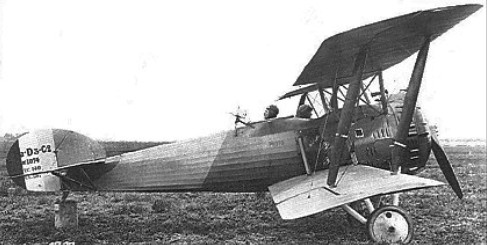
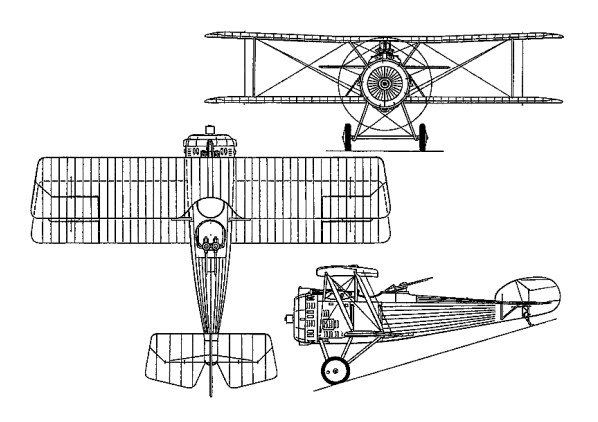
The H.31 was a participant in the 1923 competitive Cl programme, which, calling for single-seat fighters in the 400-500hp category, was most noteworthy for its large number of contending designs. The H.31 was an unstaggered single-bay biplane powered by a Salmson 18Cm 18-cylinder radial engine of 500hp and was of all-metal construction apart from the wing ribs, armament comprising four 7.7mm synchronised machine guns. The fuselage was raised above the lower wing and the centre section of the upper wing incorporated a fullchord cut-out to improve pilot visibility. The engine was close cowled, and to provide adequate cooling for the rear cylinder row, the space between the lower wing centre section and the fuselage was occupied by a large radiator. The prototype H.31 was displayed at the 1924 Salon de l’Aeronautique, but did not commence its flight test programme until the following year. Submitted to the STAe for official evaluation, the H.31 was one of the heaviest of the 12 contending prototypes and proved inferior to all other competing types in both level speed and climb rate, the winning contender being the Nieuport-Delage NiD 42 and the H.32 being abandoned.
Max take-off weight: 1789 kg / 3944 lb Empty weight: 1287 kg / 2837 lb Wingspan: 12.00 m / 39 ft 4 in Length: 7.58 m / 24 ft 10 in Height: 3.62 m / 11 ft 11 in Wing area: 34.00 sq.m / 365.97 sq ft Max. speed: 260 km/h / 162 mph
The H.26 (the first Hanriot fighter that did not use the HD nomenclature, where the D was for their long-standing designer Emile Dupont) was designed to compete in the 1921 CI (single-seat fighter) programme, the H.26 was the only participant powered by the 260hp (194 kW) water cooled Salmson 9Z nine-cylinder radial engine. Most other contenders were intended for the water-cooled inline 300 hp (224 kW) V-8 Hispano-Suiza HS 8F. The H.26 design attempted to compensate for lower installed power by means of aerodynamic cleanliness. It was an all-metal single bay sesquiplane, fabric covered except for the fuselage ahead of the cockpit. The lower wing was mounted at the bottom of the fuselage and the upper planes, built in separate pieces, braced close to the upper fuselage on short, faired extensions. There were ailerons only on the upper plane, the plan, structure and bracing of which was greatly altered during 1923.
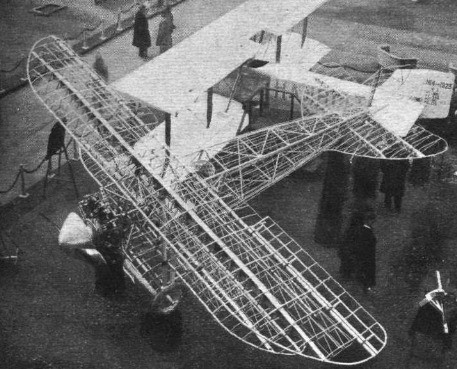
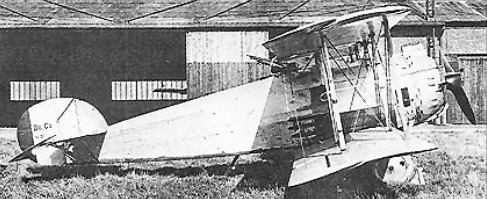
The H.26 before covering at the Paris Aero Show December 1922, with early wings
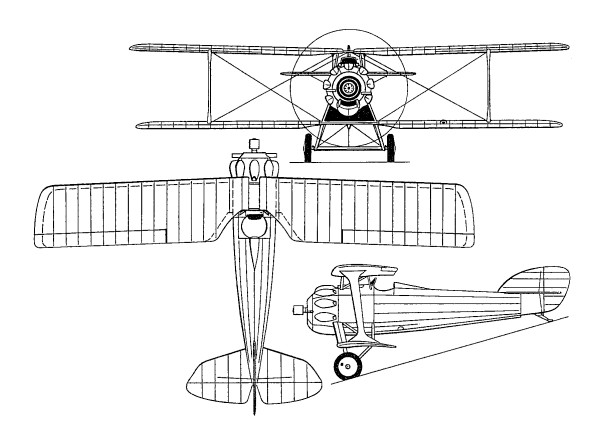
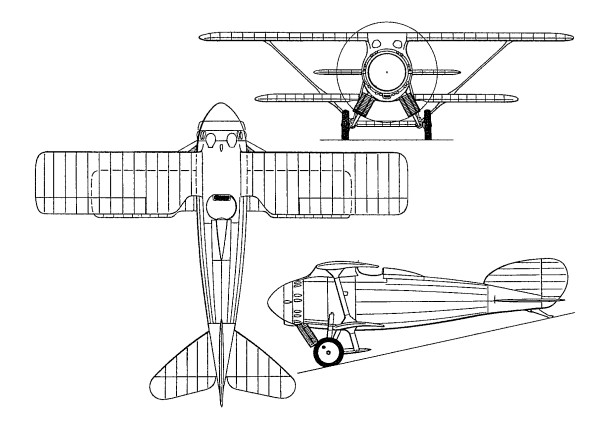
When the H.26 made its first public appearance, at the Paris Aero Show in December 1922, the still uncovered upper wing of the unflown fighter had long, curved tips outboard of a straight edged, constant chord central section and had a single main spar. Sixteen months later, after the aircraft had flown, the wings had become rectangular and were built around two spars. The short span lower wing retained its single spar structure throughout but it, too, had curved tips replaced with square. The wing bracing had also changed: originally a bracing wire ran from the rear undercarriage structure upwards and outwards, via the lower to the upper wing. This was replaced by a single, wide chord rigid strut with an aerofoil section and widened at its roots.
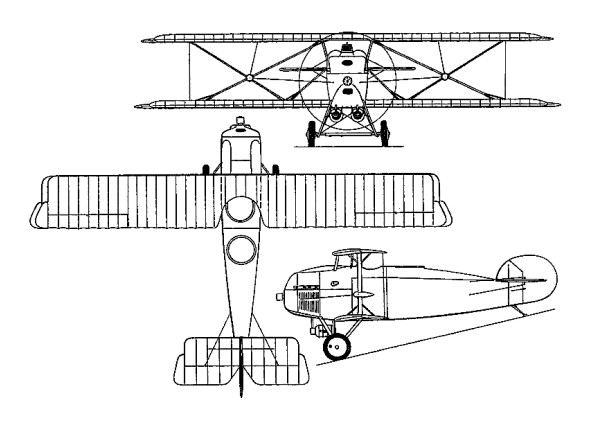
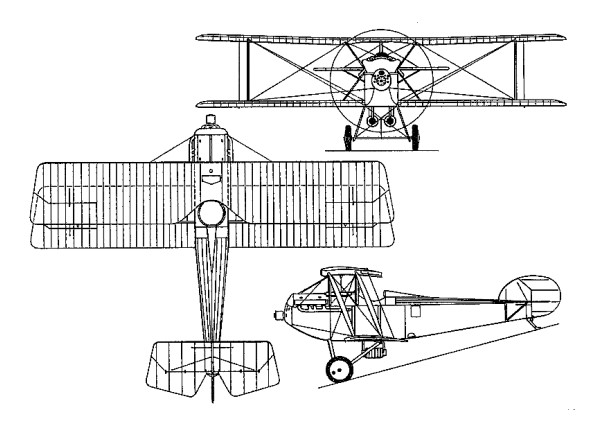
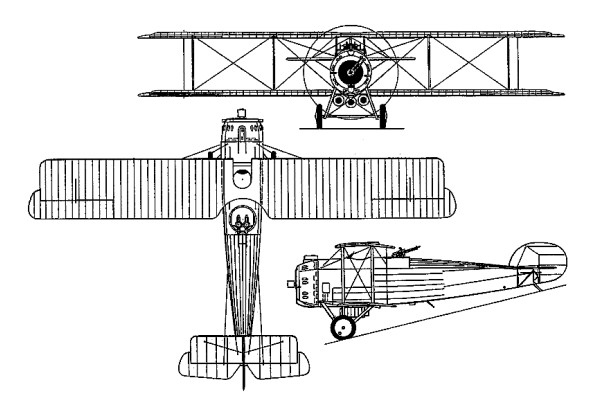
3-view of the H.26 published early 1923, showing early wing plan, wire bracing and a different vertical tail to those of 1924.
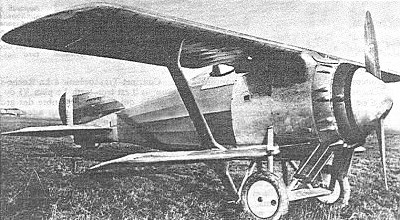
The closely cowled radial engine set the diameter of the H.26’s nose and drove a two blade propeller behind a large diameter domed spinner. The Salmson was initially cooled with a semi-circular Botali radiator to the rear of the engine. The H.26 had a fixed conventional undercarriage with mainwheels on a centrally hinged split axle, enclosed within a lift-contributing wing-like fairing and supported by N-form struts attached to the lower fuselage longerons on each side. Originally, these were reinforced by long vertical struts from the shock absorber attachments to the upper wing central section. These were discarded when the interplane wires were replaced by the faired interplane struts, which extended downwards to the rear undercarriage structure; the tops of the shock absorber struts were relocated to mid-fuselage on the engine mounting.
The pilot’s cockpit, with a faired headrest behind it, was at the trailing edge of the upper wing, placed within a small cut-out to improve view. The H.26 had a fuselage built around four metal tube, cross-braced longerons, enclosed within metal formers and stringers to shape it into an oval cross-section. Behind him the fuselage tapered to the broad chord fixed tail surfaces. The mid-fuselage tailplane, which had a strongly swept leading edge, carried round tipped elevators that narrowed inboard. The vertical tail was oval shaped, with a broad chord rudder that ended at the top of the fuselage.
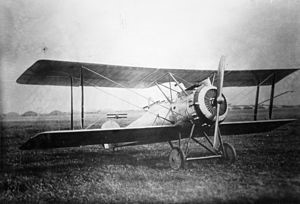
First flown at Orly in 1923, the H.26 utilised a Botali radiator arranged in a semi-circle behind the engine. As this was found to provide insufficient cooling, two Chausson radiators were attached to the undercarriage strutting. The H.26 displayed poor handling qualities, which, coupled with continued engine overheating and an inadequate view offered the pilot, led to the abandonment of further development after several test flights.
H.26 (estimated) Engine: 1 × Salmson 9Z, 190 kW (260 hp) Wingspan: 9.05 m / 29 ft 8 in Length: 7.35 m / 24 ft 1 in Height: 2.50 m / 8 ft 2 in Wing area: 18.00 sq.m / 193.75 sq ft Max take-off weight: 1150 kg / 2535 lb Empty weight: 820 kg / 1808 lb Max. speed: 260 km/h / 162 mph Ceiling: 8500 m / 27900 ft Range: 750 km / 466 miles Crew: One
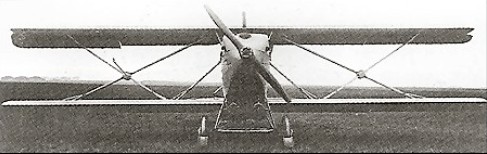
Under the technical development programme formulated in April 1919 by General Duval, the newly-appointed Directeur de l’Aeronautique, two categories of turbo-supercharged fighter were called for, one single-seat and the other two-seat. The two-seater came within the CAP, or fighter-reconnaissance, category, and Hanriot’s contribution to this programme was the HD.15, which, designed by Emile Dupont, was flown for the first time at Orly in April 1922. This competed with the Gourdou-Leseurre GL-50. The HD.15 was a tandem two-seat, unstaggered biplane employing rigid-X type interplane bracing. It was powered by a 300hp Hispano-Suiza HS 8Fb eight-cylinder water-cooled engine equipped with a Rateau turbo-supercharger which was intended to maintain sea level engine power to 5500m altitude. Armament comprised two fixed forward-firing 7.7mm Darne machine guns and two weapons of the same calibre on a swivelling mounting in the rear cockpit. In the event, the CAP category had been discarded before the flight testing of the HD.15 commenced and the entire turbo-supercharger fighter programme became something of a fiasco as a result of unavailability of the Rateau unit in quantity. However, the Japanese Army had begun to show interest in the potentiality of turbo-supercharged engines, and purchased the prototype HD.15, which was delivered in 1926. An order was placed for three identical examples of the HD.15, but, in the event, the vessel delivering the aircraft was struck by a tidal wave and the HD.15s never reached Japan.
Max take-off weight: 1750 kg / 3858 lb Empty weight: 1050 kg / 2315 lb Wingspan: 11.40 m / 37 ft 5 in Length: 7.60 m / 24 ft 11 in Height: 2.57 m / 8 ft 5 in Wing area: 32.48 sq.m / 349.61 sq ft Max. speed: 180 km/h / 112 mph Ceiling: 10250 m / 33650 ft Range: 800 km / 497 miles
The HD.12 single-seat fighter commenced its flight test programme in 1921. A single-bay staggered biplane, the HD.12 was powered by the 170hp Le Rhone 9R nine-cylinder rotary air-cooled engine, and its intended armament was the standard pair of synchronised 7.7mm Vickers machine guns. The HD.12 was considered to be somewhat passe by the time it commenced flight testing, and, having a comparatively poor performance, it was discontinued.
Wingspan: 8.70 m / 28 ft 7 in Length: 5.94 m / 19 ft 6 in Height: 2.50 m / 8 ft 2 in Wing area: 19.00 sq.m / 204.51 sq ft Max. speed: 190 km/h / 118 mph
A single-seat reconnaissance fighter developed from the two-seat HD.3, the HD.9 was placed in the broad category of Avions de Corps d’Armee (as the HD.9 Apl) and it was armament with a single synchronised 7.7mm Vickers machine gun. The airframe was basically that of the HD.3 and the installation of the 260hp (194 kW) Salmson 9Za radial engine was identical, but fuel capacity was considerably increased.
The first example of the HD.9, serial 3001, was completed in November 1918 as the initial aircraft built against an order for 10 machines with serials starting at 3001 and up. However, its career was cut short by the Armistice and there is no evidence that all nine remaining aircraft were completed.
Empty weight: 710 kg / 1565 lb Wingspan: 9.00 m / 29 ft 6 in Length: 6.95 m / 22 ft 10 in Wing area: 25.50 sq.m / 274.48 sq ft Max. speed: 220 km/h / 137 mph Range: 800 km / 497 miles
Designed as a potential successor for the SPAD S.XIII, the HD.7 single-seat fighter employed wings and tail surfaces essentially similar to those of the two-seat HD.3. Flown for the first time in the summer of 1918, the HD.7 was powered by a water-cooled Hispano-Suiza 8Fb eight-cylinder engine of 300hp and mounted an armament of two 7.7mm synchronised Vickers machine guns. The performance of the HD.7 proved good, but marginally inferior to that of its principal competitor for production orders, the Nieuport 29. With selection of the Nieuport for series manufacture, further development of the HD.7 was discontinued.
Max take-off weight: 1900 kg / 4189 lb Empty weight: 1230 kg / 2712 lb Wingspan: 9.80 m / 32 ft 2 in Length: 7.20 m / 23 ft 7 in Height: 3.00 m / 9 ft 10 in Wing area: 28.00 sq.m / 301.39 sq ft Max. speed: 218 km/h / 135 mph Range: 900 km / 559 miles
Evolved in parallel with the HD.5 and of generally similar configuration, but larger and more powerful, the HD.6 two-seat fighter was powered by a 530hp Salmson 18Z two-row radial water-cooled engine. This was essentially two Salmson 9Z engines on a common crankcase and flight testing was delayed by difficulties with this experimental power plant, eventually commencing in the spring of 1919. Armament consisted of two synchronised 7.7mm Vickers guns for the pilot and three 7.7mm Lewis guns for the gunner, two on a rotating mount and one firing through a trap in the fuselage floor. The pilot, seated beneath a cut-out in the upper wing, was offered a singularly poor field of vision. Performance did not show a significant improvement over that of the more compact and simpler HD.3, and development was discontinued by the late summer of 1919.
Max take-off weight: 1250 kg / 2756 lb Empty weight: 810 kg / 1786 lb Wingspan: 13.60 m / 44 ft 7 in Length: 8.85 m / 29 ft 0 in Height: 2.90 m / 9 ft 6 in Wing area: 47.50 sq.m / 511.29 sq ft Max. speed: 225 km/h / 140 mph Range: 600 km / 373 miles
Design work on this two seat biplane was begun by Hanriot and Dupont in the autumn of 1917. The prototype had unequal span wings and was powered by a 260 hp Salmson (Canton Unnne) 9 Za radial engine and flew in June 1017. A double yoked pair of 0.303 in (7.7¬mm) Lewis guns were fitted in a ring mount¬ing in the rear cockpit.
A production order for 120 (later increased to 300 when it was also ordered for the Aviation maritime), to be desig¬nated HD.3 C2, was placed in April 1918. Main modifications included reduction of the upper wing span to that of the lower dimension, adoption of horn balanced ailerons, and improved covering for the forward top decking panels. These were faired over the ammunition feed equipment to twin and fixed and synchronized 0.303 in (7.7 mm) Vickers guns. The pilot and gunner sat in tandem, open cockpits and the main units of the fixed tailskid undercarriage were linked by a cross-axle. Short struts braced the fuselage sides to the lower wing.
First production machines appeared in September 1918, but the Armistice in November prevented comparison with the combat promise shown by the HD.3 C2. However, 75 had been built (s/n 1001 to 1075) for the Esc. HD 174 and other squadrons of the Aviation Militaire (army aviation) and at least 15 for the Aviation Maritime (naval aviation) before the Armistice halted production. HD 174 had been formed but never saw any action before the end.
A floatplane, to have been designated HD.4 in production form, was developed with varying types of floats and hydrovanes and a larger tailfin during 1918. The first really successful mode did not appear until December 4, 1918. By this time it was too late for combat service but some were used by the Aviation Maritime for a few years.
Work on a proposed night fighter variant, the HD.3bis CN2, also stop¬ped at the end of the war. This had mainplanes of thicker section, enlarged and balanced ailerons and rudder.
After the war, one of the navy’s machines was used for trials aboard the new aircraft carrier Béarn, while another was used for floatation tests at the Isle of Grain.
The 15 used by l’Aviation Maritime never entered service until 1919. They have variously been quoted as having serials starting from 2000 and up, but according to Lucien Morareau they were from the same series quoted above. The serial 2000 has also been quoted as the sole HD.4 prototype even though a photo clearly shows HD.3C2 on the tail. Few aircraft were completed in this serial range, highest number known is 2003.
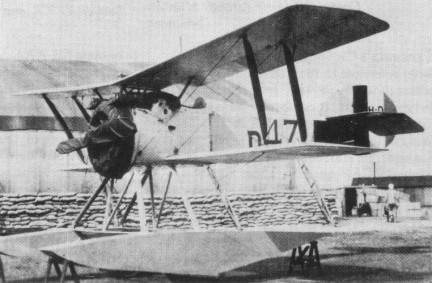
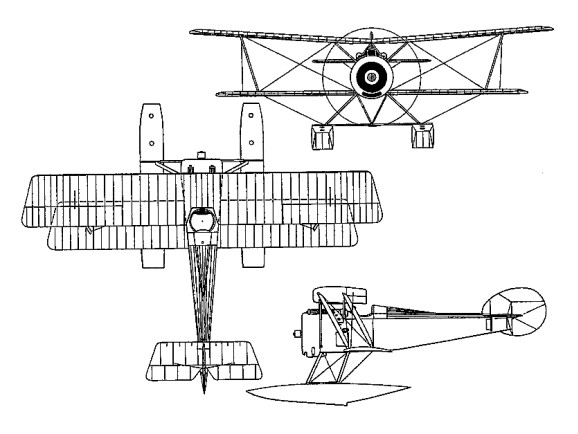
At the end of 1917, a derivative of the HD.1 intended for use by France’s Aviation maritime as a single seat fighter float plane was tested as the HD.2. Possessing an essentially similar airframe to that of the HD.1, the HD.2 was powered by a 130 hp Clerget 9B rotary engine and carried an armament of twin synchronised Vickers machine guns. Two prototypes were tested with float undercarriages of differing lengths, and several HD.2s with wheel undercarriages were delivered to the Aviation maritime at Dunkirk for trials purposes, including trial operations from a 40 ft (12 m) platform mounted above a turret of the battleship Paris in the harbour at Toulon flown by Lieutenant Georges Guierre in October 1918. Later, in August and September 1918, similar trials were conducted at Saint Raphael with one of the HD.2 prototypes converted to landplane form and re engined with a 120 hp Le Rhone. Production exam¬ples, designated HD.2C, were fitted with 130 hp Clerget 9B engines, longer main floats, and a completely revised elliptical fin and rudder assembly. Armament comprised twin 0.303 in (7.7 mm) Vickers guns. Some HD.2Cs were in service with the French navy’s Centre Maritime at Dunkerque before the end of the First World War. The US purchased 26 HD.2s and Japan also bought a number. After the war, ten of the US batch were converted back to HD.1 landplanes by the naval aircraft factory, but continued to be used as trainers aboard at Langley Field, with flotation bags and hydrovanes attached in front of the main wheels. One was employed in August 1919 for trials from a platform mounted on the battleship USS Mississippi.
HD.2 – (float equipped) Max speed, 113 mph (183 km/h). Service ceiling, 15,750 ft (4800 m). Range, 186 mls (300 km). Empty weight, 1,091 lb (495 kg). Loaded weight, 1,594 lb (723 kg). Span, 28 ft 6.5 in (8,70 m). Span upper: 8.7 m (28 ft 6.5 in) Span lower: 7.4 m (24 ft 3.25 in) Length, 22 ft 11.5 in (7,00 m). Height, 10 ft 2 in (3,10 m). Wing area, 195.9 sq ft (18,20 sq.m).