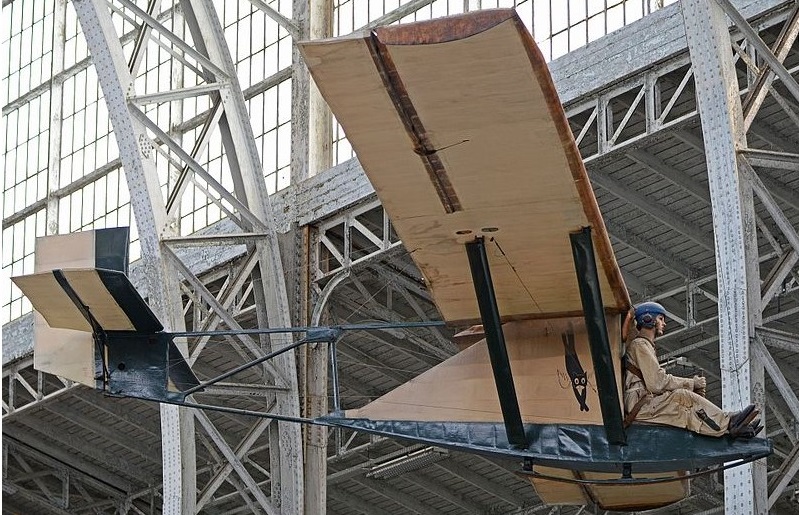
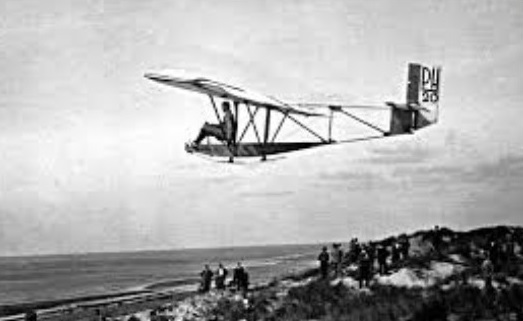
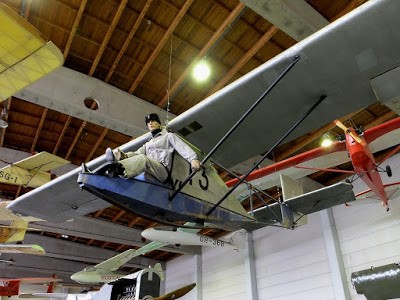
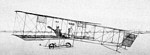
The Segelflugzeugbau Kassel 12 was a German glider used for training, developed in the 1920s. It was a minimalist design with the pilot sitting atop a tapered wooden structure that supported a high wing on a set of struts, and carried a conventional empennage at the rear. A spring skid was provided as undercarriage.
Conscripts from Lentoasema 2 built one Kassel 12A in 1935. The first flight with the aircraft was performed by Lt. Col. Ahonius at Santahamina on 28 March 1935.
The aircraft was used at the Jämijärvi glider school in the summer of 1936, carrying the designation number “13”. The aircraft is today on display at the Päijänne Tavastia Aviation Museum in Asikkala, near Lahti.
The Bekas, which first flew in 1968, was a development of an earlier, 1959, design of Stefan Brochocki, the BKB-1. The design of the Bekas 1-A had three main aims : a higher L/D (archieved by using a greater span and aspect ratio), easier ground handling and rigging and a flexible wing to study the effect of bending on stability and controllability. It has a fixed gear and trailing- edge control surfaces on the out-board portion of the wing which serve a dual role of elevator and aileron. Construction was wood and plywood.
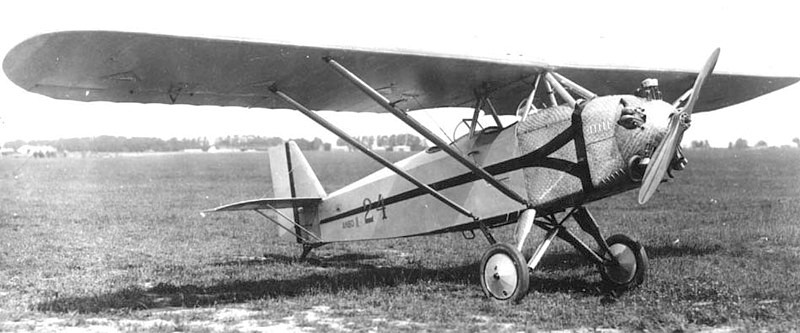
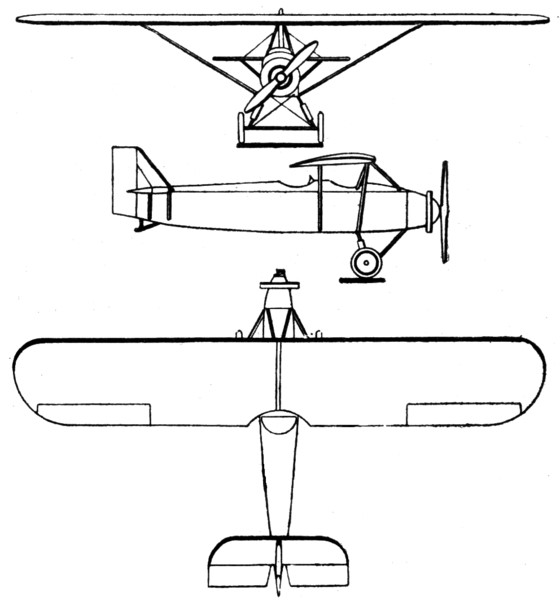
The ANBO II was a parasol-wing monoplane aircraft built by Karo Aviacijos Tiekimo Skyrius in Lithuania in 1927 as a pilot trainer for the Army. Designed by Antanas Gustaitis, it was the first Lithuanian trainer aircraft of own design.
Anbo stands for “Antanas nori būti ore”, which means “Antanas wants to be in the air”.
First flying on 27 November 1927, the plane was not produced in series, yet it served as a prototype for latter trainers Anbo-III and Anbo-V/51, developed by Antanas Gustaitis.
It was eventually reequipped with more powerful engine for the Aero Club of Lithuania in 1931 before being written off after a crash on 26 June 1934.
A full size flying replica was built in 2012-2016 by Rolandas Kalinauskas and Arvydas Šabrinskas. Due to difficulties in obtaining original Walter engine, a Russian-made Shvetsov M-11 engine, having similar parameters, was used. Test flight of the restored Anbo II took place on 18 October 2016. The plane is based in Pociūnai airfield, Lithuania and is mostly used for air shows with both constructors dressing in Lithuanian Air Force uniforms of 1920s-1930s.
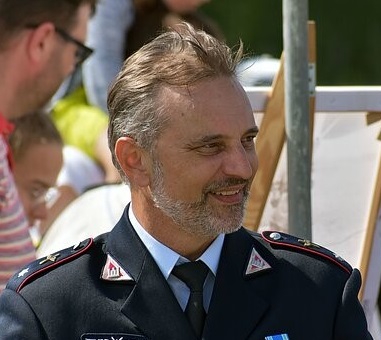
Arvydas Šabrinskas
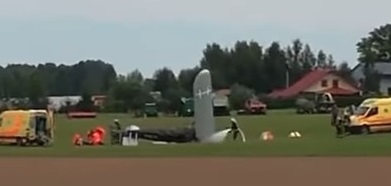
The Lithuanian plane had stopped at Priekuļi airfield, just outside Cēsis, Latvia, to refuel, en route to its destination in Biržai, northern Lithuania. After refueling, it attempted to take-off, but crashed following engine failure a little before 13:30, August 8, 2021. The engine failed during a climb at the altitude of 20-30 m resulting in a fatal crash for both the pilot Arvydas Šabrinskas, and the aircraft. The passenger is Valdas Černius, was taken to a hospital with serious injuries.
The plane crashed just outside Cēsis in Latvia
Powerplant: 1 × Walter NZ 60, 45 kW (60 hp) Wingspan: 10.72 m (35 ft 2 in) Wing area: 20 m2 (215 sq ft) Length: 6.75 m (22 ft 2 in) Empty weight: 280 kg (620 lb) Gross weight: 550 kg (1,210 lb) Maximum speed: 160 km/h (100 mph, 87 kn) Service ceiling: 3,500 m (11,500 ft) Rate of climb: 2.1 m/s (410 ft/min) Crew: two, pilot and instructor
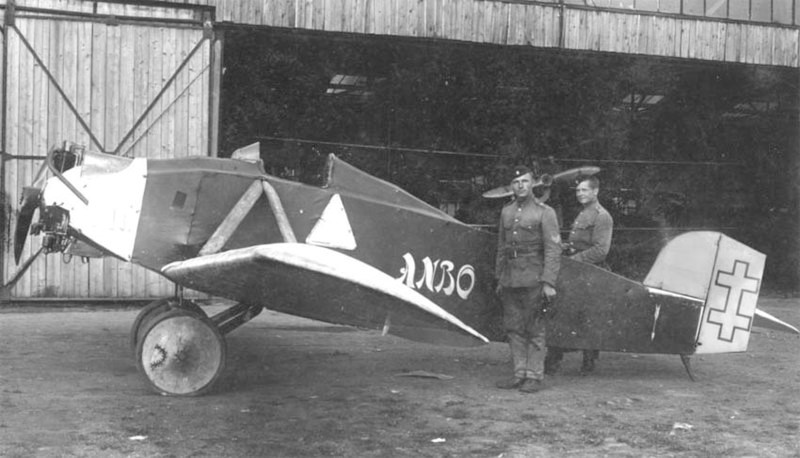
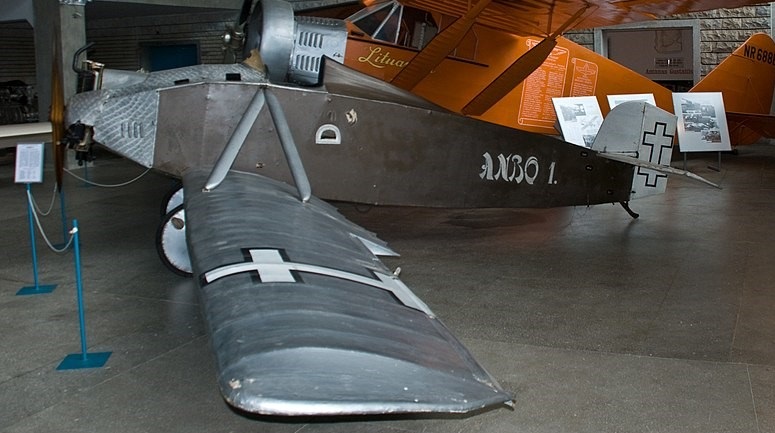
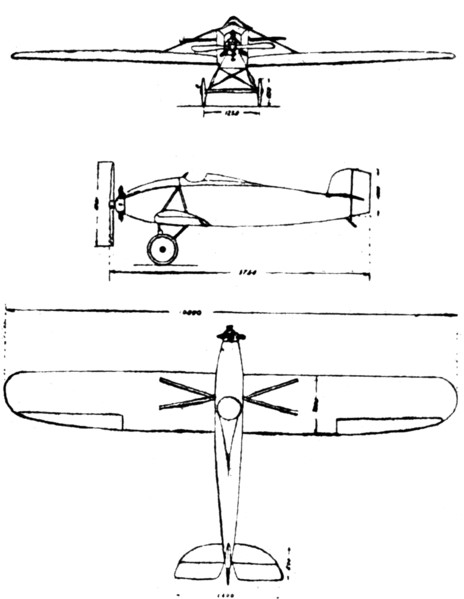
Designed by Antanas Gustaitis and built by Karo Aviacijos Tiekimo Skyrius, the ANBO I was a single-seat aircraft developed in Lithuania, proposed as a trainer for the Army It was a low-wing, braced monoplane of conventional tailwheel configuration. The fuselage structure was of fabric-covered welded steel tube, The wing had a wooden, two-spar structure and was fabric covered but the fuselage, also fabric covered, had a welded steel tube structure.
The first flight took place on 14 July 1925. Ten years later the aircraft was sold to Lithuanian Aviation Museum in Kaunas where it is exhibited today.
Powerplant: 1 × Anzani 3-cylinder radial, 30 kW (40 hp) Propeller: 2-bladed Dorand, 1.90 m (6 ft 3 in) diameter Wingspan: 10 m (32 ft 10 in) Wing area: 11.40 m2 (122.7 sq ft) Length: 5.75 m (18 ft 10 in) Height: 1.95 m (6 ft 5 in) Empty weight: 190 kg (419 lb) equipped Gross weight: 300 kg (661 lb) Fuel capacity: 35 kg (77 lb) fuel and oil Maximum speed: 142 km/h (88 mph, 77 kn) at ground level Endurance: 4 hr Service ceiling: 4,200 m (13,800 ft) Time to 1,000 m (3,300 ft): 7 min Take-off distance: 30 m (98 ft) Landing distance: 40 m (130 ft) Crew: One