Lithuania
The Lithuanian Army’s aircraft factory, responsible for the construction of the Anbo 41, a two-seat day/night observation aircraft, and the Anbo 51 two-seat trainer, both monoplanes.
Aircraft
Kari-Keen 60 Sioux Coupe / 90
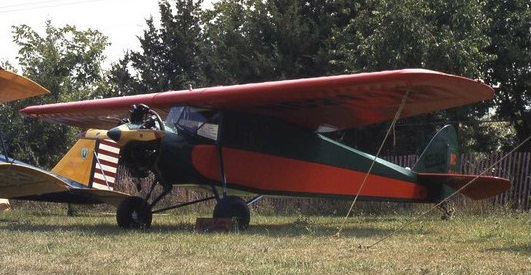
The Kari-Keen 90 Sioux coupe was designed by Swen Swanson and is a two-seat side by side high-wing monoplane with conventional landing gear. The wing is fully cantilevered, with skylights built in. The fuel tank sits above the pilot’s head and is part of the leading edge. Ole Fahlin built all the propellers and test flew the aircraft.
Production of the Sioux coupe began in 1929. The first model, the Kari-Keen 60 Sioux Coup, featured a 60 hp (45 kW) Veile M-5 engine. 22 aircraft were built without a type certificate.
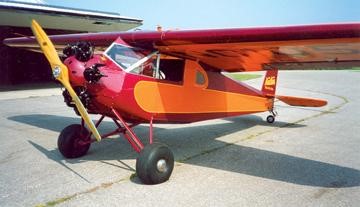
In 1930, six more model 90s were built with a type certificate. The price was US$3,365 in 1930.
In 1931, the Sioux Aircraft Corporation bought the company assets, changing the name of the Kari-Keen 90 into the Sioux Coupe 90.
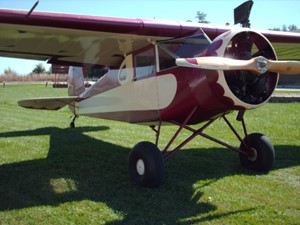
One 1930 Coupe 60 (ATC 2-81), powered by a 65hp Velie M-5 engine, was carried over from Kari-Keen inventory to Sioux Aircraft Corporation.
With the re-organization of Kari-Keen Aircraft Co, the 1931 Sioux Coupe 90 was a slight variation of the Kari-Keen 90. Designed by Swen Swanson and redesign by Gazley & LaSha, the one built, NC10544, sold for $3,355. Originally powered by a 90hp Brownback Tiger, it was later re-powered with a 110hp Warner Scarab.
The Sioux Coupe 90-B Junior (ATC 414) built in 1931, NC10721, sold for $3,500. Originally powered by a 90hp Warner engine, there are reports that a 90hp Lambert was also installed at one time.
The Sioux Coupe 90-C Senior (ATC 2-356) NC10735 was built in 1931.
Production of the Sioux coupe ended on 1 August 1933.
Variants:
Kari-Keen 60 Sioux coupe
First flight 1929. 22 built
Sioux Coupe 90
Lambert R-266 radial engine 90hp.
First flight 1930. 6 built
Sioux Coupe 90A
powered with a 90 hp Brownback Tiger
First flight 1933. 1 built
Sioux Coupe 90B Junior
powered with a 90 hp Warner Scarab Junior – One built
First flight 1931.
Sioux Coupe 90C Senior
powered with a 110 hp Warner Scarab – One built
First flight 1931.
Specifications:
Kari-Keen 90-C Sioux coupe
Engine: 1 × Warner Scarab Radial, 110 hp (82 kW)
Propeller: 2-bladed Ole Fahlin
Wing area: 150 sq ft (14 m2)
Airfoil: Eieffel 385
Gross weight: 1,580 lb (717 kg)
Fuel capacity: 25 US gallons (95 l; 21 imp gal)
Cruise speed: 66 kn; 122 km/h (76 mph)
Crew: one
Capacity: one passenger
Sioux Coupe 90
Engine: 90hp Brownback Tiger
Wingspan: 30’0″
Length: 23’0″
Useful load: 533 lb
Max speed: 115 mph
Cruise: 100 mph
Stall: 45 mph
Range: 400 mi
Seats: 2
Sioux Coupe 90-A
Engine: 90hp Brownback Tiger, later 110hp Warner Scarab
Wingspan: 30’0″
Length: 23’0″
Useful load: 533 lb
Max speed: 115 mph
Cruise: 100 mph
Stall: 45 mph
Range: 400 mi
Seats: 2
Sioux Coupe 90-B Junior
Engine: 90hp Warner
Wingspan: 30’0″
Length: 23’0″
Useful load: 530 lb
Max speed: 115 mph
Cruise: 98 mph
Stall: 45 mph
Range: 400 mi
Seats: 2
Sioux Coupe 90-C Senior
Engine: 110hp Warner Scarab
Wingspan: 30’0″
Length: 23’3″
Seats: 2
Kari-Keen Aircraft Inc
USA
Formed in June 1928, in Sioux City, Iowa, as a subsidiary of Kari-Keen Manufacturing Company Inc., which made automobile accessories. Built Kari-Keen 90 high-wing side-by-side two-seat light cabin monoplane.
Kari-Keen’s automotive product line included the Kari-Keen Kairrier automotive trunks and beds designed by Paul Lier and patented in 1925. Production started in Leeds, Iowa. In 1937, the automotive division ceased operations.
Kari-Keen also operated a flight school to operate their aircraft, the Kari-Keen School of Aviation. In 1930 C.F. Lytlebought the assets of the aviation branch and formed Sioux aircraft, changing the name of the Kari-Keen 90 into the Sioux Coupe 90. Only three prototype new models were built and retained the Kari-Keen logo on the tail.
Karhumäki Bear
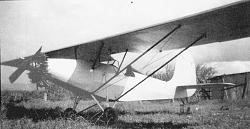
Niilo and Valto Karhumäki started in autumn 1924 the construction of an airplane at their home. The work also involved Emil Kankaanpää and Hope Hovinen. The machine was given the name Bear 1.
The brothers built in the 1920s of four aircraft: Bear 1 Bear 2 Bear 3 and Tern. Construction was initially something of a hobby, but soon expanded into a versatile aviation business.
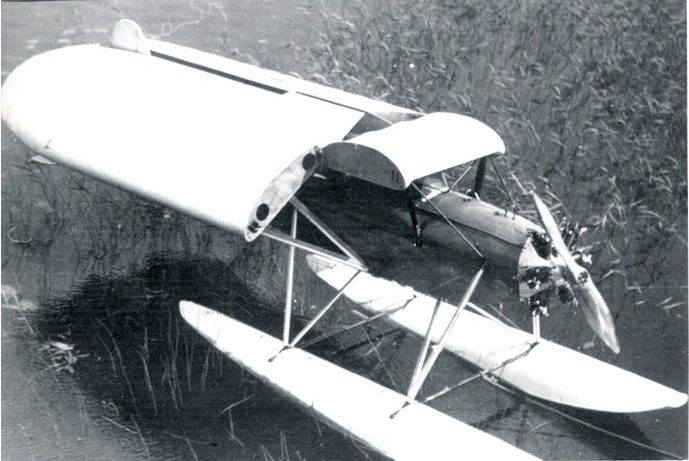
Karhumäki Tiira / Tern
Karhumäki activities began in 1924 at Keljo, near Jyvaskyla, and originally was of an amateur undertaking. Together with his brothers, Valto and Uuno, Niilo Karhumäki designed and built an aircraft and began to fly it. The first aircraft was given the name Karhu (Bear). The work was continued and the boys planned and constructed the Karhu 2, Karhu 3 and Tiira (Tern). The Tiira was built in 1929.
A reproduction of the 1929 Tiira tandem parasol monoplane began flying in 2004.
Karhumäki Karhu 48B
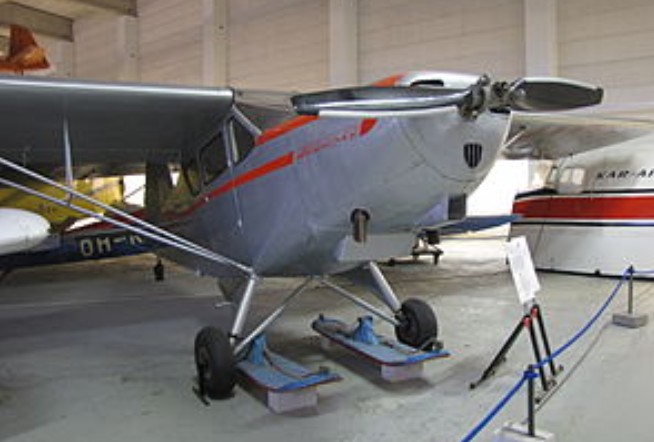
The Veljekset Karhumäki O/Y company had been formed in 1924 and concerned itself with licence manufacturing. During 1946-1947 the company designed and built the Karhu 48B a high-wing strut-braced four-seat monoplane in collaboration with Valtion. The development team included Uuno Karhumäki, Matti Hahka and August Puukko from Karhumäki and Torolf Eklund, Johannes Joensuu, Oiva Lounivuo, Toivo Mäntysalo, Karl Konrad Wessman, Paavo Paitula, Olavi Raitio and Aaretti Nieminen from Valtion, Nieminen being appointed team leader.
WINGS: High-wing rigidly braced monoplane. Wing braced by steel-tube V-struts. Two-spar wooden structure covered with fabric. Flaps and ailerons with welded steel-tube frames and fabric covering.
FUSELAGE: Welded steel-tube structure covered with fabric.
TAIL UNIT: Braced monoplane type. Welded steel-tube framework covered with fabric.
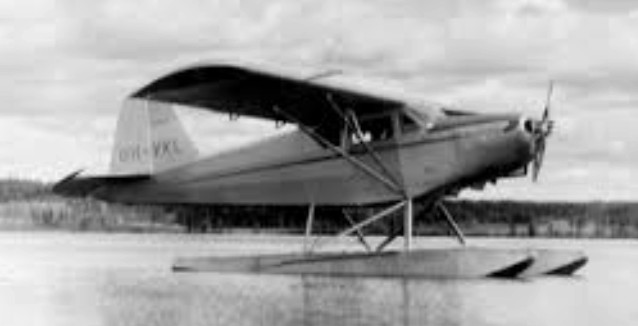
LANDING GEAR: Tail wheel type with interchangeable wheels and skis. Faired side vees, incorporating springing, and two half axles hinged at centreline of underside of fuselage. Steerable tail wheel. The landing gear could be replaced by twin all-metal single-step floats of Karhumäki design and construction, with a rudder on port float.
POWER PLANT: One 190 hp Lycoming O-435A six-cylinder horizontally-opposed air-cooled engine driving an Acromatic 220 variable-pitch airscrew.
ACCOMMODATION: Enclosed cabin seating four, two single seats in front with removable dual controls and a full-width seat aft. Entrance door on each side. Two baggage compartments. Cabin heating and ventilation. Radio fitted as standard.
Two prototypes were completed, the first, registered OH-VKK and named Nalle, was flown for the first time by Uuno Karhumäki (the youngest of the Karhumäki brothers) on July 20, 1948. The second, which flew later that year, was registered OH-VKL and named Tavi. Planned production did not materialize by the import of cheap military surplus aircraft, and subsequently both aircraft were used by Karhumäki.
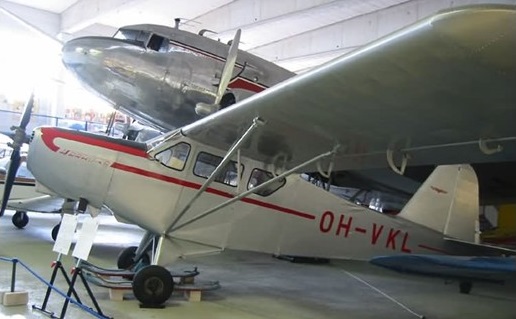
OH-VKL eventually had its wing modified and was redesignated Karhu 48B, it was reregistered OH-KUA in 1961 when it was sold to O. Marjamäki in Vilppula. After being deregistered in 1973, the aircraft eventually ended up at the Suomen Ilmailumuseo (Finnish Aviation Museum), restored by Karair in 1988 into the original livery and registration.
Specifications:
Landplane
Span: 37 ft 10 in (11.54 m)
Length: 25 ft 9 in (7.85 m)
Wing area: 186.25 sq.ft (17.31 sq.m)
Weight empty: 1,789 lb (813 kg)
Weight loaded: 2,882 lb (1,310 kg)
Max speed: 142 mph (229 kmh)
Cruising speed: 116 mph (186 kmh)
Landing speed: 48 mph (78 kmh)
Service ceiling: 15,745 ft (4,800 m)
Cruising range: 435 mls (700 km)
Seaplane
Span: 37 ft 10 in (11.54 m)
Length: 26 ft 6.5 in (8.10 m)
Wing area: 186.25 sq.ft (17.31 sq.m)
Weight empty: 1,991 lb (905 kg)
Weight loaded: 3,080 lb (1,400 kg)
Max speed: 126 mph (203 kmh)
Cruising speed: 109 mph (176 kmh)
Alighting speed: 52 mph (83 kmh)
Service ceiling: 13,780 ft (4,200 m)
Cruising range: 404 mls (650 km).
Karhu 48B
Engine: 1 × Avco Lycoming O-435A 6-cyl. air-cooled horizontally-opposed piston engine, 140 kW (190 hp)
Propeller: 2-bladed Aeromatic 220 variable-pitch
Length: 7.85 m (25 ft 9 in) (landplane)
Wingspan: 11.54 m (37 ft 10 in)
Wing area: 17.31 sq.m (186.3 sq ft)
Max takeoff weight: 1,310 kg (2,888 lb)
Maximum speed: 229 km/h (142 mph; 124 kn)
Cruising speed: 186 km/h (116 mph; 100 kn)
Range: 700 km (435 mi; 378 nmi)
Service ceiling: 4,800 m (15,748 ft)
Crew: 1
Capacity: 3 passengers
Karhumäki Viri
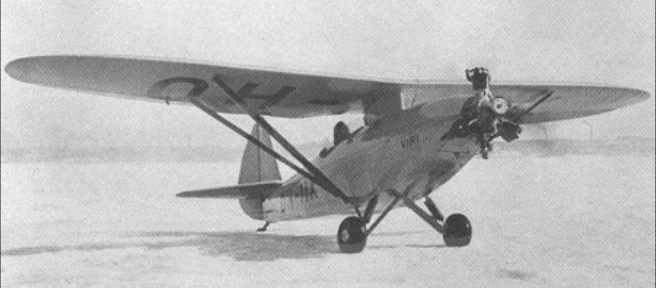
In the 1930s the single-seat light monoplane Viri single-seat light monoplane was built, design by Finnish Club of Aeronautical Engineers.
Karhumäki Brothers
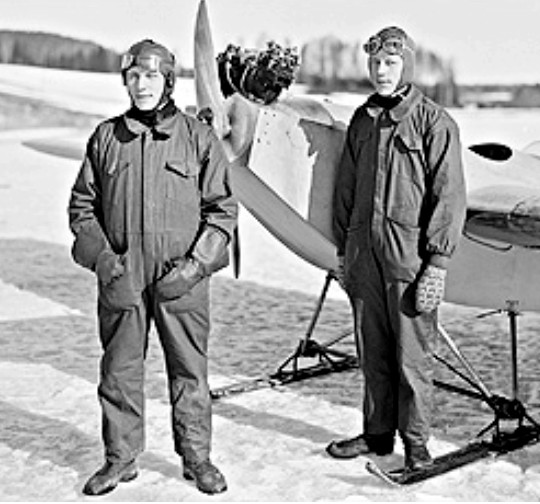
Niilo and Valto Karhumäki, also known as the Karhumäki brothers (Finnish: Veljekset Karhumäki), were Finnish aviation pioneers, aircraft manufacturers and airline founders.
Born in Multia, Niilo and Valto Karhumäki moved to Jyväskylä, where they founded a company called Veljekset Karhumäki in late 1924, which dealt with pilot training, public displays, aircraft maintenance and aerial photography during the 1930s. Niilo Karhumäki had completed in early Air Force reserve pilot course in Vyborg and received a pilot’s license.
Niilo and Valto Karhumäki started in autumn 1924 the construction of an airplane at their home. The work also involved Emil Kankaanpää and Hope Hovinen. The machine was given the name Bear 1. The brothers built in the 1920s of four aircraft: Bear 1 Bear 2 Bear 3 and Tern. Construction was initially something of a hobby, but soon expanded into a versatile aviation business.
In order to start a co-operation with the Finnish Air Force, the headquarters of Veljekset Karhumäki was moved to Kuorevesi. During World War II the company was merged into the Valtion lentokonetehdas company, manufacturer of a number of military aircraft. In the 1930s the Viri single-seat light monoplane was built, design by Finnish Club of Aeronautical Engineers. In 1939-1941 a new factory was built, near Halli airfield, where trainers for Finnish Air Force were built. The Karhumäki brothers designed the Karhumäki Karhu 48B light airplane, of which a small number was produced during the 1950s.
In 1950, Karhumäki Airways was founded by Veljekset Karhumäki, an airline initially offering scheduled passenger flights on mostly domestic routes. In 1963, Aero O/Y (today’s Finnair) acquired the majority of its stake, and in 1996 Karair (as it was known by then) was fully absorbed into Finnair.
Successful air transport and repair activities were discontinued due to tougher competition in 1963. Aerial Photography and the Ministry of Agriculture and Forestry flights continued. The brothers have been honoured with a monument called Lentäjäveljestenaukio (which translates as “Pilot Brothers Square”) in Halli.
Kappa KP 2 Sova / Rapid KP 2
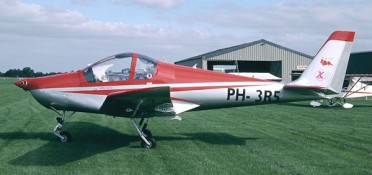
In 1994 the development of the all-metal UL aircraft KP-2U SOVA was started. Three prototypes were built: two for the test flights and one for the strength tests. The first test flight of the SOVA was done in May 1996. In September 1997 the aircraft obtained the type certificate by the UL-2 regulations from the Air Amateur Association of the Czech republic.
In June 1977, KAPPA77 a.s. was founded and the KP-2U entered serial production. After the KAPPA 77 a.s. was declared bankruptcy on 16 February 2005, the company Jihlavan airplanes, s.r.o. was founded on 2 March 2005 with the main objective – to proceed in the production of the ultralight aircraft KP 2U SOVA. On 1 April 2005, the Jihlavan airplanes, s.r.o. became the holder of the manufacture rights, intellectual properties, etc. of the KP-2U. Over 160 airplanes of the Kappa KP-2U versions were built. After Jihlavan took over the production of the aircraft it was renamed as the Rapid KP-2U.
The Kappa KP-2UR Sova is a side-by-side two-seat low-wing ultralight aeroplane, featuring variable-pitch three blade composite prop, retractable trailing link tricycle undercarriage and fowler flaps.
The all-metal aircraft is delivered in airworthy condition, with electro-retractable landing gear with hydraulic brakes, mechanically controlled Fowler flaps, removable wings with winglets, dual control and an elevator with electro-controlled trim tab. Both fabric-covered seats are adjustable, with four-point safety belts.
2009 Price: 49000 EURO
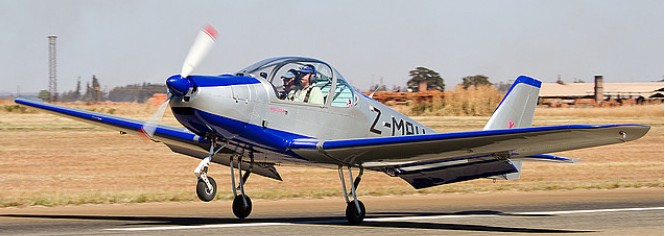
The KP 2V SOVA structure is entirely riveted dural tube. The side by side two seater is equipped with retractable undercarriage and Fowler flaps with a GAW 1 profile.
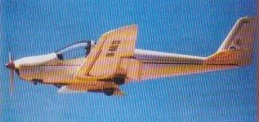
RAPID 200
Engine: Rotax, 100 hp.
Fuel cap: 64 lt.
Range nil res: 500 mile.
Stall: 26 kt / 30 mph / 48 kmh
Cruise: 113 kt / 130 mph / 210 kmh
VNE: 140 kt / 162 mph / 260 kmh
Empty Weight: 282 kg / 622 lbs
MTOW Weight: 450 kg / 992 lbs
Climb Ratio: 1300 ft/min / 6.5 m/s
Take-off distance (50ft obstacle): 330 ft / 100 m
Landing distance (50ft obstacle): 460 ft / 140 m
KP 2U SOVA
Engine: Rotax, 100 hp.
Fuel cap: 64 lt.
Range nil res: 500 mile.
Stall: 26 kt / 30 mph / 48 kmh
Cruise: 108 kt / 124 mph / 200 kmh
VNE: 143 kt / 165 mph / 265 kmh
Empty Weight: 285 kg / 628 lbs
MTOW Weight: 450 kg / 992 lbs
Engine: Rotax 912 UL, 80 hp
Wing span: 9.9 m
Wing area: 11.85 sq.m
MAUW: 450 kg
Empty weight: 260 kg
Fuel capacity: 64 lt
Max speed: 260 kph
Cruise speed: 185 kph
Minimum speed: 48 kph
Climb rate: 6.5 m/s
Certification: Cz
Seats: 2
Fuel consumption: 12 lt/hr
Price (1998): 100 000 DM
Kamov
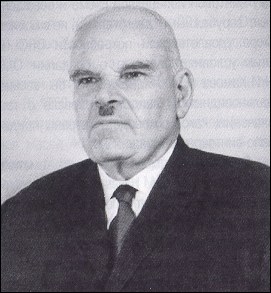
Nikolai Il’yich Kamov was born in 1902. In 1923 he graduated from the Tomsk Technological Institute. From 1923 to 1931 he worked at a number of the USSR’s aircraft factories having various posts, including those of brigade chief and leading designer in the design bureau of D.P.Grigorovich. From 1931 to 1948 (with short pauses) he headed separate brigades and an experimental design group in TsAGI. Between 1928 and 1943 he was engaged in the design and construction of autogyros.
Nicolai Kamov started building his first rotor-winged aircraft in 1929, together with N.K.Skrzhinskij. The first Soviet Autogiro was designed by Kamov and Skrzhinskii based on Cierva models.
In 1945 he started the design work on a co-axial helicopter. Kamov gained distinction for lightweight single-seat helicopters after Second World War, including Ka-8 of 1947.
On October 7, 1948 the Minister of Aviation Industry M.V.Khrunichev issued Directive No.772 ordering the establishment of the Experimental Design Bureau No.2 (OKB No.2) headed by N.I.Kamov. The OKB was to be hosted by the State All-union Experimental Factory No.3 in Sokol’niki, a district of Moscow. In accordance with this directive all the specialists of the group which had been developing the Ka-8 on a voluntary basis were transferred to Kamov’s OKB-2.
The aircraft factory No.3 of the Ministry of Aviation Industry was considered to be, for all practical purposes, the base enterprise of the OKB headed by chief designer I.P.Bratukhin. It comprised several production shops and divisions, including the flight test facility at the Izmaylovo airfield (then a suburb of Moscow). The OKB-2 occupied the rooms allocated to it at the premises of this enterprise. Its staff rendered considerable assistance to the speedily growing brigades of the OKB-2 in establishing themselves and gaining the necessary practical experience in design and calculation work.
This was followed by the single-seat Ka-10 of 1950 appearance as a piston-engined helicopter for shipbome observation duties, with two contrarotating rotors and no anti-torque tail rotor; these rotor design features were to be found in most subsequent Kamov helicopters. The Ka-15 two-seater of the 1950s used for agricultual work in addition to naval anti-submarine and other roles, and the Ka-18 four-seat development was flown in 1957 and widely operated on varied civil tasks. The Ka- 22 Vintokryl was a very large twin-turboprop convertiplane, first seen in 1961, and established many world records. The twin-turboshaft powered Ka-25 was first flown in April 1961 and deployed by the Soviet Navy as a shipborne anti-submarine warfare helicopter, and also for target acquisition, joining the Navy from 1972 and manufactured up to 1977.
The more capable Ka-27 was first flown in August 1973 and joined Soviet Navy from 1981, with the Ka-28 as an export version. The related Ka-29 first flown in July 1976 as a shipborne assault and transport variant plus the Ka-33 export model without weapons. The Ka-31 was flown in October 1987 as a shipborne AEW&C variant, and Ka-32 first flown October 1980 as civil model for transport, flying-crane, rescue, offshore support, patrol, firefighting and other uses, with the Ka-327 as a maritime patrol version of the Ka-32. The piston-engined civil Ka-26 first flew in 1965 (some military use), with the modern Ka-126 (first flown in October 1987) and the Ka-128 turboshaft developments. All having pod-and-boom fuselages to allow attachment of modules aft of cockpit for various cargoes (from passenger carrying to agricultural equipment) or left open for flying-crane duties. A new twin-turbine development is the Ka-226 (first flown September 1997). The Ka-50, was first flown in June 1982 as a single-seat combat helicopter, with the Ka-50N Black Shark night-attack version flying March 1997, while side-by-side two-seat derivative became the Ka-50 Alligator (first flown in June 1997).
1995: 8a March 8th St., Lubertsky, Moscow Region 140007, Russia.
In 1996, Kamov became a member of MIG MAPO-M.
A military multipurpose twin-turboshaft helicopter is the Ka-60 for 10 equipped troops (rolled out July 1998), with a 16-passenger civil version as the Ka-62. A light single-turboshaft Ka-115 was to fly in 1999, carrying pilot and up to four passengers.

