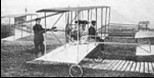
Lennert 1911 Biplane

In 1911 a biplane with an 18-foot wingspan was designed and built by Lennert in the USA.

Willie Lennert flew in his 18 ft. wing span Lennert Biplane (similar to a Demoiselle-type monoplane but with a second wing added below) powered by a Lennert 20 h.p. engine.

The first non-fatal accident at Cicero occurred in June 1911, to Willie Lennert while he was attempting to fly his small self-built Lennert Biplane.

Lendner 1912 Monoplane

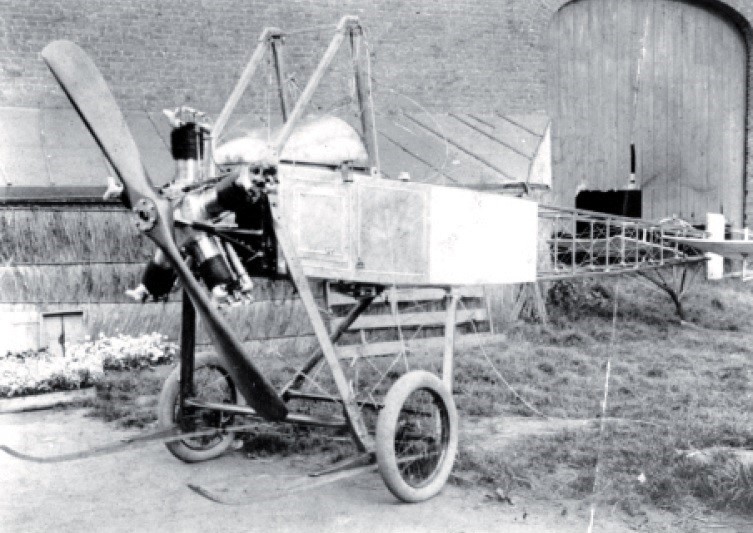
Leo Lendner (Würzburg) built several flying machines in Germany during 1911-1913. This photograph was taken during a visit of k.u.k. military cadets at Würzburg in September 1912. It was sent as postcard to a girl of the family by that boy sitting in the 2nd cockpit – Max Graf von Tauffkirchen zu Guttenburg auf Ybm. Max was the lucky one to fly with Lendner on that machine, as he told.

Lemberger LD20b

The Karl Lemberger designed Lemberger LD20b cantilever biplane was one of this kind, designed with readily detachable wings and tailplane so that it could be towed by a car. Whilst towing, the wings were stowed alongside the fuselage. The tailskid was linked to the car via a luggage rack-like frame.

The upper and lower wings of the LD20b were very similar, with the same span, area and straight, near-constant chord, plan. The lower wings were attached to the lower fuselage longerons and the upper ones to cabane struts above the front of the cabin. They were arranged with considerable stagger. The wings were built around two closely spaced spars, with plywood skin from the rear spar forward forming a torsion box and fabric covering behind. Differential ailerons were mounted only on the lower wings.

The wooden, rectangular fuselage was plywood-covered to just behind the pilot’s seat and fabric-covered further aft apart from a curved plywood decking behind the cabin. The fin was integral with the fuselage and unusually shallow with the variable incidence tailplane mounted on top of it, a little above the fuselage and bearing damped elevators. The balanced rudder was much taller than the fin. The enclosed cabin seated two in tandem with the front seat under the upper wing and over the centre of gravity. Dual control was fitted. In front, a Walter Mikron inverted 4-cylinder engine drove a two-bladed propeller.

The LD20b was completed in 1971. Its first flights were made from EDSZ Rottweil-Zepfenhahn,(Germany), piloted by a Me 109 pilot. The next flight from Friedrichshafen, Germany, piloted by Arnold Wagner, an airline pilot, the Swiss aerobatic champion and designer of the Hirth Acrostar.

After its presentation at Friedrichshafen, Leonhard Kurt Kienlein took over ownership and the task of making the structural changes in order to make sure the plane did reach stable flight characteristics. He also maintained the aircraft. An enclosed, all-weather trailer was built to house the LD20. The last flight after a total of 368 hours was in 1998.

Engine: 1 × Walter Mikron 4-cylinder inverted air cooled, 46 kW (62 hp)
Propeller: 2-bladed
Length: 6.67 m (21 ft 11 in)
Wingspan: 7.28 m (23 ft 11 in)
Height: 2.20 m (7 ft 3 in)
Wing area: 14.00 m2 (150.7 sq ft) gross
Empty weight: 300 kg (661 lb)
Max takeoff weight: 538 kg (1,186 lb)
Maximum speed Est: 178 km/h (111 mph; 96 kn) at maximum take-off weight.
Cruising speed: 160 km/h (99 mph; 86 kn)
Time to altitude: 1,000 m (3275 ft) in 7 mins
Capacity: 2

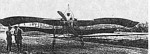
Lelièvre 1912 monoplane

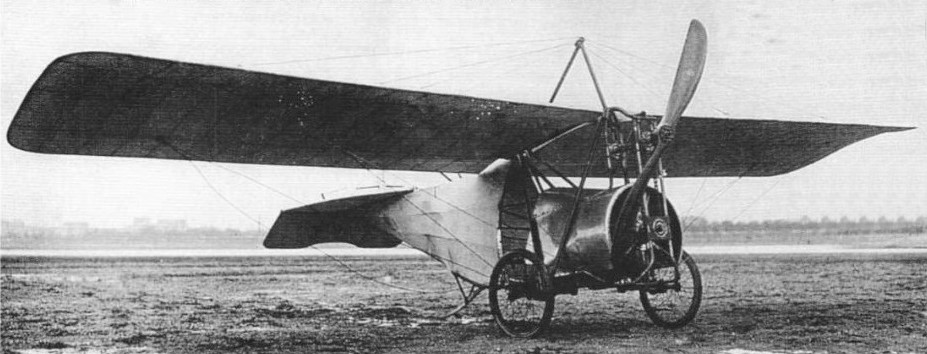
This stubby monoplane was designed by Lt Lelievre and built by Vendome in 1912 at Le Havre, France. The wing was mounted on the top of the short, covered fuselage, with the engine set almost at ground level, driving through a chain the tractor propeller that was mounted slightly forward of the leading edge. The pilot sat inside the fuselage under the wing, entering through one of the side doors.

It first flew on 18 July 1913, at Issy-les-Moulineaux. It was destroyed when it crashed in August during test flights, slightly injuring Lt Lelievre.

Engine: Gnome 50 hp

Leleu 1913 monoplane

Arthur Leleu, carpenter and father of 18 children, designed and built this somewhat Deperdussin-inspired monoplane, which was powered by a five-cylinder Anzani. It was tested at the La Briquette field outside Valencienne, France, by a pilot by the name of Boutaric. The first flight, on 18 May 1913, was successful, but on the next day the pilot was disturbed by some cattle, landed on a marker stone and broke the wheel axle. That was apparently the last that was heard of the machine.

Lejeune Biplane

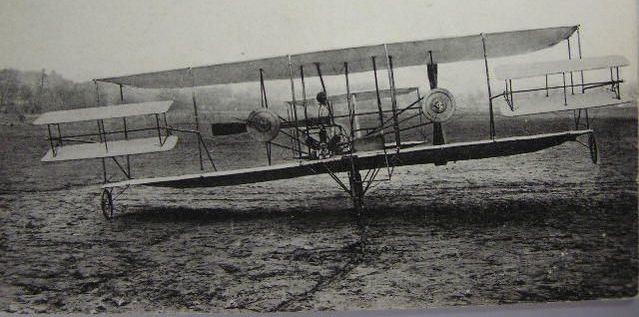
Designed by Louis Lejeune, built by de Pischoff et Koechlin, the 1909 Lejeune biplane was modified with forward extending biplane aileron control; possibly as the Lejeune No.3.

1909 Lejeune modified biplane

Powered with a 10-12 hp 3-cylinder Buchet radial engine chain-driving two 2-bladed pusher propellers and featuring bicycle gear in tandem with wingtip wheels, the Lejeune Biplane weighed 385 lb.

At the Prix de Lagatinerie, held May 23, 1909 – the official opening of Port-Aviation – Lejeune, who was not entered in the race, tried to fly his plane. Despite very long ground runs through the grass the little biplane never took off, managing only to earn itself the nickname “la moissoneuse”, (the harvester).

Span: 21’4″
Length: 16’6″
Weight: 385 lb