Germany
Developed series of related light sporting aircraft, but only MY 102 Tornado single-seater flown (1973). Others were to be MY 103 Mistral two-seater and MY 104 Passat four-seater.
Aircraft
Leichtflugzeug Vagabund
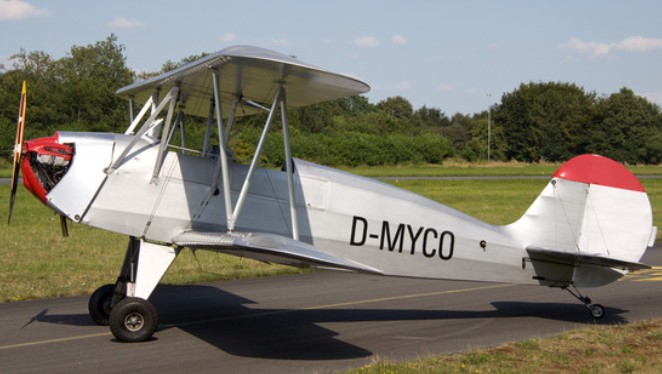
The AV Leichtflugzeuge Vagabund (English: Vagabond) is a German ultralight aircraft that was designed by Birk Meier, Hans Grannemann and Robert Kaps and produced by AV Leichtflugzeuge of Haren, Germany. The aircraft is supplied as a kit or plans for amateur construction or as a complete ready-to-fly-aircraft.
The Vagabund was designed to comply with the Fédération Aéronautique Internationale microlight rules. It features a strut-braced biplane layout, a two-seats-in-tandem open cockpit, fixed conventional landing gear and a single engine in tractor configuration. The aircraft closely resembles the 1930s Bücker Bü 131.
The aircraft is made from wood, with its flying surfaces covered in doped aircraft fabric. Its 7.55 m (24.8 ft) span wing employs ailerons on the lower wing only. The aircraft can use engines from 50 to 85 hp (37 to 63 kW) and the 80 hp (60 kW) Rotax 912UL, the 85 hp (63 kW) Jabiru 2200 and the 75 hp (56 kW) Limbach L2000 Volkswagen air-cooled engine have been fitted along with automotive conversions such as the Nissan 1.2 litre engine.
Unit cost assembled in 2011 was €48,900.
Engine: 1 × Jabiru 2200, 63 kW (85 hp)
Propellers: 2-bladed wooden
Wingspan: 7.55 m (24 ft 9 in)
Wing area: 18.2 sq.m (196 sq ft)
Empty weight: 114 kg (252 lb)
Gross weight: 450 kg (992 lb)
Fuel capacity: 50 litres (11 imp gal; 13 US gal)
Maximum speed: 140 km/h (87 mph; 76 kn)
Cruising speed: 115 km/h (71 mph; 62 kn)
Stall speed: 59 km/h (37 mph; 32 kn)
Rate of climb: 3 m/s (590 ft/min)
Wing loading: 24.73 kg/m2 (5.07 lb/sq ft)
Crew: one
Capacity: one passenger
Leichtflugzeug Sky Walker
A tandem two-seat very light aircraft in assembled or kit form.
Leichtflugzeug Gmbh & Co Kg
Germany
Offers in assembled or kit form the Sky Walker tandem two-seat very light aircraft and the Vagabund.
Legras 1909 biplane
The 1909 Legras biplane was designed and built by Legras in France
Legrand-Simon LS-60
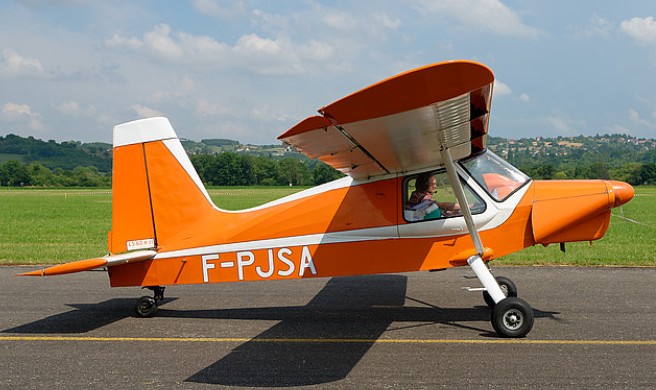
Legrand-Simon LS 50
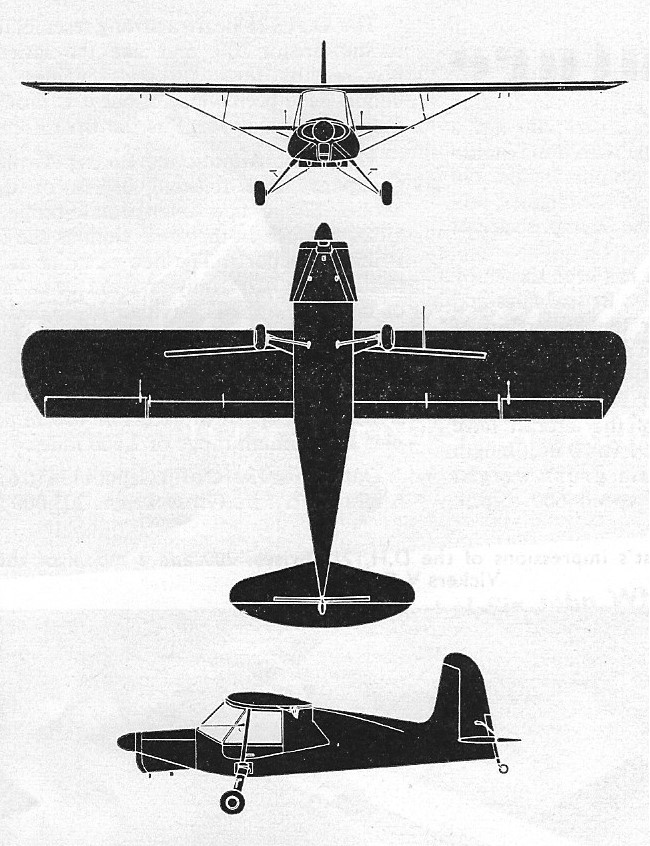
The LS 50 was designed to be suitable for touring, training, or towing. The craft is of mixed wood construction allowing sub-contracting and prefabrication.
On the prototype several components, such as cowling panels, wheel discs, spinner and door sills, had been made of fibreglass. The fuselage is basically rectangular, rigid wood box built up on four longerons. At the sear is a post for the rudder.
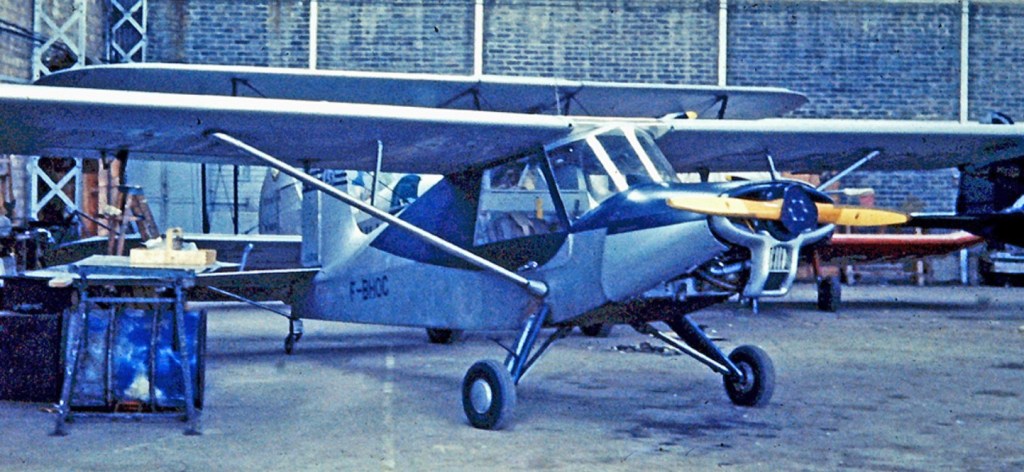
At the front a metal frame unites the cabin and wing supporting structure, the two side-by-side seats, the control column and its mechanism, and the undercarriage and shock absorbers. This welded steel structure supports the controls, flap mechanism, radio, doors and instrument panel. Full dual controls are fitted as standard, and the various trim controls are placed on the centrally mounted flap lever in the cabin roof, accessible to both seats.
The wing is built up on a single spar at 25% chord, and forward of this spar is plywood covered, forming a torsion box. The ailerons are cable-operated, the flaps by torsion tube. Ribs are built up of wood and the whole wing, braced by a single strut each side, is fabric covered. The tail unit is constructed of welded steel tube with a fabric cover.
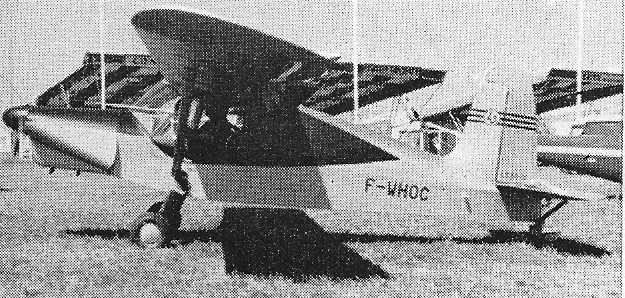
Only the one was built.
Engine: 90 hp
Wingspan: 31 ft 6 in
Length: 21 ft 0 in
Height: 6 ft 6 in
Empty weight: 979 lb
Loaded weight: 1527 lb
Max speed at 3000ft: 118 mph
Cruise at 3000ft: 104 mph
Landing speed: 41 mph
Range: 620 mi
ROC: 700 fpm
Seats: 2
Legrand and Guillaume 1910 triplane
The 1910 Legrand triplane was designed by Jean Legrand and built by Voisin in France.
Span: 23′
Legrand and Guillaume 1913 tractor/pusher
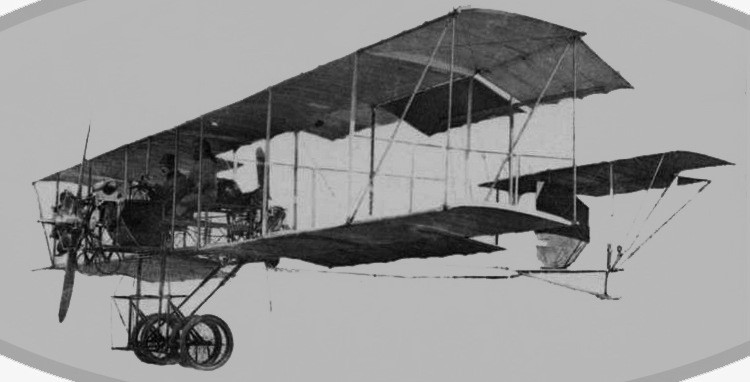
Built 1912-13, the tractor/pusher was a three-seater twin-Gnome-engined 100 hp plane built by Jean Legrand and flying by Camille Guillaume. A modification of a standard 1912 Voisin Type Course biplane to a push-pull machine.
Legnano I
The 1910 Legnano I monoplane was designed and built in Italy.

