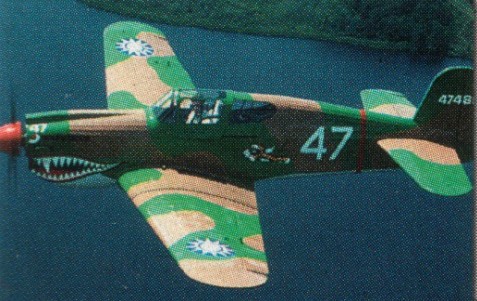
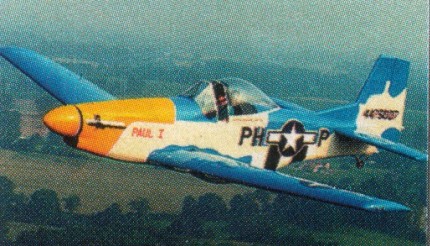
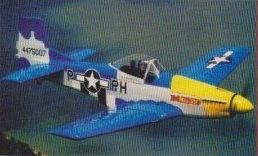
A 75% scale ultralight P-51 Mustang that qualifies as an LSA. The entire 5151 kit is designed for the inexperienced builder and is estimated to be completed in 400-500 hours. Almost all parts are pre-cut to exact dimensions, grooved, shaped and even tapered to ensure a perfect fit. The gussets and stringer attach pieces used in large quantity in the airframe are die cut like in a good model aircraft kit. The canopy and metal parts are also pre cut and those “difficult to make” parts are even preformed, predrilled and ready to assemble. All hardware comes separately packed and labelled for each section of the aircraft to avoid loss or confusion where parts go. The airframe kit includes everything to build the aircraft less engine, instruments and paint. Covering material and fabric glue, prop, tyres etc., and the enormous 18 inch custom spinner is also included in the airframe kit. Although the ROTAX 582LC is the recommend engine, there are several engine options including a 4 cyl., in-line 4-stroke engine available.
The construction of the 5151 Mustang consists more of an assembly than actually building, since all parts are highly prefabricated. Much of the assembly is of geodetic construction which, while it looks “fussy” it is actually a simple technique producing an exceptionally strong airframe for the structure’s weight. The fuselage consists of a conventional simple box-type construction which is transformed by formers and stringers into the shape of a P-51. The heart of the 5151 is the massive 10 x 12 inch centre section box spar which takes the optional wing tanks and the retractable or fixed landing gear, which ever the builder desires. The outer box spar i.e. wing panels attach to the centre section and are removable for storage or trailer, which leaves a foot wide structure on the landing gear for easy handling. Once the spar is assembled, the wing ribs simply attach to the spar and no jigs are needed since the aircraft is designed to be built on a flat bench. Also a remarkable feature is the technique used by the designer to virtually eliminate building errors in those critical components such as washout, taper etc., since the wing is tapered and all 12 wing ribs are different.
All tail surfaces are also built conventionally and consist simply of a leading edge spar, pre-cut trailing edge, ribs and geodetic bracing. The ribs are built over full-size drawings and are also built on the workbench, just as the entire rudder, elevators and vertical stabilizer. The retractable landing gear and also the fixed version is made of 4130N 2 inch chromolly tubing and comes tack welded.
The 5151RG has retractable undercarriage.
5151-RG
By 2014, the covering no longer came as part of the kit (available separately though), and only the Rotax 582 engine was offered. Ribs are solid wood – already cut to proper airfoil shape; simply require cap strips upper and lower.
5151 Engine: Rotax 503, 50 hp. Speed max: 95 mph. Cruise: 75 mph. Range: 325 sm. Stall: 28 mph. ROC: 700 fpm. Take-off dist: 150 ft. Landing dist: 250 ft. Service ceiling: 12,500 ft. Fuel cap: 5-13 USG. Weight empty: 513 lbs. Gross: 885 lbs. Height: 6 ft. Length: 22.9 ft. Wing span: 27.4 ft. Wing area: 130 sq.ft. Seats: 1. Landing gear: tail wheel.
5151 RG Engine: Rotax 582, 65 hp. Vne: 100 mph/ 89 kt. Cruise: 85 mph/ 79 kt. Range: 325 nm. Stall: 30 mph/27 kt. ROC: 1200 fpm. Take-off dist: 150 ft. Landing dist: 250 ft. Service ceiling: 12,500 ft. Fuel cap: 13 USG. Weight empty: 600 lbs. Gross: 885 lbs. Height: 6 ft. Length: 22.9 ft. Wing span: 27.4 ft. Wing area: 130 sq.ft. Seats: 1. Landing gear: tail wheel, retractable.
5151-RG Engine: Rotax 582, 64 hp Wing span: 8.4 m Wing area: 12.7 sq.m MAUW: 300 kg Empty weight: 203 kg Fuel capacity: 25 lt Max speed: 150 kph Cruise speed: 150 kph Minimum speed: 55 kph Climb rate: 4.2 m/s Certification: Vz Seats: 1 Fuel consumption: 13 lt/hr Kit price (1998): $7995
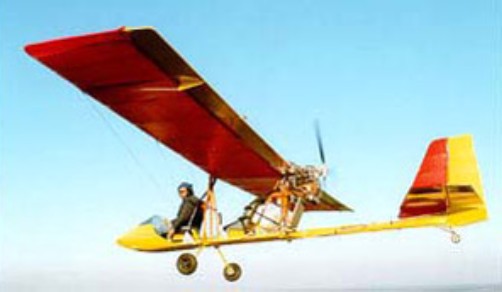
Produced by the Maxair Aircraft Corporation at the height of the ultralight boom, the original single-seat Drifter featured a 28-hp Rotax 277 engine. Its cable-braced wing and aluminum fuselage tube resulted in a rigid design that was soon expanded to include a two-seat trainer version and a short-wing, overpowered single-seat hot rod that was well outside ultralight limits. Some Drifters were equipped with monohull or dual floats.
Maxair declared bankruptcy in 1991, and the Drifter project was picked up by Phil Lockwood, who had worked for Maxair.
His company, Lockwood Aircraft, now kits the Super Drifter, an LSA, two-seat version powered by an 81-hp, four-stroke Rotax 912UL engine. With its standard 10-gallon tank, the Super Drifter claims a range of about 200 nautical miles at a cruise speed of about 60 knots—perfect for low-altitude, warm-weather exploring or short trips.
The two-seat Drifter and the similarly configured Air Cam has conventional controls and handling, and power is more than adequate. It’s worth noting that the rather short main landing gear legs and a long fuselage result in a nearly level three-point attitude on the ground. First-time front-seat pilots would benefit from climbing aboard, sitting awhile, and noting the angle between the Drifter’s small nose cone and the horizon. That’s the ideal landing attitude, and there is little ahead for a pitch reference.
Engine: Rotax 912, 80 hp HP range: 50-80 Length: 22 ft Wing span: 30 ft Wing area: 160 sq.ft Empty weight: 495 lb Gross weight: 1100 lb Fuel capacity: 10 USG Cruise: 70 mph Stall: 34 mph Range: 230 sm Rate of climb: 1000 fpm Takeoff dist: 200 ft Landing dist: 300 ft Landing gear: tailwheel
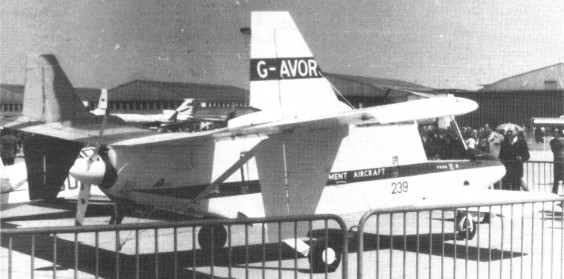
David Lockspeiser attempted to develop LDA (land development aircraft) general utility aircraft over two decades up to mid-1980s, with rear-mounted main wings and large canards, and rear-mounted engine with pusher propeller. A 70 percent-scale prototype flew 1971 as G-AVOR c/n LDA-01 and given PFA number 1346.
Construction was started at Shalford, UK, and the final assembly was done at Wisley. The two rear wing sections are interchangeable with each other and with the forward wing, which is mounted underneath the fuselage. The angular fuselage was capable of taking an underslung cargo pannier. A four unit undercarriage was fitted.
It was flown for the first time at Wisley on 24 August 1971 powered by a Continental C85-12. Initially it flew with a twin fin/rudder assembly but later a non-moving central fin was added.
In 1974, after a period of testing, the prototype was re-engined with a Lycoming O-320-D1A and given a conventional three unit undercarriage. The provision for the pannier was also removed. It appeared at the 1975 Paris Salon at Le Bourget France.
The intended full-size LDA-500 Boxer and larger LDA-1000 Boxer were designed.
Span: 29.00 ft Fore plane span: 13.00 ft Length: 22.06 ft
UK David Lockspeiser attempted to develop LDA (land development aircraft) general utility aircraft over two decades up to mid-1980s, with rear-mounted main wings and large canards, and rear-mounted engine with pusher propeller. A 70 percent-scale prototype flew 1971 as LDA-01, and intended full-size LDA-500 Boxer and larger LDA-1000 Boxer were designed.
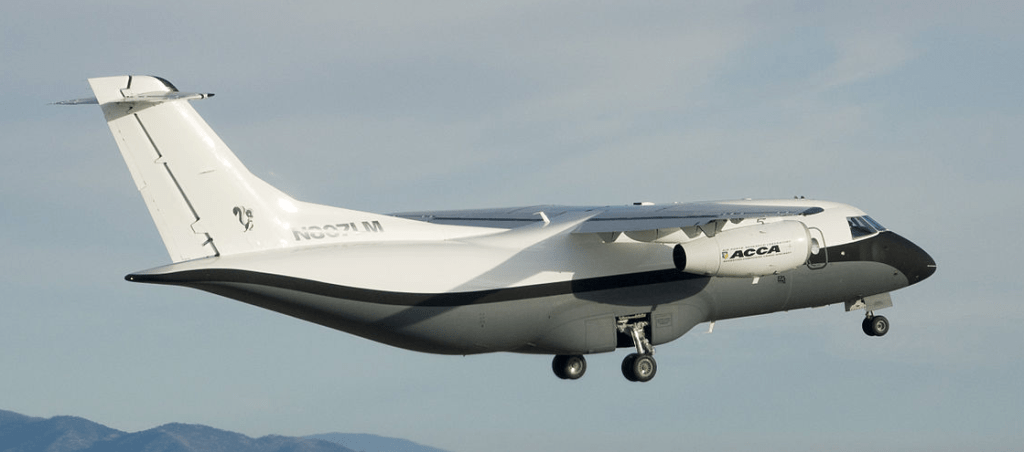
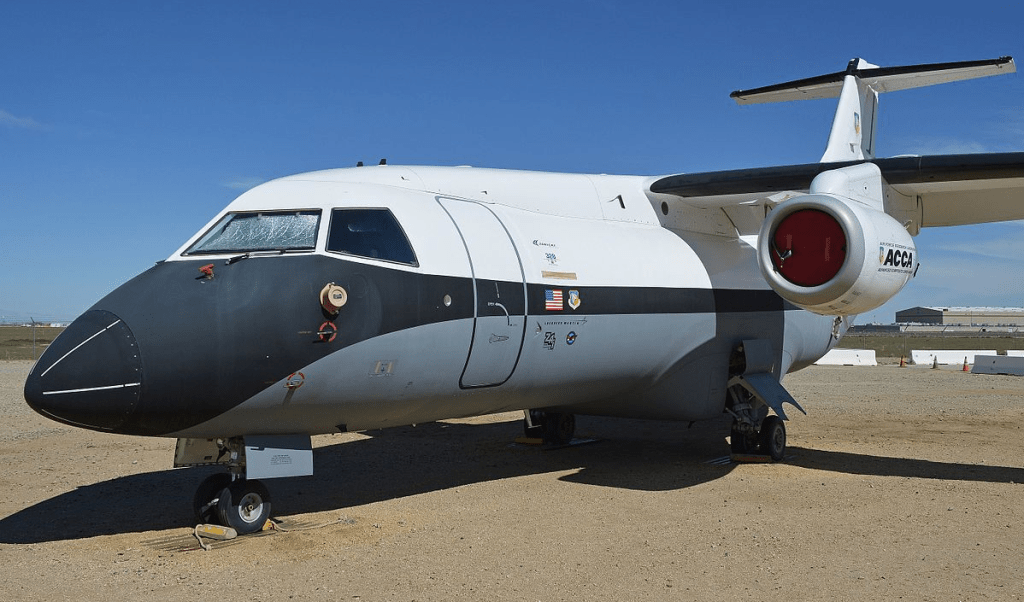
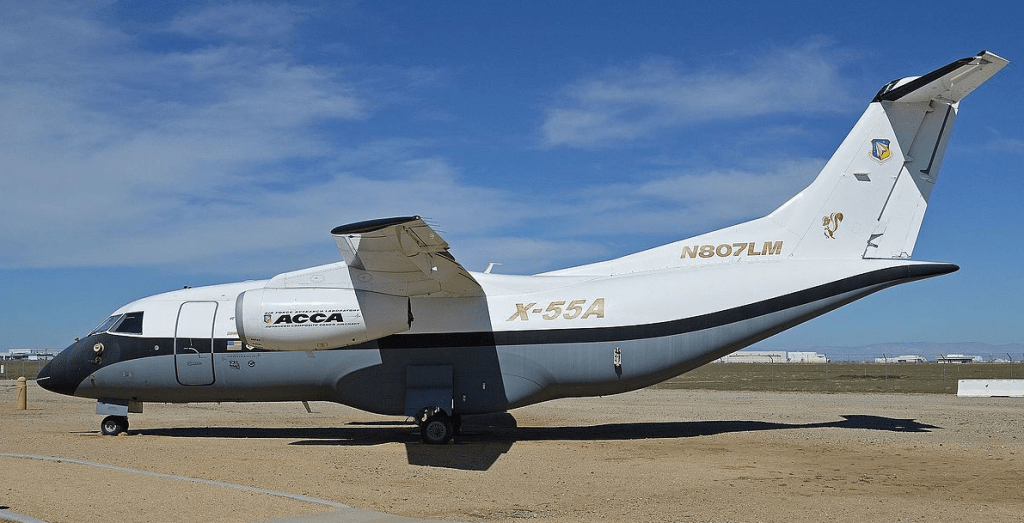
The Lockheed Martin X-55 Advanced Composite Cargo Aircraft (ACCA) is an experimental twinjet transport aircraft. It is intended to demonstrate new air cargo-carrier capabilities using advanced composite materials. A project of the United States Air Force’s Air Force Research Laboratory, it was built by the international aerospace company Lockheed Martin, at its Advanced Development Programs (Skunk Works) facility in Palmdale, California. The X-55 is a one-off aircraft intended to demonstrate the use of advanced composite materials in the fuselage of an otherwise conventional high-wing transport aircraft.
The aircraft is powered by two Pratt & Whitney Canada PW306B turbofans. The X-55 design is based on the existing Fairchild Dornier 328JET. The fuselage of that aircraft, which is constructed of aluminium alloys, was replaced aft of the entrance door with a newly designed fuselage. The new design makes extensive use of advanced composite materials, selected to allow out of autoclave curing at lower temperatures and pressures than previous materials. The new widened fuselage allows the loading of cargo through a rear ramp.
The new fuselage section is constructed as a single large component, including the vertical stabilizer. When attached to the existing nose section, the fuselage is 55 feet (16.8 m) long and 9 feet (2.74 m) diameter. The fuselage has upper and lower halves, each with a roughly-oval shape similar to a canoe. The halves are bonded to circular frames. The fuselage section ahead of the entrance door consists of the existing (metal) 328J component, with fasteners used to bring the forward and new aft sections together.
As of April 2008, the fuselage was being fabricated. The first flight of the modified aircraft was expected during the winter of 2008/2009. However, due to a “glitch” during fabricating the composite fuselage, that schedule slipped. The delay was caused by an unsatisfactory bond of the skin on the lower fuselage, which required a second fuselage to be fabricated.
The first flight was completed at Lockheed Martin’s Advanced Development Programs facility (Air Force Plant 42) in Palmdale, California on June 2, 2009 by the Air Force Research Laboratory in conjunction with Lockheed Martin. In October 2009, the ACCA demonstrator was designated X-55A by the USAF. Over the course of the program, 15 to 20 flights were expected.
As of September 12, 2014, the X-55 aircraft is on display at the Joe Davies Heritage Airpark in Palmdale, California.
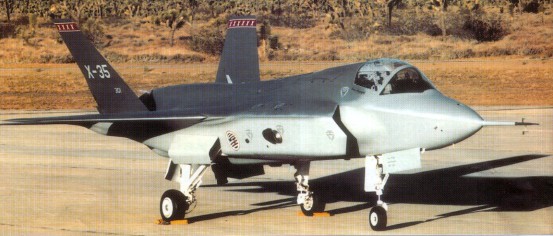
The X-35 was the Lockheed Martin Joint Strike Fighter (JSF) demonstrator, competing with the Boeing X-32. In November 1996 Boeing and Lockheed Martin were awarded contracts to build two Concept Demonstrator Aircraft (CDA)—one Conventional Take-Off and Landing (CTOL) version and one Short Take-Off and Vertical Landing (STOVL) version—each. The aircraft were not intended to be fighter prototypes, but rather to prove that the selected design concepts would work, hence the use of X-series designations.
Lockheed constructed two prototypes for the evaluation. The initial X-35A reflected the basic Air Force CTOL design, and was used for early flights before being modified into the STOVL version, designated X-35B. While Boeing proposed a direct lift STOVL design based on that used in the Harrier, Lockheed opted for a different approach in meeting the vertical flight requirements. Inspired by the Russian Yak-141, the X-35B incorporated a separate lift-fan that was shaft-driven by the F119 engine, allowing cooler exhaust temperatures during hover. While the Boeing design was more conventional, Lockheed argued that their strategy was better in the long term since it offered more room for growth as the aircraft evolves. The second airframe was the X-35C STOVL demonstrator for the Navy. This model featured an enlarged wing of greater span and area for larger fuel capacity as well as enlarged horizontal tails and flaperons for greater control effectiveness during low-speed carrier approaches. The X-35 was selected as the winner of the JSF competition on 26 October 2001.
The production aircraft to be designated F-35. The System Development and Demonstration (SDD) phase of the F-35 JSF program started with the signing of the SDD contract in October 2001, and with the delivery of test aircraft scheduled to begin in 2008. During the SDD phase, 22 aircraft (14 flying test aircraft and 8 ground-test aircraft) were to be produced and tested. The JSF program is slated to produce a total of 3,002 aircraft for the United States and United Kingdom armed forces.
Lockheed Martin leads a development team including Northrop Grumman, BAE Systems, and Pratt & Whitney. Lockheed Martin brings in advanced technology experience, stealth technology and other technologies and experience which it has gained during F-22 research and development. Northrop Grumman offers tactical aircraft knowledge, stealth technology and carrier suitability. BAE System provides expertise and experience with short take off and vertical landing (STOVL) technology as well as advanced subcontract management. Pratt & Whitney is the builder of the engine which will power the JSF which is based on the F-119 turbojet from the F-22.
To forfill the demands of the main contractors three different variants are developed. All versions will have a common structure and have the same fuselage and internal weapons bay. They will all three be powered by a F-119 modified engine. All variants will carry the standard designation F-35.
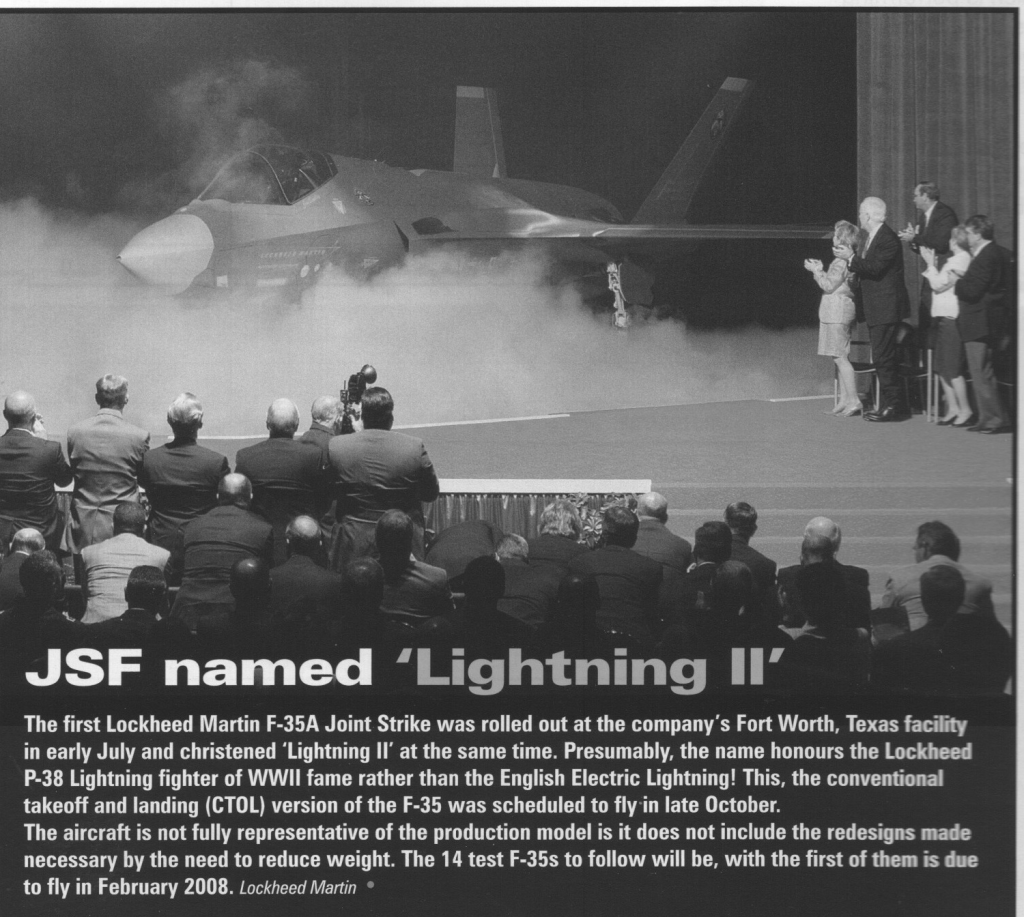
The F-35A is the standard variant with conventional take off and landing developed for the US Air Force, the biggest JSF customer. The F-35A will replace the F-16 and the A-10 aircraft currently operated by the USAF.
X-35B
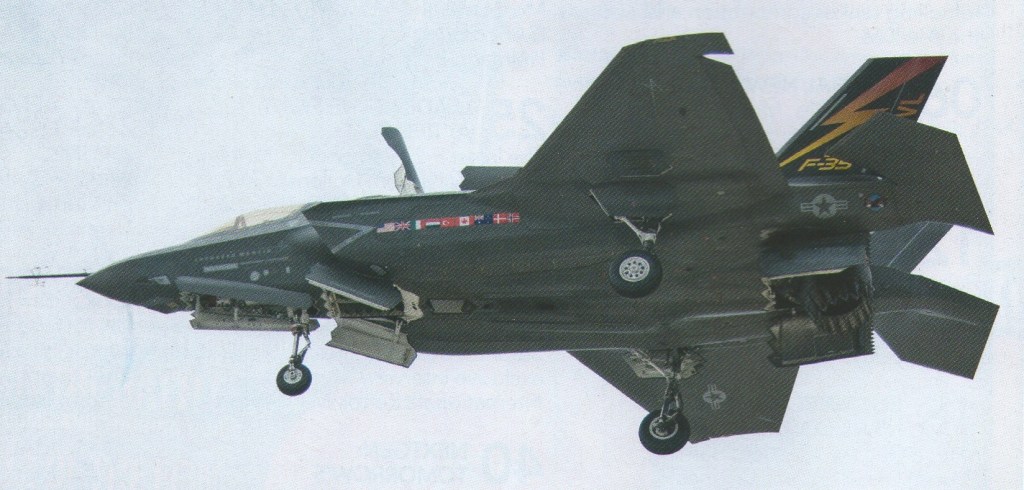
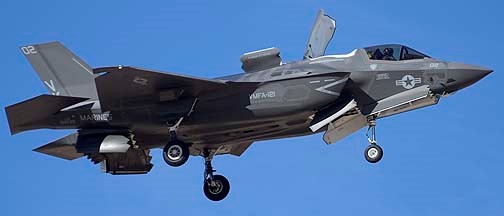
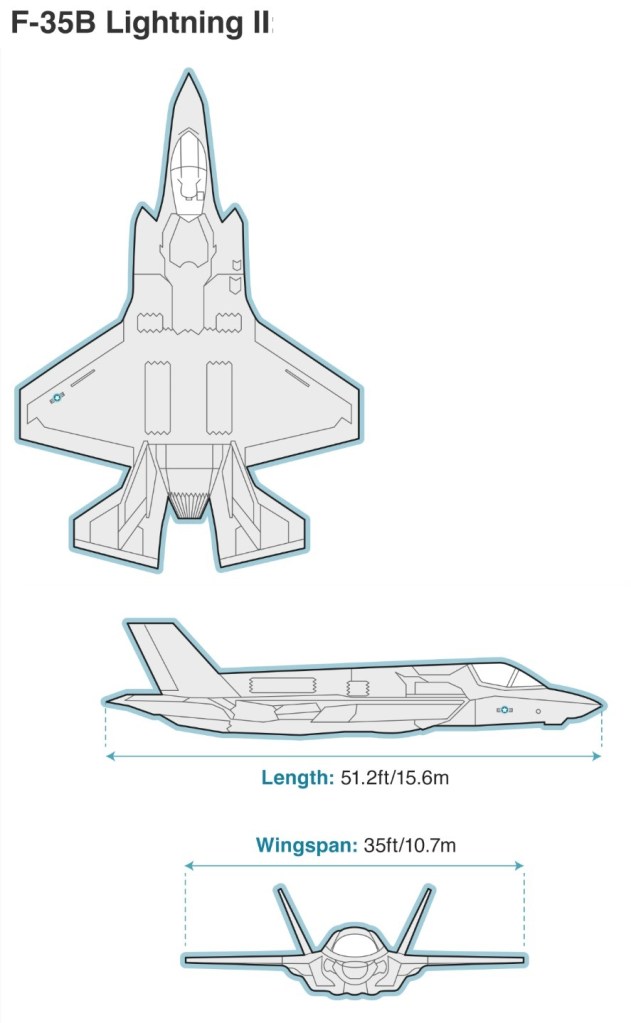
The F-35B is the STOVL variant of the JSF. The F-119 is modified using the experience of BAE Systems based on the Rolls-Royce Pegasus engine from the AV-8 Harrier. Unlike the Air Force variant the F-35B carries no internal gun and the air refuelling probe is located on the right side of the forward fuselage instead of receptacle on the top surface of the aircraft. The main customers for the F-35B will be the USMC to replace the F/A-18 Hornet ands the AV-8B Harrier IIs and the United Kingdom to replace the Royal Air Force/Royal Navy combined Harrier force of Sea Harriers and GR.7s.
The F-35C is a modified design which enables the JSF to operate from aircraft carriers using conventional carrier landings and catapult take off. The F-35C internal structure and landing gear have been strengthened to handle the loads associated with catapult launches and arrested carrier landings. It has a larger wing area than other JSF types with larger control surfaces for better low speed handling. Like the F-35B is has a refuelling probe instead of a receptacle. The US Navy will be the biggest customer of this variant. The F-35C will complement the US Navy fleet of F/A-18E/F fighters by replacing the F/A-18 A+ and C Hornet in service.
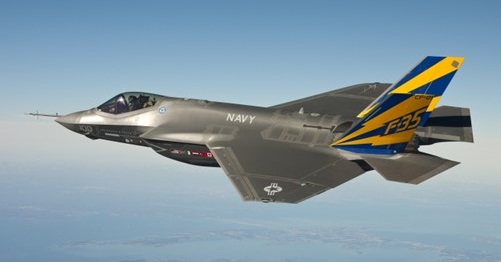
Lockheed Martin F-35B Lightning II BF-3 – the third example of the short takeoff/ vertical landing version – arrived at NAS Patuxent River, Maryland on February 17, 2010. It made its first flight on February 2 at Fort Worth, Texas and was taken from there to the naval air station by F-35 Test Pilot Jeff Knowles. Another two F-35Bs are due to join the three aircraft at Patuxent River for the flight test programme.
The F-35B was about to conduct its first vertical landing which would be a major milestone for the short take-off, vertical landing (STOVL) variant and work has started on the first F-35 lightning II for the UK.
The Lockheed Martin X-35C Joint Strike Fighter (JSF) Navy demonstrator completed medium-speed taxi testing Dec. 14 2000 at Palrndale, California, in preparation for first flight as early as Dec. 16. The aircraft, with a larger wing and control surfaces than the X-35A, will undergo about 20 hr. of flight test at Edwards AFB, before being flown to NAS Patuxent River, Md., for the continuation of demonstrations. Meanwhile, Boeing has completed structural mode interaction testing on the X-32B short takeoff and vertical landing demonstrator, expected to fly during the first quarter of 2001. The Boeing X-32A demonstrator completed government-required Navy demonstrations Dec. 2, 2000.
First flown on 24 October 2000, the JSF X-35A demonstrator aircraft completed a highly successful flight-test programme in August 2001, and the following October the US Government awarded its development contract to Lockheed Martin over the other contender, Boeing. The lift system uses a counter-rotating lift fan, located behind the cockpit and connected to the engine by a drive shaft, as a primary lifting force. The fan produces more than 18,000 lbs of cool thrust in hover flight, with an additional 18,000 lbs coming from the main engine’s vectored aft nozzle and wing roll-posts. The shaft driven Rolls-Royce lift fan amplifies engine thrust and reduces exhaust temperature and velocity during STOVL operations. First flown on 24 June 2001, in 2001 the X-35A, reconfigured as the STVOL X-35B, achieved its first vertical take-off, level supersonic flight, and vertical landing. The X-35C is to evaluate manoeuvering qualities, as a conventional carrier version and first flew on 16 December 2000. This version has larger wing and control surfaces and is stressed for catapult launches and arrested landings. This wing could also be applied to the B or A version.
By March 2010, it appeared that just five F-35s had flown: F-35A AA-01 on December 25, 2006. F-35B BF-0 1 on June 11, 2008. F-35B BF-02 on February 2, 2009 F-35A AF-01 on November 14,2009 F-35B BF-03 on February 2, 2010
The first F-35A has since been retired from flight duty. Two of the three F-35Bs were at Naval Air Station Patuxent River, Maryland, for preliminary STOVL evaluation tests.
The first pre-production F-35A flew on 15 December 2006, about three months behind schedule due to engine integration and ground testing delays.
F-35 Lightning II
As of 2014, 115 have been built at $106,000,000 each.
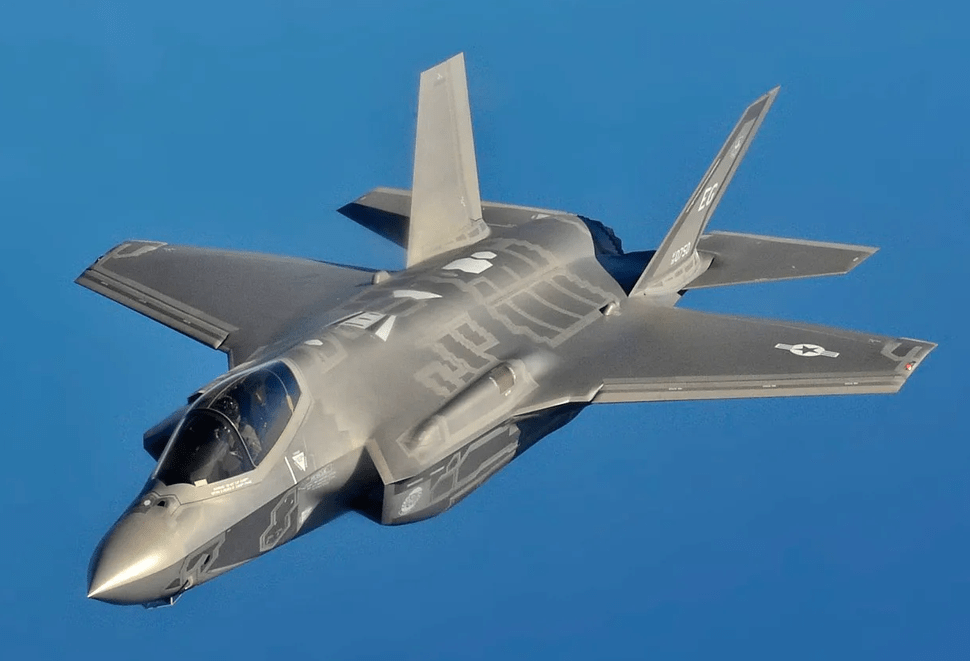
With over 1,000 aircraft delivered to 17 nations, including Australia, Israel, Japan, South Korea, and multiple NATO allies, and production plans exceeding 3,000 units, the F-35 represents the standardisation of fifth-generation technology across Western and allied air forces.
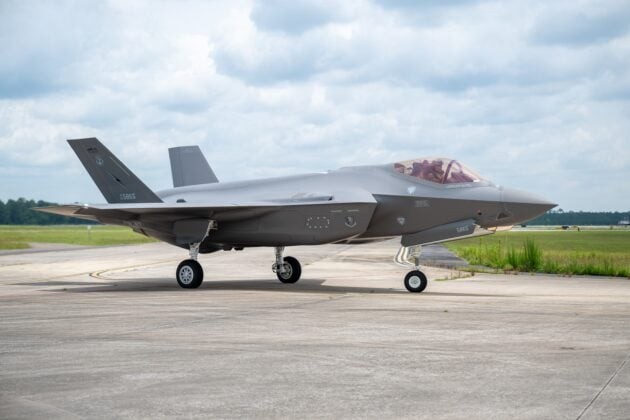
The U.S. Air Force’s 500th F-35A Lightning II fighter jet arrived at the Florida Air National Guard’s 125th Fighter Wing in Jacksonville on July 9, 2025.
500th USAF F-35A Lightning II
The aircraft is one of the first three F-35As permanently assigned to the wing, known as “the Thunder,” and features the unit’s legacy tail flash. By the end of 2024, Lockheed Martin had delivered a total of 1,102 aircraft. That figure included 797 F-35As built for the United States and allied air forces, along with 203 short takeoff and vertical landing F-35Bs built for the U.S. Marine Corps, the Royal Navy, the Royal Air Force, and the Italian Navy. The first examples for Japan’s Navy are also in production and delivery. According to F35.com, more than 1,215 F-35s of all variants have now been delivered worldwide, flown by over 3,000 pilots who have accumulated more than one million flight hours.
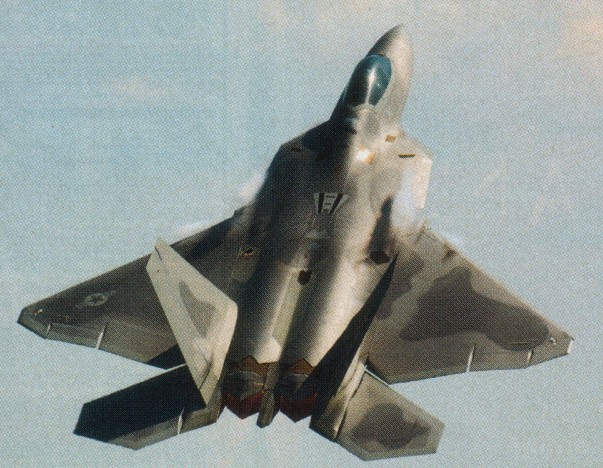
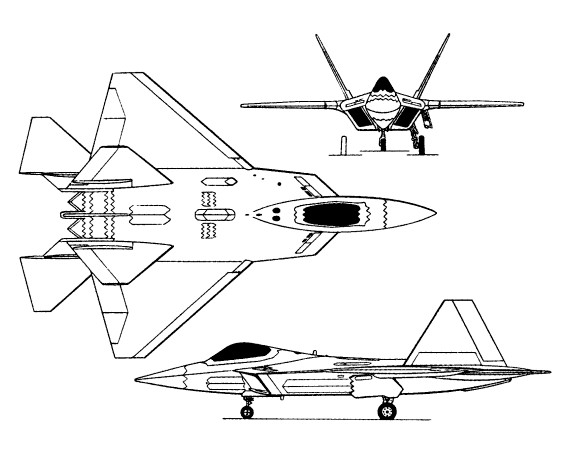
In the late 1970s, the US Air Force identified a requirement for 750 examples of an Advanced Tactical Fighter (ATF) to replace the F-15 Eagle. Flown by a single pilot, it must be able to survive in an environment filled with people, both in the air and on the ground, whose sole purpose is to destroy it. To test the concepts that would eventually be combined in the ATF, the US AF initiated a series of parallel research programmes. The first was the YF-16 control-configured vehicle (CCV) which flew in 1976-77 and demonstrated the decoupled control of aircraft flight path and attitude; in other words, the machine could skid sideways, turn without banking, climb or descend without changing its attitude, and point its nose left or right, or up or down, without changing its flight path. Other test vehicles involved in the ATF programme included the Grumman X-29, which flew for the first time in December 1984 and which was designed to investigate forward-sweep technology, and an F-111 fitted with a mission adaptive wing (MAW) – in other words, a wing capable of reconfiguring itself automatically to mission requirements.
Flight testing of all these experimental aircraft came under the umbrella of the USAF’s Advanced Fighter Technology Integration (AFTI) programme. In September 1983, while the AFTI programme was well under way, the USAF awarded ATF concept definition study contracts to six American aerospace companies and, of these, two – Lockheed and Northrop – were selected to build demonstrator prototypes of their respective proposals. Each company produced two prototypes, the Lockheed YF-22 and the Northrop YF-23, and all four aircraft flew in 1990. Two different powerplants, the Pratt & Whitney YF119 and the General Electric YF120, were evaluated, and in April 1991 it was announced that the F-22 and F119 were the winning combination. The F119 advanced technology engine, two of which power the F-22, develops 155kN and is fitted with two-dimensional convergent/ divergent exhaust nozzles with thrust vectoring for enhanced performance and manoeuvrability.
The Raptor is designed and built by Boeing, Lockheed Martin and Pratt & Whitney. Boeing supplies the F-22s 2,000-lb titanium and composite wings and aft fuselage, integrates and tests the advanced avionics and is responsible for the training and life-support systems.
Previously the designation for the Raptor was changed to F/A-22 to indicate the possible air-to-ground role of the aircraft. JDAM bombs can be carried in the internal weapon bay, while the optional external pylons offer a more flexible station for air-to-ground armament. However the U.S. Air Force changed the designation back to F-22 in December 2005, although it will still posses the secondary air-to-ground role.
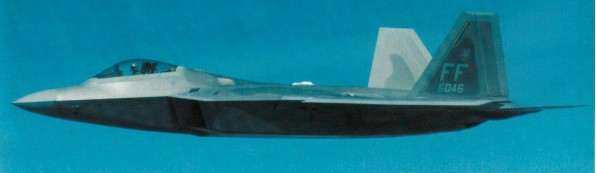
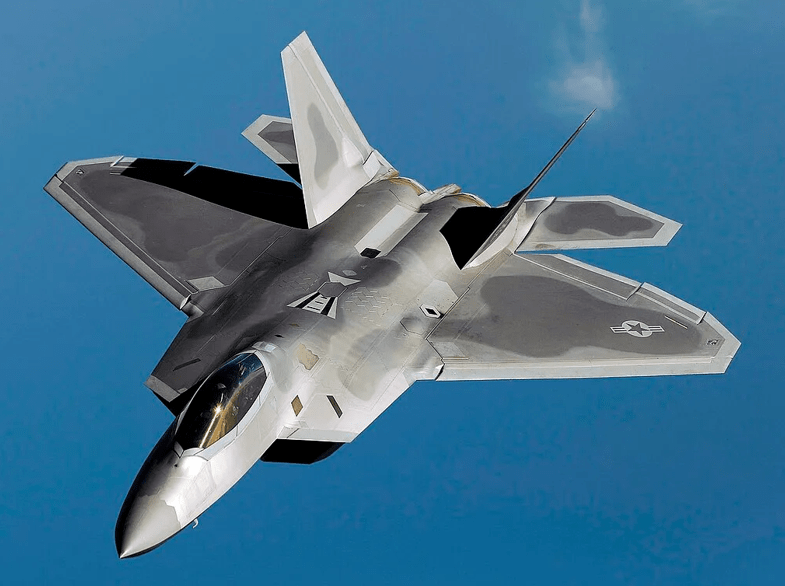
The F-22 combines many stealth features. Its air-to-air weapons, for example, are stored internally; three internal bays house advanced short-range, medium-range and beyond-visual-range air-to-air missiles. Following an assessment of the aircraft’s combat role in 1993, it was decided to add a ground-attack capability, and the internal weapons bay is also capable of accommodating 454kg GBU-32 precision-guided missiles. The F-22 is the first production aircraft with the ability to super cruise – flying at supersonic speeds without the use of afterburners. The F-22 is designed for a high sortie rate, with a turnaround time of less than 20 minutes, and its avionics are highly integrated to provide rapid reaction in air combat, much of its survivability depending on the pilot’s ability to locate a target very early and take it out with a first shot. The F-22 was designed to meet a specific threat, which at that time was presented by large numbers of highly agile Soviet combat aircraft, its task being to engage them in their own airspace with beyond-visual-range weaponry. It will be a key component in the Global Strike Task Force, formed in 2001 to counter any threat worldwide. The USAF requirement is for 438 aircraft.
The first definitive F-22 prototype was rolled out at the Lockheed Martin plant at Marietta, Georgia, on 9 April 1997.
The planned first flight of the F-22A, scheduled for 29 May 1997, was delayed by a small fuel leak in the F-1A tank just aft of the cockpit, together with an oil problem in the APU/auxiliary generator system area and software troubles.
The first flight was delayed to 7 September 1997. The second prototype first flew on 29 June 1998. The first two Raptor fighters, Nos. 4001 and 4002, have only 80% of the required strength, partly the result of an aggressive weight-cutting program, and the No. 4003 airframe has been strengthened to make it 100% capable. The third F-22 was delivered to Edwards AFB in March 2000. The aircraft was about eight months behind schedule. The empty weight is still low enough to beat the operational requirements. Raptor 4001 has been doing high speed tests such as loads and flutter but could not fully clear the envelope because of the lower strength, although it and ship No. 4002 have both exceeded 7g loads. The Air Force will only say that the required F-22 limit exceeds 7g. Raptor 4003 will provide full high speed clearance for subsequent aircraft, but will first spend several months on the ground at Edwards AFB because the reworked structure requires new ground vibration tests and other evaluations. The nonstop delivery from Marietta, Ga., was the fourth flight of 4003 and lasted 4 hr. 50 min., including four aerial refuelings. By late 2001, there were eight F-22s flying.
A YF-22 being tested at Edwards reacted unexpectedly when a go round initiated a changed in its fly-by-wire control laws. After a few cycles of PIO, the aircraft belly-flopped onto the runway.
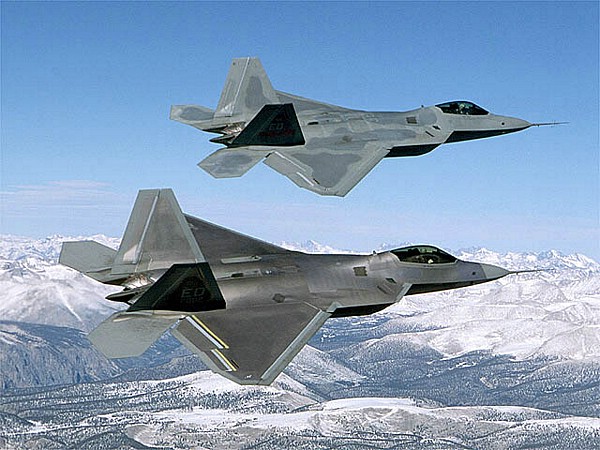
In January 2003, the Air Warfare Center at Nellis Air Force Base near Las Vegas, Nevada, received its first Raptor. It was the twelfth F-22 produced. The 422nd Test & Evaluation Squadron took on seven more F-22s for testing and training of the initial cadre of instructor pilots. The 43rd Fighter Squadron became the first F-22 squadron when it received its first F-22 (then designated F/A-22) in the end of September in 2003. The unit of the 325th Fighter Wing carries out the training at Tyndall Air Force Base, Florida. In January 2004, the first pilot qualified at Tyndall AFB.
The 27th Fighter Squadron of the 1st Fighter Wing at Langley AFB became the first operational F-22 squadron when it received its first Raptor in January 2005. The squadron was declared operational (initial operational capability) in December 2005 with 12 F-22A Raptors. Also based at Langley AFB, the 94th Fighter Squadron received its first two Raptors in March 2006. On January 19, 2007, the last of 40 F-22A Raptor for the 1st Fighter Wing was delivered to the 94th FS, equipping both fighter squadrons with 20 Raptors each.
First prototype: N22YF (GE YF120 engines) rolled out at Palmdale 29 August 1990; first flight/ferry to Edwards AFB 29 September 1990; first air refuelling (11th sortie) 26 October 1990; Mach 1.58 supercruise’ (later exceeded) on 3 November 1990; first thrust-vectoring 15 November 1990; anti-spin parachute fitted for high AoA tests with thrust-vectoring; last flight 28 December 1990 — total 43 sorties/52.8hr.
Second prototype: N22YX (P&W F119 engine) first flight Palmdale-Edwards 30 October 1990; launched first AIM-9M Sidewinder on 28 November 1990 and AIM-120 AMRAAM on 20 December 1990; achieved Mach 1.8 26 December 1990; last flight 28 December 1990 — total 31 sorties/38.8 hrs. Summary demonstrated thrust vectoring, including 100deg/sec roll rate at 120kt (222km/h; 138mph); Mach 2 speed with afterburning. Aircraft in storage at Edwards AFB from January 1991.
Despite its $150 million unit cost and production run of only 195 aircraft, terminated early due to post-Cold Its capabilities were partially demonstrated during deployments to Syria, where Raptors operated with impunity even in airspace covered by advanced Russian air defence systems.
The F-22’s main limitation is its age—designed before modern networked warfare concepts were fully developed, it lacks some of the connectivity features of newer aircraft.
Lockheed Martin F-22 Raptor
However, ongoing modernisation programs including upgraded processors, new datalinks, and integration with the latest AIM-260 long-range missiles will keep the Raptor at the forefront of air combat capability until its planned replacement by the sixth-generation NGAD (Next Generation Air Dominance) fighter.
F-22A Engines: two Pratt & Whitney F119-P-100 turbofan, 155.69 kN (35,000 lb st) with afterburning Length 18.92m (62 ft 1 in) Height 5.00m (16 ft 5 in) Wing span 13.56m (44ft 6 in) Empty weight: 13.608+ kg (30,000+ lb) Max Take-Off Weight: 26.308 kg (58,000 lb) Max level speed at optimum altitude: Mach 1.58 in supercruise Max level speed at 30,000 ft (9145m) Mach 1.7 in afterburning mode Service ceiling: 15,240+m (50,000+ ft) G limit: +7.9 Armament: one 20mm M61A2 Vulcan six-barrel gun with 480 rounds; 2 AIM-9X Sidewinder IR-guided missiles in internal side bays. Up to 6 AIM-120C or 4 AIM-120A AMRAAM missiles in internal fuselage weapon bays or 2 AIM-120C AMRAAMs and 2 GBU-32 JDAM bombs or 2 GBU-30 JDAM bombs. Up to four fuel tanks and up to 8 missiles on optional external hardpoints.