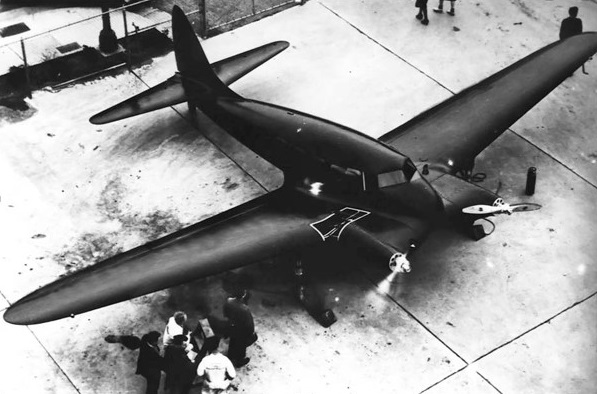
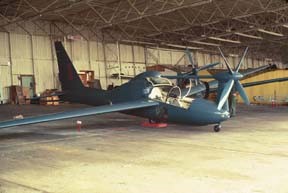
The Lockheed Brothers left the Company after the Detroit merger and set up the Airover Company, later called Alcor, to build the Uni-twin. With two Menasco engines side-by-side in the nose, driving two propellers. The name of the company was changed to Lockheed Vega when it became a subsidiary of the revived parent organization.
With Allan H. Lockheed as president, built a new version of his Duo twin-engined monoplane. Type was called Alcor Duo-6 and was distinctive in having two Menasco engines placed horizontally.
A demonstration flight was made in May 1934 at Mines Field with one propeller removed—it took off in 1200′, attained 130mph, and reportedly handled much like a single-engine plane.
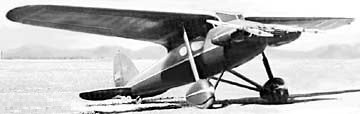
Alcor Duo-6 NX962Y
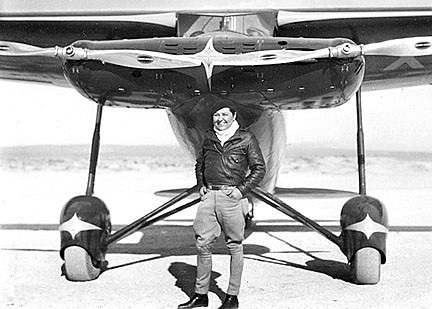
The Alcor Olympic Duo-4 of 1930 designed by Allan Loughead, featured two engines mounted side-by-side in a nose nacelle. Powered by two 160hp Menasco B-6 (reportedly first with 125hp C-5s), it was originally planned for one Wright J-6-7c in the nose. The unbraced cantilever wing had two full-length box spars.
Alcor Duo-4 with Pancho Barnes
The one five-place Alcor Duo-4 built, NX962Y, nosed over in a wind gust during a landing on Mar 18, 1931; although damage was slight, nervous financial backers withdrew their support.
Though Alcor conformed with Lockheed “star names” system and development was pursued in 1930s, no production resulted. Alcor was not a Lockheed Aircraft Corporation product.
Olympic Duo-6 Engines: two 230hp Menasco B-6S Wingspan: 42’0″ Length: 28’6″ Useful load: 2045 lb Max speed: 183 mph Cruise: 157 mph Stall: 57 mph Range: 700 mi
1929: Allan Loughead resigned from Lockheed Co after its acquisition by Detroit Aircraft Corp to establish Loughead Bros Aircraft Corp Ltd 737 S San Fernando Rd, Glendale CA. USA
The Lockheed Brothers left the Company after the Detroit merger and set up the Airover Company, later called Alcor, to build the Uni-twin, with two Menasco engines side-by-side in the nose, driving two propellers.
1934: Legally changed name to Lockheed.
1934: Alhambra Airport & Air Transport Co, Alhambra CA.
1937: Alcor (Allan Lockheed Corp) Aircraft Corp formed, San Francisco CA.
The name of the company was changed to Lockheed Vega when it became a subsidiary of the revived parent organization. The Lockheed Vega Twin then named Olympic Duo-4, crashed 1938. Firm also built low-wing Starliner and NA-35 trainer. With Boeing and Douglas during Second World War, as the BVD pool, built B-17s. Allan Lockheed, during Alcor period, was associated with Alhambra Airport and Air Transport Company.
Gave up aircraft production for parts manufacturing and, after WW2, retired from aviation to focus on his real estate business.
Mexico Formed by Juan F. Azcarate in 1957 with Lockheed, to design an aircraft specifically to suit Central American conditions. Built the LASA-60 4/6-seat utility aircraft in 1959. Construction undertaken by Lockheed-Azcarate, Macchi and Aviones Lockheed-Kaiser. Lockheed acquired a substantial holding in Aermacchi 1959.
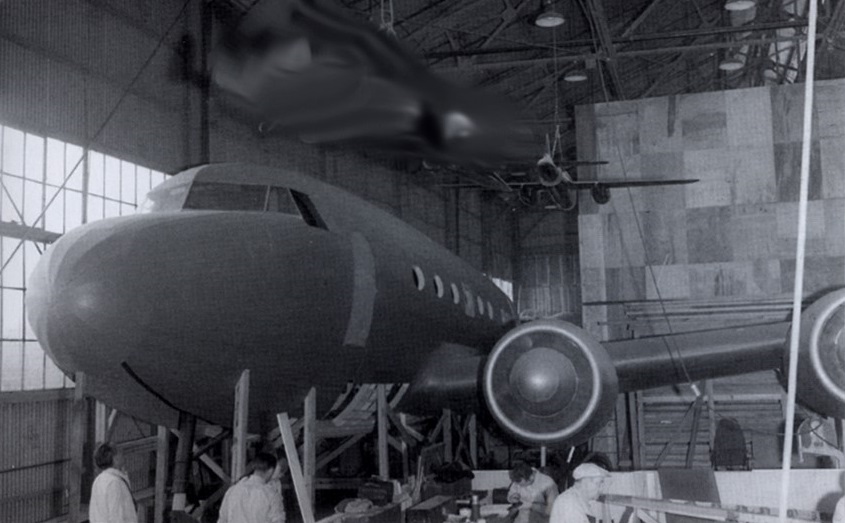
Around this time, the late 1930s Lockheed Aircraft Corporation was studying different airliner projects. The first was the Model 27, which had a canard configuration. The other two were the L-104 and L-105. The L-105 was smaller, with 1200 hp engines, and was more conventional than the L-104. These studies led Lockheed’s Burbank facility to settle on a design dubbed Model 44, a four-engined airliner that was announced to the public in April 1939. Soon afterwards, the new airliner was dubbed Excalibur. The Excalibur resembled an enlarged Model 10 Electra. It would be powered by four Wright GR-1820 Cyclone 9 radial engines, rated at 1000 hp (746 kW), or four Pratt & Whitney R-1830 Twin Wasp radials. Its wingspan was 95 ft 9 in (29.18 m), its length was 82 ft 6 in (25.15 m), and its projected maximum speed was in the 250-280 mph range (402–451 km/h). Several variants were proposed, to accommodate different passenger loads.
The original Excalibur design envisioned a 21-passenger payload, with a 240 mph (386 km/h) cruising speed. This was revised to 36 passengers at 268 mph (431 km/h) cruise at 12,000 feet (3,660m) altitude. This change included increasing the fuselage diameter, making it comparable to the Model 18 Lodestar, and increasing the wingspan to 95 ft 9 in (25.19 m) with an area of 1,000 ft² (92.9 m²). A tricycle landing gear with steerable nosewheel was envisioned. With the revised specifications, the Excalibur could now effectively compete with the near monopoly Douglas had on the airliner market. Its projected performance was better (except in range) than the Boeing 307. The revision of specifications was partially due to a request from Pan American Airlines; their influence also caused the addition of the third tailfin. A variant designated the L-144, able to carry 40 passengers was planned, but was ultimately cancelled even though South African Airways had placed a potential order for two examples. Lockheed proceeded with a full-scale mockup of the proposed Excalibur, including most of the airliner except the right wing.
The billionaire Howard Hughes, who had recently gained ownership of Transcontinental & Western Air (TWA), decided to provide funding for the new Excalibur. He had a plan in mind to vastly improve the characteristics of the Excalibur by increasing comfort, speed and profit of the aircraft. It was thus that Hughes invited three workers from Lockheed and Jack Frye (president of TWA) to a meeting at his Hancock Park residence. The Lockheed employees included Clarence “Kelly” Johnson and Robert E. Gross. Hughes expressed his requirements for the “airliner of the future”: a payload of 36 passengers (or 20 sleeping berths), a six-person crew, a 3,600 mile (5,800 km) range, a 300 mph (483 km/h) cruise speed, and a weight of 23.5-25 metric tonnes. This meant that the Excalibur would have to get a 100 mph (161 km/h) increase in speed and be able to fly 1,000 ft (305 m) higher. It would need to cross the United States nonstop. The first decision was to re-engine the Excalibur with Wright R-2600 radials, which had not been tested yet. The next decision was to start from scratch while saving the overall shape and triple tail configuration of the original Excalibur.
The new design differed so much from the original Excalibur, that a different model designation was needed. It was first given the temporary designation L-104, then it was later officially designated the Model 49 or “Excalibur A”. In time, the Model 49 would become a completely different aircraft from the original Model 44. Lockheed later dropped the name “Excalibur” as the new airliner had little to do with its predecessor. The end result was the Lockheed L-049 Constellation.
Powerplant: 4 × Pratt & Whitney Twin Wasp S4C-4-G, 1200 hp (895 kW) each Wingspan: 95 ft 0 in (28.96 m) Wing area: 1000 sq.ft (92.90 sq.m) Aspect ratio: 9.025 Length: 74 ft 11½ in (22.85 m) Empty weight: 26,424 lb (11,986 kg) Gross weight: 40,000 lb (18,144 kg) Crew: two Capacity: 32 passengers
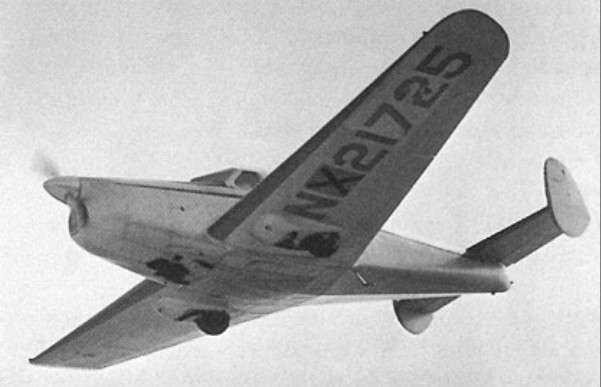
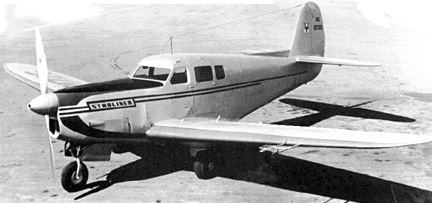
The Vega Starliner NX21725 was a five/six-seat low-wing cabin monoplane with retractable landing gear and an unusual powerplant. The model 22 was a modification with 640hp Menasco Unitwin 2-544 and a single tail. This comprised two 194kW Menasco C6S-4 inline engines, mounted side-by-side, and coupled to drive together, or independently in emergency, a single propeller.
First flown on 22 April 1939 (piloted by B A Martin), the Starliner was abandoned after some 85 flight test hours as there was no demand for an aircraft in this category.
Vega Starliner NX21725
The aircraft was sold to a film studio and its track faded.
Engines: two 194kW Menasco C6S-4 Unitwin Wingspan: 12.50 m / 41 ft 0 in Length: 31’6″ Max take-off weight: 2722 kg / 6001 lb Useful load: 1660 lb Max. speed: 338 km/h / 210 mph Cruise speed: 180 mph Stall: 60 mph Range: 600 mi Seats: 6
Potential of the QT-2 / Q-Star was such that Lockheed produced a refined version for the US Army: The YO-3A. Also based on the Schweizer SGS 2-32 Sail-Plane wings and tail unit, but with wings mounted low on the fuselage, retractable landing gear, upgraded (SLAE) avionics, State-Of-The-Art Sensor (NVAP with LTD) and the Tactical Observer seated forward for better visibility. A 156.5kW IO-360D Continental Engine provided propulsion power. The YO-3A was deployed in Southeast Asia from mid-1969 to late-1971.
It was the first military aircraft to employ an integrated NOD Sensor with a YAG Laser. It also had an Infrared Illuminator for other tactical sensors (INFANT LLTV, NODs, etc). The YO-3A was deployed in Vietnam for more than a year.
It was later operated by the Louisiana Dept of Wildlife & Fisheries (LDWF) and FBI. NASA operated the former 69-18010 as NASA 818 (or similar).
One YO-3A is preserved in the Army Aviation Museum at Fort Rucker, Alabama. YO-3A 69-18005 is on display at the Museum of Flight in Seattle, Washington. YO-3A 69-18006 is on display at the Pima Air and Space, Tucson AZ. YO-3A 69-18007 is in storage at the Western Museum of Flight in Torrance, California. As of 2014, YO-3A 69-18010 (NASA 818) is in flyable storage at Armstrong Flight Research Center.
YO 3A Engine: Continental, 210 hp. Wing span: 57 ft 0 in (17.40 m). Length: 30 ft (9.14 m). Gross weight: 2,167 lb (983 kg). Max speed: 149 mph (240 km/h). Crew: 2.
Faced with the military requirement for a quiet observation aircraft, Lockheed Missiles & Space Co. (LMSC) developed the “Q” Series Aircraft: QT-1 (conceived, but not constructed), QT-2 (N2471W and N2472W) later modified to QT-2PC configuration (#1 and #2), and Q-Star. Note: “QT: for Quiet Thruster.
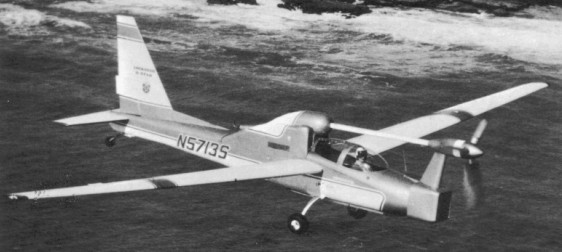
The Q-Star Aircraft was LMSC’s “House Aircraft” for evaluating “quiet recon” concepts. Eighteen propeller/reduction systems and other items were evaluated. It flew early versions “Black Crow” Sensors and was the first aircraft to use a rotary combustion chamber (Wankel) engine for primary power.
Two Schweizer 2-32s (67-15345 and 67-15346) from the U.S. Naval Test Pilot School X-26 Program (USNTPS) were modified to QT-2 configuration (QT for Quiet Thruster) by the Lockheed Missiles & Space Co. (LMSC) and civil registered as N2471W and N2472W.
In 1967 the aircraft were modified by adding a Continental O-200 engine, V-Belt RPM reduction system, four-bladed fixed pitch wood (Fahlin) propeller, and airframe upgrades. The QT-2 first flew in August 1967.
After demonstrating quiet flight, the aircraft were again modified to military QT-2PC configuration, known only as Tail Numbers “1” and “2”, with GFE avionics and camouflage for night operation. They were successfully evaluated in Southeast Asia (Prize Crew OpEval) for covert (“stealth”) tactical airborne observation in the spring of 1968 (during Têt). Arriving in South Vietnam just before the 1968 TET Offensive, they accumulated approximately 600 hours flying exclusively tactical night missions during the first three-month deployment. They continued to operate in Vietnam during most of 1968 (Prize CrewII) and were then transferred to the Navy (NTPS Pax. R.) as X-26Bs in 1969. The QT-2PCs were the first military aircraft to use “Starlight Scopes”.
QT-2PC #1 in the Soc Trang, RVN Army Airfield Hangar in 1968
The two QT-2PCs were returned to USNTPS in 1969 and re-designated X-26Bs.
The #1 QT-2PC was re-designated “67-15345” and the #2 aircraft was used for spare parts.
The #1 ship is now at USAAM at Ft. Rucker, AL. The #2 ship QT-2PC N2472W was retro-verted to SGS 2-32 configuration and is operated by Mile High Gliders in CO.
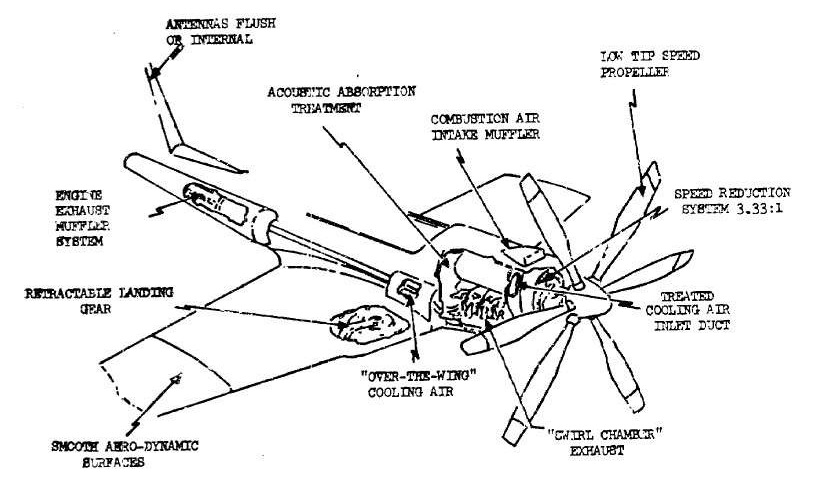
Lockheed Aircraft Corp. offered the rotating combustion engine its first chance to fly. Under a Navy contract, Lockheed was experimenting with ul¬tra quiet aircraft for undetected low altitude reconnaissance. Several air¬frame configurations, were developed culminating in the QT 3. Basically the QT 3 (QT for quiet thruster) consisted of a highly modified Schweizer 2 32 sailplane equipped with art amidship mounted Continental 100 horsepower engine turning a large slow turning propeller through a reduction drive and long overhead propeller shaft. The QT 3 yielded airframe and propellor noise so low that the most noticeable remaining sound was valve action in the engine. Endeavoring to eliminate valve noise, Lockheed’s engineers seized upon the RC engine since it has no valves, only ports.
Replacing the air cooled Continen¬tal with an RC 2 60 U5 liquid cooled engine required extensive reengineer¬ing. A Corvette aluminum radiator was grafted to the nose and redesigned reduction gearing was required. A 5.34/1, two stage ‘V’ belt reduction system reduced 6,000 rpm at the en¬gine down to 500 propeller rpm. Only 185 horsepower was used in the Q Star due to carburetor limitations. Nevertheless, power was increased by 85% with only a 6% increase in air¬frame weight. A three blade 90 100in constant speed propeller converted power to thrust. Laminated birch was used for blade material but at least one propeller had a balsa wood core covered with glass fibre.
Throughout the QT proj¬ect, Lockheed tested five 4 blade, two 6 blade, and two 3 blade props.
Flight testing revealed previously un¬attainable levels of quiet flight. Com¬pound muffling culminated in a discharge pipe pointing straight up. Re¬sidual noise was thereby directed away from the ground. As a test a Cessna 182 and the Q Star, both load¬ed to 2,600 pounds gross weight, were flown over the airport at 800 feet. The 182 was easily detectable by engine and propeller noise; Q Star was almost impossible to detect. Even at 400 feet the Q Star sounded only like leaves rustling in a light wind. In the cockpit, engine noise is similar to the hum of an electric motor and even then, most noise in the cockpit seemed to be aerodynamically originated.
Potential of the QT-2 / Q-Star was such that Lockheed produced a refined version for the US Army: The YO-3A.
Engine: 1 x Cont. IO-360, 154kW Wingspan: 17.4 m / 57 ft 1 in Length: 9.2 m / 30 ft 2 in Wing area: 17.0 sq.m / 182.99 sq ft Crew: 2
QT-2PC Engine: 1 × Continental O-200, 100 hp (75 kW) Propeller: Ole Fahlin four-blade, 8 inch chord, fixed-pitch 100 inch diameter Wingspan: 57 ft 1.5 in (17.37 m) Wing area: 185 ft² (16.7 m²) Wing aspect ratio: 18 Length: 30 ft 9 in (9.33 m) Height: 9 ft 3 in (2.74 m) Loaded weight: 2,500 lb (kg) Fuel Capacity: 20 gallons (nominal) Service ceiling: 13,000 ft (m) Rate of climb: 200 ft/min (m/s) Quiet cruise speed: 70 – 80 mph Wing loading: kg/m² (lb/ft²) Flight endurance: Planned = 4+ hours; demonstrated = 6.7+ hours Crew: two
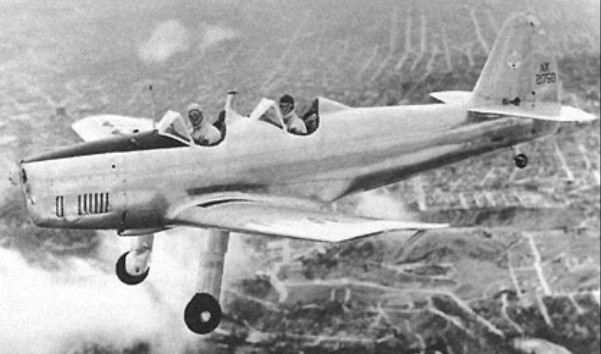
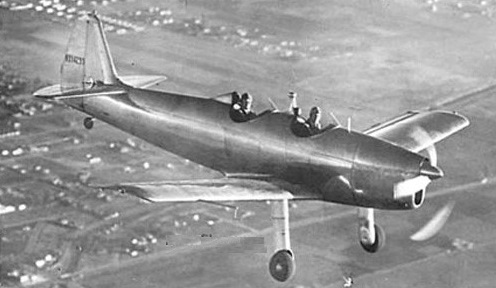
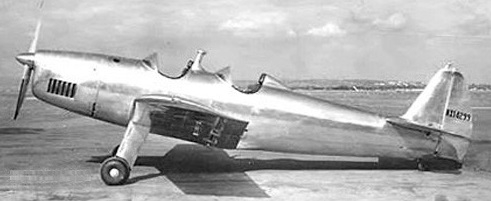
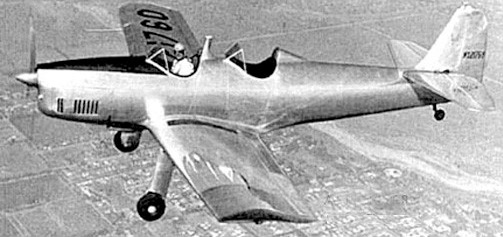
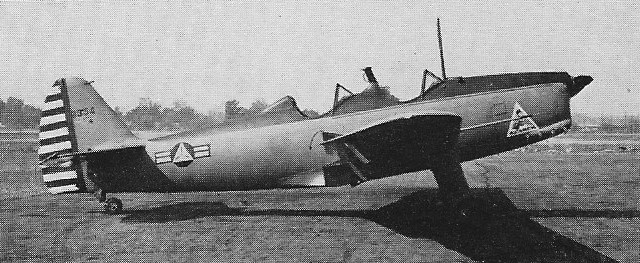
North American Aviation Inc, designed during 1937 the prototype of a lightweight primary trainer which it designated North American NA-35. Powered by a 93kW Menasco Pirate inline engine, it was of low-wing monoplane configuration with fixed tail-wheel landing gear, and seated the instructor and pupil in tandem open cockpits. First flown in October 1940, piloted by B A “Bud” Martin.
Vega 35-67 NX14299
When the NA-35 failed to win a US Army Air Corps contract in 1939, North American sold all rights, along with prototype NX14299 and 4 unfinished planes, to Lockheed’s Vega subsidiary in October 1940.
Vega 35-67 NX14299
Vega built only four of these Vega 35 aircraft (ATC 741), NX21760, and NX28351-28353, two converted to 35-70 (ATC 741) with more powerful 119kW Menasco Pirate D-B engines, the first flown in 1941, but by then the company had no manufacturing capacity available and Vega 35 production was abandoned. The wing design was used as basis for prototype NAvion.
Vega 35-67 NX21760
The model 37 of 1941 was wartime production of Lockheed Vega.
35-67 Engine: 125hp Menasco D-4 Wingspan: 9.07 m / 29 ft 9 in Length: 25’6″ Useful load: 549 lb Max. speed: 124 mph Cruise speed: 108 mph Stall: 48 mph Range: 320 mi Seats: 2
35-70 Engine: 150hp Menasco C-4S Wingspan: 9.07 m / 29 ft 9 in Length: 25’6″ Useful load: 542 lb Max speed: 140 mph Cruise speed: 124 mph Stall: 46 mph Range: 305 mi Seats: 2
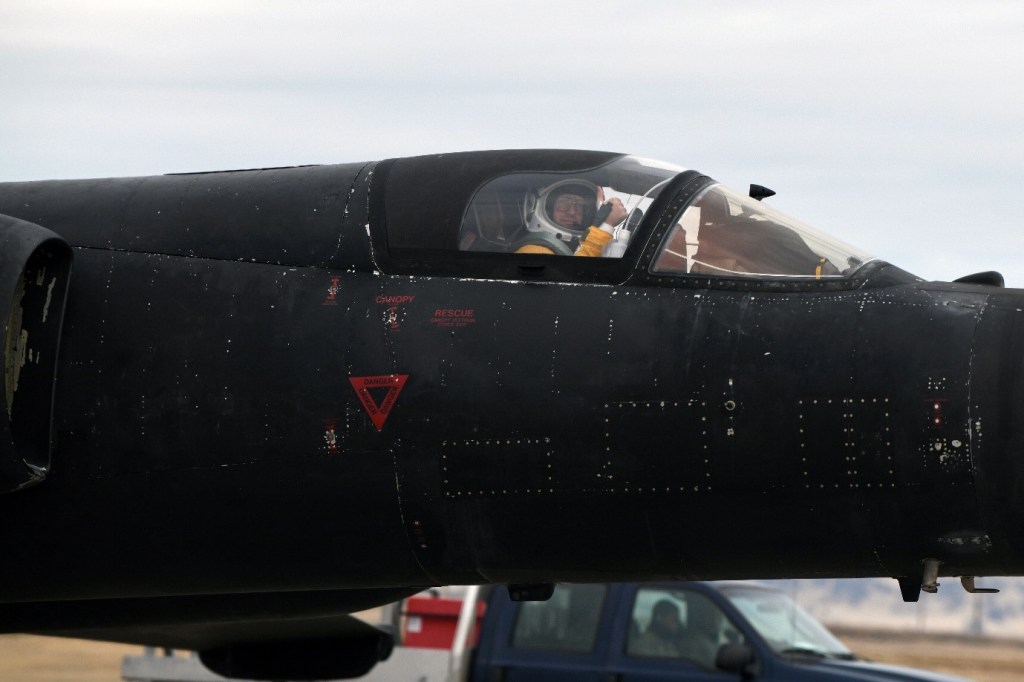
The U 2 was designed by Kelly Johnson to fly high and far. His equation stressed simplicity: flush rivets, high aspect ratio wet wing, ultralight structure, stunning power to weight ratio. Conceived originally to meet a CIA requirement for an aircraft with the potential of operating at extreme altitude and first flown in the mid-1950s, the U-2’s unique capabilities rendered it virtually immune from interception, and made possible repeated overflights of the Soviet Union, as part of the intelligence-gathering efforts of that era.
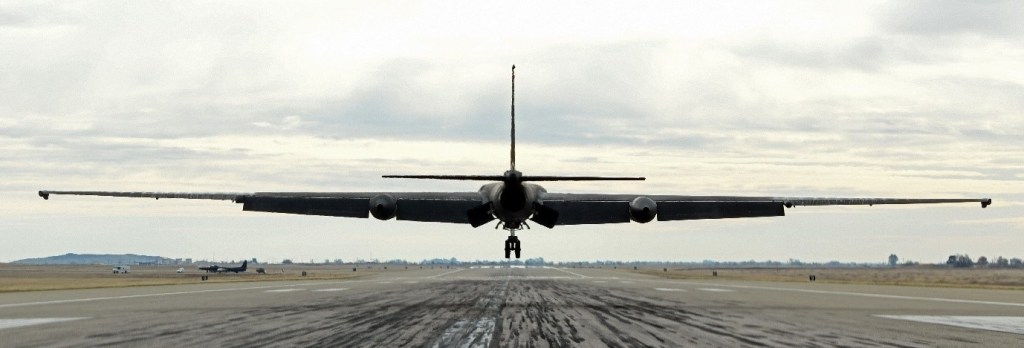
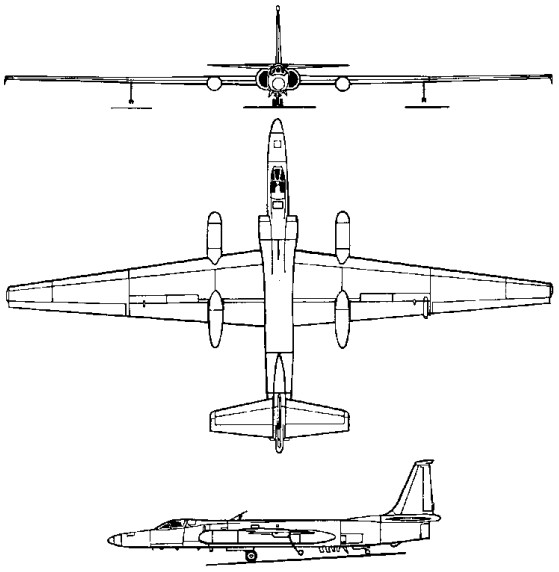
The requirement for high altitude and long range needed an aircraft with low wing loading, the latter large quantities of heavy fuel to confer the necessary range. Therefore the U-2 is of very lightweight construction, dispensing with conventional landing gear and pressurisation to save extra weight, and having wings of large area. Landing gear is of bicycle type with single wheels fore and aft, and balanced on the ground by wing-tip ‘pogos’ – a strut and wheel device which drops away when the U-2 becomes airborne – was selected. The pilot is accommodated on a light-weight seat, dressed in a semi-pressure suit with his head enclosed in an astronaut-type helmet, and forced to breathe pure oxygen for his survival. A medium-powered turbojet is adequate to lift this lightweight aircraft, and long range is possible by shutting it down and gliding for long periods.
Development of the U-2 began in the spring of 1954 to meet a joint CIA/USAF requirement for a high-altitude strategic reconnaissance and special-purpose research aircraft. It took place in the Lockheed ‘Skunk Works’ at Burbank, California, where – after acceptance of the design in late 1954 – two prototypes were hand-built in great secrecy by a small team of engineers. The aircraft’s true purpose was cloaked under the USAF U-for-Utility designation U-2, and the first flight took place on or about 1 August 1955. Once military power is on the engine for takeoff, the throttle was not touched again until ready for descent. Speed is kept fairly constant at Mach 0.715, and excess power was traded for cruise-climb altitude gain.
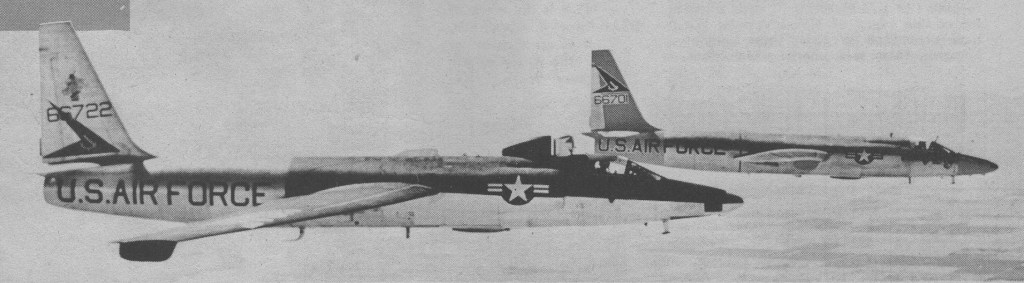
At about the same time US President Dwight D. Eisenhower was proposing his ‘Open Skies’ policy, one of mutual East/West aerial reconnaissance of territories. President Eisenhower hoped that his policy would reduce tension between East and West, thus preventing the growth of the nuclear arms race. Unfortunately the Soviet Union would have nothing to do with this proposal. Consequently ‘Kelly’ Johnson’s new ‘spy plane’ assumed greater importance. The prototypes were followed by production of about 48 single-seat U-2A and U-2B with differing power plant, and five two-seat U-2D. Some U-2B were converted later to U-2D standard.
By 1960 about 25 U-2s had operated from bases in Japan, Pakistan, Turkey and Europe since 1957 on flights around and over Russian-controlled territory.
An additional batch of 12 U-2R was ordered in 1967. A new version, known as the TR-1, entered production as a tactical-reconnaissance aircraft, equipped with a variety of electronic sensors.
Referred to as just U-2, there has been reference to a U-2B and U-2D, as well as single-seat and two-place versions. Early Lockheeds were powered by a single 11,000-1b thrust P&W J57, later models are reported to have the more powerful J75P-13. Forward landing gear is dual pneumatic type, approximately 20 in diameter, is non-steerable; rear gear is dual hard rubber of approximately 8″ diameter and steerable. A lightly stressed thin skin covers the U-2. Lockheed Martin’s Skunk Works has rewired the U-2s over the years during maintenance checks to make the aircraft compatible in the electro-magnetic interference environment.
The initial U-2As built by Lockheed in the 1950s either have been destroyed by accidents, combat or have been retired. They have been operating from Edwards AFB since 1957. The 40% larger U-2R was developed in the late 1960s, and deliveries to the Air Force started in 1969.
In addition to photo and electronic reconnaissance, U-2 were used for weather reconnaissance, high-altitude research, measurement of radiation levels, and for the tracking and recovery of space capsules. They were used for reconnaissance during the Cuban crisis, in Vietnam and during the Arab-Israeli conflict.
The destruction of the U-2B aircraft being flown by Francis ‘Gary’ Powers on 1 May 1960 brought an abrupt halt to this phase of activities, CIA attentions then focussing on the People’s Republic of China which in the early 1960s was fast emerging as a major nuclear power.
In August 1964 an Air Force U-2 crashed bear Boise, Idaho, the Chinese Nationalist Air Force officer pilot being trained at Davis-Monthan AFB 4080th Wing, parachuted to safety. This was the first indication that Chinese Nationalist pilots were being trained in the US. Three U-2s piloted by Chinese Nationalist pilots from Formosa bases had been shot down over Communist China, the first in September 1962. The US had reported selling only two U-2s the Formosa.
U-2 and TR-1 operations are usually conducted in what is best described as a ‘permissive’ environment on the friendly side of important frontiers.
Powered by the Pratt & Whitney J75, the craft rotates in less than 200 feet as wheeled outriggers fall away. Climbing at 160 knots and 6,000 plus fpm initially, sustaining 45 degrees pitch up. Only to the 45,000 foot physiological limit in the two seat trainer version without pressure suits, but the U 2 will climb to 70,000 plus. Stressed for 1.7 positive Gs and half a G negative, the U 2 demands a gentle hand.
Scrupulous energy management alti¬tude, attitude, airspeed, power setting ¬measures successful landings. Each ex¬cess foot at the threshold puts you 1,000 foot farther to touchdown. Two point land¬ings are essential; touching front wheel first causes ballooning in ground effect.
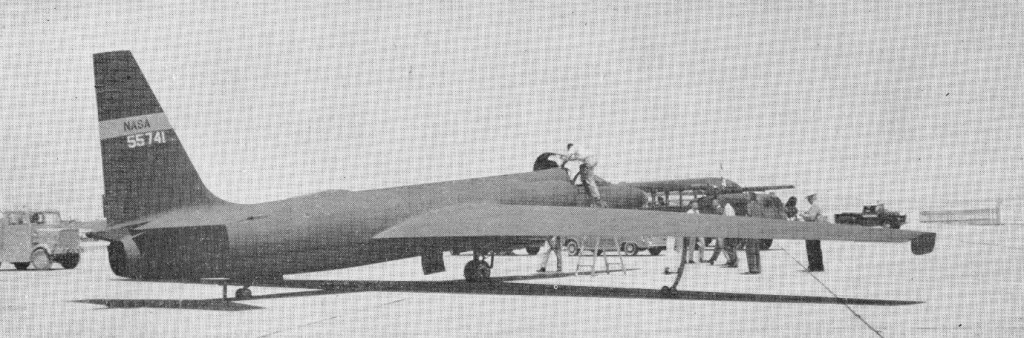
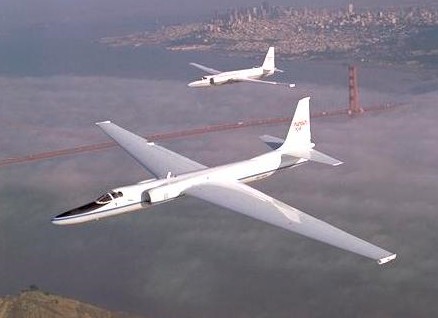
A couple of original production examples were assigned to NASA.
The Strategic Air Command use the U-2R which entered service in the late 1960s and which differs from its predecessors by virtue of greatly increased length and wing span. The U-2R was joined by an increasing number of TR-1s, these externally being very similar although they are intended for tactical rather than strategic missions. At least 25 of these were ordered by the USAF in 1968.
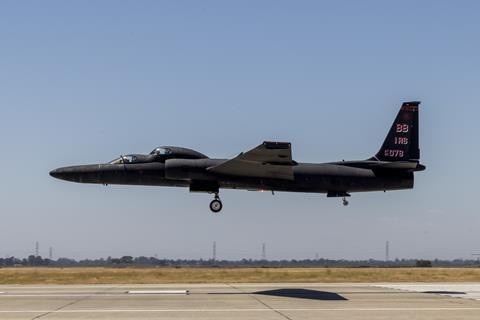
From 2002, Lockheed Martin upgraded the 31 strong U-2 fleet with state of the art glass cockpit displays and controls as the U-2S.
The service bought 37 TR-1 s in the 1980s, with the last one delivered in 1989, and these were the core of the U-2S and U-2STs in operation by the 9th Reconnaissance Wing here. The replacement of the Pratt & Whitney J75 turbine engine by the General Electric F101-GE-F29 turbofan in the 1990s caused the redesignation of the U-2R to the U-2S. The GE engine was later redesignated the F 118-GE-101.
The F 118 fuel consumption is some 16% less than the J75, which allows for a 1,220-naut.-mi. increase in range, or increased time on station. The 1,300-1b. lower weight of the General Electric engine also allows a 3,500-ft. increase in operational altitude and an increased payload. The U-2’s primary defense against both aircraft and surface-to-air missiles is its altitude, although newer variants of air-to-air and surface-to-air missiles can reach the U-2’s altitude. The reconnaissance aircraft is equipped with a radar warning system, but not with active defenses, such as flares or chaff.
The Air Force will still only say that the U-2 will fly above 70,000 ft., but the actual normal operational altitude is below 80,000 ft. and above 75,000 ft.
For descent almost everything possible on the aircraft is extended. The throttle to idle, lowered landing gear, raised spoilers and flaps in the gust-up configuration and extended fuselage-mounted speed brakes. Once stable on descent, the rate is dose to 3,000 fpm. A speed of Mach 0.715 is used to 53,000 ft., when a speed of 160 kt. is established. In the case of either an engine or electrical failure, with the aircraft descending clean, it could easily take longer than an hour to descend from altitude. The battery in the U-2S has a life of about 1 hr. and would run out just about when you needed to talk with the tower about deadstick landing instructions. The pilot also is able to raise the spoilers for landing with a micropump and accumulators, a new feature to the U-2.
Pilots claim that the U-2 is one of the hardest aircraft to land because of the need to stall the aircraft on landing and touch down rear wheel first, not to mention the effect of wind on the glider-like aircraft.
TR-1A
The U-2 aircraft was ordered back into production in 1979 as a high altitude tactical reconnais¬sance platform, this time as the TR-1A. The TR-1A is designed for tactical reconnaissance primarily in the European theatre, using UPD-X side-looking airborne radar (Slar) for surveillance up to 55km into hostile territory from friendly areas.
The first TR-1A flew on 1 August 1981 and the USAF acquired 26 of these single seaters plus two two-seat TR-1Bs. In 1984 the TR-1A flew with the precision location/strike system (PLSS) and, following successful trials, at least some of the fleet were to be allocated to this role. PLSS involves the use of three TR-lAs to detect and locate emitters and then direct attacks upon them.
In 1982 the USAF began taking delivery. Using the same basic airframe as the U-2R, the TR-1A high altitude battlefield reconnaissance aircraft was operational with the USAF flying from bases in Europe including the UK in 1990. It is equipped with an advanced sideways looking airborne radar (SLAR) and incorporates the latest ECM.
Two examples of a two-seat variant known as the TR-1B were assigned to training duties at Beale AFB, California. The TR-1B trainer has a second, raised cockpit in tandem.
ER-2
Replacing earlier U 2C’s, NASA took delivery of three ER-¬2’s, (the NASA designation for the TR 1A). The three are 80¬1063 / N706NA, 80 1069 / N708NA and 80 1097 / N709A. The first was delivered in June 1981 and the last (80 1097) was delivered in April 1989. Two are owned by NASA, while the third is leased from the USAF.
A Lockheed U-2S Dragon Lady, assigned to the 9th Reconnaissance Wing (RW) at Beale Air Force Base (AFB), California, successfully completed a test flight equipped with an AI algorithm under the control of USAF pilot, Maj “Vudu” on December 15, 2020. The first US military aircraft to fly with an artificial intelligence (AI) co-pilot.
Maj “Vudu” USAF U-2S Dragon Lady pilot assigned to the 9th RW on December 15, 2020.
The U-2S, developed by Air Combat Command’s U-2 Federal Laboratory, the algorithm – known as ARTUμ – was named in reference to the fan-favourite droid, R2-D2, from the Star Wars franchise. The system is designed to completed specific in-flight tasks that would otherwise have been completed by the pilot.
During the test flight, ARTUμ took control of the U-2’s sensors and tactical navigation systems, leaving Maj “Vudu” to fly the aircraft and coordinate with the AI on sensor operation. The Dragon Lady flew a reconnaissance mission during a simulated missile strike, in which ARTUμ was responsible for locating enemy launchers, while the pilot looked out for threatening aircraft. Both the human pilot and AI co-pilot shared the U-2’s radar throughout the test sortie.
The USAF adds that the test flight “was part of a precisely constructed scenario, which pitted the AI against another dynamic computer algorithm in order to prove the new technology.” It explained that control of the U-2’s sensors was handed over to ARTUμ after take-off, which then used insight gained from more than half-a-million computer simulated training missions to manipulate the sensors in-flight. Maj “Vudu” and ARTUμ successfully teamed-up during the demonstration to share the Dragon Lady’s sensors and all mission objectives were achieved, the service concluded.
A Lockheed U-2S Dragon Lady high-altitude reconnaissance aircraft, 9th Reconnaissance Wing (RW), Beale AFB, California, on December 15, 2020.
A two-seat TU-2S trainer variant of the U-2 logged a more than 14h flight covering over 6,000nm (11,110km) while overflying the 48 contiguous states of the continental USA setting a new endurance record for the type. The US Air Force (USAF) confirmed the flight on 1 August, noting the long-distance sortie launched from the U-2 fleet’s home base at Beale AFB in California’s Sacramento Valley on 31 July 2025. The success of the long-endurance mission pushed the U-2S “beyond its known limits”, the air force says. “The flight itself maxed out the operational range of the U-2 and placed the pilots at the edge of their physiological limit,” the service notes.
TU-2S
The timing of the record-setting sortie was likely deliberate. The USAF is seeking to retire is fleet of 24 operational U-2S and three TU-2S jets by 2026, while advocates for the Cold War-era platform look for arguments to keep the type flying.
U-2A Engine: 1 x Pratt & Whitney J57 P 37A turbojet, 11,200 lb (5,080 kg) st. Wing span: 80 ft 0 in (24.38 m). Length: 49 ft 7 in (15.11 m). Height: 13 ft 0 in (3.96 m). Gross weight: 15,850 lb (7,190 kg). Max speed: 495 mph (797 km/h) at 40,000 ft (12,200 m). Crew: 1. Armament: None. Typical range: 2,200 miles (3,540 km).
U-2B Engine: 1 x Pratt & Whitney J75. Seats: 1.
U-2C Engine: 1 x Pratt-Whitney J75-P-13B, 7711kg Max take-off weight: 10225 kg / 22542 lb Wingspan: 24.38 m / 80 ft 2 in Length: 15.24 m / 49 ft 8 in Height: 4.57 m / 14 ft 12 in Wing area: 52.49 sq.m / 565.00 sq ft Cruise speed: 740 km/h / 460 mph Op speed: Mach .73 to .80 Ceiling: 27000 m / 88600 ft Range: 4635 km / 2880 miles at 475-mph at 70,000-ft Flight endurance: 7.5 hr Crew: 1 Rate of climb: 8,000 fpm at 160-kt Time to 30,000 ft: 5 min Time to 50,000 ft: 9 min Time to 60,000 ft: 12.5 min Cruise climb to 70,000 ft: 28 min Indicated airspeed (IAS) above 70,000 ft:110 kt Mach buffet speed: 115 kt IAS / 410 kt TAS
U-2D Engine: 1 x Pratt & Whitney J75. Seats: 2.
U-2R Range: 3,000-plus miles (2,609 nautical miles).
U-2S
TR-1A Engine: 1 x Pratt & Whitney J75-PW-13B turbojet, 7711 kg (17,000-lb) thrust Estimated maximum cruise speed at over 21335 m (70,000 ft) 692 km/h (430 mph) (Mach 0.57) Operational ceiling est: 27430 m (90,000 ft) Maximum range: 4825+ km (3,000+ miles). Fuel internal: 4450 lt. Endurance: 12 hr. Air refuel: No. Seats: 1. Empty weight: about 7258 kg (16,000 lb) Maximum take-off 18144 kg (40,000 lb). Wing span 31.39 m (103 ft 0 in) Length 19.20 m (63 ft 0 in) Height 4.88 m (16 ft 0 in) Wing area about 92.90 sq.m (1,000 sq ft).
TR-1B Seats: 2.
ER-2 Engine: 1. Wing span: 105 ft. Op alt: 68,000 ft. Endurance: 8 hr.
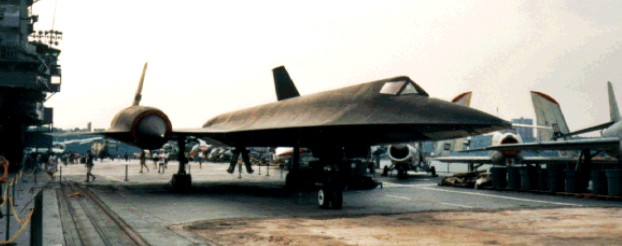
A-11 / A-12 In response to a programme for the construction of a high-speed, high-altitude, long-range reconnaissance conventional aircraft, funded by and earmarked for service with the Central Intelligence Agency (CIA), a number of US companies submitted proposals for consideration, Lockheed’s ‘Ox-cart’ from the design team led by C. L. ‘Kelly’ Johnson eventually being adjudged most suitable, and this duly received the go-ahead in the autumn of 1959.
Construction of the prototype (60-5932) single-seat A-12, as the machine was officially known, forged ahead at the ‘Skunk Works’, the virtually complete prototype being taken by road to the remote Groom Lake flight test facility during January 1962 for final assembly and flight testing. The A-12 got airborne for its first official flight on 26 April 1962, this event being preceded by a totally unexpected ‘hop’ during the course of high-speed taxi trials two days earlier.
Construction was largely of titanium to maintain structural integrity, as localised skin temperatures of up to about 427°C could be reached through air friction.
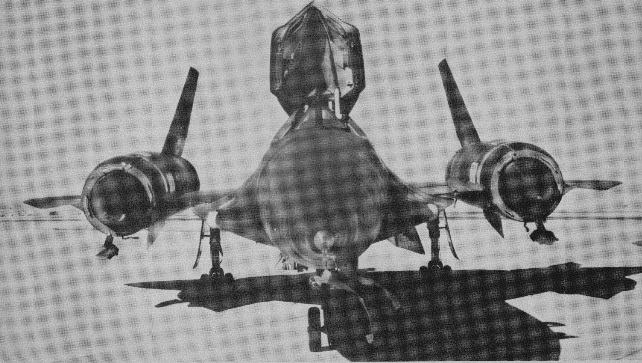
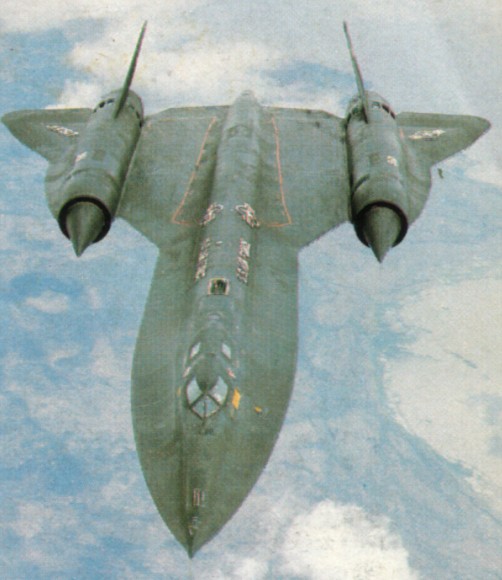
Lockheed A-12
In the early days of the flight test the first A-12 relied upon two Pratt & Whitney J75 turbojet engines for power, the same company’s J58 turbo-ramjet engine not being installed until much later in the year. Almost inevitably, with such a sophisticated machine, the project suffered from many problems during the early stages of flight testing, these being experienced in virtually every area, but despite this the CIA apparently began to take formal delivery of its initial fleet of 10 aircraft (serial numbers 60-6924/6933) shortly before the end of 1962 and these were later joined by a second batch of five A-12s (60-6937/6941). Of these 15 machines, one (60-6927) was completed as a two-seater for training duties, this differing from its counterparts by virtue of having a second, raised, cockpit and featuring conventional J75 engines which bestowed a maximum speed of about Mach 1.2, well below that of the standard A-12 which was apparently capable of approximately 3860 km/h 2,400 mph) or Mach 3.6 at altitudes in the order of 28040 m (92,000 ft), figures which significant exceeded those records established by the YF-12A at the beginning of May 1965.
A-12
In addition, the last two production examples of the A-12 were configured to carry the GTD-21B drone and these also featured a second crew station aft of the pilot’s cockpit, his housing the Launch Control Officer. As far is is known the GTD-2 1 B/A- 12 pairing was not employed operationally but the drone may have undertaken reconnaissance missions after launch from a specially configured Boeing B-52H Stratofortress.
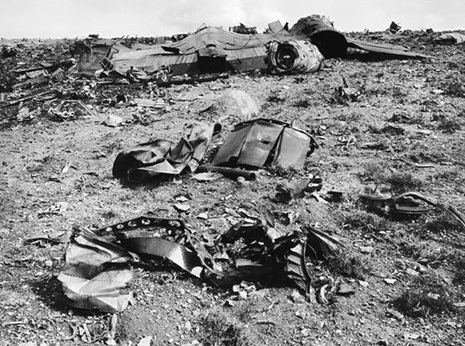
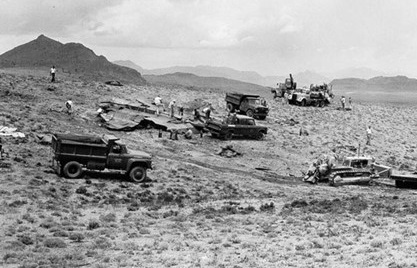
This A-12 crashed near Wendover, Utah in 1963 after entering an unrecoverable flat spin. Pilot Ken Collins managed to eject safely. He then successfully deterred several locals, who had come to his aid with the canopy of the shadowy A-12 on the back of their pickup, from the crash site by telling them the wreck was that of an F-105 Thunderchief with a nuclear weapon onboard. That same day, the CIA administered sodium pentothal to ensure Collins had divulged every last detail of the incident. When the men in black later carried him home, still heavily under the drug’s influence, Collins’ wife angrily assumed he’d been out drinking all day with his friends. Several decades later, the retired A-12 pilot was finally able to reveal the truth. X-Plane hunters continue to find components of the top secret aircraft wreck at the remote site.
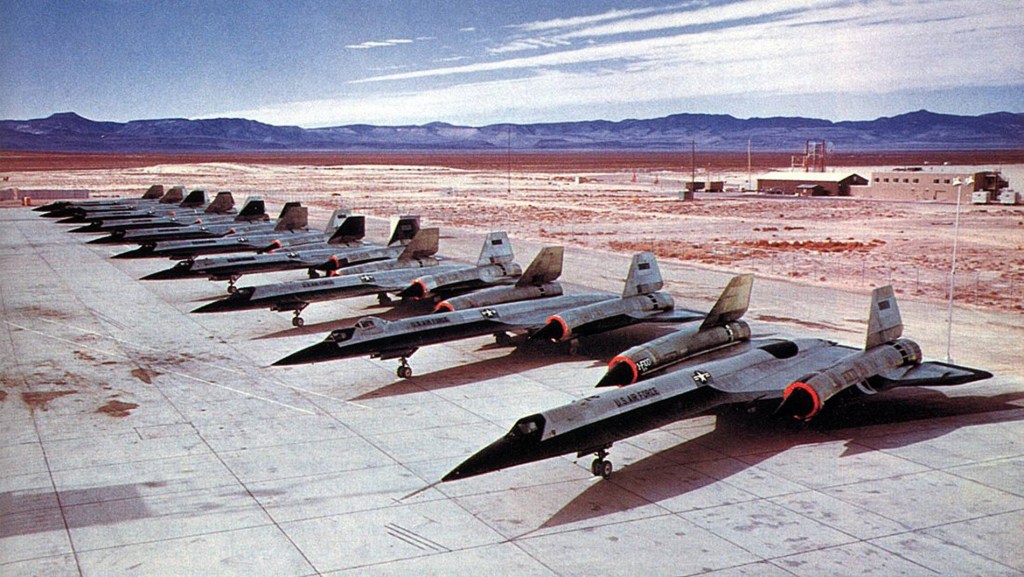
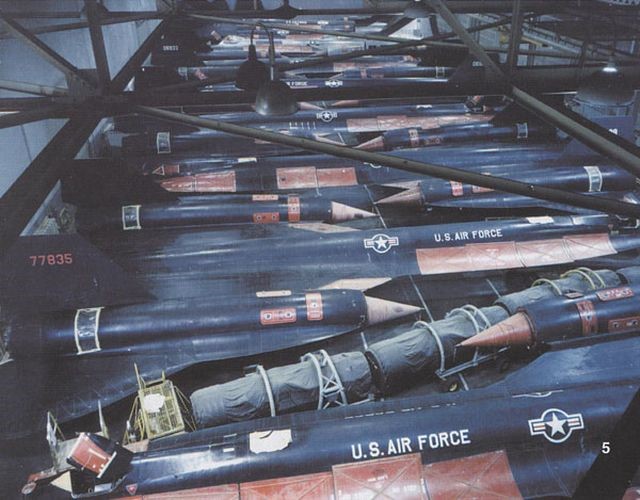
As far as operational employment is concerned, the CIA continues to maintain a tight-lipped silence about the A-12 but the type’s great speed coupled with its capacity for inflight-refuelling made range considerations virtually irrelevant, the major factor in mission scheduling almost certainly being one of crew fatigue. In view of this and the nonstop 24140km. (15,000-mile) missions accomplished by the later SR-71A it would seem reasonable to assume that intelligence-gathering was accomplished from Groom Lake until at least the summer of 1968, which most sources state as marking the cessation of A-12 activity. In addition, Kadena Air Base on the Pacific island of Okinawa has also been linked with A-12 operations as well as those of the SR-71A, and could well have served for some considerable time as a forward operating location for CIA intelligence gathering activities directed against the People’s Republic of China and North Korea. Reliable reports attest that such activity ceased abruptly on 5 June 1968 following the loss of A-12 60-6932, apparently after take-off from Kadena. By then the SR-71A had attained full operational status and the latter type is believed to have assumed responsibility for A-12 missions at about this time. Eight of the 15 A-12s eventually appeared in open storage at Palmdale during October 1977 though where they had spent the intervening nine years remains a mystery.
Lockheed A-12s while in secret storage at Palmdale, CA
In a Presidential announcement of February 1964, Lyndon Johnson formally revealed the existence of the ‘A-11 aircraft’.
YF-12
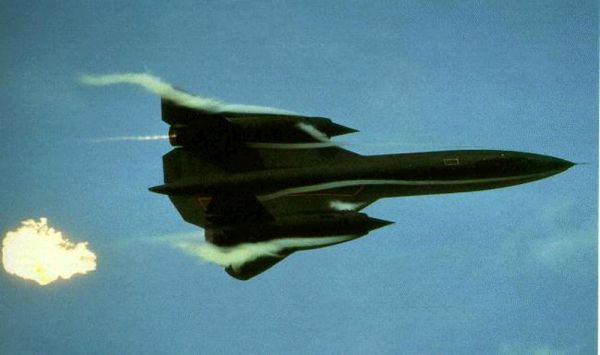
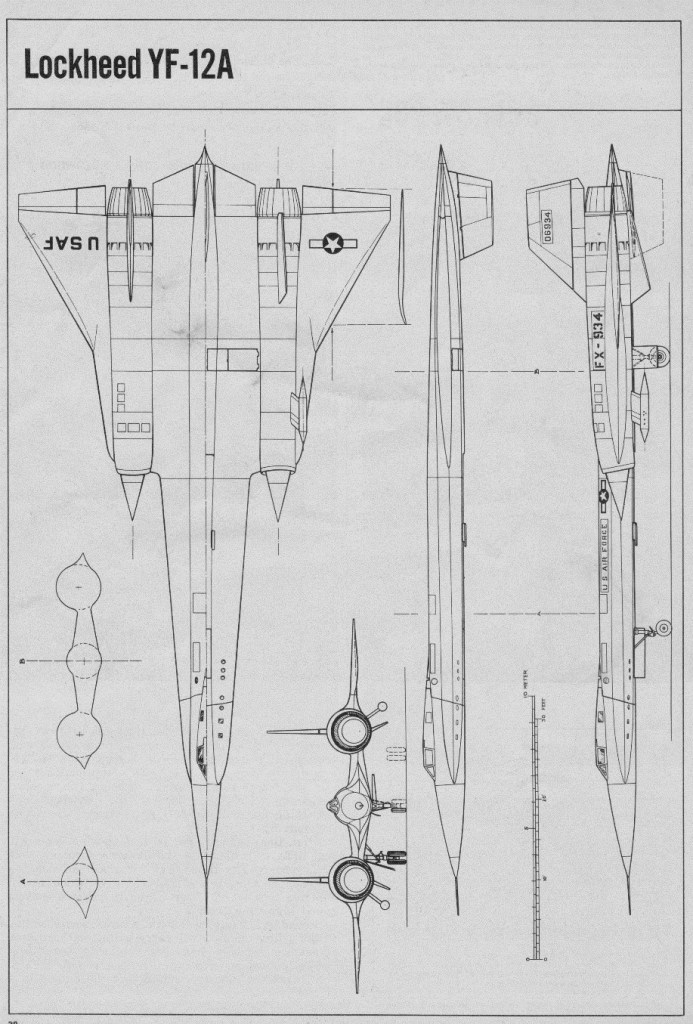
YF-12A
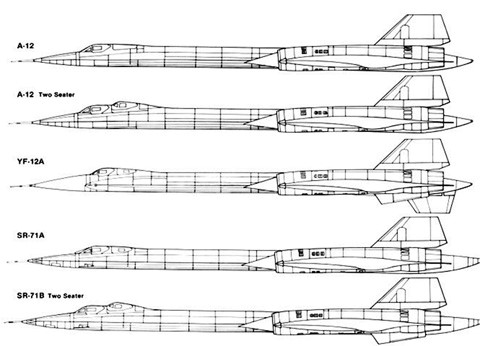
The second major ‘Blackbird’ variant to appear was the YF-12A, and it was this model which formed the basis of the Presidential announcement of February 1964 when Lyndon Johnson formally revealed the existence of the ‘A-11 aircraft’, adding that it was then under test as a long-range interceptor’. Three aircraft (606934/6936) of this type were built, the first example making its maiden flight from Groom Lake on 7 August 1963. Eventually to become the most publicly visible of all the ‘Blackbirds’, the three aircraft all featured significantly different nose contours, the forward fuselage chine having had to be redesigned to permit the installation of the Hughes AN/ASG- 18 long range radar required in the interceptor role. Armament was intended to be the Hughes AIM-47A air-to-air missile, four of which would have been housed internally, occupying space which was presumably given over to reconnaissance sensors and systems on the A-12. The type is based on advanced aerodynamics using a blended fuselage/wing design built largely of titanium alloys and covered in a special heat-radiating paint that led to the type’s nickname. The powerplant comprised a pair of 32,500-lb (14740-kg) afterburning thrust Pratt &Whitney J58 (JT11D-20B) bypass turbojets (or turbo-ramjets) which at high speeds produced their power not only as direct thrust from the exhaust nozzle but also as suction at the inlet. The fighter derivative of the basic model was the experimental YF-l2A, of which at least four were produced with the A-11’s original short fuselage, a Hughes pulse-Doppler fire-control system and, in the fuselage chine bays originally used for the carriage of reconnaissance equipment, four AJM-47A air-to-air missiles. The YF-12A never served operationally, but was important in several evaluation programmes.
The YF-12A programme, seen as important in its own right, distracted attention from the more sinister A-12, the model which mounted an assault on several world records at the beginning of May 1965, capturing the headlines and setting new marks for sustained altitudes and speed with what appeared to be consummate ease. That the A- 12 was able to exceed these figures handsomely was not brought to anyone’s attention.
Subsequently, the YF-12As and a single YF-12C (itself simply the demilitarized second production SR-71A with the bogus serial number (06937) spent most of their flying careers at Edwards AFB, California, eventually being used until 1999 by NASA in a major research effort into high-speed flight. This came to an end during 1979, the sole surviving YF-12A (60-6935) being turned over to the USAF Museum at Wright-Patterson AFB, Ohio, in November while the YF-12C was apparently placed in storage at Palmdale. Of the other two YF-12As, 60-6934 fell victim to a landing accident at Edwards at a fairly early stage, most of the rear fuselage later being used as a basis for the sole SR-71C, while 60-6936 was destroyed Arhen it crashed on approach to Edwards during June 1971.
Crewed by a pilot and flight test engineer, these aircraft flew under NASA for 10 years.
On 1 May 1965, a YF-12A established records including 2062 mph and 80,000 ft sustained horizontal flight. The YF-12As were capable of speeds in excess of Mach 3 and of sustained supersonic flight at heights of up to 24,385m.
The YF-12A paved the way for the SR-71A ‘Blackbird’ strategic reconnaissance platform that was retired from first-line USAF service in 1989, but even so the whole programme is still shrouded in secrecy and uncertainties.
SR-71
SR-71A
On Dec. 28, 1962, Lockheed got the contract to build the first group of SR-71s, which were to become the largest and best known branch of the Blackbird family. Bob Gilliland made the first flight on Dec. 23, 1964. One year after the YF-12, the first SR-71 arrived at Beale Air Force Base, California, operational home of the Black¬bird. First flown on 22 December 1964, the SR-71 is an unarmed strategic reconnaissance aircraft. The SR-71B and SR-71C are training variants.
Developed from the A-12 and flown for the first time during December 1964, the Lockheed SR-71A was the world’s fastest operational aircraft, approximately 12 examples being active with the 9th Strategic Reconnaissance Wing at any given time. Possessing the ability to survey 260000 sq.km (100,000 sq miles) of the Earth’s surface in just one hour, the SR-71A routinely cruises at Mach 3 at altitudes in excess of 24385 m (80, 000 ft) during the course of its duties, and is able to gather a variety of data by virtue of highly classified but interchangeable photographic and electronic sensors which are installed to meet specific mission objectives. Deliveries to Strategic Air Command began in January 1966, and it is believed that a total of 32 aircraft was built, this figure including two examples of the two-seat SR-71B plus a single SR-71C, the latter model also being a two-seater for pilot training, built of components taken from crashed aircraft and a structural test specimen.
Unlike the A-12, the SR-71 is a two-seat aircraft with additional accommodation for a Reconnaissance Systems Officer (RSO). Externally, this model also differed from its predecessors in that it has a fully extended chine which is much broader around the nose while the rear fuselage boat-tail was extended by some 1.83 m (6 ft) aft of the trailing edge to improve overall fineness ratio and provide additional fuel capacity. JP-7, the fuel used by the SR-71, is so special due to its properties for operations at the high temperatures caused by Mach 3 cruise that the aircraft has its own fleet of tankers, designated KC-135Q.
The configuration of this aircraft results from extensive wind-tunnel testing to evolve a minimum-drag fuselage providing maximum speed while keeping kinetic heating to the minimum; and to maintain the best possible handling characteristics at supersonic, take-off (about 370km/h) and landing (about 278km/h) speeds. Power plant comprises two 144.6kN Pratt & Whitney turbojets. The 36,287kg of special fuel for these engines – which is contained within upper-fuselage and inner-wing tanks – acts as a heat sink for the entire aircraft, fuel temperature being raised to 320°C before being injected into the engines. Highly complex air intakes with computer-controlled fail-safe systems are essential to ensure that smooth airflow to the engines is maintained over the enormous forward speed range of 0-3,200km/h, at the upper limit of which the engines are virtually operating as turbo-ramjets.
An initial batch of six aircraft formed the subject of the first contract which was placed in December 1962, and the first example took to the air for its maiden flight from Palmdale on 22 December 1964.
Deliveries to the designated operating agency (Strategic Air Command) began on 7 January 1966, the first example assigned actually being the second SR-71B to be produced. SR-71As began to follow during June of the same year to the 9th Strategic Reconnaissance Wing.
Attaining operational status in mid-1967, over 16 years later virtually everything about the SR-71’s usage and mission-related sensor equipment was still the subject of a stringent security blanket, although the USAF has revealed that it can survey 100,000 square miles of the Earth’s surface in one hour’. It seems certain that the intelligence-gathering effort entails unauthorized overflights of potentially hostile territory every now and then. However, since much valuable data can be obtained without recourse to actual overflight, it seems probable that many missions are of a peripheral nature, the SR-71A operating in international air space at extreme altitude whilst going about its duties.
Operations were routinely conducted from two forward operating locations by aircraft detached from the wing’s headquarters at Beale AFB, California. Kadena in Okinawa, normally had three aircraft attached at any time, while Mildenhall in the United Kingdom was the location of the second SR-71 detachment which usually controled the activities of two aircraft. In addition, 9th SRW’s headquarters at Beale served as the centre for crew training. The two-crew members, comprising a pilot and a reconnaissance systems operator, both wear full pressure suits similar to those of astronauts.
Regardless of the equipment fitted, it is apparent that the ‘Blackbird’ was highly regarded as an intelligence-gathering tool, clear evidence of this being provided by the massive expense incurred in supporting just a handful of aircraft. There is the large fleet of Boeing KC- 135Q Stratotankers (specially modified to carry the SR-71A’s unique JP-7 fuel. In addition, the unique aspects of high-altitude flight require the services of a large physiological support division, further 9th SRW infrastructure including a reconnaissance technical squadron with the task of processing data, and an extensive training element which uses several Northrop T-38A Talons as well as a surviving SR-71B.
A total of 31 new-build SR-71 Blackbird aircraft were constructed in addition to the SR-71C. Of the total production, 29 examples (64-17950/17955 and 64-7958/17980) are SR-71As, the two remaining (64-17956/17957) being completed SR-71Bs with a second, raised, cockpit for pilot training duties. 64-17956, was originally built as an SR-71A, but was later converted to an SR-71B trainer by the addition of a second cockpit. Two aircraft were converted.
They have the capability to survey an area of 155,400sq.km within an hour and in 1976 established a closed-circuit speed record of 3,367.221km/h; a world absolute speed record of 3,529.56km/h; and a sustained-altitude record of 25,929.031m.
Including all three members of the ‘Blackbird’ family, production of new airframes totalled just 49, a fiftieth hybrid machine being completed with parts from a wrecked YF-12A and an engineering mockup.
The SR-71 left US Air Force service in January 1990. On a flight from the West Coast to the East Coast, where the aircraft was to retire to permanent static display at the Smithsonian, the Blackbird set a new transcontinental speed record, flying from Los Angeles to Washington D.C. in 1 hour, 4 minutes, and 20 seconds, averaging a speed of 2,124 mph.
SR-71
SR-71
Records Absolute speed: 2193.17 mph / 3529.56 kph – 28 July 1976 1000km / 621.1mi closed circuit speed: 2092.294 mph / 3367.221 kph – 27 July 1976 Sustained flight in horizontal flight: 85,059 ft / 25,939 m – 28 July 1976
Lockheed SR-71A Blackbird Engines: 2 x P&W JT11D, 32,500 lb / 14,742 kg thrust Wingspan: 55 ft 11 in / 16.94 m Length: 107 ft 5 in / 32.74 m Height: 18 ft 6 in / 5.64 m Wing area: app 1000 sq.ft / 92.9 sq.m Empty weight: 60,000 lb / 27,216 kg MTOW: 170,000 lb / 77,111 kg Speed: 2250 mph / 3620 kph Ceiling: 100,000 ft/ 34,800 m Range: 2980 mi / 4850 km Seats: 2
SR-71A Engines: two Pratt & Whitney J58 turbo-ramjet engines, 14742-kg (32,500-1b) afterburning thrust. Wing span 16.94 m (55 ft 7 in) Wing area: 167.2 sq.m / 1799.72 sq ft Length 32.74 m (107 ft 5 in) Height 5.64 m (18 ft 6 in) Wing area 166.76sq.m (1,795 sq ft). Empty weights: 27216 kg (60,000 lb) Maximum take-off 78019 kg (172,000 lb) Fuel capacity 13,000+ USG Maximum speed at 24385 m (80,000 ft) 3661 km/h (2,275 mph) or Mach 3.35 Operational ceiling 26060 m (85,500 ft) Maximum unrefuelled range at Mach 3: 5230 km (3,250 miles). Crew: 2