Meadowlark Ultralight Meadowlark

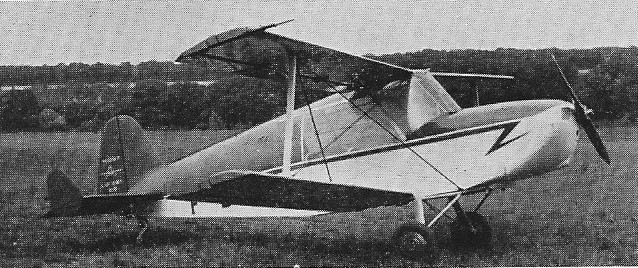
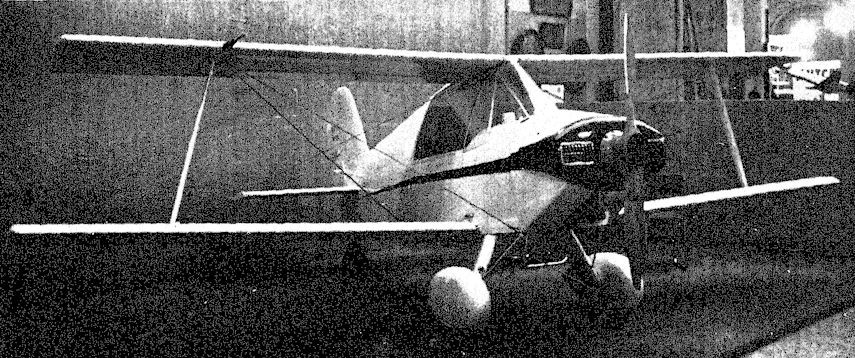
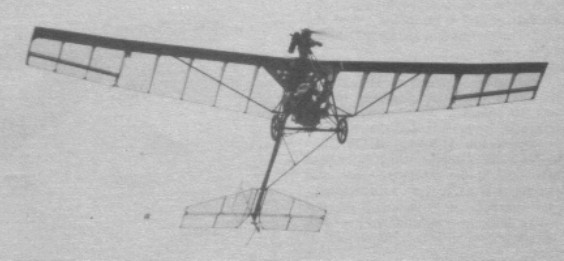
Single seat single engined high wing mono¬plane with conventional three axis control. Wing has unswept leading edge, swept for¬ward trailing edge and tapering chord; cruci¬form tail. Pitch control by elevator on tail; yaw control by fin mounted rudder; roll control by one third span ailerons; control inputs through stick for pitch/roll and pedals for yaw. Wing braced from below by struts; wing profile; double surface. Undercarriage has three wheels in tricycle formation with additional tailskid; steel spring suspension on all main wheels. Push right go right nose¬wheel steering connected to yaw control. Brakes on main wheels. Aluminium tube framework, without pod. Engine mounted above wing driving tractor propeller. Cover¬ing is transparent Mylar; push pull tubes for flight controls.

The prototype of this single seater appeared at the end of 1982 and presented at the March 1983 Sun In’ Fun in Lakeland, Florida, where it enjoyed a certain success. It is certainly one of the better conventional three axis designs on the American market; for instance, the controls are operated by push rods and the wing is supported on struts rather than cables, features which allow one to rig the aircraft in around 20 min. The wings fold parallel to the fuselage allowing easy transport on a trailer without any other derigging.

The Meadowlark was fitted with a Cuyuna 430R engine with Arizona Air Sports reduc¬tion drive and was sold only in ready to fly form, at a price of $6575. Biam floats were available as an option for $975; other options include flight and engine instruments.

Engine: Cuyuna 430R, 30 hp at 5500 rpm
Propeller diameter and pitch 54 x 27 inch, 1.37 x 0.68 m
V belt reduction, ratio 2.0/1
Max static thrust 197 lb, 90 kg
Power per unit area 0.22 hp/sq.ft, 2.4 hp/sq.m
Fuel capacity 3.7 US gal, 3.1 Imp gal, 14.0 litre
Length overall 19.0 ft, 5.79 m
Height overall 7.3ft, 2.21m
Wing span 35.0ft, 10.66m
Chord at root 5.0ft, 1.52m
Chord at tip 3.0ft, 0.91m
Dihedral 3 deg
Sweepback 0 deg
Tailplane span 8.6 ft, 2.59 m
Fin height 3.4 ft, 1.01 m
Total wing area 136 sq.ft, 12.6 sq.m
Total aileron area 12.0 sq.ft, 1.11 sq.m
Fin area 7.5 sq.ft, 0.69 sq.m
Rudder area 5.0 sq.ft, 0.46 sq.m
Tail¬plane area 14.0 sq.ft, 1.30 sq.m
Total elevator area 7.0 sq.ft, 0.65 sq.m
Wing aspect ratio 9.0/1
Wheel track 5.0ft, 1.52 m
Wheelbase 5.0ft, 1.52 m
Nosewheel diameter overall 19 inch, 48 cm
Main wheels diameter overall 23 inch, 58 cm
Optional floats: 11.0 x 23.5ft, 3.35 x 7.13 m
Empty weight 251 lb, 114 kg
Max take off weight 550 lb, 249kg
Payload 299 lb, 136kg
Max wing loading 4.04 lb/sq.ft, 19.7kg/sq.m
Max power loading 18.3 lb/hp, 8.3kg/hp
Load factors +3.8, 1.5 design
Max level speed 55mph, 88kph
Never exceed speed 60mph, 97kph
Max cruising speed 55mph, 88kph
Economic cruising speed 35mph, 56kph
Stalling speed 22 mph, 35 kph
Max climb rate at sea level 1000 ft/min, 5.1 m/s
Min sink rate 400 ft/min at 27 mph, 2.0 m/s at 43 kph
Best glide ratio with power off 8/1 at 30 mph, 48 kph
Take off distance 75 ft, 23 m
Landing distance 100ft, 30m
Range at average cruising speed 90 mile, 145 km
Mead 100 Adventure

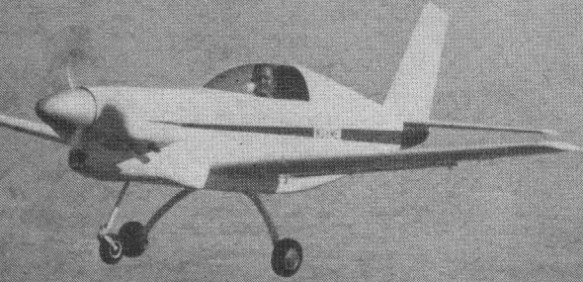
The Model 100 Adventure’s simplicity of operation is equaled only by its simplicity in construction. A modern, high performance, sandwich composite structure was used throughout. The materials and working techniques are descendants of Rutans VariEze technology. The Adventure has a combination of high speed cruise, low stall speeds and good climb performance.

The general configuration is a single-seat, low mid-wing tractor monoplane with fixed tricycle landing gear that may be powered by any of the Con¬tinental Motors A or C series engines of 65 to 85 hp driving a fixed-pitch wooden propeller. The wing is a two-piece assembly to minimize the space required to build and to facilitate its removal from the fuselage. The fuselage is built from flat sheets of half-inch-thick polystyrene foam and constructed from the inside out. The canopy is a single-piece, free-blown unit.

Aileron rolls and one turn spins are the only aerobatics that the Adventure has performed. It is intended to be a utility category aircraft with lots of structural beef and a conservative repertoire of aerobatic maneuvers.

Engine 65 to 100-hp Continen¬tal
Gross Wt. 800 lb
Empty Wt. 460 lb
Fuel capacity 20 USG
Wingspan 20’
Length 13’
Wing area: 40 sq.ft
Top speed 188 mph
Cruise 180 mph
Stall mph 57
Climb rate 1600 fpm
Takeoff run 800 ft
Landing roll 700 ft
Range 650 miles
Seats: 1.

Mead Primary Glider / Rhon Ranger / Renaut Primary

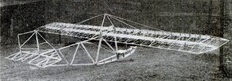
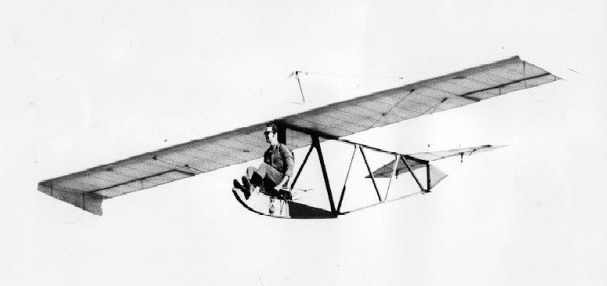
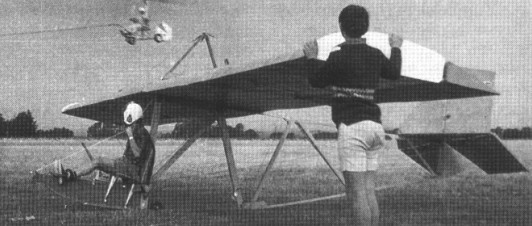
The “Rhon Ranger” is a type of primary glider (or Zogling variant), designed in Europe, for which plans were published in America in the 1930s. In America it is called the “Mead” primary glider after the Chicago firm that marketed Rhon Ranger kits and plans there.

The glider consists of a simple open wooden frame fuselage with doped fabric covered section at rear, fabric covered wooden framed wing of constant cord, fabric covered wooden framed tailplane, elevators and rudder.

The airframe, when assembled, is braced with tubular metal struts. In addition the wing root joint between the wings is covered by plywood panel fairings.

A Rhon Ranger was built by Mr Renaut of South Shiels, UK, in 1932, as the Renaut Primary. It was first flown at Simonside in July 1932.

Gallery

Wing span: 9.8 m

MDM Fox MDM-1

MDM-1 Fox

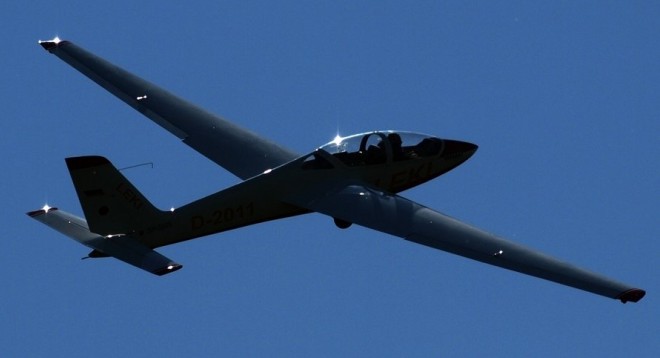
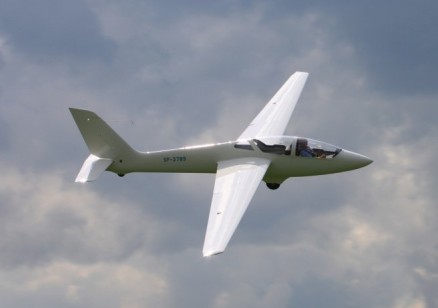
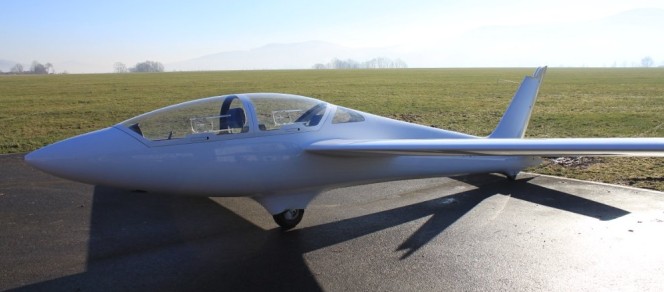
The two-seater MDM-1 FOX glider has been developed on base of design experience acquired during work with KOBUZ, JANTAR and SWIFT S-1 gliders by the team of Edward Marganski M.Sc. (Eng.). Designed by E.Marganski, K. Kapinos, H. Gielbaza, and B Adamski, work started in November 1992 and the first prototype was flown on 9th July 1993.

Marganski MDM-1 Fox G-IIFX

Capable of arotowing and winch-launching, the Fox is optimized for aerobatic training with erect and inverted clearance to +9/- 6 g solo, and +7/-5 g with two people. The landing gear is fixed, and approach control is assisted by Schempp-Hirth airbrakes.

Almost immediately after the 1-st presentation at World Glider Aerobatic Championships, Venlo Netherlands 1993 the Fox model has gained a status of monotype at every serious international championships in glider aerobatic.

Certification is EASA TYPE CERTIFICATE No A.039.

The MDM-1 Fox P is a version with redesigned exchangeable wing tips. Depending on the mounted wing tip, the glider can be used in one of two versions:

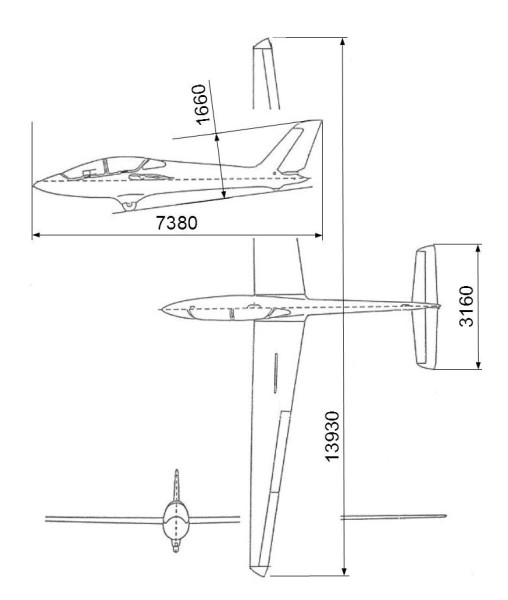
Aerobatic – without wing-tips, wing span of 14,00 m.

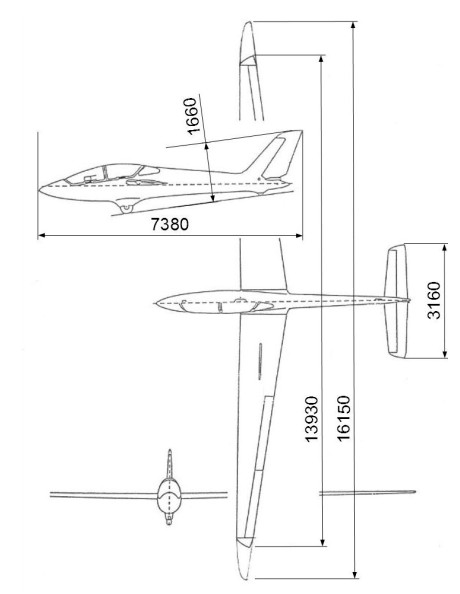
Utility – with wing-tips extending wing span to 16,15 m. Glider in this version can perform only basic aerobatic manoeuvres. Wing-tips with elliptical sweep and dihedral lift based on an arc.

The base price in 2011: 91 850 € TTC EXW (76 800 € HT EXW)
As at November 2013 the prices were:
MDM-1 Fox glider in basic version: 75 000,00 €
MDM-1P Fox glider in aerobatic / utility version: 76 500,00 €

Gallery

MDM-1 Fox
Wing span: 14 m / 45.9 ft
Wing area: 12.34 sq.m / 132.8 sq.ft
Length: 7,38 m
Height: 2,25 m
Empty Weight: 345kg / 761lb
Payload: 180kg / 396 lb
Aspect ratio: 15.88
Gross Weight: 525 kg / 1157 lb
Wing Load: 42.54 kg/sq.m / 8.71 lb/sq.ft
MinSink: 0.8 m/s / 2.62 fps / 1.55 kt
Vne (max never exceeded speed): 285 km/h / 152kts
Airfoil: NACA 64(1)412
Structure: GFRP/CFRP
Max G-Force: +9 / -6 G
Seats: 2

MDM-1 Fox P Aerobatic
Wing span: 14,00 m / 45,9 ft
Length: 7,38 m / 24,2 ft
Height: 2,25 m / 7,4 ft
Wings area: 12,34 sq.m / 132,8 sqft
Vne(max never exceeded speed): 282 km/h / 152kts
Max take-off weight: 530 kg / 1168,0 lb
Max empty weight: 350 kg / 772,0 lb
Max G-Force (1 person crew): +9 / -6 G
Max G-Force (2 person crew): +7 / -5 G

MDM-1 Fox P Utility
Wing span: 16,15 m / 53,0 ft
Length: 7,38 m / 24,2 ft
Height: 2,25 m / 7,4 ft
Wings area: 13,09 sq.m / 141,0 sqft
Vne(max never exceeded speed): 282 km/h / 152kts
Max take-off weight: 535 kg / 1179,0 lb
Max empty weight: 355,0 kg / 783,0 lb
Max G-Force (1 person crew): +5,3 / -2,65 G
Max G-Force (2 person crew): +5,3 / -2,65 G

MDM-1 Fox
MDM-1 Fox P

MDM EM-11 Orka

First prototype EM-11 Orka SP-YEN

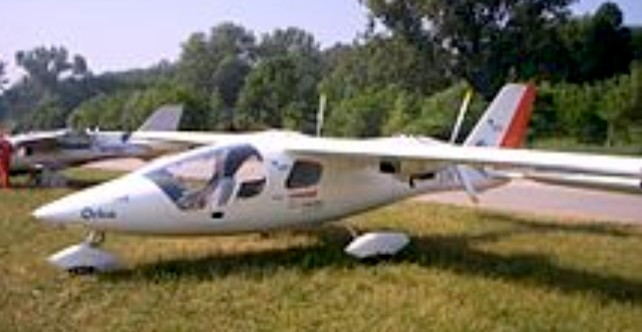
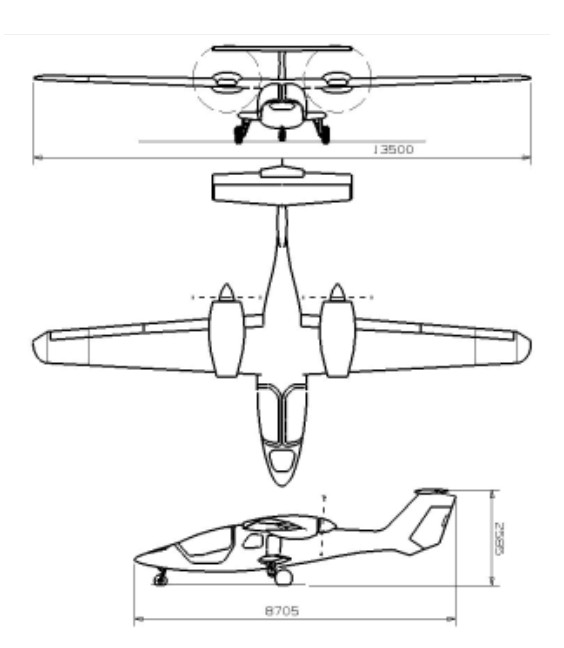
The EM-11 was designed by Edward Margański of Margański & Mysłowski Zakłady Lotnicze (Margański & Mysłowski Aviation Works). Work on this low cost, light utility aircraft, of unorthodox configuration, with slim glider-like fuselage and two pusher engines, started in 2001. The plane was constructed of composite materials with a car-like 4-seat cabin placed low to the ground. Room for cargo was created aft of the rear seats.

A four seater twin-engine aircraft with retractable landing gear, high-wing configuration, the shell structure is all-composite with honeycomb filler. Wings have foldable tips for easier hangaring. Two fuel tanks of 200 litres capacity each are installed in wings. Fuselage has upwards-opening door in the front part and cargo hatch in the central part. Passenger cabin has four separate seats, of which the front ones are reclining and sliding. The seats have 3-point inertial safety belts. Tail plane is in T type. Electrical trimming tabs are mounted on both planes. Flight control systems are controlled by a rigid push-rod transmission system, the rudder is controlled with use of a line. The aircraft is propelled by two counter-rotating engines LYCOMING IO-320 / LIO-320 of 160 hp each at 2,700 RPM. 3-blade constant-speed type MT-Propeller propellers are fitted. Hydraulically retracted landing gear is mounted on fuselage and has gas shock absorbers with hydraulic damping.

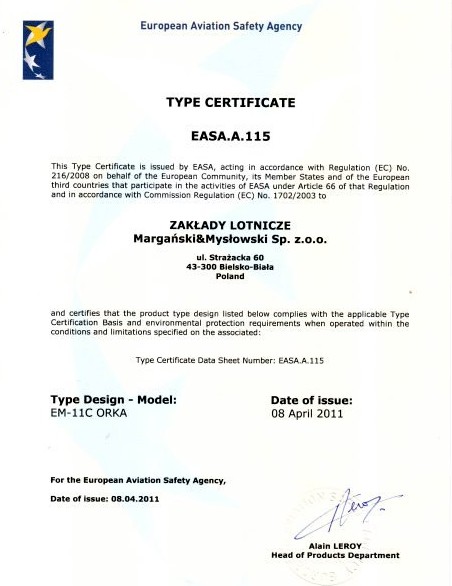
The first prototype EM-11, registered SP-YEN, first flew on August 8, 2003. It has a fixed tricycle landing gear and Rotax 912 (100 hp) engines. The second prototype, registered SP-YEP, being a pattern for serial production variant EM-11C, flew 20 October 2005 with Lycoming IO-320 engines and retractable landing gear. In April 2011 EM-11C Orka was EASA certified and in production. Prior to certification, the prototypes and three further aircraft had been built.

EM-11C Orka (SP-YEP)

Several variants were planned including, a patrol aircraft with an FLIR head, an air ambulance, a cargo plane, and an amphibious version.

Gallery

EM-11C Orka
Engines: 2 × Lycoming IO-320, 118 kW (160 PS)
Length: 8.705 m (28.56 ft)
Wingspan: 13.5 m / 44.3 ft
Wingspan folded wing tips: 10.5m / 34.4 ft
Height: 2.585 m (8.48 ft)
Wing area: 16.5 sq.m (177.61 sq. ft)
Max. takeoff weight: 1,820 kg (4,012 lbs)
Useful load: 550kg (1,212.5 lbs)
Fuel burn 75% power: 52 l/h
Maximum speed: 261 km/h / 141 kts
Never exceed speed (VNE): 359 km/h (194 kts)
Cruise speed: 261 km/h (141 kts)
Landing speed: 142 km/h / 77 kts
Stall speed (landing config): 109 km/h (59 kts)
Range (45 min res): 1700 km (918 nm)
Rate of climb: 5,1 m/s (1000 ft/min)
Rate of climb SE: 1 m/s / 200 ft/min
Take-off ground roll: 358 m / 1174 ft
Landing ground roll: 556 m / 1824 ft
Crew: one, pilot
Capacity: 3 passengers

MDM / Margański & Mysłowski

ZAKŁADY LOTNICZE Margański & Mysłowski S.A.

Margański & Mysłowski ZAKŁADY LOTNICZE dates back to 1986, when Edward Margański, an engineer, established “Aircraft Repair and Equipment Production Plant”. Initially, the company dealt with the inspection and repair of wooden gliders.

In 1990 company’s activity has been extended to glider constructions designing. Within 26 months SWIFT glider has been designed, flight tests have been performed and Type Certificate was obtained.

The successes of the SWIFT led to an order from MDM Ltd. to design an aerobatic two-seater glider. The company has developed MDM-1 Fox glider, which has gained many world’s and European aerobatics championships awards. On 27th July 1994, a Type Certificate was issued.

In 1999, on the basis of previous experience and preliminary preparations carried out in advance, the company began work on a prototype of the Iskra II jet training aircraft, with an engine thrust of 1,300 – 1,500 kg. The airplane was renamed the ‘Bielik’ and underwent test flights in 2003.

In 2001, work commenced on the development of a new aircraft structure; an executive aircraft, the EM-11 Orka, test flights for which took place in 2003. ORKA is a four seater twin-engine aircraft with retractable landing gear, high-wing configuration with push-type propellers and comfortable passenger cabin. On 8th April 2011 EM-11C Orka has achieved EASA Type Certificate.

Concurrent with aircraft production, the company has participated in a number of projects in other areas. – production tools and the first specimens of a 44 m diameter rotor blade made of glass-fibre-reinforced composite for a wind power plant generating 1000 kW of energy. In 2002, an order from ENECO for a prototype rotor for a wind power plant with a 1.2 MW output was built. In cooperation with ROTHENSEER ROTORBLATTFERTIGUNG GmbH, the company has made supporting elements for the construction of wind power plant rotor blades.

In 2010 production of MDM-1 Fox glider series was started again.

Since October 2011 the company has been transformed from limited company to joint-stock company and has been renamed to Zakłady Lotnicze Margański&Mysłowski S.A.

Certificates:
Production Organization Approval (POA) no PL.21G.0012
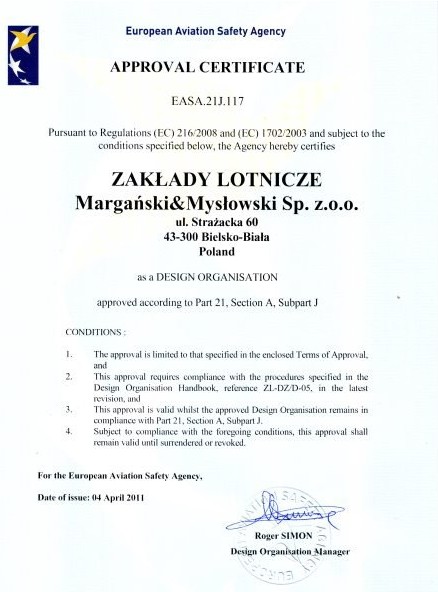
Design Organization Approval (DOA) no EASA.21J.117

M.D.G. LD-261 Midgy-Club / Indraero CB-10

The LD-261 Midgy-Club was a development of the single-seat LD-45 and two-seat LD-46 of 1946-47, and a few were produced by Instruments de Precision M.D.G. The LD-261 are tandem two-seaters of mixed construction.

A sole example of a slightly modified version, known as the Indraero CB-10, was also built.

LD-261 Midgy-Club
Engine: Continental A65, 65 hp
Wingspan: 22 ft 11.5 in
Wing area: 114 sq.ft
Length: 17 ft 10.5 in
Height: 6 ft 5 in
Empty weight: 704 lb
Loaded weight: 1190 lb
Max speed: 112 mph
Cruise: 98 mph
ROC: 560 fpm
Absolute ceiling: 22,200 ft