Subsidiary of PZL of Poland to market and support its agricultural aircraft in the West. Developed T45 Turbine Dromader as turboprop modification of M-18 Dromader, plus a waterbomber.
Aircraft
Melbourne Aircraft Corp MA-2 Mamba
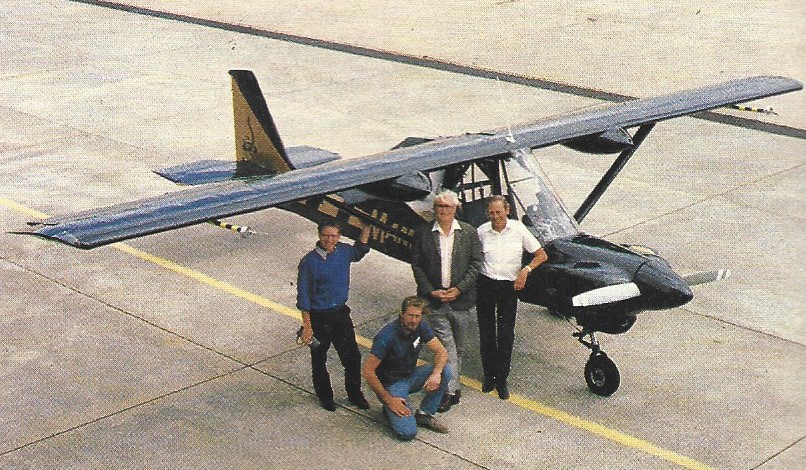
The MAC Mamba, Mamba Range is an Australian two-seat light aircraft designed and built by the Melbourne Aircraft Corporation.
The Mamba is a strut-braced, high-wing monoplane designed over two years and first flown on 25 January 1989. It has fixed tricycle landing gear and is powered by a 116 hp (87 kW) Lycoming O-235 flat-four piston engine. It has an enclosed glazed cabin with side-by-side configuration seating for two. The fuselage is constructed of welded steel tubing with stressed aluminum skin. It was intended to introduce four-seat and military versions of the Mamba.
The military version was built under contract by Australian Aircraft Industries as the AA-2S Mamba powered by an IO-360.
Variants
AA-2
Lycoming O-235-powered prototype built by Melbourne Aircraft Corporation
Powerplant: 1 × Lycoming O-235-N2C, 86 kW (116 hp)
Wingspan: 8.68 m (28 ft 5.75 in)
Wing area: 10.13 m2 (109.04 sq ft)
Length: 7.00 m (22 ft 11.5 in)
Height: 2.38 m (7 ft 9.75 in)
Empty weight: 390 kg (860 lb)
Gross weight: 680 kg (1,499 lb)
Maximum speed: 250 km/h (155 mph, 135 kn)
Endurance: 5 hours 42 minutes
Rate of climb: 7.6 m/s (1,500 ft/min)
Crew: one
Capacity: one
AA-2M
Lycoming IO-360-powered military variant built by Australian Aircraft Industries
AA-2S
Lycoming IO-360-powered civilian under test by Mamba Aircraft Company
AA-4S
Lycoming O-320 four-place under development by Mamba Aircraft Company
Melbourne Aircraft Corporation
Australia
Developed MA-2 Mamba two-seat light aircraft (first flown 1989).
Meindl M1
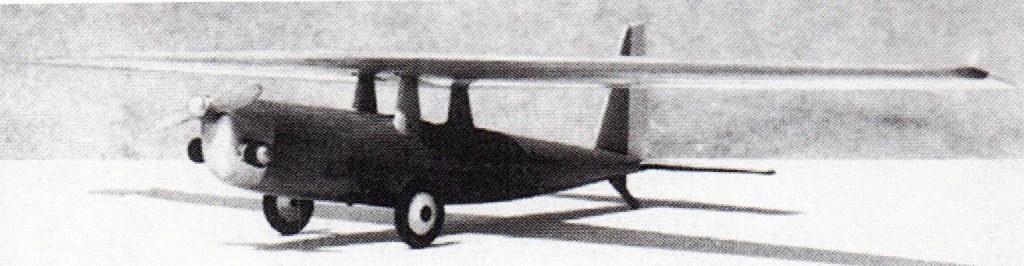
The Meindl M1 was the first construction of Erich Meindl.
It crashed on its first flight.
Meichelböck 1913 Eindecker
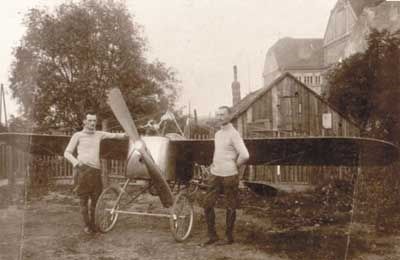
Built by Franz Meichelböck and a friend in Ober Sankt Veit, a district of Vienna, in 1913.
Meduna
In 1910 a monoplane of some type was designed and built by Meduna, in Czechia.
Meißwinkel-Frohmüller 1910 Gleiter
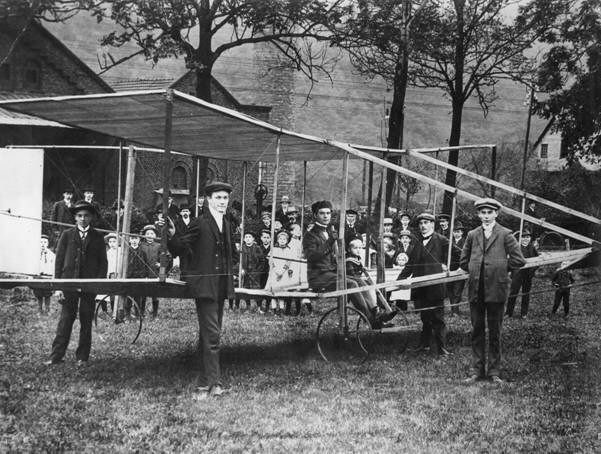
A glider built by Wilhelm Meißwinkel and Heinrich Frohmüller at Buchhagen, Germany; first flown on October 19, 1910.
Meckler-Allen New York hydro-biplane
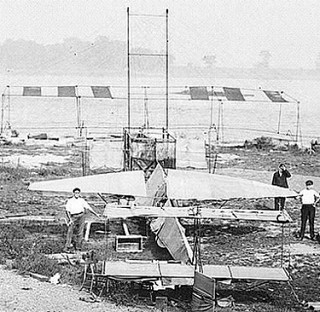
The Meckler-Allen airplane was built by Allen Canton and John J. Meckler in 1912 for an attempt to make a transatlantic flight. At the time it was the largest airplane in the world, measuring 104 ft long, and 76 ft across. It had a long triangular fuselage, an auxiliary wing between the main biplane cell and the biplane tail, twenty-two tanks of gasoline, five engines and miles of rigging wires. It was constructed out in the open, at a place called Clason Point in the South Bronx of New York City, on the waterfront of the East River opposite LaGuardia Airport.
Mecavia Onyx Biplace
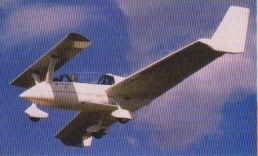
A tandem two-seat composites, built developed from single-seat Piel CP.150 Onyx and featuring rear-mounted wings and high canard. The fuselage is in wood and composites with the kit including all mouldings. The engine is limited to 55 kg for CoG reasons.
Onyx bi 582
Engine: Rotax 582 DCDI, 64 hp
Wing span: 9.20 m
Wing area: 16.07 sq.m
MAUW: 440 kg
Empty weight: 220 kg
Fuel capacity: 50 lt
Max speed: 185 kph
Cruise speed: 150 kph
Minimum speed: 64 kph
Climb rate: 5 m/s
Seats: 2
Fuel consumption: 13 lt/hr
Kit price (1998): 117 800 Fttc
Mecavia
France
Markets kit to construct tandem two-seat composites-built Onyx Biplace, developed from single-seat Piel CP.150 Onyx and featuring rear-mounted wings and high canard.
1998:
2 rue des Naudinières
F-37270 Larcay
France

