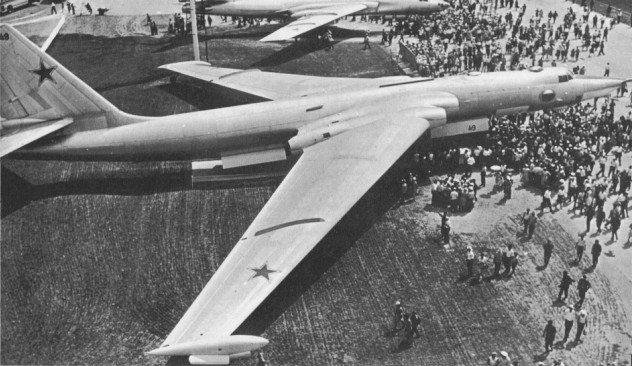
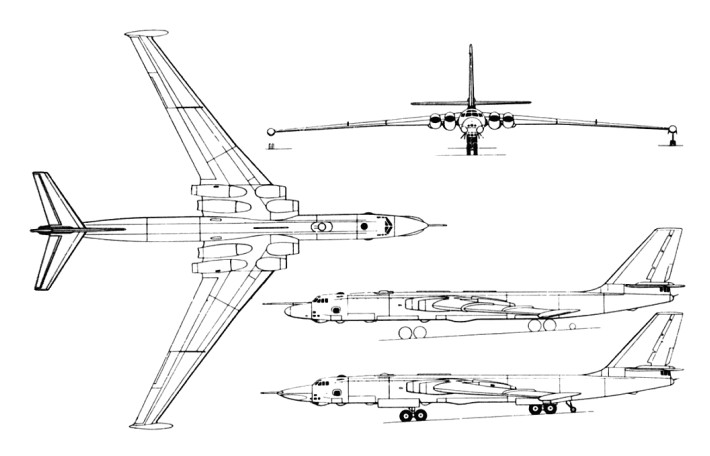
One other version of the M-4 ‘Bison’ is known, a test-bed aircraft powered by four D-15 turbojet engines each of 13000kg thrust and designated 201-M.
This was used in September 1959 to establish a number of payload-to-height records by lifting a payload of 10,000 kg (22,046 lb) to 50,253 ft (15,317 m) and the weight of 55,220 kg (121,480 lb) to 2000 m (6,561 ft).
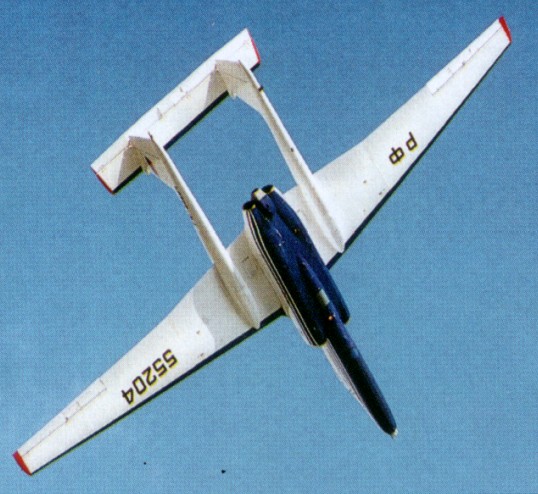
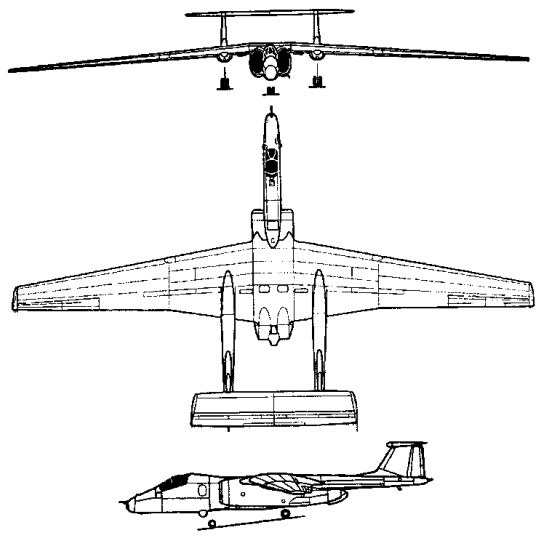
Originally identified in 1982 by US reconnaissance satellites as the ‘Ram-M’ single-seat high-altitude reconnaissance aircraft, and later codenamed ‘Mystic’ by NATO, the twin-boom straight-wing jet, was publicised as a high-altitude research aircraft able to carry around 1500kg of sensors, existing in two versions.
The first of two prototype aircraft, designated M-17 Stratosfera (‘Mystic-A’), first flew in 1988 and are powered by a single 68.6kN thrust Rybinsk RD-36-51V turbojet developed from the Tu-144 SST powerplant.
The M-55 Geofizika (‘Mystic-B’), has two 49kN thrust Perm/Soloviev PS-30-V12 turbojets mounted side-by-side behind a raised cockpit installed in a longer nose, together with a reduced span wing. The M-55 ‘Mystic-B’ differs from the first M-17 Stratosfera in having a longer jetpipe, shorter engine intakes, a reprofiled nose and an undernose FLIR turret.
The role of the ‘Mystic-B’ is described as environmental sampling missions or high-altitude research and endurance in this role is claimed as over 4 hours loiter capability at 20000m. A further variant of the M-55 is reported to be under development with wingroot mounted engines in stalled in a conventional fuselage carrying a sweptback tail unit.
Two ‘Mystic-A’ prototypes were followed by two ‘Mystic-B’ and two pre-production ‘Mystic-Bs’ were flying by 1992.
Engines: 2 x Soloviev PS-30-V12, 49kN Wingspan: 37.47 m / 122 ft 11 in Length: 22.87 m / 75 ft 0 in Height: 4.83 m / 15 ft 10 in Cruise speed: 750 km/h / 466 mph Ceiling: 21000 m / 68900 ft Crew: 1
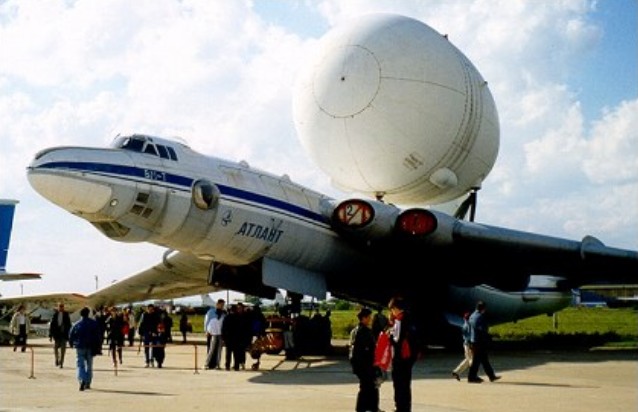
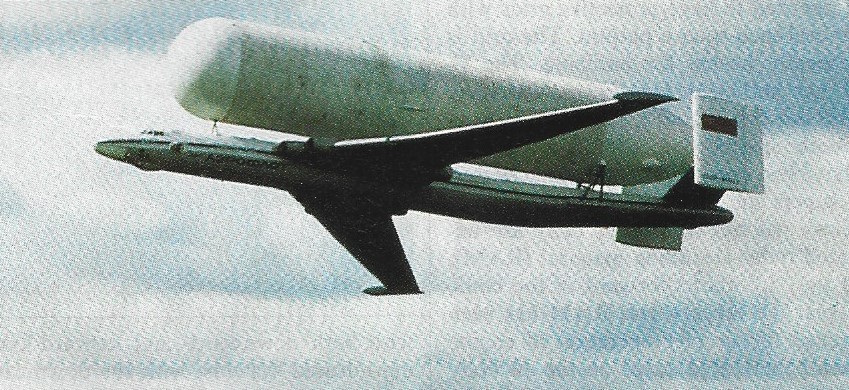
After directing CAHI (TsAGI) from 1960, Myasishchev returned to OKB No 23 in early 1978 in order to study how a 3M strategic bomber might be modified to convey large space launchers and similar payloads. In particular an aircraft was needed to transport to the Baikonur launch site four kinds of load: the nose of the Energiya launcher; the second portion of Energiya; the Energiya tank; and the Buran spacecraft, with vertical tail and engines removed. These loads typically weighed 40 tonnes and had a diameter of 8m. Myasishchev had previously calculated that such loads could be flown mounted above a modified 3M bomber. He died on 14th October 1978, the programme being continued by V Fedotov. While design went ahead, three 3M tanker aircraft were taken to SibNIA (the Siberian State Research Instiutute named for S.A.Chaplygin) and put through a detailed structural audit preparatory to grafting on a new rear fuselage and tail, and mountings for the external payload. The modified aircraft were designated 3M-T. All were rebuilt with zero-life airframes and new engines, but initially without payload attachments. One was static-tested at CAHI while the other two were completed and flown, tne first on 29th April 1981. After a brief flight-test programme they were equipped to carry pick-a-back payloads, and in Myasishchev’s honour redesignated VM-T Atlant. The first flight with a payload was made by A.Kucherenko and crew on 6th January 1982. Subsequently the two Atlant aircraft carried more than 150 payloads to Baikonur.
The most obvious modification of these aircraft was that the rear fuselage was replaced by a new structure 7m longer and with an upward tilt, carrying a completely new tail. This comprised modified tailplanes and elevators with pronounced dihedral carrying inward- sloping fins and rudders of almost perfectly rectangular shape, with increased total area and outside the turbulent wake from any of the envisaged payloads. Less obvious was the fact that, even though the maximum take-off weight was less than that for the bomber versions, the airframe was strengthened throughout.
As time between overhauls was not of great importance the original four VD-7B engines were replaced by the VD-7M. These were RD-7M-2 engines, originally built for the Tu-22 supersonic bomber with afterburners and variable nozzles, which had had the afterburner replaced by a plain jetpipe and fixed-area nozzle. Thrust was 11,000kg. These were in turn replaced by the VD-7D, rated at 10,750kg. Each aircraft was fitted with 14 attachment points above the fuselage and on lateral rear-fuselage blisters for the four different kinds of supporting structure, each being specially tailored to its payload. They were also equipped with a modified flight-control and autopilot system. The forward fuselage was furnished with work stations for a crew of six.
The aircraft were given civilian paint schemes, one being registered RF-01502 and the other being RF-01402 and fitted with a flight-refuelling probe. To support their missions the PKU-50 loading and unloading facility was constructed at spacecraft factories, including NPO Energiya at Moscow Khimki, and at the Baikonur Cosmodrome. These incorporated a giant gantry for carefully placing the payloads on the carrier aircraft. Despite the turbulent aerodynamics downstream of the external payloads, this dramatic reconstruction proved completely successful.
Max take-off weight: 136400 kg / 300712 lb Max. speed: 600 km/h / 373 mph Cruise speed: 540 km/h / 336 mph Ceiling: 9500 m / 31150 ft Range w/max.fuel: 3000 km / 1864 miles Range w/max.payload: 1500 km / 932 miles Crew: 6
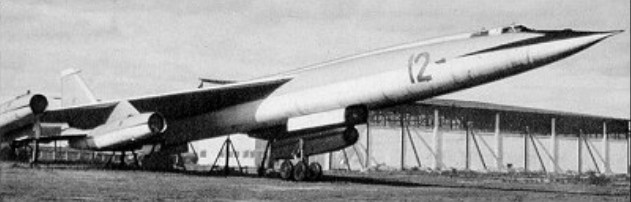
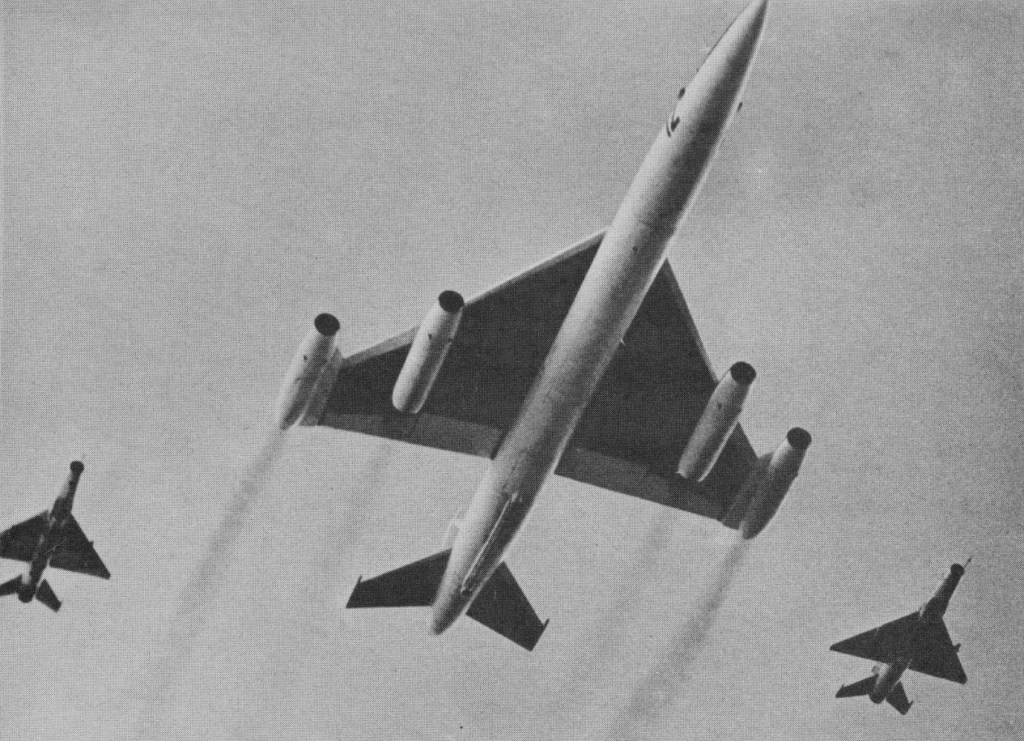
To succeed its M-4, Myasishchyev produced the M-50, codenamed ‘Bounder’ by NATO.
It was based on a very long area-ruled fuselage with two four-wheel main landing gear bogies arranged in tandem to retract into the lower fuselage. This was basically the same arrangement as that used in the M-4, as was the use of two twin-wheel stabilizers of the outrigger type that retracted aft into the wingtips. The cropped delta wing was located in the shoulder position with its leading edges swept at 500 inboard decreasing to 41030’ outboard. The tail unit was conventional for a supersonic type, with powered all-moving slab tailplane halves and a fin with a powered rudder.
The crew of three was accommodated in a pressurized nose compartment on tandem ejector seats behind a V-shaped windscreen whose contours were continued aft of the cockpit by a long dorsal spine stretching as far as the extreme tail. In the first aeroplane the four engines were located on pylons under the wing leading edges. Power was provided by four Soloviev D-15 turbo-jets of 13000kg thrust.
First flight dates between 1957 and 1961 have been quoted, and it is believed that a maximum speed in the order of Mach 1.8 was achieved. By the standards of the day this was a good figure, but the range of 3730 miles (6000 km) without payload was poor. It was seen at the 1961 Soviet Aviation Day display.
The last of several prototypes, generally known as the M-52, had a different powerplant arrangement: the two inboard engines remained on underwing pylons. The M-52 was powered by four Kolesov ND-7F or VD-7F turbojets, with an afterburning thrust of 18145kg. The two outboard engines remained non-afterburning units but were arranged on pylons with forward-swept leading edges projecting horizontally from the cropped tips of the delta wings. The M-50/M-52 series failed to progress past the prototype stage. The Bounder was intended to carry a weapons load of up to 20,000kg.
M.50 Engines: 2 x 14500kg Kolesov VD-7F and 2 x 12260kg VD-7 turbojets Wingspan: 37.0 m / 121 ft 5 in Length: 57.0 m / 187 ft 0 in Height: 12.0 m / 39 ft 4 in Wing area: 282.0 sq.m / 3035.42 sq ft Max take-off weight: 200000 kg / 440927 lb Empty weight: 74500 kg / 164245 lb Max. speed: 1053 kts / 1950 km/h / 1212 mph Cruise speed: 1500 km/h / 932 mph Ceiling: 20000 m / 65600 ft Range w/max.fuel: 6000 km / 3728 miles Armament: 20000kg of bombs and missiles Crew: 2
In 1951 V. M. Myasishchyev was directly ordered by Stalin to build a jet bomber to fly long range strategic missions. The Myasishchyev M-4 (often called the Mya 4, and called Molot, meaning hammer, by the Soviets, and given the codename ‘Bison’ by NATO) proved successful.
A mid-wing cantilever monoplane with a deep section swept wing, the M-4 has a tail unit with all-swept surfaces, and retractable landing gear comprising two main units in tandem on the fuselage centreline, each with a four-wheel bogie, plus twin-wheel outrigger balancing units which retract into the wingtips. The circular-section fuselage incorporates a pressurised nose compartment and tail turret for the crew, and a large internal weapons bay in the lower fuselage between the main landing gear units. The powerplant comprises four turbojets buried in the wing roots, these being initially Mikulin AM-3Ds each of 8700kg thrust.
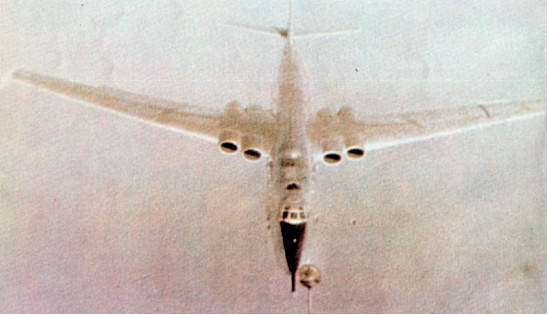
Following its maiden flight in late 1953, a single example of this large aircraft took part in the 1954 May Day parade fly past over Moscow, its size being gauged from the escorting MiG fighters. It was expected to appear in large numbers, but little was heard of it for years. In fact a useful run of about 150 had been delivered, at first being used as free fall bombers (Bison A), reaching regiments of the DA (Long Range Aviation) in 1956. Altogether about 200 were built. By 1959 the Mya-4 bombers were being fitted with more powerful engines, and their role changed from bomber to long-range over-sea reconnaissance, ECM and, in some cases, flight-refuelling tanker. Many were given different noses as ‘Bison B’ and ‘Bison C’ for maritime reconnaissance purposes. All aircraft were given large fixed FR probes, the rear turrets were removed and a vast amount of special reconnaissance equipment fitted, with from five to 17 aerials visible all over the aircraft.
In the Bison C- sub-type a large search radar fills the entire nose, lengthening the nose by about 6 ft and changing its shape. Since 1967 these now obsolescent aircraft have been frequently encountered on probing missions far over the Arctic, Atlantic, Pacific and elsewhere, at both high and very low levels, the C-model having been seen most frequently.
Bison C
In 1983 it was estimated that 43 remained in active service in the original role. Supporting them are another 30 rebuilt as inflight-refuelling tankers, with many modifications including a large hose drum unit in the rear of the weapon bay. ‘Bison B’ was a long range maritime reconnaissance version, possibly re-built from the original bomber, with a ‘solid’ nose housing a mapping and ship targeting radar with the refuelling probe above. Numerous other reconnaissance systems were installed. ‘Bison C was an improved maritime reconnaissance version with an even larger surveillance radar (NATO name ‘Puff Ball’) in a more pointed nose swollen at the sides and with the refuelling probe at the tip. These flew surveillance and electronic missions for the AV MF (Naval Air Force).
In all about 150 were built.
About 40 tanker/transport versions of the M-4 were estimated to remain in service in 1992. These were to be replaced by II-78 ‘Midas’ tankers.
M-4 / 3M Engines: 4 x VD-7, 107.8kN Max take-off weight: 202000 kg / 445336 lb Empty weight: 74430 kg / 164091 lb Wingspan: 50.53 m / 165 ft 9 in Length: 51.70 m / 169 ft 7 in Wing area: 340.0 sq.m / 3659.73 sq ft Max. speed: 940 km/h / 584 mph Ceiling: 12150 m / 39850 ft Range: 11850 km / 7363 miles Endurance: 15 hr Armament: 6 x 23mm cannons, 24000kg of bombs and missiles Crew: 8
Bison A Type: heavy bomber Engines: 4 x Mikulin AM-3D single-shaft turbojets, 19,180 lb (8700 kg). Estimated, span 165 ft 7½ in (50.48 m) Estimated Length 154 ft 10 in (47.2 m) Estimated height 46 ft (14.1 m) Estimated empty 154,000 lb (70,000 kg) Estimated maximum loaded 352,740 lb (160,000 kg) Estimated Max speed 560 mph (900 km/h) Estimated Range 6,835 miles (11,000 km) with 9,920 lb (4500 kg) of bombs or electronic equipment. Service ceiling 42,650 ft (13,000 m) Armament: ten 23 mm NR-23 cannon in manned turret in tail and four remotely controlled turrets above and below front and rear fuselage (two guns in each turret); internal bomb bays in tandem for at least 22,050 lb (10000 kg) stores.
Bison B Type: strategic reconnissance and ECM Engines: 4 x D-15, 28,660 lb (13,000 kg) Estimated empty 176,400 lb (80,000 kg) Estimated maximum loaded 375,000 lb (170,000 kg) Estimated Max speed 560 mph (900 km/h) Estimated Range 6,835 miles (11,000 km) with 9,920 lb (4500 kg) of bombs or electronic equipment. Service ceiling 49,200 ft (15,000 m) Armament: six 23 mm cannon in two forward turrets and tail turret, internal bay for at least 10,000 1b (4500 kg) stores. In many versions a single 23 mm gun is fixed on the right side of the nose, firing ahead.
Bison C Type: multi-role reconnaissance bomber Engines: 4 x D-15, 28,660 lb (13,000 kg) Estimated empty 176,400 lb (80,000 kg) Estimated maximum loaded 375,000 lb (170,000 kg) Estimated Max speed 560 mph (900 km/h) Estimated Range 6,835 miles (11,000 km) with 9,920 lb (4500 kg) of bombs or electronic equipment. Service ceiling 49,200 ft (15,000 m) Armament: six 23 mm cannon in two forward turrets and tail turret, internal bay for at least 10,000 1b (4500 kg) stores. In many versions a single 23 mm gun is fixed on the right side of the nose, firing ahead.
M-4 Bison E Type: six seat strategic bomber Engines: 4 x 9500 kg (20,943 lb) thrust Mikulin RD 3M turbojets Max speed at high alt: 1000 km/h (621 mph) Service ceiling at normal loaded wt: 17000 m (55,775 ft) MTOW Service ceiling: 13000 m (42,650 ft) Range 10700 km (6,650 miles) Empty wt: 70000 kg (154,321 lb) Normal loaded wt: 160000 kg (352,734 lb) MTOW: 210000 kg (462,963 lb) Wing span: 50.48 m (165 ft 7.5 in) Length (no probe): 47.20 m (154 ft 10 in) Height: 14.24 m (46 ft 0 in) Wing area: 309.0 sq.m (3,326.2 sq ft) Armament: (as built) 10x 23 mm cannon in five power turrets; internal bomb bay for 15000 kg (33,068 lb) bombload.
Work began in 1940 on the DVB-102 long-range, high-altitude bomber. Only two prototypes were built, because it was decided to copy the B-29 as the Tu-4.
Engines: 2 x Ash-71, 1620kW Max take-off weight: 15500-17750 kg / 34172 – 39132 lb Wingspan: 25.3 m / 83 ft 0 in Length: 19.5 m / 63 ft 12 in Wing area: 78.8 sq.m / 848.20 sq ft Max. speed: 565 km/h / 351 mph Cruise speed: 445 km/h / 277 mph Ceiling: 11500 m / 37750 ft Range w/max.fuel: 2230 km / 1386 miles Crew: 5 Armament: 3 x 20mm machine-guns, 4 x 12.7mm machine-guns, 1 x 7.62mm machine-guns, 2000-3000 lb bombs
Vladimir Myasishchev’s design career included association with the ANT-16 and ANT-29 before work began, in 1940, on prototype DVB-102 twin-engined bomber.
New bureau established 1951 to develop four-jet long-range heavy bomber, which became Mya-4 Molot (NATO codename: Bison), first flown January 1953; also served as maritime research aircraft and finally as tanker and heavylift transport.
Designed M-52 Bounderiour-\e\ delta-winged strategic bomber seen at 1961 Soviet Aviation Day display, but not put into production. Produced II-22 airborne command post, as converted llyushin 11-18 airliner. Important M-17 first flew in May 1982, having been designed originally in early 1970s as high-altitude reconnaissance balloon interceptor but developed into M-17/M-55 high altitude reconnaissance and ecological monitoring aircraft. Small civil aircraft include pressurized and single turboprop eight-seat M-101 Gzhel (first flown 1995) and M- 201 Sokol twin-engined version, with projects covering M-202PW Olen enlarged development of the Indian Saras, M-203PW Barsuk radial-engined general-purpose transport, and M-500 piston-engined agricultural monoplane suited also to other roles.
The MX2 is a purpose-built Unlimited Aerobatic aircraft developed from the highly-successful Giles G202/CAP222 aircraft. Built by MXR Technologies Inc. in Florida, it has an all carbon fibre monocoque airframe. During displays it burns two litres of avgas per minute and three litres per minute of smoke oil. The loading ranges from +8.5g to -6.5g during a display, in what is a state-of-the-art machine in the world of aerobatic aircraft.