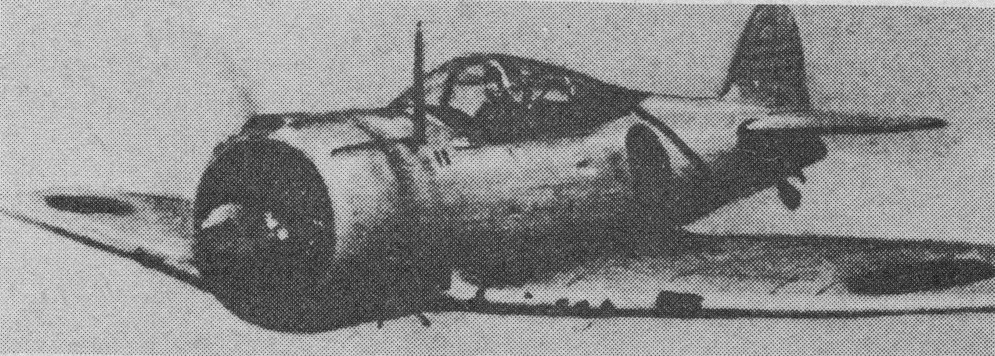
Nagoya-Sento Ki-001 BEN

Confusion over pre-war Japanese fighters was so complex many fictional or misidentified types received code names.

After the Pearl Harbor attack military intelligence gathered every piece of downed Japanese aircraft they could find. From that operation they came up with this aircraft. They found a manufacturing plate with the words Nogoya Sento, they thought that was a manufacturer, it was a plant location. From the wings and tail group, it looks like they found parts of an Aichi type 99 Val.

Given the allied code name ‘BEN’ after one of the 5th Air Force Intelligence officers, the code was dropped in less than a year.

It was 1943 before the war department figured out there was no such a plane.
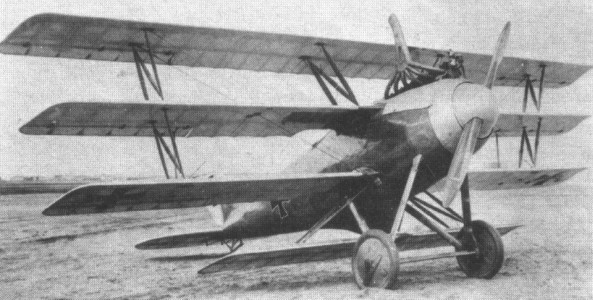
Naglo D II

The DII quadruplane built by the Naglo Werft of Pichelsdorf, near Berlin, was designed by Ing Gnädig (who was, at the time, still in the employ of the Albatros Werke) and participated in the second D-type contest at Adlershof in the summer of 1918 (the debriefing minutes of which indicating that it was to appear for further testing after modification). Powered by a 160 hp Mercedes six-cylinder water-cooled engine and inten¬ded to carry an armament of two LMG 08,15 machine guns, the Naglo DII appears to have been based on an Albatros DV type fuselage. The bottom wing, completely independent of the three main lifting surfaces, being attached to an extruded keel and braced with splayed struts. Official type testing was undertaken on 24 May 1918, and during the D-type contest, evaluation pilots praised the excellence of the construction and workmanship of the D II while calling for an improvement in the flight characteristics.

Engine: Mercedes 6 cyl, 160hp
Empty weight: 1,596 lb (724 kg).
Loaded weight: 2,015 lb (914 kg
Span: 29 ft 6 1/3 in (9,00 m).
Wing area: 241.12 sq ft (22.40 sq.m).

Mylius MY-104

Mylius Flugzeugwerk Gmbh & Co Kg marketed the single-seat MY-102 aerobatic and towing aircraft, two-seat MY-103 in Standard and Basic Trainer variants, and four-seat MY-104 for touring, IFR training and other uses. All are low-wing monoplanes based on a common modular design, with interchangeable sub-structures.

Mylius MY-103

Mylius Flugzeugwerk Gmbh & Co Kg marketed the single-seat MY-102 aerobatic and towing aircraft, two-seat MY-103 in Standard and Basic Trainer variants, and four-seat MY-104 for touring, IFR training and other uses. All are low-wing monoplanes based on a common modular design, with interchangeable sub-structures.

Mylius MY-102

Mylius Flugzeugwerk Gmbh & Co Kg marketed the single-seat MY-102 aerobatic and towing aircraft, two-seat MY-103 in Standard and Basic Trainer variants, and four-seat MY-104 for touring, IFR training and other uses. All are low-wing monoplanes based on a common modular design, with interchangeable sub-structures.

Mylius Flugzeugwerk Gmbh & Co Kg.

Leichtflugzeuge-Entwicklungen Dipl Ing Hermann Mylius

Germany
Marketed the single-seat MY-102 aerobatic and towing aircraft, two-seat MY-103 in Standard and Basic Trainer variants, and four-seat MY-104 for touring, IFR training and other uses. All are low-wing monoplanes based on a common modular design, with interchangeable sub-structures.