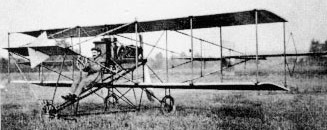
A 1911 Curtiss pusher-type single place, open cockpit biplane.
A 1911 Curtiss pusher-type single place, open cockpit biplane.
(Richard A and Werner A) Newhouse Flying Service
Rocky Hill-Princeton NJ.
USA
Newhouse had built several unrecorded, one-of-a-kind planes since 1911 and, according to his son, Werner, operated the Newhouse Flying Service at Bolmer’s Field (Princeton Airport) from 1929-42.
Circa 1929
Stoddard Hamilton closed its doors in 2000 after more than 20 years in business. Both aircraft types were split from the Stoddard Hamilton camp when the clo¬sure occurred. New owner Thomas Walthem was committed to getting all three kits back into production. He initially purchased the Glasair side of the business but after find¬ing the overheads of the line were not self supporting approached Arlington Air-craft Development Inc (AADI) to purchase the GlaStar line. As a single entity, the Glasair and Glastar kit aircraft under the banner of New Glasair/GlaStar.
2009: Glasair Aviation LLC, 18810 59th Ave NE Arlington, WA 98223
Mr. Wathen, who sits on the President’s Counsel of the EAA and owns historic Flabob Airport in Riverside, California, selected Mikael Via to be President and Chief Operating Officer (COO) of the new companies. According to Mr. Wathen, Via is to be responsible for daily operations of Glasair Aviation and will help Wathen determine the long-term direction and growth of the company. Via, is a private pilot and builder/owner of a Glasair Super II RG.
More than 3,000 kits were in the field and some 1,700 aircraft flying in countries around the world by 2008.
In July 2012 the company was sold to the Jilin Hanxing Group of China, who formed a new company Glasair Aircraft USA, LLC. Jilin Hanxing Group indicated that they intend to certify the Glastar design and otherwise retain production in Arlington, Washington. TieJi Fang, chairman of the Jilin Hanxing Group, said that he envisions the company producing trainers for flight schools and eventually personal aircraft for the Chinese market. He stated that purchasing Glasair was “the first step in a very long journey”.
The 1932 New Era Aircraft Corp Model B is an unkown type that was registered N12692 c/n 101.
The 1931 New Era Aircraft Corp Model A was a two-place cabin, high wing monoplane, powered by a 90hp Cirrus engine. It featured a podlike cabin with a twin-boom tail, Registered NX10778 c/n 100, the tail booms broke during a rough taxi, and the plane was dismantled.
Butler PA.
USA
Airplane builder 1931-2.
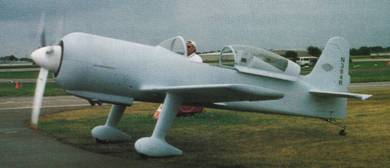
The Altitude Radial Rocket is an American amateur-built aircraft, produced by the Altitude Group of Overland Park, Kansas. The aircraft is supplied as a kit for amateur construction.
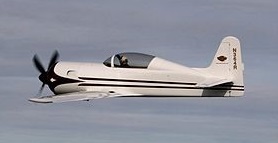
The aircraft features a cantilever low-wing, a two-seats-in-tandem enclosed cockpit under a bubble canopy, fixed conventional landing gear or retractable tricycle landing gear and a single radial engine in tractor configuration.
The aircraft is made from composites. The wing span and area as well as gross weight varies depending on the model. The Radial Rocket’s recommended engine power range is 360 to 400 hp (268 to 298 kW) and the standard engine used is the 360 hp (268 kW) Vedeneyev M-14P four-stroke powerplant.
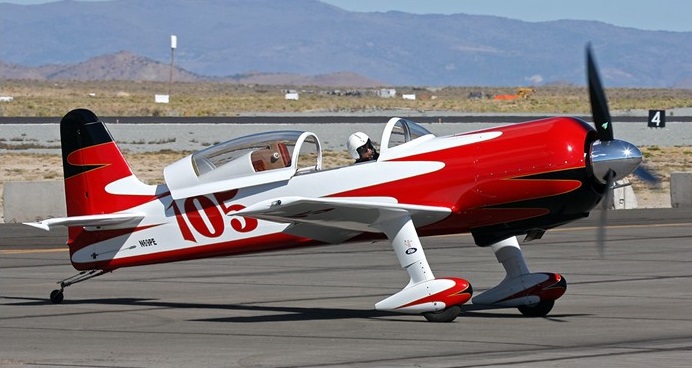
Jeff Ackland planned to sell kits under the company name New Century Aerosport. By October 2012 five examples had been registered in the United States with the Federal Aviation Administration. Unit cost US$74,500 (RG model, kit only) in production in 2011.
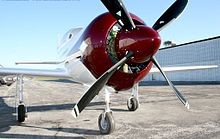
The P85 is the result of installing powerful, light, all aluminum liquid cooled V8 engine technology into the Radial Rocket airframe.
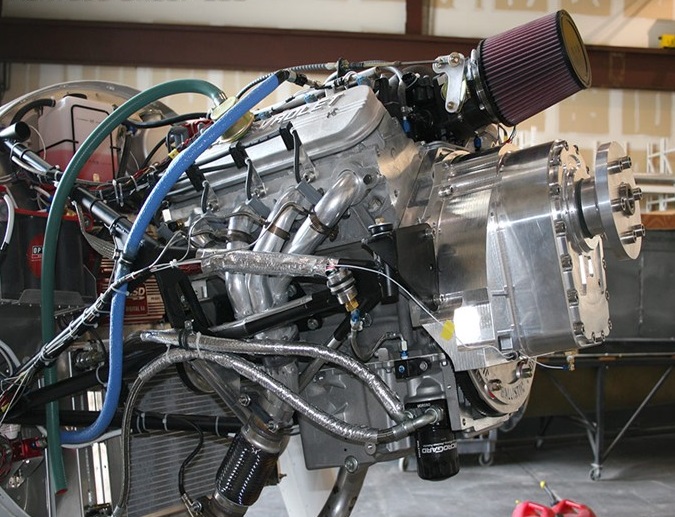
The focus of the P85 was on a simple, relatively low cost V8 firewall forward powerplant option. Toward this end, the P85 cowling has been lofted around the LS series of high performance V8’s.
The engine installed in the first P85 was a 402 CID LS2/LS3 hybrid designed to deliver 400+ HP to the prop at 5000 crankshaft RPM. A 1.8:1 ratio PSRU (prop speed reduction unit) reduces prop rpm to 2800 max. This single mesh gearbox drives a Catto 3 blade, 80 inch diameter fixed pitch propeller.
Also contributing to the goal of simplicity is single-lever power management – no mixture or prop controls to manage, thanks to electronic fuel injection controlled via an ECU.
Variants:
Radial Rocket RG
Retractable tricycle gear model. It has a 26.8 ft (8.2 m) span wing, a wing area of 93.9 sq ft (8.72 m2) and a gross weight of 2,575 lb (1,168 kg). Construction time from the supplied kit is 2000 hours. Two were reported flying by the end of 2011.
Radial Rocket TD
Fixed taildragger gear model. It has a 25.5 ft (7.8 m) span wing, a wing area of 90.8 sq ft (8.44 m2) and a gross weight of 2,550 lb (1,160 kg). Construction time from the supplied kit is 1900 hours. Four were reported flying by the end of 2011.
Specifications:
Engine: M-14P, 360 hp
Prop: MT 3-blade
HP range: 360-400
Length: 21.8 ft
Wing span: 25.5 ft
Wing area: 91.2 sq.ft
Empty weight: 1650 lb
Gross weight: 2550 lb
Fuel capacity: 91 USG
Cruise: 230 mph
Stall: 69 mph
Range: 1350 sm
Rate of climb: 3800 fpm
Takeoff dist: 600 ft
Landing dist: 800 ft
Cockpit width: 37 in
Landing gear: tail wheel
Seats: 2
Radial Rocket RG
Engine: 1 × Vedeneyev M-14P, 360 hp (270 kW)
Length: 22.2 ft (6.8 m)
Wingspan: 26.8 ft (8.2 m)
Wing area: 93.9 sq ft (8.72 m2)
Empty weight: 1,720 lb (780 kg)
Gross weight: 2,575 lb (1,168 kg)
Fuel capacity: 65 U.S. gallons (250 L; 54 imp gal)
Propeller: 3-bladed constant speed propeller
Cruise speed: 242 mph (210 kn; 389 km/h)
Stall speed: 70 mph (61 kn; 113 km/h)
Range: 1,200 mi (1,043 nmi; 1,931 km)
Rate of climb: 3,500 ft/min (18 m/s)
Wing loading: 27.4 lb/sq ft (134 kg/m2)
Crew: one
Capacity: one passenger
Radial Rocket RG
Engine / M-14PF, Nine Cylinder Radial, 400 HP
Prop / MT, 4 Blade, Constant Speed, 80 In. Diam.
Wingspan / 26.8 Ft.
Length / 22.2 Ft.
Cockpit Width / 34 In. Pilot, 30 In. Copilot
Wing Area / 93.9 Sq. Ft.
Empty Weight / 1720 Lbs.
Gross Weight / 2575 Lbs.
Useful Load / 855 Lbs.
Baggage Capacity / 12 Cu. Ft.
Fuel Capacity / 65 Gals.
Cruise, High Speed / 245 Mph
Cruise, Economy / 215 Mph
Range, Econ. Cruise, 30 Min. Reserve / 1125 sm
Climb / 4000+ Fpm Solo, 3000+ Fpm Gross
Vso, Stall, Flaps Down / 70 Mph (61 Kts)
Vs1, Stall, Flaps Up / 85 Mph (74 Kts)
Vne, Never Exceed Speed / 280 Mph
Seating / Two, Tandem
Radial Rocket TD
Seating / Two, Tandem
Engine / M-14PF, Nine Cylinder Radial, 400 HP
Prop / MT, 3 Blade, Constant Speed, 98 In. Diam.
Wingspan / 25.5 Ft.
Length / 22.2 Ft.
Cockpit Width / 34 In. Pilot, 30 In. Copilot
Wing Area / 90.8 Sq. Ft.
Empty Weight / 1650 Lbs.
Gross Weigth / 2550 Lbs.
Useful Load / 900 Lbs.
Baggage Capacity / 12 Cu. Ft.
Fuel Capacity / 70 Gals.
Cruise, High Speed / 230 Mph
Cruise, Economy / 200 Mph
Range, Econ. Cruise, 30 Min. Reserve / 1200 sm
Climb / 4000+ Fpm Solo, 3000+ Fpm Gross
Vso, Stall, Flaps Down / 70 Mph (61 Kts)
Vs1, Stall, Flaps Up / 85 Mph (74 Kts)
Vne, Never Exceed Speed / 280 Mph
G Limits / +6, -3 Limit ; +9, -6 Ultimate
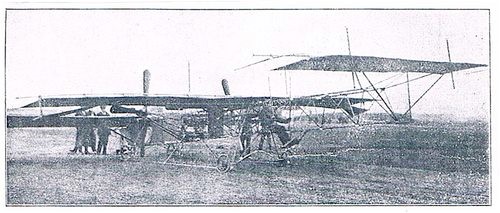
Paul Neumann built the parts of a tandem monoplane at the Neptun shipyard at Rummelsburg and constructed the machine at Johannisthal in 1910. The apparatus was modified and tested until 1911, but never left the ground. Though a tandem monoplane, the term “Dreiflächler” was likely derived from the front elevator being seen as a third wing.
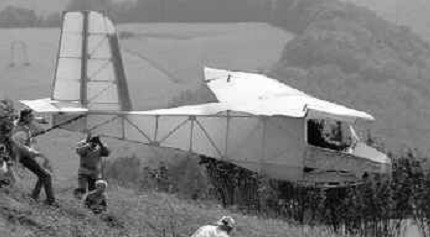
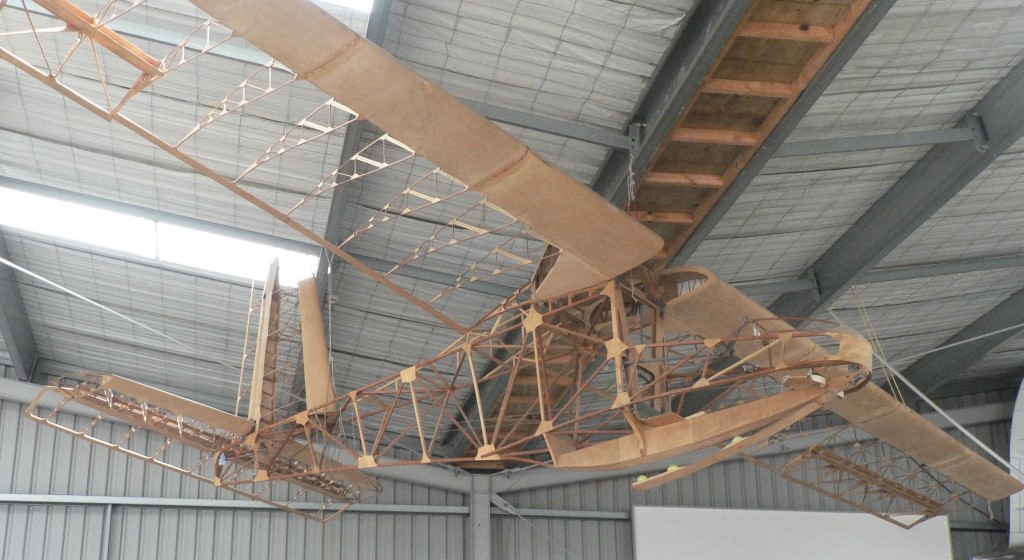
The ULF-l is a German design of classic wood and fabric by Dieter Reich and Heiner Neumann. It resembles some of the old designs like the Grunau Baby, but has an empty weight of only 100 pounds. It first flew in November 1977 and has made many excellent flights. Approximately 140 plan sets have been sold and about 40 aircraft are under construction. Plans are available from Dieter Reich. Cost of the plans is DM460.00 (about $266 US as of June 22, 1997). The plans are very detailed and have received an airworthiness certificate from the German authorities. The best L/D is 16-18:1 and the minimum sink rate is about 160 fpm. The ULF-1 climbs well and handles well. The structure is every bit as complicated as the Carbon Dragon, but results in a good foot launcher when complete.
Wing span: 10.4m
Wing area: 13.4sq.m
Empty Weight: 45kg
Gross Weight: 120kg
Wing Load: 8.96kg/sq.m
Aspect ratio: 8.07
Airfoil: FX 63-137
L/DMax: 15 50 kph
MinSink: 0.80m/s 40kph
Loading: +6g / -4g
Flying speed: 32 – 70 kph
Seats: 1
In 1978 Everett Neumann built a home-built single-place, open cockpit, low-wing monoplane folding wings. Registered N2287D c/n N782, power was a Continental O-200.

