The 1929 Parks Aircraft P-4 NX8384 was a six place high wing cabin monoplane.
Engine: 300hp Wright R-975
The 1929 Parks Aircraft P-4 NX8384 was a six place high wing cabin monoplane.
Engine: 300hp Wright R-975
The 1929 P-3 Arrow NX8385 was a four place high wing cabin monoplane.
Engine: 220hp Wright J-5
Wingspan: 45’0″
Length: 34’6″
Speed: 100 mph
Seats: 4
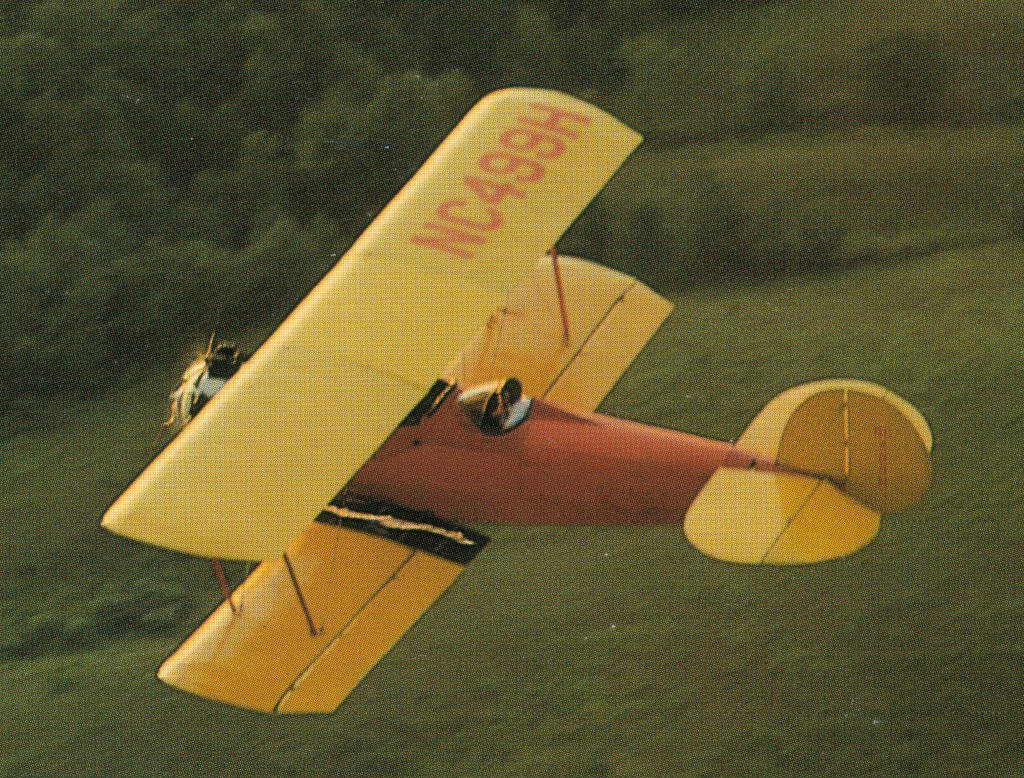
The 1929 Parks Aircraft P-2 (ATC 200) sold for $6,000. Six were built including NC902K and NC965K.
Some were repowered as P-2A. The 1929 P-2A (ATC 276) powered by a 165hp Wright J-6 sold for $6,350. Eleven were built: [NC480M, NC499H, NC502N, NC902K, NC965K, NC8487, NC8490-8492, and NC967K-968K.
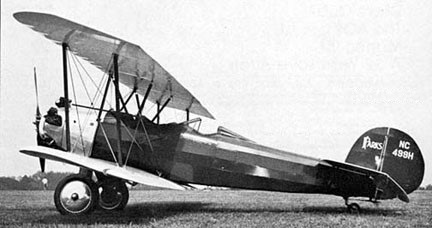
The P-2A was marketed as the Detroit-Parks P-2A after merger with Detroit Corp and, later, as the Ryan Speedster.
The P-2 was also available with a 130hp Comet. (ATC 2-99) superseded by (ATC 200), including NC8487.
P2
Engine: 150hp Axelson-Floco
Wingspan: 30’0″
Length: 22’10”
Useful load: 860 lb
Max speed: 115 mph
Cruise speed: 98 mph
Stall: 42 mph
Range: 490 mi
Seats: 3
P-2A
Engine: 165hp Wright J-6
Winspan: 30’0″
Length: 23’0″
Useful load: 897 lb
Max speed: 120 mph
Cruise speed: 100 mph
Stall: 45 mph
Range: 500 mi
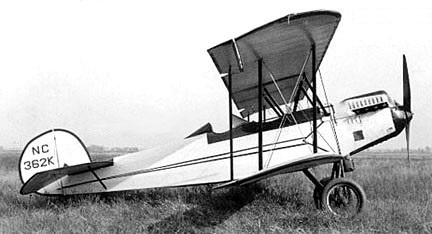
The 1929 P-1 (ATC 179) was a duplicate of the Fairchild KR-31, but with a chin radiator. They were built to replace Travel Airs used at the subsidiary Parks Air College. Selling for $3,165, forty-five were built.
The prototype, cn 10008 NX289W, was used to test the feasibility of a large, built-in “planechute” that could be released in emergencies to float the aircraft to the ground. In operation it had apparent success, but results of testing is unknown.
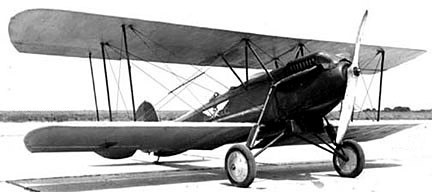
The 1929 P-1T (ATC 2-506) was fitted with a 115hp Milwaukee Tank.
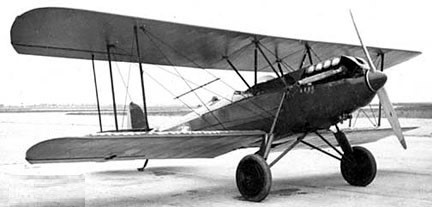
The 1930 P-1X three place open cockpit biplane was fitted with a 90hp Curtiss OX-5, and registered as a Detroit P-1-X N289W c/n 19911.
The 1932 P-1H (ATC 2-428) with a 100hp Kinner K-5 became the Hammond 100. Following Ryan’s demise the Park name was revived for the P- 1H biplane built by Hammond.
P-1
Engine: 90hp Curtiss OX-5
Wingspan: 30’1″
Length: 24’1″
Useful load: 812 lb
Max speed: 100 mph
Cruise speed: 85 mph
Stall: 37 mph
Range: 340 mi
Seats: 2-3
Established in 1929 as (Oliver L) Parks Aircraft Div, Parks Air Lines Inc/Parks Air College, East St Louis IL. USA. A division of the Detroit Aircraft Corp by 1930, Parks had built training aircraft for its own companies, Parks Air College and Parks Air Lines. After the Detroit takeover, Parks aircraft were built by Ryan.
Ended operations in 1932 and production moved to Ryan Co, St Louis MO, and designs sold to Dean Hammond, Ypsilanti MI. Following Ryan’s demise the Park name was revived for the P-1H biplane built by Hammond.
Reportedly, W Parker Perry built a five-place monoplane amphibian Perry P-1 in 1929.
Although registered as N444 on 16 January 1929, specs from Perry’s application were 14′ long with 12′ wingspan and one or two Packard engines of 85 hp, to accommodate a pilot and four passengers.
CAA inquiries went unanswered and the registration was cancelled on 5 May 1930. Probably never built or completed.
R D #6 Trenton NJ.
USA
Reportedly built the Perry P-1 in 1929.
In 1929, Willard Parker built the two place, open cockpit biplane Pal register N571 c/n T-3. Power was by a 65hp LeBlond.
(Willard) Parker Aircraft Corp
Cleveland OH.
USA
Circa 1929 airplane builder
William D “Billy” Parker manufactured personal and exhibition biplanes, stressed for competition and aerobatics, principally powered by 50-80hp LeRhône rotary, during 1912-1914.
NX62E was a personal plane flown by Parker during his years as sales representative for Phillips Petroleum Co (later manager of Aviation Dept), and was active into the 1960s. Rebuilt and upgraded many times over the years, including the mid-wing ailerons were replaced by trailing-edge ailerons.
Parker had other pushers along the way for exhibition flying, as well [NR8Y (90hp OX-5), N66V, N4161K (80hp LeRhône)]. The latter was the most recent addition (c.1955), registered as Parker-Curtiss, with a rebuilt 90hp Curtiss OX-5. While the Curtiss name is often attached to Parker’s products, and he admitted to initial design influence to some degree, he was in fact quite vocal about his planes being his own creations, noting that anyone serious about doing “loops and fancy flying” [his terms] in the ‘teems would never use a Curtiss pusher because of the weakness of its “bamboo outriggers and other frail parts.” Parker was still flying two of his originals in the ’50s and ’60s on tours for Phillips.

