Parnall Plover

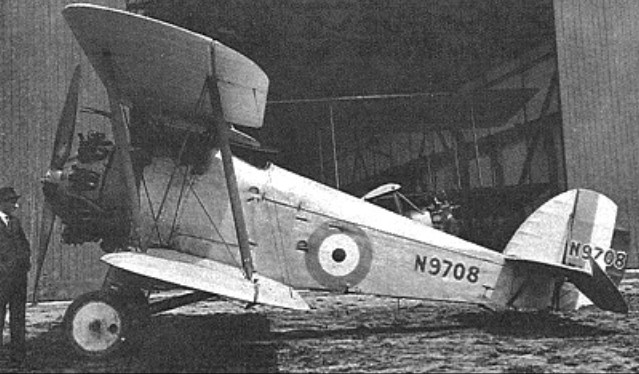
Designed by Harold Bolas to meet a specification (6/22) for a single-seat shipboard fighter to succeed the Gloster Mars X Nightjar, the Plover appeared in 1922, three prototypes were built.

Of wood and fabric construction, and designed around a 436 hp Bristol Jupiter IV nine-cylinder radial, the Plover could be fitted with either a normal wheel undercarriage or with twin floats from which wheels projected to provide amphibious capability.
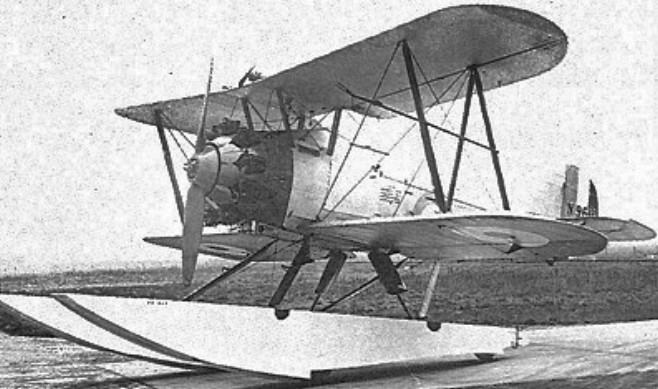
Armed with two synchronised 0.303-in (7,7- mm) guns, the Plover was ordered into small-scale production, ten were built of which at least six served briefly with Fleet Fighter Flights, before being superseded by the superior Fairey Flycatcher.

Engine: 436 hp Bristol Jupiter IV
Max take-off weight: 1354 kg / 2985 lb
Empty weight: 923 kg / 2035 lb
Wingspan: 8.84 m / 29 ft 0 in
Length: 7.00 m / 23 ft 12 in
Height: 3.65 m / 12 ft 0 in
Wing area: 28.43 sq.m / 306.02 sq ft
Max. speed: 228 km/h / 142 mph
Parnall Scout

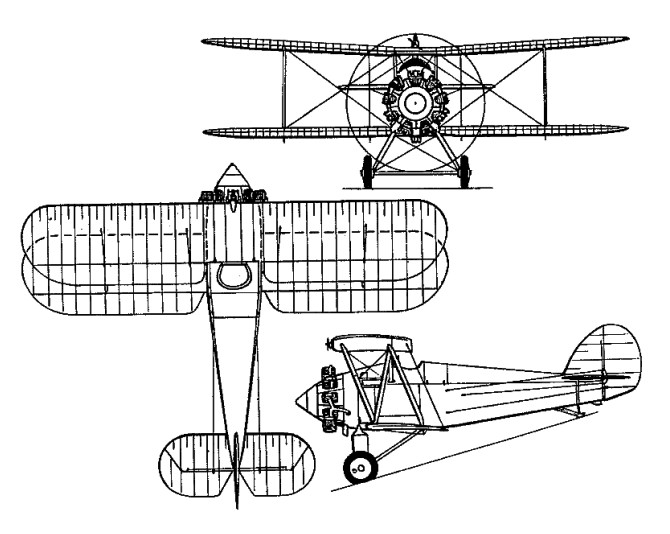
Parnall and Sons of Bristol initiated work on the company’s first original aircraft, a single-seat anti-airship fighter to the designs of A Camden Pratt, in 1916. Intended to meet a requirement formulated by the Admiralty, this aircraft, unofficially known as the Zeppelin Chaser, was a large, two-bay staggered biplane of wooden construction. It was powered by a 260hp Sunbeam Maori 12-cylinder water-cooled engine and armed with a single 7.7mm gun offset to starboard and firing upward at an angle of 45 degrees. Two prototypes were ordered, but the first of these proved appreciably overweight. Although the Scout reportedly flew twice, it was considered to possess unacceptably low safety factors and was returned to the manufacturer, development being abandoned.

Engine: 260hp Sunbeam Maori
Wingspan: 13.41 m / 44 ft 0 in
Wing area: 47.94 sq.m / 516.02 sq ft
Max. speed: 182 km/h / 113 mph

Parnall & Sons / George Parnall & Co / Parnall Aircraft Ltd

Parnall & Sons was a woodworking firm specialising in shopfitting and allied equipment in Bristol, UK, which built seaplanes in the First World War to War Office specifications. It was subsequently taken over by W. T. Avery and aircraft production was abandoned.

After the take-over of Parnall & Sons by W. T. Avery, George Parnall founded his own company with personnel from the former aircraft division of Parnall & Sons to continue aircraft manufacture under government contract.
The first product was the Puffin, a military central-float amphibian with a single Napier engine. It was followed by a wide variety of types including the Possum twin-engine triplane, Plover fighter, Pixie ultralight, Peto submarine-borne scout, and Elf light biplane. Built Hendy 302 monoplane for Henderson Aircraft Company in 1930. Parnall Aircraft Ltd. formed in 1935 to take over aircraft business and acquire patents, rights, etc. of aircraft armament firm Nash & Thompson Ltd and similar patents and rights of Hendy. Concerned with turrets and aircraft armament in Second World War; no longer produced aircraft.

PAR / Parks Alumni Racer Special / Trefethan TRW Special

PAR Special

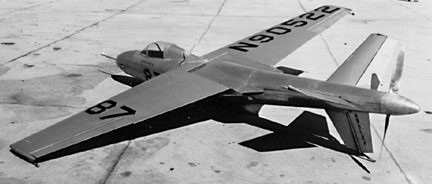
Designed by George Owl, the PAR Special N90522 of 1950 was a single place racer powered by an 85hp Continental C-85 pusher, with a variable-incidence wing.

The 1952 TRW Special midget racer N2948 was built partially from the PAR Special. Raced as a midget racer ‘Mixmaster’ with Y-tail and aft-mounted prop, after unsuccessful competitions, it was rebuilt in 1952 as Trefethan TRW Special, using the wings, aft fuselage and tail.

PAR Special
Engine: Continental C-85, 85hp
Span: 20’0″
Length: 20’0″

TRW Special
1952
Engine: 85hp Continental C-85
Seats: 1