Reghin RG-4 Pionier

The Romanian organisation of Cil Reghin began developing gliders to the design of Ing Vladimir Novitcni in 1953, starting with the RG-4 Pionier primary trainer.

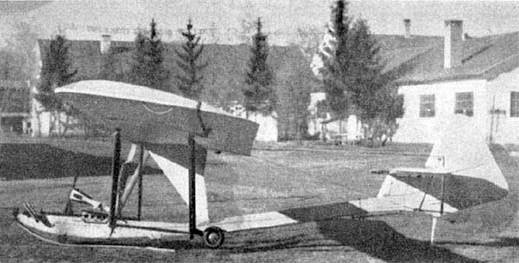
The RG-4 Pionier was a single seat primary glider built in Romania in the 1950s. Designed by Vladimir Novitchi and very much in the 1930s Zögling tradition with the pilot exposed on a simple beam fuselage under the leading edge of a high wing. This wing was supported over the fuselage beam on a set of N-form, cross braced struts and by a pair of parallel lift struts on each side to the wing at about one third span. The wing, which was wood framed, was mounted with 2.8° of dihedral, had parallel chord and was unswept. There were plain, fabric covered ailerons out to the wing tips.
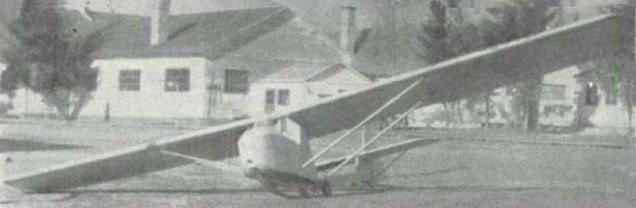
The RG-4 landed on a fixed monowheel under the wing trailing edge, with a skid that reached from the nose to under mid chord, assisted by a small tailskid. It had a conventional empennage with a parallel chord tailplane and elevators, similar in plan to the wing, mounted in front of the narrow fin, held above the fuselage on a short step and braced from below with a single strut on each side. Despite its forward position the elevators still required an elevator cut-out for rudder movement. As well as carrying the broad, near triangular rudder, the fin also anchored a pair of bracing wires on each side to reduce horizontal flexing of the fuselage beam. One of these ran to the wing underside, the other to the fuselage under the wing.
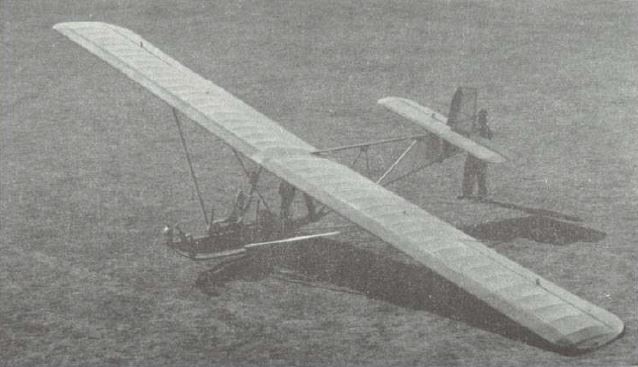
The RG-4 Pionier was first flown on 1 May 1954. A batch of fifty was produced by Intreprinderea Forestierǎ di Industrializare a Lemnului (FILI).

Wingspan: 10.45 m (34 ft 3 in)
Wing area: 14.8 sq.m (159 sq ft)
Aspect ratio: 7.0
Airfoil: NACA 60 modified
Length: 5.75 m (18 ft 10 in)
Height: 1.2 m (3 ft 11 in)
Empty weight: 100 kg (220 lb)
Gross weight: 188 kg (414 lb)
Stall speed: 40 km/h (25 mph, 22 kn)
Never exceed speed: 165 km/h (103 mph, 89 kn) placard, in smooth air
Rough air speed max: 100 km/h (62 mph; 54 kn)
Winch launch speed: 90 km/h (56 mph; 49 kn)
Maximum glide ratio: best 14.5 at 58 km/h (36 mph; 31 kn)
Rate of sink: 0.90 m/s (177 ft/min) minimum, at 52 km/h (32 mph; 28 kn)
Wing loading: 12.7 kg/sq.m (2.6 lb/sq ft)
Crew: One
Reggiane sa

Built Caproni aircraft during First World War, but closed its aircraft department after the war. Resumed aircraft manufacture in mid-1930s, producing the Ca.405 Procellaria high-performance twin-engine bomber in 1937. Re 2000 Falco I fighter appeared in 1940 with Fiat radial engine, and other versions followed. By 1946 the company had ceased aircraft manufacture and was building railway coaches.

Redwing Aircraft Redwing / Robinson Redwing

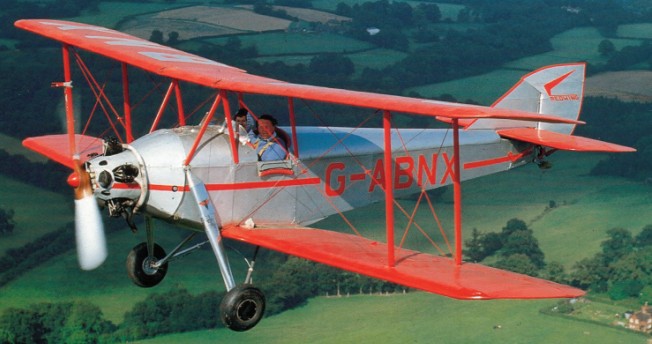
Robinson Aircraft Company produced the Redwing two-seat light biplane with an Armstrong Siddeley Genet engine.

Redwing Aircraft Redwing Article

Factory at Croydon, Surrey, was transferred to Colchester, Essex, in December 1930, and in April 1931 name was changed to Redwing Aircraft Ltd.

In June 1932 Redwing bought Gatwick Aerodrome and formed a school of flying and aeronautical engineering, and in 1934 company moved back to Croydon.

A total of 12 Redwings was built, last being delivered in 1933.

Robinson Redwing 1
Engine: Genet 5 cyl radial
Loaded weight: 520 lb
Endurance: 3 hr 30 min
Seats: 2 side-by-side

Redwing Aircraft Ltd

UK
Founded 1929 by P. G. Robinson as Robinson Aircraft Company; produced Redwing two-seat light biplane with Armstrong Siddeley Genet engine. Factory at Croydon, Surrey, was transferred to Colchester, Essex, in December 1930, and in April 1931 name was changed to Redwing Aircraft Ltd. In June 1932 Redwing bought Gatwick Aerodrome and formed a school of flying and aeronautical engineering, and in 1934 company moved back to Croydon. A total of 12 Redwings was built, last being delivered in 1933.

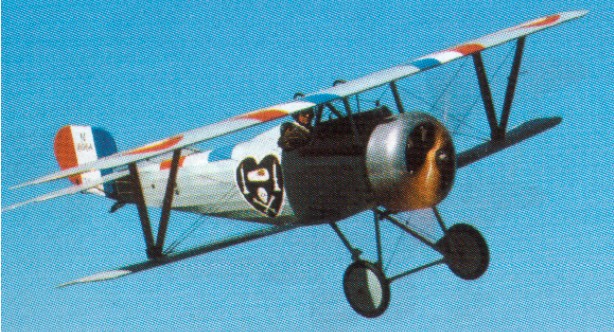
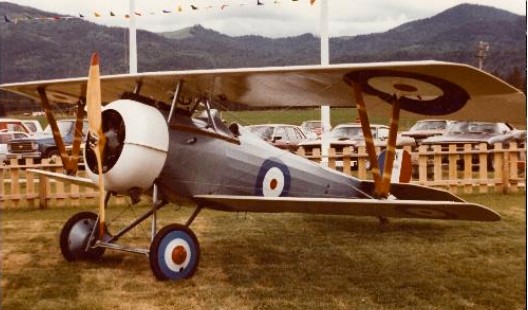
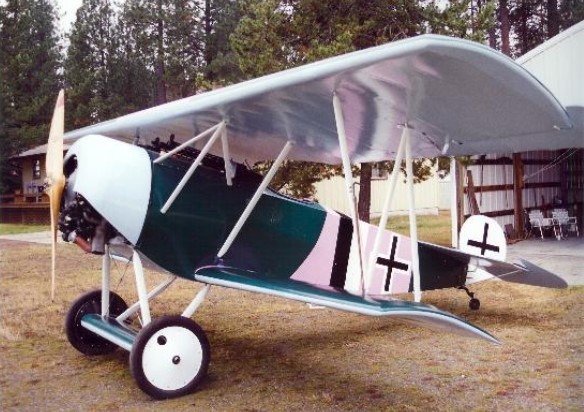
Redfern Nieuport 17

Nieuport 24Bis

This replica of the famous World War I Nieport 17 or 24 Bis is powered by a flat four-cylinder Warner engine in the 145- to 160-hp range. A single open cockpit is situated close under the trailing edge of the upper wing.

Engine: Warner, 145 hp
HP range: 145-180
Height: 7.7 ft
Length: 18.8 ft
Wing span: 26.9 ft
Wing area: 161.4 sq.ft
Fuel cap: 25 USG
Weight empty: 1004 lb
Gross: 1279 lb
Speed max: 120 mph
Cruise: 100 mph
Range: 250 sm
Stall: 45 mph
ROC: 1500 fpm
Take-off dist: 100 ft
Landing dist: 300 ft
Service ceiling: 15,000 ft
Seats: 1
Landing gear: tail wheel

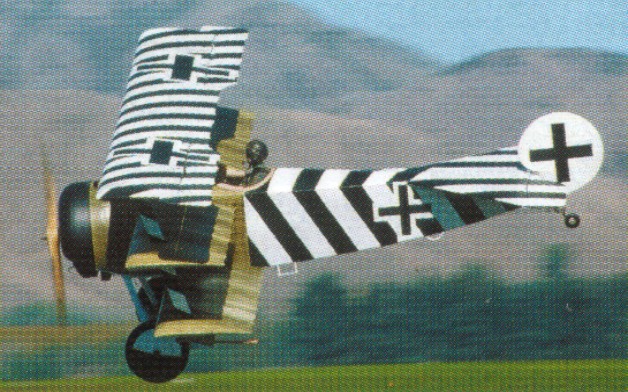
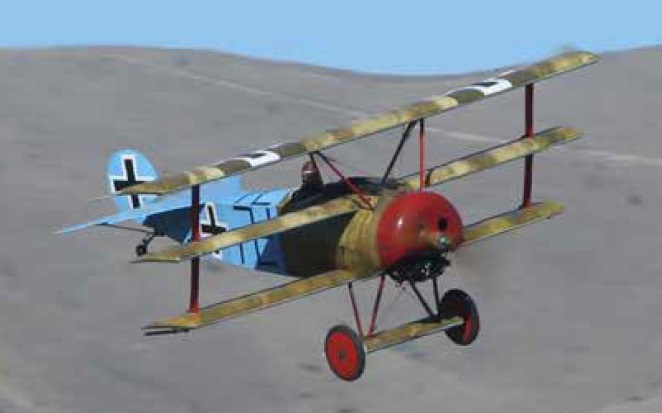
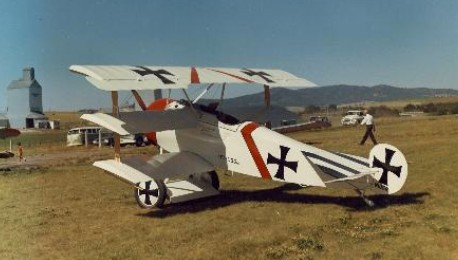
Redfern Fokker Dr.1

The replicas are built to the original 1917 pattern with small differences in the size of tubing used, and a few safety modifications like brakes and a steerable tailwheel. The aircraft has all the vices of the original poor ground visibility, and poor rudder control.

Redfern Fokker Dr.1 Article

This replica of the Red Barons famed fighter is not one of the easier-to-build homebuilts. The fuselage is built from steel tube and plywood, then fabric covered. The wings are all wood and fabric covered. The engine usually recommended is a 145-hp Warner Radial.

Gallery

Engine: Warner, 145 hp
HP range: 145-220
Height: 9.7 ft
Length: 19 ft
Wing span: 23.7 ft
Wing area: 202 sq.ft
Fuel cap: 30 USG
Weight empty: 1112 lb
Gross: 1455 lb
Speed max: 120 mph
Cruise: 100 mph
Range: 300 sm
Stall: 40 mph
ROC: 2000 fpm
Take-off dist: 100 ft
Landing dist: 250 ft
Service ceiling: 20,000 ft
Seats: 1
Landing gear: tail wheel

Engine: 220hp Continental W670 16 radial
Span: 7.19m (23ft 6in)
Length: 5.77m (19ft 11in)
Max wt: 807kg (1,775 lb)
Speed 165km/h (105mph)
Range: 287km (180sm)
Wing area: 202 sq.ft
Seats: 1
Landing gear: tail wheel