Walt built his first airplane in 1949, a Knight Twister from Vernon W. Payne’s plans. It was one of only ten at that time. Walt built 15 aircraft before his death in 1996. Five of these were the Fokker DR1, a favourite with many and still one of the most requested set of plans sold. His first triplane (white) can be found in the EAA museum in Oshkosh, Wisconsin donated by Robert Fergus. Walt was able to build and test fly all his aircraft except for the last one, a Fokker DVI. Walt’s good friend, Steve Wolf, flew this aircraft for the family in September, 1996. This aircraft will be displayed in a museum in the Pittsburgh area.
His great love was WWI aircraft but he had many problems locating plans. His greatest find was Reinhold Platz, who would go on to be his most valued mentor. Reinhold’s knowledge of the DRI, as one of the original designers, was a wealth of information that Walt relied on until his death. Plus he sent the original DRI plans, in German, to Walt to ensure his dream of building the DRI would come true. They continued to correspond with the help of a local high school teacher who spoke German until Reinhold’s death.
During Walt’s life he was able to build 13 additional aircraft and founded Redfern & Son’s Custom Aircraft, Inc. He constructed four additional DRI’s, two Great Lakes (for family fun), a French Nieuport 24 BIS, Starduster 2, de Havilland DH2, Sopwith Camel, Bucher Jungmeister, Albatros DVa, and a Fokker DVI (only aircraft that Walt was not able to test fly).
Per Walt’s request, the family continues to provide two sets of blueprints to the public. Walt also was a great supporter of the EAA. His membership number was 143, showing his early interest in the organization.
1980: Redfern & Sons, Inc., Route 1, Athol, ID 83801, USA. 1995: S-211 Spencer, Post Falls, ID 83854, USA.
Russia Established 1991. Developed the two-seat Pony amphibian (first flown 1994), produced by Pony JSC. Four seat Prize, based on Pony but with twin engines, under development.
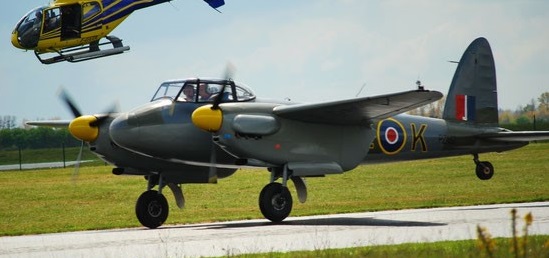
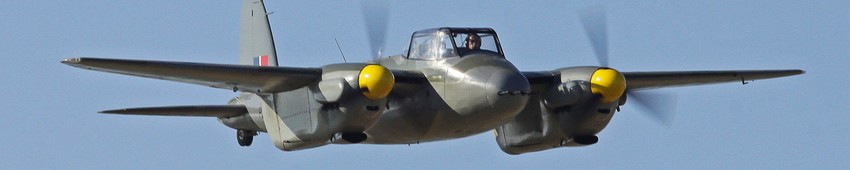
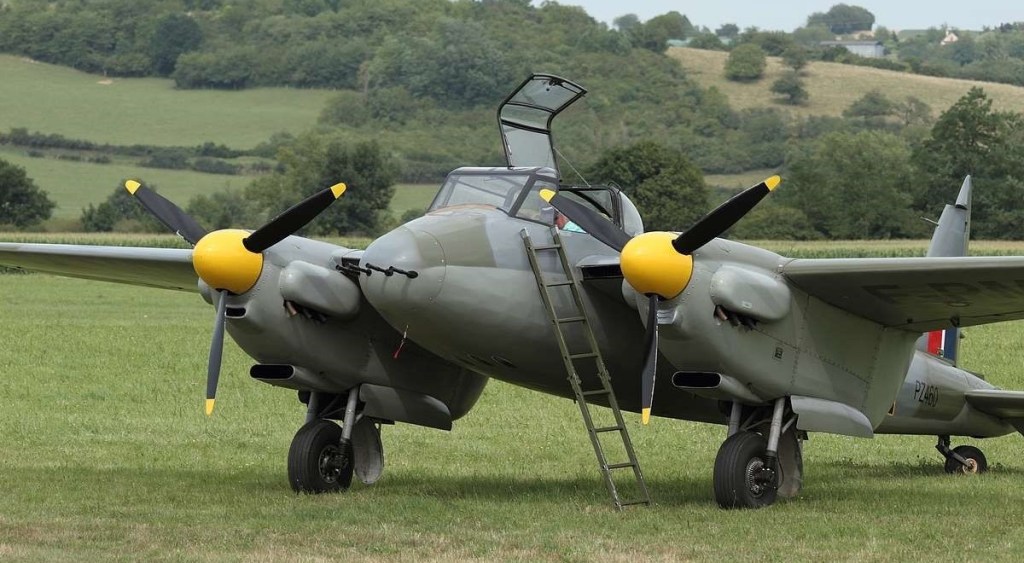
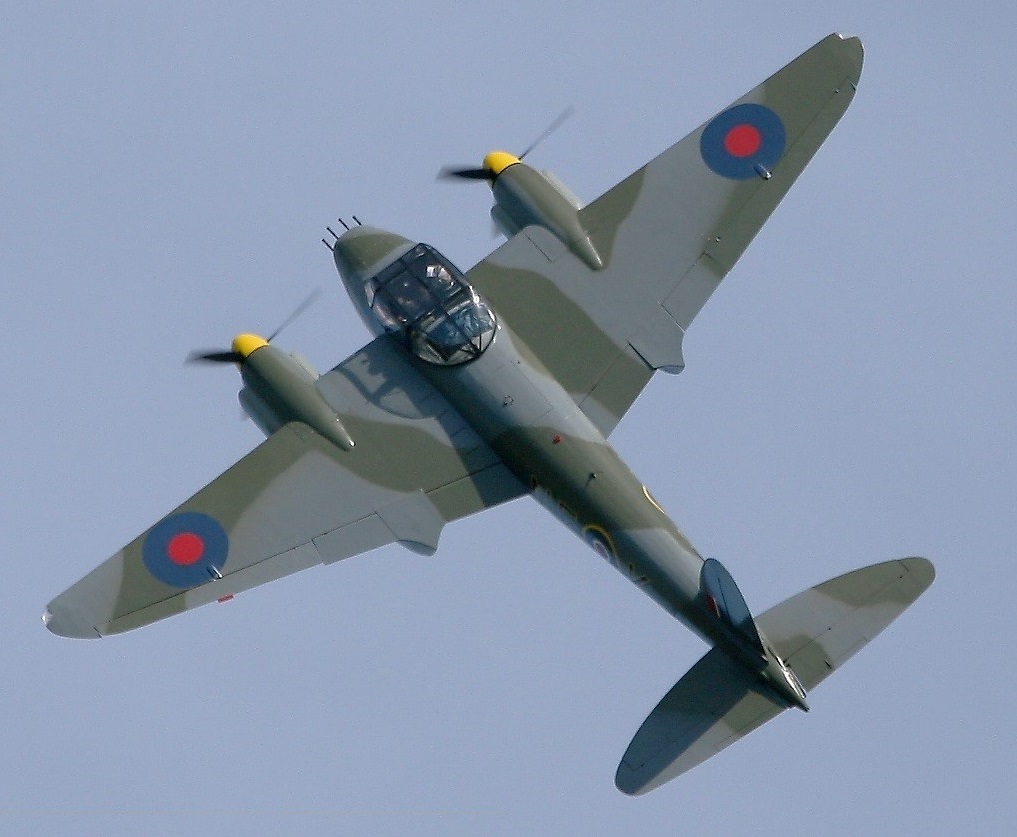
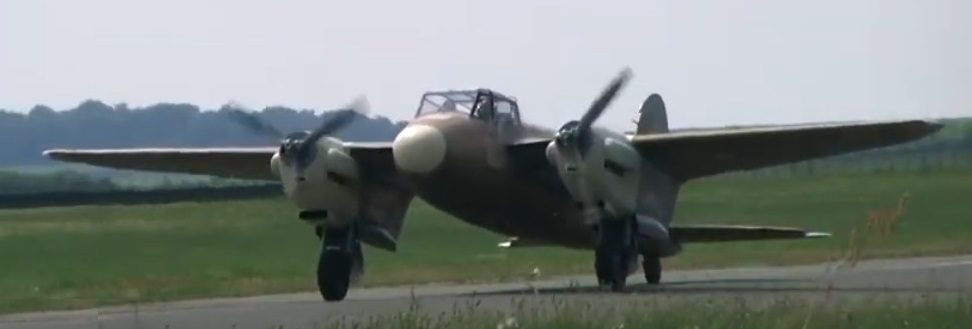
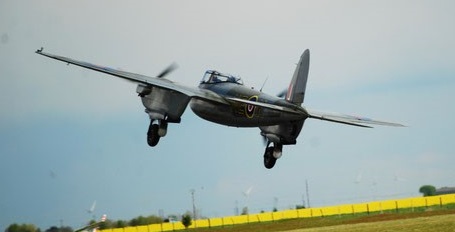
The French association Reconstruction Répliques Avions Anciens began work on 3/4-scale de Havilland Mosquito replica the replica in 1995 and required over 30,000 hours of work before it was ready for the first test at the Fontenay-le-Comte airfield.
The first engine test was carried out earlier this year and were then followed by high-speed ground tests. The first flight took place on April 23, 2011.
This replica of a British WWII bomber overturned on 6 August 2015 after touching the ground in Fontenay-le-Comte. The pilot is seriously injured.
Thursday evening, at 8:45 p.m., the plane approached an airstrip at the aerodrome of Fontenay-le-Comte, in the south-Vendée. This three-quarter-length replica of a Mosquito, a British WWII bomber, returns to its “base” after a commemoration, in Jonzac, in Charente-Maritime. On board: Hervé Thebaud, the pilot, an instructor from Île d’Yeu; and Jean-Paul Bichon, the co-pilot, a resident of Luçon, both in their sixties.
According to several witnesses, the landing “is going well”. Shortly after touching the ground, “a hundred meters from cutting the throttle”, during the “taxiing” phase, the aircraft got slightly askew. At this precise moment, it tilts forward, “like a wooden horse”, and completely overturns, until the fin hits the ground. He ends his race on his back. An aerodrome mechanic is already running towards the aircraft. Seeing the aircraft’s turn signals still on, he said to himself that it was absolutely necessary to “cut the battery to prevent it from causing a fire” with the fuel escaping from the tank. It then contains “at least 400 liters of gasoline”. When the mechanic arrives in front of the machine, the pilot and the co-pilot are aware and can press the button. The co-pilot is the first to exit, with the help of the mechanic who broke the window. The pilot was extricated after an hour by the firefighters, “quickly on the spot”. Seriously injured, he will later be directed to Nantes. Its vital prognosis is not engaged. On the aerodrome, around thirty firefighters cover the aircraft with a carpet of foam. The last left at 12:30 am Several people, including the co-pilot who returned from the emergency room, then got busy to get the Mosquito out of the airstrip. It is when trying to turn it over with a crane that the tail, which was already hanging on by a thread, becomes detached. The plane had required 17 years of work. According to a member of the Luçonnaise association which built it (Replicas and reconstruction of old planes), it will be “difficult to repair”.
Ironically, the Mosquito had, the same day, flew over Jonzac in homage to the crew of an Allied bomber that crashed there on August 6, 1944.
Wingspan: 12.04 m Length: 9.30 m Height: 2.45 to 2.53 m
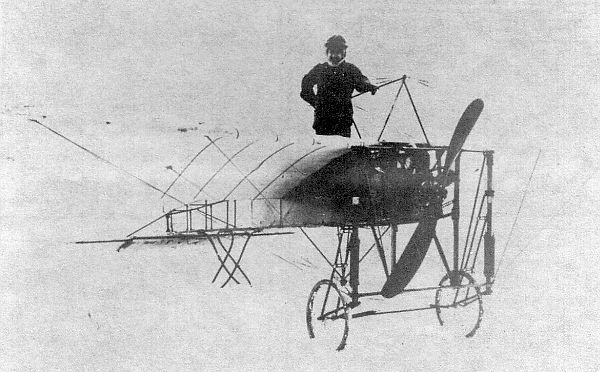
Based on the Bleriot XI, and designed in 1910 by Russian Nikolai Vasilyevich Rebikov, the Rossia B (Pуссиа Б) was built by the Shchetinin works in St. Petersburg, Russia.
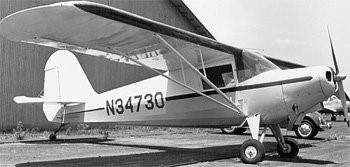
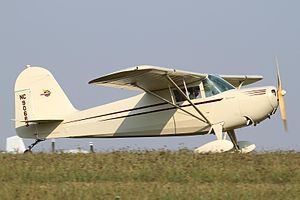
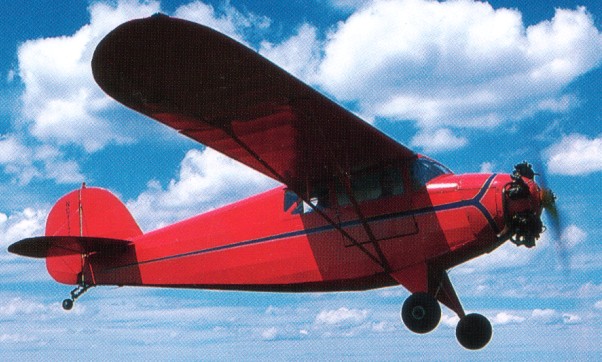
Rearwin Aircraft and Engines introduced the Skyranger in 1940 as a side-by-side two-seat cabin monoplane. Designed by Gene Salvay and George A. Stark, the Skyanger was first flown on 9 April 1940, given Aircraft Type Certificate #729 in 1940.
This aircraft was first produced in four versions: the 175 with a 75-hp Continental, the 180 with an 80-hp Continental, the 180F with a 80-hp Franklin, and the 190F powered by a 90-hp Franklin engine. Seating two people side-by-side, it featured a fabric-covered steel tube fuselage and wooden wing and it sold for about $3000. It had a conventional landing gear with a tailwheel.
About 85 were built by 1941. The Skyranger was the last design of Rearwin Aircraft. Production stopped in 1942 because of the war effort.
In 1942 the Rearwin Airplane Company was purchased by Commonwealth Aircraft of Kansas City, Missouri. In 1943 the company was reorganized as the Commonwealth Aircraft Corp. The Commonwealth Skyranger 185, with its Continental C-85-12 engine, new from the factory on Long Island was about $3,000 in early 1946.
Commonwealth 185
In 1946 Commonwealth re-established the construction of the Skyranger at their Valley Stream plant for just one year. By November of 1946, production of the Skyranger stopped due to market pressures. It had many minor modifications but was essentially the same aircraft. The Skyranger 185 is fabric covered. The fuselage is welded steel tubing, and the wing has wood spars and ribs. A full electrical system was standard, and the aircraft has a large baggage compartment, and wing slots which give better aileron control at low speeds. Two 12.5-gal. wing tanks were standard, 18-gal. tanks were an option. As the anticipated post-war boom in civil aviation had not then started, Commonwealth went bankrupt in 1947, after 275 Skyrangers were built by Commonwealth.
Serial numbers in the 1500s were built by Rearwin. Serial numbers in the 1600s are Commonwealth 185 Skyrangers.
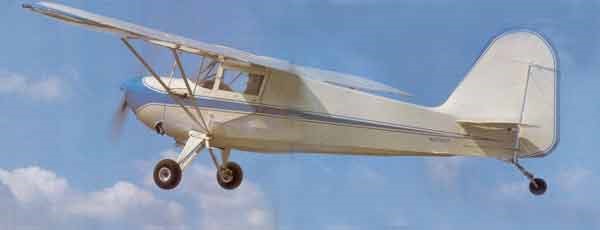
Built in the US in the 1930s. A two seat, light touring cabin monoplane, powered by a 90hp Ken Royce 5F or Le Blond 5F radial. Capable of 120mph at 1,000ft.