Canada
Formed 1928 by W. T. Reid to build biplane of his own design; merged with Curtiss Aeroplane & Motor Company of New York.
Aircraft
Reid No.2
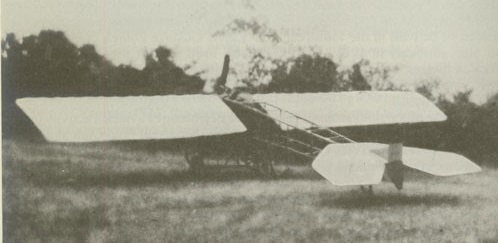
The second machine of Percival H. Reid of Monreal, powered by a 55 hp 5-cylinder Viale radial engine, 29 feet long, with a 32 foot span. The machine was quite successful and was flown numerous times in 1912 by Reid and by Ernest Anctil, who assisted in its construction.
Reid Boeing P-12E
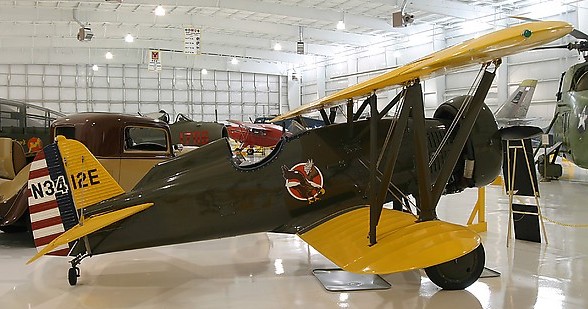
A 75% scale replica of a Boeing P-12, built by Andy Reid in 1976. Co-owned by Robin R Beeler of Jefferson City, TN, the single seat replica weighed less than 12,500lbs. Cruise was approximately 85 mph.
N3412E (cn AWR-01) On display at the Tennessee Aviation Museum.
Reichelt 1912 Eindecker
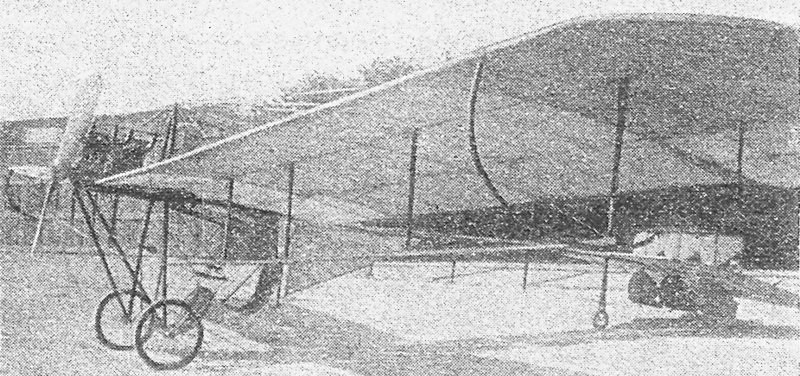
This two-seater monoplane was built by Hermann Reichelt in 1912 in Leipzig and was powered by a 50 hp Argus engine. The machine was intended for training purposes and it got an additional two front wheels later.
Reichelt Eindecker Nr. 1
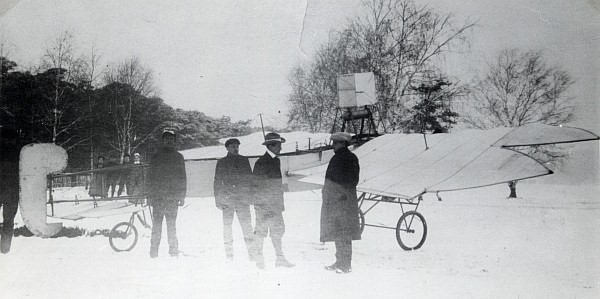
This was the first motorized aeroplane built by Hermann Reichelt in Dresden, Germany, who had previously experimented with gliders. He based the 1910 design on the famous Blériot monoplane but added some self-developed features, for example the unique split wing tips. The 16 hp two-cylinder engine was sponsored by the Gruhl motorcycle company. Ing. Gruhl and Hermann Reichelt can be seen in the foreground of the photograph. Take-off attempts with the underpowered monoplane failed.
Reichelt, Hermann
Hermann Reichelt built (at least) one biplane and seven monoplanes in Leipzig, Germany, circa 1910.
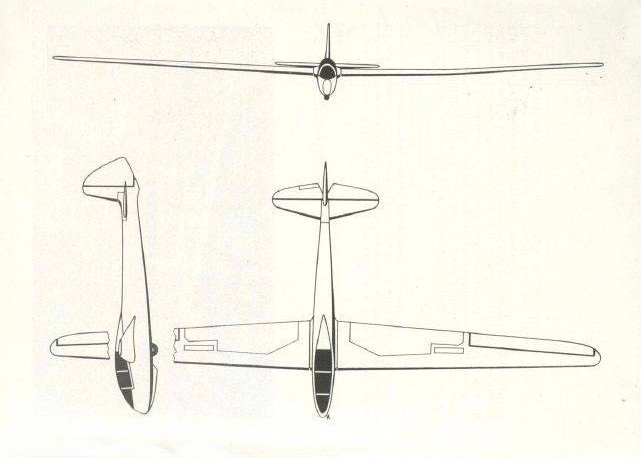
Rehberg / Schneider / Hofmann Schulgleiter SG-38
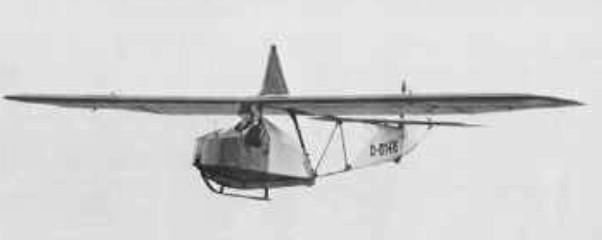
Wing span: 10.41 m
Wing area: 16 sq.m
Empty Weight: 125 kg
Gross Weight: 210 kg
Wing Load: 13.1 kg/sq.m
Aspect ratio: 6.77
L/D max: 10
Min Sink: 1.5m/s
Regnault Kurun
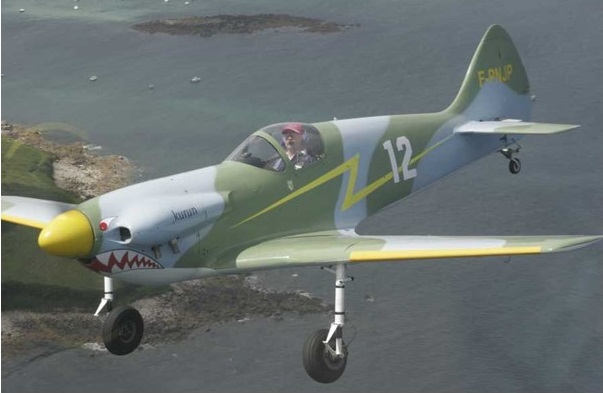
The Regnault Kurun F-PNJP is a 2/3 scale WW2 look alike fighter from Brest, France.
The approximate cost to build was $10000-$20000.
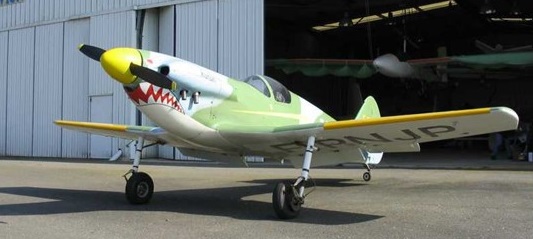
Engine: Lycoming
Reghin RG-9 Albatros
The second of Ing Vladimir Novitchi’s sailplanes to go into service with Romanian clubs was the RG-9 Albatros tandem two-seater trainer, which first flew in prototype form on 1 June 1958, and of which 25 were built. It is of conventional wooden construction, characterised by a cantilever mid wing and a long cockpit canopy with two separate sideways opening sections for pilot exit and entry. The wooden wings each have a plywood leading edge
torsion box and fabric covering aft of the spar; air brakes are fitted and the wooden ailerons are fabric covered. The fuselage is a plywood monocoque, and the landing gear consists of twin wheels under the centre fuselage plus a skid under the nose. The cantilever tail unit is of wooden construction.
Span: 54 ft 0 in
Length: 26 ft 2 in
Wing area: 215 sqft
Aspect ratio: 13.5
Empty weight: 639 lb
Max weight: 1,036 lb
Min sinking speed: 2.79 ft/sec at 38.5 mph
Best glide ratio: 25:1 at 49 mph
Reghin RG-5 Pescarus
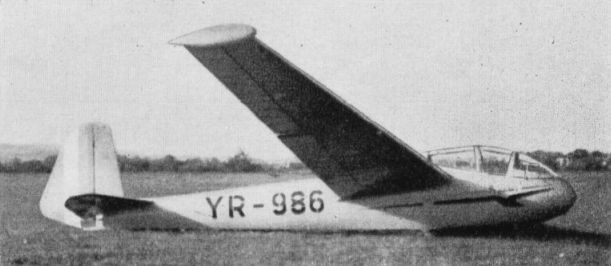
The IFIL-Reghin RG-5 Pescăruș (English: Herring gull) or CIL Reghin RG-5 Pescăruș was a Romanian single seat glider designed by Vladimir Novitchi and built in Romania in the 1950s, intended for club use. It was a mid-wing cantilever monoplane. Like the rest of the aircraft, the wing was wooden, built around a single spar and mounted with 1.66° of dihedral. Plywood skinning from the spar forward and around the leading edge formed a torsion box; the rest of the wing was covered with a mixture of ply and fabric. In plan the wing was symmetrically straight tapered, with squared tips, where there were small tip bodies or plates. It had wood-framed, fabric-covered, balanced ailerons which reached out to the wing tips. DFS (Schempp-Hirth) type airbrakes were mounted at mid-chord, just inboard of the ailerons. There were no flaps.
The RG-5 had a ply monocoque fuselage with its single cockpit ahead of the wing, enclosed by a multipart, sideways-opening canopy which reached to the nose. It landed on a fixed monowheel under mid-wing, with a skid that reached from the nose to under the leading edge, assisted by a small tail bumper. The fuselage tapered markedly from the cockpit aft to a conventional wooden-framed, fabric-covered empennage. Both tailplane and fin were straight edged, with the former mounted forward of the fin at shoulder position and carrying rounded elevators. Together the fin and rudder were flat topped. The rudder hinge was at the trailing edge of the elevators, leaving the rudder, broad and straight edged to its rounded heel, clear to extend down to the keel.
The RG-5 Pescăruș was first flown on 8 September 1957.
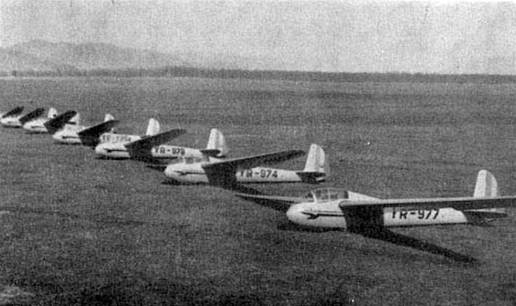
Twenty-six were constructed by Intreprinderea Forestierǎ di Industrializare a Lemnului (FILI) from 1958, going to Romanian gliding clubs.
Wingspan: 15.10 m (49 ft 6 in)
Wing area: 15.40 m2 (165.8 sq ft)
Aspect ratio: 14.60
Airfoil: Göttingen 549 (modified)
Length: 7.38 m (24 ft 3 in)
Empty weight: 210 kg (463 lb)
Gross weight: 300 kg (661 lb)
Stall speed: 50 km/h (31 mph, 27 kn)
Aertowing speed: 120 km/h (75 mph; 65 kn)
Maximum glide ratio: best 27 at 76 km/h (47 mph; 41 kn)
Rate of sink: 0.76 m/s (150 ft/min) minimum, at 60 km/h (37 mph; 32 kn)
Wing loading: 19.5 kg/m2 (4.0 lb/sq ft)
Crew: One