USA
Was producing in 1924 the BR-2 Freighter, an all-metal biplane freighter designed specifically for cargo carrying. Typical of Junkers-inspired design, it combined the Burnelli lifting fuselage with corrugated light alloy skins.
Aircraft
Rekkof Restart
Netherlands
Company formed with intention of restarting production of the Fokker 50 and 100, having bought tooling and rented the production factory in 1998.
Reissner Ente / Wellblech Ente
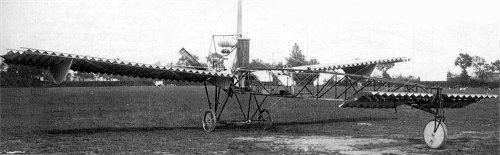
Prof. Dr. Hans Reißner built this canard in the experimental workshop of Junkers that was connected to the “Technische Hochschule Aachen”.
First flying on 23 May, 1912, in second form after having been rebuilt (in the third form, it got four fins under the mainplane).
According to G. Schmitt several versions were built and also flown. The Swiss Robert Gesell presented the machine over a few weeks in Johannisthal at the end of 1912.
Reinhard Cumulus
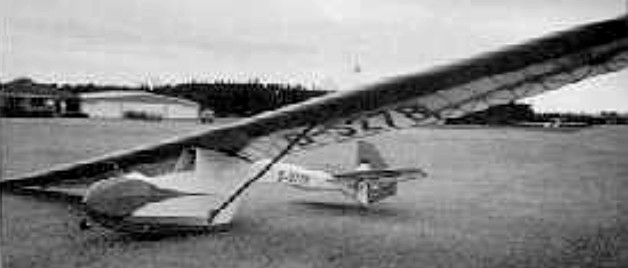
The Cumulus, which first flew in 1951, incorporated a wing very similar to that of the pre-World War II Schneider Grunau Baby with a new fuselage design reminiscent of the pod and boom Bowlus Baby Albatross. It was designed by Gerharf Reinhard with homebuilders in mind. Early models used a skid for takeoff and landing, while later models incorporated a small main wheel. The glider is constructed with wood wings and steel tube fuselage; both fabric covered.
Wing span: 13.57 m / 44.5 ft
Empty Weight: 159 kg / 350 lb.
Seats: 1
L/D max: 19
No. built: approx. 10
Reineck Patriot
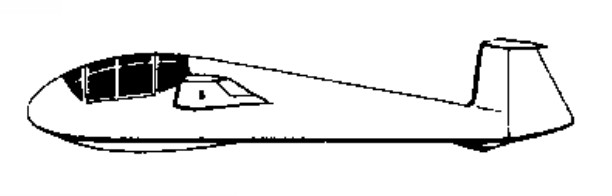
Soaring plane / ProtoEngine, Germany, 1952
Length : 25.919 ft / 7.9 m
Wingspan : 59.055 ft / 18.0 m
Landing speed : 27 kt / 50 km/h
Crew : 2
Reid & Sigrist RS.4 Bobsleigh

The unique Reid & Sigrist RS.4 Desford Trainer, VZ7281/G AGOS began life in 1945 as the R.S.3 Desford, and was modified for prone pilot experiments as the R.S.4 Bobsleigh in 1951. It rejoined the civil register five years later, being used for film and aerial survey work.
Reid & Sigrist RS.3 Desford
Another trainer prototype, the R.S.3 Desford, was built in 1945.
Reid & Sigrist R.S.1 Snargasher
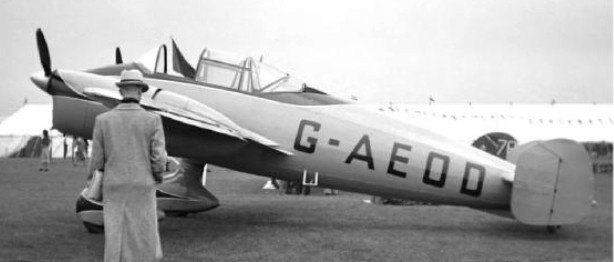
Reid & Sigrist Ltd built a twin-engined advanced trainer popularly known as the Snargasher, of which only a prototype (G-AEOD) was built.
A three seat trainer built at Desford shortly before the Second World War, power was by two de Havilland Gipsy Six engines. The aircraft’s first public appearance was at the Royal Aeronautical Society garden party at Heathrow in May 1939.
During the war the Snargasher flew as the maker’s communication aircraft until scrapped in 1944.
Reid & Sigrist Ltd
Reid & Sigrist Ltd was an instrument manufacturer which opened an aircraft department in 1939 and built a twin-engined advanced trainer popularly known as the Snargasher, of which only a prototype was built. Subcontract work during Second World War included production of Boulton-Paul Defiant two-seat fighters and modification of B-25 Mitchells for the RAF. Another trainer prototype, the R.S.3 Desford, was built in 1945.
Reid Flub / Reid Flying Submarine / RFS-1
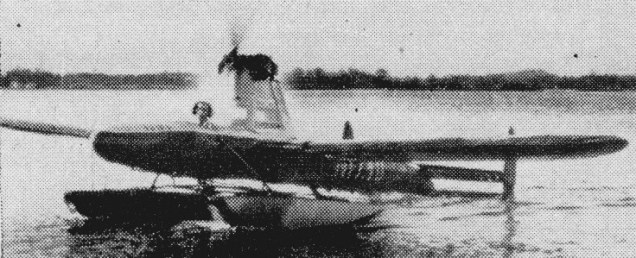
Donald Reid was developing a flying sub using his own money. The “flub” would use one jet engine for both flying and underwater propulsion.
The last five models have been man-size, and his son, Bruce, has been his chief test pilot. Bruce has had the flub, in the air on short, straight-ahead flights, and underwater for short periods. In 1965 they hoped to put the two together and take off from water, land and submerge.
The 1965 model is scrounged mostly from parts of crashed airplanes. It has a 65-hp Lycoming engine with propeller mounted above the fuselage/hull for flying and an electric-powered screw for underwater propulsion.
Reid says he was laughed out of Washington when he proposed such a vehicle to the Navy 10 years ago. “Now,” he says, “I’ll just finish it and give it to the Air Force.”
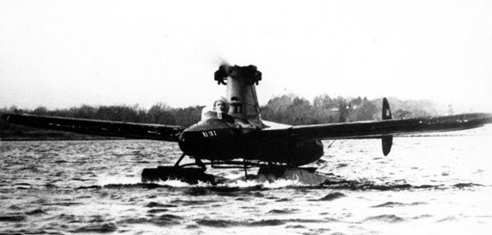
The RFS-1 sort of worked. The airplane was incredibly heavy, so it could only do slight hops in the air, but it could dive, at least a little bit. Before diving, the pilot had to remove the propeller, and cover the engine in rubber. Since the airplane had an open cockpit, the pilot used an aqualung while under water. The RFS-1 dived down to 12 feet during a test.

