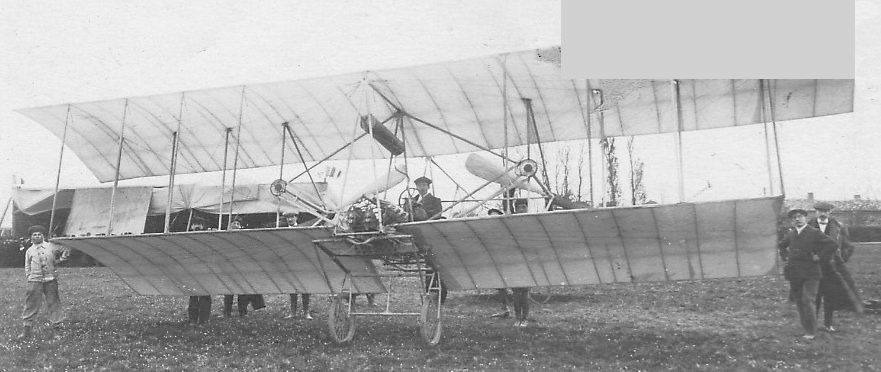
Rozé, Perret et Chaffal 1910 biplane

The Roze, Perret, et Chaffal biplane was a large overhung biplane that might have been designed by Francois Denhaut and was made partly of steel tubing. It had a single trapezoidal tailplane aft only and no apparent vertical surfaces. The arrangement of the two pusher propellers was similar to that on the Wright. It was damaged in 1909 at Poitiers, and probably rebuilt into the photographed configuration, which was tested at Poitiers, France, in May 1910.
Royal Thai Air Force RTAF-5

Development of the RTAF-5 turboprop advanced trainer and forward air control aircraft was temporarily suspended until the Fantrainer-wing manufacturing programme was complete. The RTAF-5 is similar in general layout to the OV-10 Bronco, but is powered by a single Allison 250-B17C turboprop mounted on the rear of the fuselage in pusher configuration. Four underwing hardpoints are fitted for light stores. The prototype flew on October 5, 1984, with a fixed landing gear. A retraction mechanism and other systems were due to be installed during 1985.

RTAF-5
Engine: 1 x Allison 250 turboprop, 313 kW
Span: 9.6 m
Length: 10 m
Wing area: 15.7 sq.m
Empty wt: 1645 kg
MTOW: 2154 kg
Warload: 225 kg
Max speed: 213+ kph
Initial ROC: 91 m / min
T/O run (to 15m): 700 m
Ldg run (from 15m): 915 m
Fuel internal: 219 lt

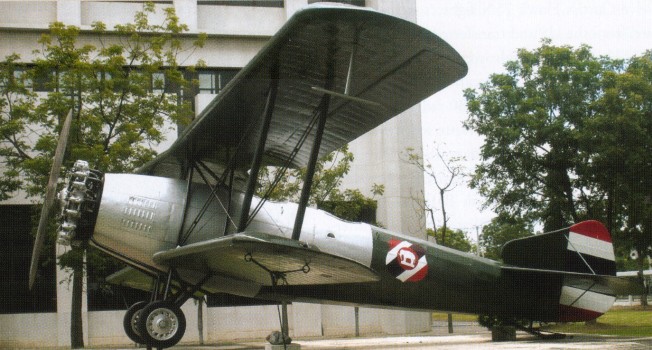
Royal Thai Air Force Paribatra / Boripatra

(Replica)

The construction ot this indigenous two seat bomber began on 5 April 1927 and was named ‘Paribatra’ by His Majestry the King.

The Boripatra was the first aircraft designed and built by the Thais. Around 12 were built by the Aeronautical Service Workshops at Don Muang up until 1933 and were powered by a Bristol Jupiter, BMW, Curtiss D-12 or Pratt & Whitney Hornet engine.

RNAS Experimental Construction Depot, Port Victoria

UK

Commissioned early in 1915 on the Isle of Grain as the RN Aeroplane Repair Depot, and named Port Victoria to distinguish it from the original air station. Experimental Armament Section set up alongside, followed in 1916 by the Seaplane Test Flight. Began construction in 1916 with the P.V.1, a Sopwith Baby fuselage with modified wings and enlarged floats. There followed a series of seaplane prototypes, the Grain Kitten and Eastchurch Kitten landplanes and the final type to be built by the ECD, the Grain Griffin, a converted Sopwith B.1 single-seat bomber. The Depot was subsequently renamed the Marine Experimental Aircraft Depot.