A single-seat biplane trainer
Aircraft
Royal Army Aircraft Factory [Sweden]
Sweden
Built series of indigenous designs for the Swedish Air Force from the mid-1920s. Early biplane types were the Tumeliten single-seat trainer and J.24B single-seat fighter, followed by S.21H.L reconnaissance biplane.
Royal Army Aircraft Factory [Denmark]
Formed in 1914 to undertake aircraft construction and repair work for the Royal Army Flying Corps. Built foreign aircraft under license before Second World War, including the Fokker C.VE reconnaissance biplane, and Gloster Gauntlet and Fokker D.XXI fighters.
Royal Aircraft Establishment Aero Club Scarab
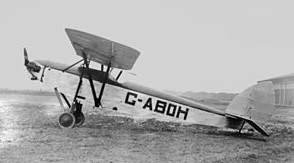
The Royal Aircraft Establishment Aero Club Scarab c/n 5 was designed by P.G.N.Peters and C.R.Brewer in 1930, using some DH.53 parts. A single-seat parasol monoplane, it was powered by a Bristol Cherub III engine and sometimes known as the P. B. Scarab.
Registered G-ABOH, it was finished in 1930 but was rebuilt in 1931 without having flown.
It first flew in 1932 at Farnborough. It was stored there until 1938 when it was broken up.
Engine: Bristol Cherub III
Wing span: 30.00 ft
Length: 21.00 ft
Royal Aircraft Establishment Aero Club Hurricane
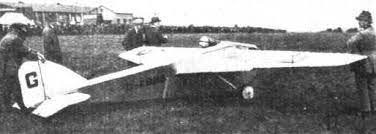
The Royal Aircraft Establishment Aero Club Hurricane c/n 2 was a single-seat, all wood, biplane, with high set wing, designed by S.Childs for the 1923 Lympne Light Aircraft Trials
Powered by a 600cc Douglas motor cycle conversion, it first flew from Farnborough in 1923 as G-EBHS.
It was rebuilt in 1925 with a Bristol Cherub III engine and modified undercarriage.
Wing span: 23.00 ft
Length: 17.03 ft
Royal Aircraft Establishment Aero Club Zephyr
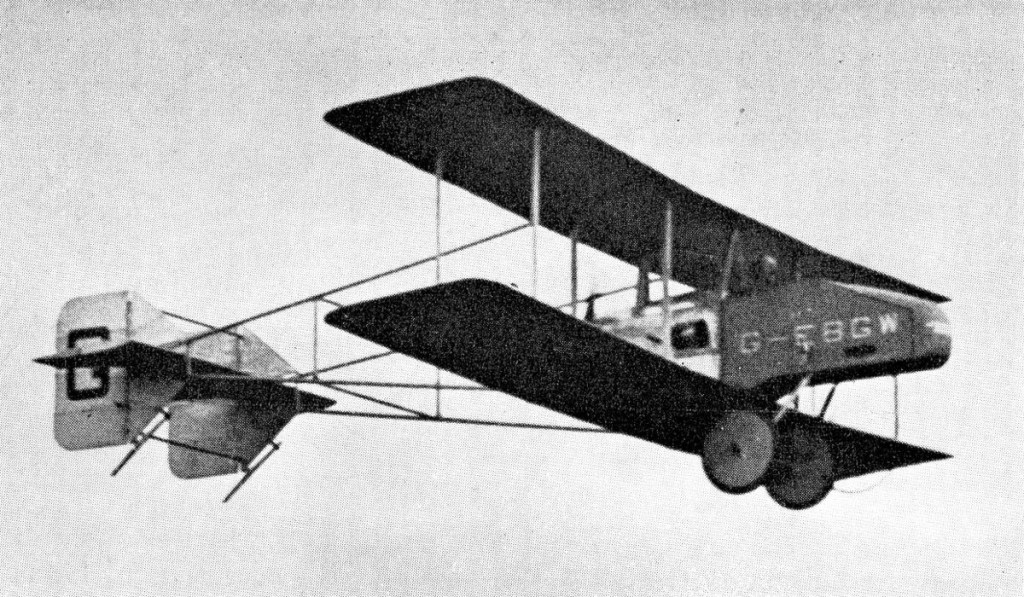
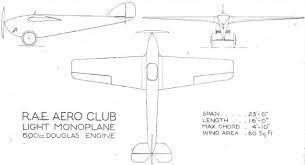
The Royal Aircraft Establishment Aero Club Zephyr c/n 1 was a single-seat, all wood, biplane, powered by a pusher 500cc Douglas motor cycle conversion. The tail was suspended on a twin lattice system from the wing trailing edge.
As G-EBGW, it was first flown at Farnborough on 6 September 1923.
It was broken up in 1925.
Engine: 500cc Douglas
Wing span: 29.00 ft
Royal Aircraft Establishment Aero Club
The Royal Aircraft Establishment Aero Club was formed in 1922 and first flew in 1923.
The Zephyr, Hurricane and Scarab all flew.
The c/n 3 Sirocco single seat for the 1926 Lympne Light Aircraft Trials was not completed. Allocated G-EBNL, it was to be powered by a Bristol Cherub III engine.
Details on c/n 4 are not known.
Royal Aircraft Factory SE.6
1918 Experimental. Other engines also fitted. Project only
Engine: 1 x 275-h.p. R.-R. Falcon
Seats: 1
Royal Aircraft Factory FE.5
1918 Experimental. Development of F.E.4; project only.
Engine: 3 x 150-h.p. R.A.F.5
Span: 103ft 0in
Seats: 3
Royal Aircraft Factory AE.3 / RAM
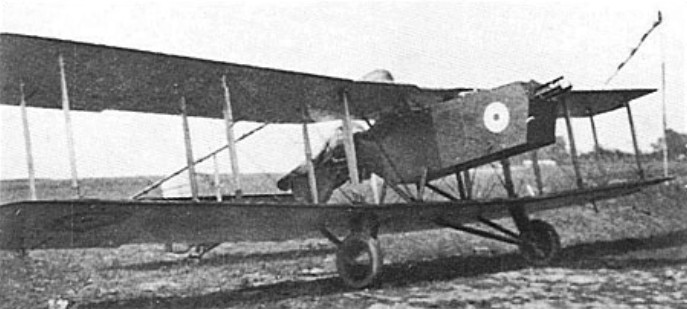
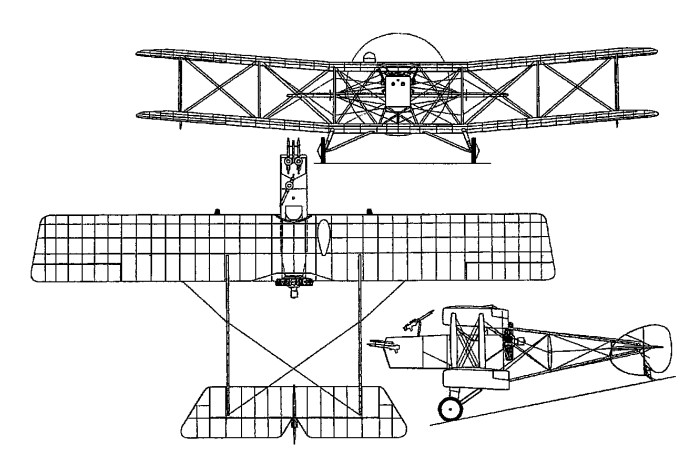
The last aircraft type to emerge from the Royal Aircraft Factory at Farnborough, before its change of name in June 1918 to Royal Aircraft Establishment, the A.E.3 was itself an extrapolation from the N.E.1.
Designated as an “Armoured Experimental” type, the A.E.1 was intended as a specialised ground-attack fighter, for which purpose it was to mount a pair of 7.7mm Lewis guns in the nose, with a limited degree of movement in azimuth and depression. A third Lewis was to be pillar-mounted in the front, observer’s, cockpit for self-defence. Like the N.E.1, the A.E.3 was a large three-bay equi-span biplane, differing principally in the construction and shape of the nacelle, which was armoured with steel plate and provided stowage for 32 ammunition drums.
Royal Aircraft Factory AE.3 / RAM Article
Intended to be powered by the 200hp Hispano engine as used in the N.E.1, the A.E.3 prototype emerged at the end of March 1918 with a 200hp Sunbeam Arab, whilst the second, eight weeks later, had a 230hp Bentley B.R.2 rotary. Flight testing of the latter began on 4 June, and larger ailerons and rudders were fitted before this A.E.3 went to France for service trials, which aroused little enthusiasm. The third aircraft, also completed in June 1918, had an Arab engine like the first and in this form the A.E.3 was named the Ram I, whilst the B.R.2 version became the Ram II.
A proposed derivative, the Ram III, was not built and no production ensued, other, better, types having become available.
AE.3 / Ram Mk. 1
Engine: 1 x 200-h.p. Sunbeam Arab
Span: 47ft 10.5in
Length: 8.44 m / 28 ft 8 in
Height: 3.05 m / 10 ft 0 in
Wing area: 52.02 sq.m / 559.94 sq ft
Max. speed: 153 km/h / 95 mph
Seats: 2
Ram Mk. II
Engine: 1 x 230-h.p. Bentley B.R.2.
Span: 47ft 10.5in
Seats: 2