The Felixstowe F.1 had wings and tail of Curtiss H.4 but Porte hull.
Aircraft
Seaplane Experimental Station / Felixstowe
Located at Felixstowe, Suffolk, its products being identified by initial F. Particularly associated with Squadron Commander J. C. Porte, RNAS, who assumed command of the Felixstowe station in September 1915. Porte had started aeronautical work in 1909; his interest in flying-boats led him to join Curtiss, in U.S.A., during 1914. Before taking command at Felixstowe had flown Curtiss flying-boats on operations, and set out to improve them. Felixstowe F.1 had wings and tail of Curtiss H.4 but Porte hull. F.2 was comparable development of H.12, and further improved as F.2A and used extensively from late 1917. Porte Baby was early 3-engined type, from one of which a Bristol Scout was air-launched in May 1916. F.3 was larger than F.2A, but though built in quantity was less highly regarded. Some were built in Malta Dockyard, others by British contractors. Some completed as further developed F.5, a type also used by U.S. Navy and Japan. Felixstowe Fury was very large 5- engined type, flown (and wrecked) after Armistice.
Seahawk Industries Condor
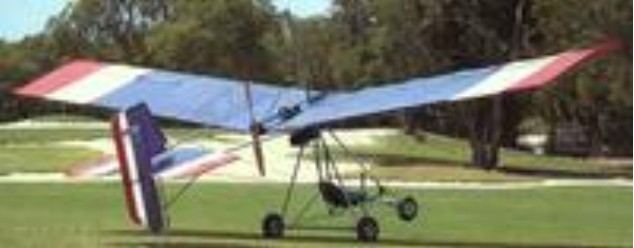
The Condor is a single-engine, high-wing monoplane has a cruciform tail and kingpost and cable braced single-surface wing. The Condor is controlled solely by weight shift. The engine is a twin-cylinder Kawasaki with 2.0 reduction is mounted in the center below the wing. Drive shaft to pusher prop is above the wing. The taildragger gear has torsion bar suspension. Fourteen-inch wheels have pneumatic tires.
The Condor II has three-axis aerodynamic controls include stick controls for elevator and spoilerons plus rudder pedals. The engine is a Kawasaki twin-cylinder 440 engine has 2.0 reduction and is mounted below the wing in the center. It drives a pusher prop of 54×32-inch wood. Some of the two seaters were equipped with Kawasaki liquid cooled engines of 80 hp. The taildragger gear has 14-inch main wheels with pneumatics and torsion bar suspension. The plane is has a single surface wing, and is wire braced. The kit came as a simple bolt together assembly taking approximately 75 hours to assemble.
The Condor single place and two place were produced up until about 1984.
Condor
Wingspan, 32 ft
Wing area 160 sq.ft
Empty weight, 164 lb
Wing loading, 2.06 lbs/sq.ft
Fuel capacity, 3.1 USG
Engine displacement, 440cc
Rated HP, 40 hp
Condor II
Wingspan, 32 ft
Wing area, 160 sq.ft
Empty weight, 196 lbs
Wing loading, 2.26 lbs/sq.ft
Fuel capacity, 3.1 USG
Engine displacement, 440cc
Rated HP, 40 hp
Condor
Stall: 22 kt / 25 mph / 40 kmh
Cruise: 30 kt / 35 mph / 56 kmh
VNE: 56 kt / 65 mph / 105 kmh
Empty Weight: 106 kg / 234 lbs
MTOW Weight: 215 kg / 475 lbs
Seagrave, Marshal T
Piedmont (Oakland), CA.
USA
Marshal T Seagrave built the Seagrave 1, registered N310H.
Seaflight (NZ) Shearwater
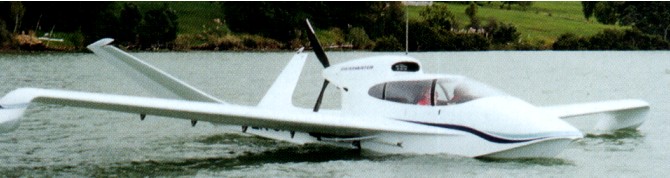
The desire to have a four-seat amphibian led to the development of the Seaflight Shearwater ZK-SFA. Designed by Bill Townson over a three-year period via a series of 1/5th scale models
Construction began in 1997 and incorporated a PZL-built development of the 210 hp Franklin pusher engine mounted lower than normal. This required a lower, cut down rear fuselage. The aircraft is equipped with a V-tail.
Registered ZK-SFA, the Shearwater first flew in November 2001, piloted by Andrew Buttle.
SeAero 1
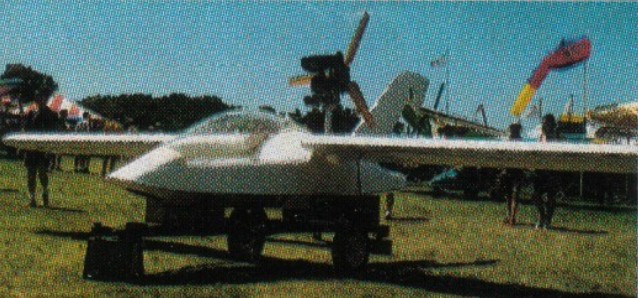
First flown in September 1997.
Engine: Zenoah G50, 42hp
HP range: 21-65
Gross Wt. 550 lb
Empty Wt. 289 lb
Fuel capacity 5 USG
Wingspan 26.5ft
Length 17.3ft
Wing area: 109sq.ft
Height: 5.8 ft
Seats: 1
Top speed: 63 mph
Cruise speed: 63 mph
Stall: 24 mph
Range: 90sm
Climb rate: 1100 fpm
Ceiling: 19,000 ft
Takeoff run: 101ft
Landing roll: 169ft
SeAero Corp
1997: PO Box 360, Cobbs Creek, VA 23035, USA.
Airplane builder
Seabird Aviation Le Petrel
Seabird Aviation Inc built the Le Petrel flying boat in the 1980s. Registered N16017, it was a single place, open cockpit biplane flying boat.
Seabird Aviation Inc
Columbus OH.
USA
Built the Le Petrel in the flying boat 1980s.
Seabird Aviation SB7 Seeker
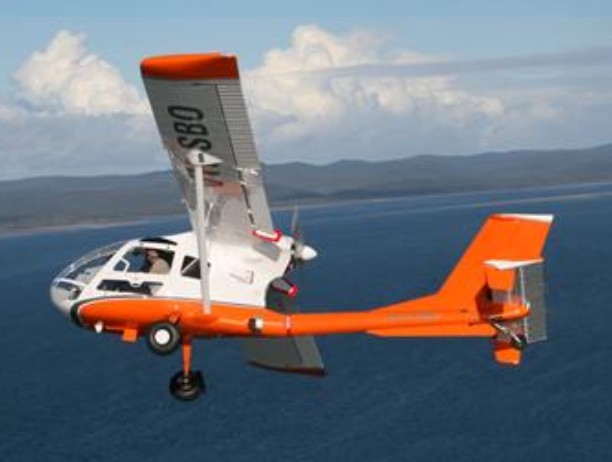
Seabird Aviation offered the Seeker SB7L two-seat monoplane (first flown October 1989), featuring a pod-and-boom fuselage with heavily glazed cabin, braced high-mounted wings with two hardpoints for attaching 264 lb (120 kg) of stores, and a piston engine with pusher propeller.
Seabird Aviation SB7 Seeker Article
The Seeker 2 is an Australian built FAR 23 Type Certified observation aircraft, designed for forestry and crop surveys, fish spotting, wildlife tracking, border surveillance, traffic patrols, transmission power and pipeline inspection operations.
The occupants are in a tubular steel safety cell. Fire hazards are minimized with no fuel lines in cockpit area.
The SB7L-360 Seeker 2 offers helicopter visibility and slow speed handling, but with the cost efficiencies, ease of operation and lower maintenance requirements of conventional fixed wing aircraft.
Certification Basis FAR 23 up to and including Amdt 34 Noise Certification ICAO Annex 16, Volume 1, Chapter 10. FAR Part 36 Appendix G Fatigue Analysis FAR 23 Amendment 38
Seeker equipment includes:
28V Electrical system, 70A alternator
Cantilever spring steel main landing gear
Cleveland wheels and brakes, 8.00 x 6.00 low pressure tyres
Oleo strut tail landing gear, Scott 8″ steerable tail wheel
Dual primary flight controls, dual differential toe-brakes
Floor and/or nose camera/sensor aperture installation, a range of high definition and FLIR cameras available (optional)
Wing hard point installation (optional)
Double longitudinally hinged windows and doors
Baggage/cargo area with tie down points
4-point inertia-reel seatbelts
Wing tip Nav/Strobe lights
Ground power receptacle
Windscreen demister
Vacuum system (optional)
Heated pitot tube (optional)
Seabird Aviation America, Inc., headquartered in New Mexico, manufactures, sells and supports the SB7L-360 Seeker Aircraft for the Western Hemisphere.
SB7L-360 seeker 2
Engine: Lycoming 0-360-B2C
Fuel: minimum 80/87 Avgas, Mogas, or Autogas
Prop: 2 bladed wood / composite.
Wing Span 11.07 m 36 ft 4 in
Overall Length 7.00 m 23 ft 0 in
Height of Vertical Stabilizer 2.03 m 6 ft 7 in
Wheelbase 2.04 m 6 ft 8 in
Cabin Width 1.12 m 3 ft 8 in
Doors – Long Axis 1.07 m 3 ft 6 in
Empty weight 610kg 1342 lb
Maximum T/O weight 925 kg 2040 lb
Min Patrol Speed (CAS) 121 km/h 65 kts
Cruise 75% Power (CAS) 208 km/h 112 kts
Never Exceed (CAS) 239 km/h 129 kts
Stall (40deg Flap)(IAS) 89 km/h 48 kts
Fuel Capacity Usable 180 litres 47.5 US gal
Endurance (inc. reserve) Min. Patrol Speed 65 kts 7 h 15 min
Cruise (65% Power) 4 h 30 min
Range Patrol Speed (65 kts) 880 km 476 nm
Cruise (65% Power) 869 km 470 nm
Fuel Flow Patrol Speed (65 kts) 22 l/h 5.80 US gal/h
Cruise (65% Power) 34 l/h 9.00 US gal/h
Take-off/Landing run at AUW T-O run 264 m 870 ft
Landing run 198 m 654 ft
Stressing Limit Load Factor +3.8 -1.52

