Smith Der Cricket

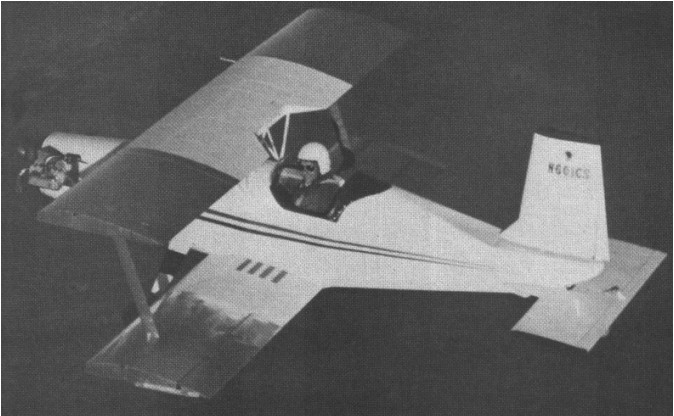
Der Kricket, an original bipe design by Cyril Smith, was built in 857 man hours, and finds that it flies fine from mile-high airports. The philosophy of design simplicity for Der Kricket began with selection of basic materials, and the construction concept developed requires only two sizes of 2024-13 aluminum angle. The spar for the horizontal stabilator is 2-inch square 6063 tubing, requiring a minimum of work. A 2-inch diameter 6063-15 tube spar for the rudder becomes self-hinging with two nylon, teflon or phenolic bushings. All ribs are constructed with a unique self-jigging tab to insure ac¬curate alignment dpring attachment to the various spars. Fuselage is semi-monocoque construction, built upside down on a flat surface, and tricks bor¬rowed from model-airplane building days are employed in assembling the fuselage. A 2 x 11-foot “pin board” on sawhorse supports is used for the fuselage layout. Longerons are tacked to the layout, then four bulkheads added to assure simple, accurate alignment. The “poor man’s deco,” (1/8th-inch soft aluminum pop rivets) are used when necessary for positioning, then are drilled out and replaced with monel or stainless steel pop rivets during final assembly. Full-flying tail surfaces, both vertical and horizontal, are easily constructed and attached, and provide effective control at low airspeeds, with ample rudder movement for takeoff and land¬ing rolls. A good-sized antiservo tab was chosen to provide ample control feel and reasonable sensitivity at cruise speeds. Smith elected to utilize as many pre¬fabricated items as possible in building Der Kricket – landing gear legs from the VP-1 Volksplane; aircraft-style Go Kart wheels and brakes; low-pressure aircraft tires for the mains; and a modified 5-inch caster for a tailwheel. The wing is a NACA 4412.

First flying on 19 September 1978, the prototype N501CS, flew for 25 years before Smith donated it to the Mid-America Air Museum.

Gross weight 750 lbs
Empty weight 500 lbs
Fuel capacity 8-10 Usgal
Wing¬span (biplane) 16’
Length 15’
Engine 1500cc-1835cc VW
Prop: 54 x 30
Vmax 138 mph
Cruise speed 90 mph
Climb rate 500 fpm
Range 200 nm
Wing loading: 7.3 lb/sq.ft
Pwr loading: 14 lb/hp

Smith 1928 Glider

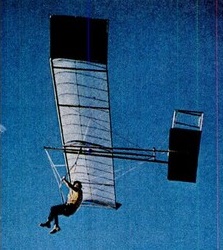
This glider was built by Charlie Smith in 1928 from plans. Mr C Smith was a garage proprietor in Palmerston, New Zealand. The glider was taken to Waikouaiti Beach in 1928 and towed into the air by his daughter Flossie driving his Studebaker car. Flossie is shown with the glider and towrope at the Matanaka end of the Waikouaiti Beach prior to the flight.

It was widely known locally that “Charlie was the pilot, it took off well and flew but as it got higher the wind took it out to sea and Charlie panicked and in getting it back to the beach, crash landed it. This was its one and only flight and thereafter it lay for years among the rafters in Smith’s Garage.

It was of wooden construction with fabric covering doped silver. The mainplane, tailplane and fin were all rectangular as were the rudder and elevators except they were cut away to allow free movement. The fuselage was a circular polygon in cross section.

Smith AJ-2

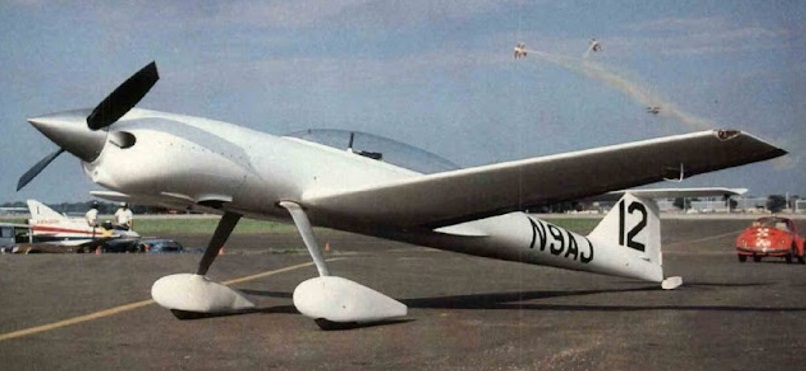
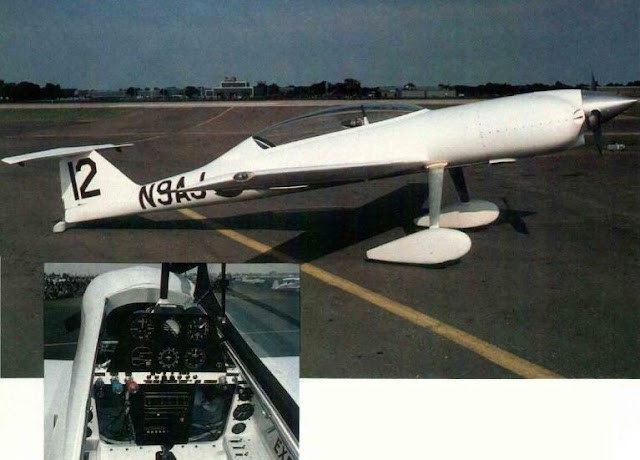
The AJ-2 was designed as a cross-country touring aircraft. It had two seats. The passenger seat was intended to serve as a baggage area when only the pilot was aboard. The engine is a Lycoming IO-360. It makes about 215 hp and has a custom, “one-off” McCauley constant-speed prop. Long-range cruise (55% power) reportedly resulted in 200 mph and 40 mpg. Normal cruise (75% power) was said to be 250-255 mph and about 23-24 mpg.

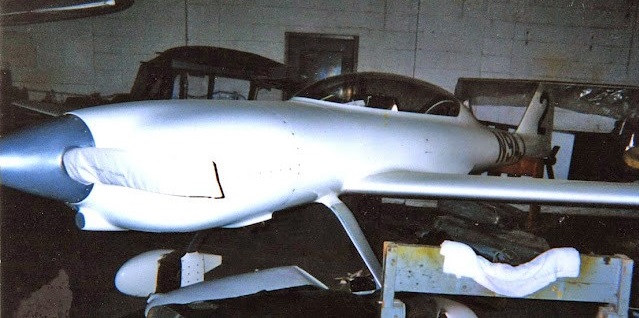
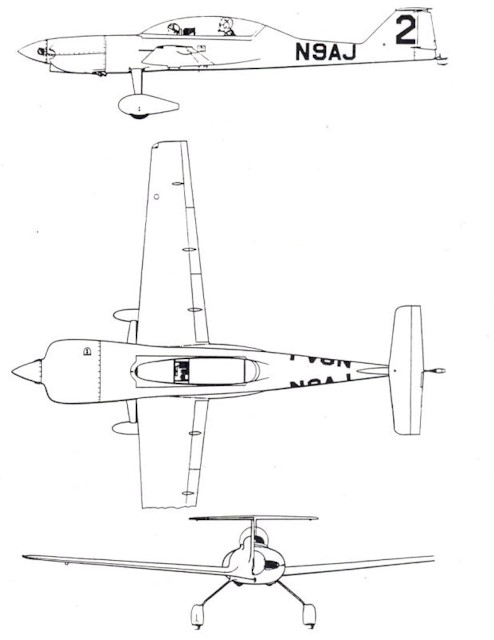
For the airframe, A.J. utilized techniques developed by the Germans in WWII. It consists of bulkheads spanned by balsa and foam. The wing is one piece, designed to be easily replaced with an updated version that contained retractable gear. The updated version was, to my knowledge, never manufactured or mounted. The wing pictured uses a NACA 64212 airfoil, 12% thick, with a constant section and a .5 taper ratio with no twist. The lack of twist produced undesirable stall characteristics, so A.J. added stall strips and rigged the ailerons up a quarter of an inch, providing an effective twist.

The airplane has a T-tail that also uses NACA sections – 9% for the horizontal, and 12% for the vertical. The tailwheel is a Henry Haigh locking version mounted on a Wittman-type tapered rod spring.

Andrew’s experience with gliders clearly translated into the exquisitely efficient design of the AJ-2. Indeed, according to Mike, Andrew once claimed that the total drag of the airplane was approximately equivalent to a 12″x12″ square piece of plywood being pushed through the air.

This paid off in cross-country competition. First flown on 15 July 1981 registered N9AJ, Andrew and the AJ-2 won a cross-country race that emphasized efficiency known as the Oshkosh 500. The airplane, AJ-2, was designed to compete in a new EAA sponsored efficiency race, the Oshkosh 500. AJ competed successfully, winning seven years in a row. He won the race with an average speed of just under 218mph while burning only 19.2 gallons to cover the 500 mile long course. On August 6, 1982 he flew the AJ-2 to a 500 km closed course speed record – 253.3 mph (407.7 km).

Andrew apparently was interested in donating the AJ-2 to a museum, but ultimately ended up selling it before passing away in 2004. It was then stored in a hangar at a nearby airport in rural Wisconsin.

In addition to the aircraft itself, there was a vast quantity of plans, diagrams, and three-ring binders of handwritten calculations and data that AJ used to design it.

After purchasing the AJ-2 back in the early 2000s, the new owner still has yet to fly it. But he thought it will likely happen later when he completes the removal of a wing modification. This project should return the AJ-2 to its standard/original configuration.

Gallery

Engine: 215hp Avco Lycoming IO-360-A1B6
Wingspan: 24’0″
Length: 22’0″
Useful load: 600 lb
Max speed: 298 mph
Cruise: 255 mph
Stall: 68 mph
Seats: 2

Smith, A J

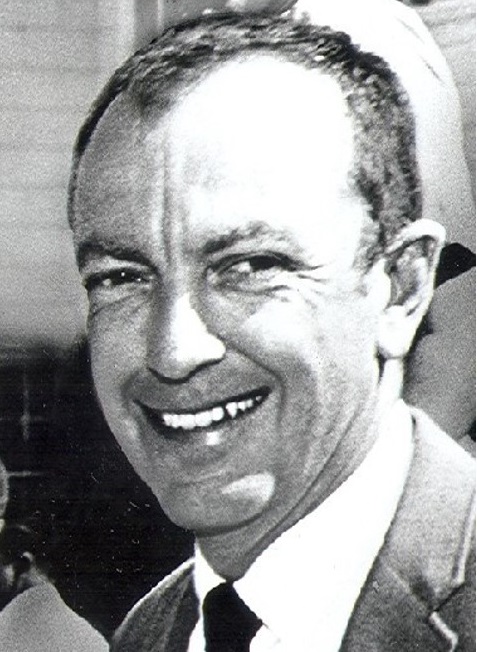
AJ Smith (Andrew James Smith) grew up in Tecumseh, Michigan graduating from Tecumseh High School in 1942. After high school, he worked for NACA (now NASA) at Langley Field, Virginia. He then served in the Navy during WW II flying Corsairs off aircraft carriers for two years in the Atlantic Theater of Operations. He attended the University of Michigan from 1946 to 1951 earning a degree in architectural engineering.

AJ Smith (Andrew James Smith) began soaring in the 1950s with his friend Dick Schreder in the Adrian, Michigan and Toledo, Ohio area. He quickly focused on competition soaring and proceeded to modify each of his sailplanes for enhanced performance, beginning with the LO-150 and continuing through the Sisu 1A, ASW 12 and Glasfluegel 604.

He won the Open Class Nationals flying these sailplanes in 1961, 1967, 1971 and 1978. AJ represented the USA on four international teams: England 1965, Poland 1968, Marfa, Texas 1970 and Yugoslavia in 1972. In the 1968 contest in Poland (flying a borrowed Elfe S-3 in the Standard Class), AJ became only the second American to win a World Gliding Championship.

AJ was a very successful architect in the Detroit area, owning his own major firm (Smith and Gardner) that designed many award-winning structures from airport terminals to major office complexes across the United States.

AJ’s artistic flare from his architecture background, combined with his engineering knowledge of aerodynamics, enabled him to design an extremely efficient racing airplane in the early 1980s which rocked the racing world of the Experimental Aircraft Association. The airplane, AJ-2, was designed to compete in a new EAA sponsored efficiency race, the Oshkosh 500. AJ competed successfully, winning seven years in a row. On August 6, 1982 he flew the AJ-2 to a 500 km closed course speed record – 253.3 mph (407.7 km).

AJ’s intense competition personality made him a controversial figure dominated by an intensity and extreme will to win.

AJ served the soaring community as an SSA Director and an NSM Trustee. Not only did he fly National and World Competitions, he was also a Smirnoff Derby competitor. He won the FAI Challenge Cup in 1968 and was awarded the Louis Bleriot Medal in 1982. He received the SSA Exceptional Achievement Award in 1970 and gave the Barnaby Lecture in 1975. He won the du Pont Trophy in 1961, 1967, 1971, 1978 and the Stroukoff Trophy in 1967, 1971, 1976, 1978. He earned Silver #283 (1957), Gold #140 (1962) and Diamond #446, Intl #2688 (1979).

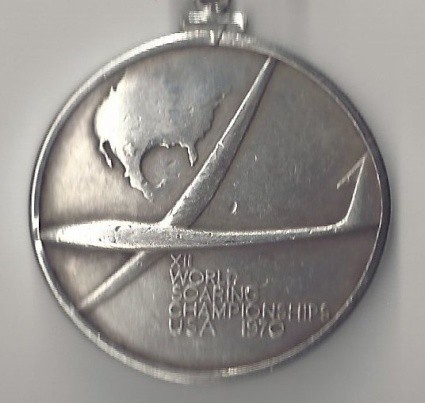
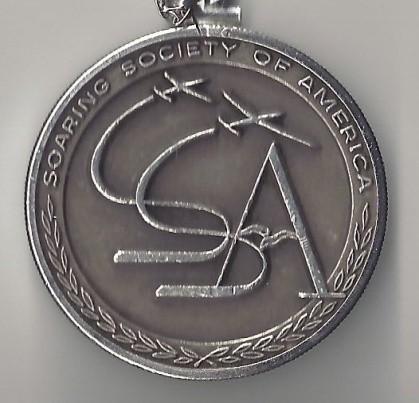
AJ used his artistic talent to design the medallion for the 1970 World Contest in Marfa, Texas. Which was made in both silver and bronze and two sizes. He told a long time wearer of this medallion that he was pleased with the weathering effect due to time and usage.

Andrew Smith passed away in 2004.

Smith 1915 Biplane

Three aircraft are said to have been constructed for Arthur L Smith’s exhibition performances at the 1915 Panama-Pacific Exposition by Al Mensaco. The use of “Smith-Curtiss Pusher” in a contemporary journal leads to an assumption of their being Curtiss machines assembled by Smith, or copies using Curtiss motors. Smith was pictured in several different types of aircraft during this period, most of them looking much like the tried-and-true Curtiss designs—or at least faithful replicas.

Smith 1910 Biplane

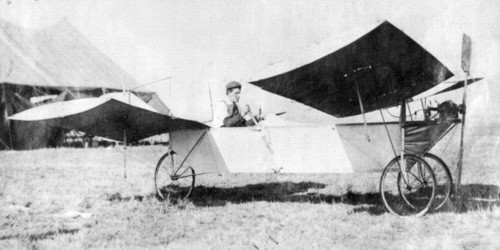
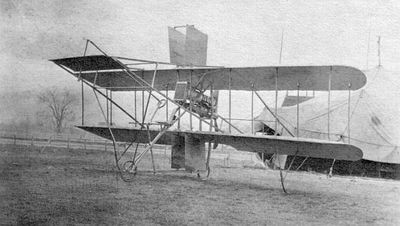
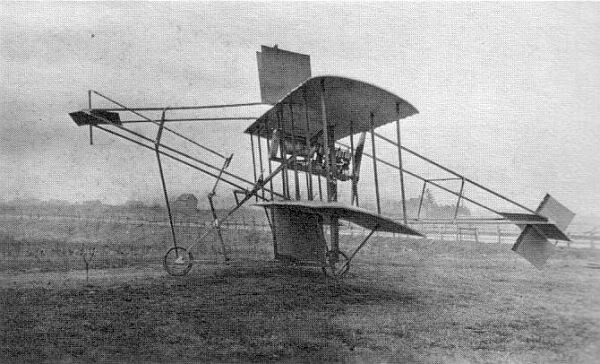
Arthur L Smith believed he could build a plane that would fly better than the Wright airplane, and as he worked on his design, he was careful to avoid infringing on their patents. This was the end result of two prototypes that crashed, mainly because Smith was teaching himself to fly as he went along.

It took him and a friend six months to build the single-place, open cockpit, biplane, which they moved through the streets of Fort Wayne at night to a field in what is now Memorial Park.

Built by Arthur L. Smith, a Curtiss-type biplane flown and crashed at Fort Wayne, Indiana, on January 18, 1910. The aeroplane reached almost fifty miles per hour before leaving the ground when suddenly it rose alarmingly, dipped, rose again, and crashed into the field in what is now Memorial Park. Art was thrown onto the frozen ground and badly injured. The machine was ruined except for the 40 hp Elbridge engine and never rebuilt.

A replica of this ship, built by Billy Parker and Bob McComb, is now hung on display at Ft Wayne Intl Airport terminal.

Smith, Arthur L

1910:
Arthur L Smith,
Ft Wayne IN.
USA

San Francisco CA.
USA

From books and magazine articles Art learned about aircraft construction, designs, and patents. He believed he could build a plane that would fly better than the Wright airplane, and as he worked on his design, he was careful to avoid infringing on their patents. It took him and a friend six months to build the plane

Smith also previously built a “gasless air-ship,” according to 1909 Jane’s.