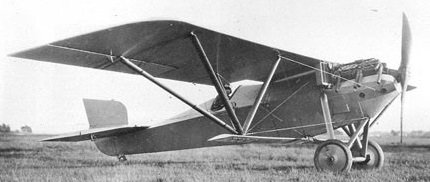
In 1916 one Sturtevant B-2 was built.
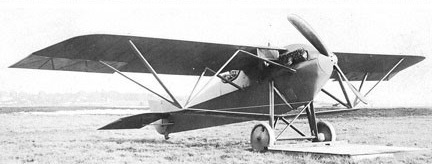
The B-2 Pursuit clipped a tree on landing in March 1917 and crashed.
Wingspan: 30’7″
Length: 23’3″
Seats: 1
In 1916 one Sturtevant B-2 was built.
The B-2 Pursuit clipped a tree on landing in March 1917 and crashed.
Wingspan: 30’7″
Length: 23’3″
Seats: 1
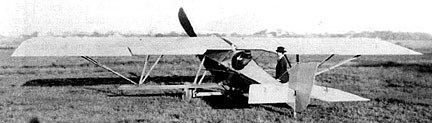
Designed by Grover Loening, the Sturtevant B-1 Speed Scout of 1916 was an Army pursuit.
Four aircraft were ordered by the Army on 8 December 1916, as AS277-280. The first one flew the first time on 20 March 1917, but crashed on that flight; the remaining three were then cancelled.
Engine: Sturtevant A5
Wingspan: 30’7″
Length: 23’3″
Seats: 1
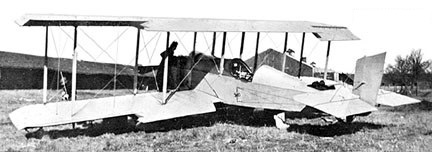
One Sturtevant A-1 Tractor was built in 1915. The wingspan was 47’0″ and length 25’10”.
The A-2 Seaplane was an unbuilt 1915 design.
The one Sturtevant A-3 Battleplane was built in 1915. Only one recorded flight was made, at nearby Readville Trotting Park in December 1915. The wingspan was 47’0″ and length 25’10”.
USA
(Benjamin F) Sturtevant Blower Works
Formed 1915 at, Hyde Park, Boston, Massachusetts. Derived from B. F. Sturtevant Company which made steel products, including engines.
1915: Sturtevant Aeroplane Co (pres: Noble Foss, vp/gen mgr: Grover C Loening), div of Sturtevant Mfg Co, Jamaica Plain MA.
From 1916 built steel-framed tractor seaplanes for U.S. Navy and generally similar landplanes for U.S. Army Signal Corps. Also built Curtiss JN and DH-4 aircraft under subcontract. No production of aircraft after First World War.
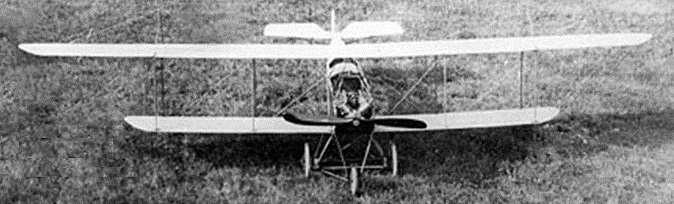
In 1914 Max F Stupar designed and built two single place biplanes as exhibition ships for Earl Daugherty. The first was powered by a 75hp Curtiss OXX-5, and also a 60hp Kirkham 6, the second one with 50hp Gnôme rotary.
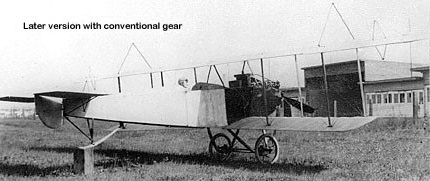
Similar planes were also built for Victor Carlstrom, William Couch, Robert Shank, and other local notables, some likely produced as Chicago Aero’s Star Tractor.
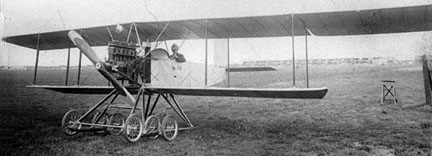
The Stupar 1914 Biplane 1 was Stupar’s first construction while employed by the Aero Works, this one for Hillery Beachy.
The single-place biplane was powered by a Hall-Scott engine, and also a Kirkham 4. A six-wheel undercarriage was fitted.
Maximillian Stupar was born on Sept. 23, 1885 in Metlika, Slovenia, where he learned the delights of flying kites. Even after his parents uprooted Max from the empire of the Hapsburgs to South Chicago, that joy never left him. He followd the exploits of Octave Chanute, another transplanted European (from France) who had found a home in Chicago and had developed an interest in kites.
Max was inspired by Chanute’s building on the landmark glider experiments of Otto Lilienthal, a German, to write Progress in Flying Machies (1894). This book was the bible of aeronautics. Max’s book, some glider experiments he attempted in the dunes of Indiana, Miller Beach, during 1896, and in Dune park during 1897, provided the design for the Wright brothers’ first airplane.
But while Chanute and the Wright brothers were becoming aeronautical icons, Max managed to elude celebrity. In 1902, as the Wright brothers also experimented with gliders, Max began his own experiments. Instead of taking off from the dunes of Kitty Hawk, Max leaped from the tops of houses, barns, low hills, and slopes of South Chicago.
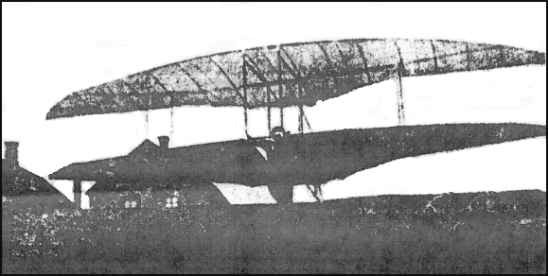
His gliders sometimes reached the awe-inspiring altitude of 300 feet. Some neighbors demanded the kid be given a saliva test. Then, like Octave Chanute, Max moved his experiments to the sands of Dune park, which led in 1908, to his construction of his first airplane. The plane cracked up before Max could test it properly.
Undeterred, Max patterned a plane after the one Louis Bleriot had used to fly the English Channel. He made a test flight to Milwaukee, lifting the hydroplane from the waters of Sandy Beach at 95th and the Big Lake the following year. That plane also had a short life, ignominiously plowing into Chicago’s first airfield, Cicero Field at 22nd and Cicero.
In 1910, he opened the Stupar Aero Works in South Chicago, then sold it in 1912 to the Chicago Aero Works for a one-third ownership, and a position as chief engineer. Between 1912 and 1916, Chicago Aero built 30 airplanes and introduced the Stupar Tractor Biplane, the first biplane to use an enclosed fuselage and tractor propellor.
With a glowing resume that proclaimed Max an aviation pioneer, he left South Chicago, in 1916, to join the Standard Airport Corporation in New Jersey.
With America’s entry into World War I Max returned to Chicago as a member of the inspection service for the new U.S. Air Service, and then went to Buffalo, and finally Washington, D.C., as assistant chief of wood inspection for airplane construction.
Throughout the war, and until 1922, airplanes were made almost exclusively of wood, the so-called “stick and wire” construction. Max knew more about that than just about anybody, having worked closely with several South Chicago lumber firms. He also authored a book entitled “Wood Technology,” as he drifted farther away from the cockpit.
After the war, Max became an engineer with the G. Elias and Brothers Lumber Co., which was just getting into aircraft design. In 1927 joined Curtiss Airplane. He stayed with Curtiss until 1939, as chief of the estimations department, in which post he originated the definitive advanced system of airplane cost estimating.
When war started again in Europe during 1939, not only did Max help develop the modern method of assembly-line airplane construction, he became liason between the government and the aircraft industry, flying all over the country in the process.
On Nov. 27, 1941, near the Dayton field named of the Wright Brothers, Max fell to the earth for the last time.
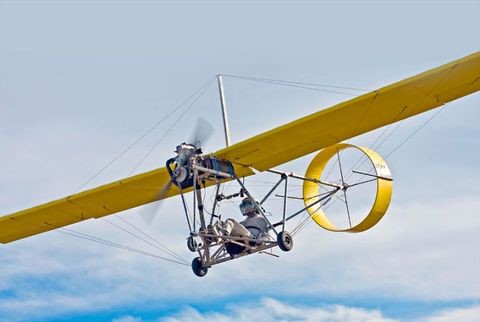
Mark Stull built Lucky Stars with a 4.5-foot-diameter ring tail. It took some clever engineering and some hair-raising test flights to make it work. Stull added a hydraulic damper to ensure that the tail didn’t swing too far to the side, and balanced the tail by adding weights to the ring. He then moved the seat forward to maintain the craft’s centre of gravity.
A two-seat amphibious flying-boat (first flown 1994). Re-winged S-302.
A single-seat composites lightplane.

