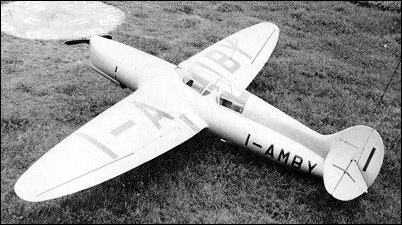
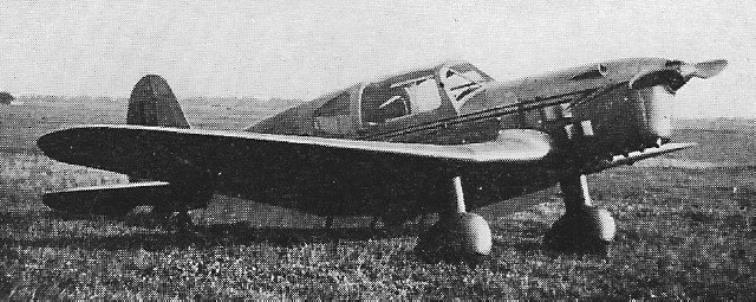
Ambrosini S.7 Freccia / Super S.7 / Supersette

When SAI Ambrosini embarked on the creation of a light jet with supersonic capabilities, it was decided to proceed step by step, with experimentation.

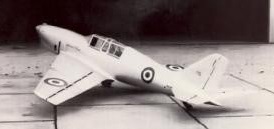
A standard Ambrosini S.7, named Freccia, was equipped with a 45° swept wing.

First flown on 18 July 1952 on the military base at Aviano, the pilot was Ireneo Di Crescenzo. Test were flown until 1 August 1952. After tests with the sweptback wing, designer Sergio Stefanutti designed the Sagittario (Archer) powered by a 400kg thrust Turbomeca Marbore turbojet.

The S.7 was produced in single- and two seat versions for the Italian Air Force. The two-seater being S.7B.

S.7

A further development of the basic design is the Super S.7, or Supersette, which is slightly larger than the S.7 and powered by a 340 hp de Havilland Gipsy Queen 70-3 engine.

S.7
Engine: 225 hp Alfa 115ter
Wingspan: 28 ft 10 in
Wing area: 137.8 sq.ft
Length: 26 ft 10 in
Empty weight: 2365 lb
Loaded weight: 3030 lb
Max speed: 224 mph
ROC: 1103 fpm

Super S.7 / Supersette
Engine: 340 hp de Havilland Gipsy Queen 70-3
Wingspan: 30 ft 6 in
Wing area: 148,5 sq.ft
Empty weight: 3030 lb
Loaded weight: 4300 lb
Max speed: 267 mph
ROC: 985 fpm

Supersette
Engine: Alfa Romeo 121 C, 395 hp
Wingspan: 30.512 ft / 9.3 m
Length: 26.804 ft / 8.17 m
Max take off weight: 4304.2 lb / 1952.0 kg
Max. speed: 227 kt / 420 km/h
Service ceiling: 24606 ft / 7500 m
Range: 594 nm / 1100 km
Crew: 2

S.7

Ambrosini S.A.I.403 Dardo

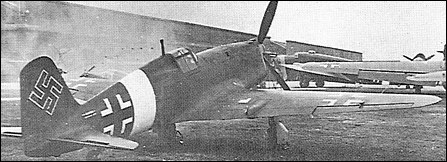
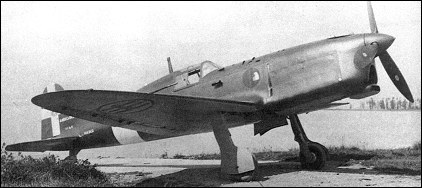
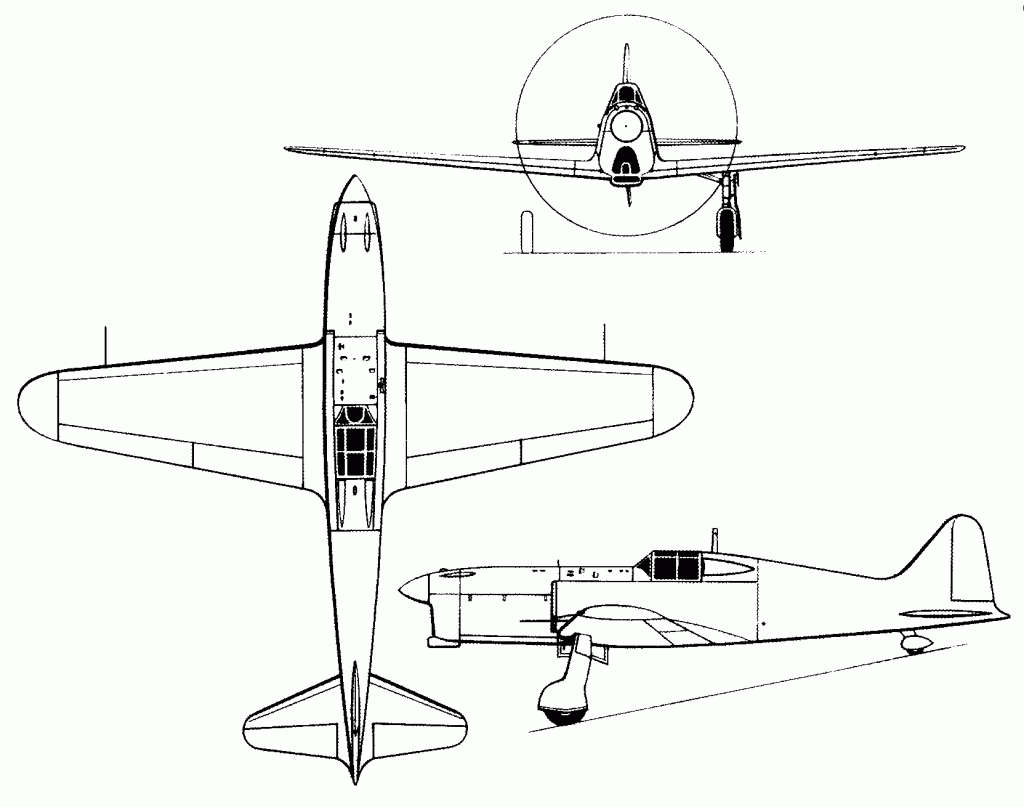
A lightweight single seat fighter by Societa Aeronautica Italiana (Ambrosini), the Type 403 Dardo (Arrow) appeared in late 1942, developed from the S.A.I.207. The 403 differed by having a later series of 750 hp Isotta Fraschini Delta inverted V 12 aircooled engine, and constant speed Piaggio propeller. The airframe was of similar all-¬wood form but had a new wing profile, greater area, redesigned tail surfaces – the incidence of the tailplane being variable in flight – a redesigned rear fuselage, a fully-retractable tailwheel, provision for wing guns and a more robust structure.

The Stefanutti-designed S.403 flew for the first time in January 1943, powered by an Isotta-Fraschini R.C.21/60 engine of 750hp which provided a maximum speed of 403 m.p.h. In the final two years of the programme all that happened was the first few items of production tooling, but no Dardos.

The armament was two 20 mm (0.79 in) Mauser MG 151 cannon in the wings and two 12.7 mm (0.5in) Breda SAFAT heavy machine guns above the engine. The Dardo¬-C was to be a long range version with increased internal fuel and two drop tanks. An order for 3000 was placed with S.A.I. (800), Savoia Marchetti (1,200) and Caproni (1,000), but only the prototype flew as the Armistice ended all further work.

S.A.I.403
Engine: Isotta-Fraschini Delta HG 21/60, 559-kW (750-hp).
Take-off weight: 2640 kg / 5820 lb
Empty weight: 1983 kg / 4372 lb
Wingspan: 9.80 m / 32 ft 2 in
Length: 8.20 m / 26 ft 11 in
Height: 2.90 m / 9 ft 6 in
Wing area: 14.46 sq.m / 155.65 sq ft
Max. speed: 648 km/h / 403 mph
Range: 937 km / 582 miles
Ceiling: 10000 m
Crew: 1
Armament: two 20 mm (0.79 in) Mauser MG 151 cannon and two 12.7 mm (0.5in) Breda SAFAT machine guns

Ambrosini S.A.I.207

Developed from the S.107 lightweight single-seat fighter and featuring a similar wooden structure with monocoque fuselage, the S.207 was essentially a more powerful, productionised version of the basic design.
The first of two prototypes of the S.207 was flown in 1940, and was powered by an Isotta-Fraschini Delta R.C.35 12-cylinder inverted-Vee air-cooled engine rated at 705hp.

The second prototype was powered by the R.C.40 version of the engine rated at 750hp at 4000m. In dives the S.A.I.207 attained an indicated air speed of 466 m.p.h. at 10,000 ft. (representing a true air speed of 596 m.p.h., or Mach 0.86), and maximum level speed was 357 m.p.h., with the 750 h.p.

Armament was two synchronised 12.7mm machine guns, and a pre-series of 12 S.207s was built during March-July 1943, several of these being assigned to the 83a Squadriglia (18° Gruppo, 3° Stormo) for evaluation, and six being assigned in August 1943 to the 162a and 163a squadriglie (161° Gruppo).
The Ministero dell’Aeronautica placed orders for 2,000 of the S.A.I.207 production version, but only 13 pre-production aircraft were completed, the order then being switched to the improved S.A.I.403 Dardo (Dart).

One pre-series S.207 was fitted with an armament of two 20mm cannon.

Prototype
Engine: Isotta-Fraschini Delta R.C.35, 705hp

S.A.I.207
Engine: 1 x Isotta-Fraschini Delta HG 40, 559kW (750 hp).
Wingspan: 9m (29 ft 6.3 in)
Length: 8.02 m / 26 ft 4 in
Height: .40 m / 7 ft 10 in
Wing area: 13.90 sq.m / 149.62 sq ft
Empty weight: 1750 kg / 3858 lb
Max T/O weight: 2415 kg (5,324 lb).
Max speed: 398 mph at 14,765 ft
Operational range: 590 miles
Ceiling: 12000 m
Climb to 6000 m: 7 min 34 sec
Armament: 2 12,7 mm machine-guns
Max Dive speed: 960 km/h
Armament: 2 x 12.7-mm (0.5-in) mg.

Ambrosini S.A.I. 107

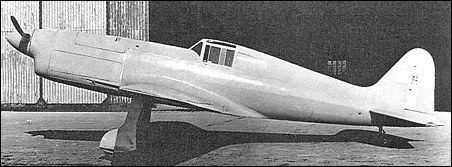
Despite highly enthusiastic flight test reports, the need for increased production of combat aircraft necessitated the shelving of the S.A.I.7 trainer, but the aerodynamic qualities of the basic design were such that Stefanutti contemplated its adaptation as a lightweight interceptor fighter. The initial single-seat model, the S.A.I.I07, was built for research purposes and, powered by a 540-h.p. Isotta-Fraschini Gamma, was flown early in 1942

Working at the Societa Aeronautica Italiana of Ing Angelo Ambrosini, Sergio Stefanutti developed the S.107 lightweight fighter from the S.7 tandem two-seat aerobatic trainer and competition aircraft. Flown for the first time early in 1940, the S.107 was powered by a 515hp Isotta-Fraschini Gamma R.C.35-I 12-cylinder inverted-Vee air-cooled engine and armament was one 7.7mm machine gun. As initially flown, the S.107 was fitted with a long, faired windscreen extending over the engine in an attempt to reduce aerodynamic drag. This was found to impair vision from the cockpit, and it was replaced by a stepped windscreen. Performance was demonstrated at Guidonia, and progressive development of the basic design led to the S.207, the sole example of the S.107 being lost in an accident on 18 July 1941.

Engine: Isotta-Fraschini Gamma RC.35-I, 515 hp
Take-off weight: 1600 kg / 3527 lb
Empty weight: 1280 kg / 2822 lb
Wingspan: 9.00 m / 29 ft 6 in
Length: 8.00 m / 26 ft 3 in
Height: 2.40 m / 7 ft 10 in
Wing area: 13.10 sq.m / 141.01 sq ft
Max. speed: 500 km/h / 311 mph
Range: 800 km / 497 miles

Ambrosini S.A.I.7

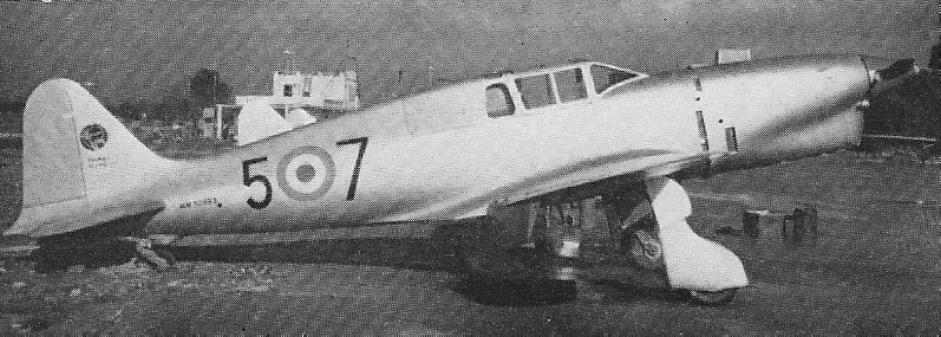
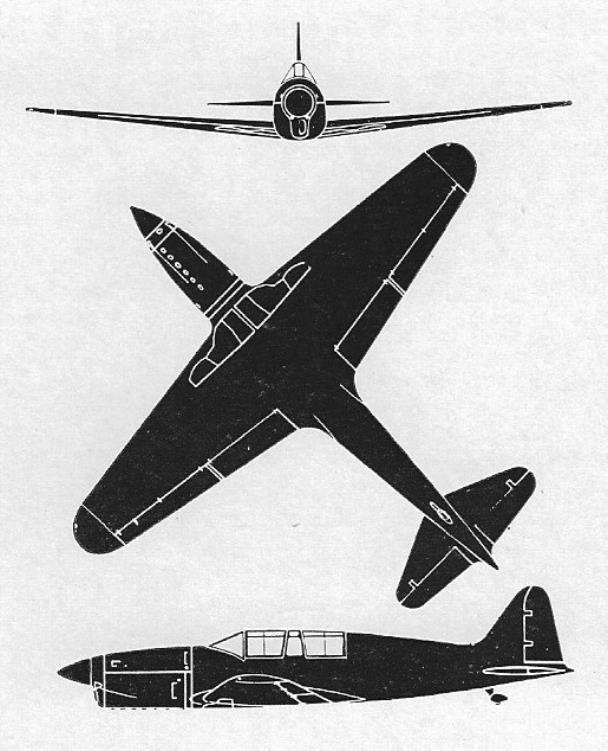
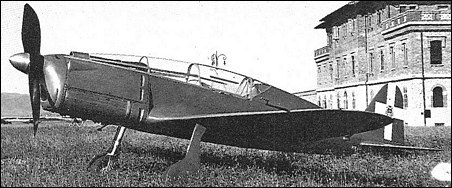
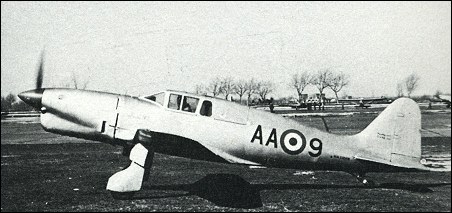
Designed between October 1938 and April 1939 by Sergio Stefanutti as a two-seat high-speed tourer monoplane, the Ambrosini S.A.I.7 was a low-wing cantilever monoplane of wooden construction with fully retractable landing gear.
The first two aircraft were specifically intended to take part in the IV Avio Raduno del Littorio contest for touring aircraft, and they flew within days of each other, only shortly before the competition opened at Rimini aerodrome on 15 July 1939. Both aircraft had an additional streamlined glazed section added between the nose and the normal cabin enclosure for the contest. The S.A.I.7s did not win the contest, but one machine captured an international speed record over the 100km closed circuit on 27 August 1939. The F.A.I. Category I aircraft with a speed of 244 m.p.h
Ten of the S.A.I.7 militarised two-seat fighter trainer version appeared during 1943, and the experimental S.A.I.107, S.A.I.207 and S.A.I.403 light fighters were developed from it.
In 1949 S.A.I. Ambrosini placed the S.A.I.7 in full-scale production. The post-war version replaced the 209kW Hirth HM.508D engine of the record-breakers and the 209kW Isotta-Fraschini Beta RC.10 of the wartime version with an Alfa Romeo engine, but apart from improved constructional detail there were few major changes.
Most of the 145 post-war Ambrosini S.7s, some of them completed in single-seat configuration, formed the equipment of various flight training centres attached to the Aeronautica Militare zone headquarters. The military service was terminated in 1956
The S.7 participated in numerous competitions and Leonardo Bonzi established international records over the 100km and 1000km distances on 21 December 1951, with average speeds of 367.36km/h and 358.63km/h respectively.

Engine: Hirth HM.508D, 209kW (280-hp)

Engine: Isotta-Fraschini Beta RC.10, 209kW (280-hp)

Engine: 1 x Alfa Romeo 115ter, 168kW
Take-off weight: 1317 kg / 2904 lb
Empty weight: 1105 kg / 2436 lb
Wingspan: 8.79 m / 28 ft 10 in
Length: 8.17 m / 26 ft 10 in
Height: 2.8 m / 9 ft 2 in
Wing area: 12.8 sq.m / 137.78 sq ft
Max. speed: 358 km/h / 222 mph
Cruise speed: 264 km/h / 164 mph
Ceiling: 5250 m / 17200 ft
Range: 1000 km / 621 miles

Ambrosini SS 4

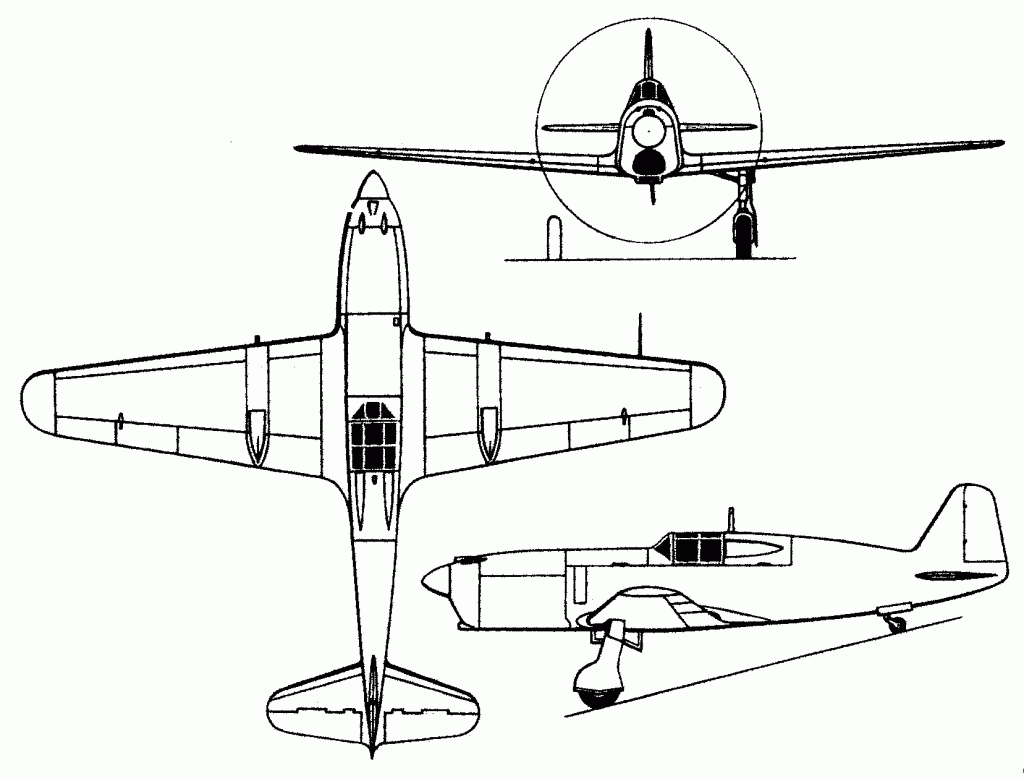
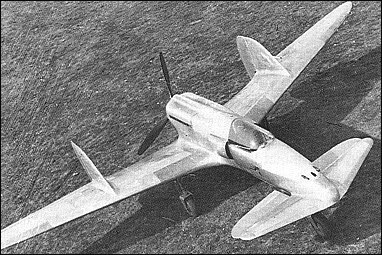
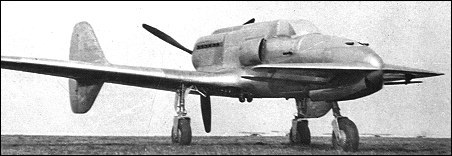
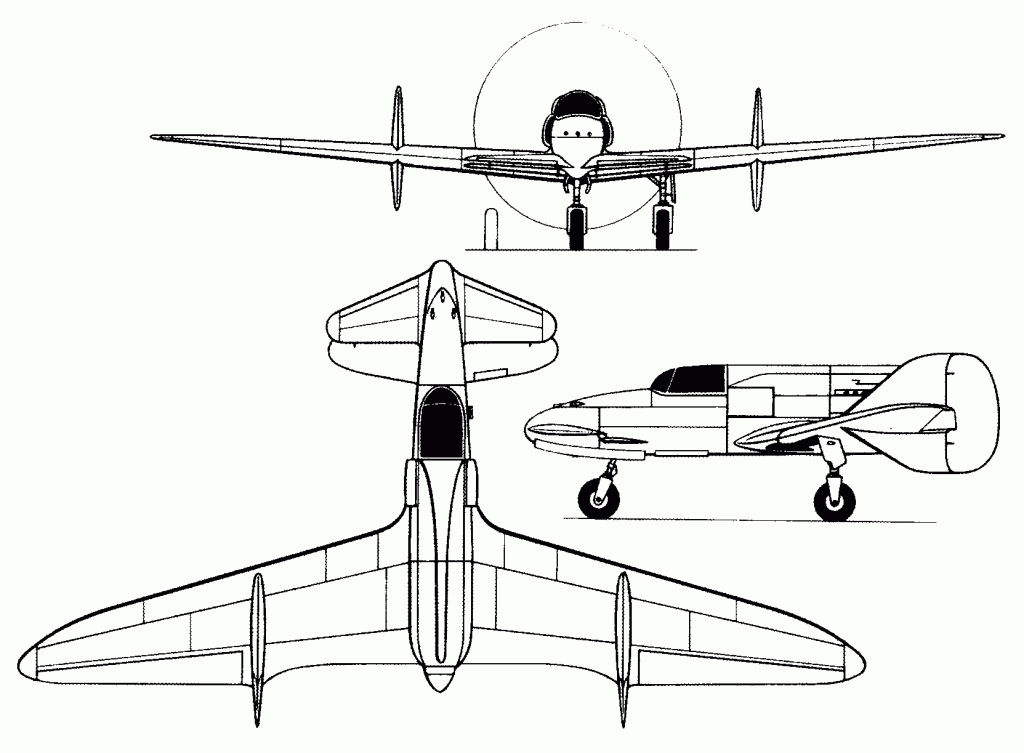
The single-seat S.S.4 monoplane fighter designed by Ing Sergio Stefanutti was tail-first configuration with a retractable nosewheel undercarriage. Built by the Societa Aeronautica Italiana Ing A Ambrosini it was of all-metal construction and powered by a 960hp liquid-cooled 12-cylinder Isotta-Fraschini Asso XI R.C.40 engine driving a three-bladed variable-pitch pusher propeller.

With a 960 hp Isotta Fraschini Asso XI 12 cylinder liquid-cooled engine, the S.S.4 was capable of a maximum speed of 540 kph (335 mph) at 5000 m (16,400 ft) and was to have been armed with two 20 mm and one 30 mm cannon.

The sole prototype was first flown on 7 March 1939, but was destroyed during its second flight on the following day when the starboard aileron separated, the wing developed a high amplitude oscillation and the aircraft entered a dive and crashed at Guidonia.

Although. the Italian Air Ministry ordered another prototype, pres¬sure of other projects caused the fighter to be abandoned. No further development was undertaken.

Manufacturer’s estimates:

Engine: Isotta-Fraschini Asso XI R.C.40, 960hp
Take-off weight: 2446 kg / 5393 lb
Empty weight: 1800 kg / 3968 lb
Wingspan: 12.32 m / 40 ft 5 in
Length: 6.74 m / 22 ft 1 in
Height: 2.48 m / 8 ft 2 in
Wing area: 17.50 sq.m / 188.37 sq ft
Max. speed: 540 km/h / 336 mph

Ambrosini S.A.I.3

Designed as a two-seat light training and touring monoplane, the Ambrosini S.A.I.3 had long-span elliptical wings, a deep rear fuselage and a fixed tailwheel type landing gear. The chosen powerplant was either a 63kW Fiat A.50 radial or 97kW Alfa Romeo A.110 inverted inline piston engine, the latter enclosed within a close cowling. Small batches of the S.A.I.3 were built, some of them with an enclosed cabin in place of the more common tandem open cockpits. The more powerful Alfa Romeo-engined model had superior performance, despite a maximum take-off weight increase by 40kg to 830kg; maximum speed rose to 230km/h, service ceiling to 5200m and range to 680km.

S.A.I.3
Engine: 1 x Fiat A.50 piston engine, 63kW
Take-off weight: 790 kg / 1742 lb
Empty weight: 550 kg / 1213 lb
Wingspan: 10.45 m / 34 ft 3 in
Length: 7.05 m / 23 ft 2 in
Height: 2.8 m / 9 ft 2 in
Wing area: 14 sq.m / 150.69 sq ft
Max. speed: 200 km/h / 124 mph
Cruise speed: 170 km/h / 106 mph
Ceiling: 4000 m / 13100 ft
Range: 620 km / 385 miles

Ambrosini S.A.I. 2

S.A.I. 2S

Ambrosini took over the Passignano factory of the Societa Aeronautica Italiana in 1934 and in 1935 produced the S.A.I. 2 five seat cabin monoplane for the Littorio Rally and Air Race,

The S.A.I. 2S four-seater cabin monoplane was developed from the S.A.I. 2, and the post-war Grifo and Girfalco were developed directly from this aircraft.

Engine: Alfa 115, 185 hp
Wingspan: 34 ft 11 in
Length: 25 ft 6 in
Height: 9 ft 2 in
Empty weight: 158 lb
Loaded weight: 3124 lb
Max speed: 161 mph
Cruise: 137 mph
Range: 702 mi

Ambrosini           

After incorporation of Societa Aeronautica Italians with Ing A. Ambrosini & Cie, they specialised in fast tourers and sporting monoplanes, though SA11 was biplane. In the immediate pre-war years its Passignano plant was responsible for a successful series of light cabin monoplanes.
In 1939, the chief designer, Sergio Stefanutti, developed an unorthodox tail-first, single-seat fighter, the S.S.4.

The series of light monoplanes had culminated in the S.A.I.7, The series of light monoplanes had culminated in the S.A.I.7 which, of exceptionally clean design and powered by a 280-h.p. Hirsh H.M.508D air-cooled engine, gained the 100-km. closed circuit record for F.A.I. Category I aircraft with a speed of 244 m.p.h. in 1939. The S.A.I.7 possessed excellent flight characteristics. Stefanutti had designed the aircraft with the alternative role of fighter trainer in mind, and a fully militarized trainer prototype flew in 1941. The original prototype featured a long, faired windscreen which extended to the front of the engine cowling to reduce drag, but the military trainer had an orthodox cockpit canopy for the tandem-seated pupil and instructor, and the German Hirsh was replaced by a 280-h.p. Isotta-Fraschini Beta R.C.I0.

The S.A.I.7 trainer basic design were such that Stefanutti contemplated its adaptation as a lightweight interceptor fighter. The initial single-seat model, the S.A.I.I07, was built for research purposes.

The S.A.I.I07 was externally similar to the S.A.I.207, which was built to full fighter requirements and carried an armament of two 20-mm. cannon and two 12.7-mm. machine guns. In dives the S.A.I.207 fighter attained an indicated air speed of 466 m.p.h. at 10,000 ft. (representing a true air speed of 596 m.p.h., or Mach 0.86), and maximum level speed was 357 m.p.h., which was attained on the 750 h.p. provided by an Isotta-Fraschini Delta R.C.40 engine. 2,000 were ordered, though only 13 completed. The type being replaced by proposed production of the SAI 403, work on which finished at war’s end.

Encouraged by the performance of the S.A.I.207, Sergio Stefanutti developed the more ambitious S.A.I.403 Dardo, which featured increased wing area and redesigned tail surfaces. Carrying a similar armament to that of its predecessor, the Dardo was powered by a 750-h.p. Delta R.C.21/60 engine which provided a maximum speed of 403 m.p.h. Large-scale production of the Dardo was planned, but the armistice precluded further development.

Other wartime activities of the S.A.I.-Ambrosini concern were the construction of the AL-12P troop- and cargo-carrying glider designed by Aeronautica Lombarda S.A., and the development of the Ambrosini AR “flying bomb”. Conceived by General Ferdinando Raffaelli as an anti-shipping weapon, the flying bomb was powered by a 1,000-h.p. Fiat A.80 radial engine and was to have been flown off the ground by a pilot who would then bail out, the bomb being directed to its destination by remote radio-control. Flight tests began on 13th June 1943, and four further examples were built at the Venegono plant. Flight trials were successful and a speed of 225-230 m.p.h. was expected, but the bomb was too late to see operational service.

In 1948 the S1001 Grifo broke more records. The S 7 was delivered in small numbers and developed into the Super S 7 (1950s). The F 7 Rondone was 3/4-seat cabin tourer.
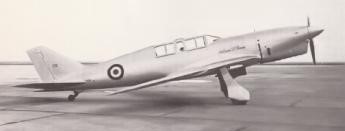
Alvarez Cardenian glider

In March 1941, Eugenio Hernández Alvarez, from Carden, completed the calculations and plans, and began the selection and testing of the Cuban woods that would be used in the construction of a glider. Construction began in July 1941 and was completed in November 1945.

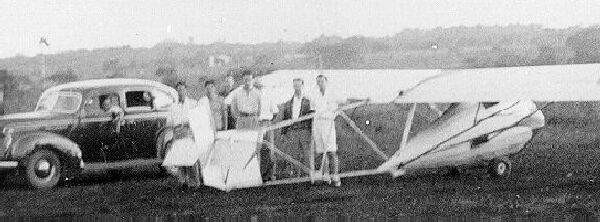
The builders were: Eugenio Hernández Alvarez and Mario Ajón. They used the area around Eugenio’s house, as well as their tools and for four years in their free time, it can be said, they built this glider.

Eugenio and Mario with the glider

In December 1945, all the tests required to obtain the certification and license granted by the Cuban Aeronautical Federation were carried out. Eugenio Hernández Alvarez, Pedro de la Fé and Flores, were the two test pilots.

In January 1946, all the details of this glider were made known to the Cuban press. On the demonstration flight, Pedro de la Fé Flores was the pilot and Eugenio Hernández told the press about the entire process of this special flight.

At one o’clock, on the track of the Pilderó farm, using a special rope 1,500 feet long (brought from Manila and paid for by Luis Ramírez) and powered by a Ford car driven by Avilio la Fé, the glider ascended at a height of 800 feet.

Using the thermal currents, the glider flew for 23 minutes, over the southern limits of the city of Cárdenas, Matanzas, Cuba, 5 kilometers from the takeoff place, returning to this place without losing the height of 800 feet, making a perfect landing.

This “Primus in Cuba” glider was a work of engineering and individual Cuban and Cardenian initiative according to the report by René Blázquez de la Grana that appeared in “El Crisol”, Havana, January 9, 1946.