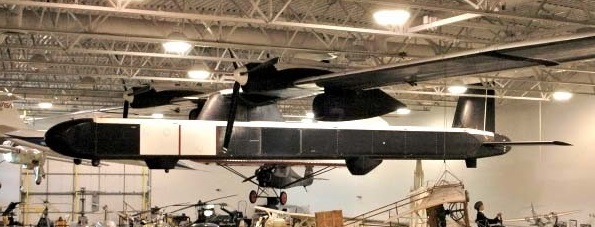
The Boeing Condor was a high-tech test bed reconnaissance aircraft built in the late 1980s. With a wing span of over 200 feet, the Condor is larger than either the Boeing 747 or the Boeing B-52 bomber. The Condor had an un-refuelled flight duration of 80 hours. It was powered by two 175 hp, six-cylinder opposed, twin supercharged, liquid cooled, Continental TSOL-300-2 engines. The aircraft is totally robotic with no pilot. On board computers communicate with computers on the ground via satellite to control all facets of the Condor’s mission.
The Condor set an altitude record for a piston powered aircraft of 67,000 feet, over twelve and a half miles high. The Condor logged over 300 hours of secret missions before its retirement. All of its test flying took place at Moses Lake, Washington.
Very light for its size, the Condor was built of state-of -the-art carbon fiber composite materials, giving the Condor stealth qualities. With a very low radar and heat signature footprint, the Condor was nearly electronically invisible.
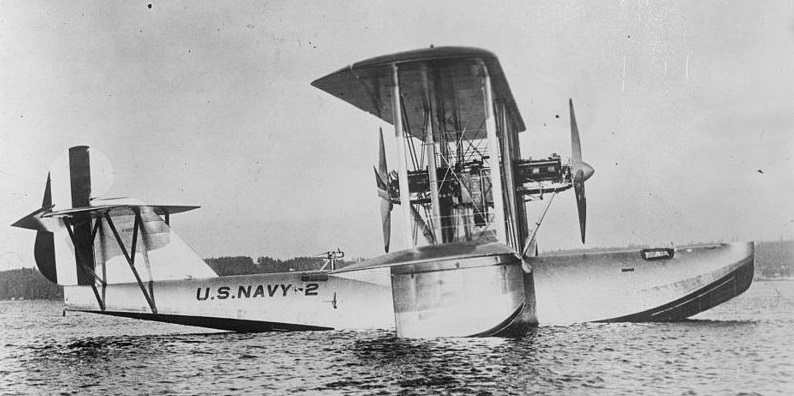
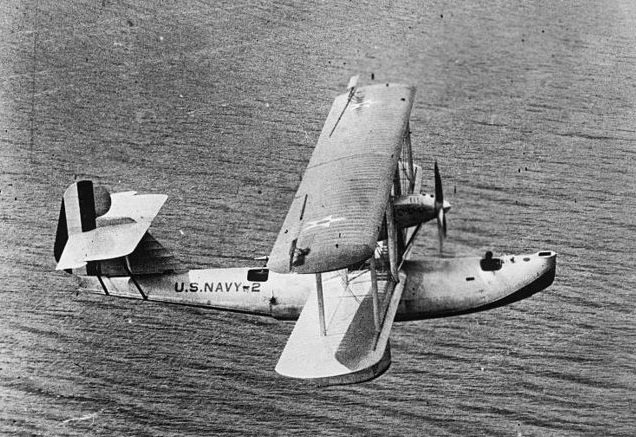
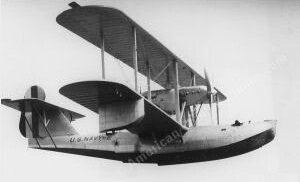
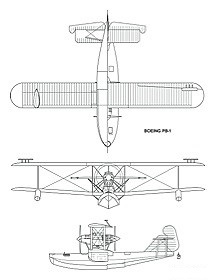
In September 1924, the Naval Aircraft Factory was tasked with designing a long-range twin-engined flying boat, capable of flying the 2,400 mi (3,860 km) between San Francisco and Hawaii. The initial design was carried out by Isaac Laddon, an employee of Consolidated Aircraft, and then passed to Boeing for detailed design and construction. The new flying boat, the Boeing Model 50, was a two-bay biplane of very streamlined design for flying boats of the time. The wings were of metal construction, with wooden wingtips and leading edges. The fuselage had a metal lower part, with the upper half made of laminated wooden frames with a wood veneer covering. Two 800 hp (600 kW) Packard 2A-2500 V12 engines driving four-bladed propellers were mounted in tandem between the wings above the fuselage.
The Boeing Model 50, designated PB-1 by the US Navy, made its maiden flight in August 1925 as A6881. It was intended to use it to lead a pair of Naval Aircraft Factory PN-9s in an attempt to fly to Hawaii on 31 August 1925, but engine trouble led to its participation in the flight being cancelled.
PB-1
In 1928, the aircraft was modified by the Naval Aircraft Factory, its Packard engines were replaced by two 500 hp (370 kW) geared Pratt & Whitney R-1690 Hornet radial engines, leading to the new designation PB-2.
Although the aircraft was a prototype the U. S. Navy did not distinguish between experimental and operational aircraft at that time so the aircraft was never designated XPB-1 or XPB-2.
XPB-1 Engines: 2 × Packard 2A-2500, 800 hp (600 kW) each Length: 59 ft 4.5 in (18.098 m) Wingspan: 87 ft 6 in (26.67 m) Wing area: 1,801 sq ft (167.3 m2) Airfoil: Clark Y Height: 20 ft 10 in (6.35 m) Empty weight: 11,551 lb (5,239 kg) Gross weight: 26,882 lb (12,193 kg) Maximum speed: 97 kn; 180 km/h (112 mph) Cruise speed: 82 kn; 151 km/h (94 mph) Service ceiling: 9,000 ft (2,700 m) Range: 2,172 nmi; 4,023 km (2,500 mi) Rate of climb: 4,000 ft/min (20 m/s) Armament: none fitted Crew: 5
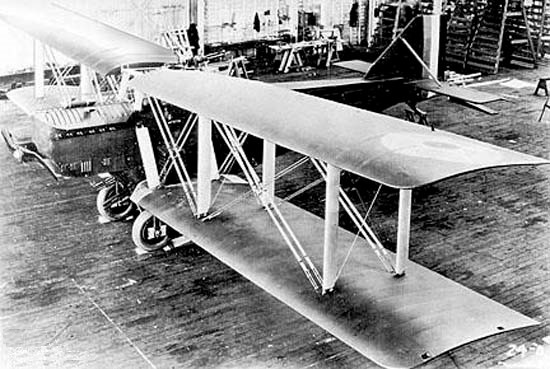
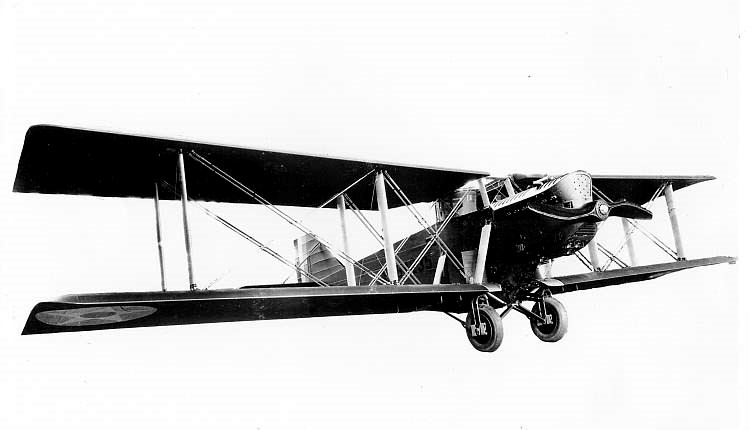
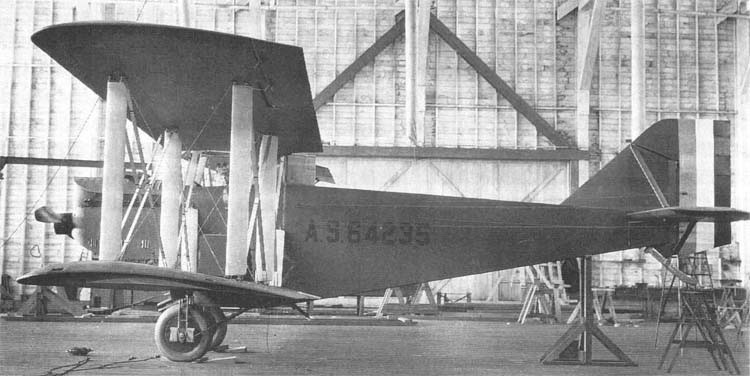
After the failure with the construction of GA-1 (and it was considered the refusal of the military to purchase a large series), Boeing decided to change the design of its attack aircraft while preserving the concept itself. The next model that received the designation GA-2 was already a single-engine armoured biplane that was also tested on the basis at McCook Airbase.
The GA-2 was initially seen as a prototype for a new three-engine attack aircraft with 700 hp engines, but as a result, the military ministry ordered two prototypes. The reservation remained approximately identical to GA-1, but due to the reduction of the crew and the number of engines, the mass of it decreased. The weapons were also changed, the gun remained in the same place, and two machine guns were placed in the turret instead of the turrets in front of the nacelle.
Both aircraft were left at the McCook airbase where they flew until 1926.
GA-2 Engine: Engineering Division W-18, 750 hp Wing span: 16.47 m Length: 11.25 m Height: 3.60 m Wing area: 258.00 sq.m Empty weight: 2934 kg Normal take-off weight: 3941kg Maximum speed: 206 km / h Cruising speed: 182 km / h Range: 364 km Maximum climb rate: 220 m / min Ceiling: 3505 m Crew: 3 Armament: one 37-mm Baldwin cannon, 6×7.62 mm Browning machine guns
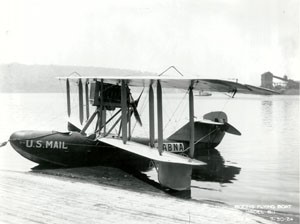
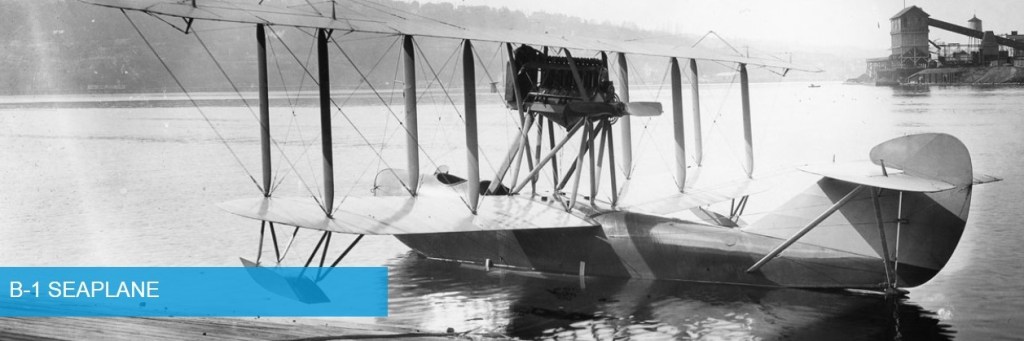
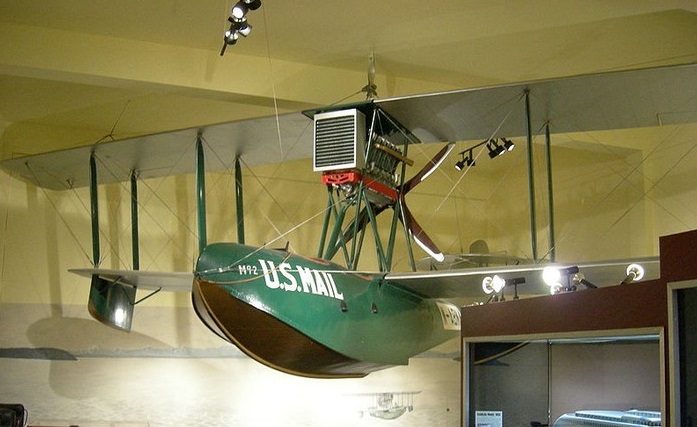
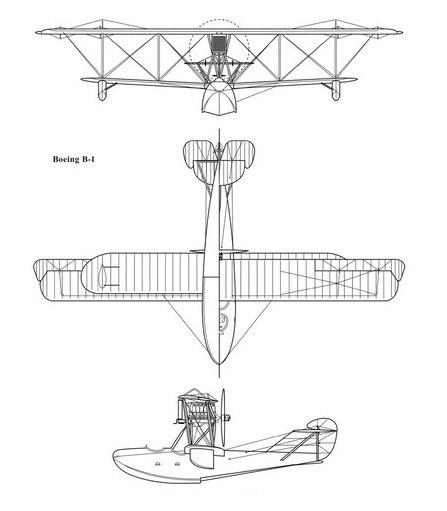
The Boeing Model 6, also known as the B-1 was a small biplane flying boat designed by William Boeing shortly after World War I. The Model 6 was the first commercial design for Boeing (as opposed to military or experimental designs), hence the B-1 designation. Its layout was conventional for its day, with a Hall-Scott engine driving a pusher propeller mounted amongst the cabane struts. The pilot sat in an open cockpit at the bow, and up to two passengers could be carried in a second open cockpit behind the first. The hull was laminated wood veneer, and the wing frames were spruce and plywood. The design was reminiscent of the Curtiss HS-2L that Boeing had been building under license during the war.
Only a single aircraft was built, first flying on 27 December 1919, as Boeing had trouble selling it in a market flooded with war-surplus aircraft. In 1920, it was purchased by Edward Hubbard, who used it to carry air mail between Seattle, Washington and Victoria, British Columbia. Air mail service began on 27 December 1919, and continued for eight years. The B-1 mail flights took off from Lake Union in Seattle. It outlasted six engines in eight years of international airmail runs between Seattle, Wash., and Victoria, British Columbia. Flown by Eddie Hubbard, the B-1 covered 350,000 miles (563,000 kilometers).
The plane flew until 1930 before being preserved and put on display at Seattle’s Museum of History and Industry in 1954.
Model 6 on display at the Museum of History and Industry in Seattle
Engine: 1 × Hall-Scott L-6, 200 hp (149 kW) 6 or 400-hp Liberty Prop: 4 blade wooden fixed pitch Wingspan: 50 ft 3 in (15.32 m) Wing area: 492 sq.ft (45.7 sq.m) Length: 31 ft 3 in (9.53 m) Height: 13 ft 4 in (4.06 m) Empty weight: 2,400 lb (1,089 kg) Gross weight: 3,850 lb (1,746 kg) Maximum speed: 90 mph (145 km/h) Cruise speed: 80 mph (128 km/h) Range: 400 miles (640 km) Service ceiling: 13,300 ft (4,050 m) Crew: one pilot Capacity: 2 passengers
The USAF’s Air Education and Training Command (AETC) began developing the requirements for a replacement for the Northrop T-38 Talon as early as 2003. Originally, the replacement trainer was expected to enter service around 2020. A fatigue failure of a T-38C killed the two-person crew in 2008 and the USAF advanced the target date of initial operational capability (IOC) to 2017. In the Fiscal 2013 budget proposal, the USAF suggested delaying the initial operating capability to FY2020 with the contract award not expected before FY2016. Shrinking budgets and higher priority modernization projects pushed the IOC of the T-X program winner to “fiscal year 2023 or 2024”. Although the program was left out of the FY 2014 budget entirely, the service still viewed the trainer as a priority.
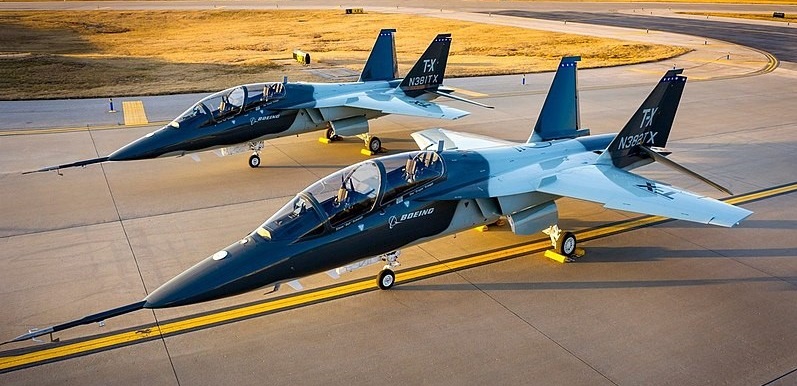
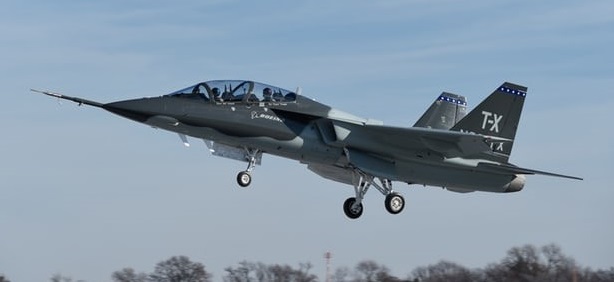
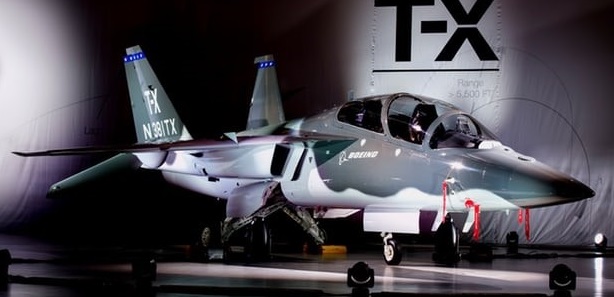
In cooperation with its Swedish aerospace partner, Saab, Boeing’s submission to the competition was the Boeing T-X, a single-engine advanced jet trainer with a twin tail, tandem seating, and retractable tricycle landing gear. The submitted aircraft and demonstration models featured a General Electric F404 afterburning turbofan engine.
The Boeing T-X jet fighter trainer was developed in partnership with Swedish defense contractor Saab. The partners’ strategy was demonstrating to the Air Force and the US Department of Defense the ability of the “blank sheet” aircraft to compete with off-the-shelf competitors for a contract in terms of quick delivery.
It has twin tails derived from Boeing’s F/A-18 for greater maneuverability and a high angle of attack, stadium seating, an advanced cockpit with embedded training, and the ability to blend with state-of-the-art ground-based training. In addition, it’s billed as being maintenance-friendly in anticipation of decades of service.
Boeing revealed its aircraft to the public on 13 September 2016. The first T-X aircraft flew on 20 December 2016, as BTX-1, on a 55-minute flight. Two protypes were built.
On 27 September 2018, Boeing’s design was officially announced as the USAF’s new advanced jet trainer to replace the T-38 Talon. A total of 351 aircraft and 46 simulators, maintenance training and support are to be supplied at a program cost of US$9.2 billion.
In May 2019, Saab announced that it would open a U.S. manufacturing facility for the T-X in Indiana in partnership with Purdue University.
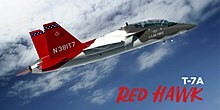
On 16 September 2019, the USAF officially named the aircraft the “T-7A Red Hawk” as a tribute to the Tuskegee Airmen, who painted their airplanes’ tails red, and to the Curtiss P-40 Warhawk, one of the aircraft flown by the Tuskegee Airmen.
U.S. Air Force publicity photo of the T-7A Red Hawk showing Red Tail livery
Boeing intends to offer an armed version of the T-7 as replacement for aging Northrop F-5 and Dassault/Dornier Alpha Jet fleets around the world.
A second T-X was being ground tested in 2017.
The design officially entered production in February 2021 as T-7A for the U.S. Air Force.
Powerplant: 1 × General Electric F404-GE-103, 11,000 lbf (49 kN) thrust dry, 17,000 lbf (76 kN) with afterburner Crew: 2
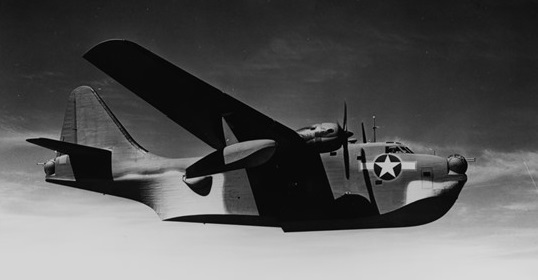
Well before the United States entered World War II, the Navy started a program to develop a long-range flying boat, able to cover the vast expanse of the Pacific Ocean. The Model 344 design offered by Boeing was chosen, and a contract for 57 aircraft was awarded on 29 June 1940.
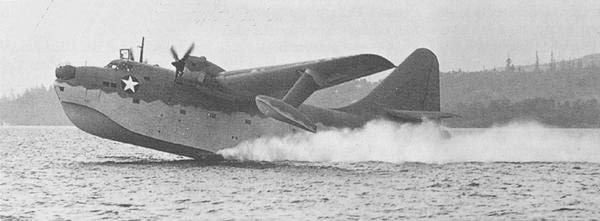
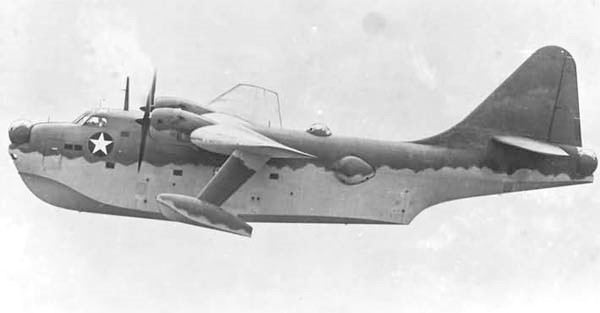
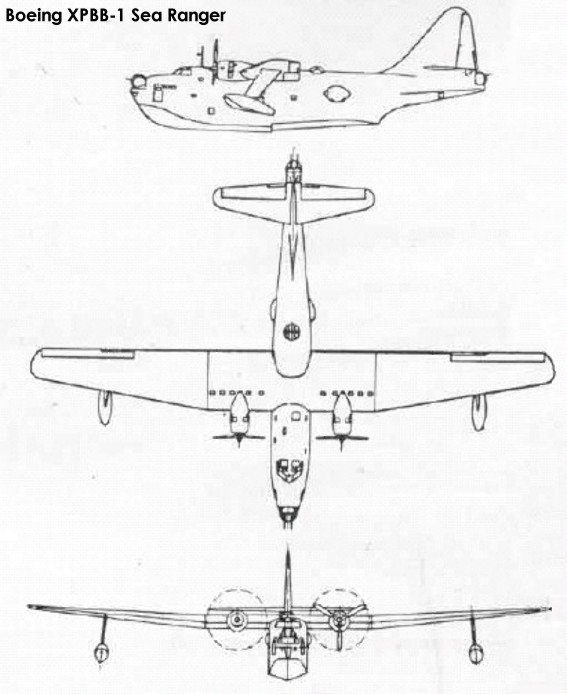
To build the large twin-engined XPBB-1 Sea Ranger (Boeing 344) flying boat Patrol Bomber prototype, Boeing started construction of a new lakeside factory in Renton, Washington, that was owned by the US Navy. The Navy owned 95 acres (38 hectares) on the south shore of Lake Washington in Renton, Wash. The waterfront site provided natural protection from prevailing winds, so it was easier to launch seaplanes directly from the plant. However, the prototype was constructed mostly in Seattle, and was moved to Renton only to be completed.
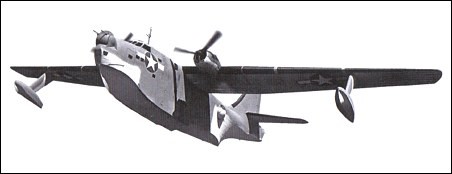
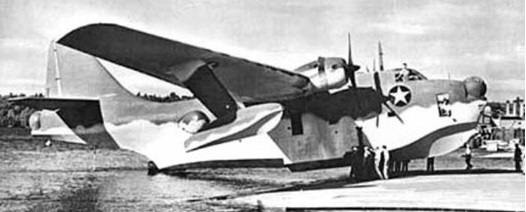
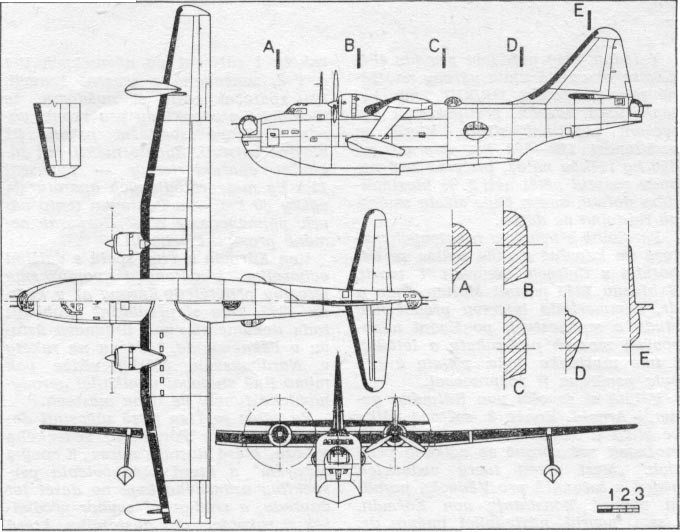
To achieve the desired long range, the PBB became a large aircraft, with a wing span of 139 feet 8½ inches (42.59 m) and a crew of 10. Despite this size, it was powered by just two Wright R-3350 Duplex Cyclone radial engines, driving three-bladed Curtiss Electric propellers. It was the largest twin-engined flying boat flown during World War II. For a flying boat, the PBB was aerodynamically clean, with a cantilever wing set high on the fuselage. The planing bottom had a single step, and the non-retractable outrigger floats were attached to streamlined, cantilever struts. The lower hull was divided in seven watertight compartments, and a short upper deck provided seating for the cockpit crew. The wing of the PBB was constructed in a centre section and two outer panels. The centre section carried the engine nacelles and contained the internal bomb bays, as well as fuel and oil tanks. The outer wing panels contained main and auxiliary, integral fuel tanks.
The defensive armament of the PBB consisted of five powered turrets equipped with Browning .50 M2 machine guns. They were installed in the nose, in the tail, on the upper fuselage just aft of the trailing edge of the wing, and in two waist positions on the rear fuselage. Except for the waist guns, the turrets had two guns each. Offensive armament could consist of up to 20,000 lb of bombs in internal bomb bays in the wing centre section (five bays on each side) or of two Mk.13 or Mk.15 torpedoes slung under the wing centre section.
The 1710 US gallon auxiliary outer and 1565 US gallon inner fuel tanks were intended to be used only in an overload condition, in which the PBB would use catapult-assisted take off to achieve a theoretical range of 11000 miles (17700 km). Normal range using the main fuel tanks was 4245 miles (6830 km).
The PBB was the first aircraft of the Patrol Bomber category built by Boeing for the Navy.
In March 1941 the Navy’s Bureau of Aeronautics asked the Naval Aircraft Factory for a catapult able to launch a PBB-1. The NAF duly prepared a design for a Mark VII catapult that would be able to launch a fifty-ton PBB-1 at a speed of 130 miles per hour. The catapult would be installed on a lighter, so that the flying boat could be lifted onto it with a large crane or hydraulic jacks. However, in the summer of 1942, while development of the Mk.VII catapult was still ongoing, the Navy cancelled the project because it considered JATO assistance at take-off more practical.
The prototype, designated XPBB-1 (hull number 3144), made its first flight on 9 July 1942 from Lake Washington. The aircraft handled very well and was considered technically successful.
The Boeing 25-year tradition of building seaplanes came to an end when the Lone Ranger flew out of Renton for the last time on Oct. 25, 1943, heading for the Navy base in San Diego, Calif.
However, already in 1942 the PBB programme had been cancelled: The need for a long-range flying boat had been reduced by the ability of land planes such as the Consolidated PB4Y to fly long-range missions over the ocean, and construction of a small number of PBB-1s would have a negative impact on the production rate of the B-29. The Navy allowed the Army to use the Renton factory for the production of B-29 bombers, in return for the use of another factory in Kansas.
The single XPBB-1 was handed over to US Navy in 1943, and was used in trials programmes at the naval base in San Diego until 1947, when it was finally retired to the Norfolk Naval Air Station in Virginia. It remained the single example of the type, and was accordingly nicknamed “Lone Ranger”.
The Navy traded the Renton site with the U.S. Army for a plant in Kansas City, Mo., and the Army took over the Renton plant, where Boeing workers subsequently produced 1,119 B-29 bombers. After the war, the Renton plant eventually became a manufacturing facility for Boeing commercial jet transports.
XPBB-1 Sea Ranger Engines: 2 × Wright R-3350-8 Double Cyclone, 2,300 hp (1,716 kW) Wingspan: 139 ft 8½ in (42.59 m) Wing area: 1,826 ft² (169.7 m²) Length: 94 ft 9 in (28.89 m) Height: 34 ft 2 in (10.42 m) Empty weight: 41,531 lb (18,878 kg) Loaded weight: 62,006 lb (28,185 kg) Max. takeoff weight: 101,130 lb (45,968 kg) Maximum speed: 186 knots (214 mph, 345 km/h) at sea level Cruising speed: 158 mph / 254 km / h Range: 6,300 mi (5,500 nm, 10,000 km) (maximum) Normal range: 3,691 NM, (4,245 mi, 6,834 km) Service ceiling: 22,400 ft (6,830 m) Rate of climb: 980 ft/min (4.98 m/s) Endurance: 72 hr Wing loading: 34.0 lb/ft² (166 kg/m²) Power/mass: 0.15 hp/lb (0.24 kW/kg) Armament: 8 × .50 in (12.7 mm) machine guns in bow and tail turrets and waist positions Bombload: 20,000 lb (9,100 kg) Crew: 10
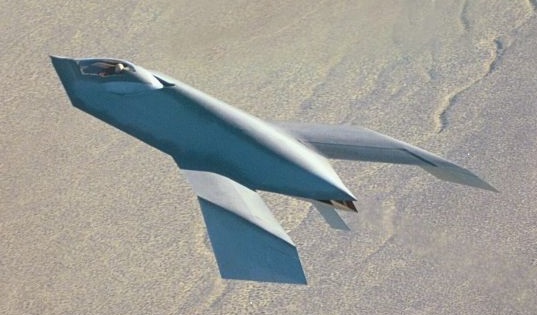
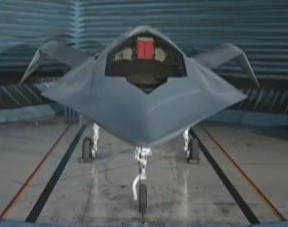
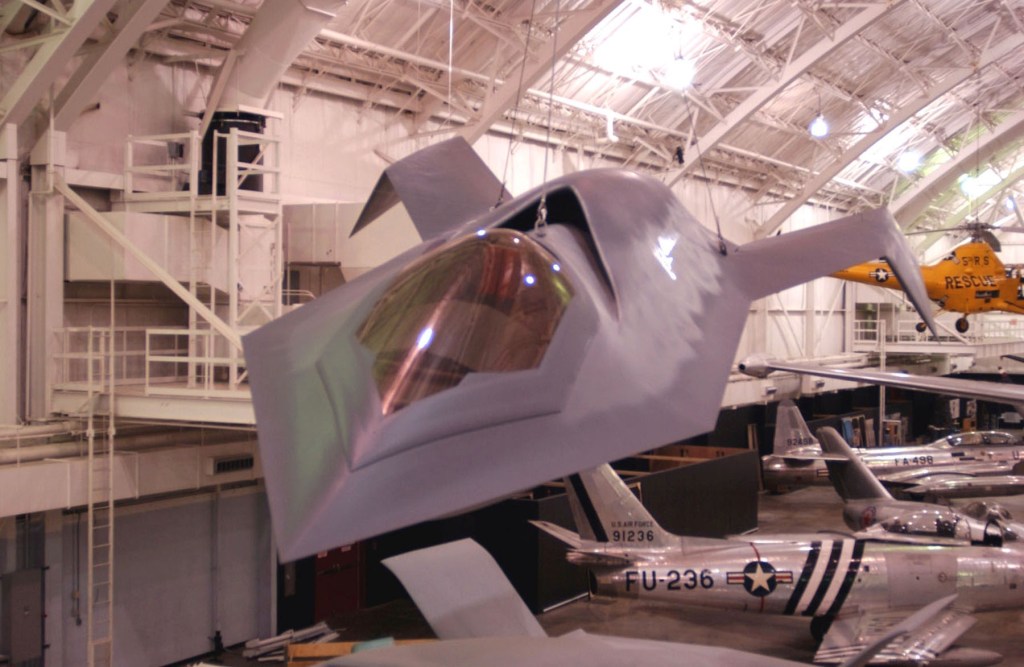
The Boeing Bird of Prey was a black project tested at the top secret Groom Lake facility. The Bird of Prey, named after the Klingon one in Star Trek, was a stealth technology demonstrator. Developed by the McDonnell Douglas Phantom Works (which later became part of Boeing), only one Bird of Prey technology demonstrator was built, taking to the air in the fall of 1996.
Funded entirely by the company, Bird of Prey was a relatively low cost programme at $67 million, utilising off-the-shelf components. To keep expenses down, the Aircraft used a Pratt & Whitney JT15D which is commonly found in Citation Jets and the Beechjet. It is speculated that the aircraft tested active camouflage, the ability to match the local environment, changing colour and luminosity. Cloaking! Another reason to reference Star Trek. Despite its radical appearance, the aircraft was aerodynamically stable enough to use manual hydraulic controls rather than fly-by-wire, reducing both development time and cost.
The aircraft made 39 flights before the programme’s conclusion in 1999, helping develop technologies since used on Boeing’s X-45 and X-47 unmanned combat air vehicles.
After the programme’s conclusion, Bird of Prey was stored in Dyson’s Dock for three years before being declassified in October 2002. In October 2002 Boeing revealed the existence of the Bird of Prey.
The sole Bird of Prey can be found at the Museum of the United States Air Force in Dayton Ohio.
Boeing, in a joint project with the Defense Advanced Research Projects Agency, had begun testing its revolutionary new canard rotor/wing aircraft, known as the X 50A Dragonfly, making the aircraft’s first hover flight by 2004. It is designed to combine the speed and range of a fixed wing aircraft with the flexibility of a helicopter. Its rotor is designed to be used for take off and landing, while in flight it stops and is used as a fixed wing. The aircraft is 17.7 feet long and 6.5 feet high and weighs 1460 pounds. The rotor/wing diameter is 12 feet. It also has a fixed canard measuring 8.9 feet in span and an 8.1 foot span horizontal tail and is propelled by a conventional turbofan engine.
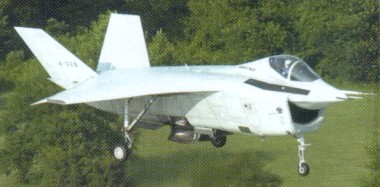
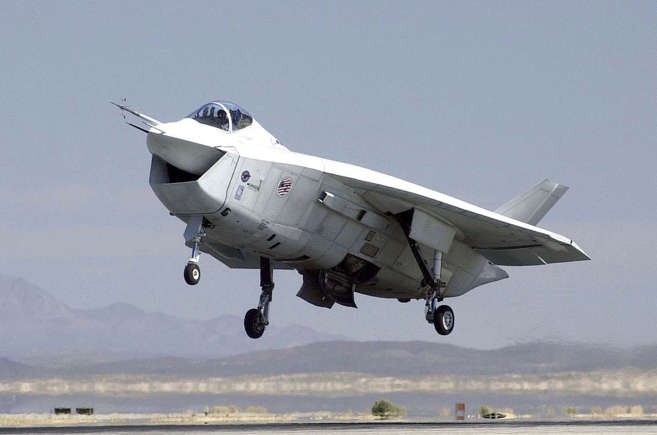
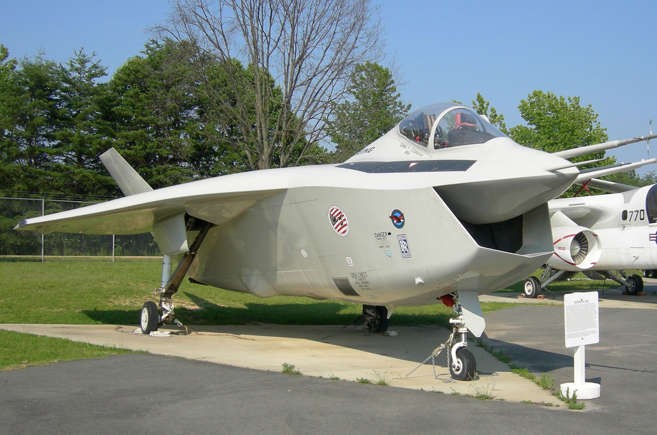
The X-32 STOVL (Short Take-Off and Vertical Landing) technology demonstrator was the Boeing Company’s response to the Department of Defense’s “Joint Strike Fighter Program” beginning in 1994. Boeing’s Joint Strike Fighter (JSF) demonstrator, the X-32A carries its weapons internally in side bays.
The X-32B achieving the first vertical landings following transition from conventional to STOVL flight. The X-32 competed – and failed – against the Lockheed submission, which went on to become the F-35.
Boeing X 32 Joint Strike Fighter Engine: General Electric YF 120 FX, 176580 N Length: 46.916 ft / 14.3 m Height: 13.123 ft / 4.0 m Wingspan: 36.089 ft / 11.0 m Wing area: 538.2 sq.ft / 50.0 sq.m Weight empty: 19999.4 lb / 9070.0 kg Crew: 1 Armament: 1x MG 27mm Mauser, max. 7700kg
Boeing X-32A Engine(s): 2 x Pratt & Whitney F135 turbofan, up to 35,000lbs thrust. Length: 50.75ft (15.47m) Width: 35.99ft (10.97m) Height: 17.32ft (5.28m) Maximum Take-Off Weight:37,920lbs (17,200kg) Maximum Range: 979miles (1,575km) Service Ceiling: 50,000ft (15,240m; 9.5miles) Armament: 1 x 20mm M61A-2 cannon OR 1 x 27mm Mauser BK-27 cannon Maximum external load: 15,000lbs approx. Seats: 1
Originally developed by Flight Concepts, the Skyfox twin-turbofan advanced trainer was developed and marketed by the Boeing Military Airplane Company, which holds an exclusive production licence for the aircraft. More than 700 active T-33s, of which the Skyfox is a remanufacture, have been iden¬tified by Boeing, and at least 200 are seen as potential subjects for conversion.
Skyfox N221SF first flew on August 23, 1983, piloted by Skip Holm or Tony LeVier, and has two externally mounted 16.4kN thrust Garrett TFE731 engines in place of the T-33’s single 20.5kN J33 turbojet. The forward fuselage is reprofiled in the absence of air intakes and faired into enlarged leading edge root extensions. Winglets are fitted in place of the T-33’s tip tanks, and internal fuel capacity is increased to compensate. A redesigned, enlarged empennage is fitted. The tandem cockpit is updated with modern avionics, equipment, and Stencel ejection seats. The resulting aircraft retains 70 per cent of the T-33’s original structure, including the wing and landing gear.
The rights to the Skyfox transferred to Boeing as Boeing Skyfox. The registration was cancelled in 1997.
Gemini Engine: 2 x Garrett TFE731-3A, 3700 lb Installed thrust: 33 kN. Span: 11.8 m / 37’10” Length: 14 m / 44’0″ Empty wt: 4665 kg. MTOW: 9070 kg. Warload: 2720 kg. Max speed: 935 kph. Initial ROC: 3050 m / min. Ceiling: 15,240 m / 50,000′ T/O run (to 15m): 670 m. Ldg run (from 15m): 1097 m. Fuel internal: 2950 lt. Range: 5560 km. Hardpoints: 4 Seats: 2