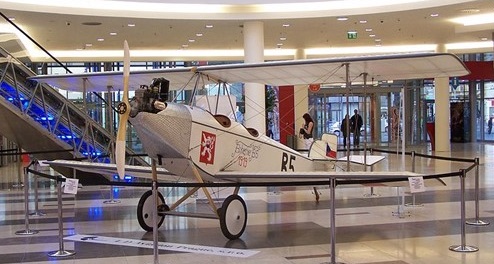
The Bohemia B.5 was a single engined, two seat, light sport aircraft designed and built in Czechoslovakia shortly after World War I.
The B.5 was the first aircraft designed and built in Czechoslovakia at the end of the First World War. Designed and constructed at the Bohemia Pilsen works the B.5 had one engine and two seats in separate, tandem open cockpits. The B.5 was a typical biplane sport/trainer aircraft of the period, with staggered upper and lower wings; the lower wing attaching directly to the lower fuselage between the two cockpits and the one piece upper wing supported on cabane and inter-plane struts.
The structure of the fuselage and wings was entirely conventional with fabric and/or plywood skinning and wooden structure. Conventional fin and tailplane were sited at the rear of the fuselage and were fitted with fin and elevators of generous area for yaw and pitch control. Roll control was effected by ailerons fitted to the upper wings only. The undercarriage consisted of bungee sprung main-wheels on a live axle supported by wire-braced struts and a sprung tail-skid at the extreme end of the fuselage.
Power was supplied by a Neue Automobil-Gesellschaft mbH NAG 4-cyl in-line piston engine, rated at 40 hp (30 kW), turning a two-blade wooden propeller counter-clockwise as viewed from the cockpit.
Colours and markings were simple with the fabric covering being left in its natural colour doped with a clear varnish. Large black letters across the span of the lower wing bottom surface spelt out BOHEMIA.
The prototype first flew from Pilsen aerodrome on 27 April 1919, but due to its lacklustre performance it was not a commercial success with few sales. The prototype B.5 crashed on Saturday, 17 May 1919, killing the student, Joseph Klíbr, and slightly injuring the instructor in the rear cockpit, Rudolf Polanecký. The remains of the B.5 were swiftly resurrected in just six weeks.
The B.5 kept flying until 1923 when it was owned by Chrudim J. Wiesner. By this time the NAG engine was completely worn out and unsafe. Wiesner and a test pilot from the Aero factory, Rudolf Valenta, converted the B.5 to a glider by removing the engine, modifying the front fuselage and replacing the wheeled undercarriage with skids. Results of attempts to fly the glider by Valenta Kbelská were mediocre due to the poor aerodynamic qualities and lack of a suitable launching area.
No complete B.5 exists today, but the fuselage is on display at the Prague Aviation Museum, Kbely.
Engine: Neue Automobil-Gesellschaft mbH NAG, 30 kW (40 hp) Wingspan: 8.00 m (26 ft 3 in) Length: 6.68 m (21 ft 11 in) Wing area: 18.05 sq.m (194.3 sq.ft) Height: 2.8 m (9 ft 3 in) Empty weight: 340 kg (750 lb) Gross weight: 520 kg (1,147 lb) Maximum speed: 110 km/h (68 mph) Service ceiling: 1,500 m (4,921 ft) Range: 120 km (74 miles) Endurance: ca 3 hours Seats: 2
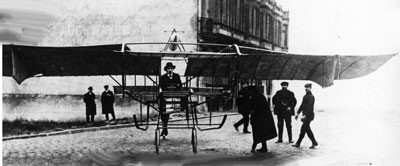
Michał Bohatyrew, Polish-born engineer and officer of the Russian Army built at Modlin an airplane with canard configuration in 1910-12, which crashed during the first flight.
In 1910, Michał Bohatyrew built a canard aircraft in Mońki near Białystok, called “Utka Nadieżda” (“Kaczka-Nadzieja”). Modeled on a Voison canard, but it was a monoplane.
A single-seat monoplane with a wooden structure. Double-girder rectangular lobe stiffened with steel wires. Truss hull with rectangular cross-section in the front and triangular in the rear with ash bars, taffeta cover. The cabin is open. Four-wheeled chassis with anti-cabotage skids.
After initial tests, the aircraft was transported to St. Petersburg, where it was shown at the First Exhibition of New Works in April 1911. Then, at the St. Gatczyno airport. the designer made further tests of the aircraft. During the first take-off the plane was crashed.
Engine: air-cooled, 18 kW (25 HP) Empty weight: 250-270 kg Total weight: 350-370 kg. Speed: 45-50 km / h.
This machine, named after the Blue-footed booby (Sula nebouxii), was built in 1909/1910 in Ostend, Belgium, by Nicolas Boel, together with his brother Louis. It had a wingspan of 9.5 m and was 9 m long. With a turn of the steering wheel the pilot was able to operate the rear rudder, while the forward or backward movement of the steering column caused the elevator to raise and lower. Like on the Voisin, there was no lateral control. Some members of the Aero Club expressed their doubts as to whether that rickety thing could ever fly. Nicolas recognized the merits of their criticism, but instead of, as his brother quietly hoped, losing his heart, he immediately went back to work to improve his first creation, which became the Blauwvoet II.
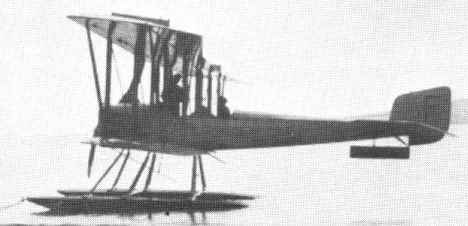
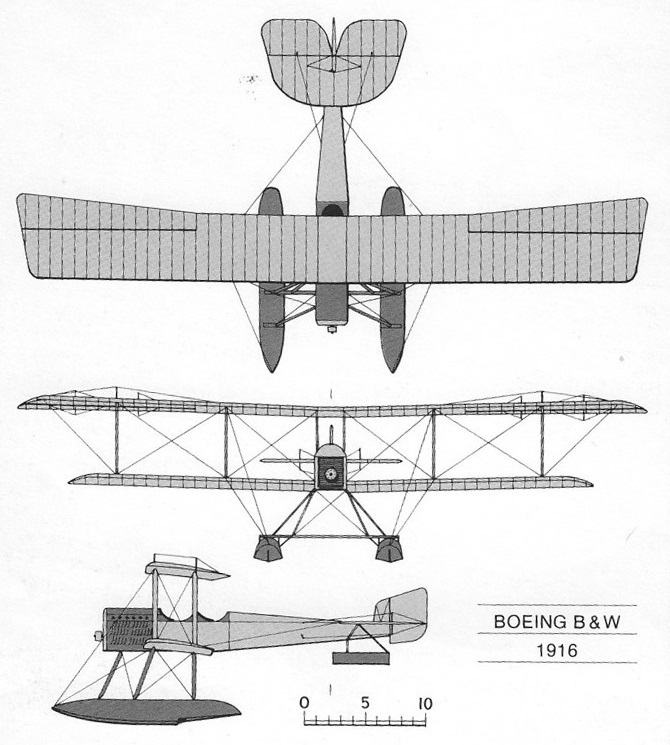
The B & W Model 1 design was the result of a collaboration between William E. Boeing and a friend, Cdr G.C. Westervelt of the US Navy, and the B & W designation recognised this association. Of wood and fabric construction, extensively strutted and wire-braced, the Model 1 was an unequal-span biplane, with ailerons on the upper wings only. The fuselage, mounted directly on the lower wing, had two open cockpits in tandem, and carried at the rear a tail unit that was a typical braced structure of its period. Power was provided by a Hall-Scott engine mounted in the nose of the fuselage to drive a tractor propeller. Floatplane landing gear included two single-step floats, strut-mounted and braced beneath the fuselage, plus a small float under the tail to prevent disaster in a tail-down landing. The first of two Model 1s was flown initially on 29 June 1916, by which time Cdr Westervelt had been posted to the other side of the American continent. William Boeing decided, therefore, to establish a company to build these aircraft, and his Pacific Aero Products Company was founded on 15 July 1916 in a rented boathouse on Seattle’s Lake Union. The first company to incorporate the Boeing name, the Boeing Airplane Company, was formed on 26 April 1917. The two Model 1s, construction numbers 1 and 2, were sold to the New Zealand government.
Later, Boeing staff created a replica of the B&W1.
Engine: 1 x Hall-Scott A-5, 125 hp / 93kW Take-off weight: 1270 kg / 2800 lb Empty weight: 953 kg / 2101 lb Wingspan: 15.85 m / 52 ft 0 in Length: 9.5 m / 31 ft 2 in Wing area: 53.88 sq.m / 579.96 sq ft Max. speed: 121 km/h / 75 mph Cruise speed: 108 km/h / 67 mph Range: 515 km / 320 miles
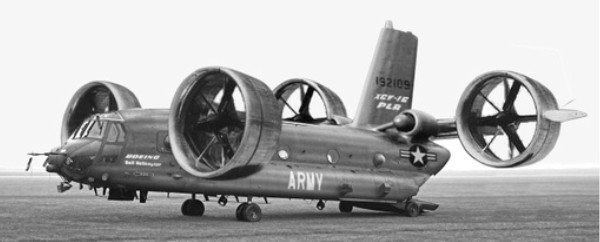
On 31 March 1960 Vertol became a Division of The Boeing Company with the title Boeing Vertol Company. Continued production of the Vertol-designed Model 107 23/25-seat twin-rotor transport aircraft, built subsequently in civil and military versions. Developed larger transport helicopter as the H-47 Chinook (first flown September 1961) which, in addition to supply to the U.S. Army, served with many other forces worldwide; also built by Agusta in Italy and Kawasaki in Japan. Company later absorbed fully into The Boeing Company, initially as the helicopter division of Boeing Defense and Space Group and then as part of Aircraft and Missile Systems business unit of ISDS.
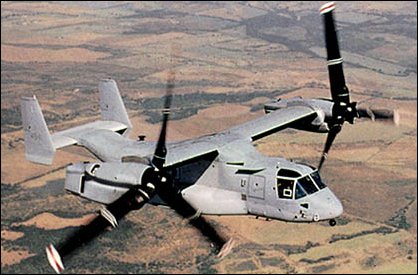
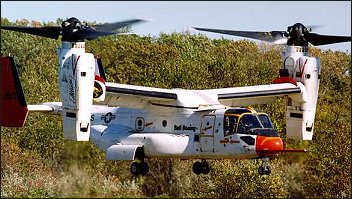
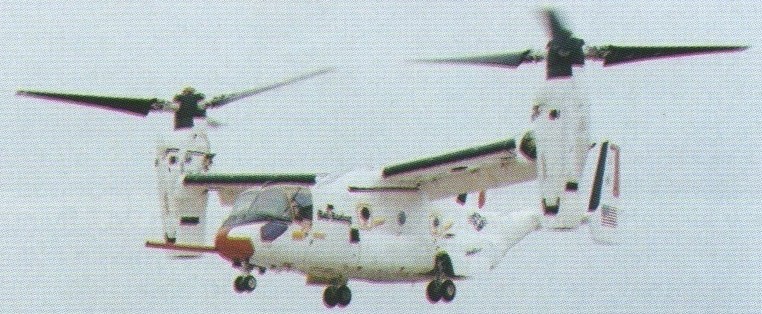
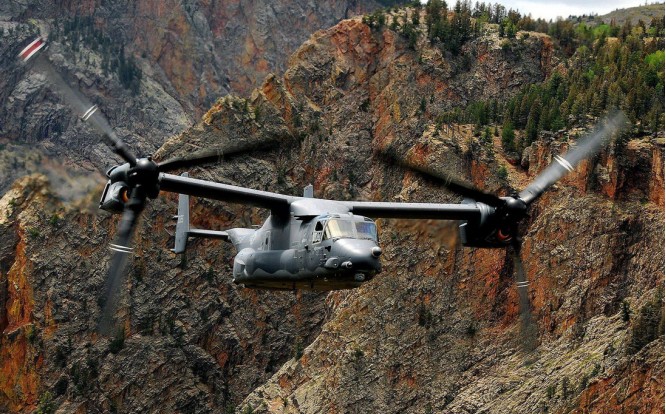
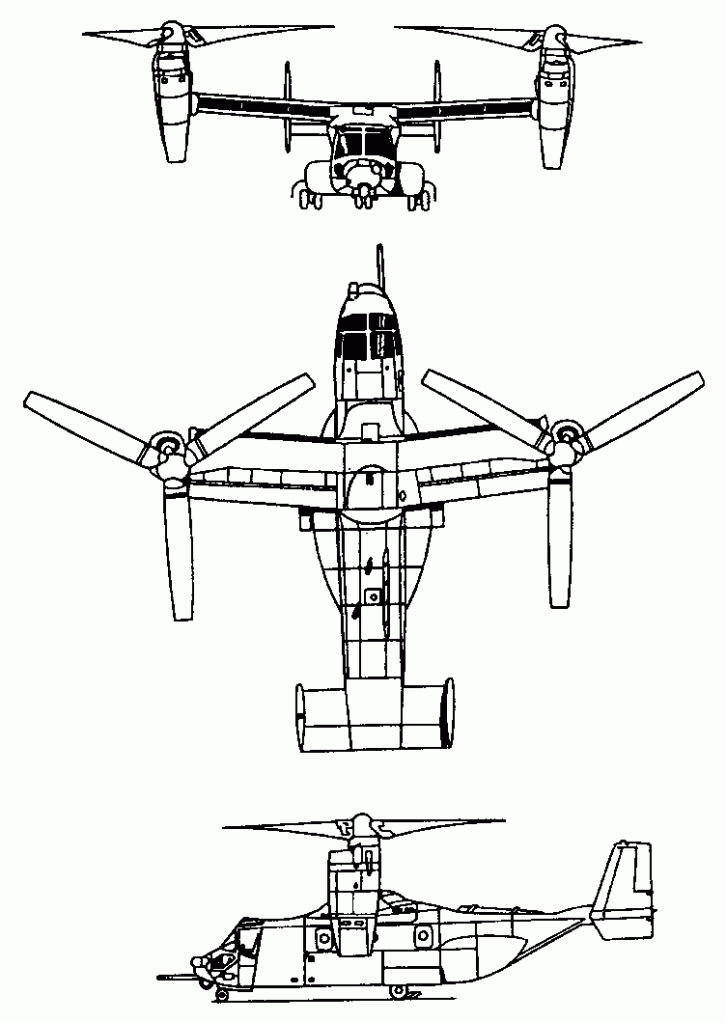
The Bell company brought a history of vertical-lift Tilt-Engine system development to this program when it combined with Boeing in the early 1980s. The company had demonstrated such a system with the XV-3, proving that it was possible to turn wingtip rotors from a vertical position to horizontal, thus providing the thrust to lift the vehicle off the ground and then transition to horizontal flight. The XV-3 was followed by the XV-15, which would closely resemble the V-22, with the XV-15 initially serving as the test vehicle for the V-22. During the early 1980s, the Bell-Boeing competed for the Joint Services Advanced Vertical Lift Aircraft (JVX). Then, on April 26, 1983, the joint team was awarded the contract to begin the preliminary design stage. Initially called the Bell/Boeing-Vertol JVX, the plane would later be given the V-22 Osprey designation, and later, special mission variations carrying the designations of MV-22, HV-22, and CV-22. The 1983 plan called for 1086 of the tri-service VTOLs to be produced with a total procurement cost of $25 billion, with the funding to be shared by the three services. The Navy was to assume the bulk of the obligation with 50 percent contribution. The initial requirement called for the craft to be capable of carrying 24 troops. Power for the Osprey comes from a pair of General Electric T64-GE-717 turboshaft engines, each rated at 6150hp, and the V-22 weighs about 24800kg at maximum take-off weight in a STOL configuration, and about 19840kg in a pure VTOL mode. Its empty weight is just over 14880kg. The rotor diameter is 11.6m, with an overall fuselage length of about 17.4m. With the rotors in the take-off position, the height of the vehicle is just over 6m. The width of the vehicle, with the rotors turning, is almost 26m. Those rotors are capable of rotating through 97 degrees and are constructed of graphite/glassfibre. 33 percent of the weight of the Osprey is fabricated of graphite/glassfibre. The rotors also possess separate cyclic control swashplates for sideways flight and fore-and-aft control during hover. Lateral attitude is maintained by differential rotor thrust. Once the V-22 achieves horizontal flight, the engines have assumed a position parallel to the fuselage.
The V-22 can fly backwards by tilting the rotors back past the 90-degree vertical position. Initial performance requirements for the Osprey were a cruising speed of 480km/h with a range with a full payload of over 1450km. Even though the V-22 carries a cargo designation, it does carry a nose-mounted 12.7mm multi-barrel machine gun. There are redundant systems, along with armor, in critical areas. The composite materials also provide protection, and one engine can power both rotors if required with a cross-coupling capability.
The full-scale development program began in May 1986 with the order for six prototypes. Numbers 1, 3, and 6 were constructed by Bell at Arlington, Texas, and numbers 2, 4, and 5 by Boeing at Wilmington, Delaware.
The first V-22 first flew on 19 March 1989.
The V-22 completed its first transition from propeller to wingborne flight on 14 September 1989.
The world’s first operational tilt-rotor transport, the Bell/Boeing’s V 22 Osprey tilt rotor made a successful first flight on 19 March 1989 with “near perfect performance” reported during a series of vertical take offs and landings at Arlington, Texas. The full-scale development program began in May 1986 with the order for six prototypes. Numbers 1, 3, and 6 were constructed by Bell at Arlington, Texas, and numbers 2, 4, and 5 by Boeing at Wilmington, Delaware. The world’s first operational tilt-rotor transport, the Bell/Boeing’s V 22 Osprey tilt rotor made a successful first flight on 19 March 1989 with “near perfect performance” reported during a series of vertical take offs and landings at Arlington, Texas. Wearing grey/green US Marine Corps camouflage, the fourth Bell Boeing V-22 Osprey flew for the first time from Boeing Helicopters flight test centre on 21 December 1989. The flight marked the beginning of V-22 flight test activities at Boeing’s facility in the Delaware Valley. The first flights for the last test vehicle occured in 1991. In 1995, the production of test vehicles resumed with numbers 7 through 10 for vibration, propulsion, USMC, and mating evaluations. Final assembly of the first production V-22 was completed in late 1998. In early 1998, the V-22 accomplished its first night test flight. During the test, the V-22 flew with a neutral density filter which covered the cockpit displays. This allowed the pilots, which were using night vision goggles, to operate the displays in the day mode. Also included in the flight test program was to investigate its capabilities for carry external loads. In one test, the number eight prototype carried a five-ton sling load through the transition phase with a top speed of 425km/h. The test pilot indicated that even though he could feel the load oscillating beneath him, it didn’t affect the craft’s performance. The testing showed that certain loads caused dramatic shifts in the center of gravity of the V-22, which in turn required a change in the attitude of the aircraft. It was determined that that requirement could be accomplished by changing the angle of the engine nacelles. Other tests planned at the time included a sling weight of 6765kg and a Humvee jeep. Early crashes of two prototypes, both in 2000 and resulting in fatalities, nearly did the system in. With pressure mounting to produce, and the general kinks reportedly ironed out, the system was passed for full scale service in 2006. In 1997 low-rate initial production was undertaken for 23 V-22s (called MV-22s) for the USMC. The first MV 22B Osprey tilt-rotor was delivered to the Marines in May 1999. The US Navy has ordered the HV-22 version for SAR duties and fleet logistic support, but cancelled its interest in the Osprey program (HV-22 Combat SAR) in 2001. The projected cost of these first operational V-22s had a unit cost of $32.2 million each, a figure that was down considerably than the $41.8 million projected during the full-scale development program. The plane has attracted international interest, with both Israel and Australia both showing interest in the unique VTOL. Bell is building the wing section, empennage, and powerplant nacelles, while Boeing has the responsibility for the fuselage and landing gear. Bell is also responsible for the final assembly and initial flight tests.
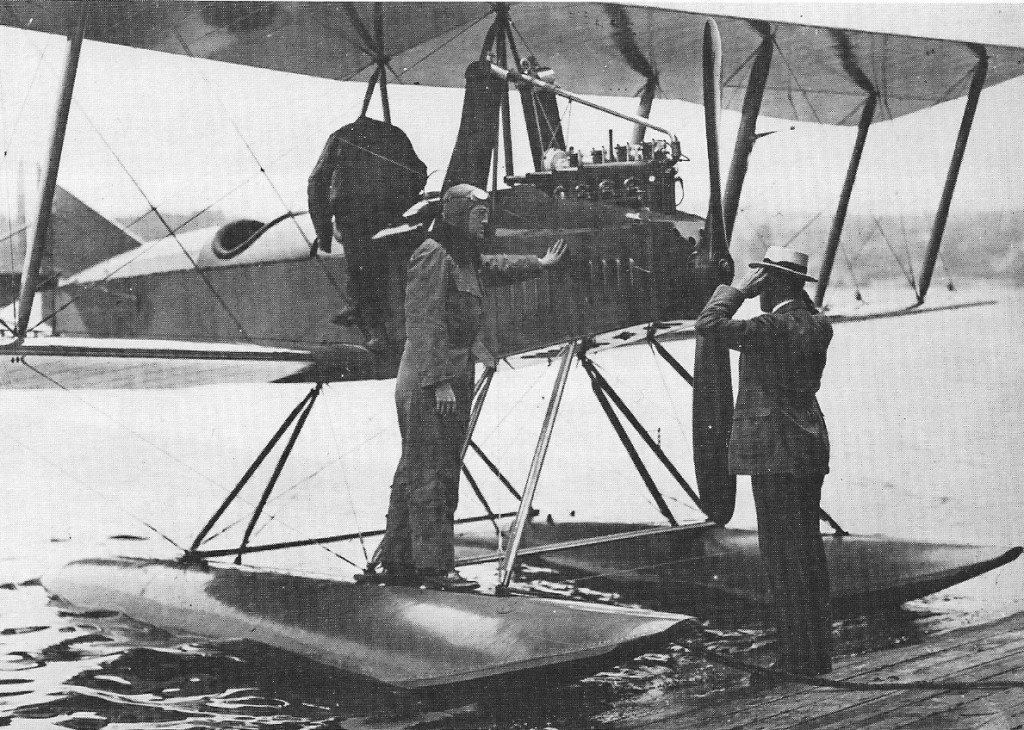
The Boeing C-700 was a development of the Model 5. Boeing (on the float) and Edward Hubbard put this aircraft to work in 1919 carrying mail between Seattle and Victoria B.C. and to ships at sea.
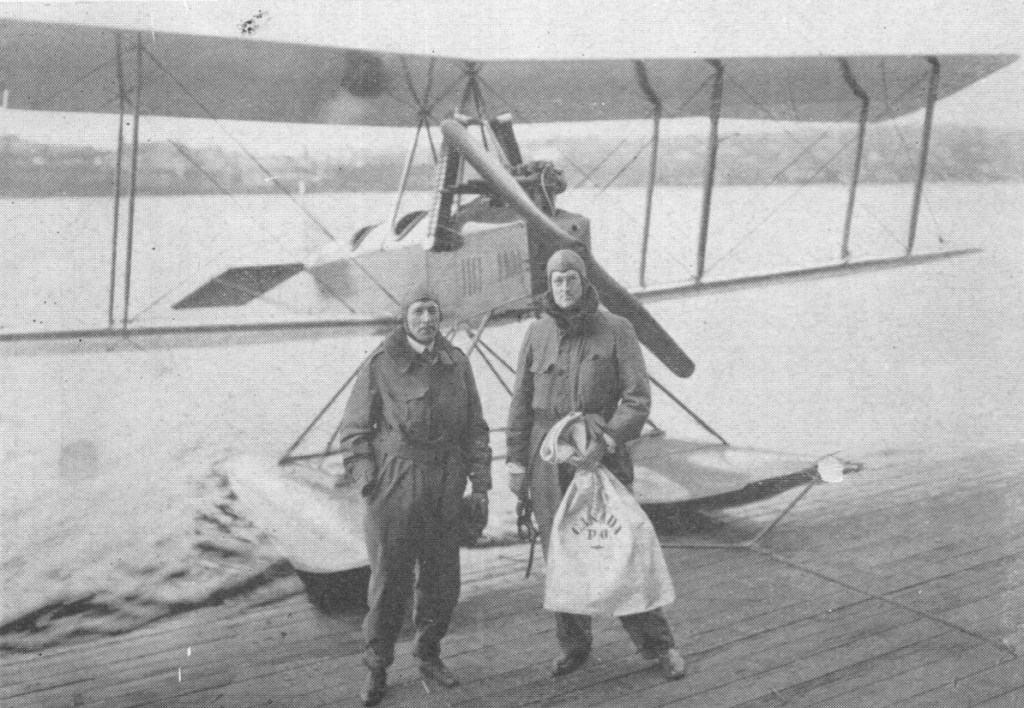
The first internation airmail flight was made from Vancouver to Seattle on 3 May 1919 by Eddie Hubbard and Bill Boeing. A pouch of 60 letters was carried in the C-700.
First international airmail
Powered by a Hall-Scott water-cooled four-cylinder of 100 hp, the cruise was 60 mph.