CASA C-202 Halcon

CASA 202

The second aircraft of original design to be produced in Spain, the CASA 202 Halcon flew for the first time on 21 May 1953. Twenty were being produced for Iberia’s internal routes.

CASA 202 Halcon
Engines: 2 x ENMA Beta B-4, 775 hp
Wingspan: 70 ft 9 in
Wing area: 617.6 sq.ft
Length: 52 ft 6 in
Height: 12 ft 6 in
Empty weight: 11,615 lb
Loaded weight: 17,900 lb
Max speed: 192.5 mph at SL / 230 mph at 23,950 ft
Cruise 70%: 205 mph
Service ceiling: 23,950 ft
Passenger capacity: 14-18
Crew: 3

CASA C 202 B Halcon
Engine: 2 x Wright Cyclone R 1850 56, 1282 hp
Length: 53.576 ft / 16.33 m
Height: 20.899 ft / 6.37 m
Wing span: 67.52 ft / 20.58 m
Wing area: 602.784 sq.ft / 56.0 sq.m
Max take off weight: 21278.3 lb / 9650.0 kg
Weight empty: 13825.4 lb / 6270.0 kg
Max. speed: 233 kts / 432 kph
Cruising speed: 215 kts / 398 kph
Service ceiling: 24934 ft / 7600 m
Wing load: 35.26 lb/sq.ft / 172.0 kg/sq.m
Range: 1485 nm / 2750 km
Crew: 2
Payload: 8pax

CASA C-101 Aviojet / E.25           

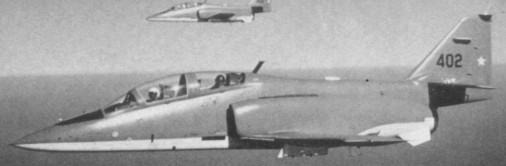
Designed by Construcciones Aeronauticas SA with collaboration from MBB and Northrop, the prototype of the CASA C 101 Aviojet made its maiden flight on 27 June 1977. A tandem two seat basic and advanced trainer with light attack capability, the C-101 is powered by a Garrett TFE731 2 25 non afterburning turbofan. The Aviojet features six pylons and a gun pack under the rear seat with either a single 30 mm DEFA cannon or two 12.7 mm machine guns.
The Garrett AiResearch TFE731 turbofan combines with a large integral fuel capacity to provide a seven hour endurance

CASA C-101 Aviojet Article

Spain’s CASA C 101 Aviojet has the Spanish air force designation E.25, entering service in 1980. An armed version has been exported to Honduras (4) and Chile (60).
Four versions of the Aviojet single-turbofan tandem-seat trainer have been built. The C.101EB was the initial trainer variant for the Spanish Air Force, production of which was completed during 1985.

An export trainer version, the C.101BB (operated by Chile as the T-36 Halcon), has an uprated engine and provision for arma¬ment on underwing hardpoints, while the C.101CC, (operated by Chile as the A-36 Halcon), is a light-attack aircraft with a further uprated engine offering 19.l3kN thrust. Weap¬ons options for the C.101CC include an under-fuselage 30mm DEFA cannon pod, rocket and gun pods underwing, together with bombs and AGM-65 Maverick ASMs.

The C-101BB armed export model differs from the C-101EB primarily in having a Garrett AiResearch TFE 731-3-1J turbofan rated at 3700 lb / 1658 kg rather than the 3500 lb / 1588 kg TFE 731-2-2J, and provision for interchangeable ventral packs containing either one 30mm DEFA 553 cannon or two 12.7mm M3 machine guns, six underwing pylons, an optical weapons sight and an armament control system. The -3 turbofan was first flown in the second Aviojet prototype in February 1981.
Announced in 1984, the C.101DD enhanced training version first flew on May 20, 1985. The CC.101DD Aviojet has the more powerful engine of the C.101CC combined with a major avionics upgrade which includes a Ferranti headup display weapons aiming computer, a Ferranti FIN 1100 altitude and heading reference system, a radar warning receiver, and flare/chaff dispensing pods. A reconnaissance pack and laser target designator are optional for both the C.101CC and DD versions.

C-101
Engine: 1 x Garrett TFE731-2-25 turbofan
Max Take-off weight: 5600 kg / 12346 lb
Empty weight: 3350 kg / 7386 lb
Wingspan: 10.6 m / 34 ft 9 in
Length: 12.25 m / 40 ft 2 in
Height: 4.25 m / 13 ft 11 in
Wing area: 20.0 sq.m / 215.28 sq ft
Max. speed: 685 km/h / 426 mph
Ceiling: 12500 m / 41000 ft
Range w/max.fuel: 3800 km / 2361 miles
Range w/max.payload: 370 km / 230 miles
Armament: 1 x 30mm cannon, 2000kg of weapons
Crew: 1-2

C.101CC Aviojet
Engine: 1 x Garrett TFE731-5.
Installed thrust: 19.2 kN (21kN).
Span: 10.6 m.
Length: 12.5 m.
Wing area: 20 sq.m
Empty wt: 3340 kg.
MTOW: 6300 kg.
Warload: 2250 kg.
Max speed: 769 kph.
Initial ROC: 1500 m / min.
Ceiling: 12,800 m.
T/O run: 560 m.
Ldg run: 480 m.
Fuel internal: 2410 lt.
Range/Endurance: 3700 km / 7 hr.
Combat radius lo-lo-hi: 520 km.
Armament: 1 x 30 mm or 2 x .5 in.
Hardpoints: 6.

CASA C-101EB Aviojet
Engine: 1 x Garrett TFE731-2-2J turbofan, 3,550lb thrust.
Length: 40.19ft (12.25m)
Width: 34.78ft (10.60m)
Height: 13.94ft (4.25m)
Maximum Speed: 478mph (770kmh; 416kts)
Maximum Range: 2,485miles (4,000km)
Rate-of-Climb: 4,900ft/min (1,494m/min)
Service Ceiling: 41,010ft (12,500m; 7.8miles)
Armament: 1 x 30mm DEFA cannon or 2 x 12.7mm M3 machine guns.
Up to 4,890lbs of external ordnance
Accommodation: 2
Hardpoints: 6
Empty Weight: 8,378lbs (3,800kg)
Maximum Take-Off Weight: 12,346lbs (5,600kg)

CASA

Construcciones Aeronauticas SA formed 3 March 1923, with a factory at Getafe, to produce all-metal aircraft for the Spanish Air Force. Began by license-building Breguet XIX reconnaissance-bomber biplanes, followed by other aircraft of foreign design including Dornier Wai flying-boats (at Cadiz), Vickers Vildebeest torpedo-bombers, Gotha Go 145C biplane trainers, Junkers Ju 52/3m transports, Bucker Bu 131, and 133 aerobatic trainers and Heinkel He 111 medium bombers. Opened a design department after the Second World War; first series product was Dornier Do 27 general-purpose lightplane, followed by CASA-201 Alcotan, CASA-202 Halcon and CASA-207 Alcotan twin-engined transports of own design. Completed 70 Northrop F-5 fighters under license for Spanish Air Force. In 1972 took over Hispano Aviacion, followed by the ENMASA aero- engine concern in June 1973. Currently has three divisions, namely Aircraft, Maintenance, and Space: Aircraft division activities include design of aircraft and integrated structures; share in international Airbus, Eurofighter, and FLA programs; manufacture of structural parts and components for Boeing, Eurocopter, Northrop Grumman, and Saab aircraft; continuing development and production of C-101 Aviojet advanced and lead-in jet trainer/light attack aircraft (first flown June 1977), C-212 Aviocar (first flown March, and currently offered in Series 400 form as first flown April 1997) in transport and maritime versions, and development of the new ATX family of advanced trainers and light combat aircraft; and production of CN 235 via international Airtech company.

Carter 1911 biplane

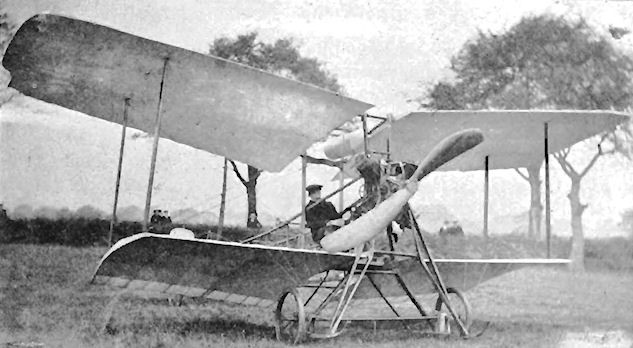
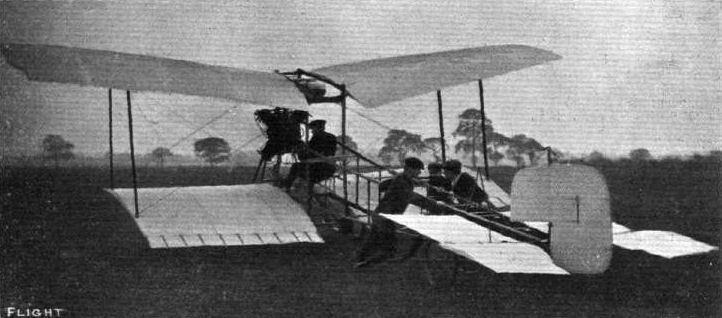
In the UK in 1911 Mr. Carter was out on the new machine and with the engine running fairly well, the machine made a few hops. The machine is of the biplane type of very short span, with the upper planes of slightly greater span than the lower ones. There is no elevator in front, but that position is occupied by the engine and propeller. The engine is an 8-cyl. made by the Nonpareil Motor Fitting Co. at Birmingham. At present it gives about 60-hp, but when properly tuned up it is expected to reach about 80-hp Mr.Carter succeeded in getting the biplane off the ground for short distances.

Mr. Carter was also out with his biplane after having made a few alterations to the tail. The machine rises very rapidly, in one case getting off the ground in 15 ft. but no extended flights were made owing to the fact that the engine was not running up to form.

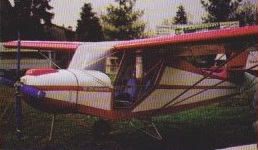
Carpenterie M 81 Butterfly

The M 81 uses mixed wood and steel construction, all covered in heat-shrunk Dacron.

Engine: Rotax 912, 80 hp
Wing span: 9.6 m
Wing area: 15.5 sq.m
MAUW: 450 kg
Empty weight: 255 kg
Fuel capacity: 40 lt
Fuel consumption: 15 lt/hr
Max speed: 150 kph
Cruise speed: 120 kph
Minimum speed: 65 kph
Climb rate: 3 m/s
Seats: 2
Price (1998): 30,000 DM
Kit price (1998): 20,000 DM

Carma VT-1 Weejet / Dale Air-Engineering WEEJET 800

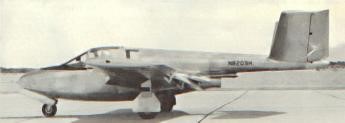
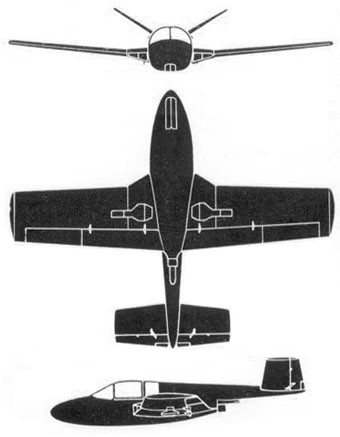
In the early fifties Harold Dale played with the idea to design the ideal jet trainer: seating trainee and instructor side-by-side in front of the wing for clear visibility all around. It should have a slow landing speed and a comfortable cruising speed of 350 mph. The plane Harold had in mind was a mid-wing cantilever monoplane of aluminium alloy structure, with slotted flaps, leading edge intake ducts, semi-monocoque fuselage, upwards opening doors, butterfly tail unit and retractable tricycle landing gear.

Harold Dale was a project engineer with North American working on the F-100, so his ideal plane had to be designed in the spare time. He had assistance from his wife Eleanor who also had an engineering degree, handling much of the mathematics, administration, etc.

The name chosen was the WEEJET 800 (WE=Harold and Eleanor), the 800 meaning the power class of the licence built Turboméca Marboré II engine of 880 lb thrust.

In February 1952 Dale Air-Engineering (Torrance, California) and the WEEJET 800 were official registered and the first material was submitted to the CAA West Region Administration. It was the first jet aircraft in the small plane field submitted to the CAA, who followed every phase of the two and a half years of design and evaluated all data during development.

In 1954 a local aircraft parts manufacturer (Carma Manufacturing Co) heard of the design and got involved in the project in two ways: he supplied the hydraulic shock absorber struts and offered to built the aircraft in his plant in Tucson, Arizona. Now it became feasible to produce and market the aircraft. Construction started at Tucson in the second half of 1954 and five people worked one and a half years on it.

The prototype (N8209H) conducted its 20 minutes first flight on Good Friday March 30, 1956, with Harold Dale at the controls. During the following weeks further test flights were made by another pilot, except for the spin tests, these were performed by USAF-pilot Doneby; the aircraft handled and performed well.

During 1956 the US Navy had become interested in jet trainers and the WEEJET was to be in their evaluation. Therefore all data had to be available before the end of the month and the aircraft was to be flown to Patuxtent, Maryland on April 29. On April 28 1956 disaster struck: during the final spin test the pilot inadvertently activated the trim tab into full nose-down position. The pilot lost control while trying to recover and had to bail out, the aircraft crashed and burned. Later data was found thrown clear of the wreckage, showing the spin tests were a complete success.

All following data was issued on April 25, 1956 in a proposal to the US Navy for the production version. The designation was Carma WEEJET TRAINER.

Gallery

Carma VT-1 WEEJET
Type: Two side by side seat primary jet trainer
Engine: Continental J69-T-9 (Marbore II), 920 lb (417 kg) s.t.
Wingspan: 28 ft 0 in (8.53 m)
Length: 24 ft 6 in (7.47 m)
Height: 6 ft 8 in (2.03 m)
Wing area: 150 sq.ft (13.94 sq.m)
Empty Wt: 2,481 lb (1,125 kg)
Max T/O Wt: 4,541 lb (2,060 kg)
Max speed: 334 mph (537 km/h) at 15,000 ft (4,570 m)
Cruise speed: 208 mph at 25,000 ft
Max climb: 2,200 ft (670 m)/min
Service ceiling: 35,000 ft (10,670 m)
Endurance: 1.72 hr at sea level

CARMAM M-200 Foehn / CVT M200

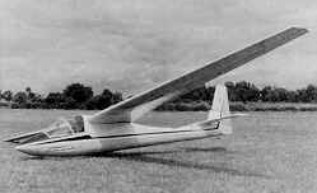
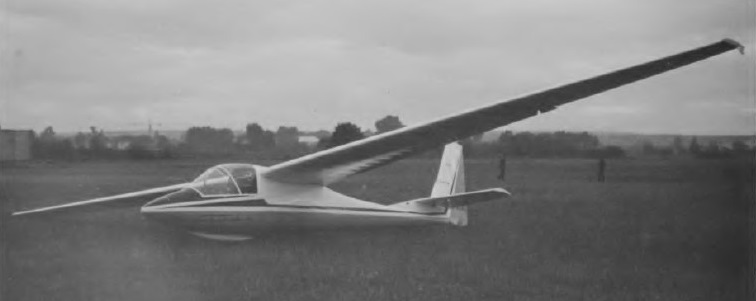
Designed by Alberto and Piero Morelli, the M-200 is a two-seater high performance version of their Standard Class M-100S which was built under licence both in Italy and by CARMAM at Moulins-Avernes as the M-100S Mesange (Tomtit). The prototype M-200 was built under contract for the Aero Club of Italy by the CVT (Centra di Volo a Vela del Politecnico di Torino) at Turin, and made its first flight in May 1964.

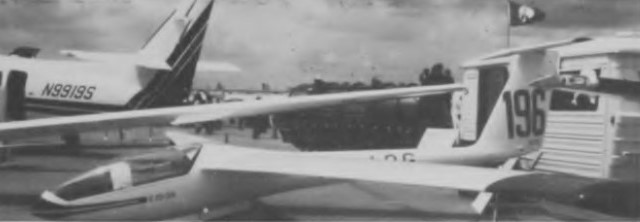
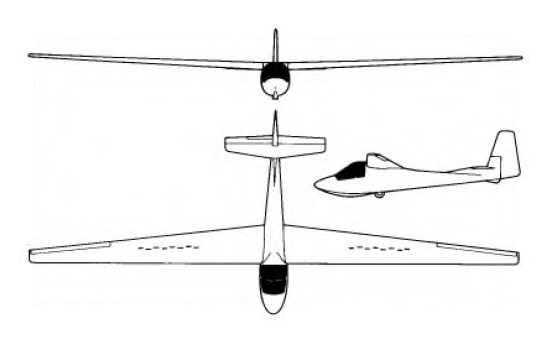
Production was undertaken under an exclusive licence by CARMAM, who built it as the M-200 Foehn, completing one more prototype and five pre-production aircraft before starting the definitive production batch. Main difference between the M-200 and the M-100S is the former’s widened fuselage to accommodate two staggered side-by-side seats, the one-piece canopy opening sideways to port; this seating arrangement obviates the need for ballast when the aircraft is flown solo, and gives good visibility to both pilots. The M-200 is designed to be easy to fly for first solos and, like the M-100S, is fully aerobatic; it is also suitable for flying in cloud. Wing span of the M-200 has been increased from the 15m of the M-100S to 18.15m (59ft 6.5 in) and it is slightly longer; the wing structure is very similar to that of the M-100S, with a leading edge torsion box and air brakes consisting of four instead of three pairs of light alloy rotating plates above and below each wing. The fuselage is of plywood construction with frames and stringers and the landing gear consists of a non-retractable monowheel with a drum brake and a rubber-sprung nose-skid; there is also a tailskid.

M-200
Span: 18.14m / 59 ft 6.5 in
Length: 7.6 m / 24 ft 1.25 in
Height: 6 ft 5 in
Wing area: 17.46 sq.m / 188.4 sqft
Aspect ratio: 19.0
Empty Weight: 345kg / 760lb
Gross Weight: 570kg / 1255lb
Payload: 225kg / 495lb
Water ballast: None
Wing Load: 32.65kg/sq.m / 6.7lb/sq.ft
Max speed: 121 kt / 225 km/h / 140 mph (in smooth air)
Max rough air speed: 81 kt / 150 km/h
Stalling speed: 38 kt / 70 km/h
MinSink: 0.64 m/s / 2.1 fps / 1.24 kt
Best glide ratio / L/DMax: 32:1 at 98 kph/ 54 kt/ 61 mph
No. of Seats: 2
Airfoil: NACA 63-619/15