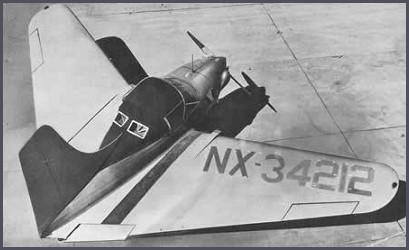
The Mallard (NX34212) was a forward swept-winged tailless monoplane with a 130 hp Franklin flat-four engine. With side-by-side two-seating it was demonstrated publicly by Alfred Reitherman. No production resulted. The 125 mph cruising speed quoted may have been projected rather than actual, considering it was described as 700 lb overweight and underpowered.
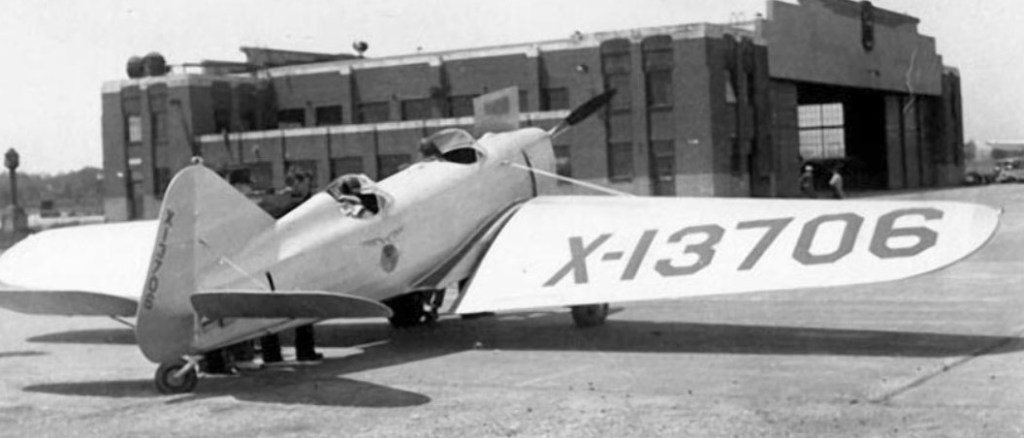
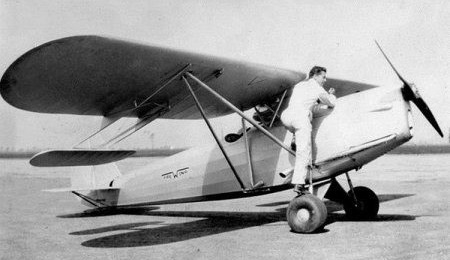
Continuing to experiment with a wing with a variable angle of attack (variable-incidence wing), American engineer George Wilbur Cornelius built his second aircraft in 1933, the designation LW-1 (from Low-Wing, and as a further development of the PW-1, from Parasol-Wing).
The low-wing two-seater LW-1 (X13706) used the short-lived four-cylinder inverted in-line 120 hp Martin 133 engine and had the same control system as the Cornelius FreWing. The incidence of the mainplanes was adjusted differentially like ailerons, and collectively like elevators in conjunction with a stabilator tailplane.
It was intended to improve performance by dispensing with the drag of the multiple strutting needed for its parasol predecessor.
The first aircraft of the Cornelius Aircraft Co, the FreWing, was designed by Cornelius and C.C. Spangenberger. It was a parasol monoplane single-seater in which the incidence of the mainplanes was adjusted differentially like ailerons, and collectively like elevators in conjunction with a stabilator tailplane. Initially, each mainplane had a servo surface extending behind it on two booms attached to the undersurface, but these were later removed as unnecessary.
Engine: 125 hp Menasco B-4 Span: 30 ft 6 in (9.30m) Length: 20 ft 6 in (6.25 m).
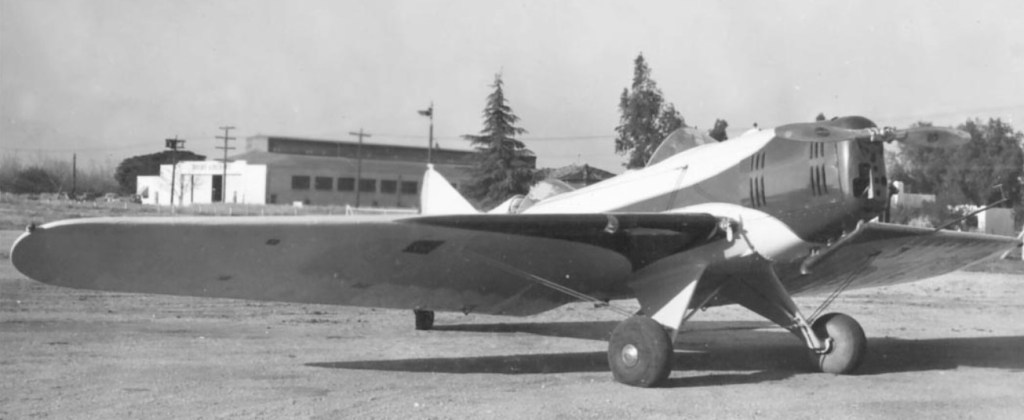
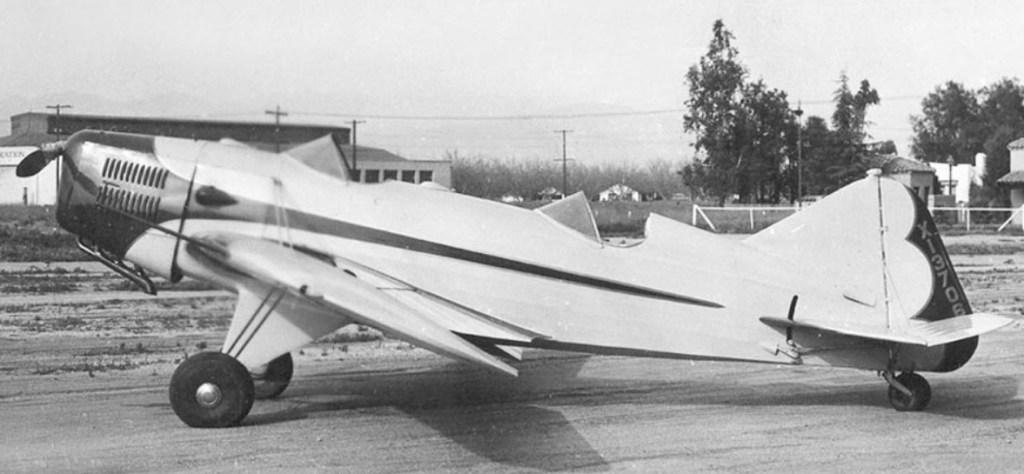
In the mid-1920 George Wilbur Cornelius started a program of experimentation on variable-incidence wings. No technical reports on the results of his work appear to have been published and little is known about the four types he produced. In 1930 George Wilbur Cornelius formed Cornelius Aircraft Co. at Glendale, California.
Vulcan C100 was a real aircraft available both fixed and retractile landing gear. Designed for Italian ultralight aviators it is inspired to Frati’s Falco lines. With all metal construction it can support engines from 80 hp to 150 hp. The suggested engine is the Rotax 912 series. Main parts in 2024 Avional T3 Alloy Landing gear and Engine mount in 4130 steel Bolts in 8.8 steel Engine cover and cockpit fairing in Fiberglas Electric actuated Flaps Retractile landing gear – pneumatic actuated Stabilizer Trim – electric actuated
Engine: Rotax 912 ULS Propeller: Carbon composite Three blade Ground adjustable Wing span: 26.40 feet (8 m) Length: 21,45 feet (6,50 m) Height: 7.59 feet (2,30 m) Wing area: 114.14 sq feet (10.61 sq.m) Wheel track: 8.25 feet (2.50 m) Empty weight: 621 lb (282 Kg) Tanks capacity: 24.96 US gallons (96 litres) MTOW Weight: 450 kg / 992 lbs VNE: 167 kt / 193 mph / 310 kmh Max horizontal speed: 140 Kts (260 Km/h) Cruise speed (75% pwr): 124 Kts (230 Km/h) Stall speed (Flaps down): 34 Kts (62 Km/h) Climb rate: 1200 ft/min (6 m/sec) Take off run: 726 feet (220 m) Take-off 50 ft obstacle: 1617 ft Landing run: 462 feet (140 m) Max. range: 653 nm (1210 Km) Endurance (with 30min reserve): 5 hr 30 min
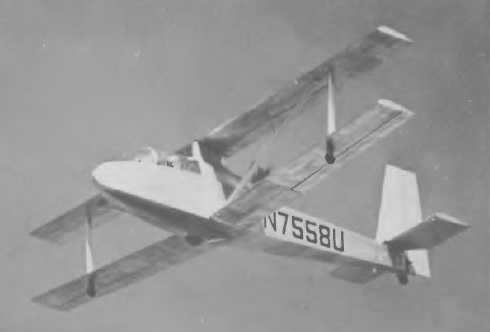
The 65-1 was designed and built by R. S Corcoran, an experienced sailplane pilot who was also the president of a company bearing his name which manufactured centrifugal pumps and other products. The 65-1 single-seater first flew in prototype form in October 1965, the powerplants being two 8hp West Bend 820 single-cylinder go-kart engines mounted on small booms extending from aft of the cockpit, and driving two-blade fixed-pitch pusher propellers. Construction is all-metal, the single-spar wings having aluminium skinning and unbalanced piano-hinged ailerons; the upper wing has flaps along 60% of its span which can be lowered to four positions, the maximum deflection being 35°. There is a single interplane strut and bracing strut on each side. The slab-sided fuselage is built up from aluminium extrusions and is also covered with aluminium; the landing gear consists of a monowheel mounted in an under-fuselage fairing, a steerable tailwheel and two small outrigger balancing wheels under the lower wings below the interplane struts – these are actually Sears ballbearing lawnmower wheels. The pilot sits under a single-framed cockpit canopy that hinges to port for entry and exit. The prototype 65-1 had a wing area of 100sq ft and was followed by a second prototype with a wing area increased to 180sq ft and two engines mounted inboard in the fuselage and driving belt-driven propellers mounted on outriggers.
First Prototype Span: 26 ft 0 in Length: 18 ft 6 in Height: 5 ft 0 in Wing area: 100 sqft Aspect ratio: 13.0 Empty weight: 364 lb Max weight: 550 lb Max speed: l00 mph (power on) Cruising speed: 67 mph Take-off run: 500 ft Range: 140 miles
Two prototypes of a metal development of the Starlet designated at this stage as the CM-2 were being built in New Zealand. The aircraft is sufficiently close to Starlet to provide high confidence in performance and flight characteristics, but provides some features to builders who may prefer building in metal. Cockpit width, range, AUW, and aerobatic [6 Gs] have been increased, and recommended power is 60 to 90 HP. The CM-2 should be an impressive cross country machine, with excellent aerobatic capability. Discussions with Jabaru on their higher powered engine suggest this combination with the CM-2 has great potential and they would be interested in cooperating on the project. The CM-2 is planned to be available in kit form and will have a high degree of parts commonality with the CJ-3 two seater which is underway but not yet ready for building.
The Starlet was designed by Australian aero engineer John Corby of Sydney, N.S.W, Australia, for a competition held by English company Rollason Aircraft Ltd in 1964. The design was placed eighth, although it became first from the competition to be built. The prototype (VH-CBS) first flew on August 9th, 1967. The Corby Starlet is a semi-aerobatic sports aircraft made of an all-wood onstruction. The fuselage is a combination of spruce longerons and frames and is sheeted with plywood. The wing is a single-piece structure, consisting of a solid laminated spar and built-up ribs. The remainder of the wing, including the ailerons, is open-structure and fabric covered. The D-nose leading edge is plywood covered. The main undercarriage consists of spring-steel legs bolted to a stiffened frame in the fuselage, immediately behind the firewall. An 8 Imp. gallon fuel tank is located in the fuselage, immediately behind the firewall. Powered usually by a VW conversion, the Starlet will take any suitable engine up to 75 hp and 72 kg (160 lb) in weight, and is aerobatic with limitations of +4.8 and 1.8G. Fuel consumption in the Starlet is between 10 and 14 litres per hour, depending on the power settings used, with an economic cruise of 110 knots. The Starlet can carry 15 lbs in a locker behind the seat, still normally within centre of gravity limits. Extra freight in most single seat homebuilts is usually either worn or sat upon to keep the C of G in the same place. Economic cruise is around 85 knots. At almost full throttle (3400 revs) the aircraft will approach VNE (138kts). The stall in a glide came at 35 knots. Some Starlets have been outfitted with 2180’s (75-80 hp) and these cruise at VNE (185) and climb at 1900 fpm.
Corby CJ-1 Starlet Engine: VW or Jabiru Horsepower: VW 45 – 75 hp Jabiru 80 hp Propeller: Wood 54 inch Overall Length: 15.1 ft (4.6 m) Height: 4.8 ft (1.46 m) Wingspan: 18.5 ft (5.63 m) Wing Area: 68.5 sq ft (6.36 sq m) Wing Loading: 10.9 lbs/sq ft (4.9 kg/sq m) Cabin Width: 21.75 inch (.55 m) Empty Weight: 450 lbs (203.6 kg) Gross Weight: 750 lbs (339.4 kg) Useful Load: 300 lbs (135.7 kg) Fuel Capacity: 11.1 gal (42 l) Maximum Speed: 139 kts @ sea level Cruise Speed: 113 kts Stall (or Min.) Speed:@ gross weight 30 kts Service Ceiling: 14,500 ft (4419 m) Takeoff Distance: 350 ft (106 m) Landing Distance: 450 ft (137 m) Rate of Climb (gross): 1000 fpm Maximum Range: 425 nm “G” Loading: +4.5g (+6.75g ultimate), -4.5g Landing Gear: FG (Tailwheel) Seats: 1
Corby Starlet Engine: VW conversion, 70 hp Engine range: 160 lbs or less 75 hp Fuselage Length: 14 ft 9 in Height: 4 ft 10 in Width: 21.75 in Span: 18 ft 6 in Wing Area 68.5 sq.ft Wing loading 10.2 lb/sq.ft Power loading 11.6 lbs per hp Empty Weight 450 – 500 lbs Gross weight one piece wing: 750 lbs Gross weight two piece wing: 650 lbs Takeoff distance 350 ft Landing distance 450 ft Fuel capacity 11 gals US/ 9.7 Imp. Gals/44 lbs/20 kg Stall (power off) 35 mph Top speed (level) 160 mph Normal Cruise 115-130 mph Fuel burn Cruise 3.5 gph US / 21 lbs per hr VNE (Mph) 159 (tested to 185) Rate of Climb 850 fpm Range 425 sm Servive ceiling: 14,500 ft Roll Rate 270 dps (approx.) Take-off dist 50 ft: 1200 ft Landing dist 50 ft: 1200 ft Design Load +/- 4.5 proof (+/- 6.75 ultimate) Utility or Semi Aerobatic MAC 45 in Incidence 2.5 deg – 1 deg Tip Airfoil: NACA 43012A Aileron Deflection +15 deg – 15 deg Horizontal tailplane Span: 6 ft 6 in Area: 13.75 sq. ft. Elevator deflection +30 deg – -20 deg Vertical Tailplane Area: 7.4 sq. ft. Rudder Deflection +/- 25 deg Horsepower range: 30 to 60 Engine Weight 130-160 lbs C.G. Range: 20 – 25% MAC or 8.7 in to 11.4 in” aft of Wing LE Number of Seats: One Building Time: 1400+