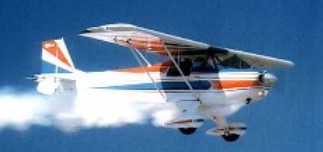
The Corbi Alto 100 is an all-metal low-winger. Standard features include Com radio, S-mode transponder, SkyView 10-inch EFIS panel, and Approach FastStack electrical power bus. An option: retrofittable FlyCool air-conditioning. Base Price 2012: US$105,000.
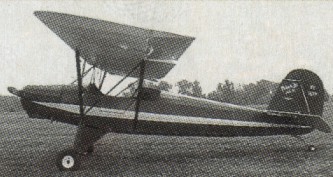
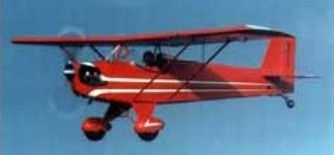
The Super Ace is constructed of basic materials, 4130 steel tubing for the fuselage, tail group, landing gear, fittings and wing struts. The wings are spruce spars and the wing ribs of spruce cap strips. The complete aircraft is covered with the PolyFiber covering materials. The wheels are 600×6 with hydraulic toe brakes. The control system is cable operated. The Prototype Super Ace is powered by a Continental C-85-8 engine of 85 hp. It does not have a starter or an electrical system. Power plants of up to 150 hp can be used; however, weight and balance considerations must be given to maintain the same engine and cowling lines and to keep the airplane’s proportions. The continental engine swings a Sensenich prop, which give a cruise speed of some 90 mph. The stall characteristics are gentle and straight forward. The coil springs mounted in tubes provide a soft landing and the wide landing gear adds to the ease of ground handling and a reasonable crosswind landing. One of the many designs to come from the drawing board of EAA’s founding President, Paul H. Poberezny, the Super Ace, is an ideal project for first time builders. It offers the excitement of open cockpit flying and excellent performance. With options for 85 hp to 150 hp, the Super Ace can meet a wide range of desires. The fuselage is a traditional 4130 steel tube frame that’s covered with Stits Poly-fiber. The two-piece wing is made of Sitka spruce spars, ribs formed with 1/2” x 1/2” spruce caps and covering is again Stits Poly-fiber. Wing span is 27’-3 1/2”, length is 18’5” and empty weight is 685 pounds with a useful load factor of 385 pounds. Using a C-85 on the prototype, cruise speed is 90 mph. Info packs on the Pober Super Ace were $8.00, plans were $125.00 in 2009.
Pober Super Ace Engine: Continental C-85, 80 hp. HP range: 85-150. Speed max: 160 mph. Cruise: 110 mph. Range: 250 sm. Stall: 44 mph. ROC: 500 fpm. Take-off dist: 350 ft. Landing dist: 450 ft. Service ceiling: 25,000 ft. Fuel cap: 12 USG. Weight empty: 685 lbs. Gross: 1030 lbs. Height: 6.6 ft. Length: 18.42 ft. Wing span: 27.3 ft. Wing area: 118 sq.ft. Seats: 1. Landing gear: tail wheel.
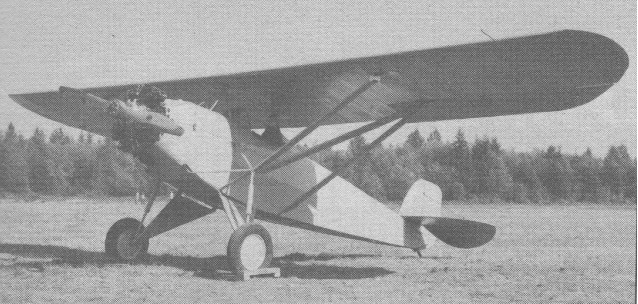
The Junior Ace is lightweight, easy to build, fun to fly and requires minimal maintenance. It has been modified from the original Corben Baby Ace so that it can utilize aircraft engines. The fuselage has also been widened, the horizontal stabilizer was modified for easier construction and modern aircraft wheels and brakes are now called for. With nearly a 34 ft wingspan and Clark Y airfoil, the Pober Junior Ace, designed by EAA founding president Paul Poberezny, is docile in stall and landing patterns. Airframe is 4130 steel tubing, wings are all wood and the recommended powerplant is a Continental C-85. Empty weight of the Junior Ace is 750 pounds and gross capacity is 1,320 pounds.
Junior Ace E
The Pober Junior Ace made its first flight with Captain Bud Judy at the controls. This first flight was successful and displayed the short field capabilities as well as low stall speed – ideal for small airstrips. The drawings for the airplane have full size wing rib drawings and two types of ailerons – the Friess aileron being a bit more responsive and lighter on aileron control. The indicated stall speed with one person on board is approximately 36 mpg. Indicated cruise with the Continental C-85-8 was a little over 80 mph. The Pober Junior Ace is open cockpit. The fuselage is chromoly steel tube, the tail group is chromoly steel tube and flat sheet stock to form ribs. The landing gear is chromoly tube with coil spring shocks. Wings are spruce spars and ribs. Two place side by side. The kit price in 2009 was US$20950.
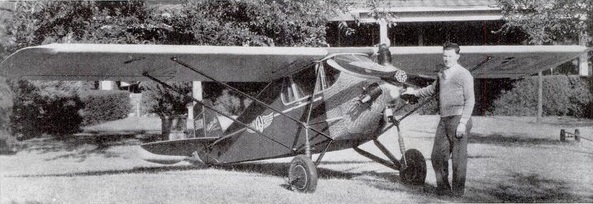
The Corben Baby Ace of 1929 was a professional design based on the Heath Parasol, but was a little more comfortable and had much better performance because of higher power. A 40-hp French Salmson AD-9 was used. Only six were factory-built, and a few were built from magazine plans in the 1930s.
The original Corben Baby Ace first flew back in 1931.
A single seat, high wing, sport plane powered by a modified Ford Model A 4 cyl inline engine. A simple and conventional design of open cockpit, strut-braced wing and tailplane, and a fixed, strutted, undercarriage. Later up-dated and marketed as the Pober Super Ace.
In 1954, Paul Poberenzy, who a year earlier had founded the still fledgling Experimental Aircraft Association, built a Baby Ace aircraft as a three part series in Mechanix Illustrated. The success of the articles caused an explosion in the homebuilt movement. The Baby Ace that Mr. Poberenzy built for Mechanix Illustrated is now in the EAA AirVenture Museum.
Corben Baby Ace D
The Baby Ace was extensively redesigned in 1955 as an ultralight monoplane specially designed for the amateur builder, the Baby Ace Model D. Baby Aces usually carry Continental engines rated from 65 to 85 hp and their performance is considered excellent by owners. Construction consists of a steel tube fuselage, all-wood wings and fabric covering. The wing is Clark Y mod from the root to the tip.
The Model C was refined by Ed Jacobs as the Model D. This first flew, as the DuCharme/EAA Baby Ace, on 16 November 1956.
In 1961 Ace Aircraft Mfg Co (Edwin T Jacobs), McFarland WI, purchased Baby Ace rights from Cliff DuCharme, West Bend WI.
Plans offered in 1968 for single-place Baby Ace ($28.50) and two-place Junior Ace, or Model E ($36.50). The kit price in 2009 was US$18950.
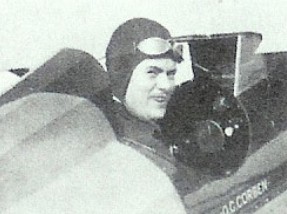
Orland G. “Ace” Corben designed and marketed the first homebuilt aircraft kit beginning in 1923; the “Baby Ace”; followed by the “Junior Ace,” the “Cabin Ace” and the “Super Ace!”
The Ace Aircraft Manufacturing Company was established in Wichita, Kansas in 1929 by Orland Corben to market the world’s first homebuilt aircraft, a machine of his own design called the Baby Ace. The enterprise did not last long before US regulations changed to restrict homebuilt aircraft, and Corben was forced to stop marketing his design.
He next commenced operations in Madison, Wisconsin in 1931 under the name Corben Sport Plane and Supply Company and produced a prototype sports plane known as the Super Ace. This endeavor soon languished, and the company remained dormant until Paul Poberezny purchased its assets for $US 200 in 1952. This included plans to three aircraft designs and a variety of components.
Poberezny was one of the founders of the Experimental Aircraft Association in 1953 and was approached by Mechanix Illustrated magazine the following year to write a series of articles on building an aircraft at home. Their publication caused considerable demand for plans, but Poberezny felt compelled to divest himself of marketing them in order to avoid any potential conflict of interest with his position within the EAA.
Since then, the rights have changed hands several times. They were purchased from Poberezny by Cliff Du Charme of West Bend, Wisconsin, who sold them to Edwin T. Jacob of McFarland, Wisconsin in 1961. Mr. Jacob sold them in 1965 to Thurman Baird of Asheville, North Carolina, who also owned the rights to the American Flea and the Heath Parasol aircraft. The rights were purchased from Baird’s estate in 1986 by Denny Meadows of Chesapeake, West Virginia, who sold them to Bill Wood of Toccoa, Georgia in 1998.
The Corben Aces have been modernised and refined by Paul Poberezny, Cliff DuCharne, Thurman Baird, Denny Meadows and others over the years. These aircraft are still being built, flown. Bill Wood, the owner of the Ace Aircraft Company, at Toccoa Georgia Airport (KTOC) maintains the marketing and kit production.
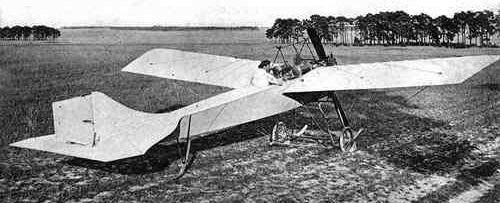
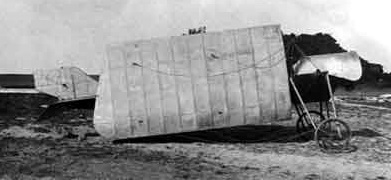
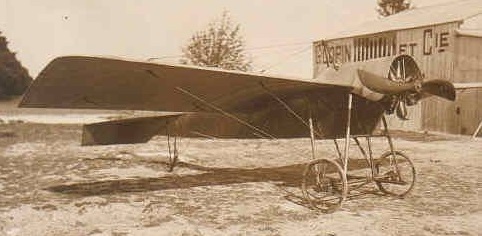
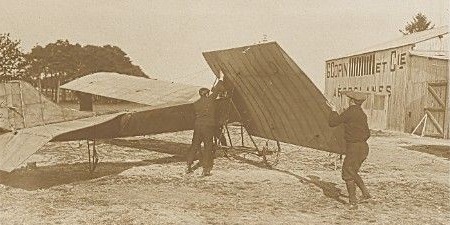
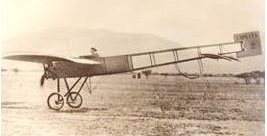
One of two monoplanes built by the former assistant manager of the Borel flying school.
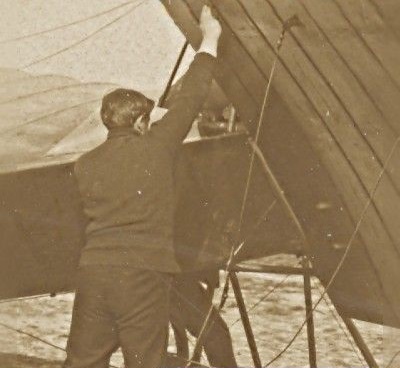
Copin opened his own facility “G. Copin Aéroplanes et Cie.” at Chalons and built the two machines in 1911. One with a Chenu inline engine, the other powered by an 80 hp Gnôme–not flown until 1912.
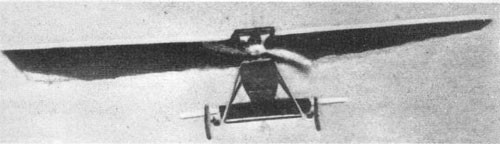
The first four airplanes constructed in Chile, were designed and built by the Copetta brothers. The first of them flew in 1911 and its name was “El Burrito” (young donkey). This airplane followed the lines of the Blériot IX in some way and was built in the necessity to fly after the irreparable destruction of their Voisin biplane, brought originally from France. Regardless of it being the first, “El Burrito” bore on its tail the inscription “Copetta 2”, since in those years it was common to put the name of the pilot and constructor; in this case Copetta and Copetta.
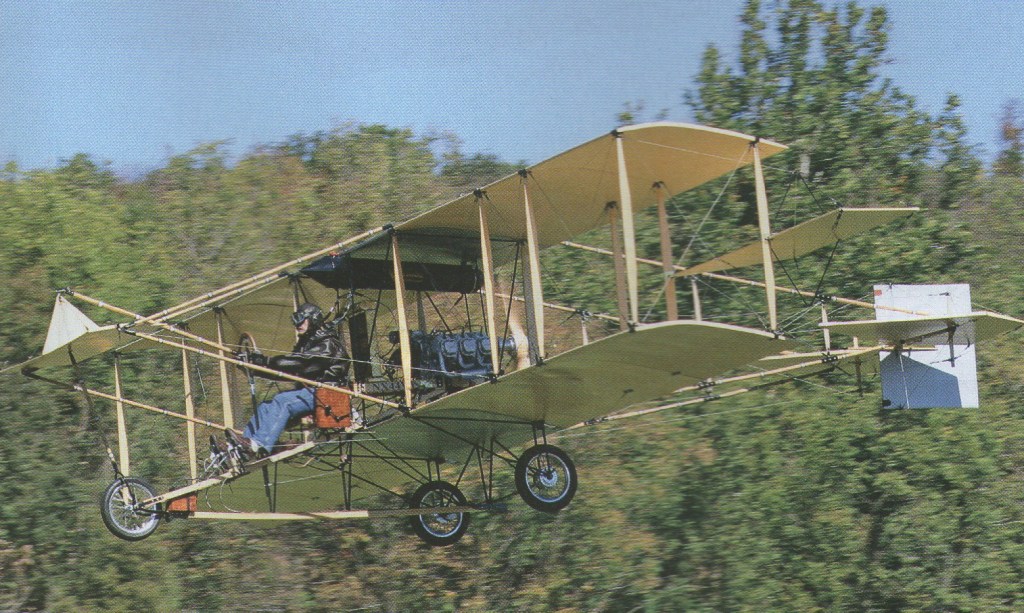
On 8 October 2010 Dave Coolbaugh first flew his replica Curtiss-Ely 1911 Pusher for the first time. The retired Navy/airline pilot spent more than 6000 hs building the craft since beginning in the Summer of 2008.
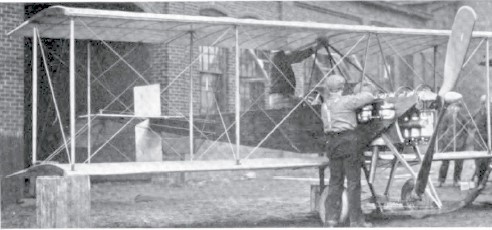
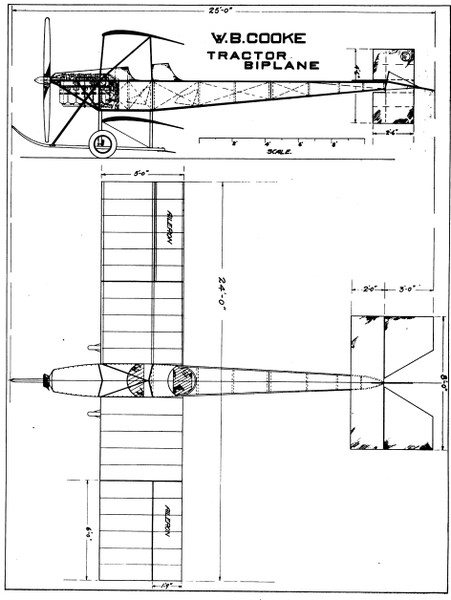
Weldon B. Cooke from Pittsburgh – Sandusky designed and built this tandem biplane aircraft in the winter of 1912-1913. Cooke, who was a well-known exhibition pilot, designed this aircraft with racing and exhibition flying in mind.
Cooke designed the aircraft for a 75 mph (121 km/h) top speed. For the time it was designed, it was a very modern aircraft, incorporating features that wouldn’t become commonplace on aircraft until towards the end of the Great War. The layout of the aircraft itself, a tandem two seat biplane with a tractor motor, was very unusual in 1912. Most of the aircraft being built and flying in North America at the time being some variation of a Curtiss type pusher biplane where the pilot and passengers would sit exposed in front of the leading edge of the lower wing.
Another unusual feature of the aircraft was the inverted installation of the Roberts inline 6 cylinder engine. When the early direct drive inline motors were mounted upright in a tractor installation, the cylinders would be almost completely exposed above fuselage deck. This type of mount would add aerodynamic drag to the aircraft, as well as presenting a substantial visual barrier for the pilot. By inverting the motor, the engine could be contained within the fuselage profile and the pilot had an unobstructed forward view. This may have been the first recorded inverted motor installation in an aircraft. The undercarriage consisted of a central skid with two flexible wheels at right / left with no connection to the fuselage (only to the central skid).
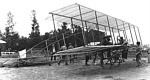
Cooke biplane on a take off run on ice, Sandusky Bay,1913
Because of the inability of period aircraft to be able to fly to and from the exhibition, the logistics of flying in the 1910s involved shipping the aircraft by train from one event to the next. To facilitate this, Cooke designed the aircraft to be quick and easy to take apart and re-assemble. The wings, which have a span of 24 feet, are made up of four detachable six foot sections. The fuselage is built in three detachable sections. The front section contains the engine and the passenger’s seat with all controls and their connections. The second section contains the pilot’s seat and the third, the tail and the square rudder. The skin of the fuselage was made up of a thin ply veneer to give it additional stiffness.
Used for exhibition flying and air racing, this biplane is sometimes identified as the ‘Sandusky Biplane’. Only the one was built.
Engine: 1 × Roberts two-stroke 6 cylinder, 75 hp (56 kW) Propeller: 2-blade Wingspan: 24 ft (7.3 m) Length: 25 ft (7.6 m)