De Schelde Scheldemusch

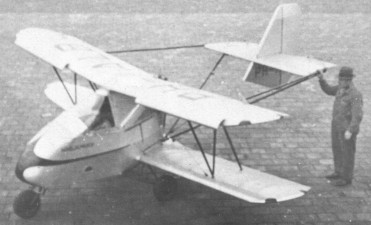
The Scheldemusch, a single seat sports aircraft with a six metre wing span and an empty weight of 185kg. Its price was Dfl. 2,500, and its operating costs, including depreciation, maintenance etc., amounted to Dfl. 9per hour. This small aircraft was designed in 1935 by the former Pander designer, Mr Slot, for the Royal Company De Schelde. The Scheldemusch was the first production light aircraft with a steerable nosewheel.
De Schelde

The aircraft department of a dockyard, opened in 1935, employing technicians from Pander. Built S.12 four-seat cabin monoplane, Scheldmusche light single-seat pusher biplane; best known for Scheldmeeuw single-seat flyingboat, which was built in all-metal and composite versions.
It took over the designs of Pander and Zonen when that company went out of business in 1934. Schelde had taken over the aircraft construction department of the Pander furniture factory in The Hague at the end 1934.
From 1939 made wings for Dornier Do 24 flying-boats, Aviolanda building the hulls.
After 1945 began glider construction and Dakota conversion. In 1951 acquired license for production of Saab Safir.
The aircraft construction department of the Royal Company De Schelde, joined Fokker on May lst, 1954.

Descamps

France
Elysee Alfred Descamps designed a machine gun-armed fighter in 1913, but this was not put into production. For a time he worked with Aviatik at Mulhouse, then went to Russia in 1914 to become chief engineer to Anatra. After the revolution he returned to France and built several fighter and bomber prototypes. In 1923-1924 he was carrying out experimental work for the French government.

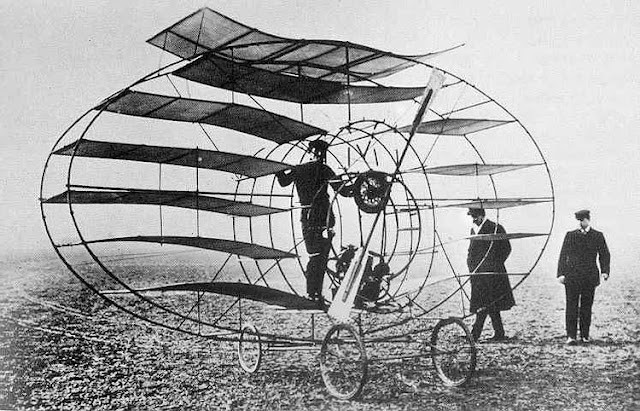
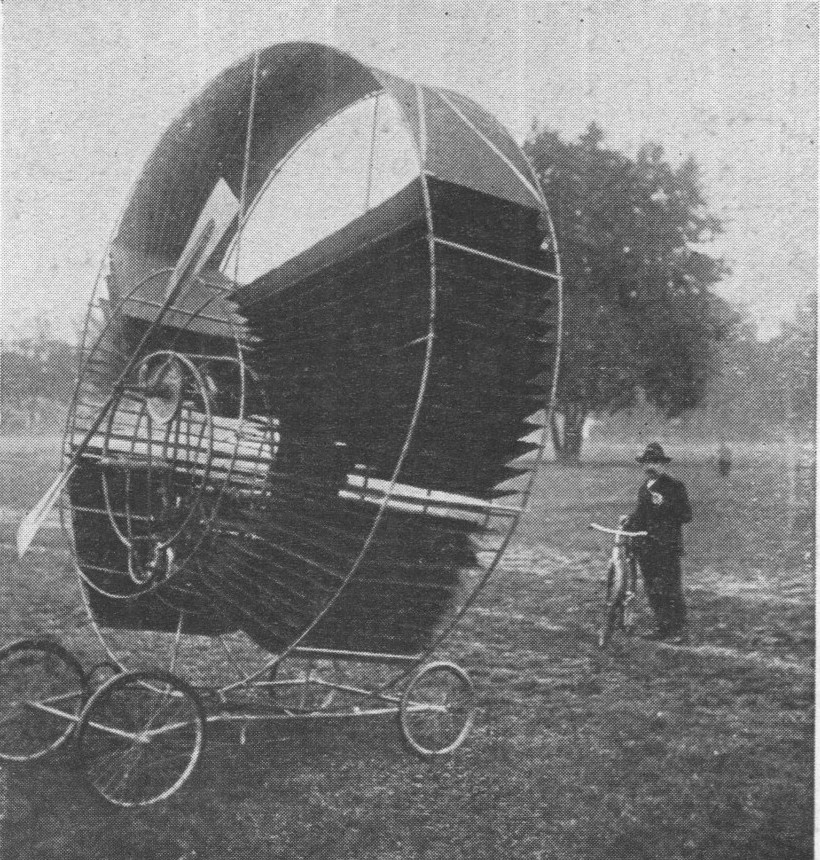
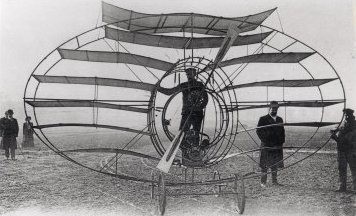
d’Equevilley-Montjustin 1908 Multiplane

A 1908 patented multi-wing machine design by Raymond d’Equevilley-Montjustin – otherwise known as the Marquis d’Equevilley – very characteristic in its circular hoop construction and several levels of planes. The pilot was to stand in flight and direct the machine by leaning his body to the left or right, and although the machine was continuously developed adding or diminishing the number of “wings”, it failed to ever leave the ground. D’Equevilley, a quite capable engineer and designer, had nearly fifty patents to his name, and is often credited as the person who perfected the snorkel that is used on submarines.

1908
Marquis d’Equevilley’s 12hp flying machine

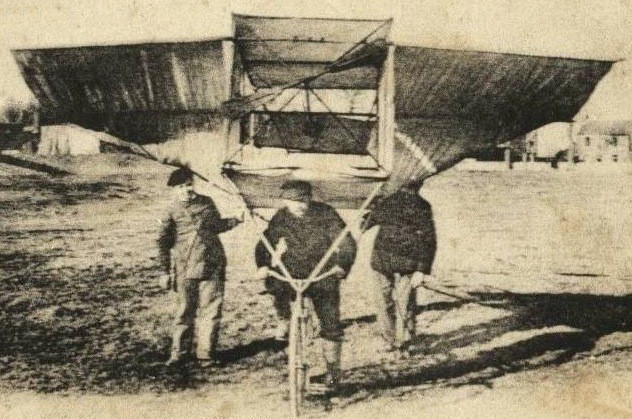
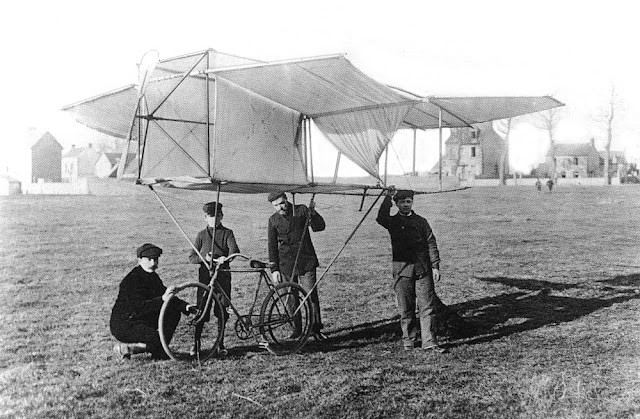
de Puiseux Aéro-Cycle No. 5 La Mouche

This was the ultimate development of Comte Gustave de Puiseux’s ambitions of 1911/1912 to create a successful human-powered airplane. At least one source quoted that it flew 16 meters. The machine, which had a wing span of some 6,5 m and a length of 5.5 m had a tractor propeller driven by the human cyclist, pedalling via chains. It is unlikely that a powered version was ever made, since this was more work than just installing an engine and the Count had no experience with engines.