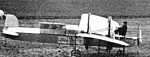
The 1910 de Feure-Deperdussin canard was designed by de Feure and built by Deperdussin in France.
The 1910 de Feure-Deperdussin canard was designed by de Feure and built by Deperdussin in France.
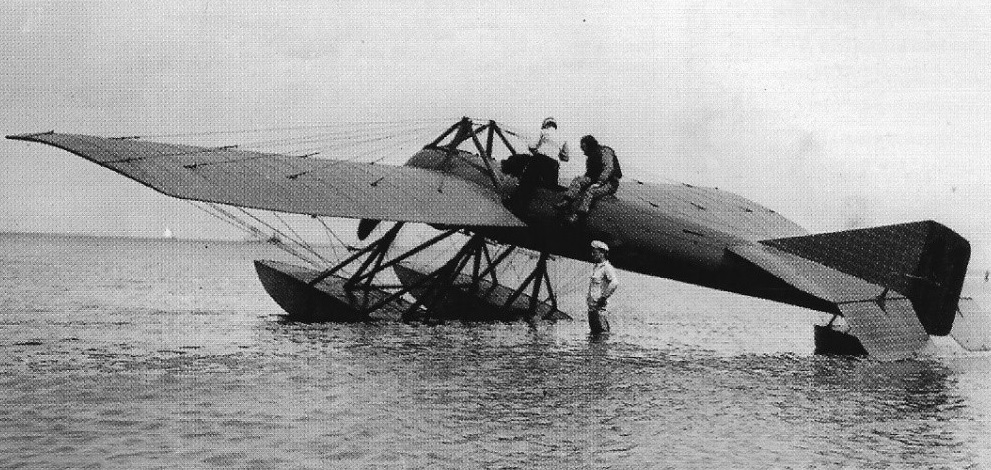
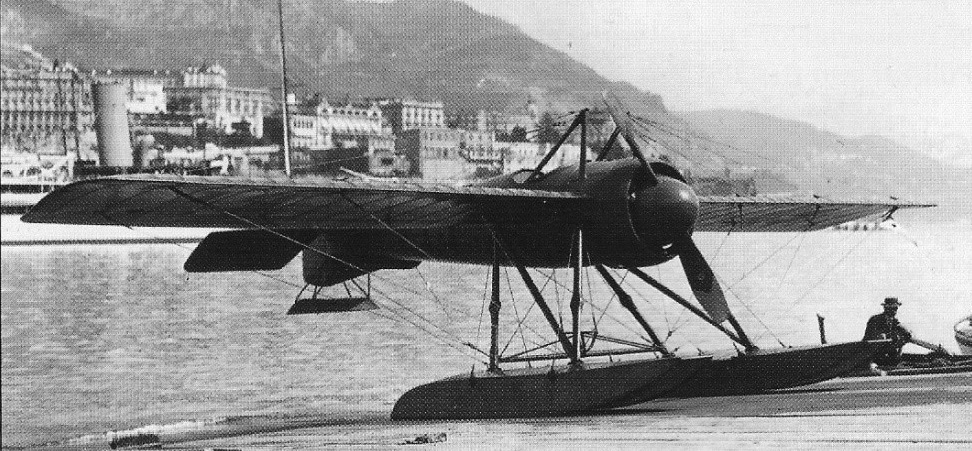
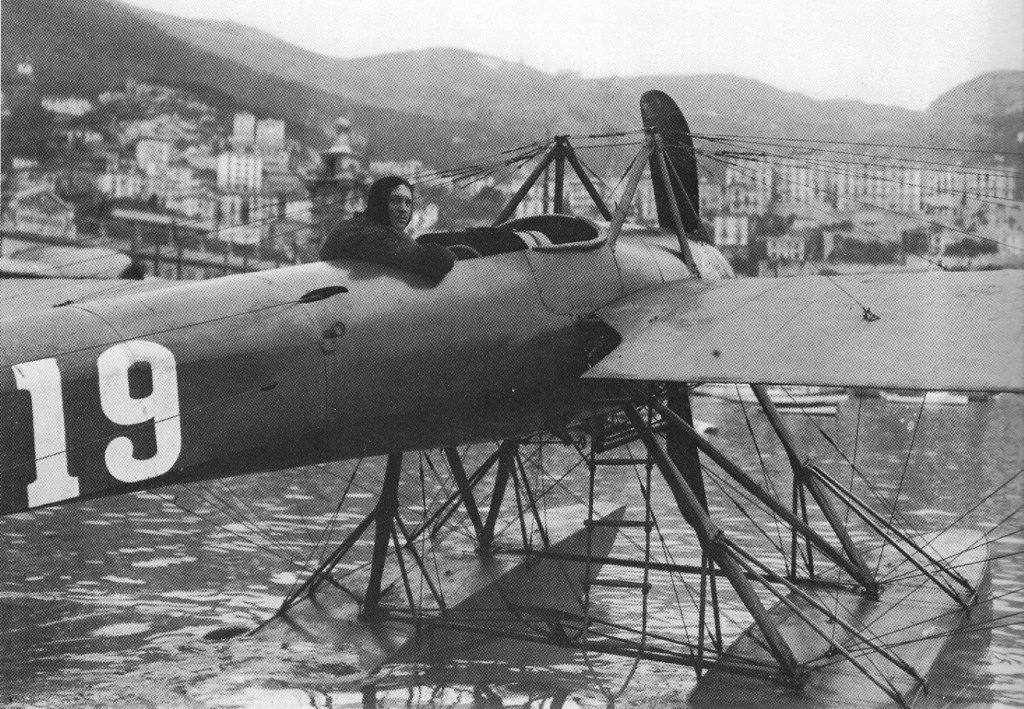
The Deperdussin Hydro of Maurice Provost was demonstrated at Monaco in April 1914.
The Hydro was fitted with a 100 hp engine.
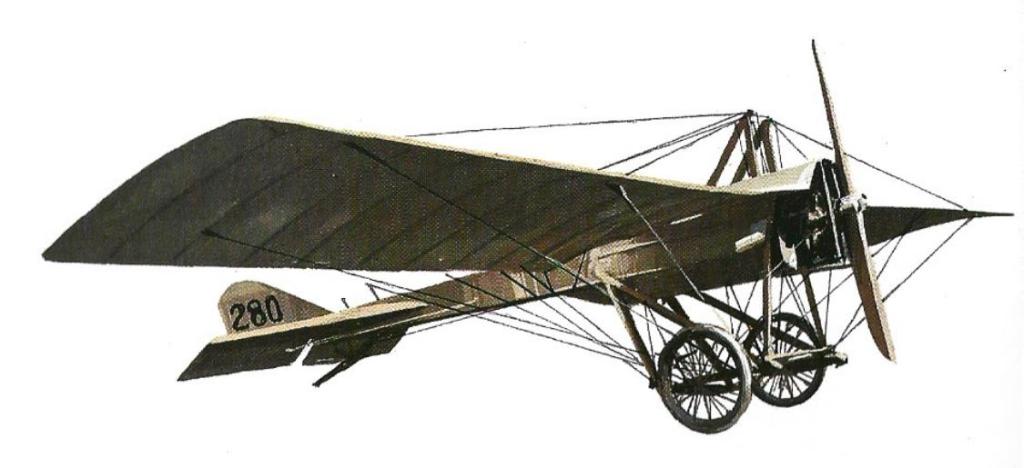
1914 reconnaissance aircraft.
Engine: Gnome, 80 hp
Wingspan: 36 ft / 10.97 m
Length: 26 ft / 7.92 m
Height: 8 ft 10 in / 2.69 m
Weight: 1600 lb / 725 kg
Max speed: 71 mph / 114 kph
Endurance: 2.3 hr
Crew: 2
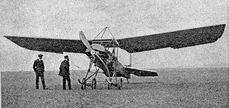
Circa 1910
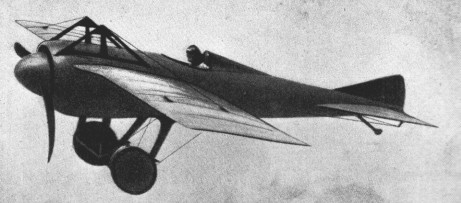
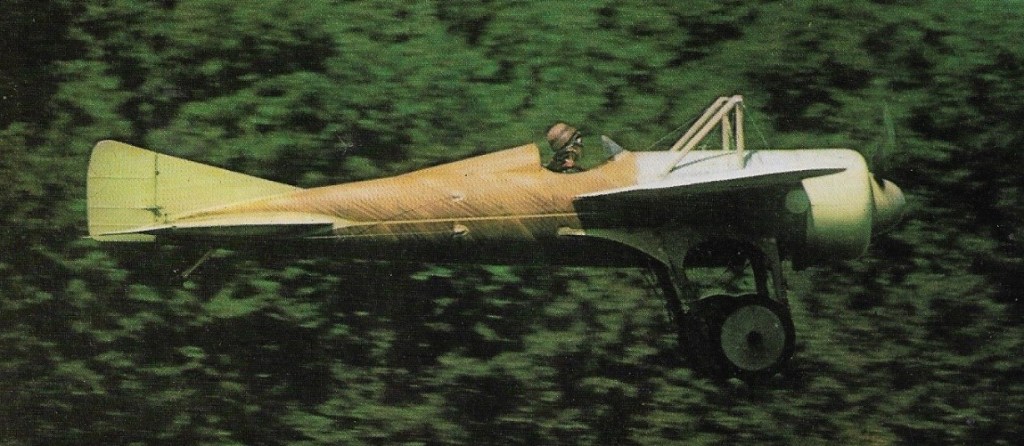
The 1912 Deperdussin Type B Racer was a high-wing monoplane with tapered wings, possibly to increase the effect of the wing-warping used for lateral control. The fuselage consisted of a wooden box-girder entirely skinned with plywood, with the rounded top and bottom built up from laminations of wood. This type of stressed skin construction, pioneered by the Swiss engineer Eugene Ruchonnet, was extremely advanced for its time, and was followed to its logical conclusion in the Deperdussin Monocoque which appeared later in the year.
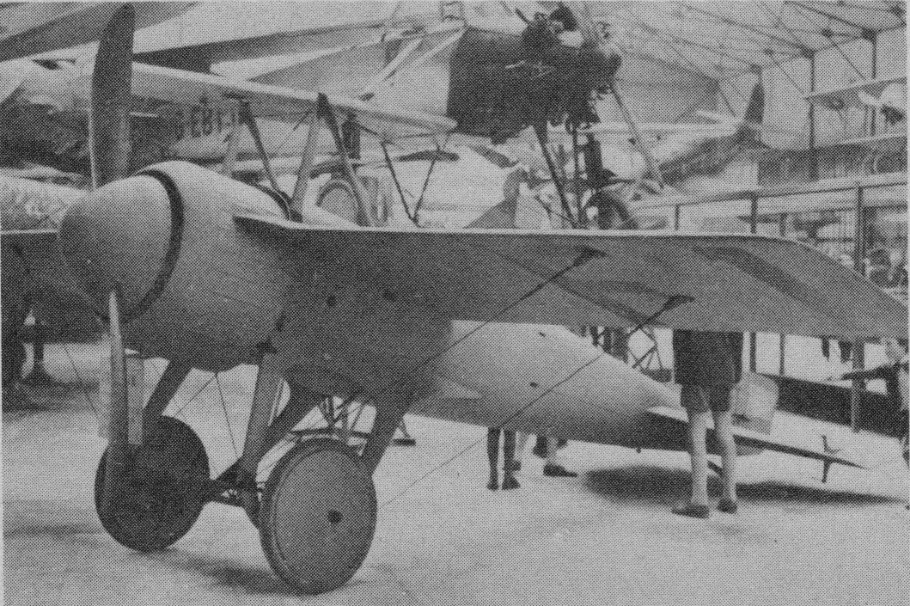
Great attention was paid to producing an aerodynamically clean design: the tailskid was arranged so that its bungee cord springing was inside the fuselage, the wheels had disks covering the spokes to reduce drag, and the wing-warping control wires were carried inside the inverted-v cabane struts.
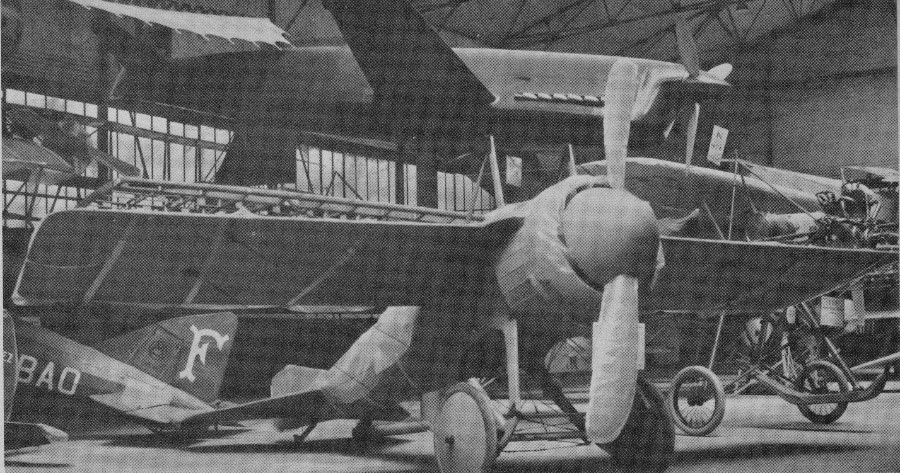
It was initially powered by a 100 hp (75 kW) Gnome double Omega 14-cylinder twin-row rotary engine and had an undercarriage with twin skids as well as a pair of wheels, similar to earlier Deperdussin aircraft, and a triangular tailplane mounted on top of the fuselage, together with a triangular fin with an unbalanced rectangular rudder hinged to its trailing edge.
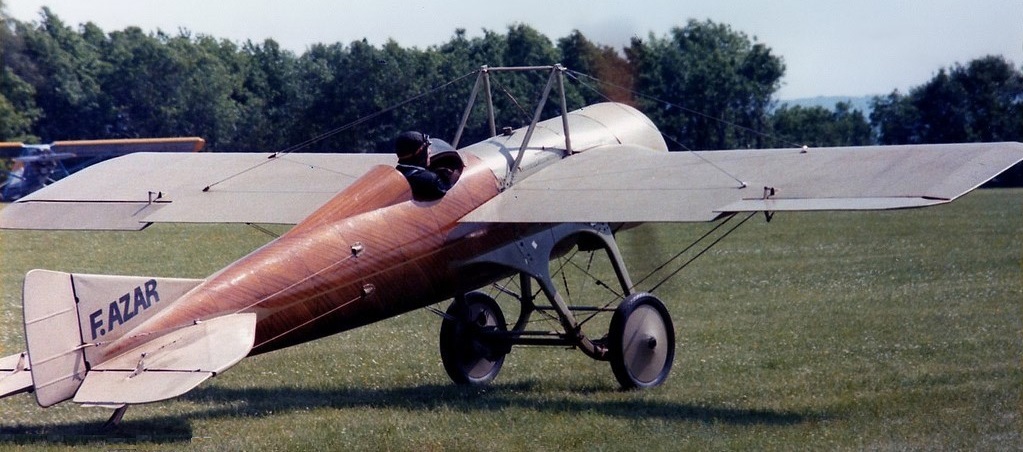
It was first flown late in 1911 or early in 1912; Jules Védrines is recorded as making “fast flights” in the aircraft on 2 January 1912. A number of record-breaking flights followed, and on 22 February Védrines succeeded in flying it at over 100 mph (160 km/h), flying a distance of 200 km (120 mi) in 1 h 15 min 20.8 s, an average speed of 169 km/h (105 mph). By this time the engine had been replaced by the more powerful 140 hp (100 kW) Gnome double Lambda engine.
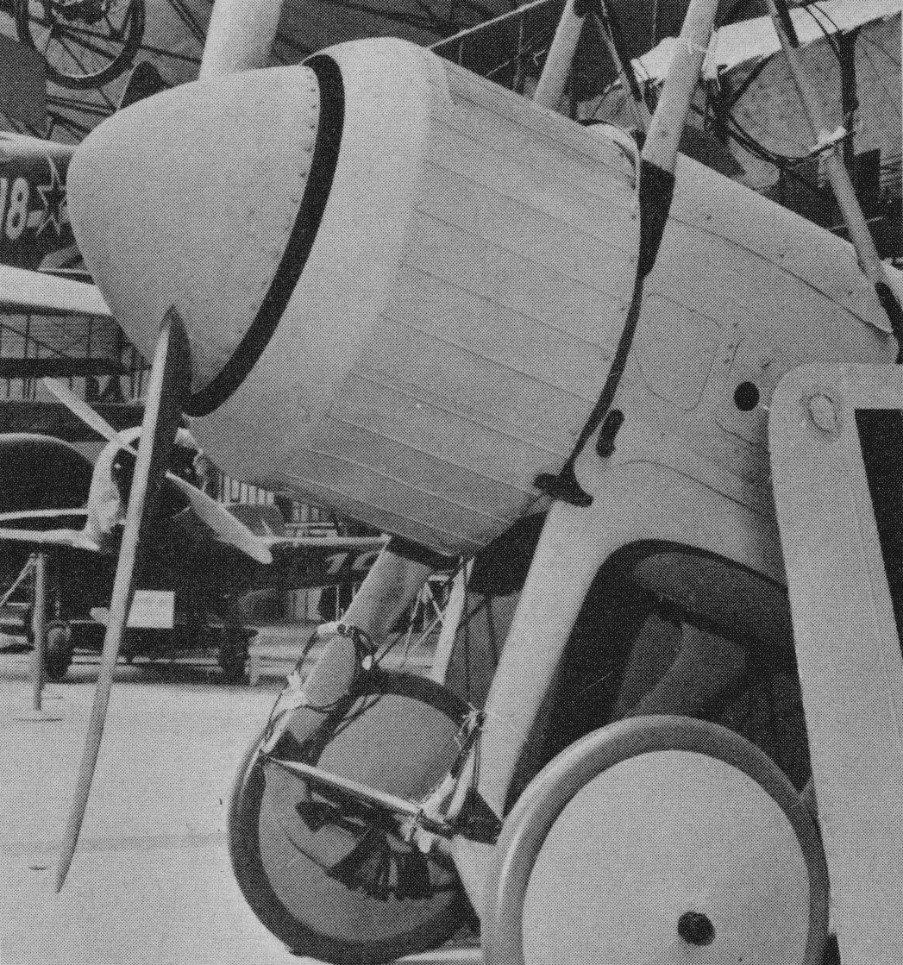
Flown by Maurice Provost it won the 1913 Gordon-Bennet Cup breaking world speed records.
It is probable that this aircraft was the aircraft being flown by Vedrines when he crashed at Épinay on 29 April during an attempt to fly from Brussels to Madrid in a single day.
The aircraft was presented to the French Musee de L’Air by SPAD.
Powerplant: 1 × Gnome Lambda Lambda, 140 kW (190 hp)
Propeller: 2-bladed Chauvière
Wingspan: 6.25 m (20 ft 6 in)
Wing area: 9.3 sq.m (100 sq ft)
Length: 7.0 m (23 ft)
Max T/O Weight: 2,860 lb.
Maximum speed: 169 km/h (105 mph, 91 kn)
Crew: 1
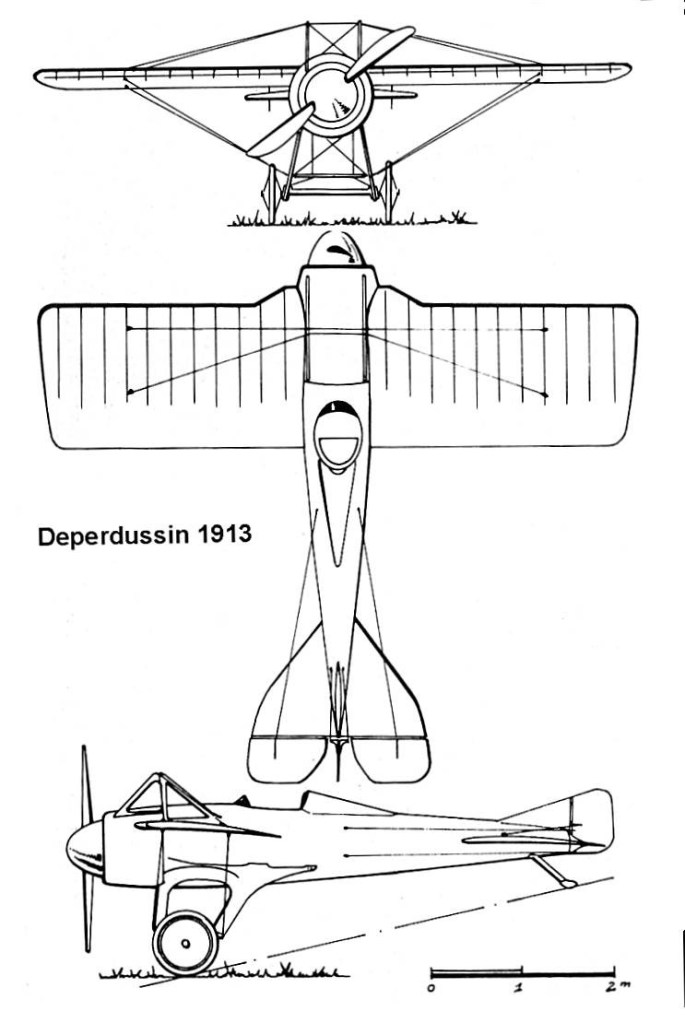
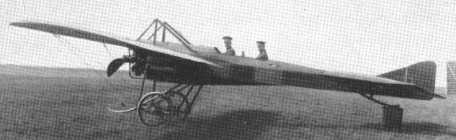
Of similar configuration to the contemporary Bleriot, the Deperdussin Monoplane was a popular training school aircraft prior to WW1.
Three were entered in the 1912 War Office military trials at Salisbury Plain, two of them built in England. One, piloted by Prevost, won the second prize of £2,000. The type formed the first equipment of the Royal Flying Corp and the Naval Wing.
Constructor number 43 was built in 1910 and flies with the Shuttleworth collection in 2017.
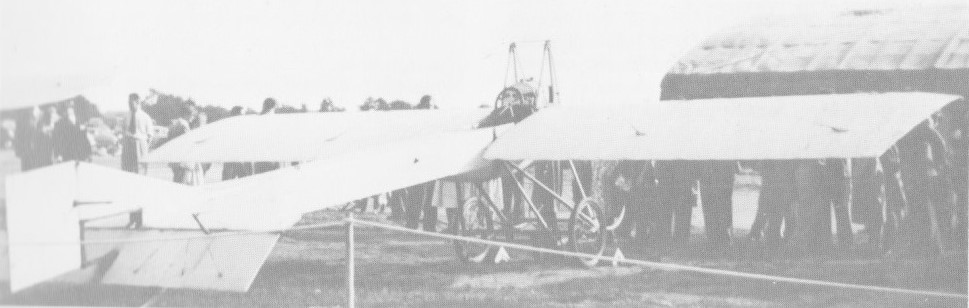
Cole Palen scratch-built a Type A Deperdussin on display at Old Rhinebeck Aerodrome.
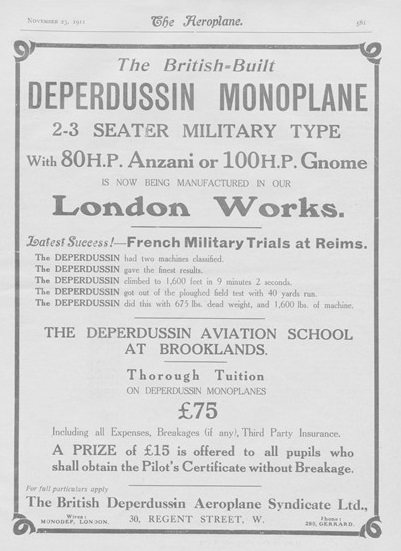
In 1911 Rene Vidart placed 3rd in the European Circuit with a Type A after winning two of the longest laps.
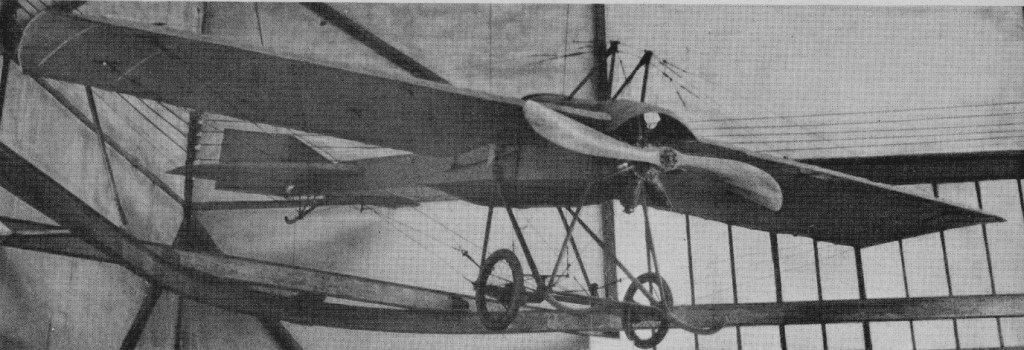
Engine: Anzani, 50 hp
Wingspan: 27.88 ft
Length: 21.32 ft
Max speed: 56 mph
Engine: Anzani, 80 hp
Wingspan: 28 ft 10.5 in
Length: 24 ft 11 in
AUW: 550 lb
Max speed: 65 km
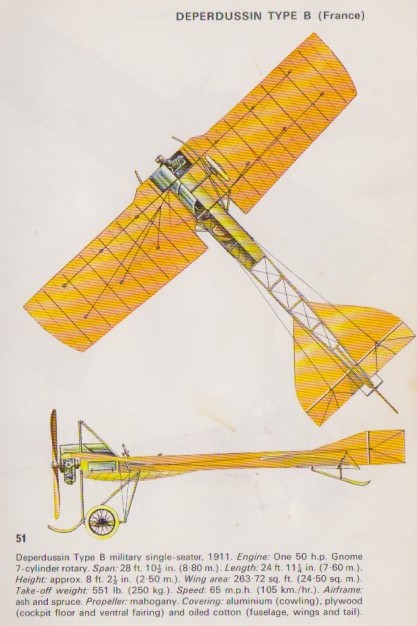
Silk merchant Armand Deperdussin (1867-1924) established Societe Provisoire des Aeroplanes Deperdussin in 1910. Built precursor in 1909 for show in a Paris store. Built during 1912-1913 a series of very advanced monoplane racers with tulip-wood monocoque fuselages. In 1912 a “Dep” was the first aircraft to exceed 160km/h, and Prevost flew one to win the 1913 Schneider Trophy race at Monaco. By 1914 monoplanes bearing Deperdussin name were used not only privately but by several military authorities. Designed by Louis Bechereau, these aircraft were especially noted for speed performances in 1912-1913, and in some instances for monocoque construction.
Deperdussin, a great promoter, became involved in financial difficulties and in 1913 Deperdussin was arrested for embezzlement and the company was taken over by Louis Bleriot. In 1915 the company was declared bankrupt. The Deperdussin name had links with several companies, including the British Deperdussin Company with which John Porte was connected. Bleriot retained the same initials, but now stood for Societe Pour Aviation et ses Derivees (SPAD).
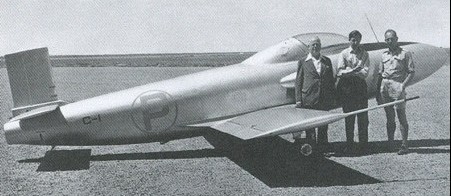
Manned prototype of the Jindivik target drone built by Department of Aircraft Production of Australia, later renamed GAF (Government Aircraft Factories).
Two were built.
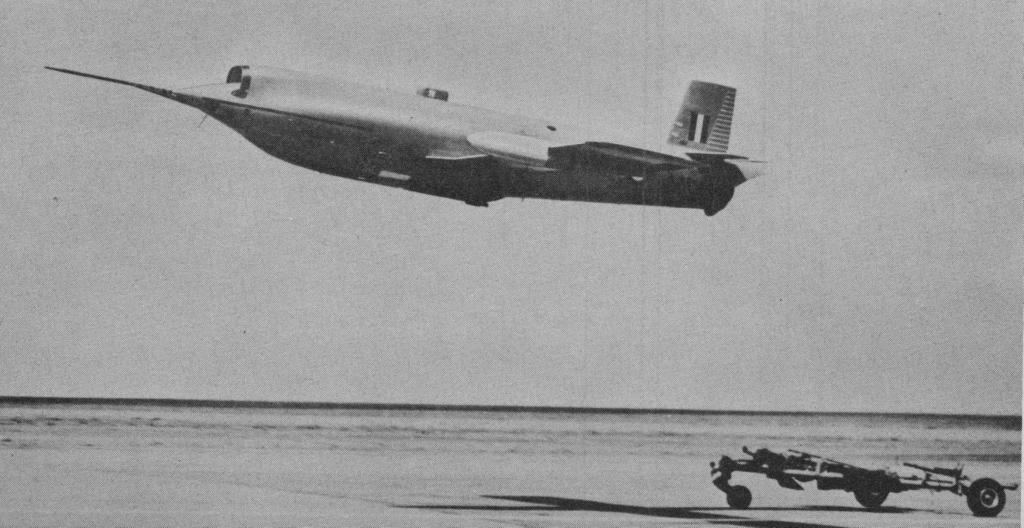
A group of engineers and students at the Centra Tecnico de Aeronautica (CTA) of the Institute de Pesquisas e Desenvolvimento (IPD) under the leadership of Mr Guido Pessotti, produced the little 8m (26ft 3in) span Periquito II single-seater sailplane which had first flown in 1957 and of which three production examples were built.

This Brazilian high performance Standard Class single-seater was designed by a group of engineers and students at the Centra Tecnico de Aeronautica (CTA) of the Institute de Pesquisas e Desenvolvimento (IPD) under the leadership of Mr Guido Pessotti.
Also known as the PAR-6505 from the letters PAR signifying the IPD’s Departamento de Aeronaves, design work on the Urupema started in 1964 and construction of the prototype began the following year.
The cantilever shoulder wings have a forward sweep of 1° 22′ at the quarterchord line and are of wood/paper honeycomb/wood sandwich construction, as are the ailerons; DFS air brakes are fitted. The wooden semi-monocoque fuselage has a nose section of plywood/plastic foam/plywood sandwich construction. The tail unit is also of wood and honeycomb paper sandwich construction like the wings, and the tailplane is a one-piece all-moving surface with automatic antibalance tabs. There was a non-retractable BF Goodrich monowheel with brake mounted ahead of the eg on the prototype, but production aircraft have a retractable monowheel. The pilot sits in a semi-reclining seat under a long one-piece flush-fitting cockpit canopy, and optional ‘extras’ include a battery-operated electrical artifical horizon and a Bertea transceiver.
It first flew on 20 January 1968 and took part in that year’s World Gliding Championships at Leszno in Poland and in the 1970 World Championships at Marfa, Texas, where it was placed 22nd out of 40 competitors in the Standard class.

After flight tests were completed, production of a batch of 20 Urupemas began in January 1971 at the works of Embraer, the major Brazilian aircraft manufacturer, under the designation EMB-400.
6505 Urupema
Wingspan: 15.0 m / 49 ft 2.5 in
Length: 7.45 m / 24 ft 8.5 in
Height: 1.52 m / 4 ft 11.5 in
Wing area: 12.0 sq.m / 129.2 sqft
Aspect ratio: 18.75
Wing section: Wortmann FX-05-171/121
Empty weight: 230 kg / 507 lb
Max weight: 310 kg / 683 lb
Water ballast: None
Max wing loading 25.83 kg/sq.m / 5.29 lb/sq ft
Max speed: 159 mph / 138 kt / 255 km/h (in smooth air)
Max rough air speed: 86 kt / 160 km/h
Stalling speed: 33 kt / 61 km/h
Min sinking speed: 2.1 ft/sec / 0.66 m/sec at 48 mph / 42 kt / 78 km/h
Best glide ratio: 36:1 at 58.5 mph / 51 kt / 95 km/h


