EEF Prometheus 1 / Entwicklungsgemeinschaft Prometheus 1 / Flugzeugbau Der Akademischen Fluggruppe Prometheus 1

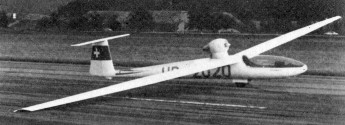
The Prometheus 1 was an experimental powered sailplane from Switzerland, based on the airframe of the FFA Diamant 18.

Design and construction began in late 1970, the wings, Fuselage, tail units and landing gear coming from an original Diamant 18. The aircraft flew for the first time on 21 June 1971, powered by a 176 lb (80 kg) Microturbo Eclair II turbojet engine mounted on a pylon above the wing center-section. This had been later replaced by a more powerful TRS 25 engine.

Engine: One 264 lb (120 kg) st Microturbo TRS 25 turbojet
Fuel capacity: 2 x 8.75 Imp gallon (40 litre) wing tanks, 1 x 0.4 Imp gallon (1.8 litre) fuselage tank.
Total fuel: 17.9 Imp gallons (81.8 litres).
Oil capacity: 0.11 Imp gallons (0.5 litres).
Wing span: 59 ft 0.5 in / 18,0 m
Wing aspect ratio: 22,5
Length overall: 24 ft 9.5 in / 7,56 m
Height over tail: 4 ft 5 in / 1,35 m
Tailplane span: 9 ft 6,25 in / 2,90 m
Weight empty: 639 lb / / 290 kg
Max T-O weight: 1,102 lb / / 500 kg
Max level speed / Vne: 146 knots / / 168 mph / / 270 km/h
Max cruising speed at S/L: 113 knots / 130 mph / 210 km/h
Econ cruising speed at SL: 92 knots / 106 mph / 170 km/h
Stalling speed, flaps up: 43.5 knots / 50 mph / 80 km/h
Stalling speed, flaps down: 37 knots / 42.5 mph / 68 km/h
Max rate of climb at S/L: 591 fpm / 180 m/min
Service ceiling: 36,100 ft / 11,000 m
T-O run: 984 ft / 300 m
T-O to 50 ft (15 m): 1,476 ft / 450 m
Landing from 50 ft (15 m): 492 ft / 150 m
Landing run: 164 ft / 50 m
Range with max fuel: > 135 nm / > 155 miles / >250 km

EDO Aircraft Corp

Incorporated 1925. Carried out three years of research and development in connection with seaplanes and flying-boats. From 1928 was famous for standardized float installations, and by 1947 over 300 types of aircraft had been equipped with Edo floats. During Second World War made sub-assemblies for Grumman Hellcat. First Edo-designed aircraft was the unsuccessful XSOE-1 single-seat observation floatplane. Company name changed in November 1947 to Edo Corporation. In 1962 fitted a Grumman amphibian flying-boat with experimental Gruenberg hydrofoils.

Edgley EA7 Optica / Optica Industries Scout

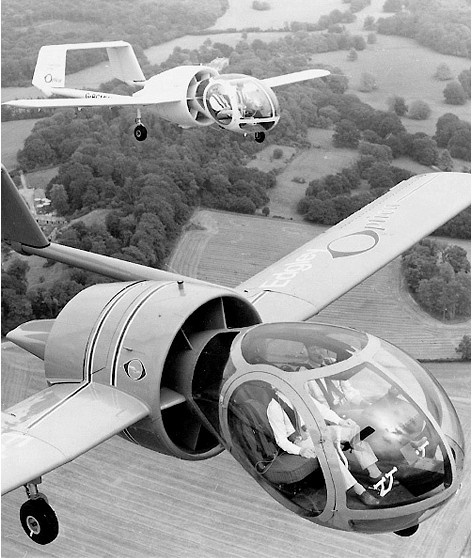
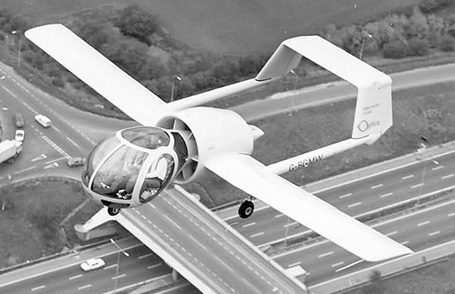
Combining the visibility of a helicopter with slow-flying capabilities, the original concept for the Edgley EA7 Optica was as a three-seat touring aircraft. Designer John Edgley, at that time a post-graduate student at the Imperial College of Science & Technology, London, began the final aerodynamic design in 1974 and a model was wind tunnel tested in 1975. Construction of a prototype began in 1976 in London, and final assembly was carried out at the College of Aeronautics, Cranfield. The first flight was made on 14 December 1979 with a 119kW Avco Lycoming O-320 engine but this was later changed to a 134kW IO-360. The Optica relies on ducted fan technology and a NASA designed aerofoil for its abilities. A one to one direct drive connects a five-bladed fixed-pitch fan to a Lycoming IO-360 200 hp fuel injected engine, enabling quiet operation and low vibration levels. As well as the normally aspirated Lycoming (TBO 1800 hours), a 210 hp turbo-charged Lycoming fit was available and a turbine installation was also being considered.

Edgley EA7 Optica Article

Optica G-BGMW (001) and G-BLFC (003) aircraft.

Mounting the whole cockpit assembly ahead of the fan and engine gives the pilot and passengers a 270 degree panoramic vision, plus almost vertical downward vision; the cockpit canopy design allows photography through the panels. The tricycle landing gear is fixed and unfaired, with maintenance-free solid suspension, and the airframe is of all-metal construction; its internal cabin width of 1.68m permits three-abreast seating, while baggage space and positions for mounting specialised observation equipment are provided behind the seats and in the unrestricted floor area in front of the two passenger seats.
A considerable flap area provides for STOL capability, enabling continuous en route flight at a very low loiter speed of 50 kts (57 mph/92 kmh). A power setting of 65 per cent covers 570 nm (1,050 km) at 94 kts (108 mph) for six hours with normal reserves. A mixture of cruise and loiter enables around nine hours airborne while maximum loiter stretches out to 13 hours.
Gliding characteristics are good with an approach speed of 65 kts and a threshold speed of 45 kts, 5 kts above the stall with 20 degree flap. The ROC (rate of climb) is around 720 fpm to a ceiling of 14,000 feet.

Considerable interest was shown in the Optica from the time of its first appearance, and at the 1981 Paris air show the announcement of a first production order was made – 25 for Australian distributor H. C. Sleigh Aviation Ltd.
With GBP 2.3-million funding, Edgley bought Old Sarum airfield near Salisbury, and set up a production line in existing hangars. Initial plans covered the construction of 200 aircraft, beginning in mid-1983, with first production models to be available at the end of that year for approximately GBP 55,000 each. However, the crash of an early production aircraft in 1985 led to the collapse of the company.
In October 1985, Optica Industries was formed to continue activities, and by the end of 1986, 15 aircraft had been produced. In January 1987 the factory was destroyed by arson along with all but one airworthy Optica. The company was reformed again as Brooklands Aircraft (later Aerospace), and the Optica Scout, renamed the Scoutmaster, returned to production with a 194kW Textron Lycoming O-540 engine. Six had been delivered to customers by the end of 1989. In March 1990, after building another five aircraft, all manufacturing was halted and a receiver called in. In July 1990 the Optica project was acquired by Lovaux Ltd at Hum and a resumption of full-scale production and marketing was planned.

Looking for an EDGLY EA-7 PRE-FLIGHT MANUAL.
William Wurthmann
william.wurthmann4@gmil.com
July 2021

Gallery

Engine; 1 x Avco Lycoming IO-360, 149kW
Max take-off weight; 1236 kg / 2725 lb
Empty weight; 850 kg / 1874 lb
Wingspan; 11.99 m / 39 ft 4 in
Length; 8.15 m / 26 ft 9 in
Height; 2.31 m / 7 ft 7 in
Wing area; 15.84 sq.m / 170.50 sq ft
Max. speed; 203 km/h / 126 mph
Stall speed; 55 mph
Cruise speed; 174 km/h / 108 mph
Ceiling; 4265 m / 14000 ft
Range; 1046 km / 650 miles
Endurance: 12 hr.

Brooklands Optica Scout
Length : 26.903 ft / 8.2 m
Height : 6.562 ft / 2.0 m
Wingspan : 39.37 ft / 12.0 m
Wing area : 170.071 sq.ft / 15.8 sq.m
Max take off weight : 2899.6 lb / 1315.0 kg
Weight empty : 2090.3 lb / 948.0 kg
Max. weight carried : 809.2 lb / 367.0 kg
Max. speed : 115 kts / 213 km/h
Landing speed : 58 kts / 108 km/h
Cruising speed : 86 kts / 159 km/h
Initial climb rate : 807.09 ft/min / 4.1 m/s
Service ceiling : 14026 ft / 4275 m
Wing load : 17.02 lb/sq.ft / 83.0 kg/sq.m
Range : 572 nm / 1060 km
Engine : Lycoming IO 540 V4A, 260 hp
Crew : 2+1

Edgley Aircraft Ltd

Edgley Aircraft Ltd was founded 1974 to develop the EA7 Optica three-seat observation aeroplane, featuring a ducted propulsor powerplant to the rear of the helicopter-like bubble cockpit (first flown December 1979). Ceased trading 1985.
Optica Industries Ltd took over the Optica observation aircraft from Edgley following purchase from receiver by A. Haikney of Aero-Docks in 1985 and formation of this company to restart production in 1986.

Eclipse EA700 / One Aviation Project Canada

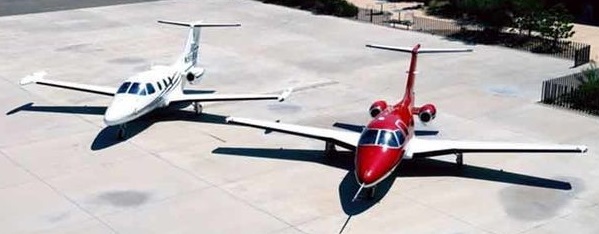
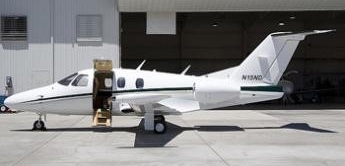
EA550 (left) & EA700 Project Canada (right)

One Aviation successfully flew an aircraft carrying the proof of concept wing shape of the new EA700 Project Canada from the company’s Albuquerque headquarters.

The first flight lasted 1.3 hours and the aircraft, N990NE climbed as high as 15,000 feet to evaluate aircraft handling qualities with the landing gear up down, as well as retracted and also in all flap configurations. Jerry Chambers, Director, Flight Test/Chief Test Pilot was PIC for the flight.

The modified wing included the four-foot wing span extension with the original EA550’s tip tanks removed to match the shape of the wing to be used on the new EA700 still under development. The final shaping of the wing tips for the EA700 was not included on this test aircraft although the wing did include a reshaped inboard wing airfoil and planform.

The flight used a modified EA550 airframe that retained the original fuselage, engines and stabilizers.
The production EA700 will feature a 14-inch cabin stretch making room for a fourth cabin window, a Garmin G3000 cockpit and additional fuel capacity. One Aviation is the parent company to Eclipse Aerospace.

Eclipse 500         

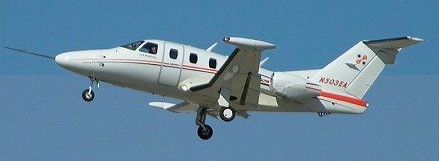
The Eclipse 500 was a project that was to build a lightweight, economical, fast jet, for both private and commercial use. The whole project was based primarily on the use of new EJ22 William jet engine.

The Eclipse 500’s price tag was promised at $837,500 and brought in deposits for more than 2,000 airplanes.

Eclipse 500 Article

The Eclipse 500 business jet programme was temporarily suspended in 2002 because of problems with the starters and fuel-metering equipment on the aircraft’s compact Williams EJ22 engines. On August 26, 2002, at Albuquerque International Sunport, prototype N500EA first flew with test pilot Bill Bubb. The acceleration is lethargic, especially for an airplane loaded so lightly. In the hot, thin, mile-high air, the EJ22s can generate barely half their rated thrust. After a leisurely takeoff roll of more than 3,000 feet, the airplane lifts off and begins a gentle climb, paralleling the Sangre de Cristo mountains off its left wing. For about an hour, Bubb flies the planned test routine, checking out general handling qualities and systems operation. Overall, the flight is free of major glitches. The Eclipse 500 never again flew with EJ22s.

Three months later, Eclipse Aviation announced: “The EJ22 is not a viable solution for the Eclipse 500 aircraft, and Williams International has not met its contractual obligations.” Williams conceded that it had run into “a number of challenges” with the EJ22 but insisted it had satisfied the contract, implying that the airplane had simply grown too heavy.

Eclipse signed a deal with Pratt & Whitney to develop a smaller version of a more conventional engine. The PW610F would develop 900 pounds of thrust, but it would weigh 260 pounds—triple the weight of the EJ22. The extra power would give the Eclipse 500 a bit better speed and climb, but there was a big downside: an empty-weight gain of 700 pounds and a 20 percent increase in fuel consumption. The price and cost projections eventually ballooned to $1.3 million and 89 cents a mile.

First flight with Pratt & Whitney Canada PW610F turbofan engines was in December 2004. Three years later, flight tests of the P&W-powered Eclipse 500 were proceeding smoothly. The Eclipse 500 became the first of a new class of Very Light Jets (VLJ) when the first jet was delivered in late 2006. The engines are in aft fuselage-mounted nacelles.

Production of the Eclipse 500 was halted in mid-2008 due to lack of funding and the company entered bankruptcy.

Gallery

Engines; 2 Pratt & Whitney Canada PW610F turbofans
Takeoff Thrust at Sea Level ISA+15°C (86°F) 900 lb (each) 4.00 kn (each)
Length 33.5 ft 10.2 m
Wingspan 37.9 ft 11.6 m
Height 11.0 ft 3.4 m
Maximum Ramp weight 6,034 lb / 2,737 kg
Maximum Takeoff weight 6,000 lb / 2,722 kg
Maximum Landing weight 5,600 lb / 2,540 kg
Empty weight 3,634 lb / 1,648 kg
Fuel Capacity 1,698 lb/251 gal / 770 kg/950 l
Useful Load 2,400 lb / 1,089 kg
Sea Level Cabin to; 21,500 ft 6,533 m
Cabin Altitude at 41,000 ft; 8,000 ft 2,438 m
Takeoff Distance Sea Level, ISA to 50 ft (15 m) @ MGTOW 2,345 ft 715 m
Landing Distance Sea Level, ISA @ 4,600-lb (2,087-kg) landing weight 2,250 ft 686 m
Rate of Climb – 2 engines 3,424 ft / min 1,044 m / min
Rate of Climb – 1 engine 989 ft / min 301 m / min
Time to Climb – 35,000 ft (10,688 m) 22 min
Takeoff at 5,000 ft (1,524 m) At ISA + 15°C; 3,881 ft 1,183 m
Single Engine Takeoff Climb at 5,000 ft (1,524 m) At ISA + 15°C; 705 fpm / 215 m / min
Max Cruise Speed; 370 kt / 685 km / hr
Vso; 69 kt / 128 km / hr
Vmo; 285 kt / 528 kph / 0.64 Mach
Maximum Altitude; 41,000 ft / 12,497 m
Single Engine Service Ceiling 25,000 ft / 7,620 m
Range 100 nm alternate; 1,125 nm / 2,084 km
Range – Max IFR 45-min res, 4 POB; 1,300 nm / 2,408 km
Cabin length; 148 in /376 cm
Cabin height (max); 50 in / 127 cm
Cabin width (max); 56 in / 142 cm
Seats 6
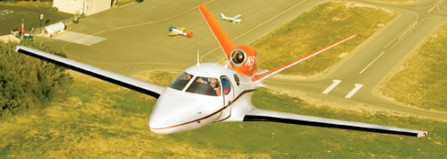
Eclipse Concept Jet / Eclipse 400

The Eclipse 400 seats four and cruises at 41,000 feet, three miles above its closest competition. Its robust v-tail design provides superior handling and its gold standard Pratt & Whitney Canada PW615F engine produces exceptional thrust and envious fuel economy.

Engines: 1 x Pratt & Whitney Canada PW615F
Length; 29.0 ft
Height; 8.8 ft
Wingspan; 36.0 ft
Max cruise speed (FL350); 330 ktas
Long range cruise speed (FL400); 290 ktas
Max range (FAA IFR + 45-min reserve); 1,250 nm
Service Ceiling; 41,000 ft
Time to Climb to FL250; 13 min
Time to Climb to FL350; 22 min
Stall Speed (VSO); 61 kt
Takeoff Distance to 50 ft. (Sea level, ISA, MGTOW); 2,045 ft
Landing Distance (Sea level, ISA, Max landing weight); 2,100 ft
Seats: 1 + 3
Baggage Capacity, Interior; 18 cu ft
Baggage Capacity, Exterior; 14 cu ft

Eclipse Aviation

Eclipse Aviation was founded by Vern Raburn in Scottsdale, Arizona, in 1998, and in 2000 the headquarters was moved to Albuquerque, N.M.

Construction of the first Eclipse 500 began in 2001.

The Eclipse 500 is flown for the first time on August 26 2002 powered by Williams International EJ22 turbofans.

In 2003 Pratt & Whitney Canada PW610F-A engines were selected to replace the Williams engines and testing of the PW610F engines began in 2004. Assembly of seven test aircraft also began and the first certification flight test aircraft was produced.

After airframe testing, in 2005 the FAA cleared the Eclipse 500 to an initial lifetime of 10,000 hours.

Eclipse Aviation receives full type certification for the Eclipse 500 from the FAA on September 302006. The first production Eclipse 500 receives its Certificate of Airworthiness from the FAA, and the first Eclipse 500 was delivered to a customer.

Eclipse Aviation received its production certificate from the FAA on April 26 2007. The Eclipse Concept Jet (now the Eclipse 400), a single-engine turbofan powered, V-tail, four-place aircraft is revealed at EAA AirVenture in Wisconsin. Eclipse Aviation opens its Jeff Harbers Customer Training Center at Double Eagle II Airport in Albuquerque, NM, and a service center in Gainesville, FL.

In 2008 Eclipse Aviation became the fastest general aviation jet aircraft manufacturer in history to produce its first 100 airplanes. The company opens a service center at the Albany International Airport in New York. On May 30 2008, Eclipse Aviation started taking orders for the Eclipse 400 single-engine jet, the production version of the Eclipse Concept Jet. Eclipse Aviation founder Vern Raburn steps down as President and CEO. Roel Pieper becomes CEO.