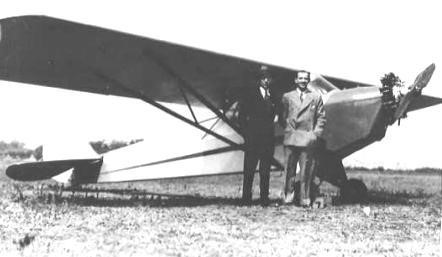
The 1927 VM-11 was built at Bettis Field, McKeesport, in association with Clifford Ball and D Barr Peat. It had a four-place cabin and open cockpit at the rear. It was registered N1540 c/n 11, which was later changed to N2972.
Airplane builder circa 1927-8. Eber H Van Valkenberg Aircraft Co began building a three seat monoplane with side-by-side seating in a rear cabin and a forward cockpit that could be open or enclosed. It was sold to Dr Leland E Phelps of Toledo c.1928, who rebuilt and expanded the plane as a four place cabin. It was never flown when called the Van Valkenberg. It was licensed as Phelps Monoplane #1 and also seen as Phelps Z-281.
Parent company was Eberhart Steel Products Co (established 1918), making not only aircraft but bomb-carriers, bombsights, synchronizing gears etc. In 1922 assembled 50 British-designed S.E.5E fighters from spare parts, “E” suffix denoting company name and plywood-covered fuselage. Aircraft division, named Eberhart Aeroplane & Motor Co Inc, formed in 1925. Developed steel-construction techniques and supplied components to U.S. aircraft industry. Experimental XFG-1 Navy fighter tested 1926/27.
The Technological Research Institute constituted the technical base on which Companhia Aeronáutica Paulista emerged. The Institute designed two aircraft that came to be manufactured in series by this company, in addition to designing the Paulistinha aircraft, it was the Paulistinha project, passed on to Companhia Aeronáutica Paulista (CPA) together with the Planalto plane that generated the first royalties paid to the IPT.
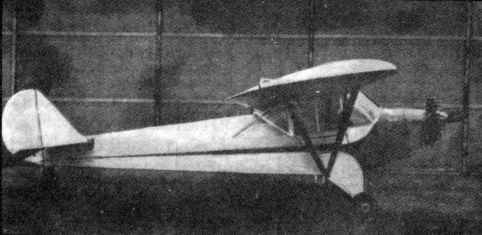
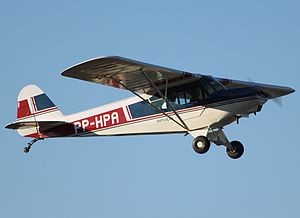
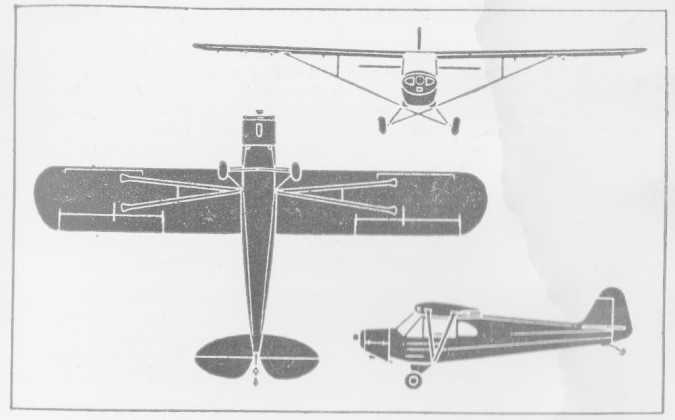
Originally developed by Empresa Aeronáutica Ypiranga (EAY) as an unlicensed copy of the Taylor Cub powered by a Salmson 9Ad radial engine, the EAY-201 featured a high strut-braced wing, two enclosed tandem seats, and a steel-tube fuselage with fabric covering. Its tailwheel undercarriage was not retractable.
Empresa Aeronáutica Ypiranga EAY-201
First flown in 1935, EAY had built five examples by the time that the firm was purchased by Companhia Aeronáutica Paulista (CAP) in 1942. CAP continued manufacturing the type under the designation CAP-4 with a 65 hp Franklin engine.
The Paulistinha was produced in three versions. The CAP 4 Tourer, the CAP 4B ambulance aircraft, and the CAP 4C military observation monoplane. The CAP 4C had a cut-down rear fuselage with the side windows extended aft.
Production of the Paulistinha was stopped in 1948, when the Paulistta company experienced financial difficulties, and resumed in 1956 by the Sociedade Construtora Aeronautica Neiva as the Pulistinha 56 (90 hp Continental C90-8F) and 56-B (100 hp Lycoming). The Paulistinha 56-C appeared in 1958, and 210 had been delivered by mid-1963. The Paulistinaha L-6 (100 hp Lycoming) was a liason version for the Brazilian Air Force, 19 being delivered in 1959.
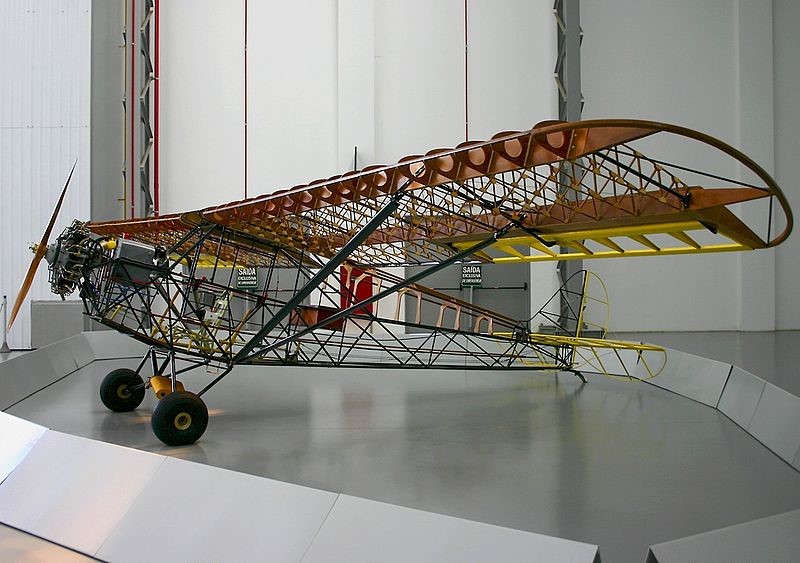
CAP 4
The type was widely successful, with nearly 800 units being produced for Brazil’s flying clubs and armed forces, as well as for export to Argentina, Paraguay, Chile, Uruguay and Portugal. At the time of peak production in 1943, a new CAP-4 left the factory every day, and production continued until 1948 when the company enter financial difficulties.
Brazilian Navy CAP-4 preserved at the Museu Asas de um Sonho
In 1956, Sociedade Aeronáutica Neiva (Neiva) acquired the rights renaming it to P-56 Paulistinha, the design was used as the basis for an agricultural aircraft, the P-56 Agricola, adding a fibreglass chemical hopper and spraybars, but this was unable to compete with imported, purpose-built agricultural aircraft.
In dimensions and characteristics, it is similar to the last series of the Paulistinha CAP-4 produced by Companhia Aeronáutica Paulista , from which Neiva acquired the rights, launching a new version, named Paulistinha 56 or Neiva 56.
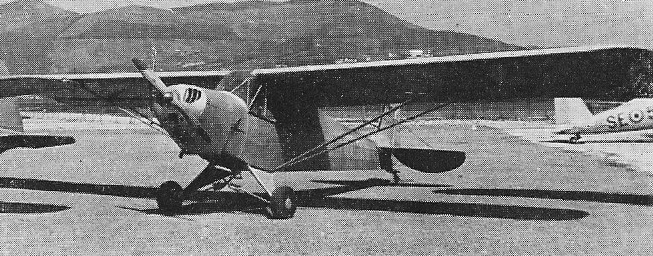
First flying in 1955, the Neiva P-56 Paulistinha could be equipped with a Continental C-90-8F or C90-12F engine, which could develop up to 115hp at 2625 RPM. A total of 256 were built
Its fuel system consists of two gas tanks, one at the top of the cabin and the other between the instrument panel and the engine fire wall, before entering the carburetor the gasoline passes through a filter and decanter type “cup” “.
Neiva P-56 Paulistinha
The Brazilian Air Force operated this aircraft between 1959 and 1967, with the military designation L-6 . It was used in bombing connection, observation and calibration missions. Paraguayan Military Aviation bought four aircraft in the early 1960s. The Paraguayan Aeroclub bought four aircraft in the 1950s
In total about 840 were built.
Variants:
EAY-201 original version Engine: Salmson 9Ad Seats: 2
CAP-4 Paulistinha main production version Engine: 1 × Franklin 4AC, 48 kW (65 hp) Wingspan: 10.10 m (33 ft 2 in) Wing area: 17.0 m2 (183 sq ft) Length: 6.65 m (21 ft 10 in) Height: 1.95 m (6 ft 5 in) Empty weight: 320 kg (705 lb) Gross weight: 540 kg (1,190 lb) Fuel capacity: 58 L (15 US gal; 13 imp gal) Maximum speed: 155 km/h (96 mph, 84 kn) Cruise speed: 140 km/h (87 mph, 76 kn) Range: 500 km (310 mi, 270 nmi) Service ceiling: 4,000 m (13,000 ft) Rate of climb: 3.1 m/s (610 ft/min) Crew: Two, pilot and instructor
CAP-4B air ambulance version (2 prototypes built) Engine: 1 × Franklin 4AC, 48 kW (65 hp) Wingspan: 33 ft 2 in Length: 21 ft 10 in Height: 6 ft 4.75 in Empty weight: 706 lb Loaded weight: 1190 lb Max speed: 96.5 mph Cruise: 87 mph ROC: 610 fpm Range: 311 mi
CAP-4C artillery-spotting version, (Paulistinha Rádio or Paulistinha Observação) Engine: 1 × Franklin 4AC, 48 kW (65 hp) Wingspan: 33 ft 2 in Length: 21 ft 10 in Height: 6 ft 4.75 in Empty weight: 706 lb Loaded weight: 1190 lb Max speed: 96.5 mph Cruise: 87 mph ROC: 610 fpm Range: 311 mi
P-56 Agricola agricultural version by Neiva 60 built
Neiva P-56 Paulistinhab Engine: Continental C90-8F, 90 hp Wingspan: 10.8 m (35 ft 4 in) Wning area: 183 sq.ft Length: 6.90 m (22 ft 2 in) Height: 1.95 m (6 ft 5 in) Empty weight: 882 lb MTOW: 1455 lb Max speed: 100 mph at SL Cruise: 90 mph ROC: 875 fpm Ceiling: 19,685 ft Range: 560 mi Endurance: 4 hrs
Neiva Paulistinha 56-C Engine: Continental C-90-8F/12F, 90 hp (67 kW) Seats: 2 256 built by between 1958 and 1964.
P56C-1 Paulistinha Rebocador
Paulistinha 56-D Engine: Lycoming O-320-A1A, 150 hp (110 kW) Single prototype built Brazilian Air Force designated L-6A No production.
Empresa Aeronáutica Ypiranga (EAY) is a Brazilian company created in São Paulo in 1931 on the initiative of the American Orthon Hoover, the Brazilian Henrique Dumont Villares and the German Fritz Roesler.
Having come to Brazil in 1914 to assemble three Curtiss seaplanes bought by the Brazilian Naval Air Force, Horton settled permanently in Brazil in 1928. He had collaborated with Frederico Brotero in the development of the IPT Bichinho. Henrique Dumont Villares was a nephew of Santos-Dumont and Fritz Roesler (born in Strasbourg), had been a fighter pilot during the First World War before reaching Brazil. Roesler had founded in 1923 in a district of São Paulo, Ypiranga, a flight school, then participated with George Coubisier, Francisco Matarazzo and others, in the creation of the airline VASP.
Empresa Aeronáutica Ypiranga began its activities with the realization of a glider, the EAY-101, a copy of the German Stamer Lippisch Zögling, of which 6 examples were built. The second achievement of the firm was copied from the Taylor Cub. The EAY-201 was a 40 hp Salmson 9Ad radial-engine, high-wing tandem tandem school two-seater which began testing in 1935. Only 5 were built. In 1942, EAY was absorbed by Companhia Aeronáutica Paulista (CAP), EAY-201 then becoming CAP-4 Paulistinha.
The Eaves Cougar 1 is an American homebuilt aircraft that was designed by Leonard R. Eaves of Oklahoma City, Oklahoma and made available in form of plans for amateur construction.
The Eaves Cougar 1 was based upon the Nesmith Cougar and features a strut-braced high-wing, a two-seats-in-side-by-side configuration enclosed cockpit, fixed conventional landing gear and a single engine in tractor configuration.
The construction of the prototype was commenced in January 1957 at Eaves’ home in Oklahoma City. The design won third place in the 1963 Experimental Aircraft Association aircraft design competition. It was featured on the cover of Sport Aviation magazine in February 1963.
Eaves was killed in the crash of another homebuilt aircraft design on 3 March 2012 at age 92 and plans for the Cougar seem to be no longer available.
The aircraft is made from welded steel tubing and wood, covered in doped aircraft fabric. Its wing has a 23.25 ft (7.1 m) span and can be folded for storage or ground transportation. Engines used typically range from 85 to 125 hp (63 to 93 kW) but the airframe can accept engines as powerful as the 150 hp (112 kW) Lycoming O-320.
The aircraft has an empty weight of 700 lb (320 kg) and a gross weight of 1,400 lb (640 kg), giving a useful load of 700 lb (320 kg). With full fuel of 35 U.S. gallons (130 L; 29 imp gal) the payload is 490 lb (220 kg).
Cougar 1 Engine: 1 × Continental C85, 85 hp (63 kW) Propellers: 2-bladed McCauley Length: 18 ft 6 in (5.64 m) Wingspan: 23 ft 4 in (7.11 m) Empty weight: 700 lb (318 kg) Gross weight: 1,400 lb (635 kg) Fuel capacity: 35 U.S. gallons (130 L; 29 imp gal) Maximum speed: 155 mph (249 km/h; 135 kn) Cruise speed: 135 mph (117 kn; 217 km/h) Stall speed: 60 mph (52 kn; 97 km/h) Range: 400 mi (348 nmi; 644 km) Rate of climb: 600 ft/min (3.0 m/s) Crew: one Capacity: one passenger
Leonard designed and built Skeeter, a two-place composite airplane, in the early 1960s, and test-hopped Skeeter in September 1966 at Wiley Post Airport.
Leonard R. Eaves, EAA Lifetime 2194, who lost his life in the crash of his Skeeter 1M homebuilt on Saturday, March 3, 2012. He was reportedly en route to a pancake breakfast in Ponca City, Oklahoma, when the crash happened on the Clarence E. Page Airport near Yukon, Oklahoma. Leonard was 92, and was survived by his wife, Rita.
A veteran, Leonard was proud of serving his country during World War II as communications personnel in North Africa. Afterward, Leonard returned to Oklahoma City and continued working at his family’s automobile repair shop. Leonard made his career there for more than 50 years, and that skill and expertise facilitated his hobby of designing, building, and maintaining airplanes.
When Leonard experienced his first flight in a Piper Cub more than six decades ago, he became “sold” on airplanes and flying. He and Rita soon earned their private pilot certificates, and Leonard also acquired his commercial ticket. In January 1957, they began building a Nesmith Cougar 1 experimental airplane. Their workshop was just behind their home.
Leonard, along with Rita, was a long-time EAA volunteer, helping with the fly-in starting during the Rockford days and long after the event moved to Oshkosh. They were awarded the EAA President’s Award for Outstanding Contributions to EAA in 1973 and 1998. Leonard was a lifetime EAA member, a charter member of EAA Chapter 24, held many offices in the chapter, and received that chapter’s Outstanding Member Award twice.
In 1963, Leonard won third place in an EAA design competition for his modified Cougar with its efficient folding-wing design. He, Rita, and Chigger were featured on the cover of EAA Sport Aviation in February 1963. Leonard designed and built Skeeter, a two-place composite airplane, in the early 1960s, and test-hopped Skeeter in September 1966 at Wiley Post Airport. Rita enjoyed flying Skeeter as well. Leonard was well respected as a test pilot for local homebuilders.
Leonard designed and built several more airplanes throughout the years. Leonard R. Eaves, EAA Lifetime 2194, who lost his life in the crash of his Skeeter 1M homebuilt on Saturday, March 3, 2012. He was reportedly en route to a pancake breakfast in Ponca City, Oklahoma, when the crash happened on the Clarence E. Page Airport near Yukon, Oklahoma. Leonard was 92, and is survived by his wife, Rita.
This machine is a biplane of the Bleriot type, except that it has sliding planes at the wing tip for securing lateral stability. This machine has been making small jumps for a couple of weeks. It is equipped with a Ford automobile engine of 22 1/2 h.p., four-cylinder, water-cooled. The power plant weighs 200 pounds, and the whole machine 700 pounds, including the aviator. Warren S. Eaton was driving the machine when it went over on to its nose. It was running on the ground at the rate of 25 miles per hour when the front axle broke. As the tail was high in the air at the time, the tips of the skids stuck in the ground, and it ended up as shown. Mr. Eaton was thrown into the framework, but escaped unhurt.