
The first of the Granville brothers’ Gee Bee racers, of 1930.
Engine: Menasco, 125 hp.
Top speed: 159 mph.
The first of the Granville brothers’ Gee Bee racers, of 1930.
Engine: Menasco, 125 hp.
Top speed: 159 mph.
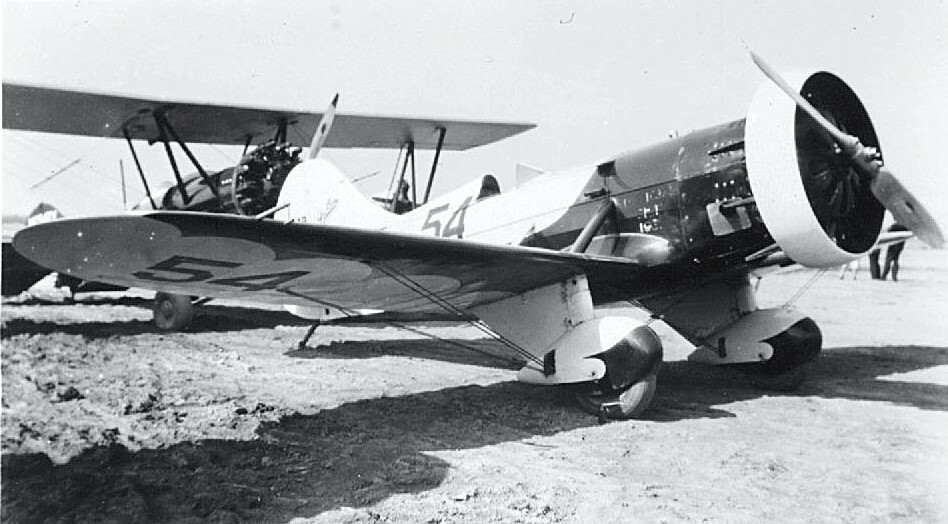
Chief engineer Bob Hall’s “Gee Bee” (for Granville Brothers) racers had dominated the 1931 Nationals. In the Thompson, Hall took a Model Y Senior Sportster to fourth and Lowell Bayles flew a Wasp Jr.-powered Model Z Super Sportster to victory.
2 seat
2 built
X11049 Wasp C engine
X715Y Lycoming
Skylander was a Desmond Norman’s last project. Intended for rough field work in remote areas, the rights for this twin PT6A turboprop have been bought by GECI of France for further development.
Skylander (provisional)
Engines: Two 1100shp Pratt & Whitney Canada PT6A 65B turboprops.
Span, 71 ft (21.6m).
Length, 47ft 2in (14.38m).
Height, 20ft 1 in (6.lm).
Max take off weight, 18,5001b (8.4 tonnes).
Max payload, 7,2751b (3.3 tonnes)
Cruise speed, 230kt (426km/h).
Range, 1,207nm (2,235km).
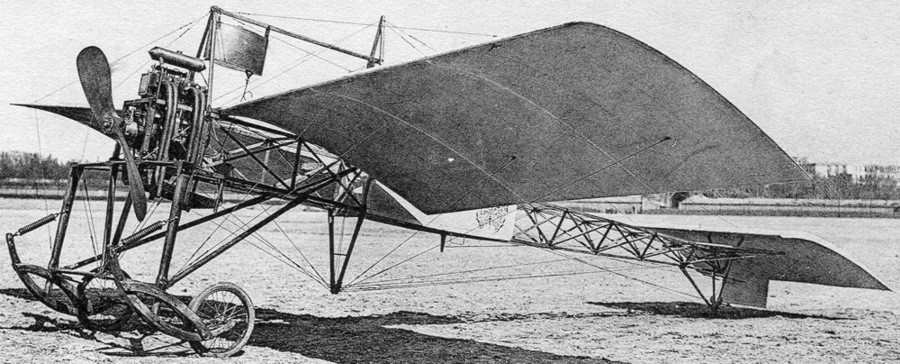
Built in France by Guyot, Bœswillwald et Stahl (G.B.S.), three of these Blériot-like planes with triangular cross-section were entered in the 1910 Tours meeting, but never showed up. Powered by a 40 hp Labor engine.
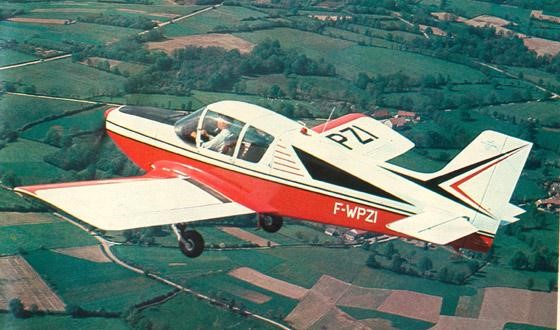
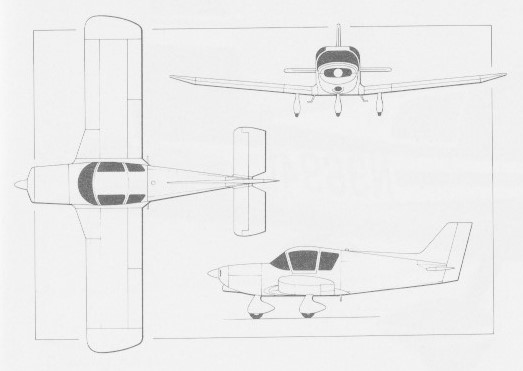
The company produced a 2/3-seat light aircraft, the GV 103L, which first flew on 1 May 1969. Subsequently built a second example with the intention of finding a sponsor for production of the type.
The GV 10-20 was an aerobatic two-seat version with 115 hp Lycoming engine.
The GV 10-31 was a four-seat version.
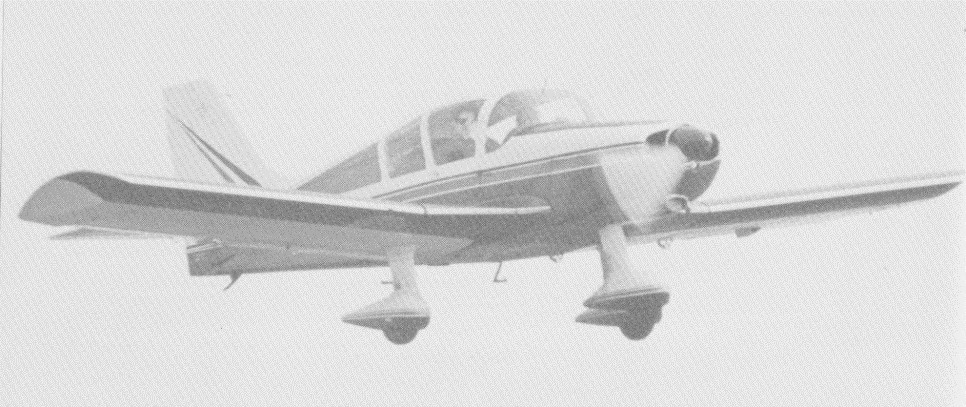
GV 10-31
Engine: Lycoming O-320, 150 hp
Wingspan: 28 ft 8.5 in / 8.75 m
Length: 21 ft 7.75 in / 6.60 m
Empty weight: 1212 lb / 550 kg
MTOW: 2182 lb / 990 kg
Max cruise 75%: 122 kt / 140 mph / 225 kph
ROC SL: 787 fpm / 240 m/min
Service ceiling: 14,760 ft / 4500 m
Range: 594 nm / 683 mi / 1100 km
Seats: 4
Max rear seat load: 340 lb / 154 kg
Baggage: 22 lb / 10 kg
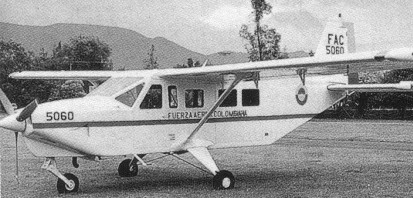
A 1998 addition to the Fuerza Aerea Colombiana (FAC) inventory was the indigenous Gavilan 358 eight seat light utility aircraft. Four were ordered by the FAC, the first of which was delivered on June 16 1998 after the type had achieved US FAA FAR Part 23, Amendment 46 type certification on May 26. Including these four, manufacturer El Gavilan SA had firm orders for 11 aircraft and was building an initial production batch of 12, which will include a number of the turboprop Model 508T, under development. A second production aircraft was delivered to TSS of Guatemala on June 17 and a third to Aeroexpreso of Bogota while the next export sale was due for delivery to Deobal of Argentina.
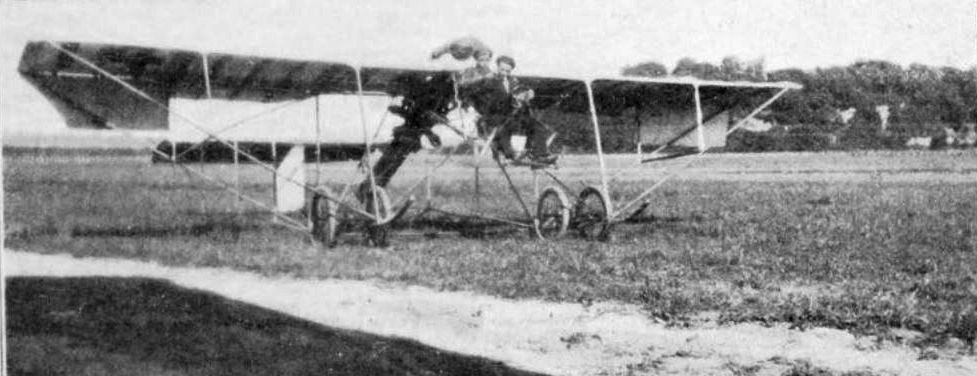
An experimental pusher monoplane with a rigidly trussed shoulder-mounted wing, one of a series of experimental types ordered by Jean Legrand. It was built by Louis Gaudart and was flown at Juvisy in May 1911.
Span: 29’6″
Length: 26’3″
Weight: 660 lb
Speed: 60 mph
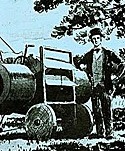
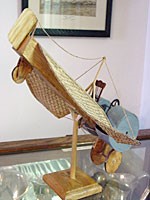
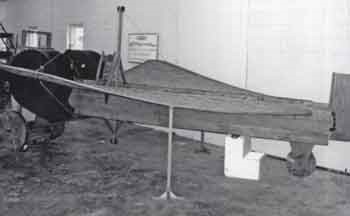
Designed and built in North Carolina by James Henry Gatling, the brother of Richard Jordan Gatling, the inventor of the infamous machine gun, the aeroplane, also called the “Turkey Buzzard”, is the first known man-powered aircraft built and flown in America. On a brisk Sunday afternoon in the fall of 1873, Gatling, sitting in the cockpit of his invention, with hands and arms furiously turning the cranks of his fan blowers, reportedly glided a little over 100 feet from a platform constructed approximately 12 feet above the ground.

The Learjet 60 was announced in October 1990 as the replacement for the Model 55C, from which it is derived. A proof of concept airframe flew for the first time on 18 October 1990 powered by one Garrett TFE331-3A and one PW305 engine. The first twin-PW305-powered Learjet 60 made its first flight from Mid-Continent Airport, Wichita, on 13 June 1991, and certification and early deliveries are targetted for the end of 1992. The Model 60 is the largest of the Learjet family and incorporates new fuel-efficient engines, a fuselage 0.07m wider and stretched by 1.43m, a ‘glass cockpit’, ‘steer by wire’ nosewheel, and an optional higher MTOW of 10478kg. Thrust reversers and single-point refuelling are also standard equipment, and the aircraft features a full galley, together with an aft toilet. By mid-1991, Learjet claimed to have sold the first full year’s production to customers in seven countries.

Engines: 2 x Pratt & Whitney Canada PW305 turbofans, 1995kg
Take-off weight: 10319 kg / 22750 lb
Wingspan: 13.34 m / 43 ft 9 in
Length: 17.88 m / 58 ft 8 in
Height: 4.47 m / 14 ft 8 in
Wing area: 24.57 sq.m / 264.47 sq ft
Max. speed: 858 km/h / 533 mph
Ceiling: 15545 m / 51000 ft
Range: 4441 km / 2760 miles
Learjet’s Longhorn series combines a revolutionary wing design, two of the most advanced engines introduced to the market, and 51,000-foot performance. The line of five aircraft has been designated the Learjet 28 and Learjet 29, both powered by General Electric turbojets, and the Learjet 54/55/56, and those three are powered by twin Garrett AiResearch fanjets. All the models are designed with a larger wing incorporating near-vertical winglets that have replaced the traditional Learjet tiptanks. The wing’s increased aspect ratio and super-critical winglets provide substantial aerodynamic improvements that in turn produce greater fuel efficiency and improved flight performance at high and low altitudes. The wing also has been responsible for significantly improved short-field performance. The balanced field length is 3,520 feet for the 54/55/56 series.
Engines two 3,650-lb. s.t. Garrett AiResearch fanjets.
Gross wt. 20,000 lb
Empty wt. 10,257 lb
Fuel capacity 1,194 USG.
Top speed 550 mph.
Stall 100 mph.
Initial climb rate 4,700 fpm.
Ceiling 51,000 ft.
Range 3, nm.
Balanced field length 4,160 ft.
Seats 12
 All Aero