Hamers 1909 Tandem monoplane

An aeroplane designed and built in 1909 by the Dutch brothers Ph. J. Hamers (architect) and J. Hamers (mechanic) together with the mechanic P. de Roos. They decided to build this plane after experimenting with gliders. The machine was finished in the beginning of 1910 and was ready to fly in February 1910. Flying tests were not successful because of the unreliable and/or underpowered engine, a two-cylinder 20 hp Humber motorcycle unit. As ever money was the problem… The machine was a monoplane, but they saw it as a biplane with one wing in front and one low at the back. Lots of the construction was of steel tubing. The plane was modified in the middle of 1910 and shown on an exposition in Haarlem in August 1910, the heavily modified machine more similar to a Blériot monoplane. After that exposition the work of the Hamers brothers faded into history.

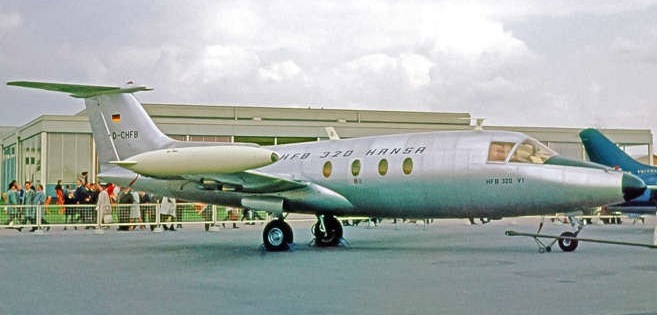
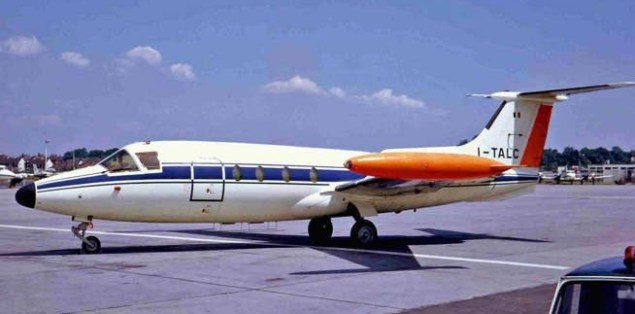
Hamburger HFB.320 Hansa

In¬terest in forward swept wing was revived in the early 1960s when the German Hamburger Flug¬zeugbau (HFB) company made market studies on the prospects for business jet aircraft. These studies indicated a potential demand for a seven seater and that a forward swept wing offered advantages for this particular size of aircraft. The HFB chief designer was Hans Wocke. Designer of the war-time Junkers Ju 287, and the commercial sales manager of HFB was Sieffiried Holzbaur, the Ju 287 test pilot.

In the development of the Hansa Hamburger Flugzeugbau GmbH co-operated with several other companies, the Dutch Fokker concern being responsible for the typical forward-swept wing and the Spanish CASA concern for the rear fuselage and tail.

Hamburger HFB.320 Hansa Article

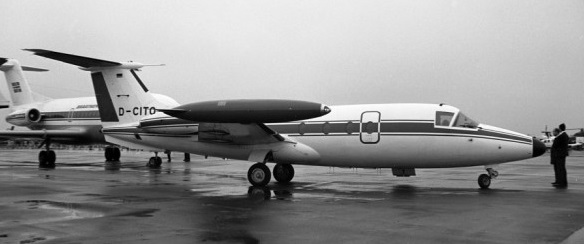
The Hansa 320 is identified by the 15-degree forward sweep of the wings. In addition to providing the low-speed flying characteristics desired, the adoption of forward sweep enabled the wing to be mid mounted, this position permitting the use of a fuselage of optimum diameter (81 in). A mid wing layout is impractical with conventional aft swept wings, as it involves the main spar passing through the cabin. On the HFB 320 Hansa Jet, the cabin is forward of the main spar.

The Hansa Jet prototype D-CHFB first flew on 21st April 1964, for 73 minutes. The wing provided the flying characteristics hoped for. Control during the approach to, and in, the stall was excellent. During trials the aircraft was held in a full stall with an indicated angle of attack of 19 deg., and banked with the normal application of aileron. Warning of stall is consistent and readily evident.

Production of the Hansa was initiated by Hamburger Flugzeugbau and carried the name of Messerschmitt- Bolkow-Blohm (MBB) when the two German aircraft companies merged in 1969. The first production Hansa Jet flew on February 2, 1966, and received FAA certification on April 7, 1967. However, the problem of providing the exceptional wing torsional stiffness required, without excessive weight penalty, was not entirely over¬come. To prevent the main landing gear bay breaking into the vital lower wing skin, the legs are stowed in fuselage fairings, ahead of the forward wing root. This results in a narrow track. To keep the air flowing over the heavily loaded inboard end of the wing, short span slats are fitted to the inner section of the wing. Without such a device, a forward swept wing will generate less lift than one swept aft.

A US test pilot, Loren W. Davis, was engaged for the initial flight programme.

In the second part of 1968, after three HFB-320 were ordered for the RLS, the Hansajet became well known at Groningen-Eelde. HFB directed a number of brand-new HFB-320 Hansa jets to Groningen Airport Eelde in the Netherlands for test flying and training.
In spite of the good low speed qualities, the Hansa Jet did not initiate a business jet fashion. The theoretical aerodynamic advantages were in practice too deeply eroded by the increased wing weight, its complexity and cost.
A parachute brake in the tail is used for short or icy runways. About 50 were built in executive, cargo and quick-change versions.

HFB-320 Hansa D-CITO (1025)

Hamburger Flugzeugbau HFB 320 Hansa Jet
Engine : 2 x General Electric CJ610-1, 12704 N / 1295 kp
Length : 54.462 ft / 16.6 m
Height : 15.748 ft / 4.8 m
Wing span : 47.572 ft / 14.5 m
Max take off weight : 18742.5 lb / 8500.0 kg
Max. speed : 486 kts / 900 kph
Service ceiling : 38058 ft / 11600 m
Range : 1253 nm / 2320 km
Crew : 2+12

Engines two 3,108-lb. s.t. General Electric turbojets.
Gross wt. 20,280 lb.
Empty wt. 11,960 lb.
Fuel capacity 1,099 USG.
Top speed 513 mph.
Cruise 420 mph.
Stall 111 mph.
Initial climb rate 4,250 fpm.
Range 1,472 miles.
Ceiling 40,000 ft.
Takeoff distance (50′) 2,740 ft.
Landing distance (50′) 4,429 ft.
Seats 15.

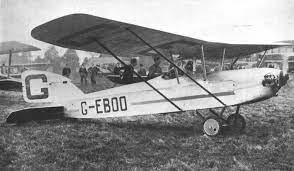
Halton Aero Club HAC.II Minus

By 1928 the Halton Aero Club HAC.1 Mayfly had been converted from a biplane to a parasol monoplane and was renamed the Halton HAC.2 Minus. The lower wings were donated to the Clark Cheetah G-AAJK. There were other minor changes.

It was used again for air racing, being entered in the 1928 and 1928 King’s Cup Races.

The aircraft was dismantled at Halton in 1930.

Powerplant: 1 × Bristol Cherub III, 32 hp (24 kW)
Wingspan: 28 ft 6 in (8.69 m)
Lower wingspan: 22 ft 0 in (6.71 m)
Length: 22 ft 0 in (6.71 m)
Crew: one

Halsmer Aero Car

Aero Car 3

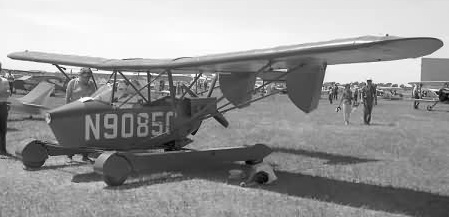
The Aero Car N9085C was built in 1959 by Joseph L. Halsmer of Lafayette, Indiana was one of the numerous attempts at building a roadable aircraft.

Airline captain Helsmer built this machine over a two-year period for $2,300. N9085C was later converted into single-engine Aero Car 3. Halsmer also built a high-wing two-seater with a uni-twin arrangement of two 65hp engines driving two counter-rotating props, registered N12043.

Aero Car 3

The Aero Car was a high-wing monoplane with two engines in a tractor-pusher configuration, a tri-cycle gear and tail booms. Helsmer built this machine over a two-year period, and later converted into the single-engine pusher Aero Car 3 presented in 1963 powered by a Continental C-85-12 engine.

Hall Cherokee II

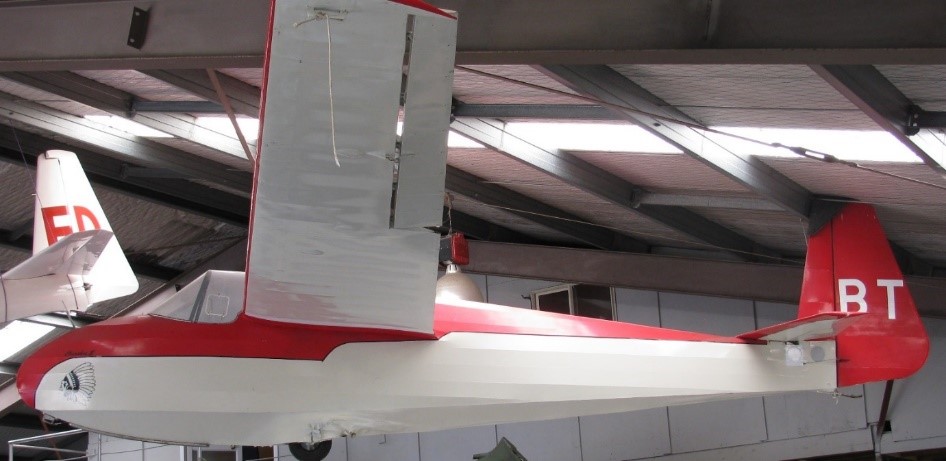
The Cherokee II, designed by Stanley Hall, was introduced in 1956 specifically for amateur construction from plans. The entire wood airframe is covered in fabric. Upper surface spoilers control the glidepath, and the landing gear is fixed. Many examples vary in detail. L/D max. 23. The design was further developed by several builders including the Cherokee RM by Terry Miller and John Ree with a 13.4 m. / 44 ft. span wing with NACA 64(3)-618 airfoil which increased L/D max. to about 28, and the 15 m. Leonard Annebula which has Prue type trailling edge airbrakes and a claimed L/D max. of 31.

Cherokee II

Plans are available only as secondhand now.

A Cherokee RM belongs to the National Soaring Museum.

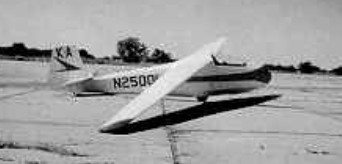
The Flagor/Hall powered version of a Hall Cherokee II single seater sailplane was produced by Mr Ken Flaglor of Northbrook, Illinois, who fitted the Cherokee II he had built from plans some years before with two 10hp West Bend Model 82001-1 and Model 82002-1 Power Bee go-kart engines. These were mounted on pylons each side of the fuselage under the wings, and drove opposite-rotating Troyer wooden pusher propellers of 2 ft 0 in diameter; the fuel capacity was 2 US gallons. The first flight of Mr Flaglor’s powered Cherokee II, registered N12042, was made in June 1964. The basic Cherokee II is a shoulder wing single seater of conventional wood and fabric construction, plans of which were marketed by its designer, Mr Stanley A. Hall.

Wing span: 12.19m / 40ft
Wing area: 11.61sq.m / 125sq.ft
Empty Weight: 154kg / 340lb
Payload: 86kg / 190lb
Gross Weight: 240kg / 530lb
Wing Load: 20.3kg/sq.m / 4.23lb/sq.ft
Aspect ratio: 12.8
Airfoil: Go 549
MinSink: 0.82 m/s / 2.7 fps / 1.59 kt
No. of Seats: 1
L/DMax: 23 @ 74 kph / 36 kt / 46 mph
No. Built: 80
Structure: wood/fabric; 2-spar wing

Flagor/Hall Cherokee II
Engines: 2 x 10hp West Bend Model 82001-1 and Model 82002-1 Power Bee
Propellers: 2 x Troyer wooden 2 ft 0 in diameter
Span: 40 ft 0 in
Length: 21 ft 6 in
Wing area: 125 sqft
Aspect ratio: 12.8
Empty weight: 375 lb
Max weight: 580 1b
Fuel capacity: 2 US gallons
Max level speed: 72 mph (power on)
Cruising speed: 60 mph (power on)
Min sinking speed: 4 ft/sec (unpowered)
Best glide ratio: 16.5:1 at4 5mph (unpowered)
Take-off run: 900 ft
Endurance: 1 hour (power on)

Hall Aircraft Cicada

As work progressed, Bob Hall turned his attention to the International Air Races at Niagara Falls New York which were to begin June 24, 1932. At 8:40 p.m. the evening before the big races were to begin at Niagara Falls, the two place aircraft took to the air for the first time with Bob Hall at the controls. Spectators commented that it resembled a giant moth as it flew through the twilight sky. Actually the new speed plane was intended to resemble an insect, in its paint scheme at least.
It was painted green with cream and brown designs on its wings and fuselage patterned after the Cicada, a type of Mexican locust. To complete the picture, eyes were painted on the engine cowling. With these facts in mind, it is easy to see why the name “Cicada” would forever identify this aircraft
After its first test flight, which Hall considered a success, work continued on the ship late into the night. The morning of June 26th, Hall, bleary eyed from lack of sleep, flew the plane to Niagara Falls just in time for the final day of air racing. He had decided to race the “Cicada” at Niagara Falls just to see what the new speed plane could do in competition.

The Niagara Falls Manufacturer’s Trophy Race was the big event on the 26th. It was a fifty mile free-for-all race with a high cash purse plus a trophy. When all was said and done, Bob Hall flying the “Cicada” placed fourth. His comparatively poor showing can be attributed to several factors. First, the “Cicada” was not primarily a pylon racing plane nor was it completely finished. Second, Hall was certainly not in tip-top shape after the last minute rush, and probably did not do as good a job of piloting as he was normally capable of.
Bob Hall then flew the “Cicada” home where he completed final details on the aircraft. It was then officially delivered to Frank Lynch who decided to enter the 1932 Bendix Trophy Race, in preparation for his round the world attempt. After considerable testing, Frank was forced to scratch his racer from the Bendix competition because of engine problems which could not be smoothed out in time for the start of the Bendix race.
Determined that he would race the “Cicada” one way or the other, Frank Lynch hastily began the task of fitting his speedster with a P&W R-1340 “Wasp” engine (800hp) , hoping to at least get in some pylon racing at Cleveland.
At this point in my story we must go back to early 1932 and the second race plane that Bob Hall was building under contract. It also was due to be finished in time to compete in the 1932 Cleveland Air Races that were to begin August 27th and run through September 5th.

After sitting out the 1932 Cleveland races, Frank Lynch flew his racer back to Bowles-Agawam airport where it was to be gone over in preparation for future competition. A short time later after some minor reworking, Frank Lynch climbed into the cockpit for a routine test flight. But as it turned out, this would be the last flight for both Frank Lynch and the “Cicada”. For as the “Cicada” roared down the runway and became airborne, it suddenly veered from its line of flight and clipped a corner of a hangar top, crashed and burned as horrified spectators watched in disbelief.

L-1
Engine:P&W R-985 Wasp jr
Wing span: 34 feet 6 inches
Overall length: 23 feet 7 inches
Wing area: 170 square feet
Gross weigh: 3300-3500 pounds
est cruise: 175 mph
Top speed 210 mph

Hall Aircraft Bulldog

With two firm orders in his hand, Bob Hall had leased a corner of the main hangar at Bowles Agawam Field where work began early in 1932 on the two never to be forgotten Hall racers.
Work began almost simultaneously on the two speed planes. The first was built on order for Flank Lynch, a wealthy sportsman. Lynch expected to fly this high wing plane around the world in a record attempt. It was considerably the larger of the two Hall designs and seated two people in a staggered side-by-side arrangement.
As work progressed, Bob Hall turned his attention to the International Air Races at Niagara Falls New York which were to begin June 24, 1932. At 8:40 p.m. the evening before the big races were to begin at Niagara Falls, the two place aircraft took to the air for the first time with Bob Hall at the controls.

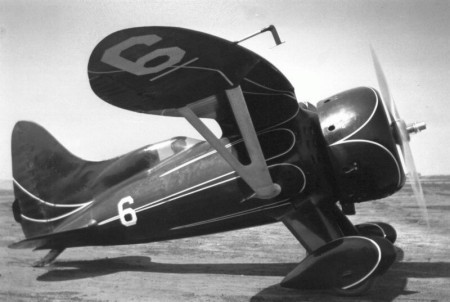
This second race plane designed and built by Bob Hall was a beautiful gull wing design. It was a single place speedster which was expected to be the equal of any other ship entered in the Cleveland National Air Races. This, of course, meant that an exciting rivalry was shaping up in Springfield between the Granvilles and the new Hall group.

The new gull winged racer was built under contract for Marion Price Guggenheim of the New York family, well known for their support of all types of aeronautical activities. The contract stipulated that only Russell Thaw or a pilot designated by him, would be permitted to fly the new race plane. Young Thaw was known as the playboy of east coast society circles and worked as chief pilot for the Guggenheim family, flying a Lockheed Air Express and a Vega. Mrs. Guggenheim would later christen this new race plane the “Bulldog”, in honour of the famed Yale University mascot.

After sitting out the 1932 Cleveland races, Frank Lynch flew his racer back to Bowles-Agawam airport where it was to be gone over in preparation for future competition. A short time later after some minor reworking, Frank Lynch climbed into the cockpit for a routine test flight. But as it turned out, this would be the last flight for both Frank Lynch and the “Cicada”. For as the “Cicada” roared down the runway and became airborne, it suddenly veered from its line of flight and clipped a corner of a hangar top, crashed and burned as horrified spectators watched in disbelief.

Hall chose the gull wing design because he thought it would produce longitudinal stability. He also designed a rather intricate exhaust system with pipes exiting at right angles to the air stream and flush with outer contours of the engine cowling . . . the theory being to create a low pressure area in the exhaust ports to better scavenge exhaust gases, thus increasing the volumetric efficiency of the supercharger. The engine was the same as mounted in the “Cicada”, a P&W Wasp Jr., which developed 535 hp. Hamilton Standard made available to Hall one of their first handmade controllable pitch propellers for use on the “Bulldog”. The wing span was 26 feet with a fuselage length of 19 feet. The racer was painted red and black with a white separator stripe and was assigned race No. 6 for the Cleveland races.

As July slipped into August, feverish preparations were carried on by the Hall group to ready the “Bulldog” for the Cleveland Nationals. The schedule called for an early August test program before the racer would be turned over to Russell Thaw, the chosen race pilot.

Hall held to his schedule and began the testing of the “Bulldog” early in August 1932. His speedy gull wing racer almost came to grief on its very first test flight. As he roared down the runway on his first take-off, the “Bulldog” started to roll to the left at about 10 feet of altitude. Hall cut the engine and got the wing up enough to clear the ground as it fell back to earth on its left wheel. Skillfully he brought the other wheel down and the airplane rolled to a stop. The excess shock caused the left tire to blow out with resulting damage to the wheel pants, which was easily repaired. The “Bulldog’s” fin was then modified three times and the rudder four times, before Hall was satisfied with the ship’s flight characteristics. This was because the gull wing was directionally destabilizing to a degree that Hall had not foreseen. While this was going on, the ejector exhaust system was removed because insufficient time remained to iron out various unforeseen details of heat expansion and contraction of various parts.

Russell Thaw, the chosen race pilot, then got the chance to fly the “Bulldog”. At the last minute Thaw expressed dissatisfaction with the airplane. He indicated that he probably would not fly the plane during the National Air Races after all. There was no indication of whether he would choose a substitute pilot or if Hall himself might fly the plane. Hall’s associates were very disappointed over this sudden turn of events and it was hoped that money could be raised to repurchase the plane from Mrs. Guggenheim. The plane had been officially delivered to Thaw only a few hours before his decision to withdraw it from the races.

Russell Thaw was quoted by newsmen as saying. “The ship is not my idea of a racer”. He declined to elaborate on the statement and things were pretty much up in the air. Hall meanwhile flew the plane to Roosevelt Field to confer with Mrs. Guggenheim. He reportedly had managed to dig up enough money for the ship’s repurchase. This did not transpire but at least he came away from the conference with permission to fly the plane himself in the Cleveland races. At least Hall would not be denied the chance to test his design against that of the Granville group in the famous Thompson Trophy Race. He had missed his chance to enter the Bendix race because of his lengthy conference with Mrs. Guggenheim.

Meanwhile, Frank Lynch had just completed the installation of the new Wasp Jr. engine in his “Cicada” as Bob Hall arrived back at Bowles-Agawam Field with permission to fly the “Bulldog” at Cleveland. They had both missed the Bendix race, so with all due speed they climbed into their airplanes and headed for Cleveland and hopefully some good pylon racing.

At Cleveland preparations were getting underway for the Shell speed dashes, qualifying event for the famous Thompson Trophy Race. Much to everyone’s delight, the Hall “Bulldog” and the Hall “Cicada” came in over the canvas-covered Brookpark Road fence, (the north boundary of the Cleveland Airport), and taxied up to the hangar line. Once in Cleveland the new engine on the “Cicada” began to act up and Lynch and his airplane were forced to sit out the entire Cleveland races. Bob Hall and the “Bulldog” fared much better as Hall qualified his racer at 243.717 mph in the Shell speed dash, which meant he would be a competitor in the Thompson race.

The 1932 Thompson Trophy race would be 10 laps around a 10-mile course. It was flown on Monday afternoon, September 5th. The “Big Daddy” of closed-course air racing events drew eight contestants: Jimmy Doolittle in the Gee Bee R-1, Lee Gehlbach flying the Gee Bee R-2 Jimmy Wedell, Roscoe Turner and James Haizlip in their Wedell Williams Specials, Bob Hall in his red, black and white “Bulldog”, Bill Ong in Howard’s “Ike” and Ray Moore in the “San Francisco I”. With a quick chop of the starter’s flag and the boom of a mortar, the racers were off in a race-horse start.

Hall was first off the ground and around the scatter pylon, but Doolittle in the Gee Bee R-1 passed him almost at once and began pulling away. In the second lap, Ray Moore dropped out with engine trouble and Hall fell back into sixth place. Jimmy Wedell moved up to second place, Turner third, Haizlip fourth, Gehlbach fifth and Ong brought up the rear. The race ended in that order. Jimmy Doolittle lapped the entire field at least once and roared over the finish line trailing smoke and pulling farther ahead with each revolution of the Gee Bee’s eight foot prop. Doolittle’s average speed, a new closed-course record, was 252.7 mph. Wedell in second place had 242.5 mph. Bob Hall placed sixth at 215.57 mph. Needless to say, he was a very disappointed young man. Once again the Granville brothers had proved their ideas for fast aircraft were correct.

There was some conjecture, after the race, that the basic pitch settings on the experimental Hamilton Standard controllable pitch propeller on Hall’s “Bulldog” did not permit the Wasp Jr. to develop peak power during the closed course Thompson event. Hamilton Standard, as well as Pratt and Whitney engineers, analyzing the “Bulldog’s” sluggish performance were anxious to correct the horsepower shortage, but this never did come about.

A short time after the 1932 Cleveland Air Races a disappointed, disillusioned and disgusted Bob Hall dismantled the “Bulldog” so that it would never race again. Cleveland Model Supply, a well known Cleveland model airplane kit manufacturer acquired the cowling, wheel pants and cockpit canopy, the only large pieces remaining after the aircraft was torn apart. These last remaining parts of the “Bulldog” were eventually donated to a scrap metal collection in Cleveland during World War II. The “Cicada” on the other hand met a different fate.
Haines H-3 Mystery Ship / Special / Firefly

The Haines H-3 Mystery Ship (sometimes called the Special or Firefly) was designed and flown by Frank Haines in the 1937 Greve Trophy Races. The race was ten laps of a ten-mile course, with a $15,000 purse. The Haines H-3 was sixth and dead last.

Haines was killed in the H-3 on 3 December of 1937 in Miami as the race began. At virtually the same moment (but not a related incident) Rudy Kling, the 1937 Thompson Trophy winner lost control of his ship and was also killed. It was thought they were both caught by the same wake turbulence or downdraft. According to newspaper articles, both aircraft were set on fire at the end of the day to get rid of the wreckage.