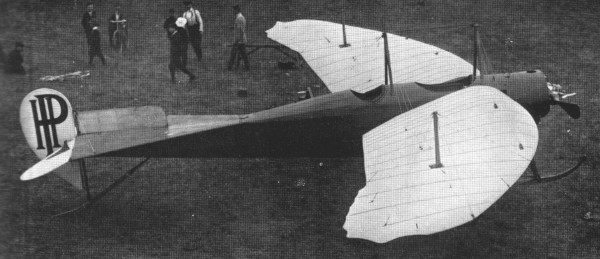
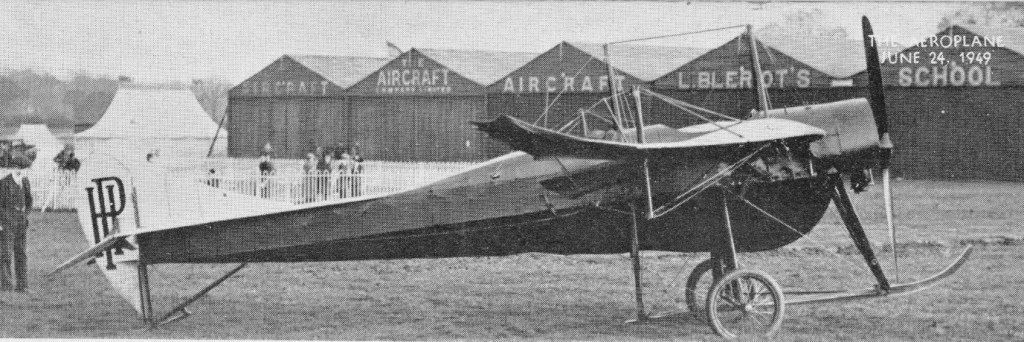
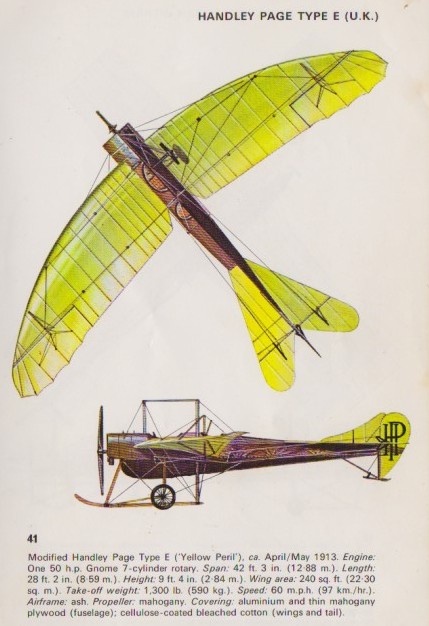
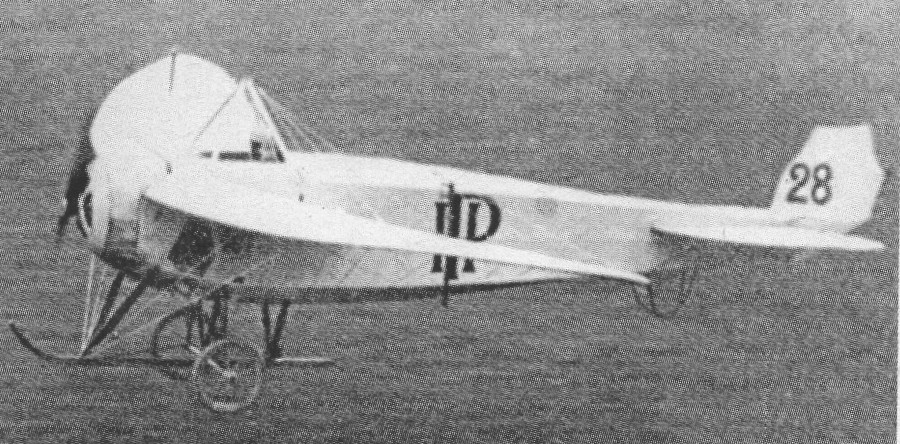
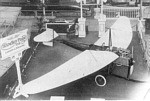
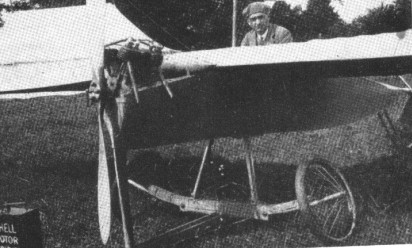
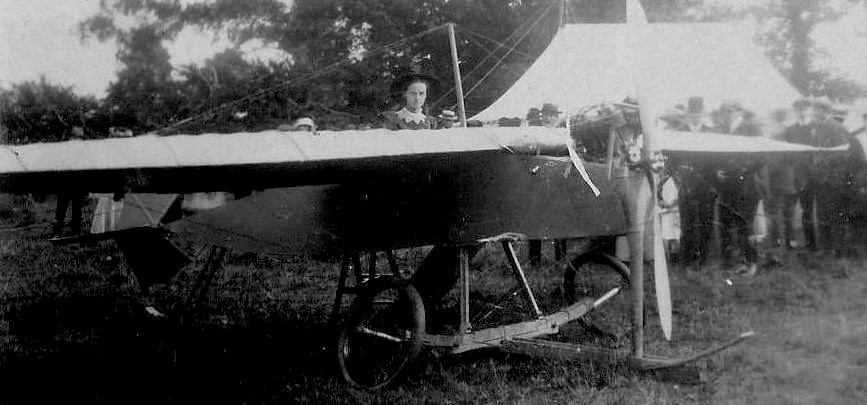
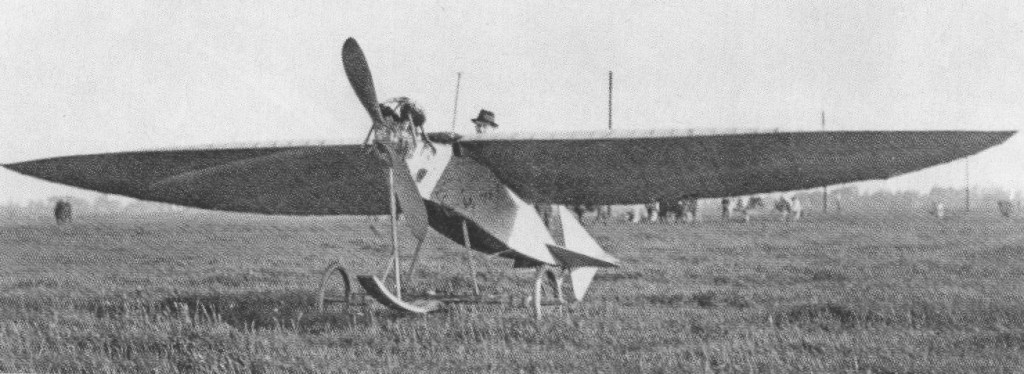
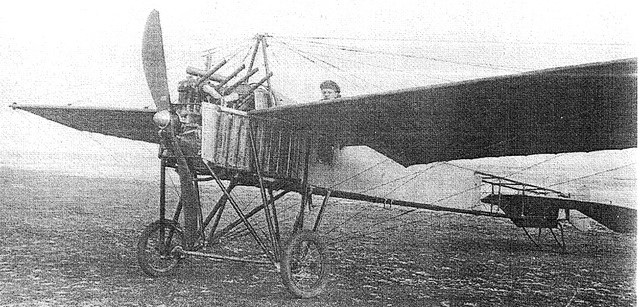
The first really successful Handley Page monoplane of 1912/13. The pilots were the Painter and Lt. Wilfred Parks RN, both who treated it as a joke, as they did everything else.
It made a flight over London from Barking to Brooklands, piloted by Edward Petre.
The 1912 Type F flew well in Military Aeroplane Competitions that summer, flown by Lt. Wilfred Parks RN.
One day Parks and Hardwick started for Farnborough to have it approved, and over Wembley the engine cut out. Park turned down wind to land on the golf course, stalled over some trees and dived into the ground. The machine was not badly broken but they were killed on impact.
The Type F monoplane crashed and brought the first fatalities to Handley Page (H.P.), and it was said that the deaths, from a stall accident, resolved FHP to seek a cure to what was then a very common occurrence.
In June 1909 Frederick Handley Page (later Sir) established this company, building a series of monoplanes with crescent-shaped wings inspired by the Austrian designer Jose Weiss.
The first powered aeroplane was the type A, or Bluebird, with a 20 hp Advance V-4 engine. It was of wood construction with a tailskid landing gear, using a wing with a shape patented by José Weiss, which was claimed to provide automatic lateral stability, so there were no ailerons or wing warping mechanisms. The wings, fuselage and tail surfaces were covered with a blue-grey rubberised fabric, hence the nickname Bluebird. Priced at £376 at the March 1910 Olympia Aero Exhibition, it found no buyers.
Even after adding a triangular tailplane to the all moving cruciform tail surfaces only a few straight hops were achieved.
When FHP took off on May 26, 1910, the craft side slipped into the ground due to lack of lateral control at the first attempt to make a turn.
Adding wing warping and installing a 26 hp Alvaston engine did not help the redeignated Type C craft to fly. Although a 50 hp Isaacaon was then fitted, it was abandoned unflown.
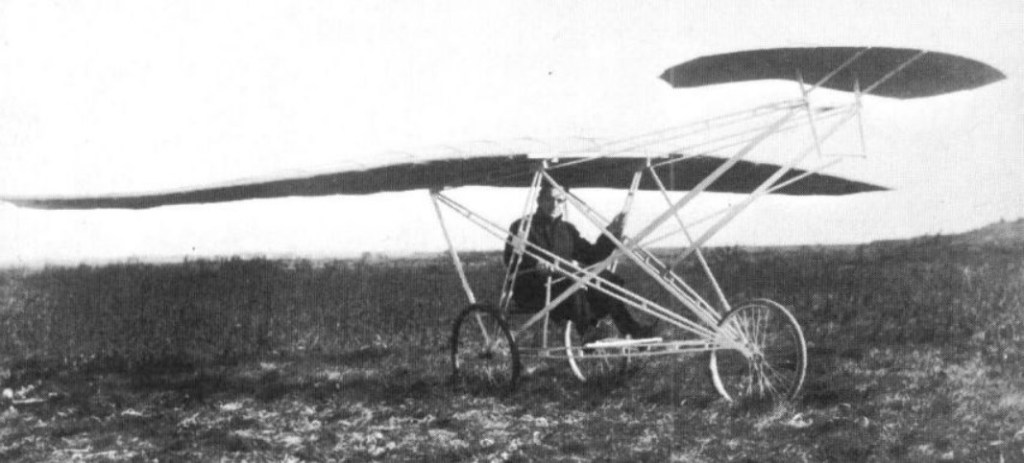
Frederick Handley Page on his first experimental glider.
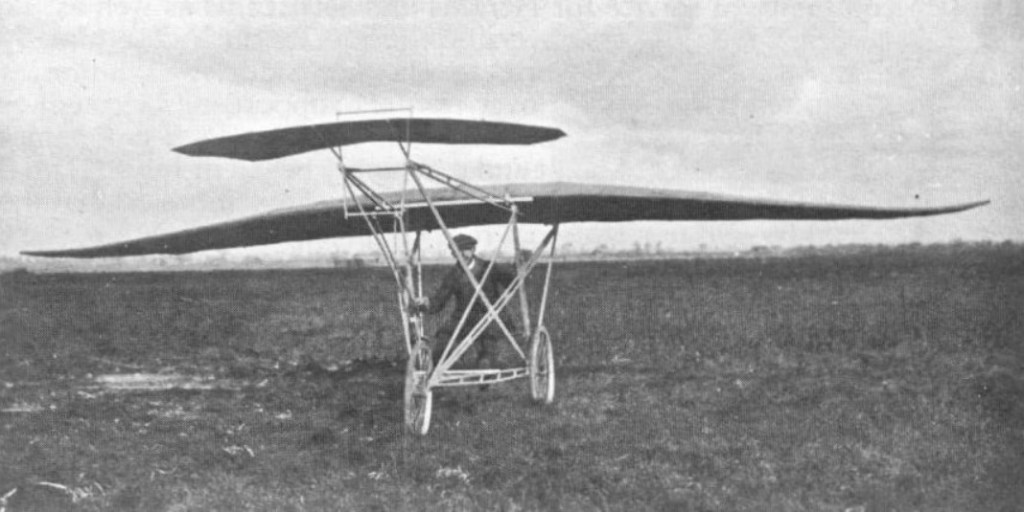
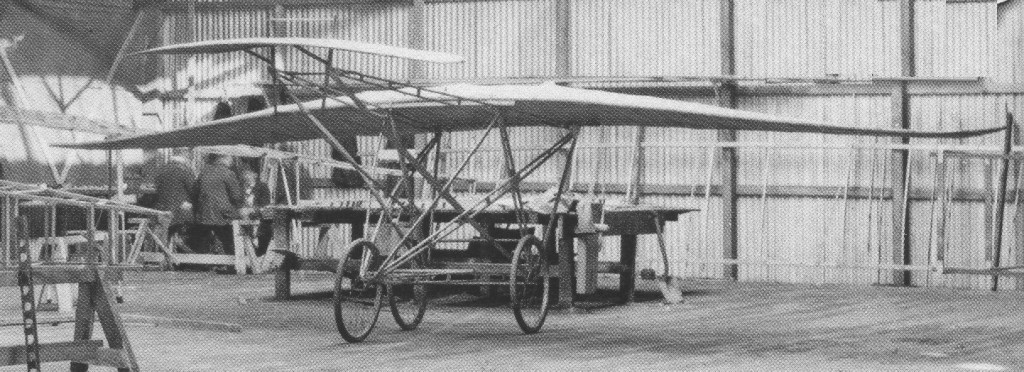
Soon after publication of Jose Weiss’s flexible wing patent (No. 17150) on 14 August, 1908, Handley Page began building his canard glider, with the help of his first employee, Tucker, and his first two premium pupils, Cyril W. Meredith and Arthur Dukinfield Jones.
Tucker on the first glider at Creekmouth in 1909.
With this apparatus he hoped to emulate the Wright brothers by teaching himself to fly. His attempts to take off from the sloping dykes adjoining Barking Creek were unsuccessful, but at least he learned the necessity for a long skid to bridge the many ditches lying in wait to trip and break an unprotected wheeled chassis; these would have been fatal to an unguarded airscrew.
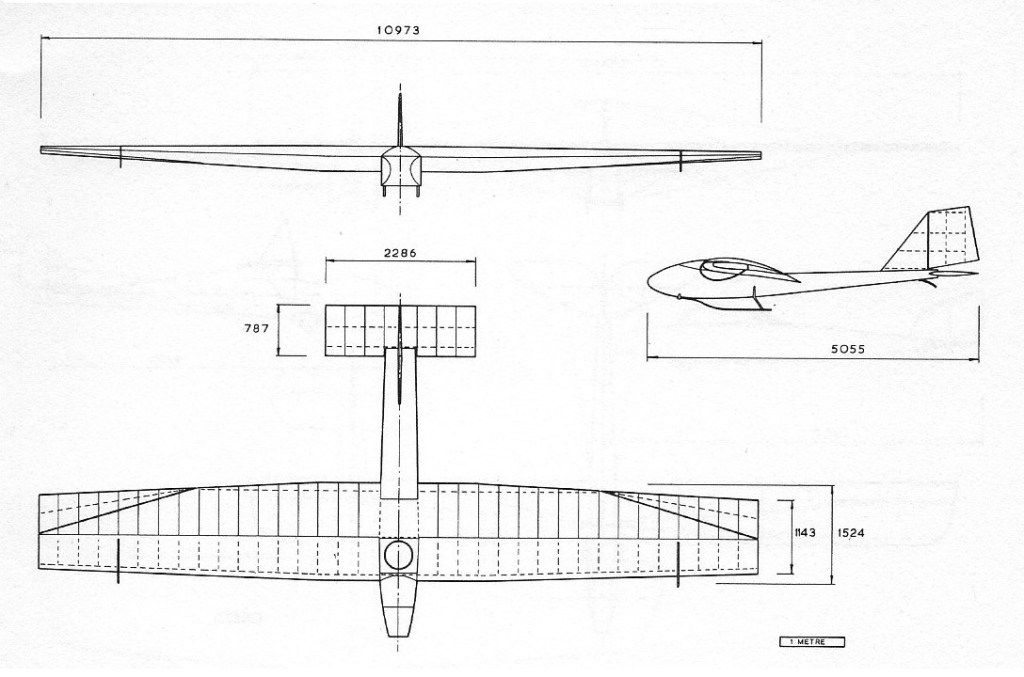
A single seat glider designed by G.A. Handasyde, F.P. Raynham and Sydney Camm, and was built for the Handasyde Aircraft Co by the Air Navigation Co, Addlestone, near Chertsey, Surrey, of wooden construction. Cantilever wing, Twin main skids + tail skid .
Flown by F.P. Raynham at the Itford 1922 competition who achieved the second longest time of 1 hr 53 min.
After the contest the glider was ditched into the sea at Torquay, Devon. During film work.
Wingspan: 10.97 m / 36 ft 0 in Length: 5.06 m / 16 ft 7 in Wing area: 14.59 sq.m / 157 sq.ft Aspect ratio: 8.3 Wing section: Gottingen 441 Empty weight: 72.58 kg / 160 lb AUW: 145.15 kg / 320 lb Wing loading: 10.05 kg/sq.m / 2.06 lb/sq.ft
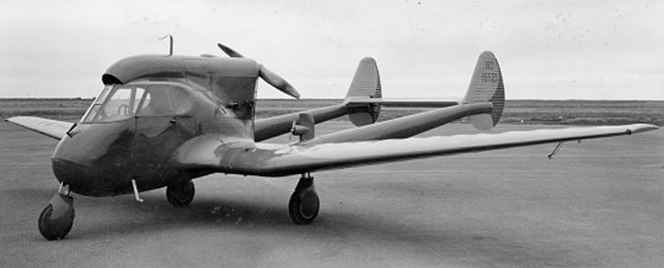
In 1934 the Bureau of Air Commerce held a competition for a safe and practical $700 aircraft. Dean Hammond designed the Hammond Model Y, a low-wing monoplane twin-boom pusher monoplane, aluminum and fabric cover. The aircraft had no rudder as such, the tailplane fins being adjustable but fixed in flight. Turning was by differential aileron and elevator alone.
In 1936 the winner of the competition was the Stearman-Hammond Y-1, incorporating many of the safety features of the Ercoupe W-1. Two other winners were the Waterman Aeroplane and the Autogiro Company of America AC-35.
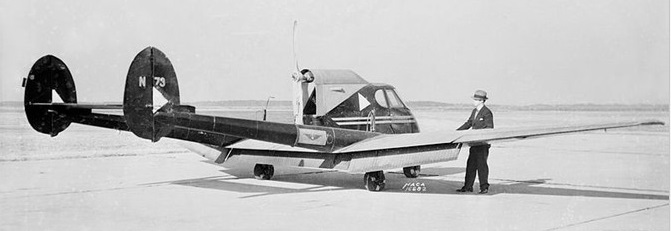
Granted an Approved Type Certificate, Hammond cooperated with Lloyd Stearman to develop the type for production. They formed the Stearman-Hammond Aircraft Corporation in 1936 to build the aircraft as the Stearman-Hammond Y-1. The first aircraft was powered by a 125 hp (93 kW) Menasco C-4 piston engine driving a pusher propeller. The performance was not impressive so it was re-engined with a 150 hp (112 kW) Menasco C-4S and re-designated the Y-1S.
25 examples were ordered by the bureau at a price of $3190 each. The first delivery was considered unnacceptable in finish, prompting the production of the re-engineered Y-S model.
The Y-1-S was distinguished for its exceptional slow speed handling characteristics and two-control flight system with the intent that an experienced automobile driver would be able to solo with only an hour of flight instruction. A national demonstration tour generated interest but no buyers, as many preferred the simple lines and prices of other aircraft, and experienced pilots found the plane confusing to fly.
Two Y-1S, serial numbers 0908 and 0909, were used for radio controlled development trials by the United States Navy as the JH-1. A successful unmanned radio-controlled flight was made with a JH-1 drone on 23 December 1937 at the Coast Guard Air Station, Cape May, N.J. Takeoff and landing was controlled via a landbased radio set; for flight maneuvers, control was shifted to an airborne TG-2.
Tests with two Stearman-Hammond JH-1s were very secret at the time and little has been published about them. They were painted yellow, the standard for primary trainers, and classified as Utitlity (J) planes to hide their identity as one of the very first radio-controlled aircraft in the USN. Both planes were tested as unmanned drone targets for anti-aircraft fire, and both were assigned to Utility Squadron One (VJ-1). Rumors had it are that both were shot down, but there is no confirmation of this, and the aircraft history card for [0908] simply says “crashed 11/7/38,” and [0909] was stricken off on 9/13/38, according to a Confidential letter from the Officer in Charge of Radio-Controlled Aircraft, Base Force, Utility Wing. (— William T Larkins)
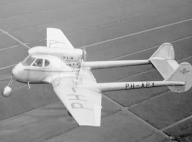
KLM purchased a Y-1 (PH-APY) for use in training their pilots in tricycle undercarriage. The Royal Air Force also evaluated the former KLM Y-1S in the 1940s.
Although designed to be easy to fly the high price meant only 20 aircraft were produced and work was abandoned in 1938.
The fourteenth Y-1-S built was donated to the National Air Museum in 1955 by Dean Hammond, after the ownership had been transferred by Ford Slagle in 1952. The Museum’s Stearman-Hammond, Waterman Aerobile, Stout Skycar, and Erco Ercoupe stand as testaments to the “flivver” movement of the 1930s.
Hammond Model Y Prototype for the 1934 Bureau of Air Commerce safe airplane competition.
Stearman-Hammond Y-1 Prototype aircraft with a 125hp (93kW) Menasco C-4 engine.
Stearman-Hammond Y-1S Production aircraft with a 150hp (112kW) Menasco C-4S engine.
JH-1 United States Navy designation for two Y-1S used for tests.
Specifications:
Y-1S Crew: 1 Capacity: 1 Length: 26 ft 11 in (8.20 m) Wingspan: 40 ft 0 in (12.19 m) Height: 7 ft 7 in (2.31 m) Empty weight: 1,400 lb (635 kg) Gross weight: 2,150 lb (975 kg) Powerplant: 1 × Menasco C-4S piston engine, 150 hp (110 kW) Maximum speed: 113 kn; 209 km/h (130 mph) at 3000 ft (915 m)
Hammer & Krollmann Eindecker of 1912. A conventional monoplane, powered by a 55 hp Hilz engine. August Birkmaier, Fluglizenz Nr 117, was killed in this plane on 4/10/1912 at Vahrenwalder Heide near Hannover.


 All Aero