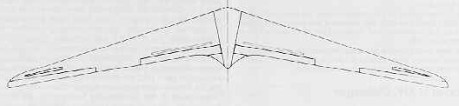
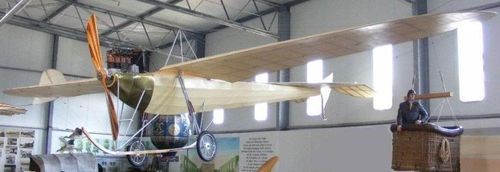
Hotz Tiger

Single seat wood and fabric ultralight sailplane to FAR 103 specs. Cantilever midwing, monocoque fuselage, conventional 3-axis controls with spoilers. 1930’s looks and technology for that vintage feel. Construction time 1000+ hours, cost $1500 US. Plans not available, sized and built for designer.

Wing Span: 30 ft
Wing Area: 112 ftsq
Aspect: 7.5
Airfoil: NACA 63-621 modified
Empty weight: 150 lb
Gross weight: 325 lb
Wing Loading: 2.9 lb/ftsq
Structure: Wood/Fabric
Performance (estimated):
L/D Max: 12 @ 50mph
Min Sink: 5 fps @ 45 mph
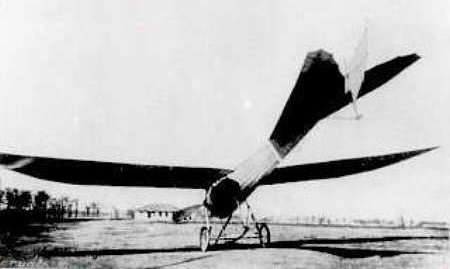
Horton Alita HX

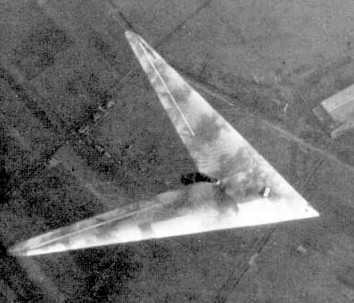
The first Alita designed by Reimar Horton was built by a group of enthusists in Argentina in 1953. It was destroyed in a storm.

The version B was then built, which never flew, and is in the aeronautical museum of moron Buenos Aires, Argentina.

HXa
Wing area: 11.2 m²
Wing span: 7.54 m
Hang glider weight: 39 kg
Minimum pilot weight: 75 kg
Maximum pilot weight: 75 kg
Maximum speed: 150 km/h
Max glide ratio: 30
Max glide ratio speed: 50 km/h
Maximum speed: 170 km/h
Max glide ratio: 18
Max glide ratio speed: 78 km/h
Landing speed: 42 km/h

HXb
Wing area: 17.5 m²
Wing span: 10 m
Hang glider weight: 39 kg
Minimum pilot weight: 75 kg
Maximum pilot weight: 75 kg
Maximum speed: 150 km/h
Max glide ratio: 20
Max glide ratio speed: 60 km/h
Landing speed: 36 km/h

HXc
Wing span: 15 m
Hang glider weight: 42 kg
Minimum pilot weight: 90 kg
Maximum pilot weight: 90 kg
Maximum speed: 150 km/h
Max glide ratio: 30
Max glide ratio speed: 50 km/h
Landing speed: 39 km/h

Horton Bomber Project

In February 1945 a committee under Professor Bock with representatives from Junkers, Messerschmitt and Horten, deliberated over the optimum design for a 4 jet engined bomber. Designs by Junkers (Ju 287. A swept forward tailed aircraft), Messerschmitt (Project 1107 as swept back tailed aircraft), and Horten (swept back tailless) were considered, and a joint report issued giving the committee’s opinion on the best estimate for relative performance. Junkers published the report.
The specification to be noted was for 900 kph at 10 km height and a range of 3,000 km using four H 11 jets. According to Horten the committee decided that his machine, given the same top speed as the others would have more range and less landing speed. (125 kph against the 175 kph for the others.) Alternatively he could carry 8 tons (metric) of bombs against the 4 by his competitors for the same range.
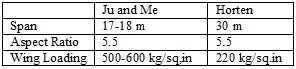
The dimensions of the aircraft were roughly as follows:

Horten said the agreed CDo for this aircraft was 0.0078 excluding Mach number correction.
In the structural design he reckoned to save 6% of the all up weight (spar and rib weight) compared with the conventional type. He thought the committee a bit unfair because they insisted on increasing his estimate of structure weight by about a ton.
All the above figures were remembered by Horton, who used them as a rough illustration. They are not accurate.

Horton Parabel

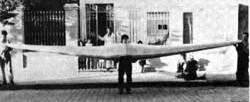
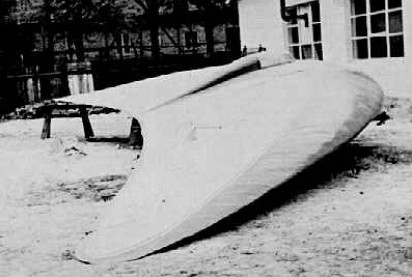
According to Reimar Horten this planform is theoretically the most efficient and has the minimum induced drag. The validity of the theory is not known. The glider was constructed in a burst of enthusiasm but proved rather awkward to make because of its curves and was damaged during transport and never flown.

Wing span: 12m
Wing area: 33sq.m
Empty Weight: 90kg
Payload: 80kg
Gross Weight: 170kg
Wing Load: 5.15kg/sq.m
Aspect ratio: 4.4
L/DMax: 19.5 61.5 kph
MinSink: 0.8 m/s 45 kph
Seats: 1

Horton Ho XIV

This was a sports sailplane designed to conform to the 1939 Olympic Games specification. It was designed for simplicity and ease of production. The first aircraft was built from sketches and proper drawings for the production type were made later with slight modifications. Construction was carried out at Hersfeld.
Span was 15 m and aspect ratio 16.2. The wing had 23 degree leading edge sweep and 8.6 degree total twist. Sections were 4% camber and 17% thickness at the root with 10% thick symmetrical tips. Empty weight was 120 kg giving a flying weight of 225 kg.
Controls consisted of one Frise nose elevon per side with rudders and dive brakes of H IV design. The glider trimmed at CL=1.0 with elevons neutral.
The pilot was put in a prone position as on the H IV and the undercarriage arrangement was also similar but for the replacement of the rear skid by a wheel.

Wing span: 16m
Wing area: 15.76sq.m
Empty Weight: 150kg
Payload: 80kg
Gross Weight: 230kg
Wing Load: 14.6kg/sq.m
Aspect ratio: 16.2
L/DMax: 30 70 kph
MinSink: 0.62 m/s 55 kph
Seats: 1

Horton Ho XIII

As part of their program on high sweepback, the Hortens built the Ho.XIII to give flight test results on a leading edge sweep of 60 degrees. This increase of sweep reduced the aspect ratio to four. Control deflections were all doubled to compensate for the obliquity of the hinge line and the ends of the control flaps trimmed to run parallel to the new aircraft center line.
The pilot had to be carried in an underslung nacelle to give him a reasonable view; the control column was inverted and hung from the roof of the nacelle.
Undercarriage consisted of a main wheel inset in the nacelle and a fixed nosewheel mounted on a welded steel tube fork.
Flying the H XIII totaled about 10 hours. Trials were interrupted in the middle by Scheidhauer landing in a barbed wire fence.
CLmax was found to be 0.9, with the stick right back. In this condition the incidence was larger than expected – about 20 – 25 degrees instead of 15 degrees, but Horten thought that the induced drag was not correspondingly increased. It was thought that the wing was not completely stalled with the stick hard back because the CG was too far forward.
Control was moderately satisfactory, but in spite of the increased elevon travel was inclined to be sluggish. Elevator control particularly was much less sensitive than on other Horten aircraft.

Horten H XIII a
Wing span: 12m
Wing area: 36sq.m
Empty Weight: 250kg
Payload: 80kg
Gross Weight: 330kg
Wing Load: 9.2kg/sq.m
Aspect ratio: 4
MinSink: 1.1 m/s 60 kph
L/DMax: 16 80 kph
Seats: 1