IKV IKV-3 Kotka

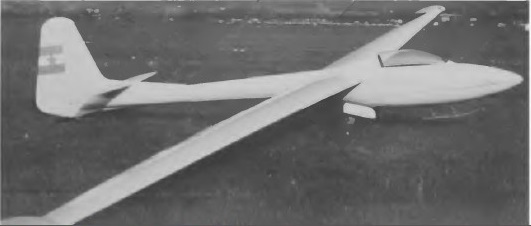
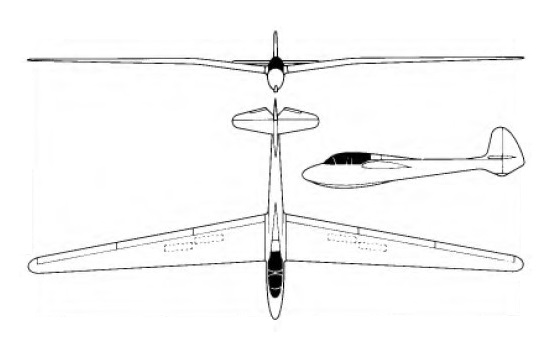
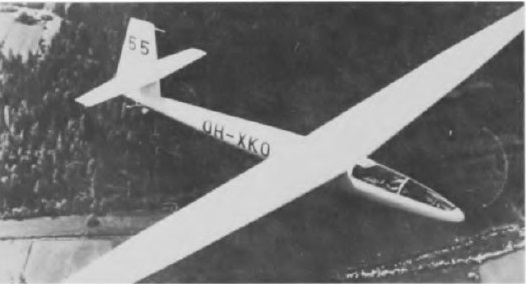
This Finnish high performance single-seater was designed by Mr Tuomo Tervo and Mr Jorma Jalkanen, whose earlier designs included the PIK-16C Vasama and Havukka sailplanes. Design work on the Kotka (or Eagle) began in December 1964 and the prototype was built by members of the Aeroclub Vasama or IKV, in association with K.K. Lehtovaara O/Y, construction starting in mid-1965; the Kotka made its first flight in May 1966; the type was later going to be put into series production by llmailukerho Vasama, but only the prototype was built.

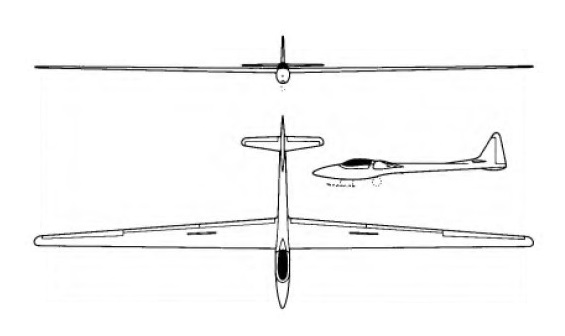
The Kotka is of conventional wooden construction with some use made of plastic foam and glassfibre; the cantilever shoulder wing is a boxtype single-spar wooden structure from almost the leading edge to the 55% chord line and entirely plywood-skinned, with a small number of wooden or plastic foam ribs at the trailing edge, and a glassfibre leading edge. Both the plain ailerons and the flaps are of plywood covered plastic foam construction. There are two pairs of light alloy air brakes in each wing, on the upper and lower surfaces. The wooden fuselage is glassfibre-covered from the nose to the wing trailing edge, and plywood-skinned aft of the wing. Some plastic foam is employed in the wooden tail unit, the variable incidence tailplane and fin being plywood covered and the rudder and elevators fabric covered. There is a mechanically retractable monowheel with drum-type brakes and also a detachable tailwheel for ease of ground handling. The pilot is seated in a semi-reclining and adjustable seat under a long, flush-fitting cockpit canopy which, together with the tall angular fin, gives the Kotka a distinctive appearance. The instrumentation included radio, an oxygen system, a central electric control panel and a landing gear warning system being provided.
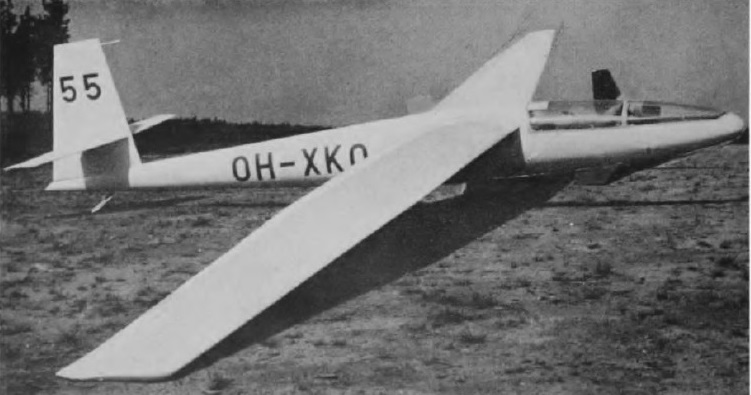
On 6 May 1968 Kotka flown by Seppo Hamalainen set up a Scandinavian goal-and-return record distance of 374 miles.

IKV-3 Kotka
Span: 18.2 m / 59 ft 8.5 in
Length: 7.75 m / 25ft 5 in
Height: 2.0 m / 6ft 6.5 in
Wing area: 17.0 sq.m / 183 sqft
Aspect ratio: 19.0
Wing section: Wortmann FX-62-K153/FX-60-126
Empty weight: 340 kg / 749 lb
Max weight: 450 kg / 992 lb
Water ballast: None
Max wing loading: 26.47 kg/sq.m / 5.42 lb/sq ft
Max speed: 155 mph / 135 kt / 250 km/h (in smooth air)
Max rough air speed: 93 kt / 172 km/h
Stalling speed: 28 kt / 52 km/h
Min sinking speed: 1.74 ft/sec / 0.53 m/sec at 43.5 mph / 37.5 kt / 70 km/h
Best glide ratio: 38:1 at 62 mph / 54 kt / 100 km/h
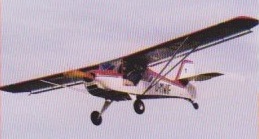
Ikarusflug Bodensee Eurofox

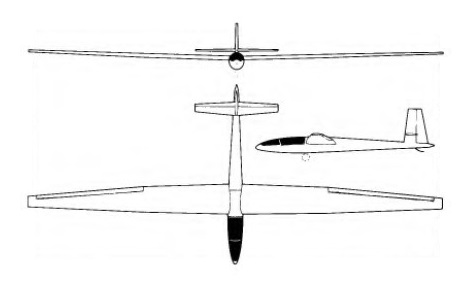
Inspired by the Kitfox and Avid Flyer, the Eurofox also uses a welded steel spaceframe fuselage, tubular spars and plywood ribs, all covered in Dacron.

Engine: Rotax 912, 80 hp
Wing span: 9.2 m
Wing area: 11.5 sq.m
MAUW: 450 kg
Empty weight: 250 kg
Fuel capacity: 58 lt
Max speed: 180 kph
Cruise speed: 150 kph
Minimum speed: 60 kph
Climb rate: 5 m/s
Fuel consumption: 10 lt/hr
Certification: VZ
Seats: 2
Price (1998): 63 240 DM

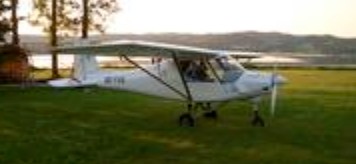
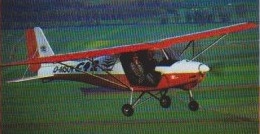
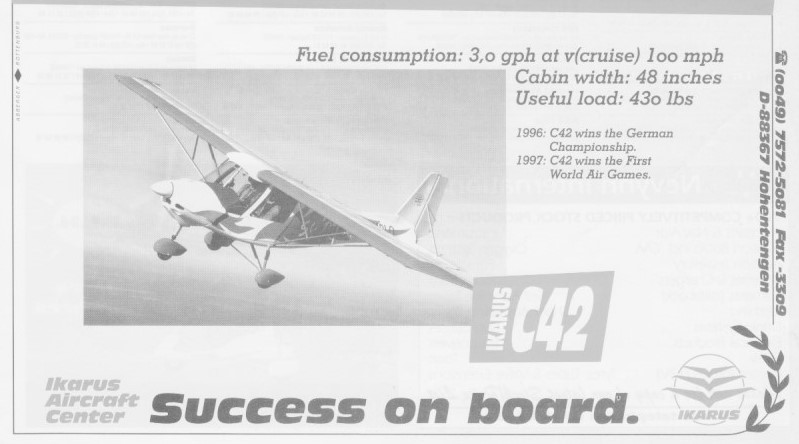
Ikarus Comco C42 / Aerosport Ltd Ikarus C42

The tube and fabric C42 features an unstressed outer skin.
Known as Aerosport Ltd Ikarus C42 in the US, the Ikarus C42 is a popular school plane. More than 650 airplanes have been delivered worldwide.

A newer model is the Ikarus C42B (C-42B). C42B 2009 Price: 40000 EURO

1998

C-42
Engine: Rotax 912, 80 hp
Wing span: 9.9 m
Wing area: 13.2 sq.m
MAUW: 450 kg
Empty weight: 230 kg
Fuel capacity: 50 lt
Max speed: 175 kph
Cruise speed: 150 kph
Minimum speed: 65 kph
Climb rate: 5 m/s
Seats: 2
Fuel consumption: 11 lt/hr

C-42B
Stall: 35 kt / 40 mph / 65 kmh
Cruise: 86 kt / 99 mph / 160 kmh
VNE: 103 kt / 118 mph / 190 kmh
Empty Weight: 259 kg / 572 lbs
MTOW Weight: 450 kg / 992 lbs
Climb Ratio: 1000 ft/min / 5 m/s
Glide Ratio: 1:11 @ 70kn
Take-off distance (50ft obstacle): 1050 ft / 320 m
Landing distance (50ft obstacle): 770 ft / 234 m

C42FB

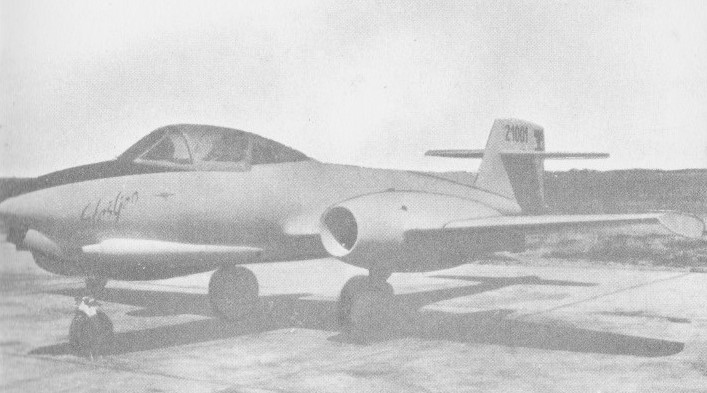
Ikarus AD J-451MM Stršljen

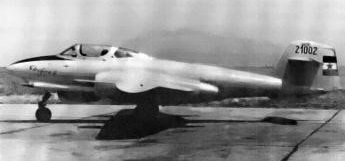
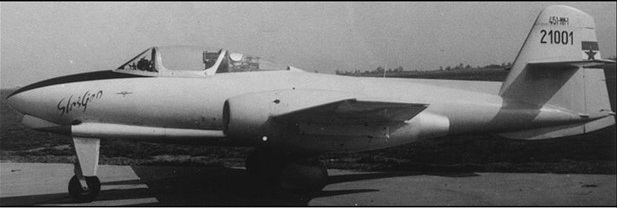
The J-451MM Stršljen is a development of the single seat 451M Zolja research aircraft, which was the first jet aircraft designed in Yugoslavia.

Ikarus J 451 MM Strsljen

The Ikarus J-451MM Stršljen (“Hornet”) was developed in 1956 as a planned close support variant of the S-451M Zolja and test flown in 1957 by the Aeronautical Testing Centre. The design featured a tricycle undercarriage as opposed to the early tail dragger designs, more powerful Turbomeca Marboré turbojet engines and armament of 2 x 20mm Hispano-Suiza 404A cannons under the fuselage along with underwing rockets.

Ikarus J-451MM Stršljen (“Hornet”)

The airframe has low-set wings without sweepback, and un-swept tail surfaces, with the tailplane mounted part-way up the fin. The ailerons, elevators and rudder are conventional. The wingtips are turned down and a stabilising fin is under the nose. The outer wings fold upward for stowage and access to the engines.

The tricycle undercarriage has single wheels on each unit. The main wheels retract inward and nosewheel retracts forward.

Two cannon are located in fairings under the fuselage and underwing attachments hold up to four air-to-ground rockets.

Engines: 2 x Turbomeca Marbore, 880 lb
Wingspan: 25 ft 10.5 in
Wing area: 121.5 sq.ft
Length: 26 ft 3 in
Height: 5 ft 6 in
Empty weight: 5370 lb
Max speed: 497 mph at SL
Service ceiling: 39,600 ft
Range: 470 mi
Armament: 2 x 20 mm Hispano cannon
Hardpoints: 4

Ikarus AD 215

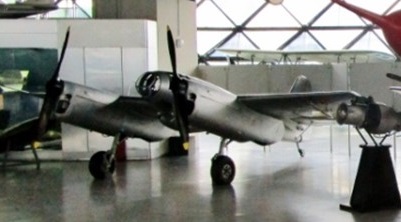
Originally designed before the World War II as a Zmaj R-1 the Ikarus 215 (Икарус 215 in Serbian) twin-engine plane, was a Yugoslav light bomber and a training aircraft. It was designed by Dusan Stankov and built at the Ikarus factory in Zemun-Belgrade.

The aircraft was of mixed construction, twin engine, with a crew of two to four. The main landing gear wheels retracted rearwards into the motor housing.

The prototype first flew in 1949. The 215 did not enter production. The prototype was used for training.

Engines: 2 × Ranger, SGV-770C-1, 387.7 kW (519.9 hp)
Propellers: 2-blade
Wingspan: 16.14 m (52 ft 11 in)
Wing area: 29.80 sq.m (320.8 sq ft)
Length: 13.35 m (43 ft 10 in)
Height: 4.03 m (13 ft 3 in)
Empty weight: 4,297 kg (9,473 lb)
Gross weight: 4,685 kg (10,329 lb)
Range: 1,120 km (696 mi; 605 nmi)
Service ceiling: 8,150 m (26,739 ft)
Crew: 2-4

Ikarus AD 453

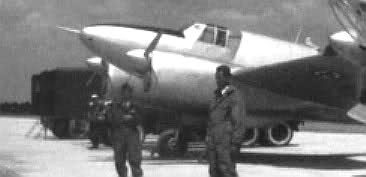
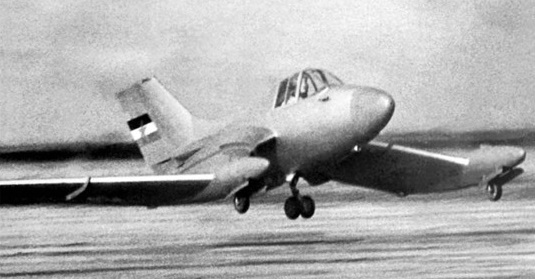
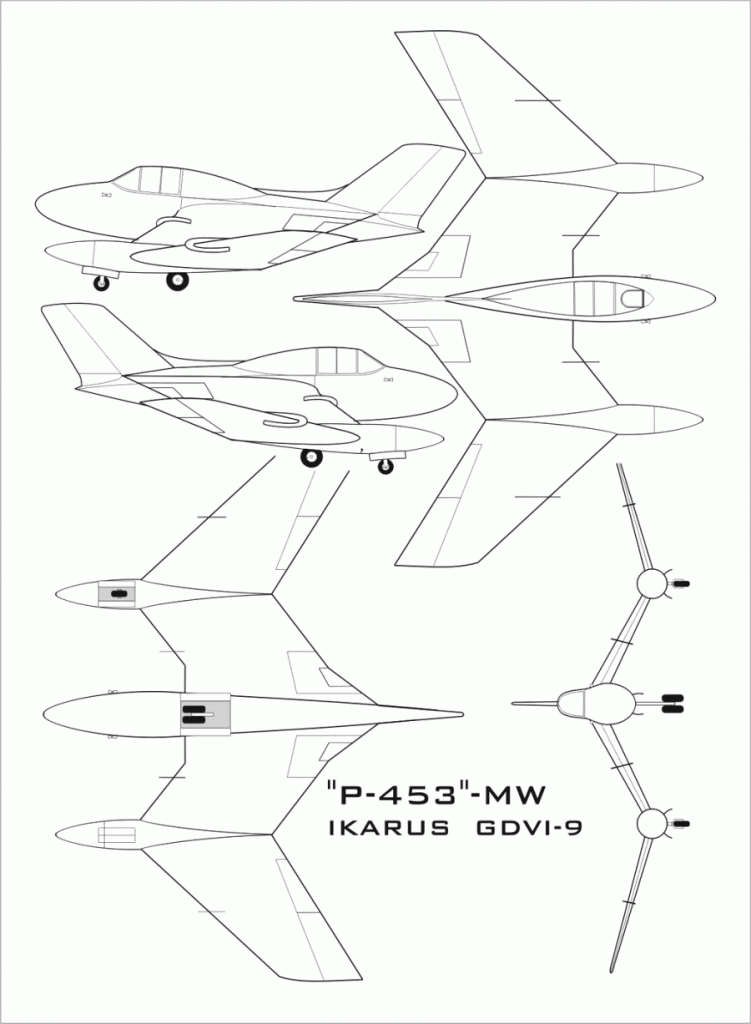
The Ikarus 453 (P-453-MW) was an aircraft designed in 1952. It featured reverse gull wings to accommodate two Turbomeca Marbore II turbojet engines in the nacelles on the wing. In 1952 the first flight was conducted without engines fitted (in glide mode) but it crashed and the project was cancelled (the pilot survived the incident).

Ikarus AD S-49

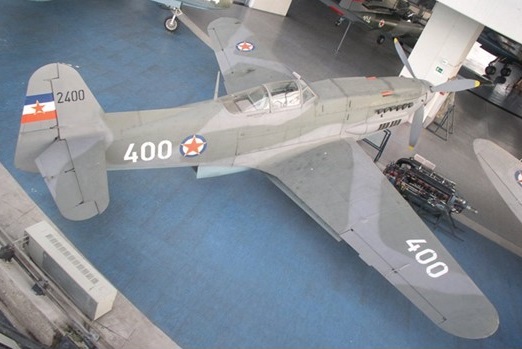
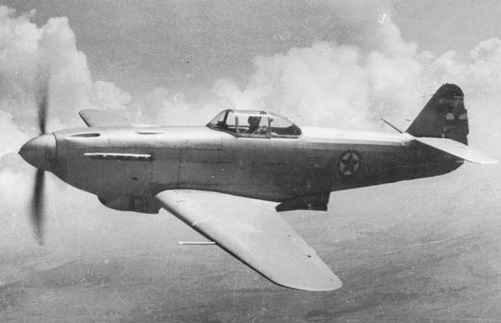
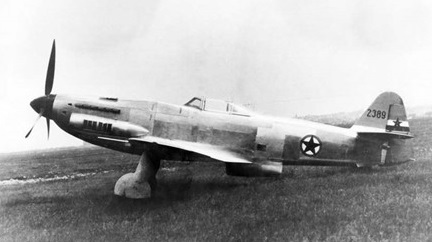
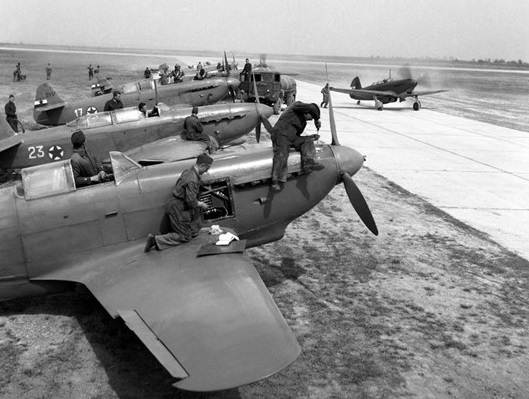
The Ikarus S-49 was a Yugoslav single-seat, single-engine fighter aircraft built for the Yugoslav Air Force (Serbo-Croatian: Ratno vazduhoplovstvo i protivvazdušna obrana – RV i PVO) shortly after World War II. Following the Tito–Stalin Split in 1948, the RV i PVO was left with an aircraft inventory consisting of mostly Soviet aircraft. Unable to acquire new aircraft or spare parts for its existing fleet, the RV i PVO turned to its domestic aviation industry in order to create an indigenous design to fulfill the need for additional aircraft.

The same constructors that built the Rogozarski IK-3 before the war, engineers Kosta Sivcev, Slobodan Zrnic and Svetozar Popovic, used existing technical documentation of the IK-3 to construct a new fighter aircraft, the Ikarus S-49.

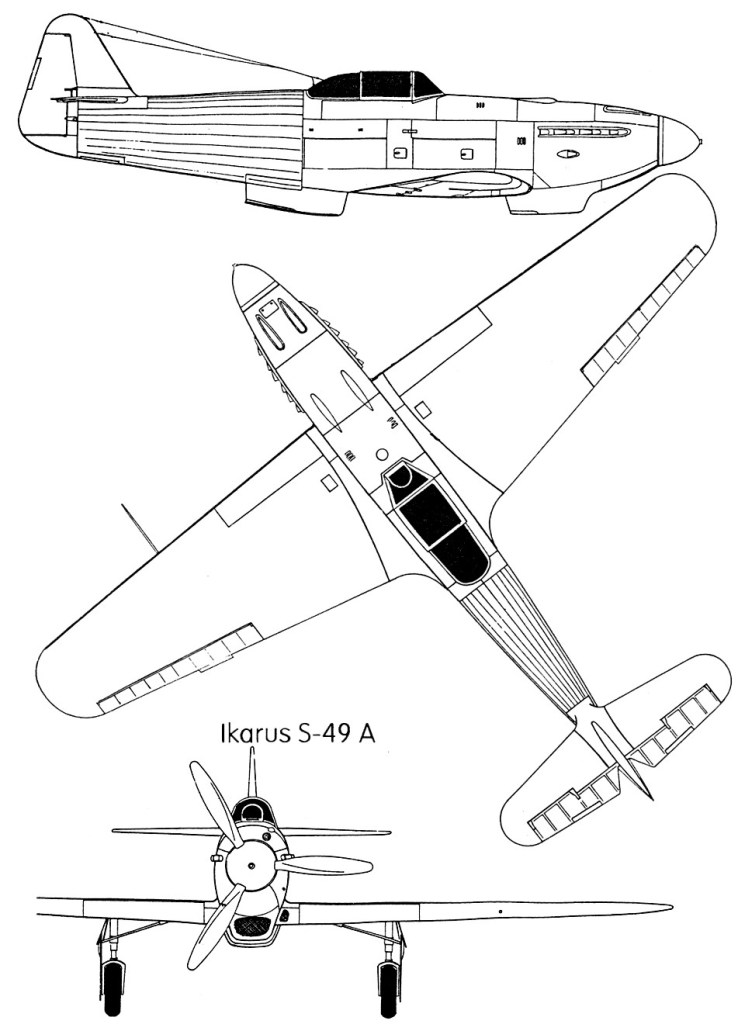
S-49A

The S-49A was of mixed construction, with Soviet built VK-105 engines which were no longer available after 1948. Therefore, it was decided to produce a new version of the aircraft powered by the similar French Hispano-Suiza 12Z-17 engine. Because of the bigger and heavier engine, the new aircraft had to be of all-metal construction with a much longer nose. While the aircraft was mainly built by Ikarus, the wings and tail were built by the SOKO factory in Mostar. The armament consisted of one 20 mm Mauser MG-151/20 autocannon produced by Germany during World War II and two 12.7 mm Colt Browning machine guns. In addition, under wing racks for two 50 kg bombs or four 127 mm HVAR missiles were provided.

The first prototype of the S-49A flew in June 1949. The first operational aircraft were delivered to combat units at the beginning of 1950.

An S-49B Ikarus had been proposed with the German DB-605 engine, but for mass production the Ikarus S-49C was chosen.

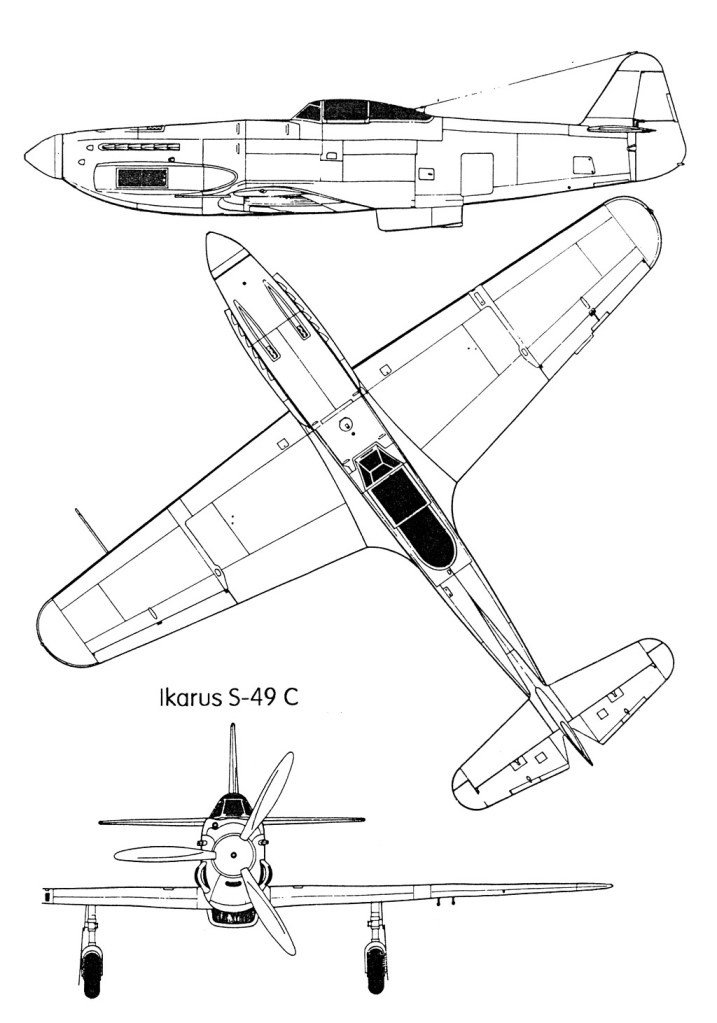
The S-49A was surpassed by the improved S-49C, featuring an all-metal construction and a more powerful engine. At the beginning of 1952, the Ikarus S-49C was introduced into the units of the Yugoslav Air Force.

S-49C

Aircraft Order “Soko” started in 1952 with the assembly of the wing and empennage for the S-49C fighter. An all-metal version of the S-49A powered by a Hispano Suiza HS 12Z-17. Under wing mounts were fitted for rockets, MG-151 or Colt Browning M2 12.7- mm machine guns, or two 50-kg bombs.

A total of 45 S-49A and 113 S-49C were produced by the Ikarus Aircraft Factory in Zemun. The last aircraft were retired from RV i PVO service in 1960/61, having been replaced by more modern jet-powered aircraft.

Gallery

Variants:
S-49A – mixed construction and Klimov M-105 engine (45 built)
S-49B – planned version powered by a Daimler-Benz engine; unbuilt.
S-49C – all-metal construction and Hispano-Suiza 12Z engine (113 built)

Operators:
Yugoslav Air Force

Ikarus S-49A – 46 aircraft (1949–1957)

117th Fighter Aviation Regiment (1950–1953)
204th Fighter Aviation Regiment (1950–1953)
107th Fighter Aviation Regiment (1953–1957)
Training Squadron of 44th Aviation Division (1953–1954)

Ikarus S-49C – 112 aircraft (1952–1961)

116th Fighter Aviation Regiment (1952–1960)
185th Fighter Aviation Regiment (1953–1956)
40th Fighter Aviation Regiment (1955–1959)
109th Fighter Aviation Regiment (1956–1960)
88th Fighter Aviation Regiment (1957–1959)
Training Squadron of 39th Aviation Division (1953–1959) S-49C

Specifications:

S-49A
Engine: Klimov VK-105PF, 1180 hp
Wingspan: 10.30 m
Length: 8.43 m
Height: 3.20 m
Wing area: 16.60 sq.m
Empty weight: 2320 kg
Normal take-off weight: 2950 kg
Maximum speed: 554 kph
Range: 690 km
Rate of climb: 1026 m / min
Ceiling: 10,000 m
Crew: 1
Armament:
1 x 20-mm motorpushka ShVAK with 120 rounds
2 x 12.7 mm UBS machine gun with 200 rounds

S-49C
Engine: 1 × Hispano-Suiza 12Z-17, 1,104 kW (1,500 hp)
Length: 9.06 m (29 ft 83in)
Wingspan: 10.30 m (33 ft 91 in)
Height: 2.90 m (9 ft 6 in)
Wing area: 16.65 m2 (179 ft2)
Empty weight: 2,818 kg (6,200 lb)
Max. takeoff weight: 3,568 kg (7,850 lb)
Maximum speed: 628 km/h (339 knots, 390 mph) at 1,525 m (5,000 ft)
Range: 690 km (373 nm, 429 mi)
Service ceiling: 10,000 m (33,000 ft)
Climb to 6,000 m (19,700 ft): 6 min 54 sec
Armament
1 × 20 mm MG-151/20 cannon
2 × .50 Colt Browning M2 machine guns with 650 rounds per gun
2 × 50 kg (110 lb) bombs or 4 × 5 in HVAR missiles
Crew: one pilot

Ikarus AD Meteor

The all-metal Meteor was designed in 1954 by Boris Cijan, Stanko Obad and Miho Mazovec. The Meteor high performance single-seater with its laminar flow wing, camber-changing flaps and very slim fuselage to give minimum cross sectional area set a pattern for the high performance types of today when it first flew from Belgrade on 4 May 1956. It soon made its mark in competition flying, taking fourth or fifth place in the Open Class in the World Championships of 1956, 1958 and 1960 and for a time it held the world speed records for the 100 and 300km triangular closed circuits.

The ailerons are divided into inboard and outboard sections, of which the inner sections can be drooped in conjunction with the flaps for landing, and modified DFS-type air brakes are fitted in the wing upper surfaces. The semi-monocoque all-metal fuselage is built in two sections for ease of repair, the rear section being straight tapered with stringers and a stressed skin. The landing gear consists of a bow-shaped front skid that extends some way out from under the forward fuselage, and a retractable monowheel with brake. The pilot is seated under a detachable one-piece canopy.

Meteor 60
Span: 65ft 7.5in / 20.0 m
Length: 26ft 5in / 8.05 m
Wing area: 172.2 sqft / 16.0 sq.m
Aspect ratio: 25.0
Wing section: NACA 633 616 5
Empty weight: 829 lb / 376 kg
Max weight: 1,113 lb / 505 kg
Water ballast: None
Max wing loading: 31.5 kg/sq.m / 6.45 lb/sq ft
Max speed: 135 kt / 250 km/h / 155 mph (in smooth air)
Max rough air speed: 67.5 kt / 125 km/h
Stalling speed: 36 kt / 67 km/h
Min sinking speed: 1.77ft/sec / 0.54 m/sec
Best glide ratio: 42:1 at 56mph / 48.5 kt / 90 km/h

Ikarus AD Kosava

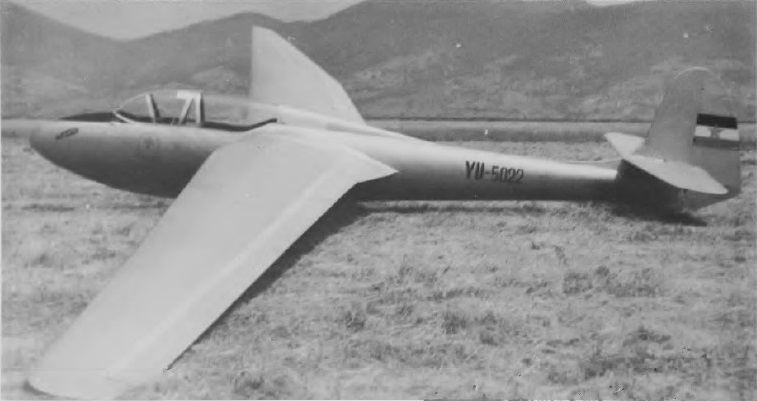
The Kosava (or North Wind) was a high performance two-seater intended to replace the DPS Kranich then in use in Yugoslav clubs; its design was commissioned by the Yugoslav Flying Sports Organisation from Milos Ilic and Adryan Kisovec, and the prototype made its first flight in March 1953. A few weeks later Bozo Komac flew it to victory in the Yugoslav National Championships, and the type went on to win many prizes in contest flying in the two-seater class, taking first place in this category in the 1954 World Championships at Camphill, Bedfordshire, and second place in the 1956 World Championships at St Yan in France.

Of conventional wood and fabric construction, the Kosava had a shoulder-mounted gull wing with a slight forward sweep at the leading edge and a more marked trailing edge sweep; the forward sweep served to maintain the cg at a suitable place when the Kosava was being flown solo. The ailerons were divided into inner and outer halves, and underwing spoilers were fitted, as well as trailing edge flaps which operated in conjunction with the ailerons, being used separately during landing. The second prototype Kosava was fitted with Schempp-Hirth air brakes. The two pilots are seated in tandem under a two-piece canopy and the landing gear consists of a single skid under the forward fuselage.

The Kosava-2 was a redesigned version intended for training from basic to advanced levels, including blind flying training, aerobatics and high altitude soaring. It features a new more streamlined fuselage with the pilots in tandem under a flush-fitting cockpit canopy divided by a centre frame; the two canopy sections are jettisonable, and there is provision for an oxygen system for the pilots. A retractable monowheel and tail bumper replaces the skid of the earlier Kosava, and the fin and rudder are swept back and the mid-set tailplane’s span increased, whereas the earlier Kosava’s tail unit, fuselage and cockpit resembled those of the DPS Kranich it was designed to replace. The Kosava-2’s wing is very similar in plan to the earlier Kosava’s, but has dihedral from the roots and is of 18m span (59 ft 0.75 in), with one piece ailerons, air brakes in the upper surfaces and no flaps.

Kosava
Wing span: 19.13 m (62 ft 9 in)
Length: 8.33 m (27 ft 4 in)
Wing area: 21.12 sq.m (227.4 sq ft)
Wing section: Gottingen 549/CAGI 731-M
Aspect ratio: 17.3
Empty weight: 336 kg (741 lb)
Max weight: 575 kg (1,268 lb)
Water ballast: None
Max wing loading: 27.2 kg/m 2 (5.57 Ib/sq ft)
Stalling speed: 29 kt (53 km/h)
Max speed: 136 mph / 119 kt / 220 km/h
Min sinking speed: 2.17 ft/sec / 0.66 m/sec at 46.5 mph / 40.5 kt / 75 km/h
Best glide ratio: 33.5:1 at 54 mph / 47 kt / 87 km/h